

P1285 on 2013-2019 Ford Escape: Cylinder Head Overheat Causes and Fixes
P1285 on a 2013-2019 EcoBoost Escape indicates a critical cylinder head overheat. This is most often caused by a known engine design flaw leading to coolant leaking into the cylinders ('coolant intrusion'). Stop driving immediately. The typical fix is an expensive engine replacement, which may have some coverage under special Ford programs like Customer Satisfaction Program 21N12 for the 1.5L engine.
- P1285 on a 2013-2019 EcoBoost Escape is a critical warning that requires you to stop driving immediately to prevent catastrophic engine damage.
- The code almost certainly points to a known, widespread engine design defect causing coolant to leak into the cylinders.
- The only permanent fix for this common issue is an expensive engine replacement with a revised block design.
- Before authorizing repairs, contact a Ford dealer with your VIN to check for coverage under TSBs or Customer Satisfaction Program 21N12 (for 1.5L engines).
What's Unique About the 2013-2019 Ford Escape
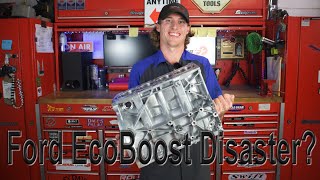
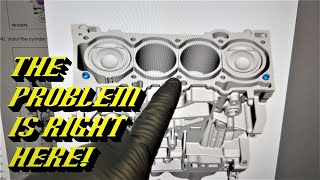
For the 2013-2019 Escape with 1.5L and 2.0L EcoBoost engines, P1285 is rarely a simple sensor or thermostat problem. It is a very strong indicator of a well-documented, widespread design flaw in the engine block. The 'open-deck' design of these engines, which was implemented around the 2017 model year, features a thin wall or 'slit' between the cylinders and coolant passages. This design is prone to cracking, allowing coolant to leak directly into the cylinders. 🎬 See a breakdown of these common EcoBoost engine problems This issue, known as 'coolant intrusion,' leads to a rapid and severe overheat condition, making P1285 a frequent and primary indicator of impending engine failure on this specific platform, as acknowledged by Ford in multiple Technical Service Bulletins.
Symptoms You May Notice
- Temperature gauge suddenly goes to max/hot
- Check engine light is on
- Engine enters reduced power 'limp mode'
- Unexplained loss of engine coolant with no visible leaks on the ground
- White, sweet-smelling smoke from the exhaust, especially on startup
- Engine misfires, especially on startup (can feel like a shudder or hesitation)
- Engine running rough
- Coolant reservoir is low or empty repeatedly
- Replacing only the CHT sensor without confirming if the engine is truly overheating. On these engines, the overheat is usually real.
- Replacing the thermostat or water pump when the actual cause is an internal engine block leak.
- Attributing coolant loss to a bad radiator cap or external leak without performing a combustion gas test to rule out coolant intrusion.
Most Likely Causes
- Internal Coolant Leak (Cracked Engine Block) 🔴 High Probability A known design defect in the 1.5L and 2.0L EcoBoost engines of this era makes them susceptible to cracks forming between coolant passages and cylinders. Ford has acknowledged this with multiple TSBs (19-2346 for 2.0L, 22-2322 for 1.5L) and a Customer Satisfaction Program (21N12) for the 1.5L engine, extending warranty coverage for this specific failure. The issue is the subject of a class-action lawsuit. Manufacturer service bulletin TSB 22-2229 notes that P1285 may be stored in the PCM due to coolant intrusion into the cylinder.
How to confirm: A technician will perform a cooling system pressure test (TSBs specify it must hold pressure for hours) and a chemical block test to detect exhaust gases in the coolant. A borescope inspection is used to visually confirm coolant inside the cylinders. Misfire codes (P0300-P0304, P0316) alongside P1285 are strong indicators.
Typical fix: The only permanent fix is to replace the engine with an updated assembly that has a revised block design. For the 1.5L, this is a short block replacement; for the 2.0L, it is a long block replacement.
Est. part cost: $4000-$8000 - Low Engine Coolant Level 🟡 Medium Probability While the root cause is often the internal leak, any external leak from a radiator, hose, water pump, or the coolant reservoir itself can also cause an overheat condition.
How to confirm: Visually inspect the coolant reservoir to see if it's below the minimum line. Perform a cooling system pressure test to find any external leaks.
Typical fix: Refill the coolant and repair the source of the leak (e.g., replace a cracked hose or faulty radiator).
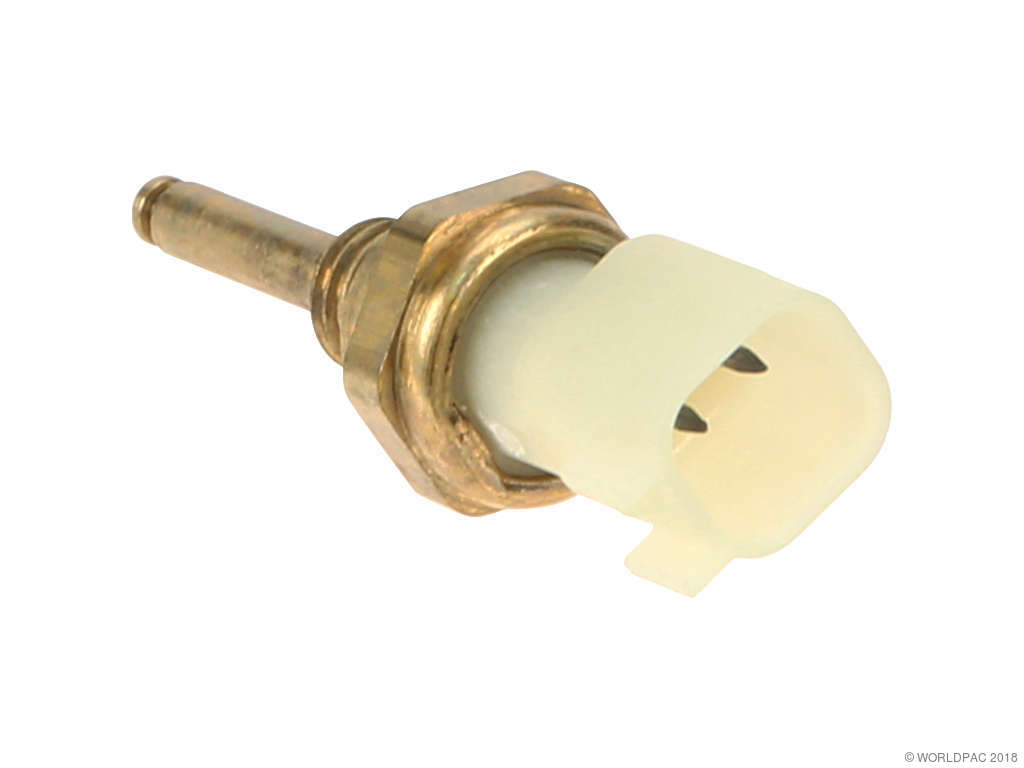
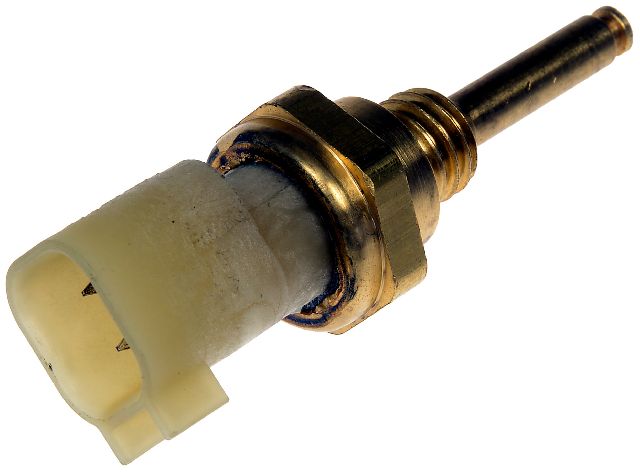
Est. part cost: $20-$500 - Faulty Cylinder Head Temperature (CHT) Sensor ⚪ Low Probability → Shop Engine Cylinder Head While less common on this platform than the engine defect, any sensor can fail. It can provide a false high-temperature reading. However, on these specific vehicles, the overheat reading is almost always real.
How to confirm: Use a scan tool to monitor the CHT sensor reading on a cold engine; it should match the ambient air temperature. If it reads high immediately, the sensor or its circuit is faulty. A faulty sensor will show infinite resistance (open) or zero resistance (shorted) when tested with a multimeter.
Typical fix: Replace the CHT sensor and its electrical connector pigtail if corroded. The OEM part number is typically DY-1144 (Motorcraft) or 3F1Z-12A648-A (Ford).
Est. part cost: $30-$100 - Stuck Thermostat or Failed Water Pump ⚪ Low Probability → Shop Integrated Thermostat Housing Assembly
How to confirm: If the engine is overheating but the radiator and its hoses feel cool, the thermostat may be stuck closed. A failing water pump may make grinding noises or leak from its weep hole.
Typical fix: Replace the thermostat or water pump.
Est. part cost: $50-$400
Diagnosis Steps
- DO NOT continue to drive. Pull over safely and turn off the engine.
- Check the engine coolant level in the reservoir. If it is low, this is a key symptom.
- Visually inspect for obvious external coolant leaks from the radiator, hoses, water pump, and reservoir.
- If no external leaks are found, a professional diagnosis is critical. The next step is a chemical block test to check for combustion gases in the cooling system, which would confirm an internal leak.
- A technician may also use a borescope to visually inspect inside the cylinders for coolant, particularly cylinders 2 and 3.
- If the engine is not actually hot but the gauge reads full hot instantly upon startup, test the CHT sensor and its wiring.
- Before authorizing any repair, provide the vehicle's VIN to a Ford dealer to check for any applicable TSBs, warranty extensions, or customer satisfaction programs. Specifically mention TSB 19-2346 (for 2.0L), TSB 22-2322 (for 1.5L), and Customer Satisfaction Program 21N12 (for 1.5L).
Parts You'll Likely Need
- Engine Short Block Assembly (1.5L)
(OEM #DS7Z-6009-J)— This is the official Ford-recommended repair for the common coolant intrusion failure on the 1.5L engine, as per TSB 22-2322. It features the revised, stronger block design.
Trusted brands: Motorcraft, Ford
OEM price range: $4000-$7000
Aftermarket price range: $3000-$6000 - Engine Long Block Assembly (2.0L)
(OEM #J2GZ-6006-E)— This is the official Ford-recommended repair for the coolant intrusion failure on the 2.0L engine, as per TSB 19-2346 and its successor TSB 22-2229. It is a complete assembly with the updated block design.
Trusted brands: Motorcraft, Ford
OEM price range: $5000-$8000
Aftermarket price range: $4000-$7000 - Cylinder Head Temperature (CHT) Sensor
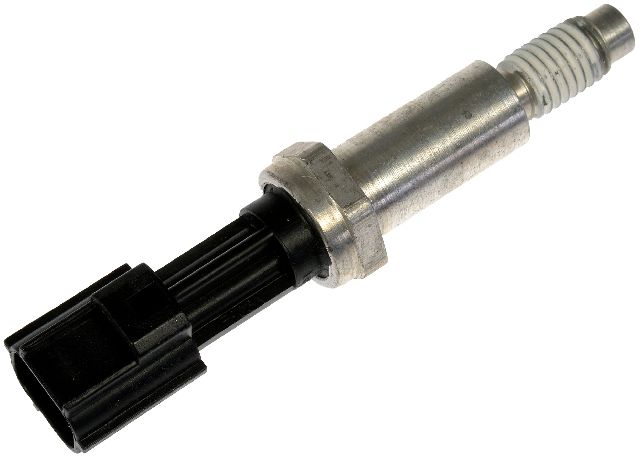
(OEM #DY-1144 (Motorcraft) / 3F1Z-12A648-A (Ford))— In the rare case that the code is caused by a sensor failure and not a real overheat, this part is needed.
Trusted brands: Motorcraft, Bosch, NTK
OEM price range: $50-$80
Aftermarket price range: $25-$50
Related Codes That Often Appear With This One
- P1299 — This code means 'Cylinder Head Overtemperature Protection Active'. It confirms the PCM has entered fail-safe 'limp mode' due to the overheat condition detected by P1285.
- P0217 — A general 'Engine Coolant Overtemperature Condition' code that often appears with the more specific P1285.
- P0300-P0304 — Random or specific cylinder misfire codes (e.g., P0302, P0303). These are triggered when coolant from an internal leak enters the cylinders, fouling spark plugs and disrupting combustion. Cylinders 2 and 3 are most commonly affected.
- P0316 — Means 'Misfire Detected on Startup'. This is a very strong indicator of coolant intrusion, as coolant pools in a cylinder overnight and causes an immediate misfire when the engine is started.
Technical Service Bulletins (TSBs) & Recalls
- TSB 19-2346 - 2.0L Engine Coolant Intrusion into Cylinders.
- TSB 22-2322 - 1.5L Engine Coolant Intrusion into Cylinders. This bulletin notes that P1285 may be stored with or without an illuminated MIL due to coolant intrusion.
- TSB 22-2229 - Engine Coolant Intrusion into the Cylinder. This bulletin addresses conditions where DTCs P1285 and/or P1299 are stored in the PCM.
Platform-Specific Known Issues
- A known design flaw in the 1.5L and 2.0L EcoBoost engines can cause coolant to leak into the cylinders, triggering code P1285. Ford has issued multiple Technical Service Bulletins (TSBs) like 19-2346 (for 2.0L) and 22-2322 (for 1.5L) for this issue.
- Ford initiated Customer Satisfaction Program 21N12 for the 1.5L engine, extending the warranty to 7 years or 84,000 miles for this specific failure, potentially covering the cost of a new short block.
- This problem is the subject of multiple class-action lawsuits (e.g., Miller, et al. v. Ford Motor Company) alleging Ford knowingly sold vehicles with this defect.
Mechanic-Grade Diagnostic Values
- Cylinder Head Temperature (CHT) Sensor Resistance — expected: Approximately 37,000 Ω at 70°F (21°C), 8,000-10,000 Ω at 32°F (0°C), and 250-350 Ω at 176°F (80°C).. Failure: An open circuit (infinite resistance), a short circuit (near-zero resistance), or readings that are dramatically outside the expected range for a given temperature indicate a faulty sensor.
- Cylinder Head Temperature (CHT) PID on Scan Tool (Cold Engine) — expected: The temperature reading should be very close to the ambient air temperature and intake air temperature readings.. Failure: If the CHT reads a very high temperature (e.g., 250°F or higher) immediately after a cold start, the sensor or its wiring circuit is faulty.
- Cooling System Pressure Test (for Coolant Intrusion) — expected: System should hold 20 psi for at least 5 hours with a pressure drop of less than 4 psi.. Failure: A pressure drop greater than 4 psi over 5 hours indicates a leak. Because the block crack can be small, a short-duration test may not reveal the leak, which is why the extended time is specified in Ford's TSBs.
Scan Tool Commands That Help
- Ford IDS (Integrated Diagnostic System) or FORScan: Active Commands > Cooling Fan Control — This bidirectional control allows a technician to manually command the cooling fans on and off to verify the fan motors, relays, and wiring are functioning correctly. This helps rule out a simple cooling fan failure as the cause of an overheat before suspecting a more complex issue like coolant intrusion.
- Ford IDS (Integrated Diagnostic System) or FORScan: Datalogger > CHT PID — Used to monitor the live data from the CHT sensor. This is the primary method to determine if the sensor is reporting a realistic temperature or if it's sending an erratic or falsely high signal, which would point to a sensor/wiring fault instead of a true overheat.
Wiring & Ground Locations
- Cylinder Head Temperature (CHT) Sensor — On both 1.5L and 2.0L engines, the sensor is located on the back of the cylinder head, underneath the intake manifold, making it difficult to access. On the 2.0L, it is near the high-pressure fuel pump housing. Access often requires removing the upper cowl panel and/or intake components.. This is the sensor that directly triggers code P1285. A faulty sensor, corroded connector, or damaged wiring harness in this location can cause a false code, though this is rare on this platform.
- G103 / G104 - Main Engine/PCM Grounds — Ford typically locates primary PCM and engine grounds on the firewall or inner fender aprons. For example, G104 may be on the right fender behind the battery, while G103 could be on the firewall near the right fender. A key ground strap also runs from the rear of the cylinder head to the firewall.. A poor ground connection for the PCM or the CHT sensor's circuit can cause incorrect sensor readings, potentially leading to a false P1285 code. Verifying these grounds are clean and tight is a fundamental step in diagnosing any electrical sensor fault.
Real Owner Repair Stories
- Car Talk Community Forum User (Ford Focus (engine not specified, but exhibits similar P1285 logic)) — Check engine light with code P1285, temperature gauge reading slightly higher than normal (65% of scale) but not fully overheating.
❌ Tried (didn't work) Initial check showed coolant levels were normal.
✅ What actually fixed it In a similar case on a Mustang, replacing a stuck thermostat resolved the intermittent overheating and cleared the P1285 code, representing a less common but possible fix that is not the catastrophic block failure. - Reddit user in r/fordfusion (2018 Ford Fusion SE 1.5L EcoBoost, 96k miles) — Noticed a coolant leak, which led to diagnosis.
❌ Tried (didn't work) N/A, went straight to dealer.
✅ What actually fixed it The dealership confirmed the coolant intrusion issue was covered under Ford's Customer Satisfaction Program 21N12. The engine was replaced. Ford provided financial assistance of $4,649.75 against a total bill of $11,624.38. - NHTSA ODI #11611342 — An owner reported that a mechanic identified the need for a new engine after retrieving codes P0300, P0301-P0304, P0316, P0217, P1285, and/or P1299.
- NHTSA ODI #11569516 — An owner reported that a dealership retrieved several codes including P0217 (coolant over temp), P0303 (#3 misfire), P0316 (misfire on start), P1285 (cylinder over temp), and P1299 (protection activated).
Documented NHTSA Reports
NHTSA ODI #11629319 describes a vehicle with an illuminated malfunction indicator lamp where diagnostic trouble codes including P0300, P0316, P0217, P1285, and P1299 were stored due to coolant intrusion into the cylinder.
OEM Part Supersession History
DS7Z-6009-G (and other early revisions)→DS7Z-6009-J (or later)— The original 1.5L short block had an 'open-deck' design with a 'saw-cut' slit for coolant between the cylinders. This was prone to cracking. The revised 'J' block uses a stronger design with 'cross-drilled' pinhole passages for coolant, providing more surface area for the head gasket to seal.
Heads up: When replacing the short block with the revised 'cross-drilled' design, a different, specific head gasket must be used than the one for the original 'saw-cut' block. Using an engine from a pre-2019 donor vehicle will lead to a repeat failure.JJ7Z-6006-B, JS7Z-6006-A, JS7Z-6006-C→J2GZ-6006-E (or later)— The original 2.0L long block design was prone to cracking and coolant intrusion. The revised J2GZ-6006-E long block features an updated block casting that redesigns the coolant passages to eliminate the weak point.
Heads up: Only the complete long block assembly is recommended for the 2.0L repair, as Ford determined changes to the cylinder head were also part of the fix. Installing a used engine with the old block design will result in a repeat failure.
Model Year Variations Within This Range
- 2013-2016: Earlier 2.0L EcoBoost engines in this range were based on the first-generation design (derived from a Mazda L-series block) and were generally considered more reliable, though not immune to other issues. The coolant intrusion problem is most severe in the second-generation 2.0L engines introduced around 2017.
- 2017-2019: These model years feature the second-generation 1.5L and 2.0L EcoBoost engines with the 'open-deck' block design that is highly susceptible to the coolant intrusion failure. Engines built after April/May 2019 have a revised block design that corrects the flaw.
- 2020+: The 2020 Ford Escape introduced a new 1.5L 3-cylinder 'Dragon' engine, which is a completely different design and is not subject to the 4-cylinder's coolant intrusion issue.
Diagnostic Flowchart
Other Known Issues on This Vehicle
Issues unrelated to this code that are worth knowing about as an owner of this generation:
- 6F35 Transmission Failure 🔴 High — Widespread across the 2013-2019 generation. Symptoms like shuddering, slipping, and hard shifts can appear before 100,000 miles, often leading to complete failure. (Ref: Subject of class-action lawsuits, but no universal recall. Ford has issued various TSBs for specific symptoms.)
- Faulty Door Latches 🔴 High — Common on 2013-2015 models. A component in the latch can break, preventing the door from closing securely or causing it to open while driving. (Ref: Ford Recall 16S30. Dealers will replace all four door latches free of charge.)
- Power Steering System Failure 🟠 Medium — Most prevalent on 2013-2014 models. The system can fail spontaneously, resulting in a sudden loss of power steering assist. (Ref: Ford issued a recall for this issue, but it was limited to certain VINs, and owners outside the group have reported failures.)
- Electrical and Infotainment Glitches 🟡 Low — Particularly common in the 2013 model year, which had numerous recalls for issues with the navigation system, radio, and backup camera. (Ref: Multiple recalls were issued for the 2013 model year to address these electronic issues.)
Used vs. New Parts: Buying Guide for This Vehicle
When a used part is the smart pick: For this specific failure, a used engine assembly is an extremely high-risk purchase and is NOT recommended unless its build date can be definitively proven to be after May 2019. Used parts like sensors, hoses, or radiators are acceptable choices.
Donor-vehicle mileage cap: roughly under 60000 miles for the part to have meaningful remaining life.
What to inspect on the donor part:
- MUST verify the engine build date. It is often on a sticker on the valve cover or stamped on the block. Only consider engines built after May 2019.
- Ask for dealership service records providing proof that the short/long block was already replaced under a TSB or Customer Satisfaction Program 21N12.
- Avoid any engine from a 2017-2018 donor vehicle, as they are almost certain to have the flawed design.
- Check for external signs of overheating on the donor engine, such as discolored or melted plastic components.
OEM-only on this vehicle (don't cheap out):
- Engine Short Block (1.5L)
- Engine Long Block (2.0L)
Aftermarket brands forum-validated for this vehicle:
- For the CHT sensor, brands like Bosch and NTK are considered reliable alternatives to OEM Motorcraft.
Brands owners have reported issues with on this vehicle:
- Any remanufactured engine that reuses the original, flawed engine block casting.
- Coolant 'stop-leak' additives. These are not a permanent fix for a mechanical crack in the engine block and risk clogging the radiator and heater core.
Real Owner Stories
Aggregated from forums and TSBs cited above. Mileages and costs reflect what owners reported in those sources.
2018 Ford Fusion SE 1.5L EcoBoost
Symptoms: Coolant intrusion into the engine cylinders.
What fixed it: Partial coverage under Customer Satisfaction Program 21N12 for engine repair/replacement.
Cost: $11,000-$11,000
Source hint: Reddit: 2018 Ford Fusion SE 1.5L EcoBoost - Coolant Intrusion
2018 Lincoln MKC 2.0L EcoBoost
Symptoms: Coolant intrusion failures and misfire codes.
What fixed it: Engine replacement.
Cost: $7,800-$9,800
Source hint: NHTSA Complaints for 2018 Lincoln MKC
2013-2019 Ford Escape 2.0L EcoBoost
Symptoms: Widespread coolant intrusion issues and high repair costs.
What fixed it: Engine replacement.
Cost: $4,000-$8,000
Source hint: Reddit: PSA: Ford 2.0 EcoBoost Coolant Intrusion — If This Happened to You, Please File an NHTSA Complaint
Related OBD-II Codes
Frequently Asked Questions
Is there a specific Ford program that covers the 1.5L EcoBoost engine for coolant intrusion?
Which Technical Service Bulletin (TSB) should I reference for my 2.0L EcoBoost Escape regarding P1285 and coolant loss?
What is the recommended permanent fix for a 1.5L EcoBoost engine with a cracked block?
Does the 2.0L EcoBoost require the same 'short block' repair as the 1.5L?
My temperature gauge hit max and the car went into 'limp mode.' Could this just be a bad sensor?
Are there any legal actions regarding this engine defect in the Ford Escape?
Helpful Videos

We Have This Part in Stock


The information in this article is provided for general reference and educational purposes only. Vehicle specifications, procedures, and part compatibility can vary by production date, trim level, and region. Always consult your vehicle's factory service manual and verify part numbers before purchasing or performing repairs. Safety-critical components such as airbags, seat belts, and braking systems should be installed by a qualified professional.
- Ford Escape:
- 🧭 Diagnostic Flowchart
- 🎬 Helpful Videos
- 🛍️ Shop This Part
- What's Unique About the 2013-2019 Ford Escape
- Symptoms You May Notice
- Most Likely Causes
- Diagnosis Steps
- Parts You'll Likely Need
- Related Codes That Often Appear With This One
- Technical Service Bulletins (TSBs) & Recalls
- Platform-Specific Known Issues
- Mechanic-Grade Diagnostic Values
- Scan Tool Commands That Help
- Wiring & Ground Locations
- Real Owner Repair Stories
- Documented NHTSA Reports
- OEM Part Supersession History
- Model Year Variations Within This Range
- Other Known Issues on This Vehicle
- Used vs. New Parts: Buying Guide for This Vehicle
- Real Owner Stories
- 2018 Ford Fusion SE 1.5L EcoBoost
- 2018 Lincoln MKC 2.0L EcoBoost
- 2013-2019 Ford Escape 2.0L EcoBoost
- Related OBD-II Codes
- Frequently Asked Questions
- 🎟️ Get 5% Off