

P1285 on 2008-2019 Ford Taurus 3.5L: Cylinder Head Over Temperature Causes and Fixes
Code P1285 on a 3.5L Taurus indicates an engine overheat warning. This is either a false alarm from a failed Cylinder Head Temperature (CHT) sensor or a genuine overheat, often caused by a failing internal water pump. The CHT sensor is a high-labor fix (~$500-$800) as it's under the intake manifold, while a water pump is a catastrophic failure costing $2,000-$4,000+.
- P1285 is a critical overheat warning. Do not drive the vehicle.
- Your first step is to determine if the engine is truly hot or if it's a false alarm. A scan tool check on a cold engine will confirm this instantly.
- If it's a false alarm, the CHT sensor has failed. This is a high-labor repair because the sensor is buried under the intake manifold.
- If it's a real overheat, check for a milky substance in your oil immediately. This signals a failed internal water pump, which is a catastrophic and very expensive repair.
- If the oil is clean, less severe causes like a stuck thermostat or failed cooling fan (on 2011-2012 models) are more likely.
What's Unique About the 2008-2019 Ford Taurus
On the 3.5L Cyclone V6, this code presents a distinct diagnostic challenge with two very different outcomes. A common cause is a faulty Cylinder Head Temperature (CHT) sensor, but unlike on many engines, it is buried under the lower intake manifold, making a simple part replacement a significant, multi-hour labor job. Alternatively, if the engine is genuinely overheating, a primary suspect is the engine's infamous internal, timing-chain-driven water pump. A failure of this pump can leak coolant directly into the engine oil, leading to catastrophic engine failure, an issue well-documented for this engine family across multiple platforms.
Generation note: This guide covers the fifth generation (2008-2009) and sixth generation (2010-2019) Ford Taurus with the 3.5L V6. The engine architecture, including the CHT sensor location under the intake manifold and the internal water pump design, is consistent across this year range, making the causes and fixes applicable to both generations. This issue is also shared by many other Ford and Lincoln vehicles using the transverse-mounted 3.5L and 3.7L Cyclone engines.
Symptoms You May Notice
- Check Engine Light is on
- Temperature gauge reads full HOT, sometimes immediately after starting
- Message on dash display like 'Engine Coolant Overtemperature'
- Engine enters a low-power 'limp mode', often with a wrench light
- Cooling fans running constantly at high speed, even when the engine is cold
- Engine actually overheating, with steam or boiling sounds from the engine bay
- Rough running or stalling if the PCM activates fail-safe mode (P1299)
- Sudden loss of cabin heat can be a precursor if caused by low coolant from a water pump leak.
- Replacing the CHT sensor without first confirming if the engine is actually overheating. If the engine is truly hot, a new sensor will not fix the problem. Always perform the 'cold engine scan tool check'.
- Replacing the thermostat when the actual cause is a failing internal water pump. This wastes time and money and fails to address the critical underlying issue.
- Mistaking the water pump weep hole leak for an oil or A/C compressor leak. 🎬 See: How to locate the water pump weep hole The location is very specific, on the passenger side of the block, and the fluid will be coolant.
Most Likely Causes
- Faulty Cylinder Head Temperature (CHT) Sensor 🔴 High Probability → Shop Engine Cylinder Head The sensor itself is a common failure point. Its location under the intake manifold subjects it to heat soak, and the wiring connector can become brittle. This is often a false alarm, not a real overheat.
How to confirm: With the engine cold (sit overnight), use a scan tool to view live data for the CHT. If the temperature reads high (e.g., 250°F) while ambient and intake air temperatures are low (e.g., 70°F), the sensor has failed and is shorted.
Typical fix: Replace the CHT sensor and the upper and lower intake manifold gaskets. Due to the 3-5 hour labor involved, using an OEM Motorcraft sensor is highly recommended to avoid a repeat repair. Inspect the connector pigtail for damage.
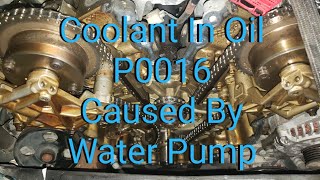
Est. part cost: $100-$200 - Failing Internal Water Pump 🟡 Medium Probability → Shop Engine Water Pump The 3.5L Cyclone V6 features an internal water pump driven by the timing chain. The bearing and seal assemblies are a known high-failure part, leading to coolant leaks either externally or, more dangerously, internally into the oil pan.
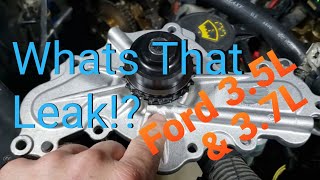
How to confirm: Check for coolant dripping from the 'weep hole' exit on the passenger side of the engine block, just above the A/C compressor and alternator. Also, check the oil dipstick and oil cap for a milky, 'milkshake' appearance, which indicates coolant has contaminated the engine oil and a catastrophic failure is imminent.
Typical fix: This is a major engine service requiring 12+ labor hours. The water pump, timing chains, guides, and tensioners must be replaced. The oil and coolant must be flushed. Repair costs often range from $2,000 to over $4,800.
Est. part cost: $400-$800 - Stuck-Closed Thermostat ⚪ Low Probability → Shop Integrated Thermostat Housing Assembly Thermostats are a standard wear item on all vehicles and can fail in the closed position, preventing coolant circulation and causing a rapid overheat.
How to confirm: After starting a cold engine, feel the upper radiator hose. It should remain cool for several minutes and then become hot suddenly as the thermostat opens (typically around 190-200°F). If the engine overheats but the hose remains cool or only lukewarm, the thermostat is likely stuck closed.
Typical fix: Replace the thermostat and housing assembly. Drain and refill the coolant with Ford-specific fluid.
Est. part cost: $50-$100 - Failed Cooling Fan Assembly ⚪ Low Probability A Ford TSB (12-7-7, though primarily for other issues, mentions fan diagnosis) addresses cooling fan logic, and failures can lead to overheating in traffic or at low speeds.
How to confirm: With the A/C on or when the engine gets hot, verify if the cooling fans are turning on. A scan tool can be used to command the fans on to test their function directly.
Typical fix: Replace the cooling fan motor assembly. On some models, the fan controller may need to be transferred from the old assembly to the new one.
Est. part cost: $200-$400
Rare But Worth Checking
- Damaged CHT Sensor Wiring: The wiring harness leading to the CHT sensor can be damaged by heat or rodents. The connector pigtail (e.g., Motorcraft WPT-984) is a common failure point, with the locking tab often breaking. Given the high labor cost to access the sensor, the wiring should always be inspected thoroughly during the repair.
- Low Coolant Level / Air in System: A simple coolant leak from a hose or the radiator can cause an overheat. If the system is low on coolant, air pockets can form. An air pocket at the CHT sensor can cause it to read an artificially high temperature, triggering the P1285 code even if the rest of the engine is not yet critical.
Diagnosis Steps
- SAFETY: Do not open the coolant reservoir when the engine is hot.
- Check for obvious signs of a genuine overheat: Is there steam from the engine? Is the engine block physically hot? Are coolant hoses pressurized and hot?
- If the engine is cold (e.g., first start of the day), connect a scan tool and observe the Engine Cylinder Head Temperature (CHT/ECT) reading. If it is already high (e.g., >240°F), the CHT sensor or its wiring is faulty. This is the most critical diagnostic step.
- If the CHT reads normal on a cold engine, start the car and monitor the temperature rise. If it overheats, proceed with diagnosing a real cooling system fault.
- Inspect the engine oil on the dipstick and under the oil cap. If it appears milky, frothy, or like chocolate milk, this indicates a catastrophic internal water pump failure. Do not run the engine further.
- If the oil is clean, inspect for external coolant leaks. Check around the thermostat housing, radiator, and all hoses. Specifically look for leaks from the water pump weep hole on the passenger side of the engine, near the alternator/AC compressor.
- Verify cooling fan operation. Turn on the A/C to command the fans on. If they do not run, investigate the fan assembly, relay, and fuses.
- If fans work, oil is clean, and there are no external leaks, the most likely cause of a true overheat is a stuck thermostat. Verify by checking radiator hose temperatures.
Parts You'll Likely Need
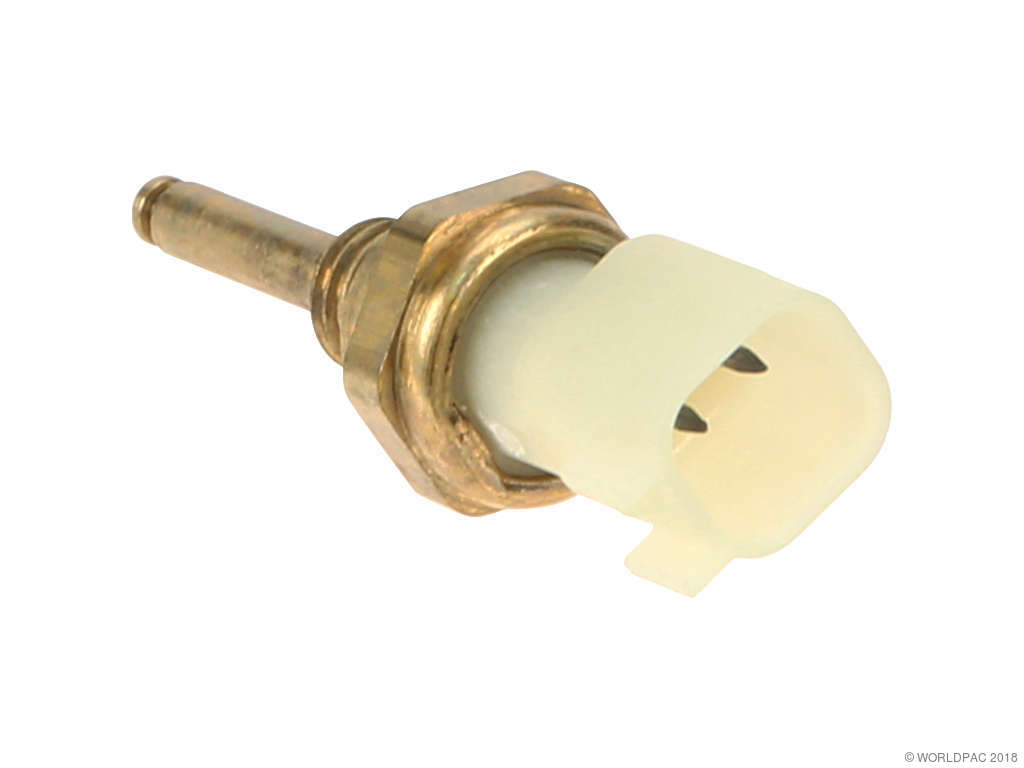
- Cylinder Head Temperature (CHT) Sensor
(OEM #9L8Z-6G004-F (supersedes 9L8Z-6G004-E, 9L8Z-6G004-D))— This sensor is a common failure point that sends false overheat signals. It's the most likely cause if the engine is not actually hot.
Related Codes That Often Appear With This One
- P1299 — This code means 'Cylinder Head Overtemperature Protection Active'. It is the next stage of Ford's fail-safe strategy and confirms the PCM is taking action (like cutting fuel injectors) because of the overheat signal reported by P1285. Seeing both codes strongly suggests the PCM is convinced of an overheat.
- P0217 — This is a more generic code for 'Engine Coolant Over Temperature Condition'. It often appears with P1285 and P1299 during a genuine overheat event, confirming the issue is not just a sensor fault.
- P0018 — This timing correlation code can be a direct consequence of the internal water pump failing and leaking coolant into the oil. The contaminated oil degrades the timing chain guides and tensioners, causing the chain to stretch or jump.
Technical Service Bulletins (TSBs) & Recalls
- TSB 12-7-7: While written for a P0088 code on a 6.4L diesel, its diagnostic procedure involves checking cooling fan operation and PCM logic, which is a relevant step in any overheat diagnosis.
Platform-Specific Known Issues
- The Cylinder Head Temperature (CHT) sensor is located under the lower intake manifold, making replacement a 3-6 hour job, which is unusually difficult for this type of sensor.
- The 3.5L Cyclone V6 uses an internal, timing-chain-driven water pump that is a common point of failure. When it fails, it can leak coolant into the engine oil, causing catastrophic engine damage. This has been the subject of class-action lawsuits.
Mechanic-Grade Diagnostic Values
- CHT Sensor Resistance vs. Temperature — expected: Approx. 37,000 Ω at 68°F (20°C); 9,500 Ω at 122°F (50°C); 1,800 Ω at 212°F (100°C). Resistance decreases as temperature increases.. Failure: Near-zero resistance indicates a shorted sensor (causing P0117, but can contribute to false high readings). Infinite resistance (open circuit) or a value that doesn't change with temperature indicates a failed sensor.
- CHT Sensor Signal Voltage at PCM (KOEO) — expected: On a cold engine, voltage should be between 2.0V and 3.5V depending on ambient temperature. At normal operating temperature (~200°F), voltage should be around 0.6V - 2.1V.. Failure: A voltage reading that is illogical for the current engine state (e.g., very low voltage on a cold engine) points to a sensor or wiring fault.
Scan Tool Commands That Help
- Ford IDS (or equivalent professional scanner): KOEO (Key On, Engine Off) and KOER (Key On, Engine Running) Self-Tests — After an initial code scan, running these comprehensive self-tests can uncover other related but non-active fault codes that may point to intermittent wiring issues or faults in other modules that contribute to the condition.
- Ford IDS (or equivalent professional scanner): Active Command - Cooling Fan Control — When diagnosing a genuine overheat condition, this command allows the technician to bypass the PCM's logic and directly turn the cooling fans on to verify their operation, ruling out a failed fan motor or controller.
Wiring & Ground Locations
- CHT Sensor Connector — In the engine valley, between the cylinder heads, underneath the lower intake manifold.. This 2-wire connector and its pigtail are subjected to intense heat and can become brittle or damaged, causing an open or short in the CHT circuit, leading to false P1285 codes.
- PCM Connector - CHT Signal Wire — Yellow wire with a Green trace at Pin 41 of the main PCM connector.. This is the specific wire that carries the temperature signal to the PCM. Technicians can test for continuity and voltage here to diagnose a wiring harness break without first removing the intake manifold.
- PCM Connector - CHT Ground/Return Wire — Gray wire with a Red stripe at Pin 58 of the main PCM connector.. This is the sensor's reference ground. A fault on this wire can cause incorrect voltage readings, leading to misinterpretation by the PCM.
- G104 / G105 — G104 is on the right side of the engine compartment, often on the fender apron. G105 is on the top right/rear of the engine.. These are primary engine and PCM ground points. A corroded or loose connection can cause erratic voltage and faulty signals for multiple sensors, including the CHT, creating difficult-to-diagnose electrical issues.
Real Owner Repair Stories
- RepairPal Forum User (Ford F-150 (with similar CHT sensor logic)) — Temperature gauge pegging into the red, codes P1285 and P1299 present. No physical signs of overheating.
❌ Tried (didn't work) Replaced the Cylinder Head Temperature (CHT) sensor, Replaced spark plugs and wires, Replaced PCV valve, Replaced oil pressure switch, Replaced upper radiator hose
✅ What actually fixed it The thermostat was stuck. Replacing the thermostat resolved the issue, indicating it was a genuine (but perhaps intermittent) overheating issue, not a sensor fault as initially suspected.
"I Checked Everything" — The Actual Cause
- A smoke test is not applicable for diagnosing the root causes of P1285. However, a parallel scenario exists: a technician may perform all standard electrical checks (confirming sensor resistance and wiring continuity are good) yet still have the code. In such cases, the root cause is often an overlooked mechanical issue causing a *real* but perhaps intermittent overheat, such as a sticky thermostat that doesn't fail consistently during testing.
When the Usual Fixes Don't Work
- While a false alarm from a bad CHT sensor is a very common cause for P1285, it should not be the default diagnosis. In one documented case, an owner replaced the CHT sensor and several other parts to fix a P1285 code that occurred without obvious signs of overheating. The problem persisted until the thermostat was replaced, which ultimately fixed the issue. This proves that a mechanical fault causing a genuine, subtle overheat can mimic the symptoms of a simple sensor failure, making a thorough diagnosis of the entire cooling system essential before committing to the high-labor CHT sensor replacement.
OEM Part Supersession History
9L8Z-6G004-A, 9L8Z-6G004-B, 9L8Z-6G004-D, 9L8Z-6G004-E→9L8Z-6G004-F— Ford periodically updates parts to improve reliability, material composition, or accuracy. The CHT sensor has gone through several revisions.
Model Year Variations Within This Range
- 2013-2019: For the 2013 model year refresh, the standard 3.5L V6 received Twin Independent Variable Camshaft Timing (Ti-VCT), which increased horsepower from ~263 to 288. This does not change the root causes of P1285 but marks a significant engine revision.
- 2010-2019 (SHO Models): On the 3.5L EcoBoost V6 (SHO), the CHT sensor is located on the rear of the right cylinder head, as opposed to the front on the naturally aspirated version. While the code's meaning is the same, physical access differs.
- Approx. 2016+: Ford began transitioning from Motorcraft Orange Coolant (VC-3-D) to Motorcraft Yellow Coolant (VC-13-G). While they are compatible, it's important to use the specified coolant or top off with the same color that is already in the system.
Diagnostic Flowchart
Other Known Issues on This Vehicle
Issues unrelated to this code that are worth knowing about as an owner of this generation:
- Internal Water Pump Failure 🔴 High → Shop Engine Water Pump — Very common, typically between 80,000 and 150,000 miles. Considered an eventual failure point by many technicians.
- Power Transfer Unit (PTU) Failure (AWD Models) 🔴 High — Common on AWD models, especially after 70,000 miles. The unit is located near the hot exhaust, has a small fluid capacity, and lacks a drain plug, leading to fluid breakdown and bearing failure.
- Electronic Throttle Body (ETB) Failure 🟠 Medium — Widespread issue causing sudden limp mode. So common Ford issued Customer Satisfaction Program 13N03 (now expired) extending the warranty. (Ref: Customer Satisfaction Program 13N03)
- Stretched Timing Chain 🟠 Medium — Often occurs as a direct result of coolant contamination from a failing water pump, which ruins guides and tensioners. Can also occur independently at high mileage (>120,000 miles).
Used vs. New Parts: Buying Guide for This Vehicle
When a used part is the smart pick: For this repair, obtaining a used part from a salvage yard is generally not recommended for the primary failure components. However, if the intake manifold is cracked or damaged during removal, a used manifold is a viable and cost-effective replacement.
Donor-vehicle mileage cap: roughly under 100000 miles for the part to have meaningful remaining life.
What to inspect on the donor part:
- For an intake manifold, ensure all mounting points are intact and there are no visible cracks or heat damage.
- Verify the donor vehicle was not in a front-end collision that could have stressed the plastic.
- Check that all threaded inserts for sensors or brackets are clean and undamaged.
OEM-only on this vehicle (don't cheap out):
- Cylinder Head Temperature (CHT) Sensor: Due to the extremely high labor cost to access this part, the risk of a premature failure from a non-OEM sensor is not worth the small cost savings. Always use a Motorcraft sensor.
- Internal Water Pump: This is a catastrophic failure point for the engine. Using a non-OEM pump introduces significant risk. The OEM part is the most trusted option for longevity.
Aftermarket brands forum-validated for this vehicle:
- Fel-Pro: Widely trusted for the required upper and lower intake manifold gaskets.
- Gates: A reputable and reliable brand for thermostats if an OEM Motorcraft part is not available.
Brands owners have reported issues with on this vehicle:
- Unbranded 'white-box' sensors or water pumps from online marketplaces. The calibration and material quality are often poor, leading to repeat failures.
Real Owner Stories
Aggregated from forums and TSBs cited above. Mileages and costs reflect what owners reported in those sources.
2008-2019 Ford Taurus 3.5L Cyclone V6
Symptoms: Owner noted a sudden loss of cabin heat followed by an overtemperature message on the dash. Upon inspection, the oil on the dipstick looked like chocolate milk.
What fixed it: Complete replacement of the internal water pump, timing chains, guides, and tensioners, followed by an oil and coolant flush.
Cost: $2,000-$4,800
Source hint: https://www.bobistheoilguy.com/forums/threads/ford-3-5l-3-7l-water-pump-failures.379633/
2008-2019 Ford Taurus 3.5L Cyclone V6
Symptoms: The temperature gauge spiked to hot immediately after starting the car, and the cooling fans stayed on high speed constantly even though the engine was physically cold.
What fixed it: Replacement of the Cylinder Head Temperature (CHT) sensor and the upper and lower intake manifold gaskets.
Cost: $100-$200
Source hint: Article Context
2010-2019 Lincoln MKT (3.5L V6)
Symptoms: Owner reported a major internal water pump failure on this platform-mate, which shares the same Cyclone engine and transverse layout as the Taurus.
What fixed it: Replacement of the internal, timing-chain-driven water pump.
Cost: $4,800
Source hint: https://www.reddit.com/r/AskMechanics/comments/10h9v1t/whats_a_fair_price_for_replacing_internal_water/
Related OBD-II Codes
Frequently Asked Questions
Why is my 3.5L Taurus temperature gauge showing full hot immediately after a cold start?
Is there a TSB for cooling fan issues on the Ford Taurus?
How can I tell if my P1285 code is caused by the internal water pump failure?
Why is the CHT sensor replacement so expensive on the 3.5L Cyclone V6?
Can a P1285 code cause my Taurus to lose power?
Helpful Videos
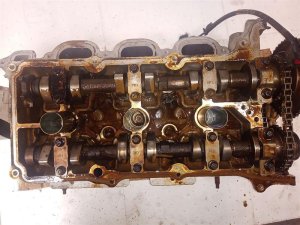
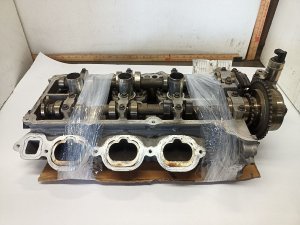
Used OEM Parts in Stock
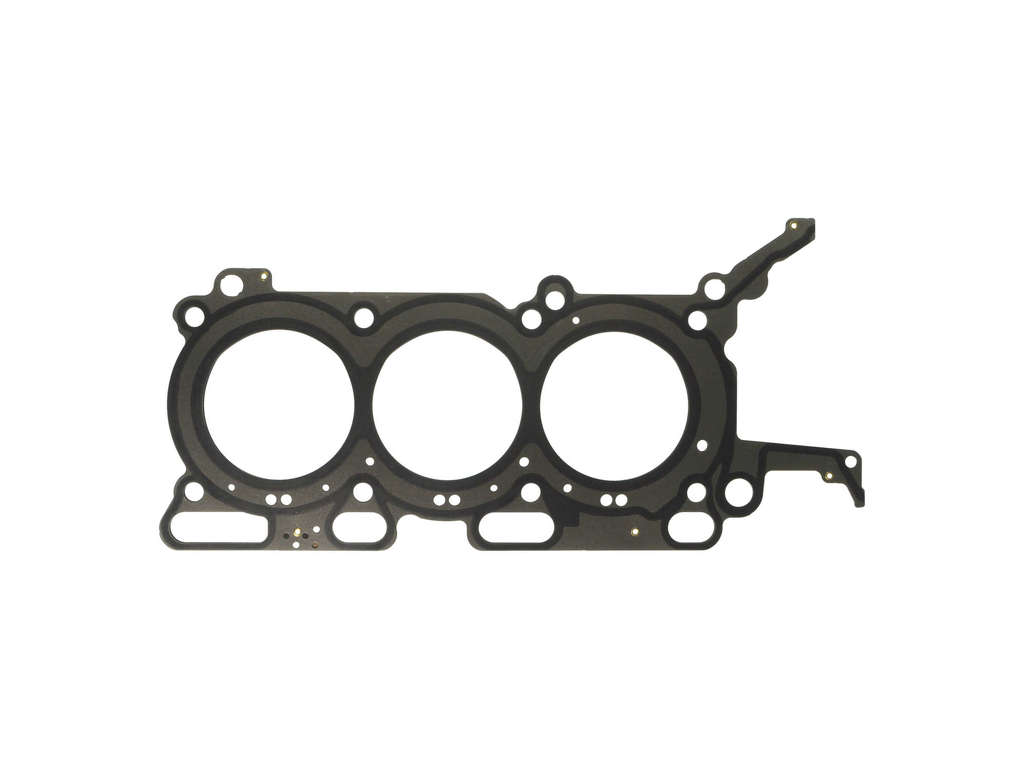
New Aftermarket Parts Available


The information in this article is provided for general reference and educational purposes only. Vehicle specifications, procedures, and part compatibility can vary by production date, trim level, and region. Always consult your vehicle's factory service manual and verify part numbers before purchasing or performing repairs. Safety-critical components such as airbags, seat belts, and braking systems should be installed by a qualified professional.
- Ford Taurus:
- 🧭 Diagnostic Flowchart
- 🎬 Helpful Videos
- 🛍️ Shop This Part
- What's Unique About the 2008-2019 Ford Taurus
- Symptoms You May Notice
- Most Likely Causes
- Rare But Worth Checking
- Diagnosis Steps
- Parts You'll Likely Need
- Related Codes That Often Appear With This One
- Technical Service Bulletins (TSBs) & Recalls
- Platform-Specific Known Issues
- Mechanic-Grade Diagnostic Values
- Scan Tool Commands That Help
- Wiring & Ground Locations
- Real Owner Repair Stories
- "I Checked Everything" — The Actual Cause
- When the Usual Fixes Don't Work
- OEM Part Supersession History
- Model Year Variations Within This Range
- Other Known Issues on This Vehicle
- Used vs. New Parts: Buying Guide for This Vehicle
- Real Owner Stories
- 2008-2019 Ford Taurus 3.5L Cyclone V6
- 2008-2019 Ford Taurus 3.5L Cyclone V6
- 2010-2019 Lincoln MKT (3.5L V6)
- Related OBD-II Codes
- Frequently Asked Questions
- 🎟️ Get 5% Off