

P1285 on 2013-2023 Ford Transit Connect 2.0L: Cylinder Head Overheat Causes and Fixes
This code indicates a critical cylinder head overheat. On the 2.0L engines used in the Transit Connect (Duratec or GDI), this is most commonly caused by a faulty Cylinder Head Temperature (CHT) sensor or its wiring, which is a relatively inexpensive fix. However, it can also indicate a genuine and severe overheat from a failed water pump or thermostat. Do not drive the vehicle; immediate diagnosis is required to distinguish between a minor sensor fault and a major cooling system failure to preve
- P1285 is a critical alert for a hot cylinder head. Stop driving immediately to prevent severe engine damage.
- There are two main possibilities: a minor electrical fault (CHT sensor) or a major mechanical failure (cooling system or engine block).
- On the 2.0L engine, this code could signal a known, catastrophic engine flaw where coolant leaks into the cylinders, requiring a full engine replacement.
- Diagnosis must begin by confirming if the engine is actually overheating. Use an infrared thermometer on the cylinder head.
- If an internal leak is suspected, a borescope inspection for coolant in the cylinders is the definitive diagnostic step before committing to an engine replacement.
What's Unique About the 2013-2023 Ford Transit Connect
The user-specified range covers two distinct generations with different 2.0L engines: the 2013 model year (first-gen) with a 2.0L Duratec I4, and the 2019-2023 model years (second-gen facelift) with a 2.0L GDI I4. Unlike the 2.0L *EcoBoost* engines found in other Fords like the Escape and Fusion, these naturally aspirated 2.0L engines are NOT known for the widespread 'coolant intrusion' issue described in TSBs 19-2346 and 22-2229. Therefore, for a Transit Connect with a 2.0L engine, a P1285 code is much more likely to be a CHT sensor/wiring fault than a cracked engine block.
Generation note: This guide applies to the North American Ford Transit Connect models equipped with a 2.0L I4 engine. This includes the first-generation model (specifically model year 2013, which used a 2.0L Duratec) and the facelifted second-generation models (2019-2023), which used a 2.0L GDI engine. The guide does NOT apply to models with the 2.5L I4 or the 1.6L EcoBoost I4. The second-generation models from 2022 onwards are rebadged Volkswagen Caddys and do not share these powertrains.
Symptoms You May Notice
- Temperature gauge reads HOT, often pegged in the red
- Check engine light is on
- Engine runs rough or misfires (as PCM enters fail-safe mode)
- Reduced engine power or 'limp mode' is active
- White smoke from the exhaust (a sign of coolant burning in a true overheat/head gasket failure)
- Noticeable loss of coolant with no visible external leak (indicates internal leak or head gasket failure)
- Cooling fans running constantly at high speed, even when engine is cold
- Vehicle may not start if the CHT sensor sends a critically high reading to the PCM
- Immediately replacing the CHT sensor without first checking if the engine is actually overheating. An infrared thermometer can quickly determine if the overheat condition is real or a sensor error.
- Mistaking the P1285 code for the EcoBoost-specific coolant intrusion problem and recommending engine replacement without proper diagnosis. This engine is not part of that known issue.
- Replacing the thermostat or water pump when the root cause is a simple corroded CHT sensor connector.
Most Likely Causes
- Faulty Cylinder Head Temperature (CHT) Sensor or Connector 🔴 High Probability → Shop Engine Cylinder Head The CHT sensor is located in a recess on the cylinder head that can collect water and debris, often from a clogged valve cover drain. This leads to corrosion of the sensor and its electrical connector, causing false high-temperature readings. TSB 12-5-5 was issued for the related Ford Fusion for P1285 caused by this exact issue.
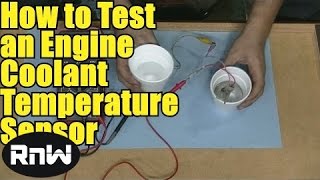
How to confirm: With a cold engine, use a scan tool to check the CHT reading. If it shows a very high temperature, the sensor or circuit is faulty. 🎬 Learn how to test the temperature sensor with a multimeter Visually inspect the sensor and connector (located between the center spark plugs) for moisture, green corrosion, or physical damage.
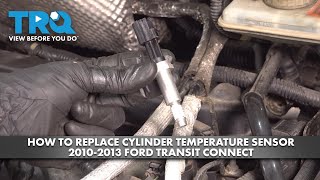
Typical fix: Replace the CHT sensor and, if corroded, the pigtail connector. 🎬 Watch this step-by-step CHT sensor replacement walkthrough Apply dielectric grease to the new connector to prevent future moisture intrusion. Ensure the valve cover drain path is clear.
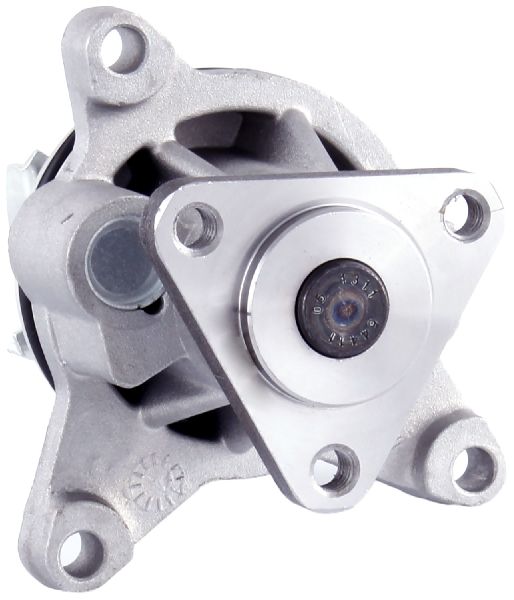
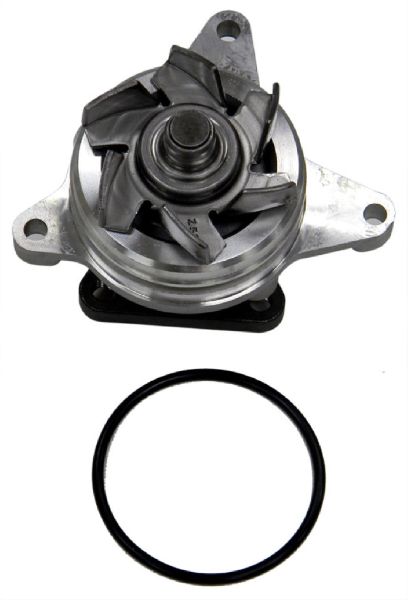
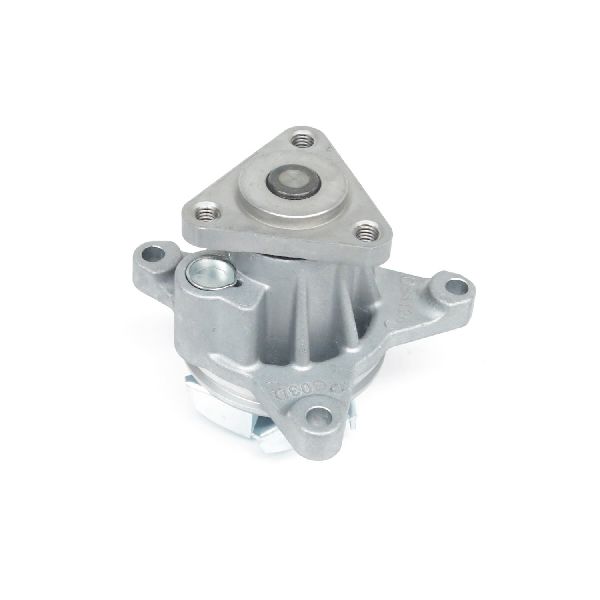
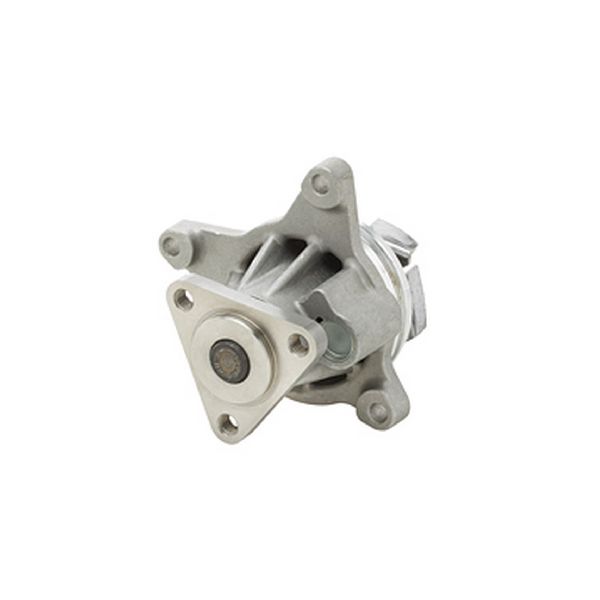
Est. part cost: $30-$90 - Failed Water Pump 🟡 Medium Probability → Shop Engine Water Pump The water pump is a standard wear item. A failure will cause a genuine overheat condition, triggering a P1285.
How to confirm: Look for coolant leaks from the pump's weep hole, often visible as drips or crusty residue on the side of the engine block. A grinding or whining noise from the belt area can also indicate a failing pump bearing. Use an infrared thermometer to confirm the cylinder head is actually overheating.
Typical fix: Replace the water pump and serpentine belt.
Est. part cost: $100-$250 - Stuck Thermostat 🟡 Medium Probability → Shop Integrated Thermostat Housing Assembly
How to confirm: If the engine is confirmed to be overheating (via infrared thermometer) but the radiator and its large upper and lower hoses feel cool or only lukewarm, the thermostat is likely stuck closed, preventing coolant circulation.
Typical fix: Replace the thermostat and gasket.
Est. part cost: $25-$75 - Internal Coolant Intrusion (Cracked Head/Block or Failed Head Gasket) ⚪ Low Probability While not prone to the specific EcoBoost block cracking issue, any engine can suffer a head gasket failure or crack from severe overheating. This is usually a *result* of another cooling system failure, not the initial cause.
How to confirm: Perform a cooling system pressure test; if it fails with no external leak, use a borescope to inspect cylinders for coolant. A chemical block test can also detect combustion gases in the coolant.
Typical fix: Requires major engine repair, such as cylinder head replacement/machining or engine replacement.
Est. part cost: $2000-$7000
Rare But Worth Checking
- Failing Coolant Reservoir (Degas Bottle) Cap: The system cap is responsible for maintaining pressure. If it fails, the coolant can boil at a lower temperature, leading to an overheat condition. It's an inexpensive part to replace as a preventative measure.
- Blocked Radiator or Cooling Fan Failure: An external blockage (dirt, debris) on the radiator or a non-functioning cooling fan can cause a genuine overheat, especially at low speeds or in traffic. On the 2010-2013 models, cooling fan issues are a known problem. 🎬 See how to diagnose a non-functioning cooling fan
Diagnosis Steps
- Check the coolant level in the reservoir. Note if it is low.
- Visually inspect for signs of white smoke from the exhaust, which indicates burning coolant.
- Use an infrared thermometer to measure the temperature of the cylinder head. If it is not hot (e.g., under 212°F / 100°C) but the gauge reads high, the primary suspect is a faulty CHT sensor or wiring.
- If a faulty sensor is suspected, disconnect the battery, remove the engine cover, and inspect the CHT sensor connector (located on top of the head, between the center spark plugs/ignition coils) for moisture or green corrosion.
- If the engine is confirmed to be physically hot, perform a cooling system pressure test to check for external leaks from hoses, the radiator, or the water pump.
- If the pressure test fails but no external leak is found, this strongly suggests an internal leak (head gasket).
- Perform a chemical block test (combustion leak test) to check for exhaust gases in the coolant system.
- Use a borescope to visually inspect the inside of the cylinders for the presence of coolant, which is a definitive test for an internal leak.
Parts You'll Likely Need
- Cylinder Head Temperature (CHT) Sensor
(OEM #1S7F6G004AB)— The most common failure point due to corrosion or internal fault, causing false overheat signals.
Trusted brands: Motorcraft, Standard Motor Products, NGK
OEM price range: $40-$60
Aftermarket price range: $25-$45 - CHT Sensor Pigtail Connector
(OEM #Motorcraft WPT-1285)— Often corrodes along with the sensor due to water intrusion, requiring replacement.
Trusted brands: Motorcraft, Dorman, Wells
OEM price range: $35-$50
Aftermarket price range: $15-$30 - Engine Water Pump — A common wear item that will cause a genuine overheat condition if it fails.
Trusted brands: Motorcraft, Gates, GMB
OEM price range: $150-$250
Aftermarket price range: $80-$150 - Engine Long Block Assembly — This is the required fix in the rare event of a cracked block or if the engine is catastrophically damaged by a severe, unresolved overheat.
Trusted brands: Motorcraft
OEM price range: $5000-$7000
Aftermarket price range: $4000-$6000
Related Codes That Often Appear With This One
- P1299 — This code, 'Cylinder Head Overtemperature Protection Active,' is the second stage of Ford's fail-safe cooling. It is set almost immediately after P1285 as the PCM begins to shut down cylinders to prevent damage.
- P0217 — A generic code for 'Engine Coolant Over-Temperature Condition.' It often appears with P1285 to indicate a confirmed overheating event.
- P0300-P0304 — These are misfire codes. They can be triggered by the P1299 fail-safe mode shutting down cylinders, or by coolant entering the combustion chamber from a failed head gasket.
Technical Service Bulletins (TSBs) & Recalls
- TSB 22-2229 / 19-2346: Pertains to 2.0L *EcoBoost* engines (not used in Transit Connect) with coolant intrusion issues. These TSBs list P1285 as a possible code but are not directly applicable to the Transit Connect's naturally aspirated 2.0L engine.
- TSB 11-10-5: Issued for various 2010-2012 Ford models including the Focus (which shares its engine with the Transit Connect), this TSB addresses DTC P0128 along with CHT sensor codes P1285 and P1299, noting the cause can be water contamination in the CHT sensor connector.
Platform-Specific Known Issues
- The 2.0L EcoBoost engine used in the Transit Connect shares its design with engines known to have a coolant intrusion problem. TSBs 19-2208, 19-2346, and 22-2229 detail how a flaw in the engine block design allows coolant to leak into the cylinders, causing overheating, misfires, and codes P1285 and P1299. The only remedy for this condition is a full replacement of the engine long block.
Mechanic-Grade Diagnostic Values
- Cylinder Head Temperature (CHT) Sensor Resistance — expected: Approximately 37,000 Ω at 70°F (21°C), dropping to around 2,000-3,000 Ω at 176°F (80°C).. Failure: Infinite resistance (open circuit), near-zero resistance (short circuit), or values that do not correspond to the current engine head temperature.
- CHT Sensor Voltage at PCM (Key On, Engine Off) — expected: Approximately 2.0V - 3.0V on a cold engine.. Failure: Voltage is stuck near 5V (indicates an open circuit or unplugged sensor) or 0V (indicates a short to ground).
- CHT Sensor Voltage at PCM (Normal Operating Temperature) — expected: Approximately 0.5V - 0.6V.. Failure: Voltage remains high (e.g., over 1.5V) when the engine is fully warmed up, indicating a faulty sensor or poor connection.
- VREF at CHT Connector (Key On, Sensor Unplugged) — expected: One pin should show a steady 5-volt reference signal from the PCM.. Failure: Absence of the 5V reference points to a wiring issue between the PCM and the sensor, or an internal PCM fault.
Scan Tool Commands That Help
- Ford IDS (Integrated Diagnostic System): KOEO & KOER Self-Tests (Key On Engine Off / Key On Engine Running) — To command the PCM to run an on-demand test of all its sensor circuits, including the CHT. This can confirm if the P1285 fault is 'hard' (currently present) or intermittent.
- Ford IDS (Integrated Diagnostic System): Datalogger - Monitor CHT PID — To view the live temperature and voltage being reported by the CHT sensor. This is essential for differentiating a true overheat from a sensor fault. On a cold engine, the PID should show ambient temperature; if it reads max hot, the sensor or circuit is at fault.
Wiring & Ground Locations
- CHT Sensor Connector — On top of the cylinder head, located in the valley between the two center spark plugs/ignition coils. It is often covered by a rubber boot.. This connector is the most common failure point. It is located in a recess that collects water and debris, leading to corrosion that causes a false overheat signal and triggers P1285.
- PCM Connector C175e, Pin 41 (Varies by Year/Engine) — At the Powertrain Control Module (PCM), which is typically located on the firewall in the engine bay.. This is the specific pin for the CHT signal wire on many Ford 2.0L engines. A technician can back-probe this pin to test for correct voltage directly at the PCM, which isolates the entire circuit from the module itself.
- Engine Control Wiring Harness Ground (e.g., G101/G102) — Typically located on the left front of the engine compartment or on the engine block itself.. A loose or corroded main engine ground can cause fluctuating voltage readings for multiple sensors, including the CHT, leading to erratic behavior and false codes.
Real Owner Repair Stories
- Ford Transit Connect Forum user (Ford Transit Connect (year not specified, but issue applies to the platform)) — Codes P0217, P1285, and P1299. Scan tool showed CHT reading 250°F on a cold engine.
❌ Tried (didn't work) Testing the CHT sensor resistance, which read normal for a cold engine.
✅ What actually fixed it The root cause was a plugged valve cover drain hole, which caused water to pool in the CHT sensor connector. Clearing the drain hole and cleaning the water out of the electrical connector resolved the false overheat codes.
OEM Part Supersession History
1S7Z-6G004-AA→1S7F-6G004-AB (engineering number), also sold as 8S4Z-6G004-A— Part number consolidation and minor revisions over time.
Heads up: The core sensor design is consistent across many Ford 2.0L, 2.3L, and 2.5L Duratec-family engines from the 2000s and 2010s. Ensure the listed part number is cross-referenced for the specific 2013-2023 Transit Connect application.CU2Z-14S411-AMA→WPT-1285 (service number)— This is the service pigtail connector for the CHT sensor.
Heads up: This is the correct 2-wire pigtail for replacing a corroded CHT sensor connector on this platform.
Model Year Variations Within This Range
- 2013: This model year used the 2.0L Duratec engine. The CHT sensor and its failure mode (water in connector) are well-documented for this engine family, shared with the Ford Focus of the same era.
- 2019-2023: These models use a newer 2.0L GDI (Gasoline Direct Injection) engine. While it also uses a CHT sensor, the exact location and surrounding components may differ slightly from the earlier Duratec. However, the fundamental principle of operation and failure modes (sensor fault, connector corrosion, or true overheat) remain the same.
Diagnostic Flowchart
Other Known Issues on This Vehicle
Issues unrelated to this code that are worth knowing about as an owner of this generation:
- Automatic Transmission Failure (2019+ 8-Speed & 2013 4-Speed) 🔴 High — Commonly reported between 70,000 and 150,000 miles. The 2019+ 8-speed (8F35) is known for harsh shifting, torque converter shudder, and complete failure. The 2013 model's 4-speed automatic is also cited for premature failure. (Ref: Recall 20S49 for 2019-2020 models addresses loose accumulator bolts that can cause a fluid leak and failure.)
- Shifter Cable Bushing Failure (2013+) 🟠 Medium — Widespread across many Ford models. The bushing degrades, preventing the vehicle from being securely placed in Park. (Ref: Recall 21S24 and 22S43 address this issue, requiring dealer replacement of the bushing and addition of a protective cap.)
- Faulty Idle Air Control (IAC) Valve (2010-2013 2.0L Duratec) 🟡 Low — Very common issue causing rough idle, stalling at stops, and code P0505. Often caused by carbon buildup. (Ref: TSB 12-7-4)
- Sliding Door and Rear Door Hinge Wear 🟡 Low — Common on fleet vehicles with high usage. Hinges wear and rust, and door checks can break.
Used vs. New Parts: Buying Guide for This Vehicle
When a used part is the smart pick: For this repair, using used parts is generally not recommended. The primary failure parts are low-cost electronic sensors and wiring that are prone to age-related failure and corrosion. A used CHT sensor or pigtail offers minimal cost savings and carries a high risk of being near the end of its service life or already compromised.
Donor-vehicle mileage cap: roughly under 50000 miles for the part to have meaningful remaining life.
What to inspect on the donor part:
- If considering a used water pump or thermostat, source it from a documented low-mileage, front-end collision vehicle.
- Avoid parts from vehicles that show signs of sitting for long periods (heavy corrosion, rodent damage to wiring).
- Never buy a used CHT sensor or pigtail connector; the risk of pre-existing corrosion or heat fatigue is too high.
OEM-only on this vehicle (don't cheap out):
- Cylinder Head Temperature (CHT) Sensor: Given its criticality and low cost, using an OEM Motorcraft sensor is strongly advised to ensure accurate readings and longevity.
- CHT Sensor Pigtail Connector: An OEM Motorcraft (WPT-1285) pigtail ensures correct wire gauge, color-coding, and weather sealing.
Aftermarket brands forum-validated for this vehicle:
- Standard Motor Products (SMP) and NGK/NTK are generally considered reliable aftermarket alternatives for sensors if Motorcraft is unavailable.
- Gates is a well-regarded brand for aftermarket water pumps and thermostats.
Brands owners have reported issues with on this vehicle:
- Avoid unbranded, 'white-box' sensors from online marketplaces. These often have poor quality control, leading to inaccurate temperature readings, premature failure, and a repeat of the P1285 code.
Real Owner Stories
Aggregated from forums and TSBs cited above. Mileages and costs reflect what owners reported in those sources.
2015 Ford Transit Connect XLT 2.0L
Symptoms: The vehicle was incorrectly reporting an overheat event.
What fixed it: The issue was caused by water collecting inside the cylinder head temperature (CHT) sensor's connector.
Source hint: Ford Transit Connect Forum
2019 Ford Transit Connect
Symptoms: Transmission failure, including slipping and torque converter issues.
What fixed it: Potential legal action or full transmission replacement; some models were subject to Recall 20S49 for loose accumulator bolts.
Source hint: Reddit r/FordTransitConnect
Related OBD-II Codes
Frequently Asked Questions
Does TSB 22-2229 regarding coolant intrusion apply to my 2.0L Transit Connect?
I have a 2015 Transit Connect with a P1285 code but the engine isn't actually hot. What is the most likely cause?
Is there a TSB for the CHT sensor issue on the 2.0L engine used in the Transit Connect?
My 2019 Transit Connect is showing P1285 and shifting harshly. Are these related?
Where is the CHT sensor located on the 2.0L Transit Connect engine?
Can a faulty shifter bushing cause a P1285 code?
Helpful Videos
We Have This Part in Stock

The information in this article is provided for general reference and educational purposes only. Vehicle specifications, procedures, and part compatibility can vary by production date, trim level, and region. Always consult your vehicle's factory service manual and verify part numbers before purchasing or performing repairs. Safety-critical components such as airbags, seat belts, and braking systems should be installed by a qualified professional.
- Ford Transit Connect:
- 🧭 Diagnostic Flowchart
- 🎬 Helpful Videos
- 🛍️ Shop This Part
- What's Unique About the 2013-2023 Ford Transit Connect
- Symptoms You May Notice
- Most Likely Causes
- Rare But Worth Checking
- Diagnosis Steps
- Parts You'll Likely Need
- Related Codes That Often Appear With This One
- Technical Service Bulletins (TSBs) & Recalls
- Platform-Specific Known Issues
- Mechanic-Grade Diagnostic Values
- Scan Tool Commands That Help
- Wiring & Ground Locations
- Real Owner Repair Stories
- OEM Part Supersession History
- Model Year Variations Within This Range
- Other Known Issues on This Vehicle
- Used vs. New Parts: Buying Guide for This Vehicle
- Real Owner Stories
- 2015 Ford Transit Connect XLT 2.0L
- 2019 Ford Transit Connect
- Related OBD-II Codes
- Frequently Asked Questions
- 🎟️ Get 5% Off