

P1285 on 2002-2007 Jeep Cherokee CRD: Fuel Injection Pump Controller Always On
This code means the control circuit for the high-pressure fuel pump is stuck on. This is often caused by a faulty fuel pump relay or a short in the wiring harness, and can lead to a no-start condition or a drained battery after the engine is shut off.
- P1285 on a Jeep CRD means 'Fuel Injection Pump Controller Always On', NOT 'Cylinder Head Over Temperature' as it does on Fords.
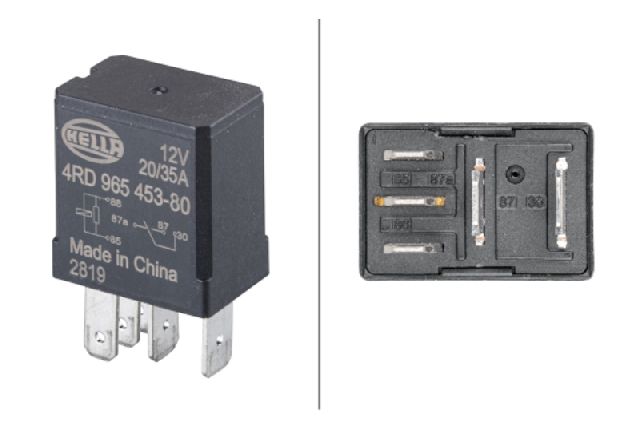
- The most likely cause is a simple, inexpensive fuel pump relay (Mopar P/N 56006709, superseded by 4727370AA) that is stuck in the 'on' position.
- A wiring short is the second most likely cause, with a known chafe point in the harness near the battery and another behind the fuel filter bracket.
- This code is for the high-pressure fuel pump (CP3) control circuit; US-spec Liberty CRDs do not have a factory in-tank lift pump to diagnose.
What's Unique About the 2002-2007 Jeep Cherokee
It is critical to know that the definition for P1285 on a Jeep CRD is completely different from its more common meaning on Ford vehicles. On Fords, P1285 means 'Cylinder Head Over Temperature'. On your Jeep CRD, this code is strictly related to the diesel fuel system, specifically the power supply for the high-pressure fuel pump controller. Applying the Ford diagnosis to your Jeep will lead to incorrect and expensive repairs.
Symptoms You May Notice
- Check Engine Light (CEL) is illuminated
- Engine may be difficult to start, or cranks but won't start.
- Potential no-start condition, especially after being shut off hot.
- Audible humming from the fuel pump relay in the Power Distribution Center (fuse box) after the engine is turned off
- Battery drain when the vehicle is parked overnight or for extended periods
- Replacing the high-pressure fuel pump (CP3). The code indicates a problem with the *control* circuit, not necessarily the pump itself. If the pump runs, it is likely not the source of a P1285.
- Diagnosing an overheating condition. This is the most common misdiagnosis due to the code's definition on Ford vehicles. P1285 on a Jeep CRD is not related to engine temperature.
- Replacing the in-tank fuel pump. North American models of the Jeep Liberty CRD were not equipped with an in-tank lift pump from the factory, though the wiring and relay location exist for it. The issue lies with the high-pressure pump circuit.
Most Likely Causes
- Faulty Fuel Pump Relay 🔴 High Probability Relays are electro-mechanical switches with a finite lifespan. The internal contacts can arc and eventually weld themselves together, causing the circuit to remain permanently closed. This is a common failure point across many Chrysler/Jeep/Dodge vehicles of this era.
How to confirm: Locate the fuel pump relay in the Power Distribution Center (fuse box under the hood). The diagram is on the underside of the lid. Swap it with an identical relay from a non-critical circuit (like the horn or A/C). 🎬 Watch: How to diagnose a no-start using the relay swap method. If the P1285 code is resolved and the other system (e.g., the horn) now stays on or fails, the relay is confirmed bad. A definitive test involves checking for continuity between terminals 30 and 87 while applying 12V to terminal 86 and ground to terminal 85; if there is continuity without power applied, the relay is stuck closed.
Typical fix: Replace the fuel pump relay. The original Mopar part number was 56006709, which has been superseded by 4727370AA.
Est. part cost: $10-$30 - Shorted Wiring Harness 🟡 Medium Probability Vibrations and heat in the engine bay can cause wiring insulation to chafe and wear through over time, leading to shorts to power. A known problem area on the Liberty KJ is the wiring harness on the driver's side (LHS) where it passes under a metal guide near the battery on its way to the ECM. Another known chafe point is where the harness passes behind the fuel filter mounting bracket.
How to confirm: With the relay removed, use a multimeter to check for voltage at the relay's control-side socket (terminal 86) with the key off. There should be no voltage. If voltage is present, the circuit is shorted to a power source. Trace the Light Blue/Brown wire from the relay socket back toward the ECM (Pin 45 on connector C3), paying close attention to the harness routing near the battery and fuel filter bracket.
Typical fix: Isolate the shorted section of wire, repair it with a new section of wire using solder and heat-shrink tubing, and protect it from future damage with loom or tape.
Est. part cost: $5-$20 - Faulty Engine Control Module (ECM) ⚪ Low Probability
How to confirm: This is a diagnosis of last resort. If the relay has been replaced with a known-good unit and the wiring harness has been checked and confirmed to have no shorts, the internal driver circuit within the ECM that controls the relay may have failed in a closed state. This requires professional-level diagnostics to confirm before replacement.
Typical fix: Replace and reprogram the Engine Control Module. This is an expensive part and requires dealer or specialist tools like a DRB III for programming the VIN and pairing with the Sentry Key Immobilizer Module (SKIM).
Est. part cost: $300-$800
Diagnosis Steps
- Verify that the code P1285 is present using an OBD-II scanner.
- Turn the ignition to the 'OFF' position. Listen carefully in the engine bay for any humming or clicking sounds from the Power Distribution Center (fuse box). A continuous hum could be the stuck relay.
- Locate the fuel pump relay in the Power Distribution Center. The underside of the lid should have a diagram identifying it.
- Swap the fuel pump relay with an identical relay from a less critical system (e.g., horn, fog lights). These are often the same part number.
- Clear the trouble code, start the vehicle, run it, then shut it off. Wait a few minutes and check if the code returns.
- If the code does not return, the original relay was faulty. Replace the bad relay with a new part (e.g., Mopar 4727370AA).
- If the code returns, remove the relay again. Use a multimeter set to DC Volts to check for voltage at the relay's control-side terminal socket (pin 86) in the fuse box with the key OFF. If voltage is present, there is a short to power in the wiring harness that must be traced and repaired. The control wire is Light Blue/Brown and goes to Pin 45 of ECM connector C3. Pay special attention to the harness routing near the battery and fuel filter bracket.
- If no voltage is found at the control-side terminal and the relay is confirmed to be good, the issue may be with the ECM's internal driver. This step is best left to a professional for confirmation before replacing the expensive module.
Parts You'll Likely Need
- Fuel Pump Relay
(OEM #56006709)— This is the most common failure point for a 'controller always on' fault, as the internal contacts can weld together from arcing over time.
Trusted brands: Mopar, Bosch, Standard Motor Products, Duralast
OEM price range: $20-$40
Aftermarket price range: $10-$25
Related Codes That Often Appear With This One
- P1287 — P1287 indicates 'Fuel Injection Pump Controller Supply Voltage Low'. These codes can appear together if the power supply to the pump controller is erratic due to a failing relay or an intermittent wiring issue.
Platform-Specific Known Issues
- Wiring Harness Chafing: Owners on forums like LOSTJeeps and JeepKJ.com report that the main engine wiring harness can rub against a metal guide bracket near the battery and firewall on the driver's side. A second known chafe point exists where the harness can be compressed by the fuel filter mounting bracket, potentially shorting wires.
- Confusion with In-Tank Lift Pump: Many owners are unaware that US-spec Liberty CRDs did not have a factory-installed in-tank fuel pump, although the wiring and a relay slot are present. Troubleshooting should focus on the high-pressure pump (CP3) and its control circuit, not a non-existent in-tank pump.
Mechanic-Grade Diagnostic Values
- Fuel Pump Relay Continuity Test — expected: No continuity (infinite resistance) between terminals 30 and 87 with the relay de-energized.. Failure: Low resistance or continuity between terminals 30 and 87 with no power applied indicates the relay is welded/stuck closed.
- Fuel Pump Relay Control Circuit Voltage — expected: 0 Volts at relay socket terminal 86 with the ignition key OFF.. Failure: Any voltage reading above 0V indicates a short to power in the control circuit wiring.
- Rail Pressure (Engine Off) — expected: 0 PSI (+/- 500 PSI).. Failure: Significant pressure reading with the engine off can indicate a leaking injector or faulty pressure sensor.
- Rail Pressure (Cranking) — expected: Greater than 2,900 PSI.. Failure: Failure to build at least 2,900 PSI during cranking will result in a no-start condition.
Scan Tool Commands That Help
- DRB III or equivalent: ECU Replacement / VIN Programming — This function is mandatory when replacing the Engine Control Module (ECM). It pairs the new or used ECM to the vehicle's Sentry Key Immobilizer Module (SKIM) and programs the correct VIN. Failure to perform this step will result in a no-start condition as the security system will not authorize engine operation.
- DRB III or wiTECH: Relative Compression Test — While not directly for P1285, this is a key diagnostic function for the CRD engine to check for mechanical issues if drivability problems are present. It uses the crank sensor to measure the speed of each compression stroke.
Wiring & Ground Locations
- ECM Connector C3, Pin 45 — The ECM is located in the engine bay on the driver's side (LHS), between the battery and the firewall. C3 is one of the main connectors on the module.. This specific pin provides the ground signal from the ECM to activate the fuel pump relay. The wire color is Light Blue with a Brown tracer (LB/BR). Checking for a constant ground here (or voltage on the relay side) is critical for diagnosing a bad ECM vs. a wiring short.
- G100 — Main chassis ground located on the driver's side (LHS) frame rail, just below the PCM/ECM.. This is a primary ground point for the engine management system. While a fault here would likely cause multiple codes, ensuring it is clean and tight is a fundamental step in any electrical diagnosis.
- Fuel Filter Bracket Harness — The main wiring harness runs behind the fuel filter mounting bracket on the firewall.. This is a known chafe point where the bracket can compress the harness, potentially causing wires to short to each other or to ground. This could short the fuel pump relay control circuit, causing the P1285 code.
OEM Part Supersession History
56006709→4727370AA— Standard part consolidation and revision by Mopar.
Heads up: The new part number (4727370AA) is a direct replacement for the old one and is fully compatible.
Model Year Variations Within This Range
- 2005-2007 vs 2002-2004: The Engine Control Module (ECM) and its underlying bus system changed. 2002-2004 models have a different ECU than the 2005-2007 models. Furthermore, the communication protocol shifted from PCI bus to a CAN bus system around 2006, which can affect diagnostics and module compatibility.
Diagnostic Flowchart
Other Known Issues on This Vehicle
Issues unrelated to this code that are worth knowing about as an owner of this generation:
- Rocker Arm Failure 🔴 High — Common, especially on engines with delayed timing belt service. The rockers are designed as a failure point to prevent further engine damage in a timing event.
- EGR Valve and Cooler Failure 🟠 Medium → Shop Exhaust Gas Recirculation (EGR) Valve — Very common. The EGR valve gets clogged with soot, leading to poor performance, black smoke, and CELs. Many owners opt to clean, replace, or delete the EGR system where legally permissible. (Ref: Multiple software update TSBs were released to alter EGR operation, e.g., TSB 18-007-05.)
- Torque Converter Failure / Shudder 🔴 High — A well-documented problem, particularly on 2005-2006 models, leading to shuddering, stalling, and eventual transmission failure. (Ref: A customer satisfaction campaign (F37) was issued to replace the torque converter and reprogram the TCM.)
- Timing Belt Service Complexity 🟠 Medium — The timing belt replacement is due at 100,000 miles. It is an interference engine, so a belt failure will cause catastrophic damage (usually broken rocker arms). The procedure is complex and requires special tools to lock the cams, as they are not keyed.
- Fuel Filter Head Air Leaks 🟠 Medium — The fuel filter head assembly, which contains a fuel heater, is prone to developing air leaks, particularly at the electrical connector. This introduces air into the fuel system, causing hard starting, stalling, and no-start issues. (Ref: An updated part/connector was made available by Chrysler to address the issue.)
- Intake Soot Buildup 🟠 Medium — A direct consequence of the EGR system, the intake manifold and MAP sensor become heavily coated in carbon and oil soot, restricting airflow and causing performance issues.
Used vs. New Parts: Buying Guide for This Vehicle
When a used part is the smart pick: A used Engine Control Module (ECM) is a sensible choice to save significant cost over a new unit, but ONLY if you have access to a dealer-level scan tool (like a DRB III) or a service that can program it. For simple relays, new is always the better choice due to low cost and high reliability.
Donor-vehicle mileage cap: roughly under 150000 miles for the part to have meaningful remaining life.
What to inspect on the donor part:
- For a used ECM, ensure there is no physical damage, corrosion on the pins, or evidence of water intrusion.
- Verify the part number on the used ECM matches the original exactly, as there were model year variations.
- Ask the seller if the vehicle's 4-digit SKIM PIN code is available, as this is required for reprogramming.
OEM-only on this vehicle (don't cheap out):
- Engine Control Module (ECM) - While a used OEM unit is fine, avoid non-reputable aftermarket/rebuilt ECMs, as programming and quality can be highly problematic.
Aftermarket brands forum-validated for this vehicle:
- For the fuel pump relay: Bosch, Standard Motor Products (SMP), Duralast are all considered reliable replacements for the Mopar original.
Brands owners have reported issues with on this vehicle:
- Avoid unbranded, no-name relays from online marketplaces, as their coil and contact quality can be poor, leading to premature failure.
Real Owner Stories
Aggregated from forums and TSBs cited above. Mileages and costs reflect what owners reported in those sources.
2005 Jeep Liberty CRD
Symptoms: Vehicle experienced a no-start condition.
What fixed it: The problem was traced to the main engine wiring harness, which had chafed and shorted against a metal guide bracket near the battery and firewall on the driver's side. Repairing the damaged wire resolved the issue.
Source hint: Reports from forums like LOSTJeeps and JeepKJ.com, specifically citing wiring harness chafing as a common problem area for no-start conditions.
Related OBD-II Codes
Frequently Asked Questions
My Jeep CRD won't start when it's hot. Is this related to the P1285 code?
I hear a humming noise from the fuse box under the hood after I turn my Cherokee off. What could that be?
I've confirmed my fuel pump relay is bad. What is the correct Mopar replacement part number?
I swapped the fuel pump relay with a good one, but the P1285 code came back. What's the next step?
I'm trying to troubleshoot the fuel system for P1285, but I can't find the fuel pump in the tank. Where is it?
Could a bad ECM be the cause of my P1285 code?
Helpful Videos

We Have This Part in Stock


The information in this article is provided for general reference and educational purposes only. Vehicle specifications, procedures, and part compatibility can vary by production date, trim level, and region. Always consult your vehicle's factory service manual and verify part numbers before purchasing or performing repairs. Safety-critical components such as airbags, seat belts, and braking systems should be installed by a qualified professional.
- Jeep Cherokee:
- 🧭 Diagnostic Flowchart
- 🎬 Helpful Videos
- 🛍️ Shop This Part
- What's Unique About the 2002-2007 Jeep Cherokee
- Symptoms You May Notice
- Most Likely Causes
- Diagnosis Steps
- Parts You'll Likely Need
- Related Codes That Often Appear With This One
- Platform-Specific Known Issues
- Mechanic-Grade Diagnostic Values
- Scan Tool Commands That Help
- Wiring & Ground Locations
- OEM Part Supersession History
- Model Year Variations Within This Range
- Other Known Issues on This Vehicle
- Used vs. New Parts: Buying Guide for This Vehicle
- Real Owner Stories
- 2005 Jeep Liberty CRD
- Related OBD-II Codes
- Frequently Asked Questions
- 🎟️ Get 5% Off