

P1288 on 2007-2013 Mazda Mazdaspeed3: CHT Sensor and Thermostat Guide
On a 2007-2013 Mazdaspeed3, code P1288 is almost always caused by a thermostat that is stuck open. This prevents the engine from warming up as quickly as the ECU expects. Replacing the thermostat and refilling the coolant is the most common fix.
- P1288 on your Mazdaspeed3 means the engine isn't warming up as fast as the computer expects.
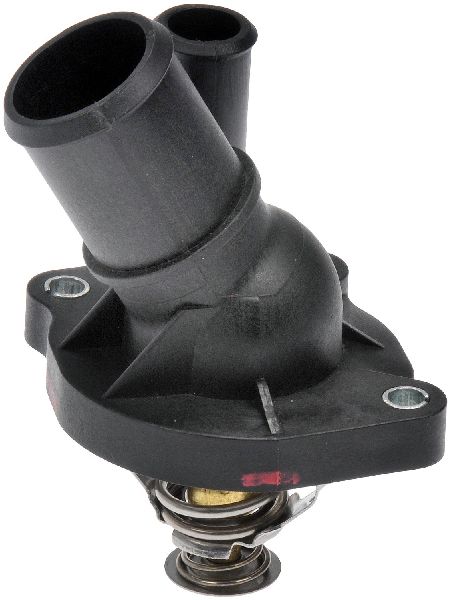
- The most likely cause, by far, is a thermostat that is stuck in the open position. The OEM part number is L336-15-170.
- Before buying parts, confirm the diagnosis by watching your temperature gauge or live data on a scanner; a very slow climb to operating temperature points directly to the thermostat.
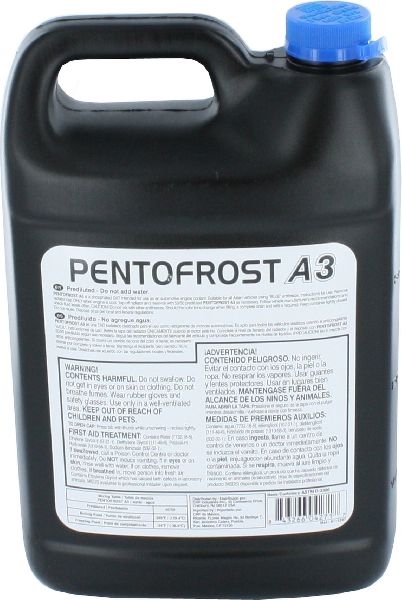
- When replacing the thermostat, you will also need to replace the engine coolant, so purchase both at the same time. Use Mazda's specified FL22 long-life coolant.
What's Unique About the 2007-2013 Mazda Mazdaspeed3
While many manufacturers use code P1288 for various faults (like A/F sensors on Nissans or wheel sensors), on the MZR DISI Turbo engine it specifically points to a rationality check failure for the CHT sensor. Unlike a simple circuit fault code (like P0118), P1288 often points to a mechanical cooling system problem rather than an electrical one. Owner experiences overwhelmingly show that the mechanical thermostat sticking open is the primary culprit, causing the engine to over-cool and fail the PCM's warm-up timer.
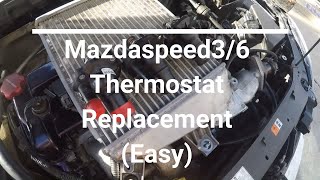
Generation note: This range covers both the first generation (2007-2009, BK) and second generation (2010-2013, BL) Mazdaspeed3. Both generations use the MZR DISI 2.3L engine, and the causes, symptoms, and repair procedures for code P1288 are consistent across both. The thermostat replacement procedure is slightly easier on the second generation (BL) as it does not have a power steering pump obstructing access.
Symptoms You May Notice
- Check Engine Light is illuminated
- Engine temperature gauge takes a very long time to reach the normal operating position (middle of the gauge), or never reaches it, especially in cooler weather or during highway driving.
- Noticeable decrease in fuel economy
- Engine may feel sluggish or bog down during acceleration.
- Heater may not blow as hot as usual
- Cooling fans may run constantly, even when the engine is not at full operating temperature.
- Replacing the CHT sensor when the thermostat is the actual problem. If the only symptom is a slow warm-up, the thermostat should be the primary suspect.
- Assuming P1288 has the same meaning as on other car brands. On a Mazda, it is specifically related to the CHT self-test, which is most often affected by the thermostat.
Most Likely Causes
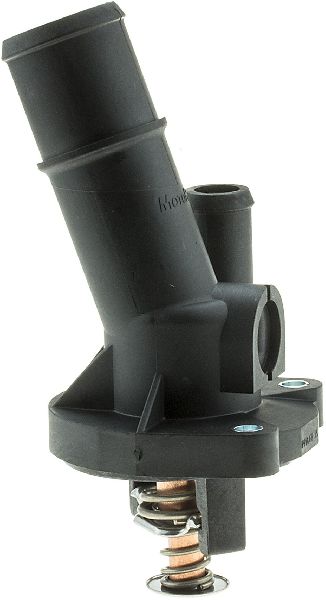
- Thermostat Stuck Open 🔴 High Probability → Shop Integrated Thermostat Housing Assembly The mechanical thermostat can weaken over time and fail in the open position, allowing coolant to circulate constantly through the radiator. This is a very common failure item on the MZR engine platform as it ages, leading to an over-cooling condition.
How to confirm: Use a scan tool to monitor the live coolant temperature data. Start the car from cold and observe the temperature rise. If it rises very slowly and struggles to reach or maintain operating temperature (approx. 195-210°F / 90-99°C), the thermostat is almost certainly stuck open. On the highway, the temperature may drop significantly.
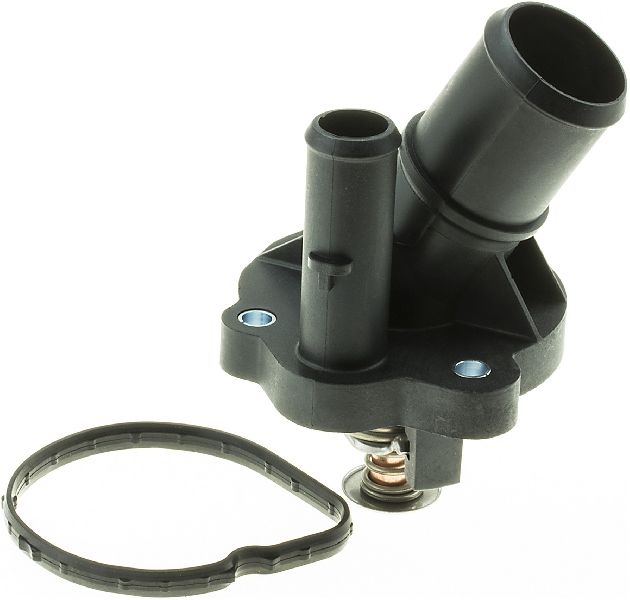
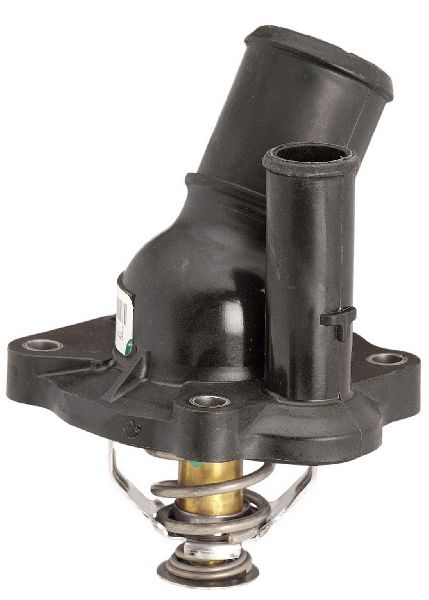
Typical fix: Replace the engine thermostat and housing assembly, then drain and refill the engine coolant with FL22-type coolant.
Est. part cost: $40-$80 - Faulty Cylinder Head Temperature (CHT) Sensor ⚪ Low Probability → Shop Engine Cylinder Head The sensor itself can fail, but it is far less common than a thermostat failure for this specific code. On the MZR DISI engine, the CHT sensor is located on the back of the cylinder head, underneath the high-pressure fuel pump, making it difficult to access.
How to confirm: If the temperature gauge behaves erratically (e.g., drops to zero instantly, spikes to hot, or provides no reading at all) rather than just warming up slowly, the sensor is more likely the issue. You can test the sensor's resistance with a multimeter and compare it to the specifications in the factory service manual.
Typical fix: Replace the CHT sensor. This may require removing the battery, intake piping, and potentially the high-pressure fuel pump for access.
Est. part cost: $25-$60 - Low Engine Coolant or Air in the System ⚪ Low Probability
How to confirm: Visually inspect the coolant reservoir to ensure the level is between the MIN and MAX marks when the engine is cold. If the system was recently serviced, an air pocket may be trapped, which would require proper bleeding procedures. An air pocket can prevent the CHT sensor from getting an accurate reading.
Typical fix: Top off the coolant and/or bleed the cooling system to remove any trapped air. Using a vacuum-style coolant refiller is highly recommended to prevent air pockets.
Est. part cost: $15-$30 - Damaged Wiring or Connector for CHT Sensor ⚪ Low Probability
How to confirm: Visually inspect the wiring harness and connector going to the CHT sensor for any signs of fraying, corrosion, or loose pins. The connector is located in a tight space near the back of the engine.
Typical fix: Repair or replace the damaged section of the wiring harness or the connector.
Est. part cost: $10-$50
Diagnosis Steps
- Verify the code with an OBD-II scanner.
- Check the engine coolant level in the reservoir and radiator (when cool). Top off if low.
- Use the scanner's live data feature to monitor the Engine Coolant Temperature (ECT) or CHT reading from a cold start.
- Observe the temperature gauge on the dashboard. Does it warm up to the middle position within 5-10 minutes of normal driving?
- If the temperature rises very slowly, struggles to reach the middle of the gauge, or drops at highway speeds, the thermostat is the most likely cause.
- If the temperature gauge is erratic, reads nothing, or is pegged hot/cold, inspect the CHT sensor and its wiring connector for damage or corrosion. The sensor is located on the back of the head, below the HPFP. 🎬 Watch: How to locate and replace the coolant temperature sensor
- If no issues are found, proceed with replacing the thermostat and housing assembly, as it is the most common failure point for this code.
- After the repair, clear the codes and perform a drive cycle to ensure the check engine light does not return.
Parts You'll Likely Need
- Engine Coolant Thermostat
(OEM #L336-15-170)— This is the most common cause of P1288, as failing in the 'stuck open' position leads to a slow engine warm-up time. The OEM part is an assembly that includes the housing and gasket.
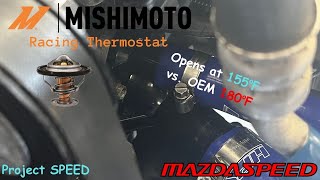
Trusted brands: Mazda (OEM), Mahle, Mishimoto (Racing/Lower Temp) 🎬 See this walkthrough for installing a Mishimoto racing thermostat
OEM price range: $50-$70
Aftermarket price range: $30-$50 - Engine Coolant / Antifreeze
(OEM #C100-CL-005A-4X (FL22))— The cooling system must be drained to replace the thermostat, so a refill is required. Use a FL22 type coolant as specified for this vehicle.
Trusted brands: Mazda FL22, Pentofrost A3, Ravenol HJC
OEM price range: $25-$35 per gallon
Aftermarket price range: $20-$30 per gallon
Related Codes That Often Appear With This One
- P0128 — P0128 ('Coolant Temperature Below Thermostat Regulating Temperature') is a generic code for the same fundamental issue. P1288 is the Mazda-specific equivalent that is triggered during the PCM's self-test. It is common to see P0128 appear alongside or instead of P1288. 🎬 Watch: How to fix code P0128 by replacing the thermostat
Mechanic-Grade Diagnostic Values
- CHT Sensor Resistance (disconnected) — expected: ~2,200 - 3,000 Ω at 20°C (68°F) and ~250 - 350 Ω at 80°C (176°F).. Failure: Readings that are infinite (open circuit), near zero (short circuit), or do not decrease smoothly as the sensor is heated indicate a faulty sensor.
- CHT Sensor Voltage (Key On, Engine Off, connector plugged in) — expected: Signal voltage should be high when the engine is cold (e.g., 3.0-3.5V) and decrease as the engine warms up (e.g., ~1.0V at operating temp).. Failure: Voltage that is stuck at 5V, 0V, or does not change with temperature points to a wiring or sensor issue.
Scan Tool Commands That Help
- Mazda IDS (Integrated Diagnostic System) or equivalent: Datalogger - CHT/ECT PID — This is the primary diagnostic function used to monitor the CHT sensor's reported temperature in real-time from a cold start. It is used to confirm the 'slow to warm up' symptom that points to a stuck thermostat.
Wiring & Ground Locations
- G6 — Left rear of the engine.. This is a primary engine ground point. A corroded or loose engine ground can cause incorrect or erratic readings from engine-mounted sensors like the CHT, potentially contributing to rationality codes.
- Engine Ground Strap — Common locations include a strap from the passenger side motor mount to the chassis, and grounds on the transmission housing.. Ensuring the engine block has a solid ground connection to the chassis and battery negative is critical for all sensor functions. These are common points to check for corrosion or looseness during diagnosis.
- CHT Sensor Connector — On the back of the cylinder head, below the high-pressure fuel pump (HPFP).. This is the direct connection point for the sensor. It's in a tight, hot area and the wiring or locking tab can become brittle over time, leading to a poor connection.
Real Owner Repair Stories
- Mazdaspeeds.org forum user 'Orangatang' (Gen 1 Mazdaspeed3 (BK)) — Not specified, but was replacing the thermostat.
✅ What actually fixed it Successfully replaced the thermostat on a Gen 1 *without* removing the power steering pump or AC compressor. The user recommends using 1/4" drive tools, a flex-head ratchet, various extensions, and a universal joint to access the three 8mm bolts. Flexible hose clamp pliers were also noted as being extremely helpful for the spring clamps in the tight space.
OEM Part Supersession History
l32715170, l32715170a, l32715171, l32815170a, l32815170b, lfe215170→L336-15-170— Standard part evolution and consolidation for multiple models using the MZR engine.
Model Year Variations Within This Range
- 2007-2009 (Gen 1 / BK): Access to the thermostat housing is obstructed by the power steering pump and its lines. While many guides suggest moving the pump, some experienced owners have successfully completed the replacement without doing so by using a combination of 1/4" drive universal joints, extensions, and flexible hose clamp pliers.
Diagnostic Flowchart
Other Known Issues on This Vehicle
Issues unrelated to this code that are worth knowing about as an owner of this generation:
- Variable Valve Timing (VVT) Actuator Failure 🔴 High — Very common, especially on earlier 2007-2010 models. Often presents as a loud rattling or ticking noise on cold startup that lasts for a few seconds. (Ref: Mazda SSP 87 (Warranty Extension) covered this issue for 7 years/70,000 miles. The original part was updated to a more robust design.)
- Failing Turbocharger (K04) Seals / Smoking Turbo 🟠 Medium — Common, especially after 60,000-80,000 miles or with modifications like a catless downpipe. Results in blue/white smoke from the exhaust at idle after the engine is warm.
- High Pressure Fuel Pump (HPFP) Internals Limitation 🔴 High — A critical weak point if adding any performance modifications. The stock pump cannot supply adequate fuel pressure for increased boost, leading to lean conditions and potential engine failure ('Zoom-Zoom Boom').
- Timing Chain Stretch 🔴 High — Often occurs concurrently with VVT failure. A stretched chain can cause rattling noises below 2,000 RPM and, if it fails, catastrophic engine damage. (Ref: Mazda SSP 87 (Warranty Extension) also covered the timing chain.)
- Intake Valve Carbon Buildup 🟠 Medium — A common issue for all direct-injection (DI) engines. Over time, carbon deposits build up on the back of intake valves, restricting airflow and causing misfires or poor performance. Typically requires cleaning every 80,000-100,000 miles.
Used vs. New Parts: Buying Guide for This Vehicle
When a used part is the smart pick: For this repair, only a used wiring pigtail for the CHT sensor is a reasonable choice if the original connector is damaged. All other primary components should be purchased new.
Donor-vehicle mileage cap: roughly under 75000 miles for the part to have meaningful remaining life.
What to inspect on the donor part:
- For a wiring pigtail, ensure the plastic is not brittle or cracked.
- Check that the locking tab on the connector is intact.
- Ensure there is at least 4-6 inches of wire to allow for easy splicing.
OEM-only on this vehicle (don't cheap out):
- Engine Coolant Thermostat: While reputable aftermarket options exist, their quality can be inconsistent. Given the labor involved in replacement, using the OEM Mazda part (L336-15-170) is the highest-probability fix to avoid repeat work.
Aftermarket brands forum-validated for this vehicle:
- Mahle
- Gates
- Denso
- Blue Print
Brands owners have reported issues with on this vehicle:
- Unknown/white-box brands from online marketplaces. The design and spring rate of the thermostat are critical, and cheap parts often fail to meet OEM specifications, leading to the same code returning.
Real Owner Stories
Aggregated from forums and TSBs cited above. Mileages and costs reflect what owners reported in those sources.
2007 Mazda Mazdaspeed3 MZR DISI Turbo 2.3L
Symptoms: The owner reported a Check Engine Light for code P1288, which they identified as 'CHT out of range'.
What fixed it: The forum discussion listed the thermostat and the CHT sensor as the potential causes to investigate.
Source hint: Mazdas247 - 'Cel P1288 CHT sensor out of range'
2009 Mazda Mazdaspeed3 MZR DISI Turbo 2.3L
Symptoms: The engine was very slow to warm up and the temperature gauge on the dashboard would not reach its normal position in the middle.
What fixed it: Community consensus confirmed that replacing the failed thermostat was the correct fix for these symptoms and the associated P1288/P0128 codes.
Source hint: r/mazdaspeed3 (Reddit)
Related OBD-II Codes
Frequently Asked Questions
My Mazdaspeed3 is taking forever to warm up, but the check engine light isn't on yet. Is the thermostat likely failing?
Is the P1288 code on my Mazdaspeed3 related to the common VVT or timing chain issues?
I need to replace the thermostat for P1288. What kind of coolant should I use to refill the system?
The temperature gauge on my dashboard is acting erratically, not just warming up slowly. Could this still be the thermostat?
Where is the CHT sensor located on the 2.3L DISI Turbo engine?
I have a 2007 Mazdaspeed6. Does this P1288 information apply to my car?
How can I confirm the thermostat is stuck open before buying a new one?
Helpful Videos
We Have This Part in Stock


The information in this article is provided for general reference and educational purposes only. Vehicle specifications, procedures, and part compatibility can vary by production date, trim level, and region. Always consult your vehicle's factory service manual and verify part numbers before purchasing or performing repairs. Safety-critical components such as airbags, seat belts, and braking systems should be installed by a qualified professional.
- Mazda Mazdaspeed3:
- 🧭 Diagnostic Flowchart
- 🎬 Helpful Videos
- 🛍️ Shop This Part
- What's Unique About the 2007-2013 Mazda Mazdaspeed3
- Symptoms You May Notice
- Most Likely Causes
- Diagnosis Steps
- Parts You'll Likely Need
- Related Codes That Often Appear With This One
- Mechanic-Grade Diagnostic Values
- Scan Tool Commands That Help
- Wiring & Ground Locations
- Real Owner Repair Stories
- OEM Part Supersession History
- Model Year Variations Within This Range
- Other Known Issues on This Vehicle
- Used vs. New Parts: Buying Guide for This Vehicle
- Real Owner Stories
- 2007 Mazda Mazdaspeed3 MZR DISI Turbo 2.3L
- 2009 Mazda Mazdaspeed3 MZR DISI Turbo 2.3L
- Related OBD-II Codes
- Frequently Asked Questions
- 🎟️ Get 5% Off