

P1288 on 2014-2015 Ram 1500 EcoDiesel: NOx Sensor Fault Causes & Fixes
On a 2014-2015 Ram 1500 with the 3.0L EcoDiesel, P1288 almost always means the downstream NOx sensor (1/2) has failed. However, before replacing this expensive part (around $400-$600 OEM), it is critical to check with a dealer if your truck's software is up-to-date. Chrysler issued multiple Technical Service Bulletins (TSBs) that reprogram the engine computer to fix the logic that triggers this specific code, which could resolve the issue without any parts replacement.
- P1288 on a 2014-2015 Ram EcoDiesel points specifically to a fault with the downstream NOx sensor.
- **Crucially, before replacing any parts, have a dealer check if your truck's computer has the latest software**, as multiple TSBs were issued to fix this exact code.
- The most common fix, if software is up-to-date, is to replace the downstream NOx sensor, which is a moderately difficult DIY job.
- Ignoring this code can lead to increased DEF and fuel consumption, and may eventually cause the truck to enter a reduced power mode.
What's Unique About the 2014-2015 Ram 1500

Unlike generic engine codes, P1288 on the EcoDiesel is very specific to its complex emissions aftertreatment system. Chrysler (now Stellantis) issued multiple software updates via TSBs to resolve issues with the emissions system's logic that could erroneously trigger this code. Therefore, a crucial first step for any owner seeing P1288 is to verify the vehicle's software is up to date, as a simple reflash at the dealer could resolve the problem without replacing any parts. Ignoring this step can lead to spending hundreds of dollars on a new sensor when it wasn't the root cause. This issue is also common on the Jeep Grand Cherokee equipped with the same 3.0L EcoDiesel engine.
Diagnostic Flowchart

Tap your situation to follow the diagnostic path that matches what you're seeing on this vehicle.
Symptoms You May Notice

- Check Engine Light (MIL) is illuminated
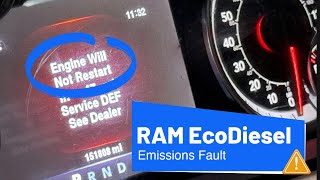
- Message on the Electronic Vehicle Information Center (EVIC) such as "Service DEF System See Dealer& 🎬 See why your Ram is displaying this DEF system warning.quot;
- Vehicle may enter a countdown mode leading to a no-start condition
- Increased consumption of Diesel Exhaust Fluid (DEF)
- Reduced fuel economy
- Failing a vehicle emissions inspection
- Replacing the NOx sensor without first checking for required PCM software updates. A new sensor will often exhibit the same fault if the underlying software logic is the root cause.
- Confusing the downstream NOx sensor (1/2) with the upstream NOx sensor (1/1). P1288 specifically points to the downstream sensor located after the SCR catalyst.
Most Likely Causes

- Faulty Downstream (Sensor 1/2) NOx Sensor 🔴 High Probability → Shop Oxygen Sensor NOx sensors are exposed to extreme heat and corrosive exhaust gases, making them a common failure point in modern diesel emissions systems. They can fail due to internal heater circuit faults, soot contamination, or moisture intrusion, leading to erratic or incorrect readings.
How to confirm: After confirming the PCM software is up-to-date, use a capable scan tool to monitor live data from both NOx sensors. 🎬 Watch: Advanced diagnostic steps for SCR and DEF system issues. During a deceleration event (coasting off-throttle), the downstream sensor's readings should drop to near zero. If the readings are stuck high, erratic, or mirror the upstream sensor's readings, the sensor has failed.
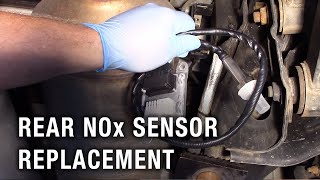
Typical fix: Replace the downstream NOx sensor and its integrated module. 🎬 Watch this walkthrough on replacing the rear NOx sensor. The sensor comes as a single assembly with the module and wiring. After replacement, a drive cycle is needed to confirm the fix.
Est. part cost: $300-$600 - Outdated Powertrain Control Module (PCM) Software 🔴 High Probability The manufacturer released several TSBs (e.g., 18-019-15 for 2015 models, 18-021-15 for 2014 models) specifically to correct overly sensitive diagnostic logic that triggers P1288 and other related emissions codes. The updates widened the acceptable parameters for the sensor's self-test.
How to confirm: A Ram dealer or a well-equipped independent shop can check your vehicle's VIN against the FCA/Stellantis database to see if the software updates from the relevant TSBs have been performed.
Typical fix: Reprogram or 'flash' the PCM with the latest software version using the proprietary wiTECH scan tool. This is often performed at a dealership.
Est. part cost: $0-$250 - Wiring Harness or Connector Damage ⚪ Low Probability The NOx sensor wiring runs along the vehicle's undercarriage and is susceptible to damage from road debris, heat from the exhaust, or corrosion in wet climates. The connectors can also become loose or contaminated.
How to confirm: Visually inspect the entire wiring harness from the NOx sensor to its module and back to the main vehicle harness. Check for broken or frayed wires, melted insulation, and pay close attention to the connector pins for corrosion or a loose fit.
Typical fix: Repair the damaged section of the wiring harness or clean/replace the affected connector. Ensure a secure connection.
Est. part cost: $10-$100 - Exhaust System Leak ⚪ Low Probability Rust or physical damage can cause leaks in the exhaust system. A leak between the upstream and downstream NOx sensors can introduce oxygen, skewing the downstream sensor's readings and potentially triggering the code.
How to confirm: With the engine running, visually inspect the exhaust system for cracks or holes, particularly around welds and flanges between the DPF and the downstream NOx sensor. Listen for audible hissing or ticking sounds. A smoke test can also pinpoint small leaks.
Typical fix: Repair or replace the leaking section of the exhaust pipe, gasket, or V-band clamp.
Est. part cost: $50-$250
Rare But Worth Checking
- DEF Contamination or Injector Issues:
Diagnosis Steps
- Connect a diagnostic scan tool to read the fault codes. Confirm P1288 is present and note any other codes, especially P20EE.
- Crucial Step: Contact a Ram dealership or qualified shop with your VIN to check for open recalls or required TSBs. Specifically ask about TSB #18-019-15 (for 2015 models) and #18-021-15 (for 2014 models) related to PCM software updates. If an update is available and has not been performed, this is the most likely fix.
- If the software is confirmed to be up-to-date, perform a thorough visual inspection of the downstream NOx sensor (located in the exhaust pipe after the SCR catalyst) and its wiring harness. Look for physical damage, melted wires, or corrosion on the connector pins.
- Inspect the exhaust system for any leaks between the DPF/SCR assembly and the downstream NOx sensor. Check for soot trails or listen for audible leaks.
- Using a scan tool with live data capability, monitor the readings from both the upstream (Sensor 1/1) and downstream (Sensor 1/2) NOx sensors. The engine must be fully warmed up.
- Perform a deceleration test: while driving, let the vehicle coast down from a higher speed (e.g., 50 mph) without touching the throttle. A healthy downstream sensor should show NOx readings dropping to near zero ppm. If the reading remains high, is erratic, or doesn't change, the sensor is faulty.
- If the sensor is confirmed bad, replace the entire downstream NOx sensor assembly (sensor and module). The new sensor typically comes with anti-seize pre-applied to the threads.
- After replacement, clear all diagnostic trouble codes. Perform a comprehensive drive cycle, including highway driving and deceleration events, to allow the emissions monitors to run and confirm the repair is successful.
Parts You'll Likely Need
- Downstream Nitrogen Oxide (NOx) Sensor
(OEM #68250214AB)— This sensor assembly is the component that directly reports the fault to the PCM. It is a very common failure item due to its harsh operating environment and the platform's initial software calibration issues. The part number 68250214AB supersedes older versions like 68171188AA, 68171188AB, and 68250214AA.
Trusted brands: Mopar (OEM), Bosch, Standard Motor Products (SMP)
OEM price range: $450-$600
Aftermarket price range: $300-$450
Related Codes That Often Appear With This One
- P20EE — This code for 'SCR NOx Catalyst Efficiency Below Threshold' is extremely common alongside P1288. The PCM uses both NOx sensors to measure catalyst efficiency; if the downstream sensor provides a faulty reading, the PCM may incorrectly flag the catalyst as inefficient.
- P2002 — This code for 'Diesel Particulate Filter Efficiency Below Threshold' is listed in the same TSBs as P1288, indicating they are part of a common cluster of emissions system faults addressed by the same software updates.
- P2299 — Meaning 'Brake Pedal Position / Accelerator Pedal Position Incompatible,' this code is also mentioned in the TSBs, suggesting the comprehensive software updates addressed multiple, seemingly unrelated, system parameters to improve overall vehicle logic.
- P2463 — This code for 'Diesel Particulate Filter - Soot Accumulation' is another related fault addressed by the same software updates for the 2015 model year.
Technical Service Bulletins (TSBs) & Recalls
- Bulletin #18-019-15 REV C: For 2015 models, this TSB involves reprogramming the
Platform-Specific Known Issues
- The most significant issue for this platform is the necessity of checking for PCM software updates. Ram issued TSBs #18-019-15 and #18-021-15 to fix the logic that causes P1288 and other codes. Applying this update is a critical diagnostic step that can prevent unnecessary sensor replacement.
- Owners report very high dealer quotes for NOx sensor replacement, sometimes exceeding $1,500-$2,000, which leads many to seek DIY or independent shop solutions.
Mechanic-Grade Diagnostic Values
- Downstream NOx Sensor (1/2) Reading During Deceleration — expected: Near 0 ppm. Failure: Reading is erratic, stuck high (e.g., over 100 ppm), or does not drop significantly when coasting off-throttle at highway speeds.
- Upstream vs. Downstream NOx Sensor Readings Under Load — expected: The downstream sensor reading should be significantly lower than the upstream sensor reading, indicating the SCR catalyst is working.. Failure: If the downstream sensor reading is very close to the upstream reading under load, it may indicate a faulty sensor or an inefficient catalyst.
Scan Tool Commands That Help
- AlfaOBD / wiTECH: Forced DPF Regeneration — This function can be used to clear out soot accumulation in the DPF and on the NOx sensors, which can sometimes resolve sensor-related codes caused by contamination rather than outright failure. It is often recommended after replacing emissions components or as a diagnostic step.
- wiTECH: PCM Configuration Routine — After reprogramming the PCM with an updated calibration (as per the TSBs for P1288), this routine must be performed to reconfigure the system and ensure all modules communicate correctly.
- wiTECH: SCR System Test — This is a guided diagnostic test within the factory scan tool to evaluate the performance of the entire Selective Catalytic Reduction system, which can help isolate whether the fault lies with a sensor, the catalyst, or the DEF injection system.
Wiring & Ground Locations
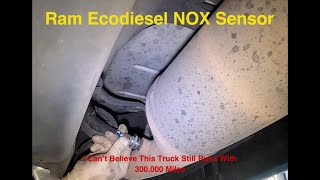
- Downstream NOx Sensor Module — Mounted to the passenger side frame rail, near the center support bearing for the driveshaft.. This is the control module integrated with the P1288-related sensor. The module itself and its connector are common points for inspection for physical damage or corrosion. It is typically held on by two 10mm nuts.
- Exhaust Ground Strap — Connects from the chassis to the muffler/exhaust system.. A missing or corroded exhaust ground strap can cause electrical potential differences and noise, which may interfere with sensitive sensor readings. It should be saved and reattached when servicing the exhaust.
- NOx Sensor Connectors — The main vehicle harness connectors for the NOx sensors are located on top of the transmission, in a very tight area.. Accessing these connectors for testing or replacement is difficult and may require long tools to release the locking tabs. This is a key location to check for corrosion or loose pins if wiring is suspected as the cause.
Real Owner Repair Stories
- EcoDieselRam.com forum user (2014 Ram 1500 EcoDiesel) — Codes P20EE, P2BA9, and P1288, along with a DEF service countdown that would not reset and led to a no-start condition.
❌ Tried (didn't work) Replacing both NOx sensors., Draining and replacing the DEF fluid., Replacing the entire DEF tank assembly (including pump and injector)., Driving the truck for 20+ miles to clear codes (codes cleared, but the countdown remained)., Having the dealer extend the countdown mileage (it just counted down to zero again).
✅ What actually fixed it The user's issue was not fully resolved in the thread, but another user with an identical problem on a 2015 Grand Cherokee EcoDiesel chimed in with the solution that finally worked for them: the truck had multiple, non-obvious faults preventing the emissions system from completing its 'healing/relearn cycle'. The final fix required replacing a sticking thermostat (which prevented the engine from reaching the required 205°F operating temperature), cleaning a slightly clogged DEF injector nozzle, and cleaning corroded BCM connectors. Only after all these underlying issues were fixed would the system reset properly after a forced regen and drive cycle.
When the Usual Fixes Don't Work
- While replacing the downstream NOx sensor is the most common fix after a software update, there are documented cases where the root cause is more complex. In one instance, a 2014 Ram 1500 with P1288 and other emissions codes had its NOx sensors, DEF pump, and DEF injector replaced without resolving a persistent no-start countdown. The ultimate resolution required fixing other non-obvious faults, including a faulty thermostat that prevented the engine from reaching the temperature needed for the emissions system to reset, and cleaning a partially clogged DEF injector that wasn't throwing its own code. This shows that if the standard fixes fail, technicians must verify that all system parameters required for the 'relearn' cycle are being met.
OEM Part Supersession History
68171188AA, 68171188AB, 68250214AA→68250214AB— Standard part revision and improvement by the manufacturer.
Heads up: The latest part number, 68250214AB, is the correct replacement for the 2014-2015 model years. Using older, superseded parts is not recommended.
Model Year Variations Within This Range
- 2014 vs 2015: Different TSBs were issued for the PCM reflash. 2014 models are covered by TSB #18-021-15, while 2015 models are covered by TSB #18-019-15. While both address P1288, the specific software packages and other codes addressed within the bulletins differ slightly, highlighting minor calibration changes between the model years.
Helpful Videos

The information in this article is provided for general reference and educational purposes only. Vehicle specifications, procedures, and part compatibility can vary by production date, trim level, and region. Always consult your vehicle's factory service manual and verify part numbers before purchasing or performing repairs. Safety-critical components such as airbags, seat belts, and braking systems should be installed by a qualified professional.
- Ram 1500:
- 🧭 Diagnostic Flowchart
- 🎬 Helpful Videos
- What's Unique About the 2014-2015 Ram 1500
- Symptoms You May Notice
- Most Likely Causes
- Rare But Worth Checking
- Diagnosis Steps
- Parts You'll Likely Need
- Related Codes That Often Appear With This One
- Technical Service Bulletins (TSBs) & Recalls
- Platform-Specific Known Issues
- Mechanic-Grade Diagnostic Values
- Scan Tool Commands That Help
- Wiring & Ground Locations
- Real Owner Repair Stories
- When the Usual Fixes Don't Work
- OEM Part Supersession History
- Model Year Variations Within This Range
- 🎟️ Get 5% Off