

P1296 on 1997-2004 Audi A6 2.7T: Cooling System Malfunction Causes and Fixes
On the Audi A6 2.7T, code P1296 is almost always caused by a faulty Engine Coolant Temperature (ECT) sensor (G62). It's an inexpensive part (around $10-$40) and a straightforward DIY replacement. If a new sensor doesn't fix it, the thermostat is likely stuck open, which is a more involved repair.
- P1296 (VAG 17704) means your Audi's engine is not warming up as quickly as the computer expects.
- The most probable cause is a bad Engine Coolant Temperature (ECT) sensor, which is an easy and affordable DIY replacement.
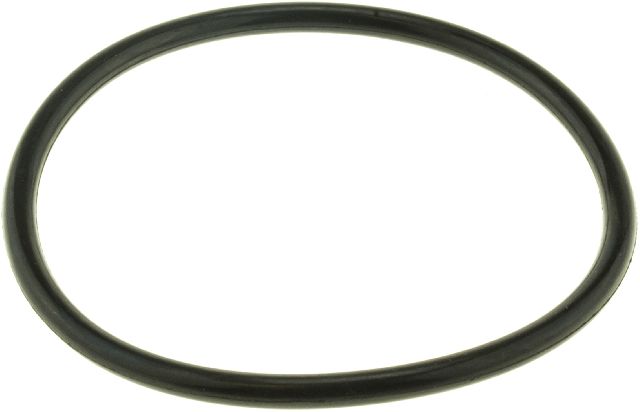
- Always replace the old black or blue ECT sensor with the updated green version (part #059919501A) along with its O-ring and clip.
- If a new ECT sensor does not solve the problem, the next most likely cause is a thermostat that is stuck open (OEM part #078121113F).
- Driving with this code can lead to poor fuel mileage and, in the long term, may harm your catalytic converters.
What's Unique About the 1997-2004 Audi A6
The 2.7T V6 engine used in the C5 generation Audi A6 is well-known for issues with its cooling system components. The primary Engine Coolant Temperature (ECT) sensor, often called the G62 sensor, is a notoriously common failure point. Over the years, Audi updated the part from a failure-prone black plastic design to a more reliable green plastic design. Because this sensor is a frequent culprit and relatively simple to replace (located on a coolant pipe at the back of the engine), it has become the standard first step for owners and mechanics when diagnosing a P1296 code on this platform.
Symptoms You May Notice
- Check Engine Light is on
- Poor fuel economy
- Engine temperature gauge on the dashboard is erratic, inaccurate, or stays on cold
- Cooling fans running at high speed unexpectedly, even when the engine is cold
- Difficulty starting the engine, especially when cold
- Noticeable decrease in engine performance or hesitation
- Black smoke from exhaust on cold starts due to a rich fuel mixture
- Replacing the thermostat before the ECT sensor. The sensor is cheaper, easier to replace, and fails more often, making it the logical first step.
- Ignoring freeze frame data. An impossible temperature reading (-40°C or +140°C) almost guarantees an electrical fault with the sensor or circuit, while a plausible but low temperature (e.g., 75°C) points towards a mechanical issue like a stuck thermostat.
Most Likely Causes
- Faulty Engine Coolant Temperature (ECT) Sensor (G62) 🔴 High Probability → Shop Engine Coolant Temperature Sensor The original black plastic ECT sensors used on this platform have a very high failure rate and were superseded by a more durable green sensor. The sensor's location subjects it to significant heat cycles, leading to degradation.
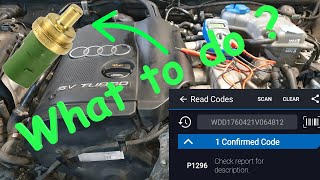
How to confirm: Check freeze frame data with a scan tool. 🎬 See how to diagnose code P1296 using a scan tool. A reading of -40°C or +140°C points directly to a bad sensor or wiring. Given the low cost and high failure rate, many owners replace it preventatively or as the first diagnostic step. A faulty sensor can also cause the temperature gauge to behave erratically or not read at all. A slow or delayed response in resistance when heating the sensor out of the car is also a clear confirmation of failure.
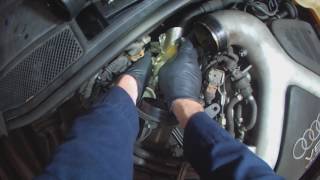
Typical fix: Replace the ECT sensor, its O-ring, and the plastic retaining clip. Be sure to use the updated green sensor. 🎬 Watch: Step-by-step guide to replacing the sensor on a 2.7T. The job is accessible at the rear of the engine and requires minimal tools, though some coolant will be lost.
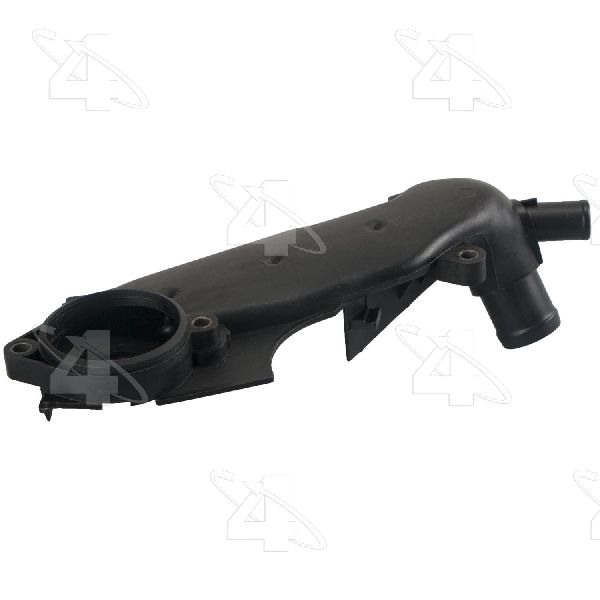
Est. part cost: $10-$40 - Stuck-Open Thermostat 🟡 Medium Probability → Shop Integrated Thermostat Housing Assembly Thermostats are a wear item that can fail over time, and getting stuck in the open position is a common failure mode. This allows coolant to circulate through the radiator constantly, preventing the engine from warming up quickly, especially in cold weather.
How to confirm: If a new ECT sensor doesn't clear the code, the thermostat is the next logical suspect. You can monitor live coolant temperature data with a scan tool; if it rises very slowly and struggles to get above 70-80°C during normal driving, the thermostat is likely open. The thermostat's opening temperature is typically 87°C.
Typical fix: Replace the thermostat and its housing/gasket. This is a more involved job than the ECT sensor as it is located behind the timing belt cover, requiring the front of the car to be put into the 'service position' and the timing belt to be removed. It is often replaced concurrently with a timing belt service. 🎬 Watch this detailed walkthrough for replacing the 2.7T thermostat.
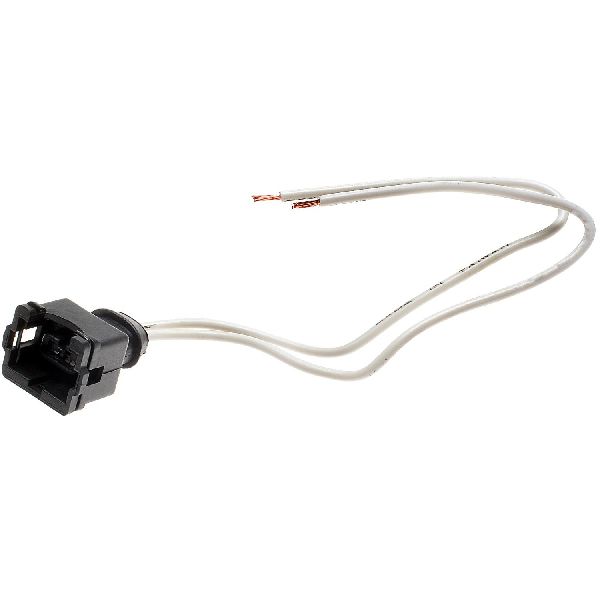
Est. part cost: $25-$75 - Faulty ECT Sensor Wiring or Connector ⚪ Low Probability → Shop Engine Coolant Temperature Sensor
How to confirm: Visually inspect the wiring and connector for the ECT sensor for any signs of brittleness, cracking, corrosion, or loose pins. The plastic connector can become brittle from heat and age. With the sensor unplugged and ignition on, check for 5-volt reference and a good ground at the connector.
Typical fix: Repair the damaged section of the wiring harness or replace the connector pigtail.
Est. part cost: $15-$30
Rare But Worth Checking
- Failing Water Pump: → Shop Engine Water Pump While a failing water pump more commonly causes overheating, a worn impeller could potentially lead to inefficient coolant circulation, contributing to slow warm-up times. This is usually considered after other, more common causes are ruled out and is often replaced during a timing belt service along with the thermostat.
- Low Coolant Level: If the coolant level is significantly low, the ECT sensor may not be submerged in coolant, leading to inaccurate readings and preventing the system from operating as expected. This would typically be accompanied by a coolant warning light.
Diagnosis Steps
- Read the fault code and any associated freeze frame data with an OBD-II scanner. Note the VAG-specific code 17704.
- Analyze the freeze frame data. An impossibly high or low temperature (e.g., -40°C or +140°C) points to the ECT sensor/wiring. A temperature that is low but plausible (e.g., 70°C) after a drive cycle points towards a stuck thermostat.
- Inspect the coolant level in the expansion tank and top off if necessary. Check for visible signs of coolant leaks.
- Visually inspect the ECT sensor connector and wiring at the back of the engine for any obvious damage, brittleness, or corrosion.
- Replace the Engine Coolant Temperature (ECT) sensor, O-ring, and clip. This is the most likely fix and is inexpensive. Ensure the new sensor is the updated green version.
- Clear the code and drive the vehicle through a full warm-up cycle to see if the code returns.
- If the code returns, the thermostat is the next most likely cause. Monitor live data to confirm slow warm-up, then proceed with thermostat replacement. This is a complex job often done with the timing belt.
Parts You'll Likely Need
- Engine Coolant Temperature Sensor (G62)
(OEM #059919501A)— This is the most common failure part for code P1296 on this engine. The original black sensor is prone to failure and was superseded by this green version.
Trusted brands: Bosch, Hella, Vemo, Febi Bilstein, Meyle
OEM price range: $30-$50
Aftermarket price range: $10-$25 - Thermostat
(OEM #078121113F)— This is the second most common cause, typically failing in the 'stuck open' position, which prevents the engine from warming up correctly. Replacement is labor-intensive.
Trusted brands: Behr, Mahle, Wahler
OEM price range: $50-$80
Aftermarket price range: $25-$50 - Thermostat Housing
(OEM #078121121K)— The original plastic thermostat housing can become brittle and leak over time due to constant exposure to hot coolant. It is often replaced along with the thermostat.
Trusted brands: Genuine Audi/VW, Rein
OEM price range: $100-$150
Aftermarket price range: $40-$80
Related Codes That Often Appear With This One
- P0300 — A random/multiple misfire code can sometimes accompany P1296 if the incorrect temperature readings cause poor fueling and hard starting conditions.
- P0117 / P0118 — These codes relate to ECT sensor circuit low/high input. They point more directly to an electrical failure of the sensor or its circuit, while P1296 is a performance code indicating slow warm-up. They can appear together if the sensor is failing intermittently.
- P3081 — This is another Audi-specific code for 'Engine Temperature too Low'. It is often logged alongside P1296 and points to the same set of potential causes.
Platform-Specific Known Issues
- source — An owner on AudiForums.com provided a detailed DIY guide for replacing the ECT sensor on a 2004 A6 2.7T to resolve a P3081 code, which is functionally identical to P1296. The steps include removing the engine and airbox covers, disconnecting the secondary air injection pipe for access, and carefully swapping the sensor and clip. The user noted the importance of relieving coolant pressure first and ensuring the new sensor clicks into place securely.
- source — Across multiple forums, including AudiWorld and Audi-Sport.net, the overwhelming consensus from owners who have experienced P1296 is to replace the G62 coolant temperature sensor first. One user on Audi-Sport.net replaced the sensor, but the code returned, and live data showed the temperature hovering at 75°C, confirming the next step was to investigate the thermostat. This highlights the common diagnostic path for this specific code.
Mechanic-Grade Diagnostic Values
- Engine Coolant Temperature (ECT) Sensor (G62) Resistance — expected: Approximately 2.0-3.0 kΩ at 20°C (68°F), decreasing as temperature rises. For example, dropping to ~300 Ω when hot.. Failure: Resistance is infinite (open circuit), near zero (short circuit), or shows a significant delay in changing when temperature is applied.
- ECT Sensor (G62) Connector Voltage (Key On, Engine Off) — expected: Approximately 5V reference from the ECU on one pin, and a good ground (showing battery voltage when tested against the positive battery terminal) on another pin.. Failure: Absence of 5V reference voltage or a bad ground indicates a wiring or ECU problem, not a sensor failure.
- VCDS/VAG-COM Live Data (Measuring Blocks) — expected: In the Engine (01) and Instruments (17) modules, the coolant temperature should rise steadily to ~90°C and remain stable. The two readings should be very close to each other.. Failure: A reading in one module (e.g., Engine) that is logical while the other (e.g., Instruments) is stuck at 90°C or cold points to a failure in one of the sensor's internal circuits. A temperature that plateaus around 70-80°C suggests a stuck-open thermostat.
Scan Tool Commands That Help
- VCDS (VAG-COM): Output Tests (Function 03) in Engine (01) Control Module — While not directly testing the ECT sensor, this function can cycle other cooling system components like the radiator fans and coolant circulation pump (if equipped), helping to verify their operation independently of the ECT sensor's input. The sequence is controlled by the module itself.
- VCDS (VAG-COM): View Measuring Blocks in Engine (01) and Instruments (17) — This is the primary diagnostic step to compare the temperature readings being sent to the ECU versus the instrument cluster. The G62 sensor has two separate thermistors inside; a discrepancy between the two readings confirms a faulty sensor.
Wiring & Ground Locations
- G62 Sensor Connector (4-pin) — On a coolant pipe at the rear of the engine, near the firewall, passenger side.. This is the central point for all electrical testing of the sensor. The connector and its wiring are prone to heat-induced brittleness and damage. The 4-pin sensor contains two separate circuits: one for the ECU (G62) and one for the dashboard gauge (G2).
- Engine Harness Ground — There are several key ground points. A major ground strap is located on the frame rail near the passenger side engine mount. Another is on the firewall. A wiring diagram shows a common ground point for many engine sensors is located in the engine wiring harness itself.. A poor ground connection for the ECT sensor circuit can cause incorrect readings, leading to the P1296 code even if the sensor itself is functional. Checking and cleaning main engine grounds is a valid diagnostic step if a new sensor and thermostat do not resolve the issue.
Real Owner Repair Stories
- AudiForums.com user (2001 Audi Allroad 2.7T) — Intermittent no-start or start-and-stall when cold. CEL with coolant temp sensor code.
❌ Tried (didn't work) Replacing the fuel filter., Replacing the spark plugs.
✅ What actually fixed it The user first replaced the ECT sensor, which did not solve the problem. After confirming the new sensor was the correct updated green version (P/N 059919501A), the problem persisted. The final fix was replacing the sensor a second time, implying the first replacement part was faulty out of the box. - AudiWorld.com user (2003 Audi A6 2.7T, 99k miles) — CEL with code P3081 (Engine Temperature too Low) and an erratic coolant temperature gauge.
❌ Tried (didn't work) Replacing the ECT sensor (G62)., Replacing the thermostat during a timing belt service.
✅ What actually fixed it The user replaced both the sensor and the thermostat, but the problem continued. The thread did not have a final confirmed fix, but the discussion pointed towards a faulty connector, wiring harness issue, or a problem with the instrument cluster itself, as all the common components had been replaced.
OEM Part Supersession History
078919501B (Blue or Black)→078919501C (Black), then 059919501A (Green)— The original black and blue sensors had a high failure rate. The design was updated to a more durable green sensor which became the standard replacement.
Heads up: The old black/blue sensors should be avoided entirely, even if new-old-stock is found. They are known to fail prematurely. Always install the green sensor.
Model Year Variations Within This Range
- 1997-2001 (Pre-facelift) vs 2002-2004 (Facelift): While the P1296 code, causes, and primary components (G62 sensor, thermostat) are the same, the C5 platform received a facelift for the 2002 model year. This involved changes to headlights, bumpers, and some interior electronics. However, for this specific fault, the location and replacement procedure for the ECT sensor and thermostat on the 2.7T engine remained consistent across the entire 1997-2004 range.
Diagnostic Flowchart
Other Known Issues on This Vehicle
Issues unrelated to this code that are worth knowing about as an owner of this generation:
- K03 Turbocharger Failure 🔴 High — Common on vehicles over 100k miles, especially if tuned. Failure is often due to heat soak from their location between the engine and firewall, or oil starvation. (Ref: A TSB (21 22 39 / 2044640) exists for related V8 turbo issues, advising replacement of the oil strainer (079115175G) to prevent oil starvation, a principle that also applies to the 2.7T.)
- Valve Cover and Camshaft Tensioner Gasket Oil Leaks 🟠 Medium — Very common. Gaskets become brittle with age and heat, causing oil to leak onto hot exhaust components (creating a burning smell) or the A/C compressor.
- Timing Belt and Water Pump Service 🔴 High → Shop Engine Water Pump — This is a critical maintenance item, not a failure. The interval is typically 75k-90k miles. Failure of the belt is catastrophic to the engine. The water pump (with a plastic impeller) and thermostat are typically replaced at the same time.
- Instrument Cluster LCD Pixel Failure 🟡 Low — Extremely common. The center LCD screen (Driver Information System) develops dead pixels, making it unreadable. This is due to the failure of the ribbon cable connecting the LCD to the main board.
- Auxiliary Water Pump Leakage 🟠 Medium → Shop Engine Water Pump — The small electric auxiliary water pump, located under the intake manifold, is prone to developing coolant leaks over time, which can be difficult to trace.
Used vs. New Parts: Buying Guide for This Vehicle
When a used part is the smart pick: For this specific repair, buying used parts is generally not recommended. The primary failure components are low-cost wear items.
Donor-vehicle mileage cap: roughly under 50000 miles for the part to have meaningful remaining life.
What to inspect on the donor part:
- For a thermostat housing, inspect carefully for any hairline cracks, chalky appearance, or brittleness, especially around the bolt holes and hose connections.
- Avoid any electronic sensor from a junkyard vehicle; the age and heat cycles are the cause of failure, so a used part has no reliability.
OEM-only on this vehicle (don't cheap out):
- Engine Coolant Temperature Sensor (G62): While quality aftermarket brands exist, the cost of a Genuine VW/Audi sensor is low enough that it is the safest choice to avoid repeat labor or faulty-out-of-the-box issues.
Aftermarket brands forum-validated for this vehicle:
- Thermostat: Behr, Mahle, Wahler are often the original equipment manufacturers for Audi and are considered reliable alternatives.
- ECT Sensor: Hella, Bosch, Febi Bilstein are generally considered reputable aftermarket brands if a Genuine part is not used.
Brands owners have reported issues with on this vehicle:
- Avoid unbranded, 'white-box' sensors and thermostats from online marketplaces. The failure rate is high, and the small cost savings are not worth the risk of repeat repairs or incorrect temperature readings that can lead to poor performance and fuel economy.
Real Owner Stories
Aggregated from forums and TSBs cited above. Mileages and costs reflect what owners reported in those sources.
2004 Audi A6 2.7T S-Line
Symptoms: Owner was resolving a P3081 code, which is functionally identical to P1296.
What fixed it: Replaced the ECT sensor, O-ring, and retaining clip, ensuring the new sensor clicked into place securely after relieving coolant pressure.
Source hint: DIY Story: ECT Sensor Replacement from AudiForums.com
Audi A6 2.7T
Symptoms: The P1296 code returned after an initial sensor replacement. Live data showed the coolant temperature hovering at 75°C.
What fixed it: The diagnosis confirmed the thermostat was the next component to investigate and replace, as the sensor replacement did not resolve the issue.
Source hint: Forum Consensus: Sensor First, Then Thermostat from Audi-Sport.net
Related OBD-II Codes
Frequently Asked Questions
I have a P1296 code on my A6 2.7T. Should I replace the thermostat or the coolant sensor first?
Is there a specific ECT sensor I should buy to fix P1296?
How can I use a scan tool to tell if my P1296 is caused by the sensor or the thermostat?
My mechanic says the thermostat replacement requires removing the timing belt. Is this correct?
My temperature gauge is erratic and the cooling fans are running constantly, even when the engine is cold. Is this related to P1296?
I have a 2001 Audi Allroad with the 2.7T engine and this code. Does this information apply to my car?
Helpful Videos


We Have This Part in Stock


The information in this article is provided for general reference and educational purposes only. Vehicle specifications, procedures, and part compatibility can vary by production date, trim level, and region. Always consult your vehicle's factory service manual and verify part numbers before purchasing or performing repairs. Safety-critical components such as airbags, seat belts, and braking systems should be installed by a qualified professional.
- Audi A6:
- 🧭 Diagnostic Flowchart
- 🎬 Helpful Videos
- 🛍️ Shop This Part
- What's Unique About the 1997-2004 Audi A6
- Symptoms You May Notice
- Most Likely Causes
- Rare But Worth Checking
- Diagnosis Steps
- Parts You'll Likely Need
- Related Codes That Often Appear With This One
- Platform-Specific Known Issues
- Mechanic-Grade Diagnostic Values
- Scan Tool Commands That Help
- Wiring & Ground Locations
- Real Owner Repair Stories
- OEM Part Supersession History
- Model Year Variations Within This Range
- Other Known Issues on This Vehicle
- Used vs. New Parts: Buying Guide for This Vehicle
- Real Owner Stories
- 2004 Audi A6 2.7T S-Line
- Audi A6 2.7T
- Related OBD-II Codes
- Frequently Asked Questions
- 🎟️ Get 5% Off