

P1296 on 1997-2002 Audi S4 2.7T: Cooling System Malfunction Causes and Fixes
On a B5 Audi S4 2.7T, code P1296 is almost always caused by a failed Engine Coolant Temperature (ECT) sensor, specifically the 'green top' sensor (Part No. 059919501A). Replacing this sensor is a fast, easy DIY fix for under $40 that resolves the issue in the vast majority of cases. If the code persists, the thermostat is likely stuck open, which is a much larger, labor-intensive repair typically performed during a timing belt service.
- P1296 on a B5 S4 means the engine is warming up too slowly.
- The most likely cause is a faulty Engine Coolant Temperature (ECT) sensor, a known weak point on this car.
- Always start by replacing the inexpensive and easy-to-access 'green top' ECT sensor (part # 059919501A).
- If the code persists, the thermostat is likely stuck open, which is a major repair that should be done with a timing belt service.
- Driving with this code will hurt your fuel economy and may cause you to fail an emissions test.
What's Unique About the 1997-2002 Audi S4
The B5 S4 2.7T platform is notorious for a high failure rate of its original Engine Coolant Temperature (ECT) sensor (G62). The original black (or sometimes blue) plastic sensors were prone to cracking and providing false readings to the ECU. Audi later released an updated, more durable 'green top' sensor (Part No. 059919501A) that became the standard replacement. Because this sensor is inexpensive and incredibly easy to access and replace on the 2.7T engine—located on a coolant pipe at the rear of the engine bay—it is the go-to first step for any owner encountering a P1296 code.
Symptoms You May Notice
- Check Engine Light is on
- Engine temperature gauge on the dashboard reads lower than normal, never reaches the center 90°C position, or fluctuates erratically.
- Reduced fuel economy
- Poor or no heat from the cabin heater
- In some cases, the engine may run rough or have cold starting issues.
- Cooling fans may run constantly, even with a cold engine, or not at all.
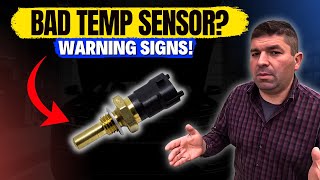
- A smell of unburnt fuel from the exhaust due to the rich running condition. 🎬 Watch: 8 common symptoms of a failing coolant temperature sensor
- Replacing the thermostat first. The ECT sensor is far cheaper, easier to replace, and is the most common failure point for this specific code on the 2.7T engine. Always start with the sensor.
Most Likely Causes
- Faulty Engine Coolant Temperature (ECT) Sensor (G62) 🔴 High Probability → Shop Engine Coolant Temperature Sensor The original-spec black or blue sensors had a very high failure rate. The sensor provides two different signals (one to the ECU, one to the dash gauge), and the ECU side can fail while the gauge still appears to work, making diagnosis tricky without a scan tool.
How to confirm: Using a scan tool (like VCDS), compare the live coolant temperature data from the ECU to the dashboard gauge reading. A significant discrepancy or a reading stuck at -40°C points to a bad sensor. However, given the low cost and ease of replacement, many owners replace it as the first step without extensive diagnosis.
Typical fix: Replace the ECT sensor, its o-ring, and the plastic retaining clip. Be sure to use the updated 'green top' sensor (OEM Part No. 059919501A). The job takes less than 10 minutes.
Est. part cost: $15-$40 - Stuck-Open Coolant Thermostat 🟡 Medium Probability → Shop Integrated Thermostat Housing Assembly Thermostats are a common wear item that can fail by sticking open. This allows coolant to flow to the radiator at all times, preventing the engine from reaching operating temperature quickly, especially in cold weather.
How to confirm: If a new ECT sensor does not resolve the code, the thermostat is the next likely cause. Feel the upper radiator hose shortly after a cold start; if it warms up along with the engine instead of remaining cool until the engine is hot, the thermostat is likely open and allowing coolant to circulate prematurely.
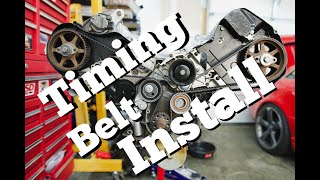
Typical fix: Replace the thermostat and its gasket (OEM Part No. 078121113F). This is a labor-intensive job on the 2.7T engine as the thermostat is located behind the timing belt. It is almost always done as part of a full timing belt service. 🎬 See this walkthrough for replacing the thermostat and timing belt
Est. part cost: $30-$80 - Damaged ECT Sensor Wiring or Connector ⚪ Low Probability → Shop Engine Coolant Temperature Sensor After 20+ years, the engine bay wiring insulation can become brittle and crack from heat cycles, leading to short circuits or breaks in the connection to the sensor. The connector's locking tab is also fragile and often breaks.
How to confirm: Visually inspect the wiring harness and the plastic connector leading to the ECT sensor for any signs of cracking, fraying, or corrosion on the pins. Wiggle the connector with the engine running and monitor live data for changes.
Typical fix: Repair the damaged section of wire or replace the connector pigtail.
Est. part cost: $10-$30
Rare But Worth Checking
- Low Coolant Level: While more likely to cause overheating codes, a very low coolant level can cause air pockets and erratic readings from the ECT sensor. Always check the coolant level in the expansion tank first as a basic step.
Diagnosis Steps
- Check the coolant level in the expansion tank and top off if necessary. Ensure you use the correct G12/G12+ spec coolant.
- Scan the vehicle for any other fault codes. Use a VAG-specific tool like VCDS to check for Freeze Frame data, which can provide clues. A reading of -40°C strongly suggests a failed sensor or wiring.
- Replace the Engine Coolant Temperature (ECT) sensor (G62), o-ring, and clip. This is the most probable cause. The sensor is located on a coolant crossover pipe at the rear of the engine, below the intake boot. It is held in by a simple plastic clip and can be swapped in minutes.
- Clear the fault codes and perform a drive cycle, allowing the car to warm up fully to see if P1296 returns.
- If the code returns, inspect the wiring and connector for the ECT sensor for any visible damage or corrosion. The connector itself can become brittle and fail.
- If the sensor and wiring are confirmed to be good, the next step is to diagnose the thermostat. This typically involves replacing it, which is a significant job requiring removal of the front bumper and timing belt.
Parts You'll Likely Need
- Engine Coolant Temperature Sensor Kit (Green Top)
(OEM #059919501A)— This is the most common failure item causing code P1296 on the B5 S4. The original black/blue sensors (p/n 078919501C) were unreliable and superseded by this green version.
Trusted brands: Genuine Audi/VW, Hella, Febi, Vemo
OEM price range: $25-$40
Aftermarket price range: $15-$25 - Engine Coolant Thermostat
(OEM #078121113F)— This is the second most likely cause if the ECT sensor replacement does not fix the issue. It fails by sticking open, preventing the engine from warming up properly.
Trusted brands: Mahle, Behr, Wahler
OEM price range: $50-$80
Aftermarket price range: $30-$50
Related Codes That Often Appear With This One
- P1127 — Long Term Fuel Trim B1 System Too Rich. The ECU adds excess fuel because the faulty ECT sensor makes it think the engine is perpetually cold, leading to a rich condition.
- P1129 — Long Term Fuel Trim B2 System Too Rich. Same as P1127, but for the second cylinder bank. It's common to see rich codes for both banks with P1296.
- P0118 — Engine Coolant Temp. Sensor (G62) Signal too High. This is another code that points directly to a fault with the ECT sensor or its circuit, often from a short to power.
- 17704 — This is the VAG-specific fault code number that corresponds to the generic OBD-II code P1296.
Platform-Specific Known Issues
- The thermostat on the 2.7T engine is located behind the timing belt. Its replacement is a labor-intensive job that is typically bundled with a full timing belt and water pump service to save on overlapping labor costs.
- Real-world repair story: An owner on AudiForums.com reported getting code P1296, noting the cooling fan was running constantly. Another user advised it could be the thermostat but that the ECT sensor is a more common failure and easier to replace first.
Mechanic-Grade Diagnostic Values
- G62 ECT Sensor Resistance (ECU-side pins) — expected: At ~20°C (68°F): 2,200 - 3,000 Ω. At ~80°C (176°F): 275 - 375 Ω. At ~100°C (212°F): 180 - 250 Ω.. Failure: Readings significantly outside these ranges, or an open/short circuit. A reading of infinity (open circuit) or near zero ohms (short circuit) indicates a failed sensor.
- VCDS/VAG-COM Live Data - Freeze Frame — expected: Normal operating temperature should be between 80°C and 100°C.. Failure: A stored Freeze Frame temperature of -40°C or +140°C almost always indicates a failed sensor or a complete break/short in the wiring. A temperature that gets stuck in the 60-80°C range during a full drive cycle points towards a stuck-open thermostat.
- VCDS/VAG-COM Live Data - Measuring Blocks — expected: In Module 01-Engine, check Measuring Block Group 001, field 4 for coolant temperature. Alternatively, Group 004 can be used. In Module 17-Instruments, Group 003 shows the temperature read by the instrument cluster. The two values should be within a few degrees of each other on a healthy system.. Failure: A large discrepancy between the Engine and Instrument cluster readings points to a failure in the dual-output sensor. The ECU value (Engine module) is the critical one for P1296.
Scan Tool Commands That Help
- VCDS (VAG-COM): Output Test Sequence (DTC) — Within module [01-Engine] or [08-Auto HVAC], you can run an output test for the cooling fans. This is useful if a symptom is 'fans run constantly' or 'fans never turn on'. The test commands the fan control module (J293) to cycle the fans, confirming if the fans and their controller are operational, which helps isolate the problem to the sensor/input side of the system.
Wiring & Ground Locations
- G62 Sensor Connector — 4-pin connector on the coolant pipe at the rear of the engine, driver's side, below the intake 'Y-pipe'.. This is the direct connection point for the sensor. The plastic connector and its locking tab become brittle with age and can break, leading to a poor or intermittent connection that mimics a sensor failure. The wiring harness in this area is also subject to heat degradation.
- G62 ECU Signal Wire — The signal wire from the G62 sensor to the ECU is typically Grey with a Brown stripe (GY/BR) and connects to pin T55/45 on the ECU.. If a new sensor doesn't fix the issue, a continuity test from the sensor connector to this ECU pin is the next step to rule out a broken wire in the harness.
- Engine Ground Points — The main engine-to-chassis ground is a cable from the passenger side frame rail to the engine mount bracket. There are also smaller ground wire bundles bolted to the back of the intake manifold.. The G62 sensor circuit relies on a solid engine ground. A corroded or loose main ground strap can cause floating voltages and erratic sensor readings across the entire engine management system, including the G62, leading to implausible signals and fault codes.
Real Owner Repair Stories
- AudiSRS.com user 'newsh' (Audi S4 B5 (year not specified)) — Car was down on power, felt like no boost and retarded ignition. Scanned and found P0116 (Engine Coolant Temp. Sensor (G62) - Implausible Signal) along with rich fuel trim codes (P1127, P1129).
❌ Tried (didn't work) The user had already replaced the G62 coolant sensor with a genuine Audi part just a week prior to the codes appearing.
✅ What actually fixed it The user discovered the plastic connector housing for the G62 sensor had a broken catch and was only being held on with a zip tie. This loose connection was causing the intermittent 'implausible signal'. Replacing the connector pigtail and ensuring a secure connection resolved the issue.
OEM Part Supersession History
078919501C→059919501A— The original black (or sometimes blue) 4-pin sensors were made of a plastic that was prone to cracking and internal failure, leading to a high warranty replacement rate.
Heads up: The green sensor (059919501A) is a direct, improved replacement for the black/blue sensor (078919501C). There are no known incompatibilities; using the older part number is not recommended. Always purchase the kit with a new o-ring and clip.
Model Year Variations Within This Range
- 1997-1999.5 (Pre-Facelift) vs. 2000-2002 (Facelift): While the G62 sensor and thermostat function are the same, there were running changes to the cooling system. Facelift (FL) cars received a slightly taller radiator (430mm) compared to Pre-Facelift (PFL) models. While this doesn't directly impact the P1296 diagnosis, it's a critical detail when replacing radiators or associated front-end components. The facelift transition occurred around mid-1999, and some 'changeover' cars can have a mix of PFL and FL parts.
Diagnostic Flowchart
Other Known Issues on This Vehicle
Issues unrelated to this code that are worth knowing about as an owner of this generation:
- OEM BorgWarner K03 Turbocharger Failure 🔴 High — Very common, especially on tuned vehicles or those over 100,000 miles. Failures under 100k miles are also frequently reported. Replacement is extremely labor-intensive, requiring engine removal.
- Front Control Arm Bushing and Ball Joint Wear 🔴 High — Considered a standard wear-and-tear item. The complex 8-arm front suspension leads to clunking noises, poor alignment, and sloppy handling, often requiring a full kit replacement every 60,000-100,000 miles.
- Instrument Cluster LCD Pixel Failure 🟠 Medium — Extremely common across the B5 platform. The central red LCD screen loses pixels, becoming unreadable over time. This does not affect vehicle operation but is a significant annoyance.
- Valve Cover and Camshaft Tensioner Gasket Oil Leaks 🟠 Medium — Frequent oil leaks develop from the valve cover gaskets and the half-moon camshaft tensioner seals, which are common maintenance items.
- Auxiliary After-Run Coolant Pump Failure 🟠 Medium — This electric pump, located under the intake manifold, is prone to leaking or failing, which can affect turbocharger cooling after engine shutdown.
Used vs. New Parts: Buying Guide for This Vehicle
When a used part is the smart pick: For this specific repair, using used parts is generally not recommended. The primary failure component, the ECT sensor, is an inexpensive wear item. A used sensor has an unknown history and a high likelihood of being near the end of its life. A used thermostat is also a high-risk part to install given the extreme labor involved.
Donor-vehicle mileage cap: roughly under 10000 miles for the part to have meaningful remaining life.
What to inspect on the donor part:
- If forced to use a used part in an emergency, only consider the wiring connector pigtail, not the sensor itself.
- Inspect the plastic for brittleness and ensure the locking tab is intact and functional.
- Check for any signs of corrosion on the metal pins inside the connector.
OEM-only on this vehicle (don't cheap out):
- Engine Coolant Temperature Sensor (G62)
- Thermostat
Aftermarket brands forum-validated for this vehicle:
- For the ECT Sensor: Hella, Febi, Vemo, Bosch (often the original OEM supplier)
- For the Thermostat: Mahle, Behr, Wahler
Brands owners have reported issues with on this vehicle:
- Unnamed, no-brand 'eBay special' or 'Amazon generic' sensors. Forum users frequently report these parts failing quickly or being dead-on-arrival, causing the same fault code to return and wasting diagnostic time.
Real Owner Stories
Aggregated from forums and TSBs cited above. Mileages and costs reflect what owners reported in those sources.
1997-2002 Audi S4 2.7T V6
Symptoms: The owner reported getting code P1296 and noticed the cooling fan was running constantly.
What fixed it: Another user advised that while it could be the thermostat, the ECT sensor is a much more common failure and significantly easier and cheaper to replace first. The recommended first step was to replace the ECT sensor.
Source hint: vehicle_specific_issues section, citing an owner report from AudiForums.com
Related OBD-II Codes
Frequently Asked Questions
My temperature gauge on the dash seems to work fine, but I still have a P1296 code. Could the coolant sensor still be the problem?
What is the correct replacement part number for the ECT sensor on my S4?
My cooling fans are running constantly, even right after a cold start. Is this related to the P1296 code?
I replaced the ECT sensor and the P1296 code came back. What should I check next?
How difficult is it to replace the thermostat on the 2.7T engine?
My scan tool's freeze frame data shows a coolant temperature of -40°C. What does this indicate?
Helpful Videos
We Have This Part in Stock




The information in this article is provided for general reference and educational purposes only. Vehicle specifications, procedures, and part compatibility can vary by production date, trim level, and region. Always consult your vehicle's factory service manual and verify part numbers before purchasing or performing repairs. Safety-critical components such as airbags, seat belts, and braking systems should be installed by a qualified professional.
- Audi S4:
- 🧭 Diagnostic Flowchart
- 🎬 Helpful Videos
- 🛍️ Shop This Part
- What's Unique About the 1997-2002 Audi S4
- Symptoms You May Notice
- Most Likely Causes
- Rare But Worth Checking
- Diagnosis Steps
- Parts You'll Likely Need
- Related Codes That Often Appear With This One
- Platform-Specific Known Issues
- Mechanic-Grade Diagnostic Values
- Scan Tool Commands That Help
- Wiring & Ground Locations
- Real Owner Repair Stories
- OEM Part Supersession History
- Model Year Variations Within This Range
- Other Known Issues on This Vehicle
- Used vs. New Parts: Buying Guide for This Vehicle
- Real Owner Stories
- 1997-2002 Audi S4 2.7T V6
- Related OBD-II Codes
- Frequently Asked Questions
- 🎟️ Get 5% Off