

P1299 on 2007-2014 Ford Edge 3.5L: Cylinder Head Overheating Causes and Fixes
P1299 means your Edge's computer has activated 'fail-safe' mode due to a real or perceived engine overheat. The most common causes are a failed Cylinder Head Temperature (CHT) sensor or a genuine cooling system failure, such as a leak or a bad water pump. A CHT sensor replacement is a labor-intensive job costing $500-$800, while a failure of the internal water pump can be significantly more, often exceeding $2,000.
- P1299 is a critical code on your Ford Edge. Do not drive the vehicle; have it inspected immediately to prevent severe engine damage.
- The first diagnostic step is to determine if the engine is truly overheating or if a faulty sensor is sending a false signal.
- A common cause is a failed Cylinder Head Temperature (CHT) sensor, which is an expensive repair due to its location under the intake manifolds.
- If the engine is genuinely overheating, check for coolant leaks. Be aware that the internal water pump is a known major failure point on this engine.
- Due to the complexity and potential for catastrophic damage, professional diagnosis and repair are strongly recommended.
What's Unique About the 2007-2014 Ford Edge
The 2007-2014 Ford Edge with the 3.5L V6 has two primary vulnerabilities that lead to a P1299 code. First, the Cylinder Head Temperature (CHT) sensor is notoriously difficult to access, as it's buried under the upper and lower intake manifolds in the engine valley. This turns a cheap part into a costly, labor-intensive repair. Second, this engine features an internal, timing-chain-driven water pump. When the water pump fails, its weep hole can clog, causing it to leak coolant directly into the engine oil. This contaminates the oil, leading to rapid overheating, loss of lubrication, and destruction of timing components, which can cause catastrophic engine failure with little external warning.
Generation note: The 2007-2014 year range covers the entire first generation Ford Edge, including the 2007-2010 pre-facelift and 2011-2014 facelift models. The 3.5L V6 engine, the location of the CHT sensor, and the internal water pump design are consistent across this entire period, so the causes and fixes are the same. For the 2011 model year, the 3.5L V6 was updated to produce 285 horsepower, up from 265, but this did not change the fundamental design related to this trouble code.
Symptoms You May Notice
- Sudden and severe loss of engine power (limp mode)
- Temperature gauge reading maxed out in the 'Hot' zone
- Check Engine Light is on
- Wrench light may be illuminated 🎬 Watch: A breakdown of P1299 causes and common fixes
- Engine may stall or shut down completely and refuse to restart
- Cooling fans running constantly at high speed
- A/C may stop working as the PCM sheds non-essential loads
- Rough, vibrating, or shaking engine as cylinders are deactivated
- Replacing the PCM. The PCM is rarely the cause. A false signal from a bad CHT sensor, its wiring, or even a faulty alternator is far more likely and should be ruled out first.
- Replacing only the thermostat when the actual cause is a faulty CHT sensor. If the symptoms are a temperature gauge that instantly reads hot on a cold engine, the problem is electrical, not a mechanical cooling system issue.
Most Likely Causes
- Failed Cylinder Head Temperature (CHT) Sensor 🔴 High Probability → Shop Engine Cylinder Head The sensor is a common failure point. It can fail internally or the wiring leading to it can be damaged, sending a false 'overheat' signal to the computer. Due to its location in the hot engine valley, it is subject to extreme heat cycles.
How to confirm: Use a scan tool to observe the CHT data with a cold engine. If the temperature reading immediately jumps to a very high value (e.g., 250°F or higher) or reads an illogical low like -40°F, the sensor or its circuit is faulty. A healthy sensor should show ambient temperature on a cold start. The CHT sensor circuit can be tested at the PCM; for a similar 3.5L V6, the signal wire is Yellow/Light Green (pin 41) and the ground is Grey/Red (pin 58). A healthy sensor should have a resistance of approximately 37,000 Ohms at 68°F (20°C).
Typical fix: Replace the CHT sensor and its connector pigtail. This requires removing the upper and lower intake manifolds to access the sensor. The intake manifold gaskets must be replaced. The OEM Motorcraft sensor is part number 9L8Z-6G004-E (also sold as DY1145). The connector pigtail is often sold as Motorcraft WPT-1255. Ford service information states that the CHT sensor must be replaced anytime it is removed; it is not reusable.
Est. part cost: $100-$180 for the OEM sensor, connector pigtail, and required intake gaskets. - Low Engine Coolant Level / Coolant Leak 🟡 Medium Probability Leaks can develop from hoses, the radiator, or the thermostat housing. A critical failure point is the internal water pump, which can leak coolant into the crankcase, causing a 'low coolant' condition without any visible external drips. The pump is designed with a weep hole that should leak externally just behind the alternator, but if this channel clogs, the coolant has nowhere to go but into the oil pan.
How to confirm: Visually inspect the coolant reservoir; if it's empty, there is a leak. Check the engine bay and under the vehicle for signs of coolant (sweet smell, colorful puddles), paying special attention to the area behind the alternator for drips from the water pump weep hole. Critically, check the engine oil on the dipstick for a milky, 'chocolate milk' appearance, which indicates a failed internal water pump.
Typical fix: Find and repair the source of the leak. This could be as simple as replacing a hose or as complex and expensive as replacing the internal water pump, timing chain, guides, and tensioners.
Est. part cost: $20 (hose) - $1800+ (water pump and timing kit job). - Failed Thermostat ⚪ Low Probability → Shop Integrated Thermostat Housing Assembly The thermostat can fail by getting stuck closed, which prevents coolant from circulating to the radiator and causes a genuine, rapid overheat condition.
How to confirm: After starting the engine, feel the upper radiator hose. If the engine temperature gauge climbs into the hot zone but the hose remains cool, the thermostat is likely stuck closed.
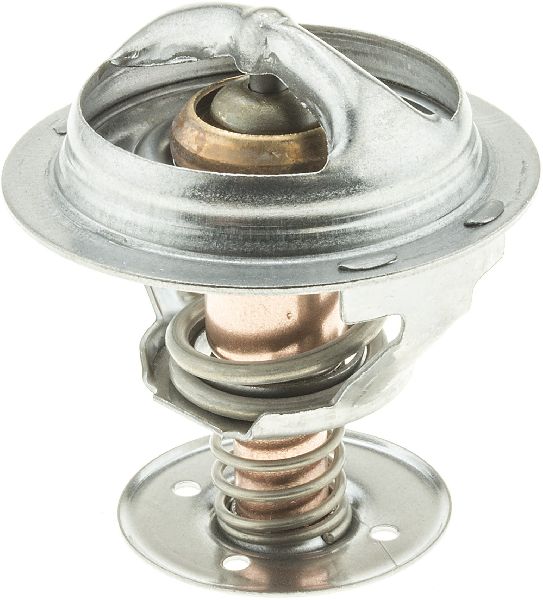
Typical fix: Replace the thermostat and housing assembly. It's recommended to use an OEM part, such as Motorcraft RT-1251.
Est. part cost: $70-$150 for an OEM thermostat assembly. - Failing Cooling Fan Assembly ⚪ Low Probability
How to confirm: With the engine at operating temperature (if it can be run safely without overheating), the cooling fans should be running, especially with the A/C on. If they are not spinning, check the fan fuses and relays first. The fan motor or control module may have failed.
Typical fix: Replace the cooling fan assembly, which typically includes the motors, blades, and shroud.
Est. part cost: $200-$400
Rare But Worth Checking
- Failing Alternator: A failing alternator can create electrical 'noise' or AC voltage ripple that interferes with the CHT sensor's signal, tricking the PCM into thinking the engine is overheating. This can cause a P1299 code even when the CHT sensor and cooling system are perfectly fine. In one documented case on a Ford Transit, disconnecting the alternator's positive cable made the false overheat code disappear, proving the alternator was the root cause.
- Failed Internal Water Pump: → Shop Engine Water Pump While a coolant leak is a medium probability, the specific failure of the internal water pump deserves special mention. It is a known, catastrophic failure on the 3.5L V6. It requires extensive labor to replace, as it is driven by the timing chain. Failure often leads to coolant contaminating the oil, destroying the timing components and potentially the entire engine. 🎬 Watch: Why the internal water pump is so expensive to fix
Diagnosis Steps
- CRITICAL FIRST STEP: Determine if the engine is actually overheating. Check for physical signs like steam from the engine bay, the smell of boiling coolant, or a bone-dry coolant reservoir. DO NOT open the coolant cap on a hot engine.
- If no signs of a real overheat are present, suspect a faulty CHT sensor circuit. Connect an OBD-II scanner and view the live data for the CHT sensor with the engine cold. If the reading is nonsensical (e.g., -40°F or 260°F), the CHT sensor or its wiring is the likely culprit.
- If the engine IS overheating, turn it off immediately. Once cool, check the coolant level in the reservoir.
- If the coolant is low, top it off and perform a cooling system pressure test to find the leak. Critically, check the oil for a milky, 'milkshake' appearance, which points to an internal water pump failure.
- If the coolant level is full but the engine overheats, check for a stuck thermostat (upper radiator hose stays cold).
- Verify the cooling fans are operating when the engine gets warm and when the A/C is turned on. Check fuses and relays first.
- If all cooling system components seem to work and no leaks are found, but the P1299 was triggered by a real overheat, consider a blockage in the radiator or a failing water pump that isn't circulating coolant effectively.
- As a rare final check, if a false P1299 is suspected but the CHT sensor and wiring are good, test the alternator for excessive AC ripple voltage that could be causing electrical interference.
Parts You'll Likely Need
- Cylinder Head Temperature (CHT) Sensor
(OEM #9L8Z-6G004-E (Motorcraft DY1145)) - Upper and Lower Intake Manifold Gasket Set
- Internal Water Pump
(OEM #AT4Z-8501-C) - Timing Chain Kit
- Thermostat
(OEM #RT-1251)
Related Codes That Often Appear With This One
- P1285 — This code means 'Cylinder Head Overtemperature Condition'. It is often the first code set as the temperature rises, with P1299 being triggered when the PCM decides to take protective action.
- P0217 — This is a generic code for 'Engine Coolant Overtemperature Condition'. It confirms a genuine overheating event, often appearing with P1299 when the cause is low coolant, a stuck thermostat, or a failing water pump.
- P1289 — This code for 'Cylinder Head Temperature Sensor Circuit High Input' points directly to an electrical fault with the CHT sensor or its wiring. If you see this code, the P1299 is almost certainly caused by a false signal, not a real overheat.
Technical Service Bulletins (TSBs) & Recalls
- While no specific TSB for P1299 on the 2007-2014 Edge was found, several TSBs address the common related failures. TSB 18-2013 covers the 'Door Ajar' light issue. Customer Satisfaction Program 13N03 was issued for the failing electronic throttle body. Recall 23S12 and Customer Satisfaction Program 13N02 addressed brake booster issues.
Platform-Specific Known Issues
- The 3.5L Duratec V6 is known for internal water pump failure. Because the pump is driven by the timing chain, a failure can cause coolant to mix with the engine oil, leading to rapid overheating and potentially destroying the engine.
- The location of the CHT sensor under the intake manifolds makes its replacement unusually labor-intensive and costly for what would otherwise be a simple sensor swap.
Mechanic-Grade Diagnostic Values
- CHT Sensor Resistance — expected: Approximately 37,000 Ohms (37 kΩ) at 68°F (20°C). Resistance decreases as temperature increases.. Failure: An open circuit (infinite resistance) or short circuit (near-zero resistance), or a value that doesn't correlate with the known temperature of the engine head.
- CHT Sensor Signal Voltage (at PCM, engine cold) — expected: Approximately 3.4V at 60°F (15.5°C). Voltage decreases as temperature increases.. Failure: Voltage near 5.0V (indicating an open circuit) or near 0V (indicating a short to ground) on a cold engine.
- CHT Sensor Reference Voltage (KOEO, sensor unplugged) — expected: Approximately 5.0V on the signal wire side of the harness connector.. Failure: No voltage or significantly less than 5.0V points to a PCM or wiring issue.
Scan Tool Commands That Help
- Ford IDS (Integrated Diagnostic System): Datalogger - CHT PID — To monitor the live voltage and inferred temperature from the CHT sensor. This is the primary method to determine if the sensor is sending an irrational signal (e.g., max temp on a cold engine) versus a legitimate overheating reading.
- Ford IDS (Integrated Diagnostic System): Self-Test (KOEO or KOER) — To retrieve specific DTCs like P1289 (CHT Circuit High) or P1290 (CHT Circuit Low) that pinpoint an electrical fault, which strongly suggests the P1299 is a false alarm.
Wiring & Ground Locations
- CHT Sensor Connector — In the engine valley between the cylinder heads, under the lower intake manifold, connected to the passenger-side cylinder head.. This connector and its pigtail are subjected to intense heat and can become brittle and fail, causing an open or short in the CHT circuit, leading to a false P1299 code.
- G104 — On the left front of the engine compartment.. This is a primary engine compartment and PCM ground point. A corroded or loose connection here can cause erratic sensor readings, including for the CHT sensor.
- G101 — Located at the right rear of the engine.. Another critical engine ground. Verifying its integrity is important when diagnosing any unexplained electrical sensor faults.
- Water Pump Weep Hole Passage — The internal water pump has a weep passage that is designed to exit the engine block externally, just above and behind the alternator on the front of the engine.. This is the ONLY external indicator of an impending internal water pump failure. If coolant crusties or drips are seen here, the pump is failing and must be replaced before it leaks into the oil. If this passage clogs, the failure will be completely internal with no warning.
Real Owner Repair Stories
- Ford Edge Forum user (Ford Edge 3.5L (year not specified, but within range)) — P1289 code (CHT Sensor High Input) and an overheating message on the dash.
❌ Tried (didn't work) Took vehicle to a dealership, which misdiagnosed it as a camshaft sensor issue and quoted $1200 for the repair.
✅ What actually fixed it The owner retrieved the vehicle and took it to an independent mechanic who correctly identified the issue was the CHT sensor based on the technician's notes. Replacing the CHT sensor resolved the code and symptoms for a much lower cost. - Ford F150 Forum user (different vehicle, same code/sensor principle) (2016 F-150 2.7L, 120k miles) — Sudden rough idle, smell of unburnt fuel, then check engine light, overheat alert, high-speed fans, and severe limp mode after 2 miles. Scan tool showed P1299 and pegged temperature gauge despite a cold engine.
❌ Tried (didn't work) Scan tool initially suggested a thermostat issue.
✅ What actually fixed it Based on forum advice, the owner suspected the CHT sensor. He purchased a new sensor (Ford part 9L8Z-6G004-F) for $35 and replaced it in under 10 minutes (access is much easier on the 2.7L). After clearing the code, the issue was resolved.
OEM Part Supersession History
9L8Z-6G004-C→9L8Z-6G004-E (also sold under part number DY1145)— Standard part revision by the manufacturer.
Heads up: The newer part number is the correct service replacement and is fully compatible. Always use a new sensor upon removal as they are considered one-time use.
Model Year Variations Within This Range
- 2011-2014: The 3.5L V6 engine received an update for the 2011 model year facelift, increasing output from 265 hp to 285 hp. However, the core design, including the internal water pump and the location of the CHT sensor, remained the same, so the causes and repair procedures for P1299 are identical across the 2007-2014 range.
- 2007-2010 vs 2011-2014: While the engine components related to P1299 are the same, a complete engine swap between these two sub-generations is not possible. The 2011-2014 engines have a different variable valve timing system that will not communicate with the PCM from a 2007-2010 vehicle.
Diagnostic Flowchart
Other Known Issues on This Vehicle
Issues unrelated to this code that are worth knowing about as an owner of this generation:
- Power Transfer Unit (PTU) Failure (AWD Models) 🔴 High — Very common, especially on models over 60,000-80,000 miles. The PTU is located near the hot exhaust, causing the non-serviceable fluid to cook and break down, leading to gear and bearing failure.
- Internal Water Pump Failure 🔴 High → Shop Engine Water Pump — A significant risk after 70,000-100,000 miles. Failure is often catastrophic as it leaks coolant into the oil, destroying timing components and potentially the entire engine.
- Door Ajar Sensor Failure 🟡 Low — Extremely common across all years. The sensor inside the door latch assembly fails, leaving the 'Door Ajar' light on and draining the battery. Often requires replacement of the entire latch assembly. (Ref: TSB 18-2013)
- Electronic Throttle Body (ETB) Failure 🟠 Medium — A well-documented, widespread failure point causing sudden limp mode. The issue was so common Ford issued a Customer Satisfaction Program (13N03) extending the warranty, which has since expired. (Ref: Customer Satisfaction Program 13N03)
- Transmission Hard Shifting / Failure (Early Models) 🟠 Medium — More common on 2007-2008 models. Owners report sudden shutdowns, clunking, and hard shifts. Failures of the output shaft speed sensor or turbine shaft speed sensor were addressed in TSB 07-21-11. (Ref: TSB 07-21-11)
Used vs. New Parts: Buying Guide for This Vehicle
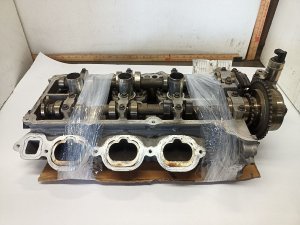
When a used part is the smart pick: For this specific repair, using used parts is generally not recommended for the primary failure components. The only potentially suitable used part would be a complete cooling fan assembly if it has been tested and confirmed to work, as new units can be costly.
Donor-vehicle mileage cap: roughly under 100000 miles for the part to have meaningful remaining life.
What to inspect on the donor part:
- For a cooling fan assembly, check for cracked or brittle plastic on the shroud and blades.
- Ensure the electrical connector is free of corrosion or damage.
- Ask the seller if the fan was tested prior to removal.
OEM-only on this vehicle (don't cheap out):
- Cylinder Head Temperature (CHT) Sensor: The labor to access this sensor is immense. Using a used or cheap aftermarket sensor introduces a high risk of premature failure, forcing you to do the entire job again. Always use a new OEM Motorcraft sensor.
- Internal Water Pump: This is a catastrophic failure point for the engine. The cost of failure (a destroyed engine) far outweighs any savings from a used or non-reputable aftermarket pump. Use only an OEM Motorcraft pump and a new timing set.
- Intake Manifold Gaskets: These are single-use gaskets and must be new to ensure a proper seal and prevent vacuum leaks.
Aftermarket brands forum-validated for this vehicle:
- Gates: Often cited by professionals as a reliable alternative for water pumps and timing components, though OEM is still preferred for the internal water pump on this engine.
- Fel-Pro: A widely trusted brand for intake manifold and valve cover gaskets.
Brands owners have reported issues with on this vehicle:
- No-name/white-box eBay/Amazon parts: For critical components like the CHT sensor and internal water pump, the risk of poor quality control and premature failure is extremely high. Avoid generic, unbranded parts for this repair.
Real Owner Stories
Aggregated from forums and TSBs cited above. Mileages and costs reflect what owners reported in those sources.
2014 Ford Edge 3.5L V6
Symptoms: A user identified potential causes for the P1299 code including low coolant, a drive belt issue, or a failed CHT sensor, noting the extreme difficulty of accessing the sensor.
What fixed it: The discussion confirms the fix involves replacing the CHT sensor located under the intake manifold.
Source hint: FordEdgeForum.com thread titled 'P1299 Trouble code - Ford Edge Forum'
2014 Lincoln MKS 3.7L V6
Symptoms: The owner experienced a classic P1299 scenario involving a known coolant leak and persistent overheating even after the water pump was replaced.
What fixed it: Troubleshooting the thermostat and CHT sensor after the initial water pump replacement failed to resolve the overheating.
Source hint: Reddit r/AskMechanics thread titled '2014 Lincoln MKS, Overheating, P1299 code'
Related OBD-II Codes
Frequently Asked Questions
Is there a TSB for the P1299 code on my 2007-2014 Ford Edge?
Can I reuse the CHT sensor on my 3.5L V6 if I have to remove it for another repair?
Why is the labor so expensive to fix a P1299 sensor issue on the Edge?
What specific part numbers do I need for the CHT sensor repair?
My Edge has a P1299 and the oil looks like chocolate milk. What does that mean?
Where should I look for an external coolant leak from the water pump on my 3.5L V6?
Helpful Videos

Used OEM Parts in Stock
New Aftermarket Parts Available


The information in this article is provided for general reference and educational purposes only. Vehicle specifications, procedures, and part compatibility can vary by production date, trim level, and region. Always consult your vehicle's factory service manual and verify part numbers before purchasing or performing repairs. Safety-critical components such as airbags, seat belts, and braking systems should be installed by a qualified professional.
- Ford Edge:
- 🧭 Diagnostic Flowchart
- 🎬 Helpful Videos
- 🛍️ Shop This Part
- What's Unique About the 2007-2014 Ford Edge
- Symptoms You May Notice
- Most Likely Causes
- Rare But Worth Checking
- Diagnosis Steps
- Parts You'll Likely Need
- Related Codes That Often Appear With This One
- Technical Service Bulletins (TSBs) & Recalls
- Platform-Specific Known Issues
- Mechanic-Grade Diagnostic Values
- Scan Tool Commands That Help
- Wiring & Ground Locations
- Real Owner Repair Stories
- OEM Part Supersession History
- Model Year Variations Within This Range
- Other Known Issues on This Vehicle
- Used vs. New Parts: Buying Guide for This Vehicle
- Real Owner Stories
- 2014 Ford Edge 3.5L V6
- 2014 Lincoln MKS 3.7L V6
- Related OBD-II Codes
- Frequently Asked Questions
- 🎟️ Get 5% Off