

P1299 on 2009-2019 Ford Flex 3.5L: Overheating Causes and Fixes
P1299 means your Ford Flex's computer thinks the engine is overheating and has activated a protective 'limp mode'. This can be a false alarm from a bad Cylinder Head Temperature (CHT) sensor, or a real overheat event, most notoriously caused by a failing internal water pump—a very expensive repair.
- P1299 is a critical code on your Ford Flex. Stop driving immediately to prevent severe engine damage.
- The first step is to determine if the engine is actually overheating or if it's a false alarm from a bad sensor.
- A coolant leak on the passenger side of the engine is a strong sign of the common and very expensive internal water pump failure.
- Due to the location of the CHT sensor and water pump, repairs are complex and best left to a professional.
- For 2011-2012 models, a faulty cooling fan could be the cause of overheating at low speeds, as noted in a Ford TSB.
What's Unique About the 2009-2019 Ford Flex
The 3.5L V6 'Cyclone' engine in the Ford Flex has two major design quirks related to this code. First, the water pump is internal and driven by the timing chain. This is a well-documented, common failure point that is extremely labor-intensive and expensive to replace. When it fails, it can leak coolant internally into the engine oil, leading to catastrophic engine failure. Second, the Cylinder Head Temperature (CHT) sensor is located under the lower intake manifold, turning a simple sensor swap into a multi-hour job. These two factors make diagnosing P1299 correctly on a Flex especially critical to avoid unnecessary costs.
Symptoms You May Notice
- Severe reduction in engine power (limp mode)
- Check engine light is on
- Temperature gauge reading at maximum ('H' or in the red)
- Engine temperature warning light illuminated
- Steam coming from the engine bay
- Sweet smell of coolant outside the vehicle
- Loud boiling or gurgling sounds from the engine
- Engine may stall and refuse to restart until it cools down
- Replacing the thermostat when the actual cause is a faulty CHT sensor or a failing water pump.
- Assuming the engine is fine because there are no visible leaks, without realizing the common water pump leak can be subtle at first.
- Replacing the engine coolant temperature (ECT) sensor, not realizing this engine uses a CHT sensor for its primary temperature reading and fail-safe strategy.
Most Likely Causes
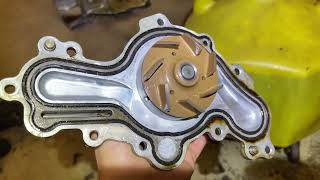
- Internal Water Pump Failure 🔴 High Probability → Shop Engine Water Pump The 3.5L V6 features a timing-chain-driven internal water pump, which is a widely recognized failure point on this engine family, often failing after 80,000-120,000 miles. The internal design means a seal failure can leak coolant directly into the engine oil, destroying the engine's lubricating properties.
How to confirm: Look for a coolant leak dripping from the passenger side of the engine, often appearing near the A/C compressor or alternator. The leak originates from a specific 'weep hole' in the engine block designed to drain coolant from the timing cover when the pump's internal seal fails. You may also notice a dropping coolant level in the reservoir over time.
Typical fix: Replacement of the water pump, timing chain, and related tensioners and guides is required. This is a very labor-intensive job, often requiring 10-12 hours.
Est. part cost: $490-$515 - Faulty Cylinder Head Temperature (CHT) Sensor 🟡 Medium Probability → Shop Engine Cylinder Head The sensor can fail electrically, sending a false high-temperature signal to the PCM even when the engine is cold. This is a very common cause for P1299 when no actual overheating is present.
How to confirm: Check live data with an OBD-II scanner. If the CHT reading is maxed out (e.g., 250°F+) immediately after a cold start, the sensor is almost certainly bad. The engine will not feel hot to the touch, and there will be no other physical signs of overheating.
Typical fix: Replace the CHT sensor and the required intake manifold gaskets. This is a labor-intensive job due to the sensor's location under the intake manifold.
Est. part cost: $20-$30 for the sensor, plus $50-$100 for intake gaskets. 🎬 See this step-by-step CHT sensor replacement walkthrough
- Low Engine Coolant Level 🟡 Medium Probability Leaks can develop over time from hoses, the radiator, or the coolant reservoir, leading to insufficient coolant to properly cool the engine. An air pocket can form in the system, causing a localized hot spot at the CHT sensor.
How to confirm: Visually inspect the coolant level in the reservoir. If low, perform a cooling system pressure test to find the source of the leak.
Typical fix: Top off the coolant with the correct Ford specification fluid and repair the source of the leak (e.g., replace a leaking hose or radiator).
Est. part cost: $20-$300 depending on the source of the leak. - Stuck-Closed Thermostat ⚪ Low Probability → Shop Integrated Thermostat Housing Assembly
How to confirm: With the engine running, feel the upper and lower radiator hoses (use caution, they will be hot). If the thermostat is stuck closed, the upper hose will be very hot while the lower hose remains cool, as coolant is not circulating through the radiator.
Typical fix: Replace the thermostat and gasket.
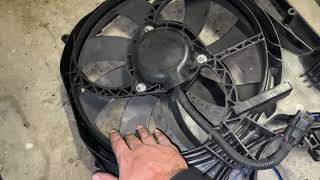
Est. part cost: $25-$75 - Faulty Cooling Fan Assembly ⚪ Low Probability TSB 12-10-3 was issued for 2011-2012 models for faulty cooling fan motors that can cause overheating at low speeds or idle.
How to confirm: With the engine at operating temperature and the A/C on, verify if the cooling fans are running. If they are not, check fuses and relays first, then test the fan motor itself.
Typical fix: Replace the cooling fan motor assembly per the TSB. 🎬 Watch: How to diagnose and fix Ford Flex cooling fans
Est. part cost: $200-$400
Rare But Worth Checking
- Clogged Radiator: → Shop Radiator Internal or external blockages in the radiator can restrict coolant flow or airflow, leading to overheating, especially on high-mileage vehicles.
- Damaged CHT Sensor Wiring: A short or open in the wiring harness between the CHT sensor and the PCM can mimic the symptoms of a failed sensor.
Diagnosis Steps
- DO NOT continue to run the engine. Let it cool down completely.
- Check the coolant level in the reservoir. If it is empty or very low, you have a leak.
- With a cold engine, use an OBD-II scanner to check the live data for the Cylinder Head Temperature (CHT). If it reads an impossibly high temperature (e.g., 250°F / 121°C) immediately on startup, the CHT sensor or its wiring is the most likely cause.
- If the CHT reading is normal on a cold start, carefully start the engine and monitor the temperature. If it rises rapidly past the normal operating range, you likely have a mechanical cooling system problem.
- Inspect the passenger side of the engine block, near the alternator and A/C compressor, for any signs of orange or yellow coolant residue. This is the primary indicator of the common internal water pump failure leaking from its weep hole.
- If there are no signs of a water pump leak, check for cooling fan operation when the engine gets hot (turn the A/C on to command the fans on).
- Perform a cooling system pressure test to identify any external leaks from hoses, the radiator, or the reservoir.
- If the engine overheats but no leaks are found and fans are working, suspect a stuck thermostat.
Parts You'll Likely Need
- Engine Water Pump
(OEM #PW-523 (Motorcraft, check specific application))— The internal water pump is the most common major failure causing a legitimate overheat condition on the 3.5L V6. It is highly recommended to replace the timing chain, guides, and tensioners at the same time.
Trusted brands: Motorcraft, Gates, AISIN
OEM price range: $400-$500
Aftermarket price range: $150-$300 - Engine Cylinder Head Temperature (CHT) Sensor
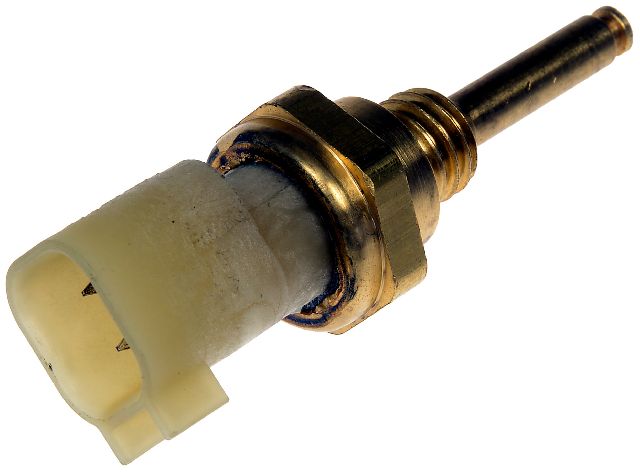
(OEM #GN1Z-6G004-A)— This sensor is a common cause of a false P1299 code. Due to its location under the intake manifold, it's wise to replace it if the manifold is removed for any other service.
Trusted brands: Motorcraft, NGK, Standard Motor Products
OEM price range: $20-$30
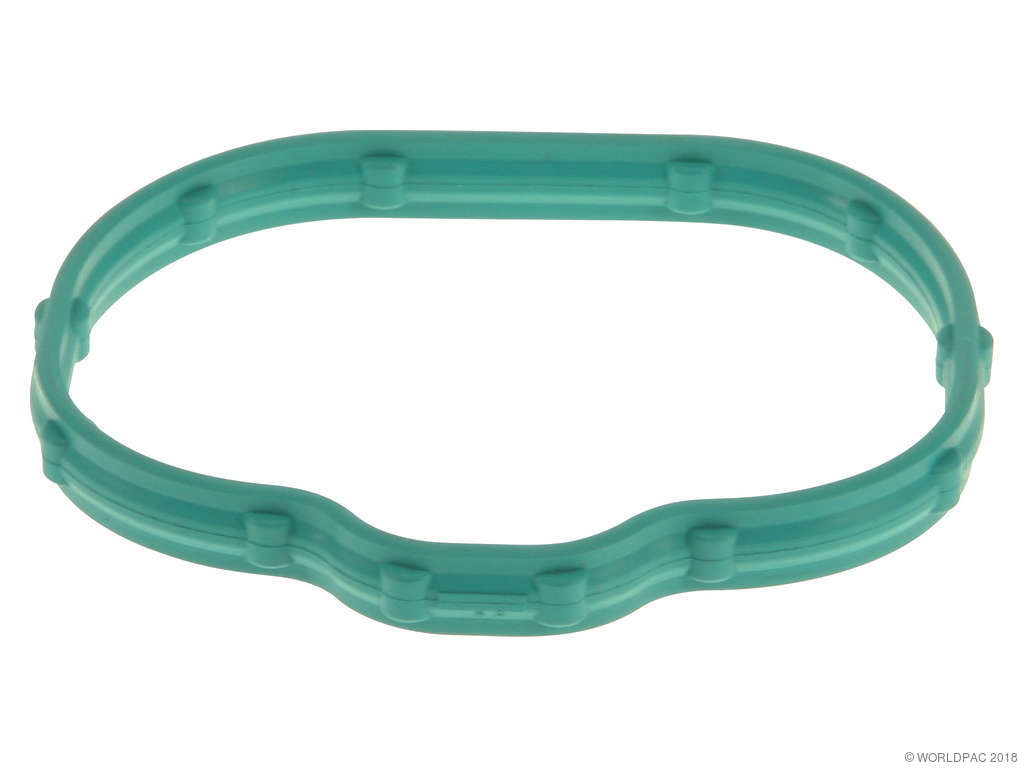
Aftermarket price range: $10-$25 - Intake Manifold Gasket Set — Required for replacing the CHT sensor or for any service that involves removing the intake manifold, such as a water pump replacement.
Trusted brands: Motorcraft, Fel-Pro, Mahle
OEM price range: $70-$100
Aftermarket price range: $30-$60
Related Codes That Often Appear With This One
- P0217 — This is a generic code for 'Engine Coolant Overtemperature Condition' and is often set alongside the manufacturer-specific P1299 when a true overheating event occurs.
- P1285 — This code for 'Cylinder Head Overtemperature Condition' is another Ford-specific code that can be triggered along with P1299.
- P1289 — This code, 'Cylinder Head Temperature Sensor Circuit High Input', points to a specific electrical fault (like an open circuit) in the CHT sensor or wiring, which is a direct cause for the PCM to activate the P1299 protection mode.
Technical Service Bulletins (TSBs) & Recalls
- TSB 12-10-3: Addresses an overheat condition at idle or low speeds on 2011-2012 models, potentially setting codes P1299, P0217, and P1285, caused by a faulty cooling fan motor assembly.
Platform-Specific Known Issues
- The internal, timing-chain-driven water pump is a significant and costly point of failure. When it fails, it can also contaminate the engine oil with coolant, potentially leading to catastrophic engine damage if not addressed immediately.
- A Reddit user on r/FordFlex reported getting a P1299 code with a coolant leak, which a mechanic diagnosed as a likely water pump failure.
Mechanic-Grade Diagnostic Values
- CHT Sensor Voltage (Live Data PID) — expected: Approximately 3.0V - 4.0V on a cold engine (~70°F/21°C), dropping to 1.6V - 2.1V at normal operating temperature (~200°F/93°C).. Failure: Voltage is stuck high, above 4.6V. This indicates an open circuit and will likely trigger a P1289 code, leading to P1299.
- CHT Sensor Connector Voltage (Key On, Engine Off, Connector Unplugged) — expected: One wire (CHT signal) should have a ~5.0V reference signal from the PCM. The other wire (Signal Return) should show good continuity to ground.. Failure: No voltage or very low voltage on the reference wire points to a wiring issue between the connector and the PCM, or a PCM fault.
Wiring & Ground Locations
- CHT Sensor Connector — Located in the engine valley, under the lower intake manifold on the naturally aspirated 3.5L V6.. This connector and its pigtail are subjected to high heat and can become brittle. It's also a common target for rodents seeking shelter, who may chew the wires causing a short or open circuit that triggers a false P1299.
- Engine Ground Points — Multiple grounds exist in the engine compartment. Key locations include the firewall on the driver's side near the battery and various points on the engine block itself.. A poor ground connection for the PCM or the sensor's signal return path can introduce electrical noise or incorrect reference points, potentially leading to false CHT readings.
Real Owner Repair Stories
- Reddit user on r/FordFlex (2016 Ford Flex) — Vehicle leaked coolant, overheated, and threw code P1299.
❌ Tried (didn't work) Took it to a mechanic who diagnosed a likely water pump failure. The owner took the car to get other estimates.
✅ What actually fixed it The check engine light turned off and the external leak stopped on its own. However, forum consensus was that this is a classic sign of the water pump's weep hole temporarily clogging and that the leak is now likely internal (coolant into oil), which is a much more dangerous condition. The fix remains a water pump and timing chain replacement. - Ford F150 Forum user (2015 Ford F-150 3.5L (non-EcoBoost)) — Code P1289 (CHT Sensor Circuit High), which directly leads to P1299.
❌ Tried (didn't work) Initial diagnosis pointed to a bad sensor.
✅ What actually fixed it After removing the upper and lower intake manifolds, the user discovered that mice had chewed and frayed the electrical wires leading to the CHT sensor. Repairing the wiring resolved the issue without needing to replace the sensor itself. - Ford Forum user (Ford with 3.5L engine) — Overheated, entered limp mode, code P1299.
❌ Tried (didn't work) Replaced the CHT sensor and the thermostat. The car seemed fine on a short test drive., Replaced the water pump when the problem returned the next day.
✅ What actually fixed it The root cause was determined to be a stubborn air pocket trapped in the cooling system from improper bleeding after the initial repairs. A professional vacuum-bleed was needed to remove the trapped air and restore proper coolant circulation.
OEM Part Supersession History
PW-495→PW-538— Manufacturer part update/revision.
Heads up: The PW-538 is a direct replacement for the PW-495 and appears to be used on both naturally aspirated and EcoBoost 3.5L engines.Unknown→PW-657— Part for later model years.
Heads up: The Motorcraft PW-657 is listed for 2013-2019 Ford Flex models, suggesting a potential design change coinciding with the 2013 model year refresh.
Model Year Variations Within This Range
- 2013-2019: For the 2013 model year, the standard 3.5L V6 engine was updated with variable cam timing on both camshafts, increasing output from 262 hp to 287 hp. The exterior also received a significant refresh. While the core cause of P1299 (internal water pump, CHT sensor location) did not change, different water pump part numbers may apply to post-refresh models.
Diagnostic Flowchart
Other Known Issues on This Vehicle
Issues unrelated to this code that are worth knowing about as an owner of this generation:
- Electronic Power Assisted Steering (EPAS) Failure 🔴 High — Common across multiple model years, particularly 2011-2013. Can result in a sudden loss of power steering assist. (Ref: Recall 15S18 (NHTSA 15V340000) was issued for 2011-2013 models for potential EPAS shutdown.)
- Power Transfer Unit (PTU) Overheating/Failure 🟠 Medium — Common on AWD models. The PTU is located near the hot exhaust, which can cook the fluid, leading to failure. Ford marketed the fluid as 'lifetime' but severe-duty schedules and experts recommend changing it every 20,000-30,000 miles.
- Door Ajar Light Stays On 🟡 Low — A very common annoyance where a faulty door latch switch causes the 'Door Ajar' warning to remain on, which can drain the battery over time.
- Timing Chain Stretch (3.5L EcoBoost) 🔴 High — More prevalent on the twin-turbo EcoBoost version of the 3.5L engine, particularly pre-2016 models. A stretched chain can cause rattling noises on startup and lead to engine timing codes. (Ref: TSB 15-0131 addresses this issue on some models.)
- Brake Caliper Bracket Issues 🟠 Medium — The front brake caliper brackets on some models were prone to issues causing uneven pad wear and noise. A revised part is available.
Used vs. New Parts: Buying Guide for This Vehicle
When a used part is the smart pick: For this specific repair, using used parts is not recommended for the primary failure components (water pump, CHT sensor, gaskets). A used part might be considered for a larger component like a cooling fan assembly if it can be tested before purchase.
Donor-vehicle mileage cap: roughly under 80000 miles for the part to have meaningful remaining life.
What to inspect on the donor part:
- For a cooling fan, check for cracked or brittle blades.
- Ensure electrical connectors are free of corrosion or damage.
- Verify the fan spins freely without excessive bearing noise.
OEM-only on this vehicle (don't cheap out):
- Engine Water Pump: Given the catastrophic engine damage that can result from a failure and the extreme labor cost of replacement, using anything other than a new OEM Motorcraft pump is a significant risk. Forum consensus strongly advises against aftermarket pumps for this specific internal application.
Aftermarket brands forum-validated for this vehicle:
- Gaskets: Fel-Pro is a widely trusted brand for intake manifold and valve cover gaskets needed for this job.
- Belts: Gates is a reputable brand for serpentine and stretch belts.
Brands owners have reported issues with on this vehicle:
- Low-cost, unbranded water pump 'kits' from online marketplaces. The quality of the pump casting, seals, and bearings is critical, and failure of a cheap part can lead to an engine replacement.
Real Owner Stories
Aggregated from forums and TSBs cited above. Mileages and costs reflect what owners reported in those sources.
2011-2012 Ford Flex 3.5L V6
Symptoms: Overheating at idle or low speeds, potentially setting code P1299.
What fixed it: Replacement of the cooling fan motor assembly per TSB 12-10-3.
Source hint: TSB 12-10-3
Ford Flex 3.5L V6 — ~100000 miles
Symptoms: P1299 code accompanied by a coolant leak.
What fixed it: Water pump failure diagnosis/replacement.
Source hint: r/FordFlex - 'Overheating' - https://www.reddit.com/r/FordFlex/comments/1df8n0j/overheating/
Related OBD-II Codes
Frequently Asked Questions
I have a 2011 Ford Flex and it's overheating at idle. Does TSB 12-10-3 apply to my vehicle?
Why is the water pump failure on my 3.5L V6 Flex considered so dangerous for the engine?
My 2009-2019 Ford Flex is in limp mode with P1299, but the engine doesn't feel hot. What should I check?
Where should I look for a water pump leak on my Ford Flex 3.5L?
How much does it typically cost to fix the internal water pump issue on a Ford Flex?
Is the P1299 code related to the Electronic Power Assisted Steering (EPAS) recall on my 2013 Flex?
Helpful Videos


We Have This Part in Stock


The information in this article is provided for general reference and educational purposes only. Vehicle specifications, procedures, and part compatibility can vary by production date, trim level, and region. Always consult your vehicle's factory service manual and verify part numbers before purchasing or performing repairs. Safety-critical components such as airbags, seat belts, and braking systems should be installed by a qualified professional.
- Ford Flex:
- 🧭 Diagnostic Flowchart
- 🎬 Helpful Videos
- 🛍️ Shop This Part
- What's Unique About the 2009-2019 Ford Flex
- Symptoms You May Notice
- Most Likely Causes
- Rare But Worth Checking
- Diagnosis Steps
- Parts You'll Likely Need
- Related Codes That Often Appear With This One
- Technical Service Bulletins (TSBs) & Recalls
- Platform-Specific Known Issues
- Mechanic-Grade Diagnostic Values
- Wiring & Ground Locations
- Real Owner Repair Stories
- OEM Part Supersession History
- Model Year Variations Within This Range
- Other Known Issues on This Vehicle
- Used vs. New Parts: Buying Guide for This Vehicle
- Real Owner Stories
- 2011-2012 Ford Flex 3.5L V6
- Ford Flex 3.5L V6 — ~100000 miles
- Related OBD-II Codes
- Frequently Asked Questions
- 🎟️ Get 5% Off