

P1299 on 2012-2018 Ford Focus 2.0L: Cylinder Head Overheating Causes and Fixes
P1299 means your Focus's engine is dangerously hot, or at least thinks it is. The most common cause is a coolant leak from the plastic thermostat housing. Stop driving immediately to prevent severe engine damage. A faulty Cylinder Head Temperature (CHT) sensor can also trigger a false alarm, which is a very common failure on this platform.
- P1299 is a critical code on your Ford Focus. Stop driving immediately to prevent severe engine damage.
- The most likely cause is a physical coolant leak. Thoroughly inspect the plastic thermostat housing and the coolant reservoir first.
- This engine uses a Cylinder Head Temperature (CHT) sensor. It can fail and cause a false overheating warning; check its live data on a scan tool when the engine is cold.
- Always use the correct Motorcraft Orange coolant (or a compatible equivalent) when refilling the system.
- Properly bleeding all air from the cooling system after a repair is crucial to prevent future overheating.
What's Unique About the 2012-2018 Ford Focus
The third-generation Ford Focus with the 2.0L GDI engine is known for cooling system issues stemming from its plastic components. The thermostat housing and the coolant expansion tank are frequent failure points, often developing leaks over time due to heat cycles. Unlike many vehicles that use a traditional Engine Coolant Temperature (ECT) sensor submerged in coolant, this Focus uses a Cylinder Head Temperature (CHT) sensor that measures the actual metal temperature of the head. This 'dry' sensor design means that even with a total loss of coolant, the PCM can still detect a rapid rise in head temperature and trigger limp mode to save the engine. However, it also means a common electrical failure of the sensor or its wiring can trigger a false P1299 code even if the engine is not actually overheating.
Symptoms You May Notice
- Check Engine Light is on
- Engine temperature warning light illuminated or flashing
- Drastic reduction in engine power (limp mode)
- Engine running rough or stalling
- Temperature gauge reading very high (in the red), often jumping to max instantly
- Cooling fans running at maximum speed
- Visible steam or smoke from under the hood (in cases of a severe coolant leak)
- A/C compressor may disengage and stop blowing cold air
- Replacing the radiator when the leak is actually from the less expensive thermostat housing or expansion tank.
- Assuming the engine has a blown head gasket without first confirming if the overheat was caused by a faulty CHT sensor or a simple coolant leak. A compression test can help rule this out.
Most Likely Causes
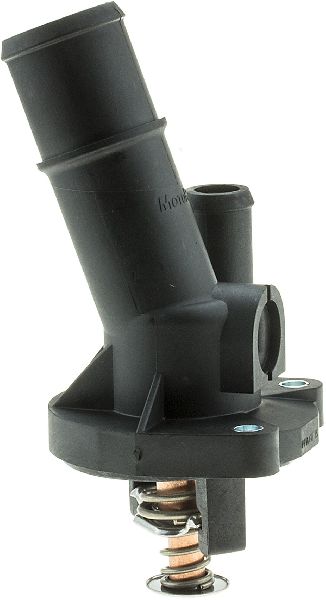
- Leaking Thermostat Housing 🔴 High Probability → Shop Integrated Thermostat Housing Assembly The original thermostat is integrated into a plastic housing, and the gasket seal between the housing and the cylinder head is a very common failure point on the 2.0L GDI engine, leading to coolant loss.
How to confirm: Visually inspect the thermostat housing, located on the driver's side of the cylinder head, above the transmission. Look for pink, red, or white crusty residue, which indicates dried coolant. A cooling system pressure test will definitively confirm the leak.
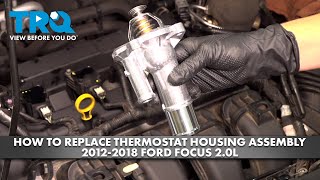
Typical fix: Replace the entire thermostat and housing assembly. 🎬 Watch this step-by-step thermostat housing replacement guide. It is sold as a single, integrated unit. It is recommended to use an OEM or high-quality aftermarket part to prevent premature failure.
Est. part cost: $30-$60 - Faulty Cylinder Head Temperature (CHT) Sensor 🔴 High Probability → Shop Engine Cylinder Head The sensor can fail electrically, sending an incorrect high-temperature reading to the PCM even when the engine is cold. This is a very common cause of P1299 without an actual overheat condition, sometimes happening immediately at startup.
How to confirm: With a cold engine, use a scan tool to check the CHT reading. If it shows a very high temperature (e.g., over 250°F) immediately after startup, the sensor is faulty. You can also test the sensor's resistance with a multimeter; the resistance should be high when cold and decrease as it warms up. An infrared thermometer aimed at the cylinder head can also confirm the engine is not actually hot.
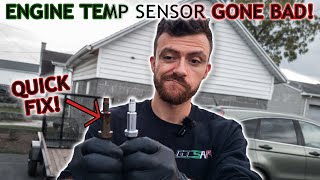
Typical fix: Replace the CHT sensor. This sensor screws directly into the cylinder head between the spark plugs and does not require draining the coolant. Access requires removing the ignition coil cover and sometimes the coil pack itself. A special extra-deep 19mm socket is often required. 🎬 See how to easily replace the CHT sensor yourself.
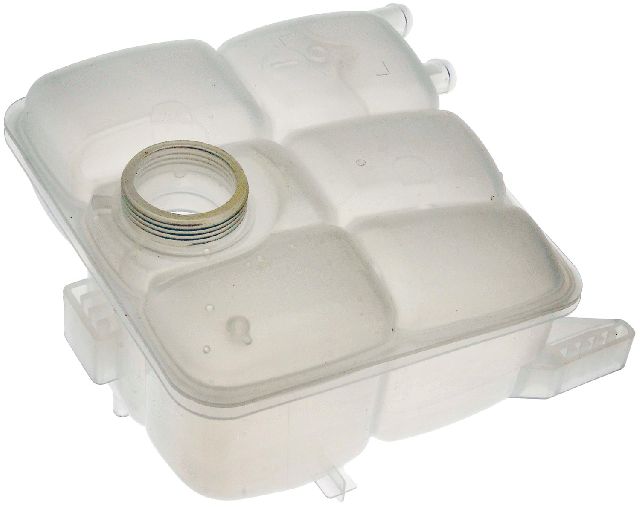
Est. part cost: $25-$55 - Cracked Coolant Expansion Tank (Reservoir) 🟡 Medium Probability The plastic coolant reservoir is subjected to constant heat cycles and can develop hairline cracks over time, leading to slow but steady coolant loss that can eventually trigger an overheat condition.
How to confirm: Carefully inspect the entire coolant tank, including the underside and hose connections, for any signs of cracking or coolant residue. A pressure test will often reveal leaks that are not visible to the naked eye.
Typical fix: Replace the coolant expansion tank. 🎬 Watch this quick video on replacing the overflow tank.
Est. part cost: $20-$50 - Low Engine Coolant Level ⚪ Low Probability This is not a cause itself, but a symptom of a leak elsewhere in the system, such as the thermostat housing, reservoir, a hose, or the radiator. An empty reservoir is a clear sign of a leak that needs to be found.
How to confirm: Check the coolant level in the expansion tank when the engine is completely cold. If it is below the 'MIN' line, you have a leak that needs to be found and repaired.
Typical fix: Top off the coolant with the correct type (Ford specifies Motorcraft Orange, WSS-M97B44-D) and perform a cooling system pressure test to find the source of the leak.
Est. part cost: $25 for coolant
Rare But Worth Checking
- Failing Water Pump: → Shop Engine Water Pump While not as common as plastic component leaks, the water pump can fail, leading to a lack of coolant circulation and a genuine overheat condition. Look for coolant dripping from the weep hole on the pump body.
- Cooling Fan Malfunction: If the engine only overheats in stop-and-go traffic but is fine at highway speeds, the cooling fan assembly (motor, relay, or wiring) could be at fault. Check for related codes like P0480.
- CHT Sensor Wiring or Connector Damage: The wiring harness or the connector for the CHT sensor can become brittle and fail from heat exposure, causing an open or short in the circuit and triggering a false P1299 code. The connector pigtail (Motorcraft WPT-985) is a common replacement part.
Diagnosis Steps
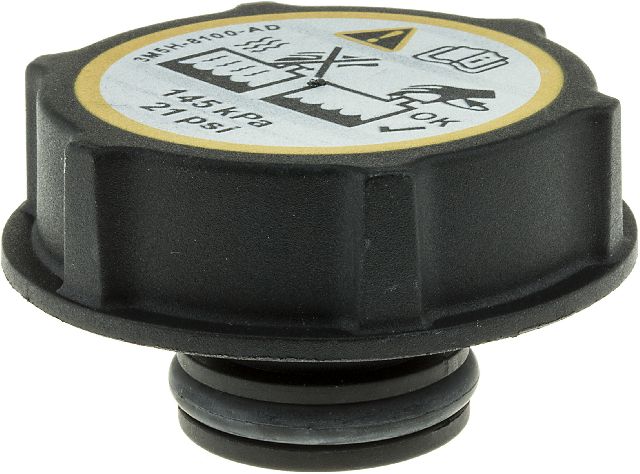
- Safety First: Do not open the coolant reservoir cap when the engine is hot. Allow the engine to cool completely for several hours.
- Check for Obvious Leaks: With the engine cool, check the coolant level in the expansion tank. Use a flashlight to inspect the thermostat housing (driver's side of the head) and the coolant reservoir for signs of leaks or crusty residue.
- Verify the Overheat Condition: If no leaks are apparent, use an OBD-II scanner to read the live data for the Cylinder Head Temperature (CHT) sensor on a cold engine. If the temperature reads excessively high (e.g., 250°F) immediately, the CHT sensor or its wiring is faulty. You can also use an infrared temperature gun to verify the actual temperature of the cylinder head.
- If the CHT reading is normal on a cold engine, the overheat is likely real. Start the engine and monitor the temperature on the scan tool. Watch to see if it rises to an excessive level.
- Perform a Cooling System Pressure Test: This is the most effective way to find small leaks. A hand pump is used to pressurize the cooling system while the engine is off. Watch for a drop in pressure and listen/look for coolant escaping from any part of the system.
- Check Cooling Fan Operation: Once the engine reaches operating temperature (around 200-210°F), the cooling fan should turn on. If it doesn't, investigate the fan relay, fuse, and motor.
- Inspect the Thermostat: If the engine overheats but the lower radiator hose remains cool, the thermostat may be stuck closed, preventing coolant from circulating through the radiator.
- Inspect CHT Sensor and Wiring: If a false overheat is suspected, visually inspect the CHT sensor's wiring and connector for any damage, corrosion, or oil contamination. The connector can become brittle and break easily.
Parts You'll Likely Need
- Thermostat Housing Assembly
(OEM #CM5Z-8K556-B)— This is the most common source of coolant leaks on the 2.0L GDI engine due to a failing integrated gasket.
Trusted brands: Motorcraft, Dorman
OEM price range: $45-$60
Aftermarket price range: $30-$50 - Cylinder Head Temperature (CHT) Sensor
(OEM #8S4Z-6G004-A)— This sensor frequently fails electrically, causing a false overheat signal and triggering P1299 even on a cold engine.
Trusted brands: Motorcraft, Standard Motor Products, NGK
OEM price range: $35-$55
Aftermarket price range: $25-$45 - Coolant Expansion Tank / Reservoir
(OEM #CV6Z-8A080-A)— The plastic
Related Codes That Often Appear With This One
- P0217 — This is a generic code for 'Engine Coolant Overtemperature Condition.' It often appears with P1299 to confirm a genuine overheating event has occurred.
- P1285 — This code for 'Cylinder Head Overtemperature Sensed' is another Ford-specific code that often precedes or accompanies P1299 during a severe overheat.
- P0118 — Stands for 'Engine Coolant Temperature Sensor Circuit High'. This can be set if the CHT sensor fails or its wiring develops an open circuit, which is a primary cause of a false P1299.
- P0480 — This code indicates a 'Cooling Fan 1 Control Circuit Malfunction' and points towards the cooling fan system as the potential cause of the overheating.
Technical Service Bulletins (TSBs) & Recalls
- Manufacturer Bulletin #SSM 52786 notes that some vehicles may exhibit a false overheat condition and illuminated MIL with DTCs P1299 and/or P0217 present, suggesting a need to check electrical connections before proceeding with mechanical diagnostics.
- Manufacturer Bulletin #TSB 26-2060 describes a loss of engine coolant at the heater hose assembly near the engine cooling fan, which may store DTCs P1299 and/or P1285 due to an incorrectly indexed hose connection at the thermostat housing.
- Customer Satisfaction Program 21N12 was issued for some 2017-2019 Ford models with the 1.5L EcoBoost engine for coolant intrusion into the cylinders, which could present with a P1299 code. While this TSB does not apply to the 2.0L GDI engine, it highlights Ford's use of this code in cases of severe internal engine issues.
Platform-Specific Known Issues
- Customer Satisfaction Program 21N12 was issued for some 2017-2019 Ford models with the 1.5L EcoBoost engine for coolant intrusion into the cylinders, which could present with a P1299 code. While this TSB does not apply to the 2.0L GDI engine, it highlights Ford's use of this code in cases of severe internal engine issues.
Mechanic-Grade Diagnostic Values
- CHT Sensor Resistance vs. Temperature — expected: Resistance is inversely proportional to temperature. Apx. values: 30-36 kOhms on ice (32°F/0°C), ~2.4 kOhms at 86°F/30°C, ~350 Ohms at 70°F/21°C, and ~177 Ohms at 212°F/100°C.. Failure: An open circuit (infinite resistance) or a short (near-zero resistance) at any temperature indicates a failed sensor. Readings that are dramatically out of line with the expected values for a given temperature also indicate failure.
- CHT Sensor Signal Voltage at PCM (Key On, Engine Off) — expected: Approximately 5 volts reference signal should be present at the signal wire side of the connector with the sensor unplugged.. Failure: A voltage reading significantly lower than 5 volts suggests a problem with the wiring or the PCM itself.
- CHT Sensor Signal Voltage vs. Temperature (Engine Running) — expected: Voltage decreases as temperature increases. Aprox. values: ~2.03V at 194°F/90°C, ~1.68V at 212°F/100°C.. Failure: Voltage that is pegged high or low, or does not change smoothly as the engine warms up, points to a faulty sensor or wiring issue.
Scan Tool Commands That Help
- Ford IDS / FORScan: Live Data Monitoring (PID: CHT) — This is the primary diagnostic step for P1299. On a cold engine, the CHT value should be very close to the ambient air temperature. If it reads an abnormally high temperature (e.g., >250°F) immediately after a cold start, the CHT sensor has failed electrically, confirming a 'false overheat' condition.
Wiring & Ground Locations
- CHT Sensor Connector — Screwed into the cylinder head, located between the spark plugs for cylinders 2 and 3. Access requires removing the plastic engine cover and the ignition coils.. This connector and its wiring are common failure points due to heat exposure. The plastic can become brittle, and the terminals can corrode, leading to an open or shorted circuit that triggers a false P1299 code.
- CHT Sensor Pins — At the two-wire connector for the CHT sensor.. One pin is the signal wire that goes to the PCM, and the other is the PCM ground. Testing for the 5V reference signal and checking the integrity of the ground connection at this connector are key steps in diagnosing a suspected wiring fault.
Real Owner Repair Stories
- NHTSA ODI #11485331 — An owner noticed the coolant reservoir was empty and found codes P0302, P0131, P1299, P1450, P0300, and P0303 stored. The repair involved replacing the spark plugs, coils, coolant reservoir, and thermostat.
- NHTSA ODI #11581990 — A driver reported the car went into limp mode with codes P0302 and P1299 stored; a dealership inspection found coolant leaking into the #2 cylinder, necessitating an engine replacement.
- NHTSA ODI #11474375 — An owner reported that a diagnosis revealed codes P1299 and P0303, with further testing showing coolant leaking inside the engine into cylinder #3 despite no external leaks being found.
- Reddit user in r/AskAMechanic (2014 Mustang 3.7L V6 (Shares CHT sensor logic with Focus)) — Car wouldn't start easily, then entered limp mode with overheating warning on the gauge, even though the engine was cold to the touch.
❌ Tried (didn't work) Replacing the battery, Replacing the thermostat
✅ What actually fixed it The user suspected a faulty Cylinder Head Temperature sensor was sending a false overheat signal, causing the limp mode and no-start condition even after replacing other parts. The symptoms described (gauge pegged hot on a cold engine) are classic signs of CHT sensor failure. - Reddit user in r/FocusST (Ford Focus ST (Shares P1299 code)) — Car went into limp mode with P1299 code.
❌ Tried (didn't work) Replacing intake airflow sensor, Replacing thermostat, Replacing cylinder head temp sensor
✅ What actually fixed it After two days of troubleshooting, a mechanic could not find a physical fault. The final fix was reprogramming the ECU (PCM). The code did not return after the software update.
Diagnostic Flowchart
Other Known Issues on This Vehicle
Issues unrelated to this code that are worth knowing about as an owner of this generation:
- PowerShift (DPS6) Automatic Transmission Failure 🔴 High — Extremely common on 2012-2016 models. Symptoms include shuddering, hesitation, rough shifting, and complete failure. (Ref: Multiple lawsuits and extended warranties were issued, but no full safety recall.)
- Faulty Canister Purge Valve 🟠 Medium — Common across all years. A stuck-open valve can cause rough idle, stalling after refueling, and difficulty starting. (Ref: NHTSA Recall 18V735 (Ford 18S32) was issued for a software update to detect the issue and, if necessary, replace the valve to prevent fuel tank deformation.)
- Premature Passenger-Side Engine Mount Failure 🟠 Medium — Very common. The hydraulic mount collapses, causing severe vibration throughout the cabin, especially at idle and in gear.
- Electronic Power Steering Failure 🔴 High — More common on 2012-2014 models. Can result in a sudden loss of power steering assist while driving. (Ref: Investigations and complaints were filed, but recalls were limited.)
Used vs. New Parts: Buying Guide for This Vehicle
When a used part is the smart pick: For this specific repair, using used parts is generally not recommended for the primary failure items. A used wiring harness pigtail for the CHT sensor could be a viable option if the connector is in good condition.
Donor-vehicle mileage cap: roughly under 75000 miles for the part to have meaningful remaining life.
What to inspect on the donor part:
- For a wiring pigtail, ensure the plastic is not brittle or cracked and the locking tab is intact.
- For any cooling component, verify there is no white or pink crusty residue, which indicates a past leak.
- Inspect plastic parts for hairline cracks, especially around seams and hose connections.
OEM-only on this vehicle (don't cheap out):
- Cylinder Head Temperature (CHT) Sensor: While some aftermarket sensors work, OEM Motorcraft sensors are strongly recommended to avoid compatibility issues and inaccurate readings that can lead to persistent false codes.
Aftermarket brands forum-validated for this vehicle:
- Dorman (Thermostat Housing): Dorman is a widely available aftermarket brand that offers a direct replacement for the plastic thermostat housing. Reviews can be mixed, but they are a common alternative to OEM.
- Standard Motor Products (SMP), NGK/NTK (Sensors): These brands are generally well-regarded in the aftermarket for producing reliable sensors.
Brands owners have reported issues with on this vehicle:
- No-name, unbranded electronic sensors from online marketplaces should be avoided, as their quality control and accuracy can be highly suspect, leading to a repeat of the original problem.
Real Owner Stories
Aggregated from forums and TSBs cited above. Mileages and costs reflect what owners reported in those sources.
2012-2018 Ford Focus 2.0L GDI
Symptoms: High engine temperature P1299, Ford stumped.
What fixed it: The article context mentions this as a source for P1299 issues involving cylinder head overtemperature protection.
Source hint: https://www.fordownersclub.com/forums/topic/158841-high-engine-temperature-p1299-ford-stumped/
Ford Focus ST
Symptoms: P1299 Cylinder Head Overtemperature Protection Active.
What fixed it: The owner investigated the protection mode triggered by the CHT sensor logic.
Source hint: https://www.reddit.com/r/FocusST/comments/18d8q5y/p1299_cylinder_head_overtemperature_protection/
Related OBD-II Codes
Frequently Asked Questions
Does the Customer Satisfaction Program 21N12 for coolant intrusion apply to my 2012-2018 Ford Focus 2.0L GDI?
My 2014 Focus shows a high temperature immediately after a cold start. Is it actually overheating?
What specific coolant should I use to top off my 2012-2018 Focus to avoid P1299 issues?
Do I need to drain the coolant to replace the CHT sensor on my Focus?
Why did my A/C stop working at the same time the P1299 code appeared?
Is there a recall for the coolant expansion tank leaks on the 2012-2018 Focus?
Helpful Videos

We Have This Part in Stock


The information in this article is provided for general reference and educational purposes only. Vehicle specifications, procedures, and part compatibility can vary by production date, trim level, and region. Always consult your vehicle's factory service manual and verify part numbers before purchasing or performing repairs. Safety-critical components such as airbags, seat belts, and braking systems should be installed by a qualified professional.
- Ford Focus:
- 🧭 Diagnostic Flowchart
- 🎬 Helpful Videos
- 🛍️ Shop This Part
- What's Unique About the 2012-2018 Ford Focus
- Symptoms You May Notice
- Most Likely Causes
- Rare But Worth Checking
- Diagnosis Steps
- Parts You'll Likely Need
- Related Codes That Often Appear With This One
- Technical Service Bulletins (TSBs) & Recalls
- Platform-Specific Known Issues
- Mechanic-Grade Diagnostic Values
- Scan Tool Commands That Help
- Wiring & Ground Locations
- Real Owner Repair Stories
- Other Known Issues on This Vehicle
- Used vs. New Parts: Buying Guide for This Vehicle
- Real Owner Stories
- 2012-2018 Ford Focus 2.0L GDI
- Ford Focus ST
- Related OBD-II Codes
- Frequently Asked Questions
- 🎟️ Get 5% Off