

P1299 on 2006-2012 Ford Fusion 3.0L V6: Cylinder Head Overheating Causes and Fixes
P1299 means your Fusion's engine is either overheating or, more likely, a faulty Cylinder Head Temperature (CHT) sensor is sending a false signal. If the engine isn't actually hot, the CHT sensor has likely failed. Replacement is labor-intensive as the sensor is located under the intake manifold, a job that typically takes 3-5 hours.
- P1299 is a critical code on your Fusion that requires immediate attention to avoid engine damage.
- The first diagnostic step is to determine if the engine is truly overheating or if it's a false alarm from a bad sensor.
- On the 3.0L V6, the most common cause of a false alarm is a failed Cylinder Head Temperature (CHT) sensor.
- Replacing the CHT sensor on the 3.0L V6 is a difficult, labor-intensive job (3-5 hours) because it is located under the intake manifold.
- If the engine is actually overheating, common causes like a stuck thermostat, low coolant, or a bad water pump must be investigated.
What's Unique About the 2006-2012 Ford Fusion
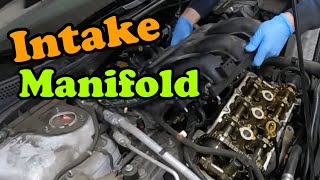
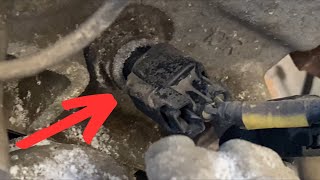
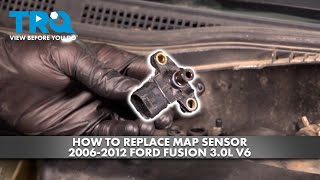
Unlike many vehicles that use a sensor to measure coolant temperature, the 3.0L Duratec V6 in the Fusion uses a Cylinder Head Temperature (CHT) sensor that screws directly into the engine block's metal between the cylinder banks. The PCM uses this sensor to infer coolant temperature and will activate fail-safe cooling strategies based on its reading alone. The primary challenge with this platform is the sensor's location; it is buried in the valley between the cylinder banks, underneath the upper and lower intake manifolds. 🎬 See this walkthrough for locating and replacing the CHT sensor This makes what would be a simple sensor swap on other engines a much more labor-intensive job requiring significant disassembly.
Generation note: The 2006-2012 year range covers the entire first generation of the Ford Fusion, including the 2010 facelift. The 3.0L Duratec V6 was an available engine option for this entire period, and the P1299 fault and its causes 🎬 Watch: Understanding the P1299 code and how to fix it are consistent across these model years.
Symptoms You May Notice
- Check Engine Light is on
- Engine enters a reduced power "limp mode"
- Temperature gauge suddenly reads full HOT, even on a cold engine
- Engine cooling fans run constantly at high speed, even when engine is cold
- Rough running, hesitation, or hard starting
- Engine may stall unexpectedly
- No heat from cabin vents during an actual overheat event
- Replacing the thermostat immediately without confirming if the engine is actually overheating. If the code is triggered by a bad sensor on a cold engine, a new thermostat will not fix the issue.
- Replacing only the CHT sensor without also replacing the connector pigtail, especially if corrosion is present. A bad connection can mimic a bad sensor and cause the problem to return.
Most Likely Causes
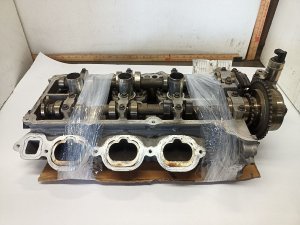
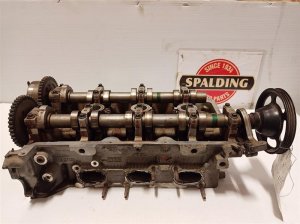
- Faulty Cylinder Head Temperature (CHT) Sensor 🔴 High Probability → Shop Engine Cylinder Head The sensor can fail internally, sending an incorrect high-temperature signal to the PCM even when the engine is cold. This is a very common failure mode for this sensor on Ford 3.0L V6 engines.
How to confirm: Check for the P1299 code immediately after a cold start. If the temperature gauge goes to HOT on a physically cold engine, the sensor is almost certainly the cause. A scan tool can also read the live data from the CHT sensor; an illogical reading (e.g., 250°F on a cold engine) confirms failure.
Typical fix: Replace the CHT sensor and its connector pigtail if corroded. Due to its location under the intake manifold, this is a labor-intensive job requiring new intake gaskets.
Est. part cost: $25-$60 - Actual Engine Overheating 🟡 Medium Probability These are common cooling system failure points on any aging vehicle, including low coolant, a stuck thermostat, or a failing water pump. In some cases, internal engine leaks may be the culprit; NHTSA ODI #11414536 describes a P1299 code where the engine was leaking coolant into the cylinders.
How to confirm: Physically verify the engine is hot using an infrared thermometer on the cylinder head or by observing other signs like steam from the engine bay or by carefully feeling the upper radiator hose for heat and pressure. Investigate the cooling system for the root cause.
Typical fix: Repair the underlying cooling system fault. This could involve refilling and bleeding the coolant, replacing a stuck thermostat, or installing a new water pump.
Est. part cost: $15-$300 - Damaged CHT Sensor Wiring or Connector ⚪ Low Probability The wiring harness in the engine bay is exposed to heat and vibration. More specifically, water can intrude into the connector, causing corrosion and a short or high resistance, leading to a false overheat signal. Manufacturer Bulletin #SSM 48991 notes that P1299 and related temperature codes may be caused by issues with the engine coolant temperature sensor or knock sensor wiring harness.
How to confirm: Visually inspect the CHT sensor's wiring harness and connector for any signs of damage, corrosion, or loose pins. This is difficult due to the sensor's location but must be done when the intake is removed for sensor replacement. TSB 11-10-5 for other Ford engines describes this exact issue.
Typical fix: Repair the damaged section of wiring or replace the connector pigtail. It is best practice to replace the pigtail when replacing the sensor.
Est. part cost: $15-$40
Rare But Worth Checking
- Air Trapped in Cooling System: This is especially common after a coolant service or part replacement if the system is not properly 'burped' or vacuum-filled. Air pockets can cause localized overheating in the cylinder head, triggering a legitimate P1299 code.
- Failed Water Pump: → Shop Engine Water Pump While less common than a thermostat or sensor failure, a failed water pump will stop all coolant circulation, leading to a rapid and genuine overheat. The water pump on the 3.0L is internal and chain-driven, and a leak from its weep hole behind the alternator is a key sign of failure. A seized water pump pulley can also break the belt, causing an overheat.
- Head Gasket Failure: Though rare, extreme overheating can lead to catastrophic failure. NHTSA ODI #11581532 reports a P1299 code alongside a P0302 misfire, where coolant entered the cylinder due to a head gasket failure.
Diagnosis Steps
- Check if the engine is physically hot when the code is set. Use an infrared thermometer on the cylinder head if possible. If the engine is cold and the temp gauge reads HOT, the CHT sensor is the prime suspect.
- If the engine is genuinely overheating, turn it off immediately. Perform a full cooling system inspection: check for low coolant, visible leaks, a stuck thermostat, a failed water pump, and ensure cooling fans operate. An owner in NHTSA ODI #11485331 reported a P1299 code after noticing the coolant reservoir was empty, subsequently replacing the reservoir and thermostat.
- If a cooling system fault is found, repair it, clear the codes, and test drive.
- If the engine is cold when the code sets, the CHT sensor or its wiring is the most likely culprit.
- Accessing the sensor requires removing the upper and lower intake manifolds.
- Once the intake is removed, inspect the CHT sensor's electrical connector and wiring for damage or corrosion. It is highly recommended to replace the connector pigtail regardless of its appearance.
- If the wiring is intact, replace the CHT sensor.
- Reassemble the intake manifold using a new gasket set (both upper and lower).
- Clear the trouble codes and perform a test drive to ensure the fault is resolved.
Parts You'll Likely Need
- Cylinder Head Temperature (CHT) Sensor
(OEM #9L8Z-6G004-F)— This is the most common point of failure for a false P1299 code. It sends an erroneous signal that the engine is overheating.
Trusted brands: Motorcraft, Standard Motor Products, NTK/NGK
OEM price range: $40-$70
Aftermarket price range: $25-$50 - Intake Manifold Gasket Set
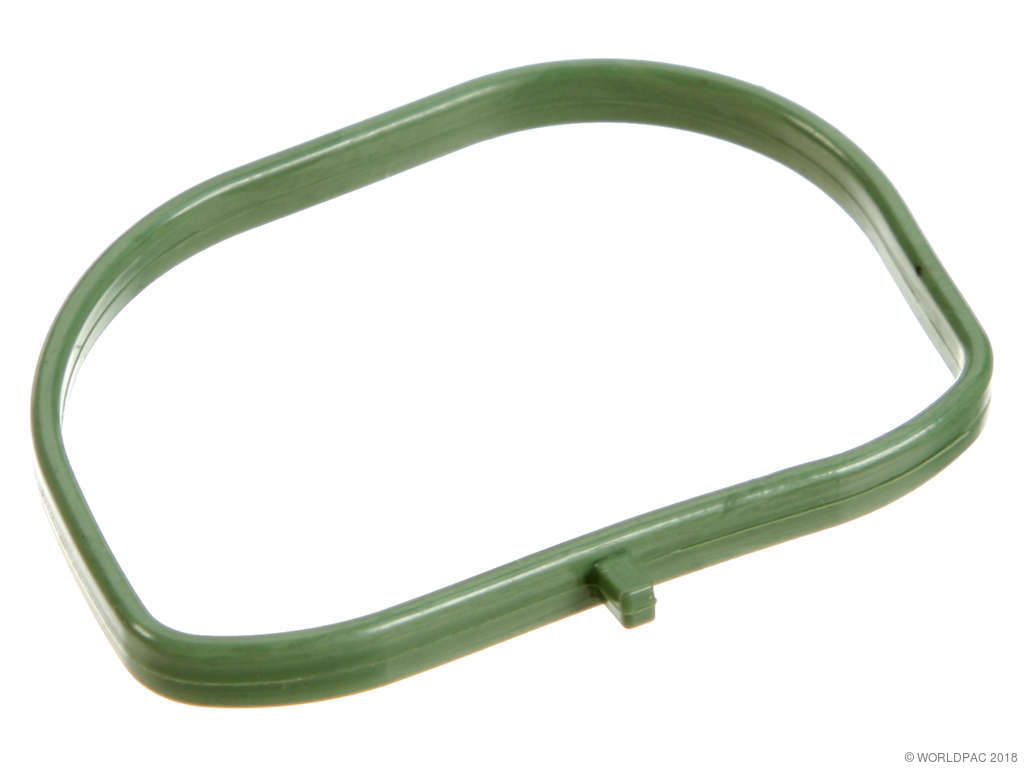
(OEM #Fel-Pro MS 96684 (Aftermarket example))— Required for re-installing the upper and lower intake manifolds, which must be removed to access the CHT sensor. Reusing old gaskets is not recommended and will likely cause vacuum leaks.
Trusted brands: Fel-Pro, Mahle, Motorcraft
OEM price range: $50-$80
Aftermarket price range: $30-$60 - CHT Sensor Connector Pigtail — Often the source of the problem due to corrosion from moisture. It is best practice to replace this when replacing the sensor to prevent a repeat failure.
Trusted brands: Motorcraft, Dorman, Standard Motor Products
OEM price range: $20-$40
Aftermarket price range: $15-$30
Related Codes That Often Appear With This One
- P1285 — P1285 'Cylinder Head Overtemperature Condition' is often a precursor to P1299. It indicates the PCM has detected the high temperature, while P1299 signifies that the protective 'limp mode' has been activated as a result.
- P0217 — This is a generic code for 'Engine Coolant Overtemperature Condition'. It often appears alongside P1299 during a genuine overheating event, confirming the problem lies within the cooling system rather than just a sensor fault.
- P0128 — P0128 'Coolant Thermostat (Coolant Temperature Below Thermostat Regulating Temperature)' can sometimes appear with P1299 if the CHT sensor is providing erratic readings, confusing the PCM about the engine's warm-up cycle.
Technical Service Bulletins (TSBs) & Recalls
- TSB 11-10-5: While this TSB officially covers the 2.0L and 2.5L engines in various Ford models (including the Fusion), it describes an identical issue where water intrusion into the CHT sensor connector causes corrosion, leading to false overheat signals and codes P1285 and P1299. The prescribed fix is to replace the sensor and connector, which is directly applicable to the 3.0L V6 problem.
- TSB 01-21-11: An older TSB for other Ford vehicles that mentions P1285 and P1299 being caused by an inoperative hydraulic cooling fan. While the Fusion uses electric fans, this establishes a history of these codes being linked to cooling fan system failures.
- Bulletin #SSM 48991: This manufacturer bulletin addresses instances where P1299 and other coolant temperature DTCs are triggered by the engine coolant temperature (ECT) sensor or knock sensor wiring harness, recommending replacement of the harness to correct the condition.
Mechanic-Grade Diagnostic Values
- CHT Sensor Resistance — expected: Approximately 37 kΩ to 59 kΩ at 60-68°F (15-20°C). Resistance decreases as temperature increases.. Failure: An open circuit (infinite resistance) or a value that does not change with engine temperature indicates a faulty sensor.
- CHT Sensor Signal Voltage (Key On, Engine Off) — expected: On a cold engine (e.g., 61°F), the voltage should be high, around 3.4V. As the engine warms up, the voltage drops, reaching approximately 2.1V at normal operating temperature (~198°F).. Failure: A voltage reading pegged near 5.0V (indicating an open circuit) or near 0V on a cold engine points to a sensor or wiring fault.
- CHT Sensor Signal Wire Voltage (Sensor Disconnected, KOEO) — expected: Approximately 5.0 Volts (VREF from PCM).. Failure: No voltage indicates an open in the signal wire or a PCM fault. Low voltage could indicate a short to ground.
Scan Tool Commands That Help
- Ford IDS / FORScan: Monitor CHT PID (Parameter ID) — This is the most critical step. On a cold engine, access the live data for the CHT sensor. If the PID immediately shows a high temperature (e.g., 260°F) while the engine is physically cold, it almost certainly confirms a failed sensor or a wiring issue, allowing you to bypass unnecessary cooling system checks.
Wiring & Ground Locations
- CHT Sensor Location — For the 3.0L V6, the sensor is located in the valley between the cylinder heads, underneath the upper and lower intake manifolds.. This difficult-to-access location is the primary reason for the high labor cost of this repair and makes visual inspection of the sensor and wiring impossible without significant disassembly.
- G101 / G102 / G103 / G104 — These are the primary engine compartment ground points. G101 is typically near the battery, G102 at the left rear of the engine compartment, G103 at the left front, and G104 at the right front.. The PCM and its sensors rely on clean ground connections. A corroded or loose engine ground can cause erratic sensor readings, including a false high temperature from the CHT sensor, leading to a P1299 code.
- PCM Connector C175e, Pin 18 — This is the pin on the Powertrain Control Module (PCM) that receives the signal from the CHT sensor. The PCM is located at the left rear of the engine compartment.. For advanced diagnosis, a technician can test for continuity and shorts on the CHT signal wire (typically a Yellow wire) directly from this pin to the sensor connector to rule out a wiring harness issue.
Real Owner Repair Stories
- Ford F150 Forum user 'Awakeatground0' (2016 Ford F-150 2.7L (different vehicle, but identical code, sensor, and symptoms)) — After sitting for a week, experienced rough idle, smell of unburnt fuel. After 2 miles, CEL on, overheat alert, high-speed fans, and limp mode (35mph max). Scan tool showed P1299 and pegged temp gauge despite a cool engine.
❌ Tried (didn't work) The scan tool app initially suggested a thermostat, but the user correctly identified from forums that a sensor fault was more likely on a cold engine.
✅ What actually fixed it Replacing the CHT sensor (Ford part 9L8Z-6G004-F) and clearing the code with a scan tool. The user noted the truck idled much smoother afterward, suggesting the old sensor was failing prior to the complete failure. - NHTSA ODI #11611137 — An owner reported recurring P1299 readings and limp mode events over several years. Despite having the motor replaced under warranty, the exact same symptoms returned four years later, highlighting the persistent nature of this fault.
OEM Part Supersession History
9L8Z-6G004-A, 9L8Z-6G004-D→9L8Z-6G004-F— Standard part revision and improvement by the manufacturer.
Heads up: The previous revisions (-A, -D) have been replaced by the -F part. While older stock may be available, it is best practice to use the latest revision (9L8Z-6G004-F) for this repair.
Model Year Variations Within This Range
- 2010-2012: The 2010 facelift introduced a revised interior and exterior, but the 3.0L V6 powertrain and the CHT sensor location remained fundamentally the same as the 2006-2009 models. Wiring diagrams for 2010+ models may show slightly different ground point designators (e.g., G104 on the right side of the engine compartment) but the diagnostic principle for P1299 is identical.
Diagnostic Flowchart
Other Known Issues on This Vehicle
Issues unrelated to this code that are worth knowing about as an owner of this generation:
- Automatic Transmission Harsh Shifting / Failure 🔴 High — Common issue, particularly on 2010-2012 models with the 6F35 transmission. Onset can be as early as 85,000 miles. (Ref: TSB 16-0043 was issued for software calibration issues causing harsh shifts. A major 2022 recall was issued for a transmission bushing that could degrade, preventing the car from staying in Park.)
- Electronic Throttle Body (ETB) Failure 🔴 High — A very common problem across 2010-2016 models, causing sudden stalling and 'limp mode' with a wrench light. (Ref: Ford issued Customer Satisfaction Program 13N03, extending the warranty to 10 years/150,000 miles, but this has since expired for most vehicles.)
- Power Steering Failure 🔴 High — Widespread on 2010-2012 models, leading to a sudden loss of power steering assist, making the vehicle very difficult to steer. (Ref: Multiple recalls were issued to address this, but complaints are numerous.)
- Rear Subframe Corrosion 🟠 Medium — Common in regions that use road salt. The rear subframe (K-member) can rust severely, potentially compromising suspension mounting points.
- Swollen/Capped Lug Nuts 🟡 Low — Extremely common across all years. The chrome caps on the lug nuts swell and deform due to corrosion, making it impossible to fit a standard lug wrench for tire changes.
Used vs. New Parts: Buying Guide for This Vehicle
When a used part is the smart pick: For this specific repair, using a used part is not recommended. The primary failure points are the CHT sensor and its connector, which are inexpensive, high-failure-rate electrical components. A used sensor carries the same risk of failure as the part being replaced.
What to inspect on the donor part:
- Not applicable. Do not use a salvaged CHT sensor for this repair.
OEM-only on this vehicle (don't cheap out):
- Cylinder Head Temperature (CHT) Sensor
Aftermarket brands forum-validated for this vehicle:
- Motorcraft (OEM)
- Standard Motor Products (SMP)
- NTK
Brands owners have reported issues with on this vehicle:
- Unknown or 'white box' no-name brands from online marketplaces. Given the 3-5 hours of labor required to access the sensor, the small savings on a cheap part are not worth the risk of a premature failure and having to do the job twice.
Real Owner Stories
Aggregated from forums and TSBs cited above. Mileages and costs reflect what owners reported in those sources.
2012 Ford Fusion - 3.0L
Symptoms: Car went into 'Limp Home' mode, overheating, Code P1299, water pump belt was off, loose water pump pulley.
What fixed it: Replaced the water pump, thermostat, and belt, and performed a final fix of bleeding air from the cooling system using a hand pump.
Source hint: Reddit r/MechanicAdvice
2011 Ford Fusion 3.0L V6
Symptoms: P1299 along with other codes; investigation found wires had been damaged.
What fixed it: Repairing the wiring harness where a rodent had chewed through the wires.
Source hint: Reddit r/AskMechanics - 'Ford Fusion throwing P1299 Code'
Related OBD-II Codes
Frequently Asked Questions
My 2010 Fusion 3.0L V6 is shifting harshly and stalling; is this related to the P1299 code?
Does TSB 11-10-5 apply to my 3.0L Duratec V6 engine?
Why does my temperature gauge read full HOT on a cold start?
Is the CHT sensor easy to replace on the 2006-2012 Fusion V6?
Can I just replace the CHT sensor, or do I need the wiring pigtail too?
Helpful Videos

Used OEM Parts in Stock
New Aftermarket Parts Available


The information in this article is provided for general reference and educational purposes only. Vehicle specifications, procedures, and part compatibility can vary by production date, trim level, and region. Always consult your vehicle's factory service manual and verify part numbers before purchasing or performing repairs. Safety-critical components such as airbags, seat belts, and braking systems should be installed by a qualified professional.
- Ford Fusion:
- 🧭 Diagnostic Flowchart
- 🎬 Helpful Videos
- 🛍️ Shop This Part
- What's Unique About the 2006-2012 Ford Fusion
- Symptoms You May Notice
- Most Likely Causes
- Rare But Worth Checking
- Diagnosis Steps
- Parts You'll Likely Need
- Related Codes That Often Appear With This One
- Technical Service Bulletins (TSBs) & Recalls
- Mechanic-Grade Diagnostic Values
- Scan Tool Commands That Help
- Wiring & Ground Locations
- Real Owner Repair Stories
- OEM Part Supersession History
- Model Year Variations Within This Range
- Other Known Issues on This Vehicle
- Used vs. New Parts: Buying Guide for This Vehicle
- Real Owner Stories
- 2012 Ford Fusion - 3.0L
- 2011 Ford Fusion 3.0L V6
- Related OBD-II Codes
- Frequently Asked Questions
- 🎟️ Get 5% Off