

P1299 on 2013-2020 Ford Fusion Energi: Overheating Causes and Fixes
P1299 on a Fusion Energi means the engine is overheating or thinks it is. Stop driving immediately. It's either a very serious internal coolant leak requiring engine repair (a known issue covered by TSB 22-2322) or a much simpler faulty temperature sensor/wiring harness. Diagnosis is critical to tell the difference.
- P1299 is a critical code on your Fusion Energi. Do not drive the vehicle; pull over immediately.
- The first diagnostic step is to determine if the engine is actually overheating (coolant loss, steam) or if it's a false alarm from a sensor.
- This specific vehicle has a well-documented engine flaw (TSB 22-2322) that causes coolant to leak into the cylinders, leading to a real P1299 overheat event. This is a very expensive repair.
- A much cheaper possibility is a faulty wiring harness (SSM 48991) that triggers a false P1299. A scan tool check on a cold engine can quickly point to this cause.
- Do not replace common cooling parts like the thermostat or water pump before ruling out the two main, documented issues for this engine.
What's Unique About the 2013-2020 Ford Fusion Energi
For this specific 2.0L engine family, the P1299 code presents two dramatically different scenarios, both officially documented by Ford. The most severe and widely known problem is a design flaw in the 'open-deck' engine block that allows coolant to leak directly into the cylinders, causing a true and severe overheat condition. This issue is so prevalent it is covered by multiple Technical Service Bulletins (TSBs). Conversely, Ford has also noted that a simple faulty wiring harness for the temperature sensor can become damaged or corroded, triggering a false P1299 code and putting the car in limp mode without any actual overheating. Differentiating between these two possibilities is the most important step in diagnosing this code.
Symptoms You May Notice
- Sudden, severe loss of engine power (limp mode)
- Engine running rough or vibrating
- Check Engine Light is on or flashing
- An 'Engine Overheat' warning message on the dashboard
- Cooling fans running at maximum speed
- White smoke from the exhaust (indicates coolant intrusion)
- Constantly needing to add coolant to the reservoir with no visible leaks (indicates coolant intrusion)
- Temperature gauge instantly spiking to 'HOT' on a cold engine (indicates sensor/wiring fault).
- Replacing the thermostat or water pump without first ruling out the coolant intrusion or wiring harness issues. On this specific vehicle, the TSBs point to more probable causes that must be investigated first.
- Assuming any P1299 code automatically means the engine is bad and needs replacement. A thorough diagnosis is required to rule out the much cheaper and simpler wiring harness fault.
Most Likely Causes
- Internal Coolant Intrusion into Cylinders 🔴 High Probability A known design flaw in the open-deck 2.0L engine block can cause cracks or porosity to form in the thin coolant channel between cylinders, allowing coolant to leak directly into the combustion chamber. This is documented in Ford TSB 22-2322, which supersedes previous versions like 22-2229 and 19-2346.
How to confirm: Check for a steadily dropping coolant level without any visible external leaks. Look for sweet-smelling white smoke from the exhaust, especially on startup. A mechanic will perform a cooling system pressure test (checking if it holds pressure) and use a borescope to look for coolant or 'steam cleaned' pistons inside the cylinders to confirm.
Typical fix: The official Ford-recommended repair is to replace the engine short block or long block with an updated part that has a revised block design (using drilled passages instead of cast slits). This is a major and expensive engine-out repair. A Reddit user with a 2017 Fusion SE 2.0L noted a dealer quote of $9,800 for this repair.
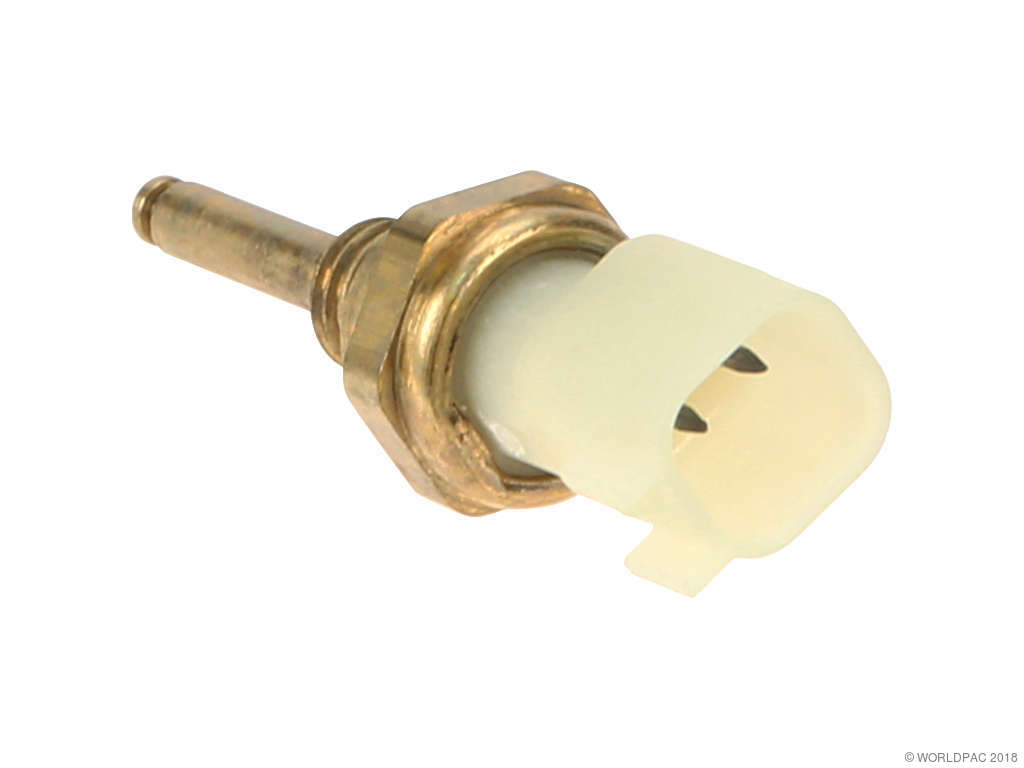
Est. part cost: $2000-$4000+ - Faulty Cylinder Head Temperature (CHT) Sensor or Wiring Harness 🟡 Medium Probability → Shop Engine Cylinder Head Ford Special Service Message (SSM) 48991, while for the 2.7L EcoBoost, identifies an identical issue where a faulty wiring harness for the CHT and knock sensor can become damaged or corroded, sending false high-temperature signals to the PCM. The sensor itself can also fail, sometimes leaking coolant through its body into the electrical connector, causing a short. This issue is common enough that aftermarket pigtail connectors are widely available.
How to confirm: With a cold engine (ideally sat overnight), use a scan tool to view the live data for the CHT sensor. If the temperature immediately reads a very high value (e.g., 250°F+), the sensor or its wiring is faulty. Visually inspect the sensor connector and harness for corrosion, damage, or signs of coolant contamination.
Typical fix: Repair the damaged section of the wiring harness or replace the sensor pigtail connector (e.g., Motorcraft WPT-985). Per SSM 48991, Ford may recommend replacing the entire short harness (part number base 12A699) and the CHT sensor (e.g., Motorcraft DY-1162 / 9L8Z-6G004-E).
Est. part cost: $30-$150 - Low Engine Coolant Level (from external leak) ⚪ Low Probability
How to confirm: Visually inspect the radiator, all coolant hoses, the water pump, and the thermostat housing for signs of pink/orange dried coolant residue, indicating an external leak. Top off the coolant and pressure test the system to find the source. On this engine, the water pump weep hole is behind the alternator.
Typical fix: Replace the leaking component, such as a hose, radiator, or water pump. Refill and bleed the cooling system.
Est. part cost: $50-$600
Rare But Worth Checking
- Stuck Thermostat: → Shop Integrated Thermostat Housing Assembly While possible, it's less common than the two main causes. A thermostat stuck closed will prevent coolant from circulating, causing a genuine and rapid overheat.
- Failing Water Pump: → Shop Engine Water Pump A water pump with a corroded impeller won't circulate coolant effectively. This usually causes overheating that gets worse at low engine RPMs. The water pump on this engine is driven by the timing chain.
Diagnosis Steps
- STOP DRIVING IMMEDIATELY. Pull over to a safe location.
- Check the coolant reservoir. Is it low or empty? If so, this points towards a real coolant loss issue.
- Visually check for white, sweet-smelling smoke from the exhaust, which strongly indicates an internal coolant leak (coolant intrusion).
- If you have a scan tool, connect it. Check for other codes, especially misfire codes (P030x) or sensor circuit codes (P011x).
- With the engine completely cold (left overnight), turn the key to the 'On' position without starting the engine. Use the scan tool to read the live data from the Cylinder Head Temperature (CHT) sensor.
- If the cold CHT sensor reads an impossibly high temperature (e.g., 250°F), the problem is a faulty sensor or wiring. Proceed with diagnosing the CHT circuit.
- If the cold CHT sensor reads a normal ambient temperature, the overheat warning is likely real. The vehicle must be professionally diagnosed for the coolant intrusion issue or other cooling system failures (leaks, thermostat, water pump).
- A professional should perform a cooling system pressure test to check for leaks and use a borescope to inspect cylinders for coolant if intrusion is suspected.
Parts You'll Likely Need
- Engine Short Block
(OEM #HS7Z-6009-A (example, verify by VIN))— This is the official Ford-recommended fix for the common coolant intrusion issue, as it contains the updated engine block design. TSB 22-2322 specifies this repair.
Trusted brands: Motorcraft
OEM price range: $2800-$4000 - Cylinder Head Temperature (CHT) Sensor
(OEM #9L8Z-6G004-E (Motorcraft DY-1162))— Can fail and send false overheat signals. It's often replaced along with the wiring harness as a preventative measure or if diagnosis confirms a sensor fault.
Trusted brands: Motorcraft, NTK, Carquest Premium
OEM price range: $35-$60
Aftermarket price range: $20-$45 - CHT / Knock Sensor Wiring Harness
(OEM #12A699 (base part number), WPT-985 (pigtail connector))— This short jumper harness is a known failure point for causing false P1299 codes due to heat damage and corrosion, as noted in principles from SSM 48991.
Trusted brands: Motorcraft, Standard Motor Products
OEM price range: $50-$100
Aftermarket price range: $25-$50
Related Codes That Often Appear With This One
- P0300, P0301, P0302, P0303, P0304 — These random or specific cylinder misfire codes often appear with P1299 when coolant intrusion is the cause, as coolant in the cylinder prevents proper combustion. This is explicitly mentioned in TSB 22-2322.
- P1285 — This is a companion code for 'Cylinder Head Overtemperature Sensed'. It is often set at the same time as P1299 when the PCM detects the high temperature, just before it activates the protection mode. It is also listed in the coolant intrusion TSBs.
- P0217 — This is the generic code for 'Engine Coolant Overtemperature Condition'. P1299 is the manufacturer-specific code for the protective action taken in response. It is also listed as a companion code in TSB 22-2222.
Technical Service Bulletins (TSBs) & Recalls
- TSB 22-2322: Documents coolant intrusion into cylinders on 2.0L (and other) engines, listing P1299 as a resulting DTC and recommending short block replacement.
- TSB 22-2229: An earlier version of the TSB also linking P1299 to the coolant intrusion issue.
- SSM 48991: Details a false P1299 caused by a faulty ECT/knock sensor wiring harness, advising harness and sensor replacement.
Platform-Specific Known Issues
- TSB 22-2322 & 22-2229: Ford has issued multiple Technical Service Bulletins for the 2.0L engine family regarding 'coolant intrusion into the cylinder'. A flaw in the engine block casting can lead to coolant leaks, causing overheating, misfires (P030x), and the P1299/P1285 codes. The recommended repair is a short block replacement.
Mechanic-Grade Diagnostic Values
- Cylinder Head Temperature (CHT) Sensor Resistance — expected: Highly temperature-dependent. Approx. 37.4 kΩ at 68°F (20°C), 7.5 kΩ at 140°F (60°C), and 2.0 kΩ at 212°F (100°C).. Failure: Infinite resistance (open circuit), near-zero resistance (short circuit), or values that do not correspond to the current head temperature.
- CHT Sensor Signal Voltage (Key On, Engine Off) — expected: Varies with temperature. Should be around 3.26V at 68°F (20°C) and drop as the engine warms. At normal operating temp (~194°F), voltage should be ~2.03V.. Failure: Voltage is greater than 4.6V (indicates an open circuit/P1289) or near 0V on a cold engine.
- CHT Sensor Reference Voltage (at connector, unplugged, Key On) — expected: Approximately 5.0 volts on the VREF (reference) wire from the PCM.. Failure: No voltage or significantly lower voltage indicates a problem with the PCM or the wiring between the PCM and the sensor.
Scan Tool Commands That Help
- Ford IDS (Integrated Diagnostic Software): Datalogger - CHT PID — To monitor the live CHT sensor voltage and temperature reading reported to the PCM. This is the primary way to determine if the sensor is reading erratically or providing an impossibly high reading on a cold engine, which points to a sensor/wiring fault instead of a real overheat.
- Ford IDS (Integrated Diagnostic Software): Self-Test — To retrieve all diagnostic trouble codes from the PCM, including any related sensor circuit codes (like P1285, P0117, P0118) that can help pinpoint the fault.
Wiring & Ground Locations
- CHT Sensor Connector (C1164) — On the 2.0L engine, the CHT sensor is a 'dry' sensor screwed directly into the cylinder head, typically located between the spark plugs for cylinders #2 and #3, under the plastic engine cover.. This connector and its pigtail (Motorcraft WPT-985) are a common failure point. It is exposed to extreme heat and can become corroded or have wires break, causing a false overheat signal.
- G101 / G107 — Primary engine compartment ground located on the left front of the engine compartment.. A poor engine ground can cause erratic voltage readings from multiple sensors, including the CHT sensor. The PCM relies on a stable ground reference for accurate sensor readings.
- G110 — Engine ground located on the right front of the engine for the 2.0L model.. This is another critical ground point for engine sensors. Verifying it is clean and tight is a key step in diagnosing any electrical fault, including a false P1299.
Real Owner Repair Stories
- Ford Forum Enthusiast Forums (Ford vehicle with P1299 (specific model not mentioned, but symptoms and parts are identical)) — After 30 minutes on the highway, the car would overheat, go into limp mode, and throw code P1299.
❌ Tried (didn't work) Replaced the CHT Sensor., Replaced the Thermostat., Performed a compression test (showed good compression, 155-160 across all cylinders)., Checked spark plugs (no 'steam cleaned' plugs found)., Checked for coolant in oil and oil in coolant (none found)., Replaced the water pump.
✅ What actually fixed it The user's diagnostic process correctly ruled out many common parts. Although the final fix was not posted in the thread, the symptoms (overheating only after extended highway driving) and the list of failed fixes strongly point towards the beginning stages of the coolant intrusion issue, which may not show up on initial compression or plug checks. The next step would be a cooling system pressure leak-down test or borescope inspection.
OEM Part Supersession History
Engine blocks with cast vertical slits between cylinders→Revised engine block with angled, drilled coolant passages— The original 'open-deck' block design with a thin cast slit for coolant between the cylinders was a structural weak point. Under thermal stress, this area was prone to cracking, allowing coolant to leak into the cylinders. The revised design uses drilled holes, which leaves more metal and structural integrity between the bores, preventing the failure.
Heads up: Using a used engine block from a 2013-2016 model as a replacement carries a high risk of the same failure occurring again. Only the revised block design is considered a permanent fix.
Model Year Variations Within This Range
- 2013-2016: These model years are more susceptible to the coolant intrusion issue due to the original engine block design which featured a cast 'slot' between the cylinders.
- 2017-2020: These models may have the revised engine block design with drilled coolant passages, which is less prone to the coolant intrusion failure. However, TSB 22-2322 still includes these model years, indicating that the issue was not completely eliminated or that the production changeover was gradual.
Diagnostic Flowchart
Other Known Issues on This Vehicle
Issues unrelated to this code that are worth knowing about as an owner of this generation:
- HF35 eCVT Transmission Bearing Failure 🔴 High — Can occur around 100,000 miles. Owners report a whining noise that progresses to transmission failure. Repair/replacement is very expensive ($6,000-$9,000).
- Battery Energy Control Module (BECM) Failure 🔴 High — Affects 2019-2020 models. Can cause a sudden loss of motive power or prevent charging. (Ref: Safety Recall 23S33)
- Faulty 120V Charging Cord 🟠 Medium — Affects 2013-2015 models. The original cord lacks a thermistor and can overheat the wall outlet, creating a fire risk. (Ref: Recall 18S22)
- Power Steering (EPAS) Failure 🔴 High — Common across all Fusion models of this generation. Can lead to a sudden loss of power steering assist, making the vehicle difficult to steer. (Ref: Multiple investigations and complaints, but no single recall covers all years.)
- Swollen Lug Nuts 🟡 Low — Extremely common. The two-piece design with a chrome cap allows moisture to get underneath, causing the steel lug nut to swell and making it impossible to remove with the factory lug wrench.
- Charging Port Faults / 'Flashing Ring of Death' 🟠 Medium — Owners report issues where the vehicle fails to charge, sometimes accompanied by a flashing light on the charge port and an error message. Can be caused by the charge cord, the station, or the vehicle's onboard charging module.
Used vs. New Parts: Buying Guide for This Vehicle
When a used part is the smart pick: For this specific P1299 repair, sourcing used parts is generally not recommended for the primary failure component (the engine block). However, a used wiring harness pigtail or other minor external engine components from a donor vehicle could be a cost-effective choice if they are in good condition.
Donor-vehicle mileage cap: roughly under 80000 miles for the part to have meaningful remaining life.
What to inspect on the donor part:
- For Engine Block/Short Block: MUST verify it is the updated design with drilled passages, not the old slotted design. Avoid blocks from 2013-2016 models if possible.
- Check the VIN of the donor vehicle to see if it falls within the TSB ranges for coolant intrusion.
- Inspect any used wiring harness connectors for signs of corrosion, brittleness, or previous repairs. The locking tabs should be intact.
OEM-only on this vehicle (don't cheap out):
- Engine Short Block: To guarantee you receive the updated design that permanently fixes the coolant intrusion flaw, ordering a new OEM (Motorcraft) short block is the only reliable method.
- Cylinder Head Temperature (CHT) Sensor: Given the low cost and critical function of this sensor, a new OEM (Motorcraft) or high-quality aftermarket (NTK) part is strongly recommended over a used one.
Aftermarket brands forum-validated for this vehicle:
- Fel-Pro: For head gasket sets required during an engine block replacement.
- Standard Motor Products (SMP): For replacement CHT sensor pigtail connectors.
Brands owners have reported issues with on this vehicle:
- No-name or unbranded engine blocks/short blocks from online marketplaces, as their design revision status is often unknown and they may be old-stock, failure-prone units.
Real Owner Stories
Aggregated from forums and TSBs cited above. Mileages and costs reflect what owners reported in those sources.
2017 Ford Fusion SE 2.0L
Symptoms: Engine experienced coolant intrusion due to the known design flaw in the open-deck block.
What fixed it: Replacement of the engine block with an updated part featuring revised drilled passages.
Cost: $9,800-$9,800
Source hint: Reddit r/fordfusion - Coolant Intrusion Diagnosis and Cost
2014 Ford Fusion
Symptoms: P1299 code triggered with an instant temperature spike and limp mode, despite the engine being physically cold and coolant levels being normal.
What fixed it: Diagnosis confirmed an electrical fault/non-mechanical failure path rather than an actual overheat.
Source hint: CarKiller Forum - P1299 False Overheat Discussion
2013 Ford Fusion
Symptoms: Slow coolant loss occurring over several years, eventually resulting in a P1299 limp mode event.
What fixed it: Professional diagnosis for coolant intrusion issue.
Source hint: 2CarPros - Losing Coolant and P1299
2015 Ford Fusion 2.0L
Symptoms: Coolant intrusion into the cylinders.
What fixed it: Short block replacement.
Cost: $8,000-$8,000
Source hint: Reddit r/fordfusion - Coolant Intrusion Diagnosis and Cost
Related OBD-II Codes
Frequently Asked Questions
My 2017 Fusion is showing P1299 and the dealer says I need a new engine. Is there a specific TSB for this?
Can a faulty wiring harness cause a false P1299 overheat warning on my Fusion?
I have a P1299 code but the engine is cold and the coolant is full. What should I check?
Is the P1299 coolant intrusion issue limited only to the Ford Fusion?
What are the signs that my P1299 code is caused by internal coolant intrusion rather than a sensor?
Helpful Videos

We Have This Part in Stock


The information in this article is provided for general reference and educational purposes only. Vehicle specifications, procedures, and part compatibility can vary by production date, trim level, and region. Always consult your vehicle's factory service manual and verify part numbers before purchasing or performing repairs. Safety-critical components such as airbags, seat belts, and braking systems should be installed by a qualified professional.
- Ford Fusion Energi:
- 🧭 Diagnostic Flowchart
- 🎬 Helpful Videos
- 🛍️ Shop This Part
- What's Unique About the 2013-2020 Ford Fusion Energi
- Symptoms You May Notice
- Most Likely Causes
- Rare But Worth Checking
- Diagnosis Steps
- Parts You'll Likely Need
- Related Codes That Often Appear With This One
- Technical Service Bulletins (TSBs) & Recalls
- Platform-Specific Known Issues
- Mechanic-Grade Diagnostic Values
- Scan Tool Commands That Help
- Wiring & Ground Locations
- Real Owner Repair Stories
- OEM Part Supersession History
- Model Year Variations Within This Range
- Other Known Issues on This Vehicle
- Used vs. New Parts: Buying Guide for This Vehicle
- Real Owner Stories
- 2017 Ford Fusion SE 2.0L
- 2014 Ford Fusion
- 2013 Ford Fusion
- 2015 Ford Fusion 2.0L
- Related OBD-II Codes
- Frequently Asked Questions
- 🎟️ Get 5% Off