

P1299 on 2014-2018 Ford Fusion Energi: Overheating Causes and Fixes
P1299 means your Fusion Energi's engine is overheating. The most likely causes are a faulty Engine Coolant Temperature (ECT) sensor or wiring, or a more severe, documented issue of coolant leaking into the engine's cylinders. Do not drive the vehicle until this is fixed.
- P1299 is a critical code indicating your Fusion Energi's engine is overheating. Stop driving immediately to prevent severe damage.
- The cause can be as simple as a bad $50 temperature sensor or as severe as a catastrophic engine failure requiring a full replacement.
- Ford has issued multiple Technical Service Bulletins (TSBs) acknowledging a design flaw that allows coolant to leak into the cylinders on this engine family.
- Check for common symptoms of coolant intrusion: dropping coolant levels with no visible leak, white exhaust smoke, and engine misfires.
- Due to the high stakes and complexity, professional diagnosis is strongly recommended to determine the correct cause.
What's Unique About the 2014-2018 Ford FUSION ENERGI
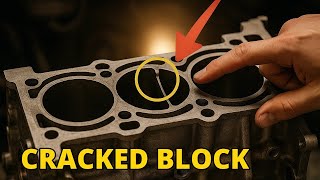
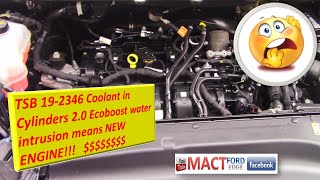
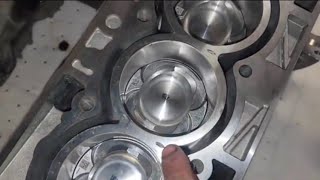
For the 2014-2018 Fusion Energi with the 2.0L engine, this code presents two very different scenarios. It can be triggered by a relatively simple electrical fault with the temperature sensor or its wiring, as outlined in a Ford Special Service Message (SSM 48991). However, it is also explicitly linked in multiple Technical Service Bulletins (TSB 22-2322, TSB 22-2229, TSB 19-2346) to a severe engine design flaw. 🎬 Watch: A deep dive into Ford's EcoBoost coolant intrusion issues. A defect in the engine block casting allows coolant to leak directly into the cylinders, causing overheating, misfires, and eventual engine failure. Diagnosing this code correctly is crucial to avoid both unnecessary minor repairs and overlooking a catastrophic engine failure that requires a complete engine replacement.
Diagnostic Flowchart
Tap your situation to follow the diagnostic path that matches what you're seeing on this vehicle.
Symptoms You May Notice
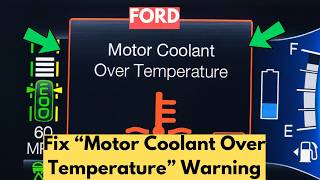
- "Engine Coolant Over Temperature" warning light on the dashboard
- Temperature gauge reading very high or in the red zone, or sometimes jumping instantly to hot
- Reduced engine power as the vehicle enters "limp mode"
- Engine running rough or misfiring, especially on a cold start
- White smoke from the exhaust, which can indicate coolant is burning in the cylinders
- Noticeable loss of engine coolant without any visible external leaks
- Cooling fans running on high speed constantly, even when the engine is cold
- Replacing only the thermostat when the actual issue is a faulty temperature sensor or wiring.
- Assuming the engine is fine and only replacing sensors when the root cause is the severe coolant intrusion issue, leading to repeated overheating events.
- Topping off coolant repeatedly without diagnosing the underlying leak, which could be internal and destroying the engine.
Most Likely Causes
- Coolant Intrusion into Cylinders 🔴 High Probability Ford has issued multiple Technical Service Bulletins (TSB 22-2322, TSB 22-2229, TSB 19-2346) for the 2.0L engine family concerning a design flaw in the engine block that allows coolant to leak into the cylinders, causing overheating and misfires. This is a widely discussed issue in owner forums, often leading to engine replacement.
How to confirm: A technician will perform a cooling system pressure test, check for combustion gases in the coolant (chemical test), and may use a borescope to look for coolant inside the cylinders. A persistent misfire code (like P0302 or P0303) accompanying coolant loss is a strong indicator.
Typical fix: Replacement of the long block or short block engine assembly is the manufacturer-recommended repair.
Est. part cost: $3000-$5000+ - Faulty Cylinder Head Temperature (CHT) Sensor or Wiring 🟡 Medium Probability → Shop Engine Cylinder Head Ford issued Special Service Message (SSM 48991) indicating that the CHT/ECT sensor or its wiring harness can fail, leading to false overheating signals and triggering P1299. Corrosion or coolant leaking into the sensor connector is a common failure mode.
How to confirm: Test the sensor's resistance with a multimeter at various temperatures to see if it matches specifications. Inspect the wiring harness for damage, corrosion, or loose connections. A visual inspection may reveal coolant contamination in the connector itself.
Typical fix: Replace the CHT sensor and/or repair the damaged section of the wiring harness. In some cases, Ford has issued relocation kits for other engines with similar sensor accessibility issues.
Est. part cost: $30-$80 - Low Engine Coolant Level 🟡 Medium Probability While not a design flaw, this is a common trigger. If the coolant is low due to an external leak (hose, radiator, water pump) it will cause a genuine overheat. If it's low with no external leak, it points back to the more serious internal coolant intrusion issue.
How to confirm: Visually inspect the coolant reservoir. If the level is below the 'MIN' line when the engine is cold, it is low.
Typical fix: Top off the coolant with the correct Ford-specified type (Motorcraft VC-13-G Orange or VC-12 Yellow) and perform a cooling system pressure test to find the source of the leak.
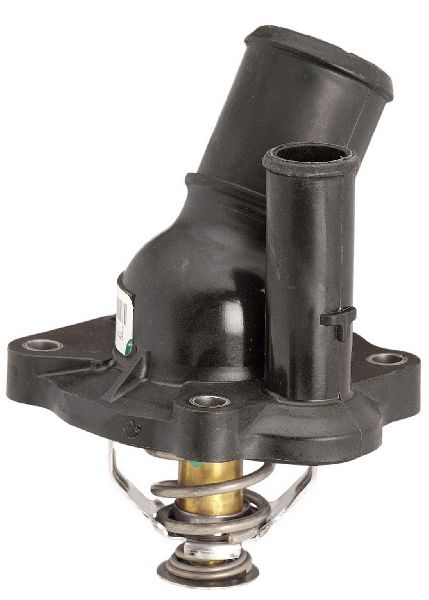
Est. part cost: $20-$40 - Stuck Thermostat ⚪ Low Probability → Shop Integrated Thermostat Housing Assembly
How to confirm: Check if the upper radiator hose gets hot as the engine warms up. If it stays cool while the engine overheats (verified with an infrared thermometer), the thermostat is likely stuck closed.
Typical fix: Replace the thermostat and gasket.
Est. part cost: $30-$80 - Failing Water Pump ⚪ Low Probability → Shop Engine Water Pump
How to confirm: Look for coolant leaking from the water pump's weep hole. A grinding noise from the pump area when the engine is running is another sign of failure.
Typical fix: Replace the water pump and serpentine belt.
Est. part cost: $100-$300
Rare But Worth Checking
- Cooling Fan Malfunction: If overheating only occurs at low speeds or in traffic but is fine on the highway, the cooling fan may not be activating. Check fuses and relays first.
- Clogged Radiator: → Shop Radiator Internal or external blockages in the radiator can prevent proper heat dissipation. This is more common on higher-mileage vehicles or if the wrong coolant has been used.
Diagnosis Steps
- DO NOT open the coolant cap when the engine is hot. Allow it to cool completely.
- Check the engine coolant level in the reservoir and top off if low with the correct Ford-specified coolant.
- Use an OBD-II scanner to check for other accompanying codes, especially misfire codes (P030x). Note if the misfire is isolated to a single cylinder.
- Determine if the engine is TRULY overheating. Use an infrared thermometer to measure the temperature of the cylinder head and compare it to the live data from the CHT sensor on your scan tool. If the physical temperature is normal but the sensor reads hot, the sensor or wiring is the likely culprit.
- If the engine is not actually overheating, inspect the Cylinder Head Temperature (CHT) sensor and its wiring harness for damage, corrosion, or coolant contamination per SSM 48991.
- If the engine is confirmed to be physically overheating, check for obvious external coolant leaks from hoses, the radiator, or the water pump area.
- Test the cooling fans for proper operation by turning on the A/C, which should command them to run.
- Test the thermostat to ensure it is opening correctly as the engine warms up.
- If no external leaks are found and the coolant level is dropping, a professional should perform a cooling system pressure test and a chemical test for combustion gases in the coolant to confirm or rule out the internal coolant intrusion issue.
Parts You'll Likely Need
- Cylinder Head Temperature Sensor (CHT)
(OEM #Motorcraft DY-1162)— A common failure point identified in Ford SSM 48991, causing false overheating signals. Note: This part is sometimes referred to as an ECT sensor, but for this engine, it is a CHT sensor that measures metal temperature directly. The part number DY-1162 is often listed as an Oxygen Sensor by retailers, which can cause confusion; ensure you are purchasing a CHT sensor.
Trusted brands: Motorcraft, NTK, Bosch
OEM price range: $40-$70
Aftermarket price range: $25-$50 - Long Block Engine Assembly — This is the official Ford-recommended fix for the coolant intrusion issue described in TSB 22-2229 and TSB 19-2346. It replaces the entire engine block and cylinder head assembly. Owner forums report dealer quotes from $7,000 to over $9,800 for this repair.
Trusted brands: Motorcraft
OEM price range: $3000-$5000 - Engine Coolant Thermostat — Can get stuck closed, preventing coolant from circulating and causing a genuine overheat condition.
Trusted brands: Motorcraft, Gates
OEM price range: $50-$80
Aftermarket price range: $30-$60
Related Codes That Often Appear With This One
- P0217 — This is a generic code for 'Engine Coolant Overtemperature Condition' and often appears with the Ford-specific P1299.
- P1285 — This code for 'Cylinder Head Overtemperature Condition' is also frequently cited alongside P1299 in Ford TSBs related to coolant intrusion.
- P0300, P0301, P0302, P0303, P0304 — These random or specific cylinder misfire codes are common when coolant intrusion is the cause, as the coolant fouls the spark plugs and disrupts combustion. A persistent misfire in one cylinder (e.g., P0302) is a hallmark of this problem.
Technical Service Bulletins (TSBs) & Recalls
- TSB 22-2322: Supersedes a previous TSB, addresses low coolant, white smoke, and rough running with DTCs including P1299, attributing it to coolant intrusion into the cylinder and recommending a short block replacement.
- TSB 22-2229: Similar to 22-2322, links DTCs like P1299 to coolant intrusion into the cylinders and advises following a specific service procedure.
- SSM 48991: Points to a faulty Engine Coolant Temperature (ECT) sensor or its wiring harness as a cause for P1299 and other temperature-related codes, suggesting sensor replacement.
- TSB 19-2346: An earlier bulletin that also identifies coolant intrusion in the 2.0L engine as the cause for rough running, white smoke, and a list of DTCs including P1299, recommending a long block engine replacement.
Platform-Specific Known Issues
- Coolant Intrusion into Cylinders: TSBs #TSB 22-2322 and #TSB 22-2229 specifically mention that P1299 can be caused by coolant leaking into the cylinders due to a flaw in the engine block design. The official fix is a long block replacement.
Mechanic-Grade Diagnostic Values
- CHT Sensor Signal Voltage (KOEO, engine cold) — expected: ~4.29 Volts @ 86°F (30°C). Failure: Voltage significantly different from expected value at a known temperature. A 5V reading indicates an open circuit or disconnected sensor.
- CHT Sensor Signal Voltage (engine at operating temp) — expected: ~2.03 Volts @ 194°F (90°C). Failure: Voltage that doesn't decrease as temperature rises, or a reading that doesn't correlate with the engine's actual temperature.
- CHT Sensor Resistance (engine cold) — expected: ~37.3 kΩ @ 68°F (20°C). Failure: Resistance is out of spec for the measured ambient temperature, indicating a faulty sensor.
- CHT Sensor Resistance (engine hot) — expected: ~2.0-2.8 kΩ @ 194°F-212°F (90°C-100°C). Failure: Resistance does not drop into the lower kΩ range when the engine is hot.
- CHT Sensor Connector Reference Voltage (KOEO, sensor unplugged) — expected: ~5 Volts on one wire (reference) and <100mV on the other (PCM ground). Failure: No 5V reference suggests a wiring or PCM issue. High voltage on the ground wire indicates a grounding problem.
Wiring & Ground Locations
- G103 — Located at the left rear of the engine compartment on the cowl, above the brake booster.. This ground serves the Powertrain Control Module (PCM) and the Data Link Connector (DLC). A poor connection here can cause erratic sensor readings and communication issues, potentially leading to a false P1299 code.
- G104 / G105 / G106 — Located on the right and left front of the engine compartment, near the cooling fans and on the frame cross rail.. These grounds are for the cooling fan motors and various engine compartment components. A bad ground at G105 could prevent the cooling fans from operating correctly, leading to a genuine overheat condition.
- CHT Sensor Connector — Screwed directly into the cylinder head, typically between the center spark plugs.. The two-wire connector provides the reference voltage and signal return for the CHT sensor. SSM 48991 specifically calls out this connector and its wiring as a potential failure point due to damage or corrosion. One wire is the signal, the other is a dedicated PCM ground.
Real Owner Repair Stories
- Reddit user in r/fordfusion (2017 Ford Fusion SE 2.0L EcoBoost, 66k miles) — Check engine light on.
❌ Tried (didn't work) Initial diagnosis
✅ What actually fixed it The dealer diagnosed coolant intrusion and replaced the engine. The owner noted the cost was quoted at $9,800. Another user with the same car had the engine replaced under warranty at 33k miles for the same issue, confirmed after noticing repeat coolant loss. - Reddit user in r/fordfusion (2017 Ford Fusion SE with 2.0L EcoBoost) — Coolant intrusion issue.
✅ What actually fixed it The engine was replaced under warranty with a new long block, part number J2GZ6006E. A commenter, identifying as a Ford tech, confirmed this is the newest part revision for the long block and that the 1.5L and 2.0L EcoBoost engines are known for this issue. - Ford Forums user (2012 Ford Escape 2.5L (similar CHT system)) — Overheating on the highway, limp mode, P1299 code.
❌ Tried (didn't work) Replaced CHT sensor, Replaced thermostat, Replaced water pump
✅ What actually fixed it The user performed a compression test (which passed) and a combustion leak test (which passed), ruling out a head gasket. The final suspect was the cooling fan relay, as the fans were not operating correctly, causing a genuine overheat condition that other part replacements did not solve.
OEM Part Supersession History
Unknown (Pre-2019 2.0L Long Block)→J2GZ-6006-E (and potentially other revisions)— The original engine block design had a slit between cylinders that was prone to cracking, allowing coolant to leak into the cylinders. The revised block design removed these slits and uses angled drillings for coolant passages instead.
Heads up: When replacing the engine due to coolant intrusion, it is critical to install a long block built after mid-2019 (ideally from a 2020+ donor vehicle) to ensure the revised block design is used. Installing an older engine will likely lead to a repeat failure.
Model Year Variations Within This Range
- 2014-2019: The engine block design flaw causing coolant intrusion affects 2.0L EcoBoost engines built on or before April/May 2019. TSB 19-2346 specifically calls out 2017-2019 Fusion models built on or before April 8, 2019. Vehicles built after this date should have the revised engine block that corrects the flaw.
Helpful Videos
We Have This Part in Stock


The information in this article is provided for general reference and educational purposes only. Vehicle specifications, procedures, and part compatibility can vary by production date, trim level, and region. Always consult your vehicle's factory service manual and verify part numbers before purchasing or performing repairs. Safety-critical components such as airbags, seat belts, and braking systems should be installed by a qualified professional.
- Ford FUSION ENERGI:
- 🧭 Diagnostic Flowchart
- 🎬 Helpful Videos
- 🛍️ Shop This Part
- What's Unique About the 2014-2018 Ford FUSION ENERGI
- Symptoms You May Notice
- Most Likely Causes
- Rare But Worth Checking
- Diagnosis Steps
- Parts You'll Likely Need
- Related Codes That Often Appear With This One
- Technical Service Bulletins (TSBs) & Recalls
- Platform-Specific Known Issues
- Mechanic-Grade Diagnostic Values
- Wiring & Ground Locations
- Real Owner Repair Stories
- OEM Part Supersession History
- Model Year Variations Within This Range
- 🎟️ Get 5% Off