

P1299 on 2000-2007 Ford Taurus 3.0L V6: Engine Overheating Causes and Fixes
This code means the engine is overheating, or the computer thinks it is. The most common cause for a false code is a faulty Cylinder Head Temperature (CHT) sensor, not an ECT sensor. If the engine isn't physically hot, this sensor is the prime suspect. Always check the coolant level first. If the engine is truly overheating, a stuck thermostat is a common culprit. A new sensor is inexpensive, but an actual overheating issue needs immediate attention to prevent engine damage.
- P1299 means your Taurus's computer has detected a severe overheat and has put the engine in a protective 'limp mode' with drastically reduced power.
- DO NOT continue to drive. You risk severe and expensive engine damage if the overheat is real.
- The first diagnostic step is to determine if the engine is truly overheating or if it's a false alarm from a bad sensor. A temp gauge that instantly reads HOT on a cold engine points to a bad sensor.
- The most common repairs are replacing the Engine Coolant Temperature (ECT) sensor or the thermostat.
- Always start by checking the simplest thing first: the engine coolant level.
What's Unique About the 2000-2007 Ford Taurus
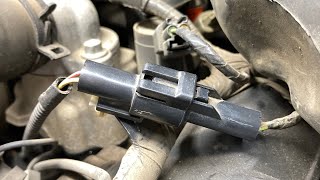
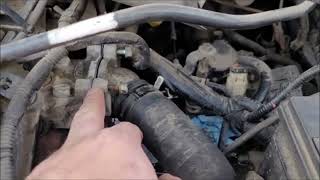
The fourth-generation Taurus with the 3.0L DOHC Duratec V6 uses a Cylinder Head Temperature (CHT) sensor located in the valley between the cylinder heads, underneath the intake manifold. This is a critical distinction from many other vehicles that use a simpler Engine Coolant Temperature (ECT) sensor. The CHT directly measures metal temperature rather than coolant temperature. While this provides a more accurate reading of engine stress, its location makes diagnosis and replacement for a false overheat signal significantly more labor-intensive (3-5 hours) than a typical ECT sensor. The key challenge with this code on an older Taurus is 🎬 Watch this step-by-step Taurus overheating diagnostic guide distinguishing between a faulty, buried CHT sensor and a more serious mechanical failure in the aging cooling system.
Symptoms You May Notice
- Check Engine Light is on
- Temperature gauge reading is very high or in the red zone
- Sudden and significant loss of engine power (limp mode)
- Engine running rough or vibrating as cylinders are deactivated
- Steam coming from under the hood
- Smell of hot or burning coolant
- Cooling fans running at maximum speed, even on a cold engine
- Replacing the radiator cap when the issue is a stuck thermostat.
- Assuming the engine is destroyed without first checking if the CHT sensor is sending a false signal, especially on a cold start.
- Replacing an ECT (Engine Coolant Temperature) sensor when this engine uses a CHT (Cylinder Head Temperature) sensor for this function.
Most Likely Causes
- Faulty Cylinder Head Temperature (CHT) Sensor 🔴 High Probability → Shop Engine Cylinder Head The CHT sensor is a common failure point. It can fail internally, creating an open or short circuit, and send a false 'overheat' signal to the computer, triggering P1299 and limp mode even when the engine is completely cold.
How to confirm: The classic symptom is the temperature gauge shooting to HOT immediately after a cold start. Use a scan tool to view live data with the engine cold (e.g., after sitting overnight). If the CHT sensor reads a high temperature (like 250°F) while ambient and intake air temps are low, the sensor or its wiring is faulty.
Typical fix: Replace the Cylinder Head Temperature (CHT) sensor. This is a labor-intensive job as the upper and lower intake manifolds must be removed to access it. The intake manifold gaskets must also be replaced.
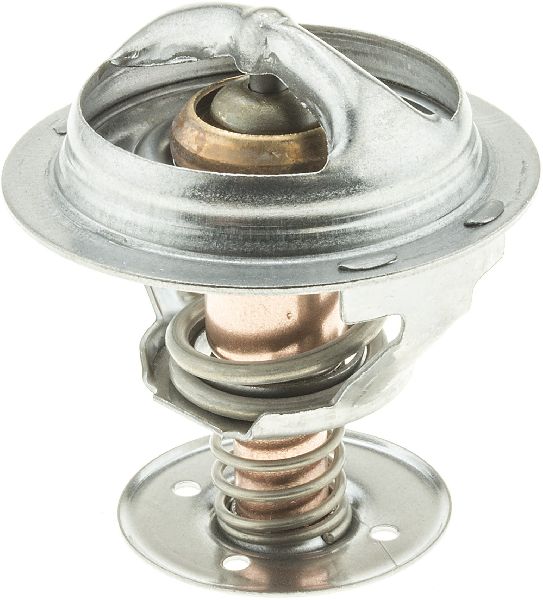
Est. part cost: $25-$60 for the sensor, plus $50-$100 for gaskets. - Thermostat Stuck Closed 🔴 High Probability → Shop Integrated Thermostat Housing Assembly Thermostats are a common wear item. After many years and heating cycles, the wax motor can fail or the spring can break, causing it to stick closed and prevent coolant from circulating to the radiator.
How to confirm: After starting the engine, feel the upper radiator hose. It should remain cool for several minutes and then get hot suddenly as the thermostat opens (around 190-195°F). If the engine temperature gauge climbs high but the upper radiator hose stays cool or only gets lukewarm, the thermostat is likely stuck closed.
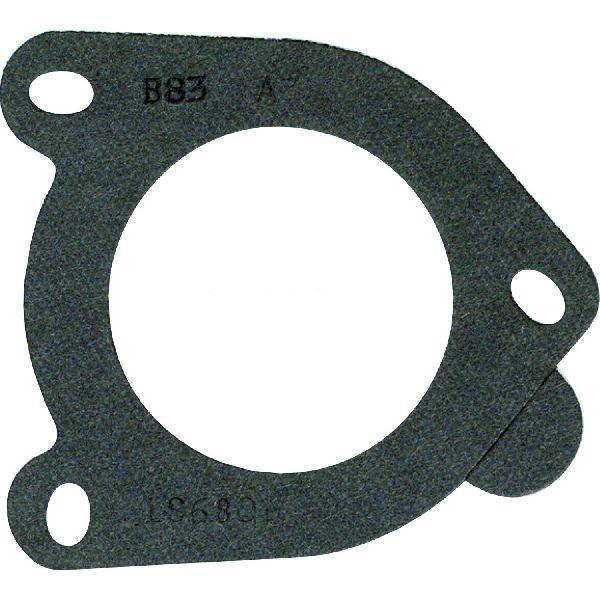
Typical fix: Replace the thermostat and gasket. It's recommended to also flush the cooling system at the same time.
Est. part cost: $15-$40 - Low Engine Coolant 🟡 Medium Probability As these vehicles age, plastic radiator end tanks, seams, water pump seals, and various coolant hoses can develop slow leaks, leading to a gradual loss of coolant.
How to confirm: Visually inspect the coolant level in the overflow reservoir when the engine is cold. If it is low, look for signs of leaks (puddles under the car, white or green crusty residue on hoses or the radiator). A cooling system pressure test can pinpoint the location of a leak.
Typical fix: Top off the coolant with the correct type (Ford specifies Motorcraft Gold or Green depending on the exact year) and find and repair the source of the leak.
Est. part cost: $20-$300+ depending on the source of the leak - Failing Water Pump ⚪ Low Probability → Shop Engine Water Pump The water pump is a wear item. The internal impeller can erode, or the bearing seal can fail, causing a leak or preventing proper coolant circulation.
How to confirm: Look for coolant leaking from the weep hole on the bottom of the water pump housing. A rumbling or grinding noise from the front of the engine can also indicate a failing water pump bearing. In some cases, the pump can seize, which may break the serpentine belt.
Typical fix: Replace the water pump and serpentine belt.
Est. part cost: $50-$150 - Cooling Fan Malfunction ⚪ Low Probability The electric cooling fan motors or the fan control relays can fail over time, preventing the fans from turning on when needed, especially in stop-and-go traffic or when the A/C is on.
How to confirm: Let the vehicle idle and watch the temperature gauge. As it passes the halfway mark, the cooling fans should turn on. You can also turn on the A/C, which should command the fans to run. If they do not, there is an issue in the fan circuit (fan motor, relay, fuse, or wiring).
Typical fix: Diagnose and replace the faulty component, which is most often the fan motor assembly or the fan relay.
Est. part cost: $100-$250
Rare But Worth Checking
- Clogged Radiator: → Shop Radiator Internal passages in the radiator can become blocked with sediment over time, especially if the coolant has not been changed regularly. This restricts flow and reduces cooling efficiency.
- Blown Head Gasket: Though less common, a failed head gasket can allow hot combustion gases to enter the cooling system, causing a rapid overheat. This is usually accompanied by white smoke from the exhaust, a milky appearance in the engine oil, and persistent, unexplained coolant loss.
- Damaged CHT Sensor Wiring: The wiring harness to the CHT sensor runs through the hot engine valley. Over time, the wiring can become brittle and chafe, causing a short or open circuit that mimics a failed sensor. Always inspect the wiring carefully when replacing the sensor.
Technical Service Bulletins (TSBs) & Recalls
While the Taurus has its own specific history, manufacturer service bulletins for other Ford models highlight common failure modes for P1299. For instance, manufacturer bulletin #TSB 26-2060 notes that a vehicle may exhibit a loss of engine coolant at the heater hose assembly near the engine cooling fan, leading to DTC P1299 and/or P1285. Additionally, manufacturer bulletin #SSM 52786 describes a "false overheat condition" with P1299 present, suggesting electrical interference or connector issues as a potential culprit.
Diagnosis Steps
- Check Coolant Level: First, ensure the engine is completely cool. Check the coolant level in the overflow reservoir and top it off if necessary with the correct type of coolant.
- Verify the Overheat Condition: Start the engine from cold. If the temperature gauge immediately shoots to HOT and the engine goes into limp mode, a faulty CHT sensor or wiring is almost certain. If the engine physically heats up over several minutes, you have a real cooling system problem.
- Scan for Codes: Use an OBD-II scanner to confirm the P1299 code and look for any other related codes like P1285 or P0217. Check freeze-frame data to see the conditions under which the code was set.
- Inspect for Leaks: Carefully inspect the radiator, all coolant hoses, the thermostat housing, and the water pump for any signs of coolant leaks (stains, drips, crusty residue).
- Check Cooling Fan Operation: Start the engine and let it warm up. Turn on the air conditioning. The cooling fans should engage. If they don't, inspect the fan fuses, relays, and wiring.
- Test the Thermostat: With the engine running, feel the upper and lower radiator hoses. If the engine is hot but the upper hose is hot and the lower hose is cold, the thermostat is likely stuck closed, preventing circulation.
- Test the CHT Sensor Circuit: If a false overheat is suspected, use a scan tool to monitor the CHT reading on a cold engine. It should match the ambient air temperature. If it reads high (e.g., 250°F+), the sensor or its circuit is faulty.
Parts You'll Likely Need
- Cylinder Head Temperature Sensor (CHT)
(OEM #9L8Z-6G004-F (Motorcraft DY-1145))— This sensor is the most common failure point that can send a false overheating signal to the computer, triggering limp mode even on a cold engine.
Trusted brands: Motorcraft, NTK/NGK, Standard Motor Products
OEM price range: $25-$40
Aftermarket price range: $15-$30 - Thermostat and Gasket — A thermostat stuck in the closed position is a very common cause of genuine engine overheating.
Trusted brands: Motorcraft, Stant, Gates
OEM price range: $25-$50
Aftermarket price range: $15-$30 - Upper and Lower Intake Manifold Gaskets — These are required for replacing the
Related Codes That Often Appear With This One
- P1285 — P1285 ('Cylinder Head Temperature Sensed Over-Temperature Condition') is the code that indicates the temperature has been exceeded. P1299 is the code that indicates the computer has taken protective action (limp mode) as a result. They almost always appear together.
- P0217 — This is a generic code for 'Engine Coolant Overtemperature Condition' and can appear alongside the Ford-specific P1299 to confirm a genuine overheating event.
Mechanic-Grade Diagnostic Values
- CHT Sensor Signal Voltage (Key On, Engine Off) — expected: On a cold engine (~60-70°F), voltage should be high, around 3.0V to 3.5V. At normal operating temperature (~198°F), voltage should drop to around 2.1V.. Failure: A voltage reading near 5.0V indicates an open circuit (unplugged sensor or broken wire). A voltage near 0V indicates a short to ground.
- CHT Sensor Resistance vs. Temperature — expected: The CHT is a thermistor; resistance decreases as temperature increases. Expected values are approximately 2000-3000Ω at 68°F (20°C) and drop to 200-300Ω at 194°F (90°C).. Failure: An open circuit (infinite resistance) or a value that does not change with temperature indicates a failed sensor.
- CHT Sensor Ground Circuit Voltage Drop — expected: Less than 100mV (0.1V).. Failure: Voltage significantly above 100mV indicates high resistance in the ground circuit, which can skew sensor readings. This could be due to corrosion at the PCM ground or a damaged wire.
Scan Tool Commands That Help
- Ford IDS (or equivalent like FORScan): Live Data Monitoring (PID: CHT) — This is the primary diagnostic step for P1299. Use it on a cold engine to instantly determine if the sensor is sending a false high-temperature reading (e.g., 250°F when ambient is 70°F), which confirms a faulty sensor or circuit.
- Ford IDS (or equivalent like FORScan): Active Commands - Cooling Fan Control — If a genuine overheat condition is suspected and the cooling fans are not running, this command allows the technician to bypass the PCM's logic and directly command the fans on. If the fans run with the command, the fan motors are good, and the issue lies within the control circuit (relay, wiring, or PCM).
Wiring & Ground Locations
- CHT Sensor Connector (C1164) — In the engine valley, between the cylinder heads, threaded into the driver's side cylinder head. It is located underneath the upper and lower intake manifolds.. This is the direct connection point for the sensor. The wiring harness in this hot area can become brittle, and the connector itself can corrode, leading to a poor connection that mimics a sensor failure. A TSB for other Ford models with similar engines (11-10-5) points to water intrusion and corrosion at this connector as a cause for P1299.
- G101 — On the left side of the engine, typically located on the engine block or transmission case, often above or near the starter motor.. This is a primary engine ground point. A poor connection here can affect the reference ground for multiple sensors, including the CHT, potentially causing erratic readings.
- G104 — On the right front side of the engine compartment, typically on the chassis frame rail or inner fender.. This is a key chassis ground. While less direct than the engine block ground, poor chassis grounds can create electrical noise and voltage offsets that may interfere with sensitive sensor signals returning to the PCM.
- PCM Location — On the firewall, behind the intake plenum.. Accessing the PCM connectors is necessary for end-to-end wiring tests (checking for continuity, shorts, or opens) between the PCM and the CHT sensor connector. Its difficult location makes this a late-stage diagnostic step.
Real Owner Repair Stories
- Taurus Car Club of America Forum (2002 Ford Taurus, 3.0L DOHC Duratec V6) — Car suddenly went into limp mode with the temperature gauge pegged to HOT, even on a cold start. Cooling fans were running at full speed.
❌ Tried (didn't work) Initially suspected a stuck thermostat or low coolant, but the engine was physically cold.
✅ What actually fixed it The owner replaced the Cylinder Head Temperature (CHT) sensor. After removing the intake manifold, they discovered the original sensor's connector was heavily corroded. The final fix was replacing both the CHT sensor and the pigtail connector, which resolved the false overheat signal and the P1299 code. - NHTSA ODI #11581990 — An owner reported the car went into limp mode with codes P0302 and P1299 stored. A dealership inspection found coolant leaking into the #2 cylinder, a condition that can trigger the Cylinder Head Protection strategy.
- NHTSA ODI #11685553 — A report describes a check engine light accompanied by white smoke on a cold start, low coolant, and codes P0302 and P1299, resulting in a loss of power and limp mode.
- NHTSA ODI #11485331 — One owner noticed an empty coolant reservoir and found codes including P0302, P1299, and P0300. They attempted to resolve the issue by replacing the spark plugs, coils, coolant reservoir, and thermostat.
OEM Part Supersession History
F5AZ-6G004-A→9L8Z-6G004-F (Motorcraft DY-1145)— Part has been updated and consolidated over multiple vehicle generations.
Heads up: The DY-1145 part number is widely used across many Ford engines. While it is the correct part for this application, always verify fitment with the vehicle's VIN, as connector styles can occasionally vary mid-generation, though it is not a common issue on this platform.
Model Year Variations Within This Range
- 2004-2007: For the 2004 model year, the Taurus received a minor facelift with a redesigned front bumper, grille, and revised taillights. However, these cosmetic changes did not affect the 3.0L Duratec V6 engine or its cooling system. The location and function of the CHT sensor, thermostat, and water pump remain identical across the entire 2000-2007 range for this engine.
Diagnostic Flowchart
Other Known Issues on This Vehicle
Issues unrelated to this code that are worth knowing about as an owner of this generation:
- AX4N/4F50N Transmission Failure 🔴 High — Very common, especially over 100,000 miles. Symptoms include slipping, harsh shifting, or sudden loss of engagement due to stripped torque converter splines.
- Ignition Coil Pack Failure 🟠 Medium — Common failure item leading to engine misfires, rough idle, and hesitation under acceleration. Often presents with codes for specific cylinder misfires (P0301-P0306).
- Camshaft Position Synchronizer Failure 🟠 Medium — The synchronizer assembly, which replaces a traditional distributor, can wear out, causing a characteristic 'chirping' or 'squeaking' noise from the engine. If it fails completely, it can cause stalling or a no-start condition.
- PCV System Vacuum Leaks 🟡 Low — Rubber PCV hoses and elbows, particularly the one under the throttle body, can degrade from oil exposure, causing vacuum leaks that lead to a high idle, lean codes, and increased oil consumption.
- Sticking Throttle Cable 🔴 High — A known issue on 2000-2003 models where the speed control cable collar could break, potentially causing the throttle to stick open. Addressed by a Ford customer satisfaction program. (Ref: NHTSA Investigation PE03-042)
Used vs. New Parts: Buying Guide for This Vehicle
When a used part is the smart pick: For this specific code, used parts are generally not recommended for the primary failure items. However, larger, durable components like a cooling fan assembly or a coolant overflow reservoir could be sourced from a junkyard if they are in good physical condition.
Donor-vehicle mileage cap: roughly under 100000 miles for the part to have meaningful remaining life.
What to inspect on the donor part:
- For a cooling fan assembly, check for cracks in the shroud and ensure the fan blades spin freely by hand without noise or wobble.
- For a coolant reservoir, inspect carefully for hairline cracks or yellowing, brittle plastic, especially around the hose connections.
- Check the donor vehicle for signs of a front-end collision, which could have damaged the radiator and associated components.
OEM-only on this vehicle (don't cheap out):
- Cylinder Head Temperature (CHT) Sensor: Due to the high labor cost to access this sensor, using a genuine Motorcraft part is strongly advised to avoid premature failure and a repeat repair.
- Thermostat: While many aftermarket thermostats work, an OEM Motorcraft thermostat is recommended for precise temperature regulation and longevity.
Aftermarket brands forum-validated for this vehicle:
- Gates (for hoses, belts, and water pumps)
- Stant (for thermostats and radiator caps)
- Standard Motor Products (SMP) or NTK (for sensors, if OEM is unavailable)
Brands owners have reported issues with on this vehicle:
- Unnamed 'white box' sensors from online marketplaces. These often have high failure rates and can provide inaccurate readings, leading to persistent issues.
Real Owner Stories
Aggregated from forums and TSBs cited above. Mileages and costs reflect what owners reported in those sources.
2000-2007 Ford Taurus 3.0L Duratec V6
Symptoms: The P1299 code appeared immediately upon a cold start, with the temperature gauge showing an overheat condition despite the engine not being hot.
What fixed it: Replacement of the CHT sensor located under the intake manifold.
Source hint: Taurus Car Club of America - A thread titled 'P1299 code'
Related OBD-II Codes
Frequently Asked Questions
Why does my 2000-2007 Ford Taurus temperature gauge shoot to hot immediately after a cold start?
Where is the CHT sensor located on the 3.0L Duratec V6, and can I replace it myself?
What type of coolant should I use to top off my Taurus to prevent P1299?
My Taurus is vibrating and has lost significant power; is the engine failing?
Can a bad water pump cause the P1299 code on this vehicle?
Why are my cooling fans running at maximum speed even though I just started the car?
Helpful Videos
We Have This Part in Stock


The information in this article is provided for general reference and educational purposes only. Vehicle specifications, procedures, and part compatibility can vary by production date, trim level, and region. Always consult your vehicle's factory service manual and verify part numbers before purchasing or performing repairs. Safety-critical components such as airbags, seat belts, and braking systems should be installed by a qualified professional.
- Ford Taurus:
- 🧭 Diagnostic Flowchart
- 🎬 Helpful Videos
- 🛍️ Shop This Part
- What's Unique About the 2000-2007 Ford Taurus
- Symptoms You May Notice
- Most Likely Causes
- Rare But Worth Checking
- Technical Service Bulletins (TSBs) & Recalls
- Diagnosis Steps
- Parts You'll Likely Need
- Related Codes That Often Appear With This One
- Mechanic-Grade Diagnostic Values
- Scan Tool Commands That Help
- Wiring & Ground Locations
- Real Owner Repair Stories
- OEM Part Supersession History
- Model Year Variations Within This Range
- Other Known Issues on This Vehicle
- Used vs. New Parts: Buying Guide for This Vehicle
- Real Owner Stories
- 2000-2007 Ford Taurus 3.0L Duratec V6
- Related OBD-II Codes
- Frequently Asked Questions
- 🎟️ Get 5% Off