

P1299 on 2008-2019 Ford Taurus 3.5L V6: Cylinder Head Over-Temperature Causes, from Faulty CHT Sensor to Internal Water Pump Failure
This code means your engine's computer has activated a protective 'limp mode' due to a detected overheat. The cause is either a faulty Cylinder Head Temperature (CHT) sensor sending a false signal, or a genuine cooling system failure. A faulty CHT sensor is a high-labor repair on this engine as it's located under the intake manifold. A genuine overheat is frequently caused by the vehicle's notoriously failure-prone internal water pump, which can leak coolant into the engine oil and lead to catas
- P1299 is a critical code that puts your car in a protective limp mode. Stop driving immediately.
- The first diagnostic step is to determine if the engine is truly hot or if it's a false alarm from a bad sensor. A scan tool check on a cold engine can confirm this.
- A faulty Cylinder Head Temperature (CHT) sensor is a very common cause, but it is a difficult, high-labor repair because it's located under the intake manifold.
- If the engine is truly overheating, the failure-prone internal water pump is a primary suspect. Check your oil for coolant contamination ('milky' appearance) immediately.
- Due to the known issues with this engine, do not ignore coolant loss, even if you don't see a puddle. It could be leaking internally.
What's Unique About the 2008-2019 Ford Taurus
The Ford Taurus with the 3.5L V6 (Duratec/Cyclone) has two significant design quirks that make P1299 a particularly noteworthy code. First, a very common cause is a faulty Cylinder Head Temperature (CHT) sensor, but on this transverse engine, the sensor is buried under the lower intake manifold, turning a cheap part into a multi-hour, high-labor repair. Second, if the engine is genuinely overheating, a likely culprit is the internal, timing-chain-driven water pump—a well-documented weak point on this engine that can fail and leak coolant directly into the oil pan, leading to catastrophic engine failure. This internal pump design is specific to the transverse engine layout found in the Taurus, Edge, Flex, and others, while the truck-based 3.5L engines used an external pump.
Generation note: This guide covers the fifth generation (2008-2009) and sixth generation (2010-2019) Ford Taurus. Both generations used the naturally aspirated 3.5L V6 engine, and the primary issues related to code P1299—the difficult-to-access CHT sensor and the internal water pump design—are applicable across this entire year range.
Symptoms You May Notice
- Check Engine Light is on
- A warning message on the dashboard indicating engine overheat or "Engine Coolant Over Temp".
- Temperature gauge suddenly shoots to HOT, even on a cold start (classic sign of a bad CHT sensor)
- Sudden and severe loss of engine power (Limp Mode).
- Engine cooling fans running at maximum speed, even when the engine is cold.
- Rough idle or engine vibration as cylinders are deactivated.
- Steam or a sweet smell of coolant from the engine bay
- Replacing only the thermostat when the CHT sensor is sending a false signal from a cold engine.
- Replacing the CHT sensor when the engine is genuinely overheating due to a failing water pump or other cooling system issue. Proper diagnosis (cold sensor check) is key.
- Assuming a coolant leak is from a simple hose when it is actually coming from the internal water pump's weep hole exit near the alternator.
Most Likely Causes
- Faulty Cylinder Head Temperature (CHT) Sensor 🔴 High Probability → Shop Engine Cylinder Head The CHT sensor is a common failure point. It can fail internally and send a false 'overheat' signal to the computer, triggering P1299 and limp mode even when the engine is completely cold. Its location under the intake manifold makes it a high-labor repair.
How to confirm: With the engine completely cold (after sitting overnight), use a scan tool to view live data. If the CHT sensor reading is already high (e.g., 250°F) while the ambient and intake air temperatures are low (e.g., 70°F), the sensor is bad. A functional sensor should read near ambient temperature when cold.
Typical fix: The CHT sensor must be replaced. 🎬 Watch: This walkthrough shows how to access the buried CHT sensor. This is a major job requiring the removal of the upper and lower intake manifolds to gain access. The intake manifold gaskets must also be replaced as they are a one-time use part.
Est. part cost: $30-$80 for the sensor and gaskets. - Failing Internal Water Pump 🟡 Medium Probability → Shop Engine Water Pump The 3.5L V6 features an internal water pump driven by the timing chain. When its seal fails, it can leak coolant. The design intends for the leak to exit a weep hole, but it can also leak internally into the engine oil, causing both overheating (from coolant loss) and severe internal engine damage. This is a widely documented design flaw with failures reported as early as 50,000-60,000 miles.
How to confirm: Check the engine oil and oil cap for a 'milky' or 'chocolate milk' appearance, which indicates coolant contamination. Check for coolant loss with no visible external leaks. Critically, inspect the area below the alternator and A/C compressor for signs of coolant leakage; this is the exit for the internal water pump's weep hole. A coolant system pressure test can confirm a leak.
Typical fix: This requires a complete timing system overhaul, including replacing the water pump, timing chain, tensioners, and guides. It is a very expensive and labor-intensive repair, often costing thousands of dollars.
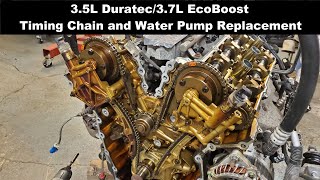
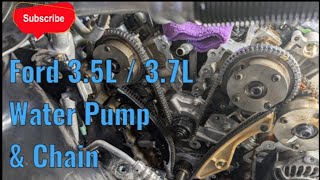
Est. part cost: $400-$800 for a complete timing and water pump kit. 🎬 Watch: A complete guide to replacing the internal water pump.
- Low Engine Coolant 🟡 Medium Probability Aside from the water pump, leaks can develop in hoses, the radiator, or the coolant reservoir. Insufficient coolant will cause a genuine overheating event and trigger P1299.
How to confirm: Visually inspect the coolant reservoir and check for obvious leaks throughout the cooling system (radiator, hoses, connections). A cooling system pressure test is the definitive way to find the source of an external leak.
Typical fix: Top off the coolant with the correct type (Ford specifies Motorcraft Orange or Yellow, depending on the year) and repair the source of the leak. If the leak is from the water pump weep hole, see above.
Est. part cost: $10-$500+ depending on the source of the leak. - Stuck Thermostat ⚪ Low Probability → Shop Integrated Thermostat Housing Assembly Thermostats are a common wear item on any vehicle. If it sticks closed, it will prevent coolant from circulating to the radiator, causing a rapid overheat.
How to confirm: After the engine has warmed up, carefully feel the upper and lower radiator hoses. If the upper hose is hot and the lower hose is significantly cooler, the thermostat is likely stuck closed and not allowing coolant to flow.
Typical fix: Replace the thermostat and housing, and refill the coolant. It is often recommended to replace the thermostat whenever major cooling system work, like a water pump replacement, is performed.
Est. part cost: $30-$100
Rare But Worth Checking
- Damaged CHT Sensor Wiring: The wiring harness leading to the CHT sensor can be damaged by heat, abrasion from vibration, or rodents, causing a short or open circuit that mimics a sensor failure. Given the high labor cost to access the sensor, the wiring and connector should always be inspected thoroughly during replacement.
- Failing Cooling Fan Assembly: If the engine overheats primarily in stop-and-go traffic but is fine on the highway, the cooling fans, fan control module, or their relays may have failed. A Reddit user with a platform-mate Lincoln MKX reported P1299 due to fans not activating.
- PCM Software Issue: In some cases, a vehicle's Powertrain Control Module (PCM) may have outdated software that can contribute to false overheat codes. A Ford dealer or qualified shop can check for and apply any available software updates.
Diagnosis Steps
- DO NOT open the radiator or coolant reservoir cap on a hot engine.
- First, determine if the engine is actually overheating. Note any physical signs like steam, a hot coolant smell, or radiant heat from the engine bay. If not, a false signal is likely.
- If the engine is completely cold (sat overnight), connect a scan tool. Go to Live Data and compare the Cylinder Head Temperature (CHT) reading to the Ambient Air Temperature (AAT) and Intake Air Temperature (IAT) readings. If CHT is abnormally high (e.g., >200°F) while the others are low, the CHT sensor or its circuit is faulty.
- If the CHT reading is normal when cold, check the coolant level in the overflow reservoir. Check the oil dipstick and oil cap for any milky, frothy residue indicating coolant contamination.
- Inspect the area on the passenger side of the engine, below the alternator/AC compressor, for signs of orange or yellow coolant residue. This is the location of the water pump weep hole drain and a tell-tale sign of internal water pump failure.
- If no fault is found with the CHT sensor, start the vehicle and monitor the temperature as it warms up. Verify cooling fan operation as the engine temperature rises. The fans should activate at high speed when the A/C is turned on.
- If the engine genuinely overheats, check for coolant circulation by carefully feeling the upper and lower radiator hoses. If the upper is hot and the lower is cold, the thermostat may be stuck closed.
Parts You'll Likely Need
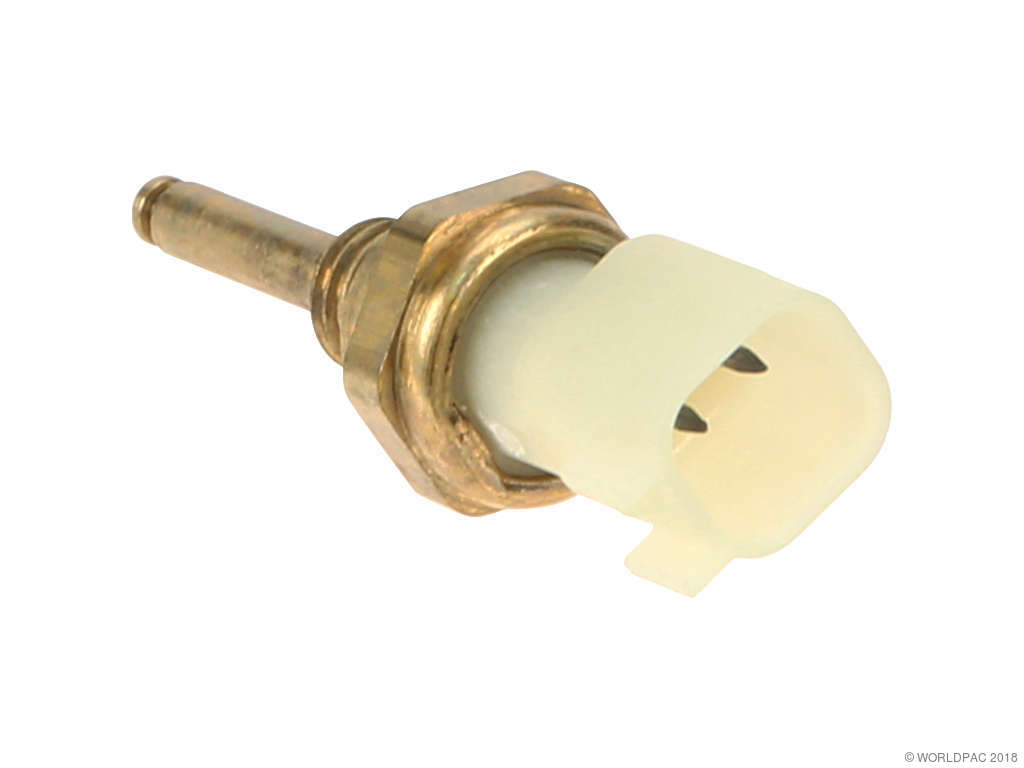
- Cylinder Head Temperature (CHT) Sensor
(OEM #9L8Z-6G004-C (Motorcraft DY1144) - number may vary by specific year, always verify with VIN.)— This sensor is a very common failure point that sends a false overheat signal. Due to the high labor cost of replacement, it's critical to use a high-quality OEM or equivalent part.
Trusted brands: Motorcraft, Standard Motor Products (SMP), NGK/NTK
OEM price range: $25-$50
Aftermarket price range: $15-$40 - Intake Manifold Gasket Set
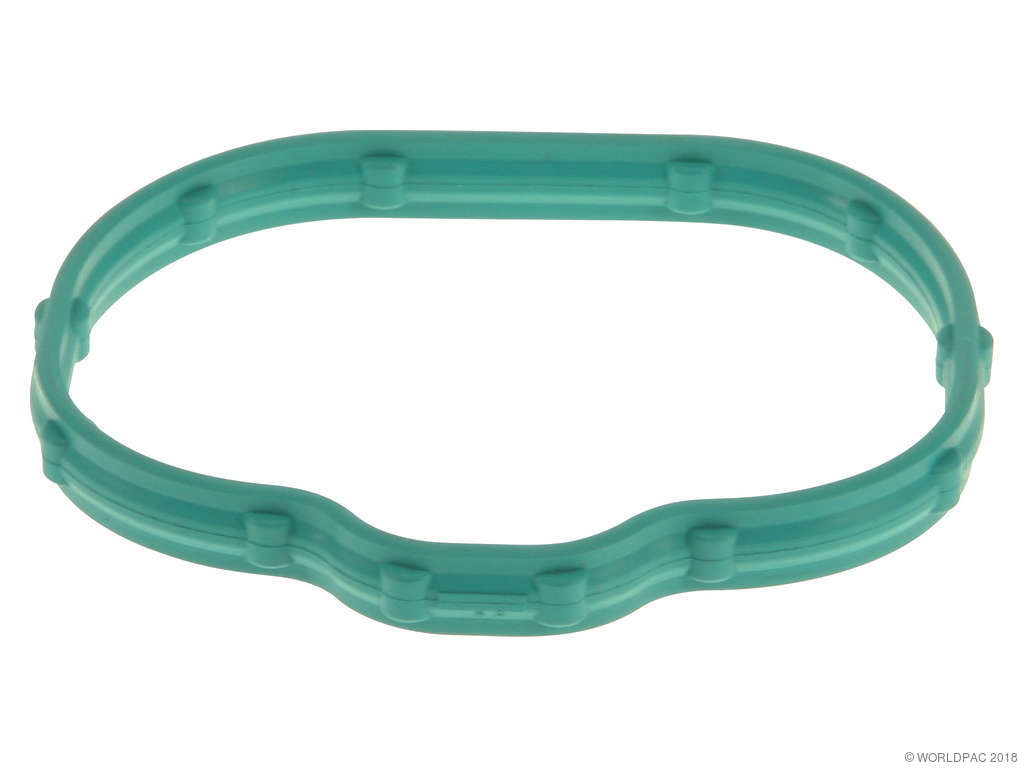
(OEM #Motorcraft part numbers vary. A common aftermarket set is Fel-Pro MS 96621.)— Required when replacing the CHT sensor, as the upper and lower intake manifolds must be removed to access it. These are single-use gaskets that must be replaced to prevent vacuum leaks.
Trusted brands: Motorcraft, Fel-Pro, Mahle
OEM price range: $40-$70
Aftermarket price range: $25-$50 - Water Pump & Timing Chain Kit
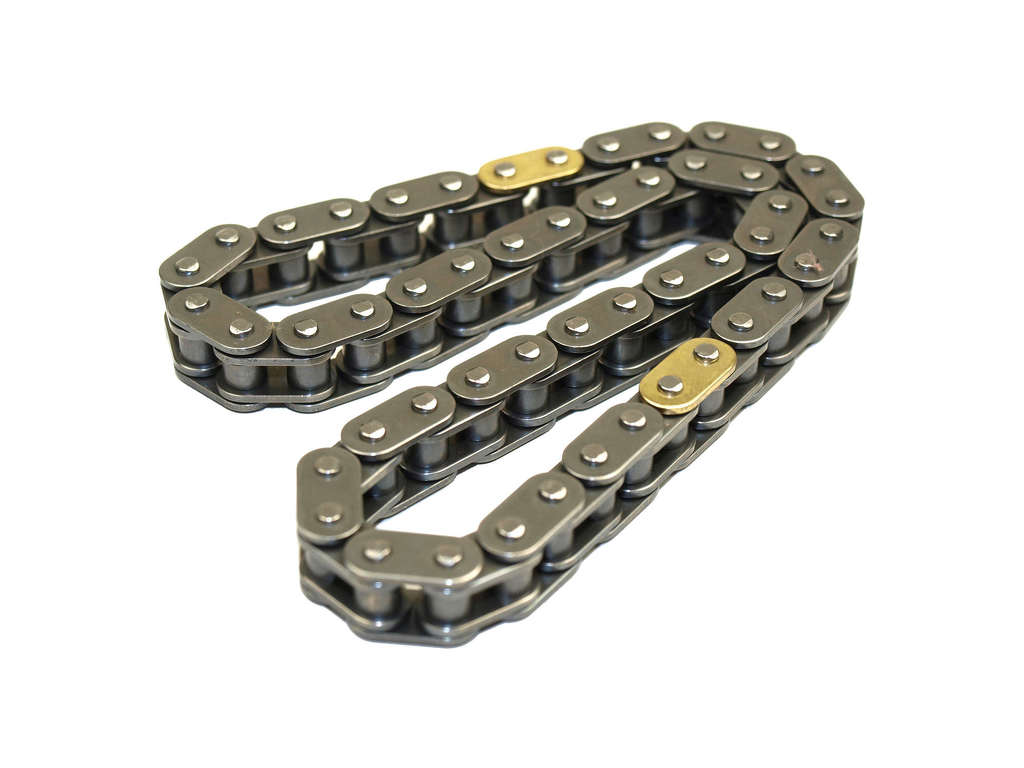
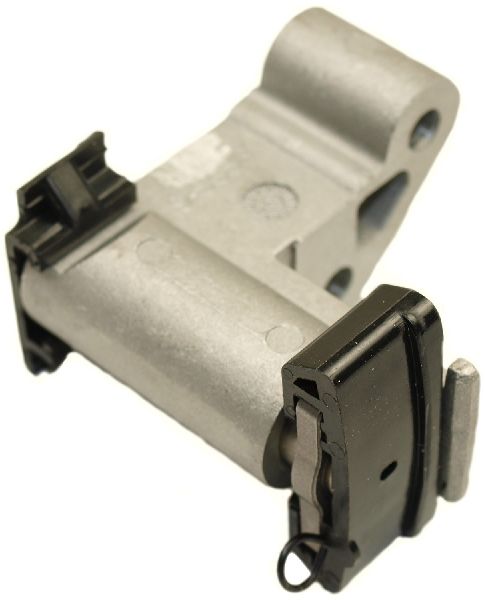
(OEM #Water pump may be PW-569 or similar. Kits vary.)— Required if the internal water pump has failed. A complete kit includes the pump, timing chains, guides, and tensioners, as all should be replaced at the same time due to the extensive labor involved.
Trusted brands: Motorcraft, Cloyes, Gates
OEM price range: $500-$900
Aftermarket price range: $350-$600
Related Codes That Often Appear With This One
- P1285 — This code for 'Cylinder Head Overtemperature Condition' is a direct companion to P1299 and indicates the initial detection of the overheat event. It often appears alongside P1299.
- P0117 / P0118 — These codes indicate a circuit fault (low or high input) with the temperature sensor. They can appear if the CHT sensor or its wiring has an electrical failure, rather than just an inaccurate reading.
- P0016 / P0018 — These timing correlation codes can appear if the internal water pump has failed and leaked significant coolant into the oil, causing the timing chain to stretch or jump time. This indicates a much more severe, and likely catastrophic, engine problem.
Technical Service Bulletins (TSBs) & Recalls
- TSB 10-21-6: Addresses issues including lower than desired idle and codes P2111/P2112 on 2010-2011 3.5L engines, recommending throttle body replacement for certain build dates.
- Customer Satisfaction Program 16B32: Extended warranty coverage for electronic throttle body replacement on certain 2016 Taurus models (among others) due to internal contamination causing limp mode.
- SSM 46085: A general service message revising the diagnostic procedure for electronic throttle bodies, indicating it's a known area of concern.
Platform-Specific Known Issues
- The 3.5L V6 engine family (including Cyclone, Duratec 35, and EcoBoost variants) used in the Taurus has an internal water pump driven by the timing chain. Failure of this pump is common and can cause coolant to leak directly into the engine oil, leading to contaminated oil, stretched timing chains, and catastrophic engine failure. This issue has resulted in class-action lawsuits which include the 2008-2019 Ford Taurus.
Mechanic-Grade Diagnostic Values
- Cylinder Head Temperature (CHT) Sensor Resistance vs. Temperature — expected: Approximately 37 kΩ @ 68°F (20°C), 2.4 kΩ @ 176°F (80°C), and 1.1 kΩ @ 212°F (100°C). The resistance should decrease smoothly as temperature increases.. Failure: An infinite (OL) reading indicates an open circuit. A reading that does not change with temperature indicates a faulty thermistor.
- Cylinder Head Temperature (CHT) Sensor Signal Voltage (at PCM) — expected: On a cold engine (KOEO), voltage should be between 2.0V and 3.5V depending on ambient temp. At normal operating temperature (~200°F), voltage should be around 2.1V.. Failure: A voltage near 5.0V indicates an open circuit (sensor unplugged). A voltage greater than 4.6V will set a high input code. A voltage near 0V indicates a short to ground.
Scan Tool Commands That Help
- Ford IDS or equivalent professional scan tool: Monitor CHT PID (Live Data) — This is the primary diagnostic step for P1299. It is used on a cold engine to instantly determine if the CHT sensor is sending a false high temperature reading compared to ambient and intake air temperature sensors. It is also used to watch for erratic behavior as the engine warms up to diagnose intermittent faults.
Wiring & Ground Locations
- CHT Sensor — On the naturally aspirated 3.5L V6, the sensor is located on the front of the right (passenger side) cylinder head, underneath the intake manifold. On the 3.5L Twin Turbo (SHO) engine, it is on the rear of the right cylinder head.. This is the sensor that triggers the P1299 code. Its location under the intake manifold is the reason for the high labor cost associated with its replacement.
- G104 — A major engine bay ground point, typically located on the right fender apron, behind the battery.. A loose or corroded ground at this point can cause a floating ground condition, leading to erratic and incorrect voltage readings for multiple engine sensors, including the CHT sensor, potentially triggering a false P1299 code.
- G105 — A major engine ground point, often located at the rear of the engine compartment or on the left front corner near the fender.. Similar to G104, a poor connection at this primary engine ground can disrupt the CHT sensor's reference voltage and cause incorrect readings, leading to a misdiagnosis.
Real Owner Repair Stories
- Ford Edge Forum user (2007 Lincoln MKX (shared 3.5L platform)) — Car started overheating, pulled over to find it was leaking coolant. All coolant drained out. When refilled, water immediately leaked out from the front passenger's side. Water pump was whining. Eventually, water got into the oil.
❌ Tried (didn't work) Initially unsure if it was a head gasket or water pump.
✅ What actually fixed it The user diagnosed a failed water pump after researching and learning that the internal pump's weep holes are designed to drain externally out of the front engine cover in the exact area of the leak, confirming the pump as the source. - BobIsTheOilGuy Forum user discussion (2013 Ford Taurus Police Interceptor, 190k miles) — Vehicle was at an auction, listed as 'engine inop - needs water pump'. The engine was seized.
✅ What actually fixed it This was an observation, not a repair, but it highlights a critical failure path. The engine was seized, likely from the timing chain jumping after the water pump bearing failed, yet the engine oil was dark (not milky) and the coolant level was normal, indicating a catastrophic mechanical failure without the typical coolant/oil mixing.
OEM Part Supersession History
9L8Z-6G004-B→9L8Z-6G004-E— Standard part revision and update by the manufacturer.
Heads up: The newer part number is the recommended replacement. Another valid part number for this application is 9L8Z-6G004-F.
Model Year Variations Within This Range
- 2008-2019: The CHT sensor on the naturally aspirated 3.5L V6 is on the front of the right cylinder head, while on the 3.5L Twin Turbo V6 (SHO model), it is on the rear of the right cylinder head.
- 2011-2019: For the 2011 model year, the 3.5L V6 received Twin Independent Variable Camshaft Timing (Ti-VCT), which increased output from ~265 hp to ~285-290 hp. This does not fundamentally change the cause of P1299 but marks a significant engine revision within the specified range.
- Late model years (approx. 2016+): Ford transitioned from Motorcraft Orange Coolant to Motorcraft Yellow Coolant. Some technicians and owners anecdotally report that the newer yellow coolant formulation may offer better longevity for the water pump seals.
Diagnostic Flowchart
Other Known Issues on This Vehicle
Issues unrelated to this code that are worth knowing about as an owner of this generation:
- Internal Water Pump Failure 🔴 High → Shop Engine Water Pump — Very common, often occurs between 60,000 and 120,000 miles. Considered a 'when, not if' failure by many owners.
- Power Transfer Unit (PTU) Overheating/Failure (AWD Models) 🔴 High — Common on AWD models. The PTU fluid overheats due to proximity to the exhaust, leading to fluid breakdown and bearing failure. Often requires complete PTU replacement.
- Electronic Throttle Body (ETB) Failure 🟠 Medium — Fairly common across many Ford models of this era. Internal contamination causes sudden limp mode with codes like P2111 and P2112. (Ref: TSB 10-21-6, Customer Satisfaction Program 16B32)
- Cracked Flex Plate 🟠 Medium — Less common than other issues, but can occur. Presents as a rhythmic ticking or knocking sound from the transmission bellhousing area that changes with engine RPM.
Used vs. New Parts: Buying Guide for This Vehicle
When a used part is the smart pick: For this specific code, using used parts is generally not recommended for the primary culprits. However, a used radiator or cooling fan assembly from a verified low-mileage, non-collision donor vehicle could be a cost-effective option if those parts are diagnosed as the cause.
Donor-vehicle mileage cap: roughly under 50000 miles for the part to have meaningful remaining life.
What to inspect on the donor part:
- For a radiator, inspect fins for damage or blockage and check plastic end tanks for any hairline cracks or discoloration.
- For a cooling fan assembly, spin the blades by hand to ensure they move freely and check the electrical connector for corrosion or damage.
- Verify the donor vehicle's mileage and history; avoid parts from vehicles with signs of front-end damage or overheating.
OEM-only on this vehicle (don't cheap out):
- Internal Water Pump: Due to the catastrophic failure potential and the 10+ hour labor job, using an OEM Motorcraft water pump and timing kit is critical. The risk of a premature failure with an aftermarket part far outweighs any initial cost savings.
- Cylinder Head Temperature (CHT) Sensor: Because this sensor is buried under the intake manifold and requires significant labor to access, using an OEM Motorcraft sensor is strongly advised to prevent a repeat repair job.
Aftermarket brands forum-validated for this vehicle:
- Gates: Often considered a reliable OEM-quality alternative for timing components and water pump kits, though many professionals still insist on Motorcraft for the internal pump.
Brands owners have reported issues with on this vehicle:
- Unbranded 'White Box' Parts: Avoid generic, unbranded water pump or sensor kits from online marketplaces. Forum users have reported receiving low-quality, Chinese-made parts that fail prematurely.
Real Owner Stories
Aggregated from forums and TSBs cited above. Mileages and costs reflect what owners reported in those sources.
2013 Ford Edge 3.5L V6
Symptoms: Large coolant leak observed.
What fixed it: Internal water pump failure required a complete timing system overhaul.
Source hint: Reddit r/MechanicAdvice thread titled '2013 ford edge 3.5 l large coolant leak'
2008-2019 Ford Taurus 3.5L V6 — ~55000 miles
Symptoms: Internal water pump seal failure leading to coolant leaking into the engine oil, causing potential catastrophic engine failure.
What fixed it: Replacement of the internal water pump, timing chain, tensioners, and guides.
Cost: $1000-$3000
Source hint: vehicle_specific_issues regarding class-action lawsuits for Duratec 35 engines
Related OBD-II Codes
Frequently Asked Questions
My 2013 Taurus temperature gauge shoots to HOT immediately on a cold start. Is it actually overheating?
Does TSB 10-21-6 apply to my 2010 Ford Taurus 3.5L?
I see orange fluid leaking near the alternator of my 2015 Taurus. What is that?
Is there a recall or extended warranty for the throttle body causing limp mode on my 2016 Taurus?
Why is my Taurus in 'Limp Mode' with a P1299 code?
What kind of coolant should I use to top off my 2019 Taurus?
Helpful Videos


Used OEM Parts in Stock
New Aftermarket Parts Available


The information in this article is provided for general reference and educational purposes only. Vehicle specifications, procedures, and part compatibility can vary by production date, trim level, and region. Always consult your vehicle's factory service manual and verify part numbers before purchasing or performing repairs. Safety-critical components such as airbags, seat belts, and braking systems should be installed by a qualified professional.
- Ford Taurus:
- 🧭 Diagnostic Flowchart
- 🎬 Helpful Videos
- 🛍️ Shop This Part
- What's Unique About the 2008-2019 Ford Taurus
- Symptoms You May Notice
- Most Likely Causes
- Rare But Worth Checking
- Diagnosis Steps
- Parts You'll Likely Need
- Related Codes That Often Appear With This One
- Technical Service Bulletins (TSBs) & Recalls
- Platform-Specific Known Issues
- Mechanic-Grade Diagnostic Values
- Scan Tool Commands That Help
- Wiring & Ground Locations
- Real Owner Repair Stories
- OEM Part Supersession History
- Model Year Variations Within This Range
- Other Known Issues on This Vehicle
- Used vs. New Parts: Buying Guide for This Vehicle
- Real Owner Stories
- 2013 Ford Edge 3.5L V6
- 2008-2019 Ford Taurus 3.5L V6 — ~55000 miles
- Related OBD-II Codes
- Frequently Asked Questions
- 🎟️ Get 5% Off