

P1299 on 2003-2007 Honda Accord: Overheating Causes and Fixes
On a 2003-2007 Honda Accord, code P1299 means the engine's cylinder head is overheating. This triggers a 'limp mode' to prevent damage. The most common causes are low coolant levels due to leaks or a faulty Engine Coolant Temperature (ECT) sensor. Stop driving immediately to avoid severe engine damage.
- P1299 is a critical code on your Honda Accord indicating the engine is dangerously hot or the computer thinks it is.
- Do not drive the vehicle. Pull over immediately to prevent severe engine damage like a warped cylinder head.
- The most likely causes are simple: low coolant from a leak, a bad temperature sensor, or a stuck thermostat.
- Always check the coolant level first (when the engine is cold). This is the simplest and most common cause.
- If the engine is not actually overheating but the code is present, the Engine Coolant Temperature (ECT) sensor is the most probable culprit.
What's Unique About the 2003-2007 Honda Accord
For the 2003-2007 seventh-generation Honda Accord, this code is a critical overheating warning. While some sources mention P1299 can relate to throttle issues on Hondas, the overwhelming evidence points to it being a 'Cylinder Head Overtemperature Protection' code. The engine enters a protective self-preservation mode, which can be alarming for the driver as it involves a sudden and significant loss of power.
Symptoms You May Notice
- Check Engine Light is on
- Sudden and significant loss of engine power (limp mode)
- Engine running rough or stalling
- Temperature gauge reading very high or in the red zone
- Cooling fans running constantly at high speed
- Reduced fuel efficiency
- Engine takes a long time to start
- Replacing the ECM. While an ECM fault is technically possible, it is extremely rare and should only be considered after all other components of the cooling system have been thoroughly tested and verified.
Most Likely Causes
- Low Engine Coolant Level 🔴 High Probability As with any vehicle of this age, rubber hoses can deteriorate, plastic radiator tanks can crack, and water pump seals can fail, leading to coolant leaks. A TSB was issued for potential engine coolant leaks on the 2003 model.
How to confirm: Visually inspect the coolant reservoir and radiator (when the engine is cold) to check the coolant level. Look for visible signs of leaks (puddles under the car, dried white or green coolant residue) around the engine bay, especially around hose connections, the radiator, and the water pump.
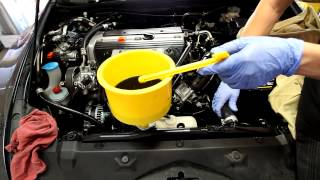
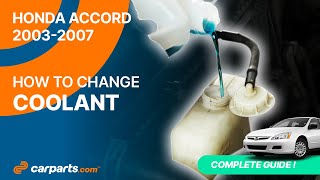
Typical fix: Identify the source of the leak and replace the faulty component (e.g., radiator hose, water pump, radiator). A cooling system pressure test is the most effective way to find leaks. Refill with Honda Type 2 coolant and bleed the system. 🎬 Watch: How to drain, fill, and bleed your coolant
Est. part cost: $20-$300 - Faulty Engine Coolant Temperature (ECT) Sensor 🟡 Medium Probability → Shop Engine Coolant Temperature Sensor The ECT sensor can fail electrically, sending an incorrect high-temperature reading to the ECM even if the engine isn't actually overheating. This is a common failure mode that triggers limp mode as a precaution.
How to confirm: Use an OBD-II scanner to check the live data from the ECT sensor. If it reads an abnormally high temperature (e.g., >250°F) on a cold engine, the sensor is faulty. You can also test the sensor's resistance with a multimeter against a temperature chart from a service manual.
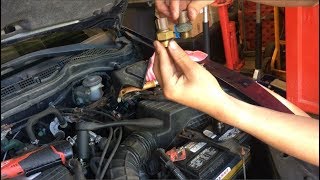
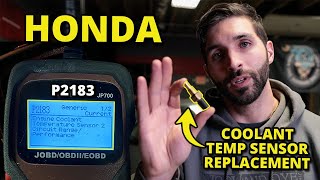
Typical fix: Replace the Engine Coolant Temperature (ECT) sensor. On the 2.4L K24 engine, one sensor (ECT 1) is located on the cylinder head near the upper radiator hose, and another (ECT 2) is on the bottom of the radiator. 🎬 See this step-by-step coolant temperature sensor replacement guide
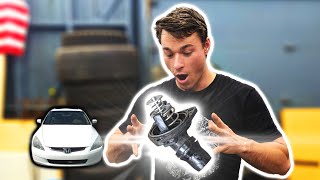
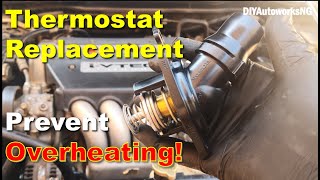
Est. part cost: $25-$75 - Stuck-Closed Thermostat 🟡 Medium Probability → Shop Integrated Thermostat Housing Assembly Thermostats are a wear item designed to fail in the open position, but can sometimes stick closed. This completely blocks coolant flow to the radiator, causing a rapid and genuine overheat condition.
How to confirm: After starting the engine from cold, feel the upper radiator hose. It should remain cool for several minutes and then become hot suddenly as the thermostat opens. If the engine temperature gauge climbs high but the upper hose remains cool or only lukewarm, the thermostat is likely stuck closed.
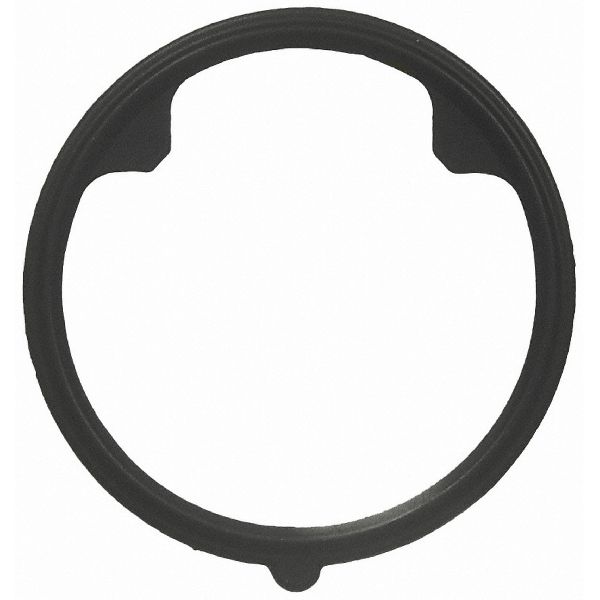
Typical fix: Replace the thermostat and gasket. On the 4-cylinder model, the thermostat is a unitized assembly with its housing. It's recommended to also flush the cooling system at the same time.
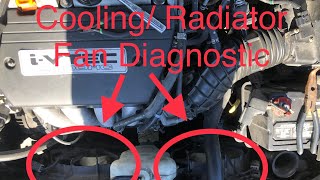
Est. part cost: $20-$50 - Malfunctioning Radiator Fan ⚪ Low Probability → Shop Radiator The fan motor can burn out or the fan relay can fail, preventing the fan from turning on. This is most noticeable in stop-and-go traffic or at idle when there is no airflow through the radiator.
How to confirm: With the engine at operating temperature (gauge near the middle) and the A/C turned on, both radiator fans should be spinning. If not, check the fan fuses and relays in the under-hood fuse box first. You can also test the fan motor by applying 12V directly to its connector.
Typical fix: Replace the faulty fan motor, relay, or fuse.
Est. part cost: $15-$150 - Failing Water Pump ⚪ Low Probability → Shop Engine Water Pump The water pump impeller can corrode or the bearing can fail, leading to insufficient coolant circulation or a significant leak from the weep hole.
How to confirm: Listen for grinding or whining noises from the timing belt area of the engine. Look for coolant leaks from the pump's weep hole, which is located on the engine block behind the timing cover. Overheating at idle that improves with higher RPMs can also indicate a failing pump.
Typical fix: Replace the water pump. This is often done at the same time as the timing belt service on V6 models as a preventative measure.
Est. part cost: $50-$200
Rare But Worth Checking
- Blown Head Gasket: This is a worst-case scenario. A failed head gasket can allow hot combustion gases to enter the cooling system, causing rapid overheating. Look for milky oil, white smoke from the exhaust, or use a block tester kit to check for combustion gases in the coolant.
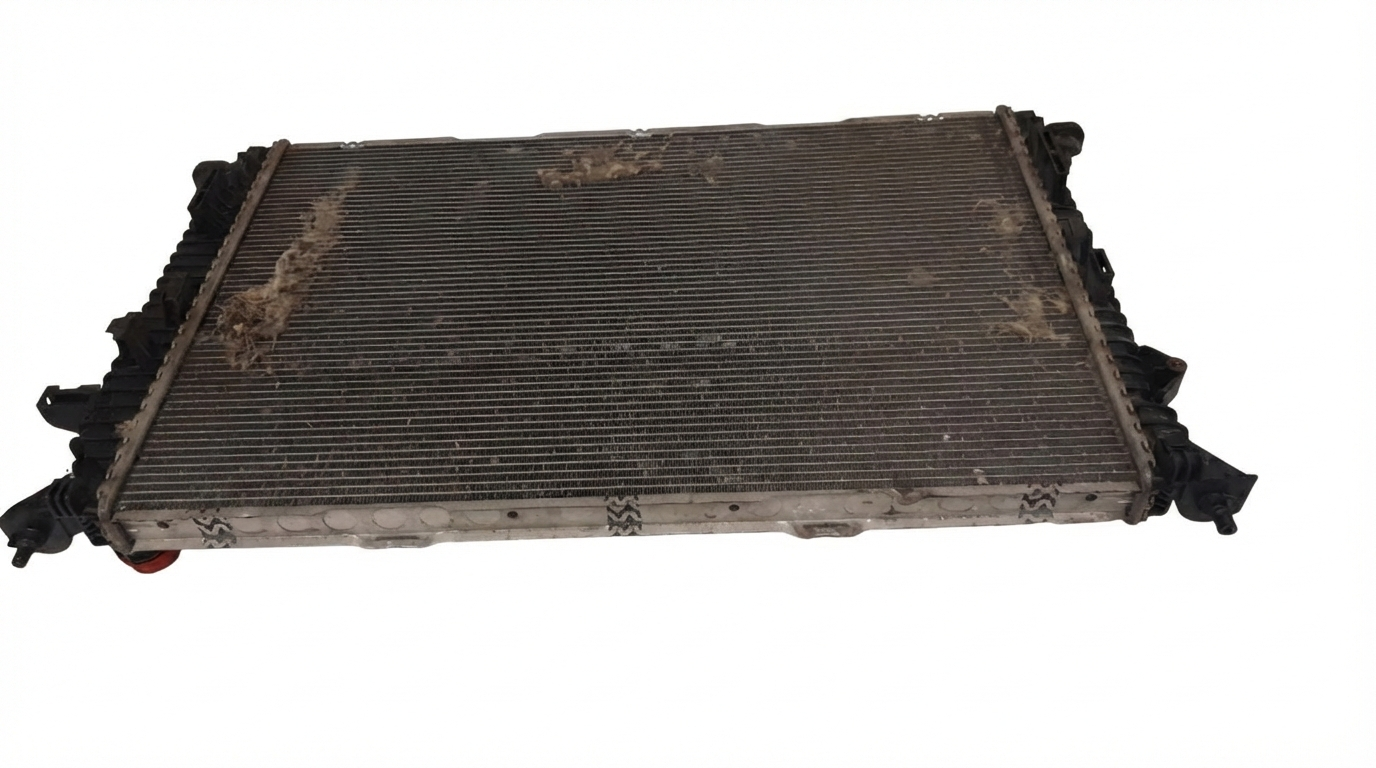
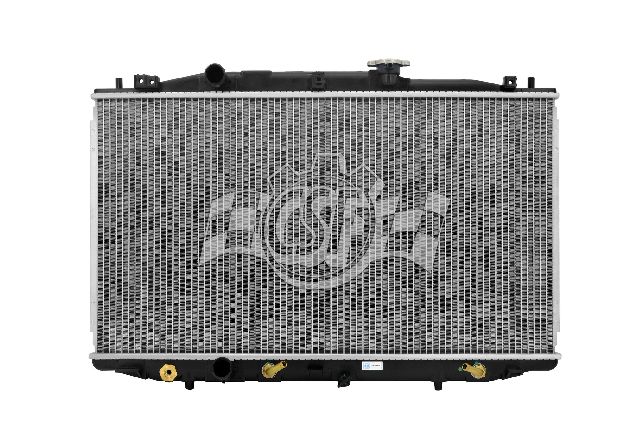
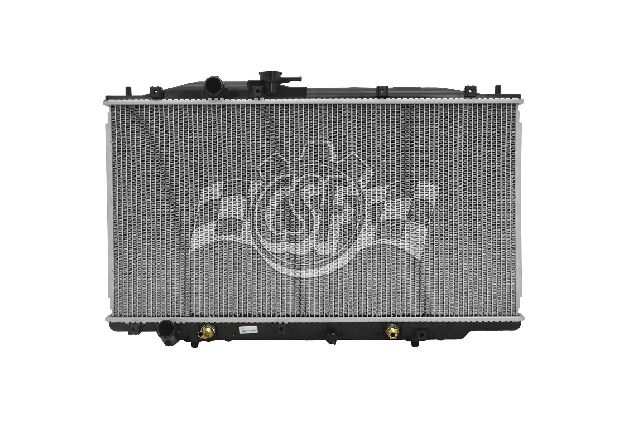
- Clogged Radiator: → Shop Radiator Internal passages in the radiator can become blocked with sediment over time, or external fins can be blocked by debris, reducing its ability to dissipate heat.
- Air Pockets in Cooling System: If the cooling system was recently serviced and not properly bled, trapped air can cause localized hot spots and prevent proper coolant circulation, triggering the P1299 code.
Diagnosis Steps
- CRITICAL SAFETY STEP: Do not open the radiator cap when the engine is hot. Allow the vehicle to cool down completely for several hours before working on the cooling system.
- Check the coolant level in the overflow reservoir and the radiator. If it is low, top it off with Honda Type 2 (blue) coolant and look for obvious leaks.
- Use an OBD-II scanner to read the live data for the Engine Coolant Temperature (ECT) sensor. On a cold engine, it should read close to the ambient air temperature. If it reads excessively high (e.g., 250°F+) immediately, the sensor or its wiring is likely faulty.
- If the coolant level was low, perform a cooling system pressure test to find the source of the leak.
- Start the engine and monitor the temperature gauge. Turn on the A/C, which should command both radiator fans to turn on. If they don't, inspect fuses and relays first.
- Carefully feel the upper and lower radiator hoses once the engine is warm. The upper hose should be hot. If it's not, and the temperature gauge is high, the thermostat is likely stuck closed.
- If no other cause is found, inspect the water pump for leaks (from the weep hole) or listen for bearing noise.
- If overheating persists and you suspect a head gasket failure, use a chemical block tester kit to check for combustion gases in the cooling system.
Parts You'll Likely Need
- Engine Coolant Temperature (ECT) Sensor
(OEM #37870-PNA-003 (Keihin, on cylinder head) or 37870-RAA-A01 (Panasonic, on radiator))— This sensor is a common failure point that can send false overheating signals to the computer, triggering the P1299 code even without an actual overheat condition.
Trusted brands: Honda OEM (Keihin/Panasonic/Denso), NTK, Denso
OEM price range: $65-$80
Aftermarket price range: $25-$50 - Engine Coolant Thermostat
(OEM #19301-RAF-004 (4-Cyl) or 19301-P8E-A10 (V6))— A thermostat stuck in the closed position will prevent coolant circulation and cause a genuine overheating condition.
Trusted brands: Honda OEM, Stant, Gates
OEM price range: $30-$50
Aftermarket price range: $15-$30 - Radiator Cap
(OEM #19045-RAA-003)— A faulty radiator cap that can't hold pressure will lower the boiling point of the coolant, which can contribute to overheating. It's an inexpensive and easy part to replace during diagnosis.
Trusted brands: Honda OEM, Gates, Stant
OEM price range: $20-$30
Aftermarket price range: $10-$15
Related Codes That Often Appear With This One
- P0217 - Engine Coolant Overtemperature Condition
- P1285 - Cylinder Head Overtemperature Condition
Technical Service Bulletins (TSBs) & Recalls
- TSB #09162004 / NHTSA ID #10013851: Notes potential for engine coolant leaks on 2003 models.
Mechanic-Grade Diagnostic Values
- ECT Sensor Resistance (Ohms) — expected: Approx. 2,000-3,000Ω at 20°C (68°F); Approx. 250-400Ω at 80°C (176°F); Approx. 200Ω at 100°C (212°F).. Failure: Resistance is infinite (open circuit), near zero (short circuit), or does not decrease smoothly as temperature rises. A reading below 200 ohms at normal operating temperature may be suspect.
- ECT Sensor Signal Voltage (Key On, Engine Off) — expected: High voltage on a cold engine (e.g., 2.0V - 3.5V).. Failure: Voltage is stuck near 0V or 5V, indicating a short or open in the circuit.
- ECT Sensor Signal Voltage (Engine at Operating Temp) — expected: Low voltage (e.g., 0.5V - 1.5V).. Failure: Voltage remains high even when the engine is hot, or the reading is erratic.
Wiring & Ground Locations
- G101 — On the thermostat housing, bolted to the engine block/cylinder head.. This is a primary ground point for the PCM and multiple sensors, including the ECT sensor. Corrosion or a loose connection at G101 can cause erratic or false high temperature readings, triggering a P1299 code even if the sensor and cooling system are functioning correctly.
- ECT Sensor 1 Connector — On the cylinder head, near the upper radiator hose connection.. This is the primary sensor for measuring engine temperature. The connector and wiring are exposed to heat and vibration and can become brittle or corroded, leading to a faulty signal.
- ECT Sensor 2 Connector — On the bottom of the radiator, typically on the driver's side.. This sensor provides radiator temperature data to the PCM, which is used for cooling fan control. A fault here can prevent the fans from activating, leading to overheating in traffic. The connector is low on the vehicle and susceptible to road debris and corrosion.
Real Owner Repair Stories
- YouTube user Ozzstar (2005 Honda Accord 2.4L) — Check Engine Light with codes P2183 (ECT Sensor 2 Range/Performance) and P2185 (ECT Sensor 2 Circuit High).
❌ Tried (didn't work) Initial diagnosis pointed towards a sensor issue based on the codes.
✅ What actually fixed it The ECT sensor 2, located at the bottom of the radiator, was physically broken and corroded, causing an open circuit. Replacing the sensor and performing a coolant flush with Honda Type 2 coolant resolved the codes.
Model Year Variations Within This Range
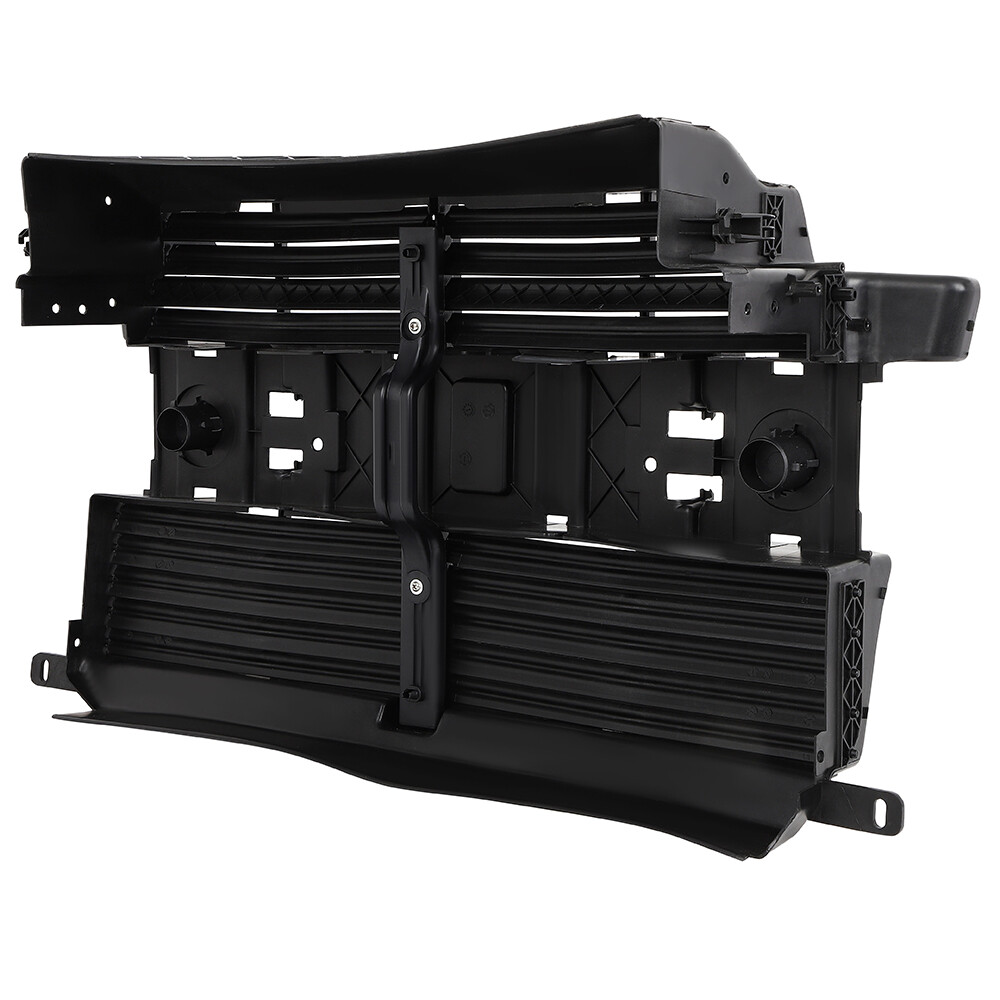
- 2003-2007: Honda used two different radiator suppliers for this generation: Denso and Valeo. The radiator fan assemblies are NOT interchangeable between the two brands. Before ordering a replacement fan, it is critical to identify the brand of the existing radiator to ensure proper fitment.
- 2003 vs 2007: There may be subtle differences in the mounting bracket angle for the coolant reservoir between early (2003) and late (2007) models, although the reservoir itself is generally the same for the K24 engine.
Diagnostic Flowchart
Other Known Issues on This Vehicle
Issues unrelated to this code that are worth knowing about as an owner of this generation:
- Automatic Transmission Failure (Especially 2003-2004 V6) 🔴 High — Very common on early 7th gen models, particularly V6s, often before 100,000 miles. Symptoms include harsh shifting, slipping, or failure to engage gears. (Ref: Honda had extended warranties and settlement programs, such as the 'Third Clutch Transmission Settlement' mentioned in TSBs.)
- Cracked Front Compliance Bushings 🟠 Medium — Extremely common failure item. Bushings in the front lower control arms crack, leading to noise over bumps, poor alignment, and uneven tire wear. Often fails every 50,000-90,000 miles.
- Power Steering Hose Leak (V6 Models) 🔴 High — The high-pressure power steering hose deteriorates from engine heat, leading to fluid leaks that can drip onto the hot catalytic converter, creating a fire risk. (Ref: Recall issued by Honda (NHTSA ID #10129443) for 2003-2007 Accord V6 models to replace the hose.)
- Radio/HVAC Display Backlight Failure 🟡 Low — Common for the circuit board controlling the backlight for the radio and climate control display to fail, causing the display to go dark. The unit still functions but is not visible at night.
- Excessive Oil Consumption (4-Cylinder Models) 🟠 Medium — Some K24 engines can develop issues with piston rings (specifically oil control rings) leading to higher than normal oil consumption.
Used vs. New Parts: Buying Guide for This Vehicle
When a used part is the smart pick: Used parts like radiator fan assemblies, coolant reservoirs, and hose assemblies can be a cost-effective option, especially from a low-mileage donor vehicle. These parts are generally durable and not high-wear items.
Donor-vehicle mileage cap: roughly under 100000 miles for the part to have meaningful remaining life.
What to inspect on the donor part:
- For radiators, inspect fins for excessive damage or corrosion and check plastic end tanks for hairline cracks or discoloration.
- For hoses, squeeze them to check for sponginess, hardening, or cracks.
- For fan assemblies, check for cracks in the shroud and spin the fan blades by hand to ensure the motor isn't seized.
- Verify the brand of a used radiator (Denso or Valeo) to ensure compatibility with your existing components.
OEM-only on this vehicle (don't cheap out):
- Engine Coolant Thermostat: Aftermarket thermostats have a higher failure rate and can cause significant issues. The price difference is minimal, making the OEM part a much safer investment.
- Radiator Cap: OEM caps are calibrated to the exact pressure specifications of the system. An incorrect aftermarket cap can lead to boiling over or prevent the system from pressurizing correctly.
Aftermarket brands forum-validated for this vehicle:
- Sensors: Denso, NTK (NGK)
- Radiators: Denso, Koyo, TYC
- Water Pumps/Timing Kits (V6): Aisin
- Coolant: Honda Type 2 (Blue) is strongly recommended, though Zerex Asian Vehicle (Blue) is a widely accepted alternative.
Brands owners have reported issues with on this vehicle:
- Generic, unbranded 'white box' sensors from online marketplaces should be avoided due to high rates of out-of-box failure and incorrect resistance curves.
Real Owner Stories
Aggregated from forums and TSBs cited above. Mileages and costs reflect what owners reported in those sources.
1990-2002 Honda Accord
Symptoms: The cooling fans would not turn on, leading to potential overheating concerns.
What fixed it: The owner performed a diagnostic process for the cooling fans to identify why they weren't receiving power.
Source hint: Honda-Tech - Fan Troubleshooting Issue: A user details their diagnostic process for cooling fans that don't turn on, a potential cause for overheating. URL: https://honda-tech.com/forums/honda-accord-1990-2002-2/fan-troubleshooting-issue-3273392/
2003-2007 Honda Accord
Symptoms: Cooling fans failed to operate correctly, requiring a diagnosis of the fan relay and sensors.
What fixed it: Diagnosing and addressing issues with the fan relay and sensors.
Source hint: Honda Accord Forum - Cooling Fans Issue: Discussion about diagnosing fan relay and sensor issues when fans fail to operate correctly. URL: https://www.hondaaccordforum.com/forum/general-tech-help-7/cooling-fans-issue-62181/page2/
Related OBD-II Codes
Frequently Asked Questions
I have a 2003 Honda Accord; is there a known issue with coolant leaks for my specific year?
Where is the ECT sensor located on my 2.4L K24 engine to check for a P1299 fault?
My Accord is in 'limp mode' and the fans are running at high speed. Is this normal for P1299?
Can I use any coolant to refill my system after fixing a leak?
Should I replace my water pump while fixing a P1299 on my V6 Accord?
How can I tell if my thermostat is the cause of the P1299 code?
Helpful Videos

Used OEM Parts in Stock
New Aftermarket Parts Available


The information in this article is provided for general reference and educational purposes only. Vehicle specifications, procedures, and part compatibility can vary by production date, trim level, and region. Always consult your vehicle's factory service manual and verify part numbers before purchasing or performing repairs. Safety-critical components such as airbags, seat belts, and braking systems should be installed by a qualified professional.
- Honda Accord:
- 🧭 Diagnostic Flowchart
- 🎬 Helpful Videos
- 🛍️ Shop This Part
- What's Unique About the 2003-2007 Honda Accord
- Symptoms You May Notice
- Most Likely Causes
- Rare But Worth Checking
- Diagnosis Steps
- Parts You'll Likely Need
- Related Codes That Often Appear With This One
- Technical Service Bulletins (TSBs) & Recalls
- Mechanic-Grade Diagnostic Values
- Wiring & Ground Locations
- Real Owner Repair Stories
- Model Year Variations Within This Range
- Other Known Issues on This Vehicle
- Used vs. New Parts: Buying Guide for This Vehicle
- Real Owner Stories
- 1990-2002 Honda Accord
- 2003-2007 Honda Accord
- Related OBD-II Codes
- Frequently Asked Questions
- 🎟️ Get 5% Off