

P1299 on 2001-2005 Honda Civic: Cylinder Head Overheating Causes and Fixes
On a 2001-2005 Honda Civic, P1299 means the computer has detected a cylinder head overheat condition and has activated a protective limp mode. This is often caused by a real cooling system problem like low coolant, a bad thermostat, or a failing water pump, but can also be triggered by a faulty temperature sensor. Do not drive the vehicle until the issue is resolved, as continued operation can lead to a warped cylinder head.
- P1299 is a critical code indicating an engine overheat condition or a sensor failure tricking the computer.
- Do not drive the vehicle. Immediately investigate the cause to prevent severe engine damage.
- Start diagnosis by checking the coolant level and using a scanner to view live temperature data on a cold engine.
- The most common fixes are replacing a faulty thermostat, a bad Engine Coolant Temperature (ECT) sensor, or addressing a coolant leak.
- Always properly bleed the air from the cooling system after any repairs are made.
What's Unique About the 2001-2005 Honda Civic
While many generic scan tools might misinterpret P1299 on a Honda, for the 2001-2005 Civic, it reliably points to an overheating condition. Unlike some other Honda models where P1299 can relate to the electronic throttle control system, on this specific generation, it is tied to the cooling system. The D17 series engines in this generation are known to be susceptible to head gasket failure, especially after an overheating event, which makes addressing this code immediately extremely important. The system uses multiple temperature sensors, and the code is the ECM's last-ditch effort to prevent catastrophic engine damage when it sees a temperature reading that exceeds the programmed safety limits.
Symptoms You May Notice
- Check Engine Light is on
- Engine enters 'limp mode' with severely reduced power and RPM limit
- Temperature gauge on the dashboard reads very high or is in the red zone
- Temperature gauge may read fully hot even on a cold engine (indicates sensor failure)
- Engine may run rough, stutter, or stall completely
- Radiator cooling fans running constantly at high speed
- Bubbling in the coolant overflow reservoir (symptom of head gasket failure)
- Replacing the ECM without first thoroughly testing the sensors, wiring, and the entire mechanical cooling system.
- Assuming a blown head gasket without performing a combustion leak test, leading to unnecessary expensive repairs.
- Replacing only the thermostat when the root cause is a coolant leak or air in the system.
Most Likely Causes
- Low Engine Coolant 🔴 High Probability Leaks can develop over time from radiator hoses, the radiator itself, the water pump, or heater core. The plastic end tanks on the stock radiator are a common failure point.
How to confirm: Visually check the coolant level in the overflow reservoir and the radiator (only when the engine is completely cool). Inspect the engine bay for signs of coolant leaks (green, blue, or pink residue). A cooling system pressure test can pinpoint hard-to-find leaks.
Typical fix: Find and repair the source of the leak, then refill with Honda Type 2 (Blue) coolant and bleed the cooling system.
Est. part cost: $10-$200 - Faulty Engine Coolant Temperature (ECT) Sensor 🟡 Medium Probability → Shop Engine Coolant Temperature Sensor The sensor can fail electrically, sending a false high-temperature signal to the ECM, triggering limp mode even on a cold engine. This is a very common misdiagnosis for a real overheating problem.
How to confirm: Use an OBD-II scanner to read live data. If the coolant temperature reads extremely high (e.g., 250°F+) immediately after a cold start, the sensor or its wiring is faulty. You can also test the sensor's resistance with a multimeter against the specifications in the service manual.
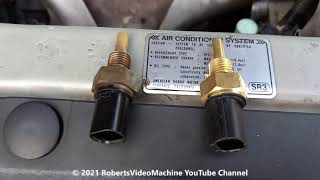
Typical fix: Replace the faulty ECT sensor. The primary sensor for the ECM is located on the cylinder head, near the upper radiator hose housing. 🎬 Watch: How to replace the ECT sensor
Est. part cost: $25-$75 - Faulty Thermostat 🟡 Medium Probability → Shop Integrated Thermostat Housing Assembly Thermostats can fail and get stuck in the closed position, preventing coolant from circulating to the radiator.
How to confirm: After starting the engine cold, feel the upper radiator hose. It should remain cool for a few minutes and then get hot suddenly as the thermostat opens. If it stays cool or heats up very slowly while the engine overheats, the thermostat is likely stuck closed.
Typical fix: Replace the thermostat and gasket. It is highly recommended to use an OEM Honda thermostat. 🎬 See this step-by-step thermostat replacement walkthrough Refill and bleed the cooling system.
Est. part cost: $20-$50 - Air in the Cooling System 🟡 Medium Probability Often occurs after a coolant service if the system was not properly bled. Air pockets can get trapped and cause localized overheating, leading to temperature spikes.
How to confirm: If the code appeared shortly after the cooling system was serviced, this is a likely cause. Squeezing the upper radiator hose may reveal gurgling sounds. The heater may also blow cold air at idle.
Typical fix: Properly bleed the cooling system using a spill-free funnel to remove all trapped air. Park the car on an incline (nose up) to help air escape. 🎬 Watch: How to properly bleed your cooling system
Est. part cost: $0-$30 (for a funnel) - Failing Water Pump ⚪ Low Probability → Shop Engine Water Pump The impeller inside the water pump can corrode or break, or the pump bearing can fail, leading to a complete loss of coolant circulation. This is less common than other causes but should be considered, especially on high-mileage vehicles.
How to confirm: Listen for grinding or whining noises from the area of the water pump (driven by the timing belt). Check for coolant leaks from the pump's weep hole. Confirming a failed impeller often requires removal.
Typical fix: Replace the water pump. This is an involved job often done at the same time as the timing belt.
Est. part cost: $50-$150
Rare But Worth Checking
- Blown Head Gasket: A failed head gasket can allow hot combustion gases to enter the cooling system, causing rapid overheating. The D17 engine in this Civic generation is particularly known for this failure. Symptoms include coolant being pushed out of the reservoir, milky oil, and persistent white, sweet-smelling exhaust smoke. A block tester (combustion leak tester) can confirm this.
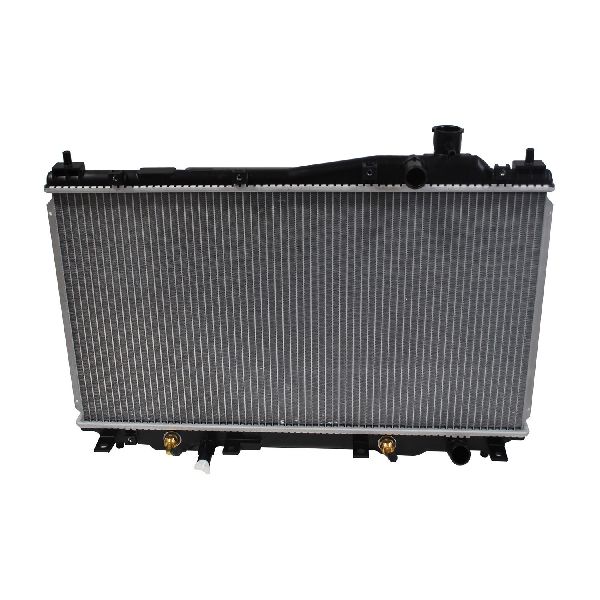
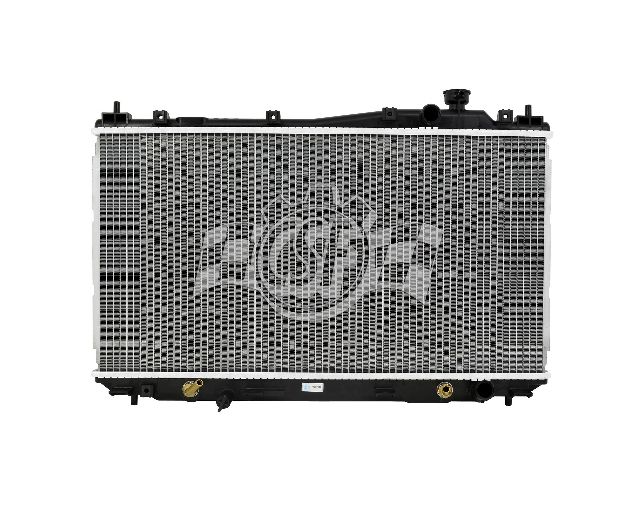
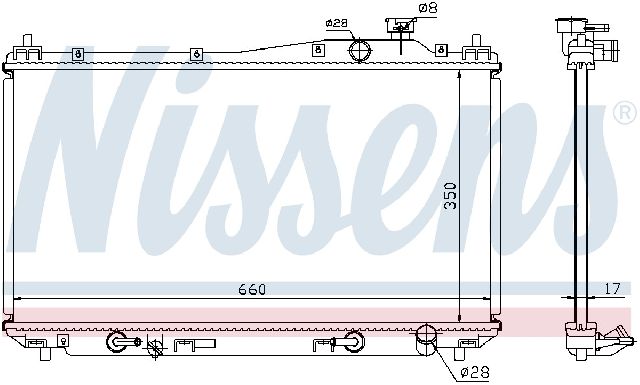
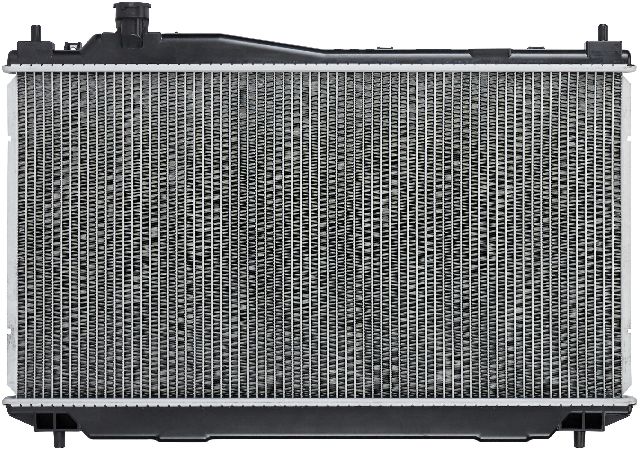
- Clogged Radiator or Failed Radiator Fan: → Shop Radiator A radiator clogged internally or externally with debris can't dissipate heat effectively. A non-functioning cooling fan (due to a bad motor, relay, or fan switch) will cause overheating in stop-and-go traffic.
- Faulty Radiator Cap: → Shop Radiator A faulty radiator cap that can't hold pressure will lower the boiling point of the coolant, leading to overheating. This is an inexpensive and easy part to replace as a first step.
- Faulty Engine Control Module (ECM): In very rare cases, the ECM itself can fail and misinterpret sensor data, triggering the code without a real fault. This should be the last consideration after all other possibilities are exhausted.
Diagnosis Steps
- DO NOT continue to run the engine if it is actively overheating.
- Check the coolant level in the reservoir and radiator (only when the engine is completely cool). If low, top it off and look for obvious leaks.
- Connect an OBD-II scanner and check the live data for the Engine Coolant Temperature (ECT).
- If the ECT reads extremely high on a cold engine (e.g., >250°F), the problem is likely the ECT sensor or its wiring. Test the sensor and circuit.
- If the ECT reads a normal ambient temperature on a cold engine, start the vehicle and monitor the temperature reading as it warms up.
- Feel the upper radiator hose. It should get hot once the engine reaches operating temperature (around 195°F), indicating the thermostat has opened. If the engine overheats but the hose stays cool, the thermostat is likely stuck closed.
- Verify that the radiator cooling fans turn on when the engine gets hot (or when the A/C is turned on). Check fan relays and fuses if they do not operate.
- If the system appears to be working but still overheats, check for a faulty radiator cap by seeing if it holds pressure.
- If you suspect a head gasket failure, use a block tester (combustion leak detector) to check for exhaust gases in the coolant. This is a definitive test.
- If no mechanical faults are found, perform a cooling system pressure test to check for hidden leaks.
Parts You'll Likely Need
- Engine Coolant Temperature (ECT) Sensor
(OEM #37870-PLC-004)— This sensor provides the primary temperature reading to the ECM. A failure can send a false signal, triggering P1299 even if the engine isn't hot.
Trusted brands: Honda (OEM), Denso, NGK/NTK
OEM price range: $40-$60
Aftermarket price range: $20-$40 - Engine Coolant Thermostat
(OEM #19301-PLC-315)— A common failure point. If it sticks closed, it will prevent coolant circulation and cause a genuine and rapid overheat condition. OEM is strongly recommended by enthusiasts.
Trusted brands: Honda (OEM), Stant, Gates
OEM price range: $30-$50
Aftermarket price range: $15-$30 - Radiator Cap
(OEM #19045-PAA-A01)— A faulty radiator cap that can't hold pressure will lower the boiling point of the coolant, leading to overheating. It's a cheap and simple part to replace for diagnosis.
Trusted brands: Honda (OEM), Stant
OEM price range: $15-$25
Aftermarket price range: $5-$15
Related Codes That Often Appear With This One
- P0117 (Engine Coolant Temperature Sensor Circuit Low Input)
- P0118 (Engine Coolant Temperature Sensor Circuit High Input)
- P0300-P0304 (Random or specific cylinder misfire codes, can occur if overheating is severe)
Platform-Specific Known Issues
- The D17 engines in this generation are widely reported by owners to have a higher-than-average rate of head gasket failure, often triggered by a minor overheating incident. Using anything other than Honda Type 2 (Blue) coolant is sometimes blamed for accelerating this issue.
- Forum users on Honda-Tech and Reddit frequently advise that even one significant overheating event on a D17 engine is enough to damage the head gasket, making immediate diagnosis and repair critical.
Mechanic-Grade Diagnostic Values
- Engine Coolant Temperature (ECT) Sensor Resistance — expected: 2,000 - 3,000 Ω at 68°F (20°C); ~200 Ω at 212°F (100°C).. Failure: An open circuit (infinite resistance) or a reading significantly outside the expected range for a known temperature indicates a faulty sensor.
- ECT Sensor Circuit Reference Voltage — expected: ~5.0V at the sensor connector (with sensor unplugged, key on, engine off).. Failure: No voltage suggests a problem with the ECM or the wiring between the ECM and the sensor. Voltage significantly lower than 5V could indicate a short in the harness.
- ECT Sensor Signal Voltage (Connected) — expected: ~2.0V - 3.0V on a cold engine (~20°C); drops to ~0.5V when the engine is at operating temperature.. Failure: A voltage that is stuck high (e.g., >4.5V) or low (e.g., <0.2V) regardless of temperature points to a sensor, wiring, or ground issue.
Wiring & Ground Locations
- G101 — On the thermostat housing, where the main engine harness grounds to the engine block.. This is the primary logic and power ground for the ECM and multiple sensors, including the ECT sensor. A loose, corroded, or damaged G101 ground can cause erratic ECT sensor readings, leading to a false P1299 code, no-start conditions, and rough idling.
- ECT Sensor Signal Wire — The Red/White wire running from the ECT sensor to Pin B8 on the ECM connector.. This wire carries the temperature signal voltage to the ECM. If this wire is shorted to ground, it will cause a P0117 code and can trigger P1299. If it is open or shorted to power, it will cause a P0118 code. Checking for continuity and shorts on this specific wire is a key diagnostic step.
- Sensor Ground Wire — The Green/Yellow wire running to Pin D10 (Sensor Ground) on the ECM connector.. This is the dedicated ground return path for several sensors. A fault on this wire can affect multiple sensor readings, not just the ECT.
Real Owner Repair Stories
- Honda-Tech Forum User (2001-2005 Honda Civic (specific year not mentioned)) — After replacing the ECT switch and flushing coolant, the engine would start, idle down, and then die. It would not restart unless the throttle was applied, and would die when the throttle was released.
❌ Tried (didn't work) Cleaning the ground terminal and bolt, Repositioning the ground wire multiple times
✅ What actually fixed it The issue was an improper connection at the G101 ground on the thermostat housing, which had been loosened during the repair. Ensuring this ground was clean and tight resolved the no-idle and stalling condition. One user with a similar issue found the wire itself was frayed inside the loom, requiring a new ground wire to be run from the ECU pin to the chassis. - Honda-Tech Forum User (2005 Honda Civic LX) — Car started to overheat in stop-and-go traffic on hotter days. Temperature gauge would rise after waiting at a couple of red lights.
❌ Tried (didn't work) Replacing the thermostat, Replacing the temperature sensor, Flushing the coolant
✅ What actually fixed it The owner took the vehicle to a Honda dealer who diagnosed a blown head gasket and a warped cylinder head, a known issue with this engine generation after overheating events.
OEM Part Supersession History
19301-PLC-305→19301-PLC-315— Standard part revision by the manufacturer.37870-PLC-004→N/A— This part number appears to be consistent for the entire generation and related models.
Diagnostic Flowchart
Other Known Issues on This Vehicle
Issues unrelated to this code that are worth knowing about as an owner of this generation:
- Automatic Transmission Failure 🔴 High — Very common, often occurring under 100,000 miles. The 2001 model year is particularly notorious. A recall was issued to install a revised oil cooler return line to improve fluid flow, but failures are still widespread. (Ref: NHTSA Recall 04V176000)
- Head Gasket Failure 🔴 High — A widely documented weak point of the D17 engines in this generation. Often fails after any minor overheating incident.
- Cracked Exhaust Manifold 🟠 Medium — The integrated exhaust manifold/catalytic converter assembly is prone to cracking, causing an exhaust leak, noise, and potentially a check engine light for catalyst inefficiency.
- Cracked Front Lower Control Arm (Compliance) Bushings 🟠 Medium — The large rubber compliance bushings on the front lower control arms frequently crack and fail, leading to clunking noises over bumps, vague steering, and uneven tire wear.
- Failing Top Engine Mounts 🟡 Low — The passenger-side upper engine mount is prone to collapsing, causing excessive engine vibration to be felt in the cabin, especially at idle and in reverse.
Used vs. New Parts: Buying Guide for This Vehicle
When a used part is the smart pick: Mechanical, non-wear items like the thermostat housing, coolant pipes, or a radiator fan assembly can be good candidates for used parts from a reputable salvage yard, provided they are from a low-mileage vehicle that did not suffer a front-end collision.
Donor-vehicle mileage cap: roughly under 100000 miles for the part to have meaningful remaining life.
What to inspect on the donor part:
- For radiators, inspect for corrosion, bent fins, and any signs of cracks or previous repairs on the plastic end tanks.
- For hoses, ensure the rubber is still pliable and free of cracks, swelling, or soft spots.
- For housings, check for any cracks, stripped threads, or heavy corrosion on the gasket surfaces.
OEM-only on this vehicle (don't cheap out):
- Engine Coolant Thermostat: Aftermarket thermostats for this Civic are notoriously unreliable and can fail open or closed prematurely. Always use a genuine Honda thermostat (part #19301-PLC-315) to ensure proper operation and temperature regulation.
- Radiator Cap: A genuine Honda cap is recommended as they are designed to hold the precise pressure required for the system.
Aftermarket brands forum-validated for this vehicle:
- ECT Sensor: Denso is the original equipment manufacturer for many Honda electronics and is a reliable alternative to dealer parts.
- Radiator: Denso is a trusted OEM-quality replacement for the radiator.
Brands owners have reported issues with on this vehicle:
- Generic, unbranded 'white-box' thermostats and electronic sensors from online marketplaces should be avoided due to high failure rates.
Real Owner Stories
Aggregated from forums and TSBs cited above. Mileages and costs reflect what owners reported in those sources.
2005 Honda Civic D17
Symptoms: Classic head gasket failure symptoms including an overfull reservoir, temperature spikes, and an empty radiator after an initial overheat.
What fixed it: Diagnosis confirmed a textbook case of head gasket failure for this engine generation.
Source hint: Reddit user on r/Honda thread titled 'Head gasket blown? Whats going on here? 2005 Civic'
2001-2005 Honda Civic
Symptoms: The temperature gauge reads fully hot on a cold engine.
What fixed it: Replacement of the failed ECT sensor.
Source hint: Reddit r/AskAMechanic thread titled 'Dreaded error code P1299'
2005 Honda Civic D17
Symptoms: Detailed overheating issues; users noted the D17 engine's propensity for head gasket failure after even minor overheating.
What fixed it: Immediate diagnosis and repair of the head gasket to prevent further engine damage.
Source hint: Honda-Tech forum thread 'Civic overheating detailed'
Related OBD-II Codes
Frequently Asked Questions
What type of coolant should I use for my 2001-2005 Honda Civic to avoid head gasket issues?
My 2001 Civic has a P1299 code and transmission issues; is there a recall?
Why does my temperature gauge read fully hot even when I first start the car in the morning?
Is it true that one overheating event can ruin my Civic's engine?
Where is the ECT sensor located on the 2001-2005 Civic?
I just changed my coolant and now I have a P1299 code. What happened?
Helpful Videos
We Have This Part in Stock


The information in this article is provided for general reference and educational purposes only. Vehicle specifications, procedures, and part compatibility can vary by production date, trim level, and region. Always consult your vehicle's factory service manual and verify part numbers before purchasing or performing repairs. Safety-critical components such as airbags, seat belts, and braking systems should be installed by a qualified professional.
- Honda Civic:
- 🧭 Diagnostic Flowchart
- 🎬 Helpful Videos
- 🛍️ Shop This Part
- What's Unique About the 2001-2005 Honda Civic
- Symptoms You May Notice
- Most Likely Causes
- Rare But Worth Checking
- Diagnosis Steps
- Parts You'll Likely Need
- Related Codes That Often Appear With This One
- Platform-Specific Known Issues
- Mechanic-Grade Diagnostic Values
- Wiring & Ground Locations
- Real Owner Repair Stories
- OEM Part Supersession History
- Other Known Issues on This Vehicle
- Used vs. New Parts: Buying Guide for This Vehicle
- Real Owner Stories
- 2005 Honda Civic D17
- 2001-2005 Honda Civic
- 2005 Honda Civic D17
- Related OBD-II Codes
- Frequently Asked Questions
- 🎟️ Get 5% Off