

OBD-II Code P1312: Manufacturer-Specific Combustion Fault
An Expert Guide to What P1312 Means, Why It Triggers, and How to Fix It for Good
- P1312 is a manufacturer-specific code that means a combustion fault on a Saab, an Injector Driver Module failure on a Ford 7.3L, or a bad EGT sensor on a Subaru WRX.
- Fix Saab P1312 codes by installing 4 new OEM-spec NGK spark plugs (approx. $40) and cleaning the ionization module connector before buying a $400 ignition cassette.
- Stop driving immediately if the check engine light flashes; this indicates a severe misfire that will destroy a $1,500 catalytic converter in under 10 miles.
- Test Ford 7.3L IDM wiring by measuring resistance between the common power feed and injector ground pins; healthy circuits read exactly 2.8 to 3.6 Ohms.
- Bypass a seized Subaru WRX EGT sensor on a catless aftermarket up-pipe by plugging a 2.2k Ohm, 1/2 watt resistor into the harness connector to permanently clear the code.
What Does P1312 Mean?
P1312 is a manufacturer-specific code. On Saab vehicles, it indicates a fault in the ionization-based combustion detection circuit. On Ford 7.3L diesels, it points to an Injector Driver Module (IDM) communication error. On Subaru WRX models, it signals a failed exhaust gas temperature (EGT) sensor. For Honda, Hyundai, Jaguar, and Mazda, it flags ignition system sensing faults or severe misfires.
Technical definition: Because P1312 is a manufacturer-specific (P1xxx) code, its formal definition depends entirely on the vehicle brand: * **Saab:** Combustion Detection Cylinders 1+2 Circuit Fault. The Trionic engine management system detects an electrical fault or implausible combustion signal via the spark plugs. * **Ford (7.3L Powerstroke):** Injector Driver Module (IDM) Communication Error. The Powertrain Control Module (PCM) cannot communicate with the high-voltage fuel injector controller. * **Subaru:** Exhaust Gas Temperature (EGT) Sensor Malfunction. The sensor monitoring pre-turbo exhaust gas temperature sends a faulty open-circuit signal. * **Hyundai:** Ignition Misfire Sensor or Ignition Coil #2 Fault. The dedicated misfire sensor or cylinder 2 coil has failed. * **Jaguar / Land Rover:** Catalyst Damage Misfire, Cylinder 2. The ECU detects a misfire severe enough to overheat and destroy the catalytic converter. * **BMW:** Misfire Detected, Cylinder 12. Specific to V12 engines (e.g., M73, N73), indicating a misfire on the 12th cylinder. * **Ford (Duratorq Diesel) / Mazda:** Injection Pump Timing Actuator Circuit Fault. An electrical anomaly in the injection pump's timing advance mechanism.
Can I Drive With P1312?
Yes, But With Caution. You can drive short distances (under 50 miles) to a repair shop, but expect reduced power and poor fuel economy. If the Check Engine Light flashes, pull over immediately. A flashing light indicates a severe misfire dumping unburnt fuel into the exhaust, which destroys a $1,500 catalytic converter in minutes. On Saab vehicles, the ECU enters a low-power 'limp mode' to prevent engine damage.
Common Causes
- Worn or Incorrect Spark Plugs (Saab) (Very Common) — The Saab ionization detection system requires specific NGK spark plugs. Non-OEM plugs, incorrect heat ranges, or improper gapping reliably trigger this code by altering the electrical resistance of the combustion event.
- Failing Direct Ignition Cassette (DIC) (Saab) (Very Common) — On older Saabs (9-5, early 9-3), the single cassette housing all ignition coils wears out. Aftermarket cassettes fail quickly and cause phantom codes; genuine OEM (SEM) replacements are mandatory.
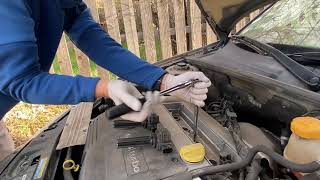
- Failing Ignition Coil(s) (Saab/Hyundai/Jaguar) (Common) — On vehicles with individual coils, a weak coil produces inadequate spark. On Saabs, replace all four with OEM Mitsubishi parts 🎬 Watch: Step-by-step Saab 9-3 spark plug and coil replacement guide. to ensure the Trionic system receives accurate ionization feedback.
- Corroded Ionization Detection Module Connector (Saab) (Common) — On Saab Trionic 8 systems (2003+ 9-3), the ionization module connector lacks weatherproofing. Moisture causes pin corrosion, interrupting the delicate combustion signal sent to the ECU.
- Faulty Injector Driver Module (IDM) (Ford) (Less Common) — On Ford 7.3L diesels, water intrusion through the case vent or internal component failure disrupts IDM communication with the PCM.
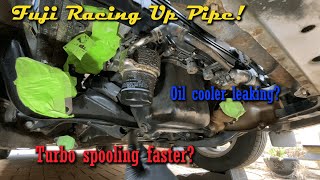
- Faulty Exhaust Gas Temperature (EGT) Sensor (Subaru) (Less Common) — On Subaru WRX models, the EGT sensor in the up-pipe fails open due to extreme heat cycles, sending a dead signal to the ECU. 🎬 See this quick and affordable Subaru EGT sensor fix.
- Damaged Wiring or Connectors (Less Common) — Frayed wires, melted insulation, or loose connections at the ignition coil, DIC, or IDM harnesses interrupt critical signals. Oil saturation in Ford valve cover harnesses is a frequent culprit.
- Poor Ground Connection or Low Voltage (Rare) — A corroded engine ground strap introduces electrical noise, confusing sensitive ignition monitoring systems and IDMs. A failing alternator causes voltage drops that trigger false codes.
- Failing Engine Thermostat (Rare) — An open thermostat prevents the engine from reaching operating temperature, causing a rich fuel mixture that carbon-fouls spark plugs and triggers combustion faults.
Symptoms
- Check Engine Light On — The ECU illuminates the Malfunction Indicator Lamp (MIL) steadily for minor or intermittent faults.
- Flashing Check Engine Light — Indicates a severe, active misfire dumping raw fuel into the exhaust. Stop driving immediately to prevent catalytic converter meltdown.
- Engine Hesitation or Surging — The vehicle jerks or delivers uneven power, especially during acceleration between 2000-3000 RPM.
- Rough Idle or Misfire — The engine shakes at a stop, indicating one or more cylinders are failing to fire completely.
- Reduced Engine Power ('Limp Mode') — The ECU intentionally limits turbo boost and throttle response to protect the engine from further damage.
- Difficulty Starting — The engine cranks but struggles to start due to a failing ignition cassette (Saab) or IDM (Ford).
- Decreased Fuel Economy — Inefficient combustion wastes fuel, dropping MPG by 5% to 15%.
Diagnostic Flowchart
Tap your situation to follow the diagnostic path that matches what you're seeing on this code.
Common Fixes & Costs
- Replace Spark Plugs — Parts: $20-$60, Labor: $50-$100, ~0.8 hr book time (DIY)
- Replace Saab Direct Ignition Cassette (DIC) — Parts: $300-$500, Labor: $50-$75, ~0.3 hr book time (DIY)
- Replace All Ignition Coils (Set of 4) — Parts: $320-$450, Labor: $75-$125, ~0.7 hr book time (DIY)
- Clean Ionization Module Connector — Parts: $10, Labor: $0-$75, ~0.3 hr book time (DIY)
- Replace Ford Injector Driver Module (IDM) — Parts: $250-$500, Labor: $100-$200, ~0.8 hr book time (Intermediate)
- Replace Subaru EGT Sensor — Parts: $110-$165, Labor: $100-$250, ~1.2 hr book time (Intermediate)
- Replace Engine Thermostat — Parts: $30-$80, Labor: $150-$300, ~1.8 hr book time (Intermediate)
DIY vs Professional
- Replace Spark Plugs — Beginner: Yes
Tools: Ratchet, extension, spark plug socket, torque wrench, spark plug gap tool. - Replace Ignition Coils / DIC — Beginner: Yes
Tools: T30 Torx socket/driver for Saab DIC, 10mm socket for typical coils. - Clean Ionization Module Connector — Beginner: Yes
Tools: Electrical contact cleaner, small brush, dielectric grease. - Replace Ford IDM — Beginner: Yes
Tools: Socket set (typically 10mm). - Replace Subaru EGT Sensor — Beginner: No
Tools: Socket set, penetrating oil, flare nut wrench, torch.
Used vs. New Parts: Buying Guide
When a used part is worth it: Buying used ignition components is strongly discouraged. Used Saab ignition cassettes (DICs) and coils are wear items with no reliable way to gauge remaining life. Only consider used parts for high-cost modules (like a Ford IDM) if sourced from a reputable dismantler with a warranty.
Donor-vehicle mileage cap: roughly under 50000 miles for the part to have meaningful remaining life.
Donor quality checklist:
- Verify the donor vehicle's mileage and ensure it wasn't scrapped for an engine fire or electrical issue.
- Match part numbers exactly; do not rely on visual similarity.
- Purchase from sellers offering at least a 90-day warranty.
Decision logic:
- If The part is a Saab Direct Ignition Cassette or ignition coil → Buy new OEM. The high probability of premature failure makes used parts a poor value.
- If The part is a Ford IDM and budget is extremely tight → A used part from a low-mileage vehicle is acceptable, but a remanufactured unit with a warranty is safer.
- If The part is a Subaru EGT sensor → Buy new. The labor to access the sensor is significant; do not risk installing a used part.
Warranty tradeoff: Used parts typically have a 30-day warranty covering the part only. New aftermarket parts carry a 1-year warranty. New OEM parts offer the best quality assurance.
Worst-case if a used part fails: 400-800 if a used part fails, requiring repeat labor and a new replacement part.
What Happens If You Wait — Timeline
- 0-1 month: Intermittent Check Engine Light with code P1312. No perceptible symptoms, or a slight rough idle on cold starts. (MPG impact: 0-2%% · Added cost: $0)
- 1-3 months: Check Engine Light stays on permanently. Noticeable hesitation during light acceleration. On Saabs, 'Limp Mode' engages, reducing turbo boost. (MPG impact: 3-8%% · Added cost: $50 in wasted fuel)
- 3-6 months: The underlying misfire becomes frequent. The Check Engine Light flashes during acceleration, signifying raw fuel is overheating the catalytic converter. (MPG impact: 8-15%% · Added cost: $150 in wasted fuel, imminent risk of catalyst damage)
- 6+ months: The catalytic converter substrate melts from continuous raw fuel, creating a blockage. Engine power is severely limited, and exhaust backpressure causes internal engine damage. (MPG impact: 15-30%+% · Added cost: $1500-$2500 for catalytic converter replacement)
Cost of Not Fixing It
- 0-1 month: Reduced fuel economy, rough idle, and hesitation. The check engine light causes an automatic emissions test failure. (Added cost: 20-60)
- 1-6 months: Risk of severe damage to the catalytic converter. Continuous misfires dump unburnt fuel into the exhaust, melting the converter's internal structure. (Added cost: 1200-2200)
- 6+ months: Complete catalytic converter failure. Exhaust blockage makes the car undrivable and causes secondary internal engine damage. (Added cost: 1500-3000)
Diagnosis Steps
- Read the Fault Codes
Use an OBD-II scanner to confirm P1312 is present. Check for related codes like P1334 (Saab), P030x misfire codes, or P1316 (Ford). Related codes provide critical clues to narrow down the problem.
Tools: OBD-II Scanner (Beginner) - Inspect and Replace Spark Plugs
Remove and inspect all spark plugs for heavy carbon buildup, oil fouling, or worn electrodes. Ensure they are the correct type (NGK required for Saab) and gapped correctly. Replace them as a set if old or incorrect.
Tools: Socket Wrench, Spark Plug Socket, Spark Plug Gap Tool (Beginner) - Inspect Electrical Connectors and Grounds
On Saabs, disconnect the Ionization Detection Module and check for green or white corrosion on the pins. Clean the pins and connector with electrical contact cleaner. Verify the main engine-to-chassis ground strap is clean and tight.
Tools: Electrical Contact Cleaner, Small Brush, Socket Wrench (Intermediate) - Test the Ignition Coils (by Swapping)
If you have a cylinder-specific misfire code (e.g., P0302), swap the ignition coil from the misfiring cylinder with a known good cylinder. Clear the codes and drive. If the code follows the coil (e.g., changes to P0303), the coil is faulty.
Tools: Socket Wrench (Intermediate) - Test Ford IDM Resistance
For Ford 7.3L diesels, disconnect the IDM. Use a multimeter to check resistance between the common power feed pin and each injector ground pin. A healthy reading is exactly 2.8 to 3.6 Ohms. Readings outside this range indicate wiring or solenoid issues.
Tools: Digital Multimeter, IDM Pinout Diagram (Advanced) - Test Subaru EGT Sensor
For Subaru WRX models, unplug the EGT sensor and measure resistance across its two pins. An open circuit (infinite resistance) confirms the sensor is bad. You can temporarily plug a 2.2k Ohm resistor into the harness to verify the code clears.
Tools: Digital Multimeter, 2.2k Ohm Resistor (Advanced) - Inspect the Wiring Harness
Examine the wiring going to the ignition coils, DIC, or IDM for cracking, melting, or rodent damage. With the engine running, gently jiggle the harness to see if it induces a misfire or causes the engine to stumble.
Tools: Flashlight (Intermediate) - Advanced Electrical Testing
Use a digital multimeter to check ignition coil primary resistance (0.3-2.0 ohms) and secondary resistance (5k-15k ohms). Verify battery voltage (12V+) at the coil's power supply pin with the key on.
Tools: Digital Multimeter, Vehicle-Specific Wiring Diagram (Advanced) - Mechanical & Fuel System Health Check
Check fuel pressure (Ford 7.3L should be 45-65 PSI at idle). Perform a cylinder compression test. Readings should not vary by more than 15% between the highest and lowest cylinders.
Tools: Fuel Pressure Gauge, Compression Tester Kit (Advanced) - Test by Component Substitution
If all previous steps fail, replace the suspected major component (DIC, Ionization Module, or IDM) with a known-good OEM part. This is the definitive final step in diagnosis.
Tools: Socket Wrench (Advanced)
Related Codes
- P1334 — On Saabs, P1312 indicates a fault in cylinders 1/2, while P1334 indicates cylinders 3/4. Swap an ignition coil from cylinder 1 to cylinder 3; if the code changes to P1334, the coil is faulty.
- P0300 — A generic code for 'Random/Multiple Cylinder Misfire.' Seeing P1312 without P0300 on a Saab points directly to an electrical fault in the ionization sensing system rather than a mechanical misfire.
- P0301, P0302, P0303, P0304 — These specify a misfire in a particular cylinder. If you have P1312 and P0302 on a Saab, the problem is isolated to the spark plug or ignition coil in cylinder 2.
- P1316 — On Ford vehicles, this means 'Injector Driver Module (IDM) Codes Detected.' It tells you the IDM has stored specific codes, like P1312, requiring further diagnosis.
- 01312 (Volkswagen/Audi) — NOT the same as P1312. VAG code 01312 means 'Powertrain Data Bus: Faulty,' indicating a CAN bus communication problem.
Climate & Environmental Factors
- Humidity and Moisture: On 2003-2006 Saab 9-3 models, the ionization detection module connector is unsealed. Moisture intrusion causes pin corrosion, directly triggering P1312.
- Road Salt: Regions using road salt see accelerated corrosion on under-hood ground straps and electrical connectors, introducing electrical faults that trigger sensitive codes.
- Engine Bay Heat: Ignition coils and cassettes are exposed to extreme heat. Over time, internal insulation breaks down, causing internal shorts and eventual failure.
How to Talk to a Mechanic About This Code
Say this: "I have a P1312 code on my [Saab/Ford/Subaru]. For a Saab: 'I've replaced the spark plugs with OEM NGKs. Please inspect the ignition coils and clean the ionization module connector before quoting a new DIC.' For a Ford 7.3L: 'Please inspect the IDM connector for water intrusion and check harness integrity before quoting a new IDM.' For a Subaru: 'Please test the resistance of the EGT sensor to confirm it's faulty.'"
This directs the technician to perform specific diagnostic steps rather than immediately replacing the most expensive part, showing you understand the common failure points.
Avoid saying:
- 'My check engine light is on, can you just fix it?'
- 'The internet said to replace the ignition cassette.'
- 'Just do whatever you think is best.'
Questions to ask before authorizing the repair:
- For a Saab, did you swap the coils to see if the fault code moved?
- For a Ford, what were the results of the IDM electrical resistance tests?
- Is the replacement part OEM or aftermarket, and what is the warranty?
Where to Take It: Dealer vs Independent vs Chain
- Dealer:
Recommended only if the vehicle is under warranty. Otherwise, an independent specialist is better value.
Best for: Vehicles still under a factory or extended warranty.
Downsides: Significantly higher labor rates and parts markups., May lack familiarity with common issues on 20-year-old enthusiast vehicles. (Typical cost: +50% vs. baseline) - Independent Shop:
Best fit. A brand specialist has fixed this exact code many times and will diagnose it efficiently without replacing unnecessary parts.
Best for: Out-of-warranty vehicles, especially enthusiast brands like Saab, Subaru, and Ford Powerstroke.
Downsides: A general shop may lack specific knowledge for P1312 quirks; a brand specialist is required. (Typical cost: +0% vs. baseline) - Chain Shop:
AVOID. The risk of being sold unneeded parts is very high for this specific code.
Best for: Simple, high-volume jobs like oil changes and brake pads.
Downsides: High pressure to upsell services and significant risk of misdiagnosis for manufacturer-specific codes. (Typical cost: -10% vs. baseline)
When to Walk Away From the Repair
If the total estimated repair cost exceeds 50% of the car's current private-party market value, seriously consider selling the vehicle instead of repairing it.
- Car worth $4500, fix is $600: Fix it. This repair is well below the threshold and is a common maintenance item.
- Car worth $3000, fix is $1800: Walk away. The repair cost is over half the car's value. Put this money toward a more reliable vehicle.
- Car worth $15000, fix is $750: Fix it. This is a minor cost relative to the vehicle's high value.
What Scan Tool You Need for This Code
Minimum: A scanner that reads manufacturer-specific 'P1xxx' codes and displays freeze-frame data.
A $20 reader only gives the code without context. You need freeze-frame data to know engine conditions when the fault occurred, or brand-specific software to communicate with modules like the Ford IDM.
Budget: Innova 1000 / BlueDriver Pro (~$100) — Reads manufacturer-specific codes, shows freeze-frame data, and clears codes after repair.
Mid-range: Foxwell NT510 Elite / iCarsoft CR Max (~$180) — Offers brand-specific software providing deeper access to modules like the ECU for proprietary data.
Professional: Autel MaxiCOM MK808S (~$450) — Provides full-system access and bi-directional control to command specific components to test their function.
Rent vs buy: AutoZone offers a 'Loan-A-Tool' program for a fully refunded deposit. This is great for a one-time diagnosis. Buy a midrange scanner if you regularly work on enthusiast vehicles.
How to Clear the Code After You Fix It
- Use an OBD-II scan tool to clear the Diagnostic Trouble Codes (DTCs).
- Perform a complete OBD-II drive cycle to run the vehicle's readiness monitors.
- Re-scan the vehicle to confirm no codes have returned.
Drive cycle (~20 minutes): Cold start and idle for 3 minutes. Drive at a steady 55 mph for 10 minutes. Perform stop-and-go city driving for 10 minutes. Let the vehicle cool completely (8+ hours) and repeat.
Readiness monitors affected: Misfire Monitor, Catalyst Monitor, Oxygen (O2) Sensor Monitor
Before emissions retest: drive at least 50 miles to fully set monitors.
Watch out for:
- Disconnecting the battery clears the code but resets all readiness monitors, causing an automatic emissions failure.
- The code returns immediately if the underlying mechanical or electrical fault is not repaired.
Will This Fail Emissions / State Inspection?
Yes — this code typically fails an OBD-II emissions inspection.
- California: An illuminated check engine light causes an automatic smog check failure. All required OBD-II readiness monitors must be set to 'Ready' before testing.
- New York: A vehicle fails the NYS inspection if the check engine light is on. For 2001+ vehicles, only one readiness monitor is allowed to be 'Not Ready'.
- Texas: In emissions-testing counties, an illuminated check engine light is an automatic fail. The vehicle also fails if too many readiness monitors are 'Not Ready'.
Most Commonly Affected Vehicles
- Saab 9-3 (2003-2011) — Extremely common on Trionic 8 engines. 2003-2006 models are known for corrosion on the unsealed ionization module connector.
- Saab 9-5 (1998-2010) — Almost always caused by the failure of the Direct Ignition Cassette (DIC). 1998-1999 used a red T5 DIC; 2000-2010 used a black T7 DIC.
- Ford F-250 / F-350 Super Duty (1999-2003) — On 7.3L Powerstroke diesels, this code points to a fault with the Injector Driver Module (IDM) or its circuit.
- Subaru Impreza WRX (2002-2005) — Indicates a failure of the Exhaust Gas Temperature (EGT) sensor located in the uppipe.
- Honda Passport (1998-2002) — Uses an ion sensing system on V6 models. P1312 indicates a malfunction in the secondary line circuit.
- Hyundai Santa Fe, Elantra, Tiburon (2001-2008) — Points to a faulty misfire sensor or a failure of the cylinder 2 ignition coil.
- BMW 7, 8, and X series with V12 engines (1994-2020) — Specifically flags a misfire on cylinder 12.
- Saab 9-2X Aero (2005-2006) — A rebadged Subaru WRX. P1312 points to the same EGT sensor issue as its Subaru counterpart.
- Jaguar / Land Rover Various V8 models (2000-2015) — Indicates a catalyst-damaging misfire on cylinder 2.
- Mazda B-Series / Ranger (Diesel) (1999-2006) — Points to an Injection Pump Timing Actuator Circuit Fault.
Manufacturer-Specific Notes
- Saab: Saab's Trionic system applies an 80-120V bias across the spark plug after firing to measure combustion current. This raw signal detects misfires without a knock sensor. The system sets P1312 if an electrical fault occurs for 200 consecutive combustions.
- Ford: On 7.3L Powerstrokes, the IDM steps up battery voltage to over 100 volts to actuate the injectors. P1312 indicates a problem with the IDM communicating its status to the PCM, not necessarily a failed injector.
- Subaru: An EGT sensor in the exhaust uppipe protects the turbo from excessive heat. P1312 indicates this sensor failed open. Owners installing catless uppipes often bypass this sensor with a 2.2k ohm resistor.
- Hyundai: Older 2.0L and 2.7L engines used a dedicated 'Misfire Detection Sensor' bolted to the engine block. P1312 indicates a fault with this sensor or its wiring.
- Jaguar / Land Rover: P1312 is part of a specific code family (P1312-P1316) signifying a misfire severe enough to rapidly increase catalyst temperatures above 950°C, warning of imminent catalytic converter destruction.
Real Owner Stories
2007 Saab 9-3 2.0T with surging acceleration
Check Engine Light came on with a P1312 code. The owner noticed a distinct surge when accelerating between 2000-2500 RPM at 40-50 mph.
What they tried:
- Replaced spark plugs with correct NGK plugs.
- Swapped a new OEM ignition coil between cylinders.
- Replaced the Ionization module with a new OEM part.
- Replaced all four fuel injectors.
Outcome: Despite replacing nearly every related component, the P1312 code persisted. The root cause was a corroded pin inside the main wiring harness connector leading to the ionization module.
Lesson: Before replacing expensive modules, thoroughly inspect the wiring harness for chafing, melting, or corroded pins. Electrical contact cleaner solves many P1312 codes for under $10.
2001 Saab 9-5 with recurring P1312/P1334 codes
The Check Engine Light appeared with codes P1312 and P1334. The car intermittently jerked on the freeway and lost acceleration.
What they tried:
- The dealer replaced the Direct Ignition Cassette (DIC) three separate times under warranty.
Outcome: The problem continued despite multiple new DICs. The dealer overlooked the spark plugs. The owner installed OEM-spec NGK plugs, and the codes permanently cleared.
Lesson: Always replace spark plugs with the correct OEM-spec NGK plugs when diagnosing P1312 on a Saab. A new DIC cannot fix a problem caused by incorrect or worn-out plugs.
2001 Subaru WRX with P1312 after exhaust work
After installing a catless aftermarket up-pipe, the Check Engine Light came on with code P1312. The original EGT sensor was seized and destroyed during removal.
What they tried:
- Plugged a 2.2k Ohm resistor into the harness connector where the EGT sensor normally connects.
Outcome: The resistor successfully tricked the ECU into reading a healthy sensor temperature. The P1312 code cleared, allowing the car to pass inspection.
Lesson: If you install a catless up-pipe on an early WRX, bypassing the EGT sensor with a 2.2k Ohm resistor is a proven way to clear P1312. Do not do this on a stock catted up-pipe.
2001 Ford F-250 7.3L Powerstroke with repeated IDM failures
The owner replaced the Injector Driver Module (IDM) three times in two years due to sudden no-start conditions and P1312 codes.
What they tried:
- Installed a used OEM unit, then a remanufactured unit.
- Replaced valve cover gaskets and under-harness wiring.
Outcome: The repeated failures were caused by a severely corroded engine ground strap causing voltage spikes that destroyed the sensitive IDM electronics.
Lesson: If an electronic module like the Ford IDM fails repeatedly, check the charging system voltage and clean all major ground connections between the battery, chassis, and engine block.
How to Prevent This Code From Triggering
- Use OEM-spec ignition components (At every replacement) — Saab's ionization-sensing ignition is calibrated to specific electrical resistances. Using genuine NGK plugs and OEM coils/cassettes prevents false P1312 triggers.
- Replace spark plugs on schedule (Every 30,000 miles) — Worn spark plugs require higher voltage to spark, straining ignition coils and the Direct Ignition Cassette, leading to premature failure.
- Clean and protect electrical connectors (Every 30,000 miles) — Cleaning the unsealed Saab ionization module connector or Ford IDM connector with contact cleaner and applying dielectric grease prevents moisture-induced corrosion.
- Maintain clean engine grounds (Inspect annually) — Sensitive electronic modules require stable voltage. Corroded grounds cause voltage fluctuations that trigger erratic behavior and fault codes.
Frequently Asked Questions
What are the most common misdiagnosis mistakes for P1312?
On Saabs, the biggest mistake is replacing expensive ignition coils or the DIC without first installing correct NGK spark plugs and cleaning the ionization module connector. Another pitfall is using cheap aftermarket ignition parts that fail quickly.
I got a P1312 code but my car seems to be running fine. Can I ignore it?
No. The ECU is detecting a real electrical fault that hasn't become a noticeable misfire yet. On a Saab, this code warns that the DIC is failing and will eventually leave you stranded.
Do I really need to use expensive OEM parts to fix a P1312 on my Saab?
Yes. The ionization detection system is precisely calibrated to work with OEM-spec NGK spark plugs and genuine Mitsubishi or SEM coils. Cheaper parts cause the code to return immediately.
Can a bad battery or alternator cause P1312?
Yes. A failing battery or alternator causes voltage fluctuations that lead to weak spark and erratic module behavior, generating false P1312 codes.
What is the '2.2k ohm resistor trick' for a Subaru P1312?
Owners who install a catless exhaust uppipe plug a 2.2k ohm resistor into the EGT sensor harness. This mimics a healthy sensor, tricking the ECU and clearing the P1312 code. Do not do this on a stock vehicle.
My Saab has a V6 engine and a P1312 code. What does it mean?
On the Saab 9-3 2.8T V6, P1312 is a generic misfire code not tied to the 4-cylinder ionization system. It points to a faulty ignition coil or spark plug, usually accompanied by a P030x code.
How much does it cost to diagnose a P1312 code?
Repair shops charge a diagnostic fee ranging from $100 to $180. This fee is often applied as a credit toward the final repair cost if you proceed with the work.
Will clearing the code make the problem go away?
No. Clearing the code only turns off the check engine light temporarily. The light will reappear as soon as the ECU detects the underlying hardware fault again.
Key Takeaways
- P1312 is a manufacturer-specific code that means a combustion fault on a Saab, an Injector Driver Module failure on a Ford 7.3L, or a bad EGT sensor on a Subaru WRX.
- Fix Saab P1312 codes by installing 4 new OEM-spec NGK spark plugs (approx. $40) and cleaning the ionization module connector before buying a $400 ignition cassette.
- Stop driving immediately if the check engine light flashes; this indicates a severe misfire that will destroy a $1,500 catalytic converter in under 10 miles.
- Test Ford 7.3L IDM wiring by measuring resistance between the common power feed and injector ground pins; healthy circuits read exactly 2.8 to 3.6 Ohms.
- Bypass a seized Subaru WRX EGT sensor on a catless aftermarket up-pipe by plugging a 2.2k Ohm, 1/2 watt resistor into the harness connector to permanently clear the code.
Helpful Videos

Shop the Parts Behind P1312
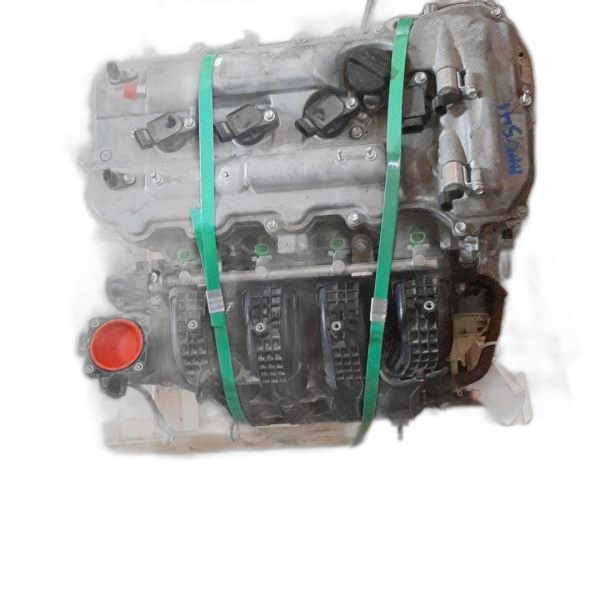
Below are the parts most often responsible for code P1312, ranked by how frequently each one is the actual culprit (per the diagnosis above). Tap any to see what we have for your vehicle.




The information in this article is provided for general reference and educational purposes only. Vehicle specifications, procedures, and part compatibility can vary by production date, trim level, and region. Always consult your vehicle's factory service manual and verify part numbers before purchasing or performing repairs. Safety-critical components such as airbags, seat belts, and braking systems should be installed by a qualified professional.
- 🧭 Diagnostic Flowchart
- 🎬 Helpful Videos
- 🛍️ Shop This Part
- What Does P1312 Mean?
- Can I Drive With P1312?
- Common Causes
- Symptoms
- Common Fixes & Costs
- DIY vs Professional
- Used vs. New Parts: Buying Guide
- What Happens If You Wait — Timeline
- Cost of Not Fixing It
- Diagnosis Steps
- Related Codes
- Climate & Environmental Factors
- How to Talk to a Mechanic About This Code
- Where to Take It: Dealer vs Independent vs Chain
- When to Walk Away From the Repair
- What Scan Tool You Need for This Code
- How to Clear the Code After You Fix It
- Will This Fail Emissions / State Inspection?
- Most Commonly Affected Vehicles
- Manufacturer-Specific Notes
- Real Owner Stories
- 2007 Saab 9-3 2.0T with surging acceleration
- 2001 Saab 9-5 with recurring P1312/P1334 codes
- 2001 Subaru WRX with P1312 after exhaust work
- 2001 Ford F-250 7.3L Powerstroke with repeated IDM failures
- How to Prevent This Code From Triggering
- Frequently Asked Questions
- What are the most common misdiagnosis mistakes for P1312?
- I got a P1312 code but my car seems to be running fine. Can I ignore it?
- Do I really need to use expensive OEM parts to fix a P1312 on my Saab?
- Can a bad battery or alternator cause P1312?
- What is the '2.2k ohm resistor trick' for a Subaru P1312?
- My Saab has a V6 engine and a P1312 code. What does it mean?
- How much does it cost to diagnose a P1312 code?
- Will clearing the code make the problem go away?
- Key Takeaways
- 🎟️ Get 5% Off