

P1315 on 2013-2015 Jaguar XF: Persistent Misfire Causes and Fixes
P1315 on a 2013-2015 Jaguar XF indicates a severe, catalyst-damaging misfire. The most common causes are a faulty high-pressure fuel pump or outdated engine software, both addressed by manufacturer TSBs. This is a serious code that requires professional diagnosis to prevent expensive catalytic converter damage.
- P1315 on a 2013-2015 Jaguar XF indicates a 'Persistent Misfire' that is severe enough to damage the catalytic converter.
- Do not immediately replace spark plugs and coils. The first step should be to investigate two known issues covered by Jaguar Technical Service Bulletins: an ECM software update (JTB00445NAS1) and a faulty high-pressure fuel pump (JTB00410NAS1).
- This repair is not recommended for beginners. Diagnosis and fixes involve high-pressure fuel systems and proprietary software, making professional service the safest option.
- Stop driving the vehicle as soon as possible. A flashing check engine light with this code means the catalytic converter is actively being damaged, which can lead to a repair costing thousands of dollars.
What's Unique About the 2013-2015 Jaguar XF
For the 2013-2015 XF with the 2.0L or 3.0L engines, code P1315 is very frequently linked to two specific issues documented by Jaguar itself. Unlike many vehicles where mechanics might immediately suspect spark plugs or coils, on this XF, the primary suspects are a software glitch requiring an ECM update (per TSB JTB00445NAS1) and a known failure in the high-pressure fuel pump's metering valve (per TSB JTB00410NAS1). Investigating these TSB-related issues first is critical for an accurate and cost-effective repair, a fact corroborated by numerous owner experiences in online forums.
Diagnostic Flowchart
Tap your situation to follow the diagnostic path that matches what you're seeing on this vehicle.
Symptoms You May Notice
- Flashing or solid Check Engine Light 🎬 Watch: Diagnosing a dead misfire and flashing check engine light
- Engine running rough, shaking, or vibrating, especially at idle
- Noticeable loss of engine power and acceleration, sometimes described as 'bogging down'
- 'Restricted Performance' message displayed on the instrument cluster
- Hard starting or long crank times
- Rough or unstable idle
- Increased fuel consumption
- Audible metallic 'clicking' or 'rattling' from the engine bay that may disappear when the pump fails
- Immediately replacing spark plugs and ignition coils without first checking for the applicable TSBs. On this specific vehicle, the fuel pump and ECM software are highly probable causes and should be ruled out to avoid unnecessary parts replacement.
- Confusing the engine-mounted High-Pressure Fuel Pump (HPFP) with the in-tank low-pressure fuel pump. The P1315 is most often related to the HPFP.
Most Likely Causes
- Outdated Engine Control Module (ECM) Software 🔴 High Probability A specific software version was identified by Jaguar as being unable to properly manage certain combustion events, leading to misfires. This is documented in Technical Service Bulletin #JTB00445NAS1, which explicitly lists P1315 as a target code.
How to confirm: A Jaguar dealer or specialist with the appropriate diagnostic tool (SDD) can check the current software calibration number against the one specified in the TSB.
Typical fix: Reprogramming (flashing) the ECM to the latest software version. This is a labor-only task.
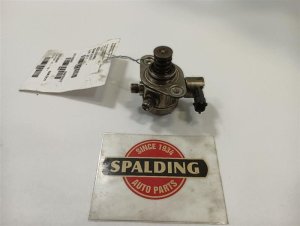
Est. part cost: $0 - Faulty High-Pressure Fuel Pump (HPFP) 🔴 High Probability → Shop Fuel Pump The internal metering valve within the high-pressure fuel pump is a known failure point that causes incorrect fuel pressure and misfires, as documented in Jaguar TSB #JTB00410NAS1. The 3.0L V6 actually uses two of these pumps, and they are often replaced in pairs.
How to confirm: A technician monitors the high-pressure fuel rail data with a scan tool. Per TSB JTB00410NAS1, a faulty pump will show pressure around 700-900 KPa that does not increase with engine speed, whereas a healthy pump shows 3.0-8.0 MPa (3000-8000 KPa) at idle. Another symptom can be the absence of the normal metallic 'chatter' from the pump.
Typical fix: Replacement of the high-pressure fuel pump(s).
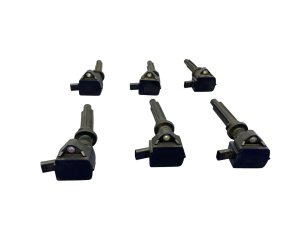
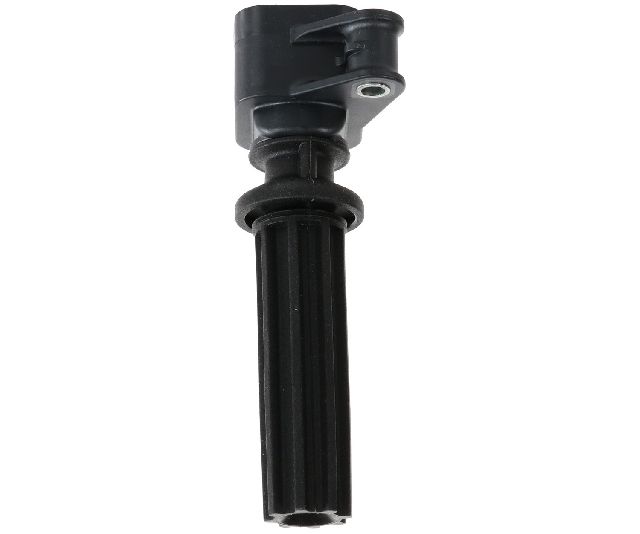
Est. part cost: $350-$900 - Failing Ignition Coil(s) 🟡 Medium Probability → Shop Ignition Coil
How to confirm: Identify the misfiring cylinder using an accompanying P030x code. Swap the ignition coil with one from a known good cylinder. If the misfire code follows the coil, the coil is bad.
Typical fix: Replace the faulty ignition coil. It is often recommended to replace all coils if they are original and high-mileage.
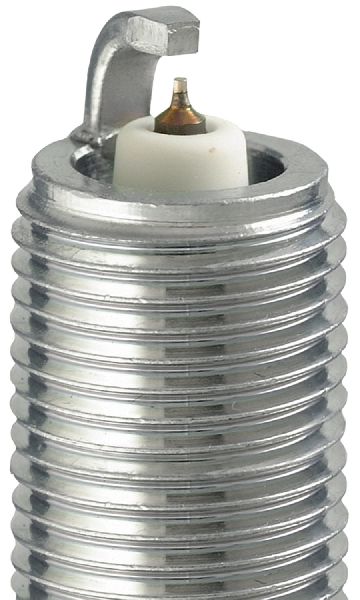
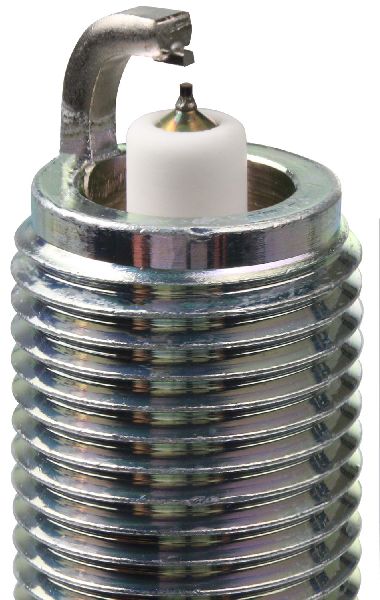
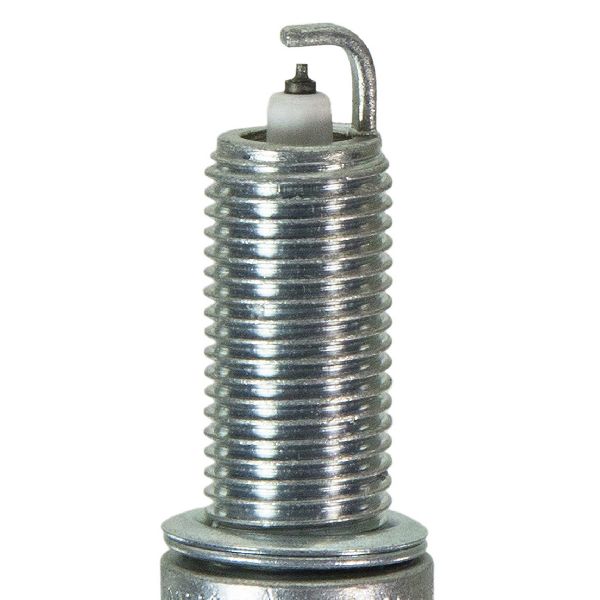
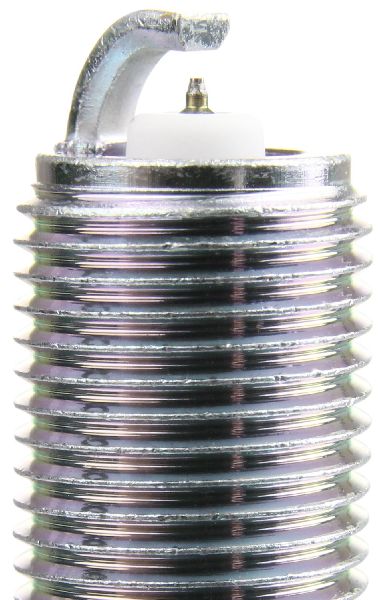
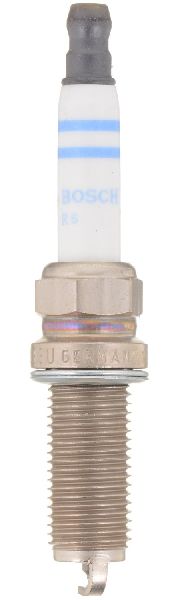
Est. part cost: $40-$120 per coil - Worn or Fouled Spark Plugs 🟡 Medium Probability → Shop Spark Plug
How to confirm: Remove and inspect the spark plugs from the misfiring cylinder(s). Look for signs of excessive wear on the electrode, carbon buildup, or oil/fuel fouling.
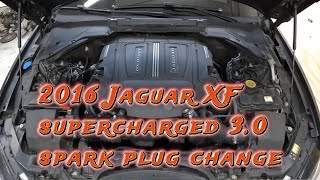
Typical fix: Replace all spark plugs as a set, ensuring they are correctly gapped. NGK Laser Iridium plugs are a common 🎬 See this walkthrough on how to change the spark plugs OEM-spec replacement.
Est. part cost: $80-$150 for a set
Rare But Worth Checking
- Clogged or Faulty Fuel Injector: → Shop Fuel Injector While less common than the HPFP or coils, a single injector can fail or become clogged, causing a misfire isolated to one cylinder. This becomes more likely if a P1316 (Injector Circuit) code is also present.
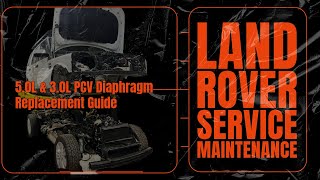
- Intake Valve Carbon Buildup: Like many Gasoline Direct Injection (GDI) engines, the 2.0L and 3.0L are prone to carbon deposits on the intake valves because fuel is injected directly into the cylinder and does not wash over the valves. Severe buildup can restrict airflow and cause misfires, especially at idle or during cold starts. This typically requires physical cleaning like walnut blasting. 🎬 Watch: How to replace the PCV diaphragm on 3.0L engines
- Low Cylinder Compression: Internal engine issues like a burnt valve or worn piston rings can cause a misfire. This is a worst-case scenario and should be investigated with a compression test only after all fuel and ignition system causes have been ruled out.
Diagnosis Steps
- Connect a professional-grade OBD-II scanner to read all stored fault codes. Note any P0300-P0306 codes, as they identify the specific misfiring cylinder(s). Also look for P0087, which strongly indicates a fuel pressure issue.
- Check for applicable Technical Service Bulletins (TSBs) for your vehicle's VIN. Specifically reference JTB00445NAS1 (ECM reprogram) and JTB00410NAS1 (high-pressure fuel pump).
- Using a capable scan tool (like JLR SDD), check the ECM's current software calibration. If it is an older version as described in TSB JTB00445NAS1, have the ECM reprogrammed by a qualified shop.
- If the software is current, monitor the high-pressure fuel rail pressure with the scan tool. Compare the 'desired' pressure to the 'actual' pressure. Per TSB JTB00410NAS1, a faulty pump will read ~700-900 KPa and not rise with RPM, while a good pump is ~3.0-8.0 MPa.
- Listen to the HPFP(s) at idle. A normal pump makes a metallic 'chatter'. If the pump is silent, its internal control valve may have failed.
- If fuel pressure and software are confirmed good, proceed with traditional misfire diagnosis. Move the ignition coil from the misfiring cylinder to a good cylinder. Clear codes and see if the misfire code follows the coil.
- If the misfire remains on the original cylinder, remove and inspect the spark plug for wear, fouling, or damage. Replace if necessary.
- If coils and plugs are good, the problem may be a fuel injector or carbon buildup. A borescope can be used to inspect the intake valves for carbon deposits. A professional power balance test or injector flow test can confirm a bad injector.
Parts You'll Likely Need
- High-Pressure Fuel Pump
(OEM #C2D24859 (for 3.0L V6, often used interchangeably with Land Rover part LR081595))— This is a well-documented failure item on these engines, causing fuel pressure instability that leads to severe misfires, as noted in TSB JTB00410NAS1. The 3.0L V6 has two of these pumps.
Trusted brands: Bosch (OEM supplier), Genuine Jaguar
OEM price range: $600-$900
Aftermarket price range: $350-$600 - Ignition Coil
(OEM #C2Z28433 or AJ813732 (for 3.0L V6))— A primary cause for any engine misfire. If the TSB-related issues are ruled out, a failing coil is a common culprit.
Trusted brands: Bosch, Denso, NGK
OEM price range: $80-$120
Aftermarket price range: $40-$70 - Spark Plug
(OEM #C2Z28432 (NGK ILKAR7C10))— As a routine maintenance item, worn spark plugs are a frequent cause of incomplete combustion and misfires.
Trusted brands: NGK (OEM), Bosch
OEM price range: $20-$30 per plug
Aftermarket price range: $10-$20 per plug
Related Codes That Often Appear With This One
- P0300 — This code indicates a random, multiple-cylinder misfire, which is a common trigger for the more severe P1315 code.
- P0301, P0302, P0303, P0304, P0305, P0306 — These codes specify which cylinder is misfiring (e.g., P0301 for cylinder 1), helping to pinpoint the location of the fault that triggered the P1315.
- P0087 — This code for 'Fuel Rail/System Pressure - Too Low' is a strong companion code that points directly to the high-pressure fuel pump as the likely culprit.
- P1316 — Indicates 'Injector Circuit / IDM Codes detected', suggesting the ECM has shut down an injector to protect the catalyst due to the persistent misfire detected by P1315.
Technical Service Bulletins (TSBs) & Recalls
- JTB00445NAS1: Addresses P1315 and other misfire codes, recommending an ECM reprogram to protect the engine against damaging combustion events.
- JTB00410NAS1: Links P1315 and symptoms like rough running and hard starting to an internal fault in the high-pressure fuel pump's metering valve.
- SSM74589: Issued for the platform-mate Jaguar F-Pace, this TSB also addresses noise from the HPFPs and associated check engine lights, suggesting software updates may improve system robustness.
Platform-Specific Known Issues
- This code is directly addressed by two key manufacturer TSBs for the 2013-2015 XF. JTB00445NAS1 points to an ECM software issue requiring a reprogram, and JTB00410NAS1 identifies a faulty metering valve in the high-pressure fuel pump as a common cause of these symptoms.
- Owner experiences on forums frequently confirm that either the HPFP replacement or the ECM reflash resolves the P1315 code, often after misdiagnosing with coils and plugs first.
Mechanic-Grade Diagnostic Values
- High-Pressure Fuel Pump (HPFP) Pressure at Idle — expected: 3.0 - 8.0 MPa (3000 - 8000 KPa). Failure: Pressure is low (~700-900 KPa) and does not increase with engine RPM, per TSB JTB00410NAS1.
- Ignition Coil Secondary Winding Resistance — expected: 8-10 kΩ. Failure: Reading is significantly outside the expected range (e.g., 12.3 kΩ).
- VVT Solenoid Resistance — expected: ~7-12 Ω. Failure: Resistance is significantly higher (e.g., 26 Ω) or the solenoid does not make an audible 'clack' when 9-12V is applied.
- Injector Pulse Width at Idle (Hot Engine) — expected: 1.5ms - 2.9ms. Failure: Pulse width is significantly higher (e.g., 2.9ms - 5.5ms), which can indicate clogged injectors as the ECU tries to compensate.
- Long-Term Fuel Trim (LTFT) at Idle — expected: Within +/- 10%. Failure: LTFT is highly positive (e.g., +25%) at idle but returns to normal at higher RPM (1500+). This strongly suggests a vacuum leak.
Scan Tool Commands That Help
- Manual Procedure: Fuel Trim / Adaptation Reset — After repairing a vacuum leak (e.g., replacing a PCV valve), fuel adaptations must be reset. This can be done by disconnecting the battery ground cable for at least 15 minutes to clear the learned values.
Wiring & Ground Locations
- Brake Booster Vacuum Pipe — Connects to the throttle body elbow, often underneath and difficult to access. Another common leak spot is the connection at the back of the engine near the firewall, under the plastic shroud.. A crack or leaking O-ring at either end of this pipe creates a significant vacuum leak, which can cause lean misfires (P030x) and trigger a persistent misfire code (P1315).
- PCV Valve / Hoses — On top of the valve/camshaft cover(s).. A PCV valve stuck open or a cracked PCV hose will cause a large, unmetered vacuum leak, leading to lean codes and misfires, particularly affecting cylinders on one bank.
- Engine Oil Dipstick Tube O-ring — At the top of the dipstick tube where the dipstick handle seals.. If the O-ring is worn, it creates a vacuum leak. A simple test is to see if there is resistance when inserting the dipstick; if it slides in freely, the seal is bad.
Real Owner Repair Stories
- Jaguar Forums user 'sicarumba' (Jaguar XF (engine unspecified)) — P0077-00 (Intake valve control - circuit high) and P0026-77 (Intake valve control solenoid - circuit range/performance). These can lead to misfires.
❌ Tried (didn't work) Initial diagnosis and research.
✅ What actually fixed it The VVT solenoid on Bank 1 was faulty. A good solenoid on Bank 2 measured ~7 ohms, while the bad one measured 26 ohms. The bad solenoid also failed to make a 'clack' sound when tested with a 9V battery. Replacing the faulty VVT solenoid resolved the issue. - Jaguar Forums user 'harvest14' (2004 Jaguar XJ8 (X350 with related V8 engine architecture)) — Restricted Performance mode with codes P0300, P0301, P0303, P0305, P1313, and P1316 (misfires on one bank).
❌ Tried (didn't work) Considered swapping coils and plugs but suspected a common cause due to multiple adjacent cylinders misfiring.
✅ What actually fixed it The PCV valve was faulty. When shaken, it did not rattle, and air could pass through it freely in both directions, indicating it was stuck open and causing a massive vacuum leak. Replacing the PCV valve fixed the misfires.
"I Checked Everything" — The Actual Cause
- In cases with misfires and timing-related fault codes (like P0016 or P0019 which can accompany P1315), a faulty crankshaft position sensor can be the root cause. The sensor may send incorrect data to the ECU, making it appear as if the mechanical timing has jumped a tooth when the timing chain and guides are actually fine. This is an electronic failure mimicking a major mechanical one.
OEM Part Supersession History
C2D24859 (HPFP for 3.0L)→LR081595 (Land Rover P/N)— Jaguar and Land Rover used the same Bosch high-pressure fuel pumps on the shared 3.0L SCV6 engine.
Heads up: These parts are generally interchangeable. Other related part numbers include LR035527, AJ812357, and LR066512.AJ813732 (Ignition Coil)→N/A— Multiple part numbers exist for the same component.
Heads up: Other compatible OEM part numbers for the same coil include C2Z28433, C2D2450, LR030637, and C2P20557.
Model Year Variations Within This Range
- 2013: The 2013 model year marked the introduction of the 2.0L GTDi and 3.0L SCV6 engines to the XF platform, replacing the previous naturally aspirated 5.0L V8. This year also introduced a new eight-speed automatic transmission and optional all-wheel drive (V6 only).
Helpful Videos

Used OEM Parts in Stock
New Aftermarket Parts Available

The information in this article is provided for general reference and educational purposes only. Vehicle specifications, procedures, and part compatibility can vary by production date, trim level, and region. Always consult your vehicle's factory service manual and verify part numbers before purchasing or performing repairs. Safety-critical components such as airbags, seat belts, and braking systems should be installed by a qualified professional.
- Jaguar XF:
- 🧭 Diagnostic Flowchart
- 🎬 Helpful Videos
- 🛍️ Shop This Part
- What's Unique About the 2013-2015 Jaguar XF
- Symptoms You May Notice
- Most Likely Causes
- Rare But Worth Checking
- Diagnosis Steps
- Parts You'll Likely Need
- Related Codes That Often Appear With This One
- Technical Service Bulletins (TSBs) & Recalls
- Platform-Specific Known Issues
- Mechanic-Grade Diagnostic Values
- Scan Tool Commands That Help
- Wiring & Ground Locations
- Real Owner Repair Stories
- "I Checked Everything" — The Actual Cause
- OEM Part Supersession History
- Model Year Variations Within This Range
- 🎟️ Get 5% Off