

P1315 on 2008-2012 Land Rover LR2: Persistent Misfire Causes and Fixes
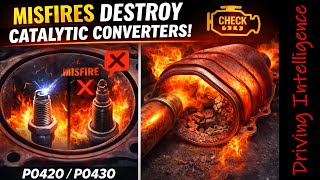
P1315 on a 2008-2012 LR2 means the engine has a persistent, catalyst-damaging misfire. The most likely causes are failing fuel injectors, as noted in a Land Rover TSB, or worn ignition coils and spark plugs. This engine is a Volvo SI6, so parts are often shared with Volvo models. Addressing this promptly is critical to avoid expensive catalytic converter damage.
- P1315 is a serious code indicating a persistent misfire that can damage your catalytic converter.
- For the 2008-2012 LR2, a faulty fuel injector is a highly probable cause, as noted in a Land Rover TSB.
- Failing ignition coils and worn spark plugs are also very common causes and are often replaced together as a set.
- Always diagnose the P030x codes first to find which cylinder is misfiring.
- Do NOT replace oxygen sensors if P1315 is present; the misfire is almost certainly the real problem.
What's Unique About the 2008-2012 Land Rover LR2
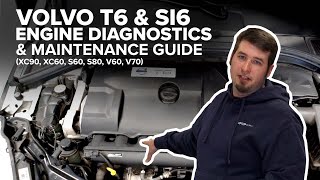
The 2008-2012 Land Rover LR2 uses a Volvo-designed 3.2L inline-six engine, also known as the Volvo SI6. 🎬 Watch: Complete diagnostic and maintenance guide for the SI6 engine. This engine was widely used in vehicles like the Volvo S80, XC60, XC70, and XC90. While ignition coils and spark plugs are common failure points on any engine, Land Rover issued a Technical Service Bulletin (TSB #SSM71894) specifically to investigate 'fuel injector failures' as a cause for this code on the LR2. This makes faulty injectors a higher-probability cause on this specific vehicle compared to others where ignition components might be the sole primary suspects. The shared engine architecture means that many parts, including ignition coils and fuel injectors, have equivalent Volvo part numbers which can be a more affordable option.
Diagnostic Flowchart
Tap your situation to follow the diagnostic path that matches what you're seeing on this vehicle.
Symptoms You May Notice
- Rough or shaking idle.
- Engine hesitates, stumbles, or jerks during acceleration.
- Flashing Check Engine Light.
- Noticeable loss of engine power.
- Reduced fuel economy.
- Engine may backfire.
- Oxygen (O2) Sensor: A persistent misfire will cause erratic readings from the O2 sensors. Land Rover issued SSM 75635 specifically warning technicians not to replace O2 sensors if P1315 is present, as the misfire is the root cause. Replacing the O2 sensor will not fix the problem.
Most Likely Causes
- Failing Fuel Injector(s) 🔴 High Probability → Shop Fuel Injector Land Rover issued TSB #SSM71894 specifically to investigate fuel injector failures causing misfires, including P1315, on this vehicle. This is a known issue on the Volvo SI6 engine platform.
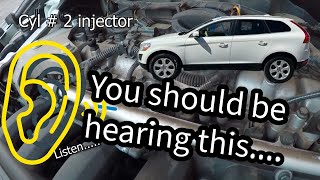
How to confirm: After ruling out ignition issues, a technician can perform a fuel injector balance test. A DIY method is to measure the electrical resistance of each injector with a multimeter after unplugging its connector. They should all be within 0.5 ohms of each other (typically around 11.8-12.3 ohms). A significant deviation indicates a faulty injector. Another method is to listen to each injector with a mechanic's stethoscope; a healthy injector will have a consistent clicking sound.
Typical fix: Replace the faulty fuel injector. It is often recommended to replace them as a set, or at least all injectors on the same bank, to ensure balanced fuel delivery and prevent future failures.
Est. part cost: $40-$90 per injector - Worn or Faulty Ignition Coil(s) 🔴 High Probability → Shop Ignition Coil Ignition coils are a common wear-and-tear item on most modern engines, including the 3.2L I6. The original coils are often made by Denso. Failure is a common cause of misfires on the shared Volvo engine platform.
How to confirm: Identify the misfiring cylinder using the corresponding P030x code. Swap the ignition coil from the misfiring cylinder with a coil from a known good cylinder. Clear the codes and drive the vehicle. If the misfire code follows the coil to the new cylinder (e.g., P0302 becomes P0301), the coil is faulty.
Typical fix: Replace the bad ignition coil. It is best practice to replace all six coils and spark plugs at the same time for long-term reliability. This is considered a very DIY-friendly job that can be completed in under an hour.
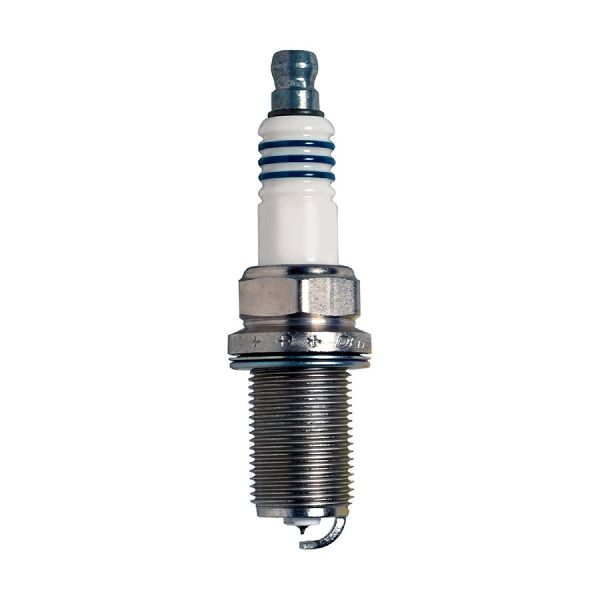
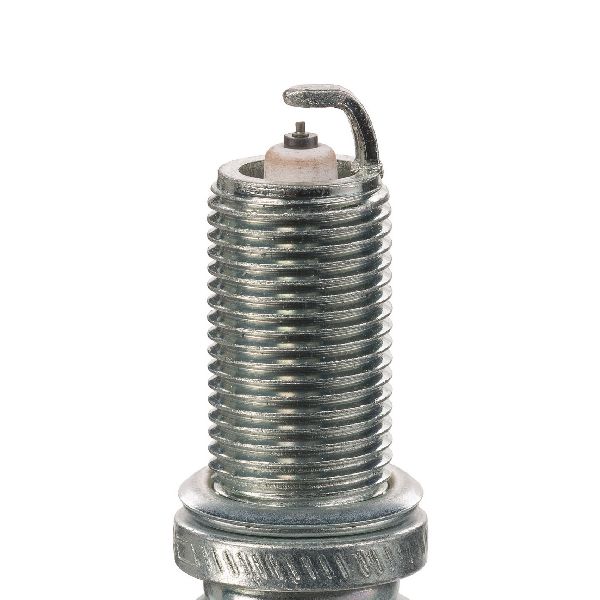
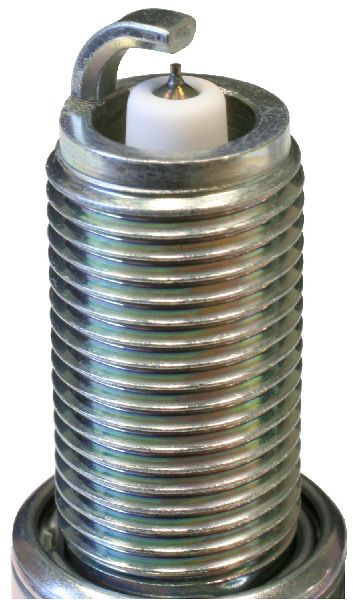
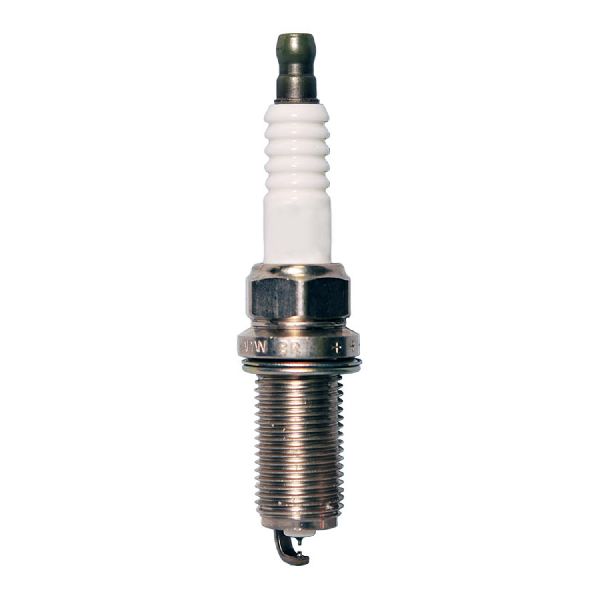
Est. part cost: $35-$70 per coil - Worn Spark Plugs 🟡 Medium Probability → Shop Spark Plug Spark plugs are a routine maintenance item. If they are past their service life (typically 75,000 miles for this engine), they can cause weak spark and misfires.
How to confirm: Remove the spark plugs from the misfiring cylinder(s) and inspect them for wear (rounded electrode), fouling (black, sooty, or oily deposits), or damage to the ceramic insulator. Compare them to new plugs.
Typical fix: Replace all six spark plugs. Use the correct type (Platinum or Iridium are standard for the 3.2L engine). This should be done whenever replacing ignition coils.
Est. part cost: $10-$25 per plug
Rare But Worth Checking
- Vacuum Leak: A leak in a vacuum hose, intake manifold gasket, or injector O-rings can introduce unmetered air, leaning out the air/fuel mixture and causing misfires. This can sometimes be detected by a hissing sound at idle or by performing a smoke test.
- Low Fuel Pressure: While less common than individual injector failure on this engine, a weak fuel pump or clogged fuel filter could starve the engine of fuel and cause misfires, especially under load. A fuel pressure test can confirm this. A P0087 code often accompanies a failing pump.
- PCM Software Glitch: On some Land Rover models, TSB LTB00799NAS2 was issued for P1315 being caused by a calibration error, fixable with a software update. While this TSB was for the 2014-2015 Evoque, it's a possibility if all hardware checks out, though less likely on the LR2.
- Clogged Catalytic Converter: A clogged catalytic converter can cause excessive backpressure, leading to a rough running engine and misfires. This is often a result of a long-term misfire condition, not the initial cause.
Diagnosis Steps
- Read all stored fault codes with an OBD-II scanner. Note any P030x codes to identify the specific misfiring cylinder(s).
- Start with the easiest and most common items. Inspect the spark plug for the identified cylinder. Check for wear, damage, or incorrect gap. If plugs are old or their condition is unknown, replace all six.
- If plugs are good, swap the ignition coil from the misfiring cylinder with one from a non-misfiring cylinder. Clear codes and test drive.
- If the misfire code moves to the new cylinder (e.g., P0301 becomes P0304), the ignition coil is bad and should be replaced. It's best practice to replace all six coils and plugs at once.
- If the misfire stays on the original cylinder, the problem is likely fuel-related or mechanical.
- Unplug the electrical connector from the fuel injector on the affected cylinder. Use a multimeter to measure the resistance between the two pins on the injector itself. It should be around 12 ohms. Compare this reading to a known good cylinder. A significant difference points to a bad injector.
- If injector resistance is good, listen to it with a mechanic's stethoscope while the engine is running. It should make a regular, audible clicking noise. Compare its sound to a working cylinder.
- If the injector is silent or sounds different, and resistance is good, check for power and ground at its electrical connector with a noid light.
- If wiring is okay and resistance is good, but the injector is still suspect, it may be clogged. At this point, replacing the fuel injector is the most likely fix, as suggested by TSB SSM71894.
- If the cause is still not found, consider checking for vacuum leaks (a smoke test is most effective) or performing a compression test to rule out mechanical engine problems like bad valves or piston rings.
Parts You'll Likely Need
- Fuel Injector
(OEM #LR001982)— This is a primary suspected cause according to Land Rover TSB #SSM71894 for this specific vehicle. It is a known failure point.
Trusted brands: Bosch, Standard Motor Products, Denso (OEM)
OEM price range: $100-$150
Aftermarket price range: $40-$90 - Ignition Coil
(OEM #LR002954)— A very common cause of misfires on all modern engines. It's a primary component to check when diagnosing a misfire.
Trusted brands: Denso (OEM), Bosch, NGK, Bremi
OEM price range: $80-$120
Aftermarket price range: $35-$70 - Spark Plugs
(OEM #LR005483)— Worn spark plugs are a common cause of misfires and are a standard maintenance item that should be replaced along with ignition coils.
Trusted brands: NGK, Bosch, Champion
OEM price range: $20-$30
Aftermarket price range: $10-$25
Related Codes That Often Appear With This One
- P0300 — This code for 'Random/Multiple Cylinder Misfire' is often set alongside P1315 to indicate that more than one cylinder is misfiring.
- P0301, P0302, P0303, P0304, P0305, P0306 — These codes specify which cylinder is misfiring (P0301 for Cylinder 1, P0302 for Cylinder 2, etc.). They are essential for diagnosis as they pinpoint where to start looking for a bad plug, coil, or injector.
Technical Service Bulletins (TSBs) & Recalls
- SSM71894: Notes intermittent rough running and various misfire codes (including P1315) and explicitly states an investigation into 'fuel injector failures' as the cause.
Platform-Specific Known Issues
- Land Rover TSB #SSM71894 was issued for the manufacturer to 'gain further understanding into the cause of these fuel injector failures' which were leading to misfire codes, including P1315.
- The Volvo SI6 3.2L engine in the LR2 has a known, though relatively rare, issue with oil consumption on pre-2012 models due to piston ring design. While not a direct cause of P1315, severe oil burning can foul spark plugs, leading to misfires.
Mechanic-Grade Diagnostic Values
- Fuel Rail Pressure — expected: Approximately 55 PSI (3.8 bar) under normal conditions. Can rise to over 60 PSI on a cold start. At 4000 RPM, should be around 50 PSI (3.45 bar).. Failure: Significant deviation from 55 PSI at idle or a pressure drop under load. A P0087 code indicates pressure is too low.
Scan Tool Commands That Help
- JLR SDD (Symptom Driven Diagnostics): Clearing adaptions — After replacing major components like fuel injectors or addressing a significant vacuum leak, clearing the engine's learned fuel trim and other adaptations can help resolve rough running and prevent the code from returning due to incorrect learned values.
- JLR SDD (Symptom Driven Diagnostics): Fault Code Reading / Analysing for repairs — The dealer-level software provides more detailed fault descriptions and follows a guided diagnostic flowchart, which can be more efficient than a generic OBD-II scanner for complex issues.
Wiring & Ground Locations
- Ignition Coils (C1E123 - C1E128) — Located on the top right side of the engine, under the plastic engine cover.. These are the primary components for creating spark. A bad coil, or a bad connection at its connector, is a direct cause of misfires.
- Engine Control Module (ECM) — Located in the engine compartment on the top, center of the firewall.. The ECM controls both the ignition coils and fuel injectors. While rare, a fault in the ECM driver for a specific cylinder can cause a persistent misfire. All wiring for these components terminates here.
- Diagnostic Socket (C2DB04) — Located under the left side of the dash.. This is the OBD-II port where a scanner is connected to read P1315 and other related fault codes.
- Fuel Rail Pressure Sensor — Located on the driver's side of the fuel rail, near injector number 6.. This sensor provides the fuel pressure reading to the ECM. A faulty sensor or wiring can cause the ECM to miscalculate injector pulse width, leading to misfires.
Real Owner Repair Stories
- Land Rover Forums (2014 Land Rover LR2 (Note: This is a post-facelift model but the P1315 and P0303 codes are relevant)) — Intermittent misfire, 'reduced performance' mode warning on the dash.
❌ Tried (didn't work) The user went straight for the fix after consulting a mechanic.
✅ What actually fixed it Replaced the ignition coil on cylinder 3, which corresponded to the P0303 code. The fix cost $30 for the part. - Land Rover Forums (2008 Land Rover LR2, 99k miles) — Check engine light, losing power on the highway, eventually would not stay running. Code P0087 (fuel pressure too low) was present.
❌ Tried (didn't work) Replacing the fuel pressure sensor did not solve the problem.
✅ What actually fixed it The user suspected a failed fuel pump, as there was no pressure at the rail. The progressive failure (losing power over 10 minutes) is characteristic of a dying pump rather than an electrical module failure. The final fix was not posted, but the diagnosis points strongly to the fuel pump.
Helpful Videos

We Have This Part in Stock


The information in this article is provided for general reference and educational purposes only. Vehicle specifications, procedures, and part compatibility can vary by production date, trim level, and region. Always consult your vehicle's factory service manual and verify part numbers before purchasing or performing repairs. Safety-critical components such as airbags, seat belts, and braking systems should be installed by a qualified professional.
- Land Rover LR2:
- 🧭 Diagnostic Flowchart
- 🎬 Helpful Videos
- 🛍️ Shop This Part
- What's Unique About the 2008-2012 Land Rover LR2
- Symptoms You May Notice
- Most Likely Causes
- Rare But Worth Checking
- Diagnosis Steps
- Parts You'll Likely Need
- Related Codes That Often Appear With This One
- Technical Service Bulletins (TSBs) & Recalls
- Platform-Specific Known Issues
- Mechanic-Grade Diagnostic Values
- Scan Tool Commands That Help
- Wiring & Ground Locations
- Real Owner Repair Stories
- 🎟️ Get 5% Off