

Ultimate P1319 Guide: Expert Causes, Diagnosis & Fixes (2026 Update)
The Definitive Resource for Decoding and Repairing OBD-II Fault Code P1319
What Does P1319 Mean?
P1319 is a manufacturer-specific OBD-II code. For Saab, it indicates a Trionic 7 ignition system misfire. For Toyota/Lexus diesels, it points to an injector driver (EDU) circuit fault. On Land Rovers, it signifies a misfire detected at low fuel levels. For Ford diesel vans, it flags a diesel injection pump timing sensor failure.
Technical definition: The formal definition of P1319 varies by manufacturer: Misfire Detected, Combustion Signal (Saab); Injector Driver Circuit Malfunction (Toyota/Lexus); Misfire Detected at Low Fuel Level (Land Rover); and Injection Timing Piston Position Sensor Circuit Range/Performance (Ford).
Can I Drive With P1319?
Yes, But With Caution. Driving is technically possible for short distances, but strongly discouraged. A flashing check engine light signals a severe, active misfire. Continuing to drive dumps unburnt fuel into the exhaust, destroying your catalytic converter in as little as 50 miles and adding $1,500 to $3,500 to your final repair bill.
Common Causes
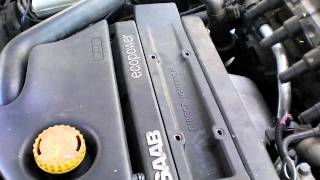
- Faulty Ignition Discharge Module (IDM) / Direct Ignition Cassette (DIC) (Very Common) — For Saab T7 engines, the Direct Ignition Cassette (DIC) is the primary cause. This unit combines ignition coils and control electronics and fails frequently due to heat cycling.
- Failed Injector Driver Module (EDU) (Common) — On Toyota 1KD-FTV diesels, this code points to the electronic driver unit (EDU) controlling the fuel injectors, not the injectors themselves.
- Worn Spark Plugs or Faulty Ignition Coils/Wires (Common) — Aged spark plugs, cracked coil packs, or deteriorated high-tension leads cause the misfire triggering P1319 on Land Rovers.
- Leaking Valve Cover Gaskets (Less Common) — Oil leaks from valve cover gaskets pool in spark plug wells, saturating the boot and causing spark to arc to the cylinder head instead of the plug electrode.
- Vacuum Leaks (Less Common) — Cracked intake hoses allow unmetered air into the engine, creating a lean air-fuel mixture that causes misfires.
- Low Fuel Pressure or Weak Fuel Pump (Less Common) — A weak fuel pump starves the engine of fuel under load, causing misfires. This is literal for the Land Rover 'low fuel' definition.
- Faulty Crankshaft Position Sensor (CKP) (Rare) — A failing crankshaft position sensor sends erratic signals to the ECU, triggering false misfire codes on Land Rover Discovery II models.
- Damaged Wiring or Corroded Connectors (Rare) — Breaks or corrosion in the wiring harness interrupt signals to the ignition cassette, EDU, or individual coils.
- Faulty Engine Control Module (ECM) (Very Rare) — The main engine computer fails rarely, usually due to severe overheating or water intrusion.
Symptoms
- Flashing Check Engine Light — The check engine light blinks during acceleration, signaling a catalyst-damaging misfire.
- Engine Shaking or Rough Idle — The engine vibrates or stumbles noticeably at idle or when stopped at a light.
- Reduced Engine Power and Limp Mode — The ECU restricts RPM and power to protect the engine, causing severe hesitation.
- Poor Fuel Economy — Gas mileage drops 10-20% due to inefficient combustion.
- Loud Tapping or Knocking Noise — Ford Transit TDDI engines produce a loud, rhythmic tapping from a failing injection pump.
- Rotten Egg Smell from Exhaust — Unburnt fuel overheats the catalytic converter, producing a strong sulfur odor.
Common Fixes & Costs
- Replace Ignition Cassette (Saab) — Parts: $300-$485, Labor: $60-$120, ~0.5 hr book time (DIY)
- Replace Injector Driver Module (EDU) (Toyota/Lexus) — Parts: $450-$660, Labor: $150-$250, ~1.5 hr book time (Intermediate)
- Replace Spark Plugs and/or Ignition Coils (Land Rover) — Parts: $80-$400, Labor: $180-$270, ~2.5 hr book time (Intermediate)
- Replace Diesel Injection Pump (Ford Transit) — Parts: $1200-$1800, Labor: $500-$800, ~6 hr book time (Professional)
- Initial Diagnostic Service at a Shop — Parts: $0, Labor: $100-$250, ~1.5 hr book time (Professional)
DIY vs Professional
- Replace Ignition Cassette (Saab) 🟢 Beginner
Tools: T30 Torx socket/screwdriver, small flathead screwdriver. - Replace Injector Driver Module (EDU) (Toyota) 🟢 Beginner
Tools: Basic socket set, trim removal tools, multimeter. - Replace Ignition Coils (Land Rover Discovery II) 🟢 Beginner
Tools: Socket set (10mm), extensions, swivel adapter, T30 Torx, dielectric grease. - Replace Diesel Injection Pump (Ford Transit VP44) 🟢 Beginner
Tools: Extensive tool set, engine timing tools, gear puller, high-pressure line wrenches.
Used vs. New Parts: Buying Guide
When a used part is worth it: A used OEM (SEM) Saab DIC is acceptable if budget is tight. Used Land Rover ignition coils from a low-mileage donor work for older vehicles.
Donor-vehicle mileage cap: roughly under 80000 miles for the part to have meaningful remaining life.
Donor quality checklist:
- For Saab DICs, check the date code stamped on the unit; newer is better.
- Verify the donor vehicle was not scrapped for engine issues.
- Match the part number exactly.
Decision logic:
- If The part is a Saab Direct Ignition Cassette → Buy a new OEM (SEM) part. If budget is tight, buy a used OEM part. Never buy new aftermarket cassettes.
- If The part is an ignition coil for a vehicle over 150k miles → A used OEM coil from a salvage yard is an acceptable risk to save money.
- If The part is the Toyota EDU → Buy new OEM. The risk of a used electronic part failing outweighs the savings.
Warranty tradeoff: Used salvage parts carry a 30-90 day warranty. New aftermarket parts offer longer warranties but fail frequently. New OEM parts provide the best reliability.
Worst-case if a used part fails: $300-800 if a cheap aftermarket part fails, requiring repeat labor and a second part purchase.
What Happens If You Wait — Timeline
- 0-50 miles: Check engine light illuminates. Engine has a rough idle or hesitation. Misfire dumps unburnt fuel into the exhaust. (MPG impact: 5-10%% · Added cost: $0)
- 50-200 miles: If the light flashes, the catalytic converter actively overheats. The internal ceramic honeycomb melts. A rotten egg smell appears. (MPG impact: 10-20%% · Added cost: $50-$150)
- 1-3 months: The catalytic converter is substantially damaged and clogged. The vehicle suffers severe power loss and fails emissions tests. (MPG impact: 20-40%% · Added cost: $1,200 - $3,500)
- 3+ months: Total catalyst meltdown. Extreme exhaust backpressure causes burnt exhaust valves or engine stalling. Downstream O2 sensors fail. (MPG impact: >40%% · Added cost: $2,000 - $5,000+)
Cost of Not Fixing It
- Immediate (0-1 month): Drop in fuel economy, rough engine performance, and potential stalling. Catalytic converter damage begins if the light flashes. (Added cost: Negligible, other than increased fuel consumption.)
- Short Term (1-6 months): Guaranteed emissions inspection failure. The catalytic converter overheats, melts internally, and fails completely. (Added cost: $1,200 - $3,500 for catalytic converter replacement.)
- Long Term (6+ months): Catastrophic catalytic converter failure causes extreme exhaust backpressure, burning exhaust valves and destroying O2 sensors. (Added cost: $2,000 - $5,000+)
Diagnosis Steps
- Identify Your Vehicle's P1319 Definition
Confirm what P1319 means for your specific vehicle (Saab, Toyota, Ford, or Land Rover). This dictates your entire diagnostic path.
Tools: OBD-II Scanner, Vehicle-Specific Repair Manual (Beginner) - Check for Related Misfire Codes
Look for P0300 (Random Misfire) or P0301-P0308 (Cylinder-specific misfire) to pinpoint the exact failing cylinder.
Tools: OBD-II Scanner (Beginner) - Inspect Spark Plugs and Wells (Gasoline Engines)
Remove spark plugs. Look for carbon fouling, oil contamination, or damage. Check inside spark plug tubes for oil indicating a leaking valve cover gasket.
Tools: Spark Plug Socket, Ratchet, Torque Wrench, Flashlight (Intermediate) - Test Ignition Coils (Land Rover, BMW)
Swap the ignition coil from the misfiring cylinder with a working cylinder. If the misfire code moves to the new cylinder, the coil is faulty.
Tools: Basic Hand Tools (Socket/Wrench Set) (Intermediate) - [PRO TIP] Perform Injector Solenoid Resistance Test (Toyota 1KD-FTV)
Measure resistance between the two pins on the injector. A good Denso injector reads below 2.6 Ohms. Check for continuity to ground; any continuity means the injector is shorted and will destroy the EDU.
Tools: Multimeter, Basic Hand Tools (Advanced) - Inspect Wiring and Connectors
Visually inspect the wiring harness going to the Ignition Cassette, EDU, or coils. Look for cracking, melting, or loose pins.
Tools: Flashlight, Mirror (Intermediate) - [PRO TIP] Perform Fuel Pressure Test (Land Rover V8)
Connect a fuel pressure gauge to the Schrader valve. A healthy Discovery II V8 fuel pump produces 43-50 PSI. Low pressure indicates a weak pump or clogged filter.
Tools: Fuel Pressure Gauge Kit (Advanced) - [PRO TIP] Perform Cold Engine Compression Test (Land Rover)
If misfires persist after replacing ignition parts, check compression. Readings below 90 PSI indicate worn piston rings or poor valve seals.
Tools: Compression Tester Gauge, Basic Hand Tools (Advanced) - [PRO TIP] Test Crankshaft Position Sensor (Land Rover)
Pour cool water over the CKP sensor body when the engine acts up hot. If the engine smooths out, the sensor is failing thermally.
Tools: Bottle of Water (Intermediate)
When This Code Triggers (Freeze-Frame Conditions)
- Engine Coolant Temp: 180-205°F (Fully warmed up at normal operating temperature.)
- RPM: 1500-2800 (Under moderate acceleration or steady-state cruise.)
- Engine Load: 30-60% (The engine is producing moderate power, not idling or at full throttle.)
- Vehicle Speed: 45-65 mph (Highway or expressway driving conditions.)
Related Codes
- P0300-P0308 — These generic codes report the specific cylinder misfiring alongside P1319. P0304 means cylinder 4 is the culprit.
- P1312 — On Saabs, P1312 indicates a combustion fault for cylinders 1 and 2. Seeing P1312 and P1319 together guarantees a failed DIC.
- P0171 — A misfiring cylinder dumps unburnt oxygen into the exhaust, triggering this lean code. Fixing the misfire resolves P0171.
- P0134 — A failing upstream O2 sensor causes incorrect fueling, leading to fouled plugs and misfires that trigger P1319.
Climate & Environmental Factors
- High Humidity / Water Ingress: Water entering the Saab Direct Ignition Cassette causes internal shorting, overheating, and melting of the unit.
- Extreme Heat Cycles: Land Rover plastic engine components become brittle with age and heat, increasing the risk of breaking vacuum lines during repair.
How to Clear the Code After You Fix It
- Use an OBD-II scan tool to erase the diagnostic trouble codes.
- Ensure the fuel tank is between 1/4 and 3/4 full.
- Perform a complete drive cycle to allow readiness monitors to run.
Drive cycle (~30 minutes): Cold start and idle for 3 minutes. Drive 15 minutes in mixed conditions, including 5 minutes steady at 55-60 mph. Coast down without braking. Idle 30 seconds before shutting off.
Readiness monitors affected: Misfire Monitor, Catalyst Monitor, Oxygen (O2) Sensor Monitor
Before emissions retest: drive at least 100 miles to fully set monitors.
Watch out for:
- Clearing the code does not fix the mechanical fault; it will return immediately.
- Disconnecting the battery resets all readiness monitors, guaranteeing an emissions test failure.
Will This Fail Emissions / State Inspection?
Yes — this code typically fails an OBD-II emissions inspection.
- California: An illuminated check engine light is an automatic failure. All OBD readiness monitors must be set to 'Ready' before re-testing.
- New York: A vehicle with an illuminated check engine light automatically fails the emissions portion of the annual inspection.
- Texas: In the 17 counties requiring emissions testing, an active P1319 code causes an automatic OBD-II test failure.
Most Commonly Affected Vehicles
- Saab 9-3 (2000-2002) — Extremely common due to the failure rate of the black T7 Direct Ignition Cassette.
- Saab 9-5 (1998-2010) — Shares the same failure-prone T7 Direct Ignition Cassette. Always use genuine SEM/Orio parts.
- Toyota Hilux (2005-2015) — Prone to Injector Driver Module (EDU) failure on 1KD-FTV diesel engines.
- Toyota Land Cruiser Prado (2006-2015) — Uses the 1KD-FTV engine and experiences identical EDU failures.
- Land Rover Discovery II (1999-2004) — Logs P1319 with misfire codes. Diagnosis focuses on spark plugs, wires, coils, and oil intrusion in plug wells.
- Ford Transit (2000-2006) — On 2.4L TDDI engines, P1319 indicates an internal failure of the Bosch VP44 injection pump.
- Honda Accord, Civic, CR-V (1998-2005) — Honda uses the similar code P1399 for 'Random Cylinder Misfire' caused by clogged EGR passages or faulty coils.
- BMW 3-Series (E46) (1999-2006) — BMW uses code 274E for identical misfire symptoms caused by ignition coils or vacuum leaks.
Manufacturer-Specific Notes
- Saab: P1319 is synonymous with a failed Direct Ignition Cassette (DIC). Always replace spark plugs when replacing the DIC.
- Toyota: The code points to the injector driver circuit (EDU), not the injectors. Test injectors for shorts before replacing the EDU.
- Land Rover: The 'low fuel' definition is a red herring. It reports a standard ignition misfire from plugs, wires, or coils.
- Ford: On Transit 2.4L TDDI vans, P1319 is a death sentence for the Bosch VP44 injection pump, requiring full replacement.
Real Owner Stories
2001 Saab 9-5 Aero (155K miles) - Classic DIC Failure
Experienced a sudden rough idle, flashing check engine light, and power loss on the highway. Codes P1319 and P0304 (Cylinder 4 Misfire) appeared.
What they tried:
- Verified spark plugs were correct NGK models replaced 10,000 miles prior.
- Diagnosed a failed Direct Ignition Cassette (DIC) based on the P1319 code.
Outcome: Purchased a genuine SEM/Orio DIC (P/N 55559955) for $380. Replacement took 10 minutes. The car ran perfectly, and codes never returned.
Lesson: On a T7 Saab, P1319 guarantees a failed DIC. Always use a genuine cassette; aftermarket versions fail rapidly.
2003 Land Rover Discovery II (130K miles) - The 'Low Fuel' Red Herring
Car shook violently at startup with a flashing check engine light. Scanner showed P1319, P0300, and P0303. The fuel light was on.
What they tried:
- Added fuel and injector cleaner, assuming a clogged filter based on the 'low fuel' code definition. This failed.
- Inspected cylinder 3 and found the spark plug well full of oil from a leaking valve cover gasket.
Outcome: Replaced the valve cover gasket, cleaned the plug well, and installed a new spark plug and wire. Misfire resolved for under $100.
Lesson: Ignore the 'low fuel' definition on Land Rovers. It is a standard ignition misfire. Always check for oil in spark plug wells first.
2008 Toyota Hilux 1KD-FTV - The Expensive Injector Mistake
Vehicle entered limp mode with P1319. The owner assumed a failed fuel injector.
What they tried:
- Replaced all four fuel injectors. P1319 returned immediately, and the vehicle remained in limp mode.
Outcome: Learned P1319 points to the Injector Driver Module (EDU). Discovered one original injector had a short to ground, which instantly destroyed the new EDU. Required a second new EDU and one new injector after testing resistance.
Lesson: For Toyota 1KD-FTV engines, P1319 means suspect the EDU. You must test injector resistance before replacing the EDU to prevent a shorted injector from destroying the new module.
How to Prevent This Code From Triggering
- Replace spark plugs at recommended intervals with correct OEM parts (Every 30,000-60,000 miles) — Worn spark plugs require more energy from the ignition system, stressing coils and shortening the life of the expensive Saab DIC.
- Replace valve cover gaskets at the first sign of a leak (Inspect every oil change) — Leaking valve cover gaskets allow oil to fill spark plug wells, soaking plug boots and causing spark to arc to ground.
- Ensure spark plug wires are correctly routed in their looms (During any spark plug or wire change) — Misrouted wires melt against hot engine components or cross-induce a spark, causing misfires.
- Avoid poor quality diesel and water contamination (Toyota 1KD-FTV) (Ongoing) — Contaminants cause rapid wear and internal shorting of injector solenoids, which destroys the EDU.
Helpful Videos
Shop the Parts Behind P1319
Below are the parts most often responsible for code P1319, ranked by how frequently each one is the actual culprit (per the diagnosis above). Tap any to see what we have for your vehicle.



The information in this article is provided for general reference and educational purposes only. Vehicle specifications, procedures, and part compatibility can vary by production date, trim level, and region. Always consult your vehicle's factory service manual and verify part numbers before purchasing or performing repairs. Safety-critical components such as airbags, seat belts, and braking systems should be installed by a qualified professional.
- 🎬 Helpful Videos
- 🛍️ Shop This Part
- What Does P1319 Mean?
- Can I Drive With P1319?
- Common Causes
- Symptoms
- Common Fixes & Costs
- DIY vs Professional
- Used vs. New Parts: Buying Guide
- What Happens If You Wait — Timeline
- Cost of Not Fixing It
- Diagnosis Steps
- When This Code Triggers (Freeze-Frame Conditions)
- Related Codes
- Climate & Environmental Factors
- How to Clear the Code After You Fix It
- Will This Fail Emissions / State Inspection?
- Most Commonly Affected Vehicles
- Manufacturer-Specific Notes
- Real Owner Stories
- 2001 Saab 9-5 Aero (155K miles) - Classic DIC Failure
- 2003 Land Rover Discovery II (130K miles) - The 'Low Fuel' Red Herring
- 2008 Toyota Hilux 1KD-FTV - The Expensive Injector Mistake
- How to Prevent This Code From Triggering
- 🎟️ Get 5% Off