

P1326 on 2017-2022 Genesis G90 3.3T: Knock Sensor Detection System Guide
P1326 on your Genesis G90 means the Knock Sensor Detection System (KSDS) has detected vibrations suggesting potential engine failure. The vehicle will enter a severe 'limp mode.' This is a critical code that requires an immediate trip to a Genesis dealer for diagnosis, which may be covered under an extended warranty for connecting rod bearing failure.
- P1326 is a critical code indicating the vehicle's computer suspects imminent engine failure.
- The vehicle will protect itself by entering a severe 'limp mode' to limit RPM and speed.
- This code triggers a specific dealer diagnostic path, starting with a Bearing Clearance Test.
- The root cause (rod bearing failure) is often covered by a 15-year/150,000-mile warranty extension.
- Do not clear the code or continue driving; tow the vehicle to a Genesis dealer immediately.
What's Unique About the 2017-2022 Genesis G90
Hyundai and Genesis implemented the KSDS via a software update across many of their engines as a response to known issues with connecting rod bearing failures, which led to class-action lawsuits primarily targeting the Theta-II four-cylinder engines. 🎬 Watch: Learn how the KSDS detects Theta II bearing failure. While the Lambda V6 in the G90 was not the primary focus of the lawsuits, it received the protective KSDS software as a preventative measure. Its appearance is the first step in a dealer-led diagnostic process that could lead to a full engine replacement, often under a 15-year/150,000-mile extended warranty for this specific issue.
Symptoms You May Notice
- Flashing Check Engine Light
- Vehicle enters 'limp mode' (severely reduced power and acceleration)
- Engine RPM limited to approximately 1800-2000 RPM
- Vehicle speed may be limited to around 40 mph
- Potential for rough idle or stalling
- Possible metallic knocking or tapping sound from the engine 🎬 Watch: Hear what a failing rod bearing sounds like.
- Replacing the knock sensor without performing the bearing clearance test. The code is a symptom reported by the sensor, not necessarily a failure of the sensor itself.
- Clearing the code and continuing to drive. The code will likely return, and continued operation risks engine seizure.
Most Likely Causes
- Excessive Connecting Rod Bearing Wear 🔴 High Probability This is the exact failure the KSDS software is designed to detect. While more famous on other Hyundai engines, the risk exists, and the detection system is sensitive. The warranty for this specific failure has been extended to 15 years/150,000 miles.
How to confirm: A Genesis dealer must perform a 'Bearing Clearance Test' using a specialized tool (SST KQ231-2T110QQK) that measures piston movement by applying pressure and vacuum to the cylinder. This is not a visual inspection. A passing result does not always rule out the issue, as some owners report the problem recurring.
Typical fix: If the bearing clearance test fails, the engine assembly must be replaced. This is often covered under Hyundai/Genesis's extended engine warranty (Campaign T6G / TXXM) related to this issue.
Est. part cost: $0 (under warranty) - $15,000+ - Faulty Knock Sensor or Wiring Harness ⚪ Low Probability → Shop Ignition Knock (Detonation) Sensor Wiring harnesses can be susceptible to damage from heat, chafing, or rodents. Connectors can also suffer from water intrusion, leading to false signals. The knock sensor itself is located deep in the engine valley, making it a labor-intensive repair.
How to confirm: If the Bearing Clearance Test passes, the dealer will then follow diagnostic procedures to inspect the knock sensor and its wiring for opens, shorts, or physical damage. The sensor's resistance and voltage signal can be checked with a multimeter. The torque of the sensor bolt is critical for proper operation. A key step is ensuring the knock sensor harness is not touching the injector harness, which can induce electrical noise and cause a false code.
Typical fix: Replacement of the faulty knock sensor or repair/replacement of the damaged wiring harness. This is only done after the bearing test passes.
Est. part cost: $150-$400 - Outdated Engine Control Module (ECM) Software ⚪ Low Probability → Shop Engine Control Module (ECM) The KSDS itself was deployed via a software update (Service Campaign 966 on many models). There may be subsequent updates to refine the sensitivity and prevent false positives. The dealer will verify the latest software is installed as part of the diagnosis.
How to confirm: A Genesis dealer can check the vehicle's VIN to see if the KSDS update has been performed and if any newer software versions are available using the GDS diagnostic tool.
Typical fix: Flashing the ECM with the latest software version. This is typically the first step before any hardware is replaced.
Est. part cost: $0 (if under a campaign) - $150
Diagnosis Steps
- Confirm the presence of code P1326 with an OBD-II scanner. Note the flashing check engine light and limp mode condition.
- DO NOT clear the code. It is critical evidence for the dealer's diagnostic and warranty process.
- Have the vehicle towed to an authorized Genesis dealership. Do not continue to drive.
- The dealer will verify the vehicle's VIN for any open campaigns or warranty extensions related to the KSDS and engine bearings (e.g., Campaign 966, T6G, TXXM).
- The dealer will perform the official Bearing Clearance Test as mandated by Hyundai/Genesis technical service bulletins (e.g., TSB 22-01-023H-2).
- If the test fails, the engine will be replaced under the warranty extension, if applicable.
- If the test passes, the technician will proceed with diagnosing the knock sensor, wiring harness, and ECM software.
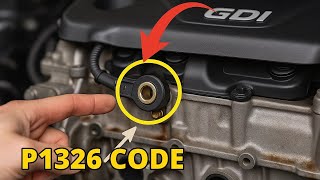
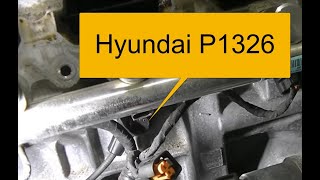
- After any repair, the dealer must clear the P1326 code with the engine running and reset adaptive values using the GDS tool. 🎬 See this walkthrough on diagnosing and fixing the P1326 code.
Parts You'll Likely Need
- Engine Long Block Assembly — This is the required fix if the internal connecting rod bearings have failed, as confirmed by the dealer's bearing clearance test.
Trusted brands: Genesis OE
OEM price range: $10000-$15000+
Aftermarket price range: N/A - Knock Sensor
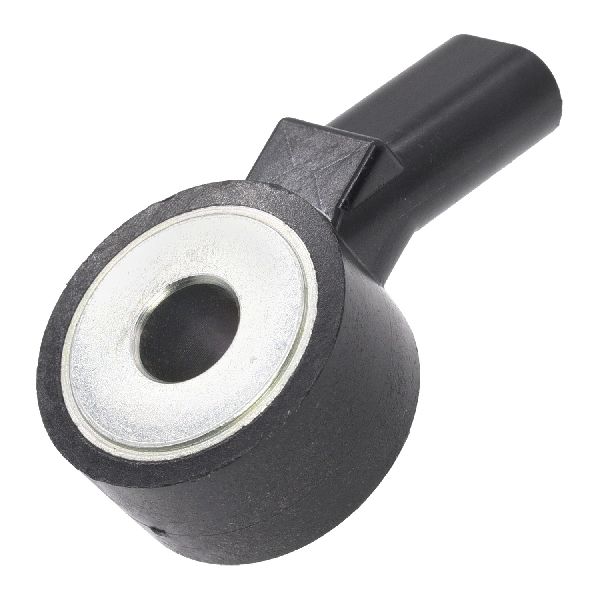
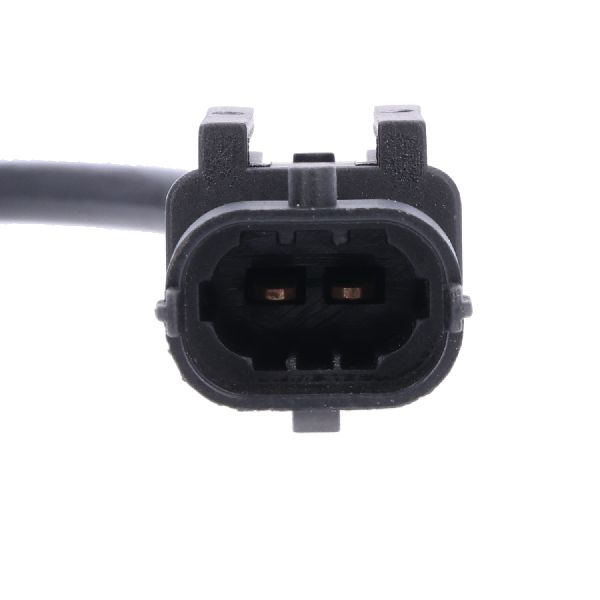
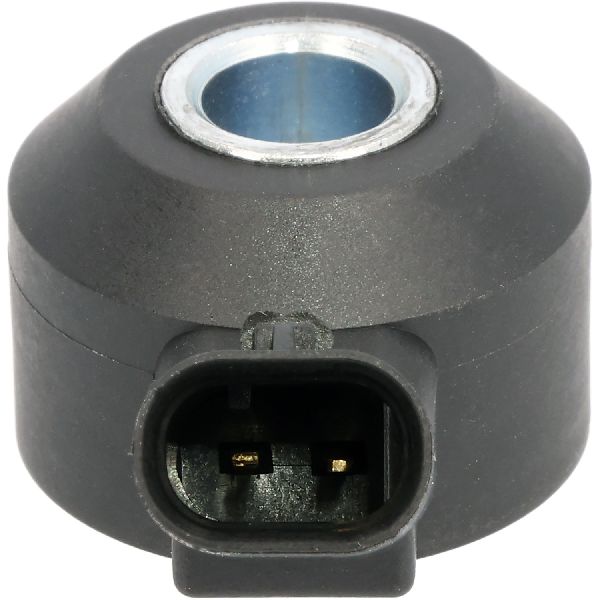
(OEM #39320-3L000)— In the less common scenario where the engine is mechanically sound but the sensor itself has failed, it will need to be replaced. This is only done after passing the bearing test.
Trusted brands: Genesis OE, Bosch
OEM price range: $100-$150
Aftermarket price range: $50-$120
Related Codes That Often Appear With This One
- P0300-P0308 — If connecting rod bearings are severely worn, it can cause engine knocking and vibrations that lead to cylinder misfires.
- P2106 — This code for 'Throttle Actuator Control System - Forced Limited Power' is a direct result of the ECM commanding limp mode when P1326 is triggered.
Technical Service Bulletins (TSBs) & Recalls
- Service Campaign 966: The widespread campaign to install the KSDS software on many Hyundai/Kia/Genesis vehicles.
- TSB 21-01-024H / T6G (and successors like 22-01-023H-2): Examples of follow-up TSBs for Hyundai that guide dealers on how to proceed when P1326 appears after the initial KSDS update, including the bearing test procedure.
- Warranty Extension TXXM: Extends the warranty for connecting rod bearing failure to 15 years or 150,000 miles for eligible vehicles.
- TSB 19-EM-001H: Notes changes to timing chain components for the Lambda 3.3L engine in the G90 (HI), relevant to overall engine mechanical health.
- TSB 21-EM-004H: Provides the detailed service procedure for performing the engine connecting rod bearing clearance test.
Platform-Specific Known Issues
- This vehicle is subject to the Knock Sensor Detection System (KSDS) software update, which was created to detect potential engine bearing failure. The presence of code P1326 is the primary trigger for a specific, manufacturer-defined diagnostic and repair path that may be covered by a lifetime warranty extension for the engine short block.
- The Lambda II 3.3T engine was included in Hyundai/Genesis recall 019G (NHTSA ID: 24V-191) for a left turbocharger oil feed pipe that could deteriorate and leak oil, increasing fire risk. While not a direct cause of P1326, a significant oil leak could lead to oil starvation and bearing damage.
Mechanic-Grade Diagnostic Values
- Bearing Clearance Tester (BCT) - AP (Pressure) Gauge — expected: 0.1 ~ .011 MPa. Failure: Reading outside of this range indicates a problem with the test setup or tool.
- Bearing Clearance Tester (BCT) - VC (Vacuum) Gauge — expected: -73 ~ -83 kPa. Failure: Reading outside of this range indicates a problem with the test setup or tool.
Scan Tool Commands That Help
- Genesis GDS (Global Diagnostic System): Special Inspection -> Bearing Clearance Test — This is the mandatory first step when P1326 is present. The GDS guides the technician through using the special tool to measure bearing play, which determines if an engine replacement is authorized under warranty.
- Genesis GDS (Global Diagnostic System): S/W Management -> Wiring Signal Interference Check — This function is used if the Bearing Clearance Test passes. It helps determine if electrical noise from other components, like fuel injectors, is causing a false P1326 trigger before replacing the harness or sensor.
- Genesis GDS (Global Diagnostic System): ECU Upgrade — Used to apply the KSDS software update (e.g., Event #739) or newer versions. This is often a preliminary step, as outdated software can cause false positives.
- Genesis GDS (Global Diagnostic System): Reset Adaptive Values — This is a critical final step after a repair (like knock sensor replacement) is completed to clear learned values and prevent the code from immediately returning.
Wiring & Ground Locations
- Knock Sensor Harness Routing — The knock sensor is located under the intake manifold, near the fuel rail.. The knock sensor harness must not touch the fuel injector harness. Electrical feedback from the injector harness can be picked up by the knock sensor circuit, inducing a false signal that triggers a P1326 code even with a mechanically sound engine.
- Battery Ground Strap — Main ground connection from the battery negative terminal to the chassis.. A loose battery ground strap was identified as the cause of a no-start situation on a long-term test G90. While not directly causing P1326, poor grounding can create widespread electrical issues and unpredictable sensor behavior.
Real Owner Repair Stories
- Reddit user in r/Hyundai (2016 Sonata Hybrid with 147,000 miles) — Audible knocking sound when the engine is warm and driving (not at idle). Eventually, the car threw code P1326 and entered limp mode.
❌ Tried (didn't work) The dealership performed the Bearing Clearance Test, which passed., The dealership replaced the knock sensor.
✅ What actually fixed it The issue was unresolved. The user reported still hearing the knocking sound after the dealer's repair, highlighting a scenario where the official diagnostic procedure (passing the BCT and replacing the sensor) does not resolve the underlying mechanical noise, leaving the owner in a state of uncertainty. - Reddit user in r/kia (2016 Kia Optima with 165,000 miles) — Heard a knock while accelerating uphill, followed immediately by a flashing check engine light and limp mode (RPM limited to 1,750).
❌ Tried (didn't work) The dealership confirmed code P1326 and performed the Bearing Clearance Test, which the engine passed., The dealer then performed a software update which cleared the code.
✅ What actually fixed it This story was unresolved at the time of posting. The owner was concerned about the engine's reliability for a long drive home, as the underlying knock was heard but the engine passed the test. This demonstrates the common and frustrating loop owners can get into where the dealer follows protocol but the owner's confidence in the vehicle is not restored.
When the Usual Fixes Don't Work
- A significant point of contention among owners is the reliability of the Bearing Clearance Test (BCT). Multiple online accounts describe scenarios where an engine passes the BCT, the dealer replaces the knock sensor as per protocol, but the owner can still hear a mechanical knocking sound. In some cases, the P1326 code returns shortly after, leading to repeat dealer visits. This suggests that the BCT may not be 100% effective at detecting early-stage bearing wear, or that other mechanical issues can mimic the failure signature, creating a diagnostic loop that is frustrating for vehicle owners.
OEM Part Supersession History
39320-3L000→39320-3L010— Part number 39320-3L000 is for the right-hand (passenger side) knock sensor. Part number 39320-3L010 is listed for the left-hand (driver side) sensor. They are not a direct supersession but are the pair of sensors for the V6 engine. It is critical to order the correct sensor for the specific bank being serviced.
Heads up: Using the wrong part number for the bank will likely result in fitment issues or incorrect signal interpretation by the ECM.
Model Year Variations Within This Range
- 2017-2019: The initial launch models. A 2020 refresh brought significant exterior and interior styling changes but the 3.3T powertrain remained largely the same. Early models are more likely to have outdated KSDS software versions compared to later models.
- 2020-2022: These post-refresh models received minor updates, such as new 19-inch wheels and improved voice recognition in 2021, but no major mechanical changes to the 3.3T engine that would affect the P1326 diagnosis. The vehicle was a carryover for 2022.
Diagnostic Flowchart
Other Known Issues on This Vehicle
Issues unrelated to this code that are worth knowing about as an owner of this generation:
- Leaking Left Turbocharger Oil Feed Pipe 🔴 High — Common enough to trigger a recall (019G). The pipe can deteriorate from heat and leak oil onto hot engine components. (Ref: Recall 019G (NHTSA ID: 24V-191))
- Intake Valve Carbon Buildup 🟠 Medium — A common characteristic of all Gasoline Direct Injection (GDI) engines, including the Lambda II 3.3T. Typically becomes noticeable after 60,000+ miles, causing rough idle or misfires.
- Failing Oil Pressure Sensor 🟠 Medium — The sensor itself can fail, causing a flickering oil light at idle when warm. The issue is exacerbated by the sensor's location deep in the engine valley, making replacement a very labor-intensive job.
- Timing Chain Tensioner Wear 🟠 Medium — Some Lambda engines can develop a rattle on cold startups, indicating wear in the timing chain tensioners. If ignored, this can lead to chain slack and timing correlation codes (e.g., P0016). (Ref: TSB 19-EM-001H)
- Water Entry into Starter Solenoid 🔴 High → Shop Starter Motor — A recall was issued for potential water ingress into the starter solenoid, which could cause an electrical short and risk of an engine compartment fire, even when parked. (Ref: Recall 003G (NHTSA ID: 19V-538))
Used vs. New Parts: Buying Guide for This Vehicle
When a used part is the smart pick: For a P1326-related repair, using used parts is generally not recommended for the core components. A used knock sensor could be considered if sourced from a low-mileage vehicle, but given the extensive labor to access it (intake manifold removal), the cost savings may not outweigh the risk of premature failure. Used wiring harnesses are also risky due to potential for unseen damage.
Donor-vehicle mileage cap: roughly under 40000 miles for the part to have meaningful remaining life.
What to inspect on the donor part:
- For a knock sensor, ensure the connector is free of corrosion, and the plastic housing has no cracks.
- Verify the donor vehicle's VIN to ensure it was not part of a fire or flood auction.
- If considering a complete engine, an verifiable, complete service history with consistent on-time oil changes using OEM filters is mandatory. Even then, the risk is substantial.
OEM-only on this vehicle (don't cheap out):
- Engine Long Block: Due to the nature of the P1326 code indicating a known engine defect, installing a used engine is extremely high-risk. A new or remanufactured OEM engine is the only reliable solution if a replacement is needed.
- Oil Filter: At least one owner has reported that an aftermarket oil filter was blamed for a recurring P1326 code. Using an OEM Hyundai/Genesis filter is a low-cost way to eliminate a potential variable.
Aftermarket brands forum-validated for this vehicle:
- Bosch is a known OEM supplier for knock sensors and can be a reliable alternative to dealer-sourced parts.
Brands owners have reported issues with on this vehicle:
- Avoid unbranded, white-box knock sensors from online marketplaces. The sensitivity and reliability of the sensor are critical for the KSDS to function correctly, and a poor-quality sensor can lead to false codes or failure to detect a real problem.
Real Owner Stories
Aggregated from forums and TSBs cited above. Mileages and costs reflect what owners reported in those sources.
2016 Kia Optima (Platform Mate) — 109000 miles
Symptoms: The owner received a P1326 code and was informed by the dealer that the vehicle required a new engine.
What fixed it: The engine was replaced and covered under the manufacturer's warranty.
Source hint: Reddit r/kia - 'Just got the p1326'
2017-2022 Hyundai (Generic Platform Model)
Symptoms: The vehicle passed the bearing clearance test and had the knock sensor replaced, but the owner could still hear a knocking noise from the engine.
What fixed it: The source highlights a frustrating loop where the official test and sensor replacement did not resolve the underlying mechanical noise, leading to repeat issues.
Source hint: Reddit r/Hyundai - 'P1326, Bearing Clearance Test passed, knock sensor replaced, Still can hear the knocking.'
Related OBD-II Codes
Frequently Asked Questions
Is my 2017-2022 Genesis G90 covered by a warranty extension for the P1326 code?
What specific test will the dealer perform on my G90 to diagnose the P1326 code?
Can a turbocharger issue cause engine damage leading to a P1326 code on the 3.3T engine?
My G90 passed the bearing clearance test, but the light is still on. What is the next step?
Is there a software update I should check for regarding the Knock Sensor Detection System?
Why is my G90 limited to 40 mph and 2000 RPM after the check engine light started flashing?
Helpful Videos
We Have This Part in Stock


The information in this article is provided for general reference and educational purposes only. Vehicle specifications, procedures, and part compatibility can vary by production date, trim level, and region. Always consult your vehicle's factory service manual and verify part numbers before purchasing or performing repairs. Safety-critical components such as airbags, seat belts, and braking systems should be installed by a qualified professional.
- Genesis G90:
- 🧭 Diagnostic Flowchart
- 🎬 Helpful Videos
- 🛍️ Shop This Part
- What's Unique About the 2017-2022 Genesis G90
- Symptoms You May Notice
- Most Likely Causes
- Diagnosis Steps
- Parts You'll Likely Need
- Related Codes That Often Appear With This One
- Technical Service Bulletins (TSBs) & Recalls
- Platform-Specific Known Issues
- Mechanic-Grade Diagnostic Values
- Scan Tool Commands That Help
- Wiring & Ground Locations
- Real Owner Repair Stories
- When the Usual Fixes Don't Work
- OEM Part Supersession History
- Model Year Variations Within This Range
- Other Known Issues on This Vehicle
- Used vs. New Parts: Buying Guide for This Vehicle
- Real Owner Stories
- 2016 Kia Optima (Platform Mate) — 109000 miles
- 2017-2022 Hyundai (Generic Platform Model)
- Related OBD-II Codes
- Frequently Asked Questions
- 🎟️ Get 5% Off