

P1326 on 2013-2018 Hyundai Santa Fe 3.3L V6: Engine Failure Warning, Causes, and Fixes
P1326 on your Santa Fe means the Knock Sensor Detection System (KSDS) has detected vibrations indicating severe connecting rod bearing wear. The vehicle will enter a low-power 'limp mode'. This is a critical warning; the most common fix is an engine replacement, often covered by a Hyundai warranty extension. Do not drive the vehicle; have it towed to a dealer immediately.
- P1326 is a critical code indicating a high likelihood of severe internal engine damage (connecting rod bearing failure).
- Your vehicle will enter a protective 'limp mode' with a flashing check engine light. Do not drive it.
- Tow the vehicle to a Hyundai dealer immediately. Do not clear the code.
- The repair is very often an engine replacement covered by a special Hyundai warranty extension, provided your vehicle's VIN is included and required software updates were performed.
- This is not a DIY repair. The diagnosis and warranty claim process must be handled by an authorized Hyundai dealer.
What's Unique About the 2013-2018 Hyundai Santa Fe
While many P1326 issues are documented for Hyundai's 2.0L and 2.4L four-cylinder engines, the 3.3L V6 in the Santa Fe was also part of the broader engine issue saga. Hyundai and Kia faced class-action lawsuits over manufacturing defects, specifically metallic debris left in the crankshaft during production, which led to premature connecting rod bearing failure. In response, Hyundai rolled out the KSDS software update (part of campaigns like 953 and T3G) and extended warranties for affected vehicles. Therefore, a P1326 code on this V6 is not a simple sensor fault; it's a direct flag from a system designed to catch an impending, warrantable engine failure.
Symptoms You May Notice
- Flashing Check Engine Light.
- Vehicle enters 'limp mode' (Engine Protection Mode), with RPM limited to approximately 1800-2000 RPM.
- Drastic loss of engine power and acceleration.
- Audible engine knocking, ticking, or 'screaming' sounds, which may start suddenly.
- Rough or unstable idle, possibly stalling.
- Difficulty starting the engine or no-start condition.
- Excessive oil consumption prior to the event.
- Replacing only the knock sensor. The knock sensor is the messenger, not the problem. Replacing the sensor without addressing the underlying mechanical issue (or confirming it's a false alarm via the bearing test) will not fix the root cause, and the code will return.
Most Likely Causes
- Excessive Connecting Rod Bearing Wear 🔴 High Probability Manufacturing defects in some Hyundai Lambda II engines could leave metallic debris in the crankshaft, leading to oil starvation and premature bearing failure. The KSDS was specifically designed to detect this failure mode.
How to confirm: A Hyundai dealer must perform a specific diagnostic procedure outlined in TSB 22-01-023H-1 (T6G), which includes a bearing clearance test using a special service tool. The presence of code P1326 itself is the primary indicator that this test is required.
Typical fix: Engine replacement (short block or long block assembly), often covered under Hyundai's extended warranty or a class-action settlement if the vehicle qualifies.
Est. part cost: $0 (if under warranty) - $9000+
Rare But Worth Checking
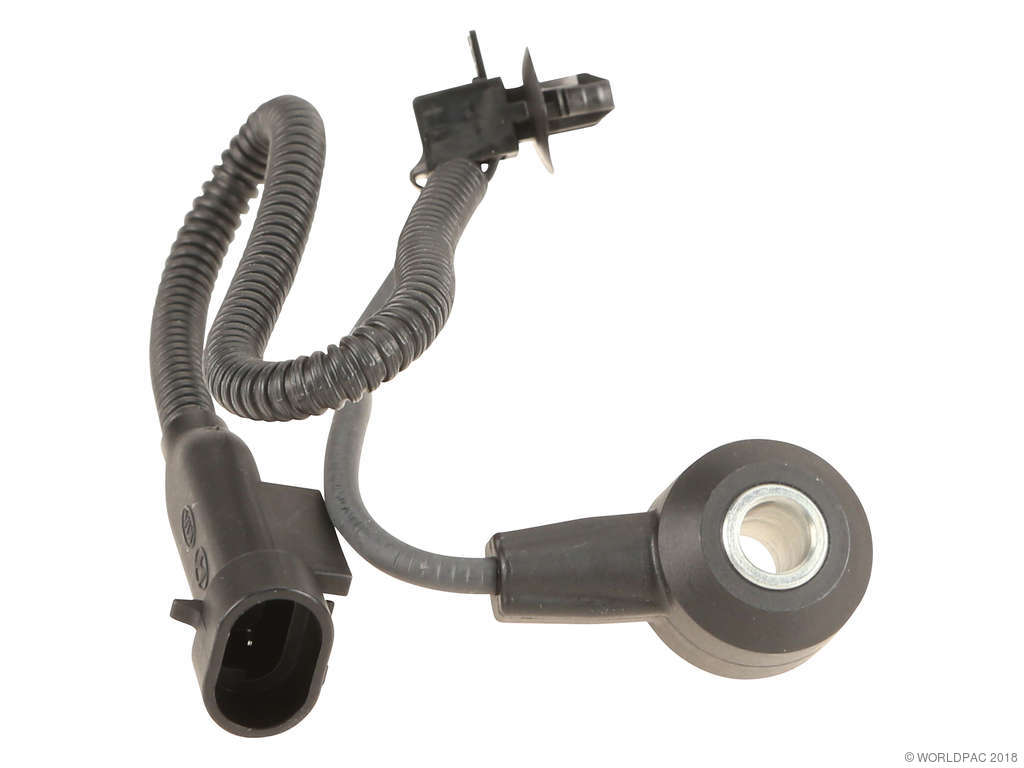
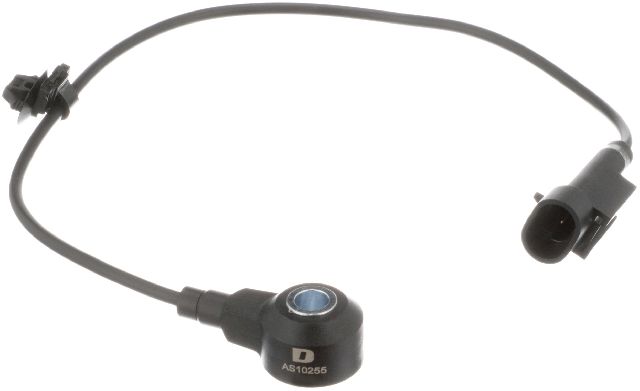
- Faulty Knock Sensor or Wiring: → Shop Ignition Knock (Detonation) Sensor While possible, this is much less common than actual bearing failure. The dealer diagnostic procedure is designed to rule this out. In some cases, a wiring harness extension kit is installed as part of the TSB procedure before condemning the engine. In rare instances, replacing just the sensor resolves the issue if the bearing test passes.
- Outdated ECU Software: If the vehicle never received the mandatory KSDS software update (e.g., Campaign 953), the code may be triggered. The first step at the dealership is often to ensure the latest software is installed. Warranty coverage for the engine replacement is often contingent on this update having been performed by a specific deadline.
Diagnosis Steps
- Confirm the presence of the P1326 code using an OBD-II scanner. Do NOT clear the code, as the dealer needs to see it active for warranty purposes.
- Note the flashing check engine light and the vehicle being in 'limp mode'. NHTSA ODI #11650108 describes an instance where the light flashed instantly while driving on the interstate, limiting the vehicle to 2000 RPM or 60 mph.
- Immediately and safely stop driving the vehicle. Arrange for it to be towed to a Hyundai dealership.
- The dealer will verify the code and check the vehicle's VIN for open campaigns (like 953, T3G) or warranty extensions (like TXXM).
- The dealer will follow Hyundai's specific TSB procedures, primarily TSB 22-01-023H-1 (T6G), which involves a software check, wiring inspection, and a bearing clearance test to confirm internal engine damage.
- If the bearing test fails, the dealer will submit a Prior Approval (PA) request to Hyundai for an engine replacement under warranty. NHTSA ODI #11564096 notes a case where the BCT test failed and the vehicle required a new engine.
- If the bearing test passes, the procedure may call for a software update or knock sensor/wiring repair.
Parts You'll Likely Need
- Engine Assembly (Short or Long Block)
(OEM #Varies by year, e.g., 21101-3L100RM (remanufactured long block example))— This is the ultimate and required fix for the connecting rod bearing failure that triggers the P1326 code.
Trusted brands: Hyundai OE
OEM price range: $5000-$9000+
Aftermarket price range: N/A - Knock Sensor
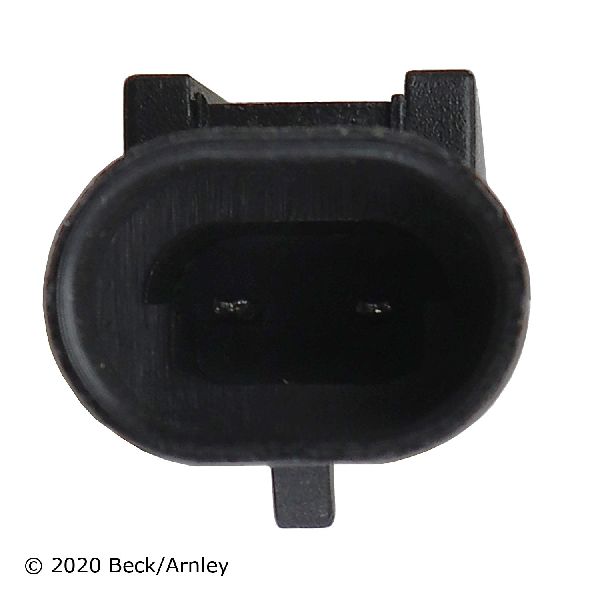
(OEM #39320-3C300 (Note: V6 has two sensors, Left and Right))— Rarely the root cause, but may be replaced if found to be faulty after the bearing test passes. It is often replaced as a matter of course during an engine swap.
Trusted brands: Hyundai OE, Bosch, Delphi
OEM price range: $80-$150
Aftermarket price range: $40-$90
Technical Service Bulletins (TSBs) & Recalls
- TSB 22-01-023H-1 / T6G: The primary document for dealers. Details the bearing inspection procedure and engine replacement process for vehicles that have code P1326 after the initial KSDS update.
- TSB 19-01-006H / T3G: Outlines the initial procedure for vehicles presenting with DTC P1326, including inspection and potential engine replacement. While focused on 2.0L/2.4L engines, it established the overall process.
- Warranty Extension TXXM (related to TSB 22-EM-006H-1): Describes the extended warranty terms for connecting rod bearing wear, which is the underlying cause for P1326.
Platform-Specific Known Issues
- Engine Warranty Extension: Due to a class-action settlement, Hyundai extended the powertrain warranty for affected vehicles to cover this specific failure. The extension can be up to 15 years/150,000 miles or even a lifetime warranty for the engine short block, but is strictly contingent on the KSDS software update (Campaign 953) having been performed, sometimes by a specific deadline.
- Knock Sensor Detection System (KSDS) Update: This was a mandatory service campaign (e.g., Campaign 953, T3G) to install the software that detects the bearing failure. Eligibility for the warranty extension depends on this update having been completed. NHTSA ODI #11549939 mentions a vehicle receiving a second software update after previously entering limp mode with code P1326.
Mechanic-Grade Diagnostic Values
- Knock Sensor Bolt Torque — expected: 15 ft-lbs. Failure: Incorrect torque can lead to improper vibration detection, either too sensitive or not sensitive enough.
- Knock Sensor Resistance — expected: Varies by manufacturer; must compare to service manual specification for the 3.3L V6.. Failure: A resistance reading that is out of the specified range (e.g., open circuit or shorted) indicates a faulty sensor.
Scan Tool Commands That Help
- Hyundai GDS (Global Diagnostic System): Bearing Clearance Test — This is the primary, TSB-mandated diagnostic function to run when P1326 is present. It's a guided procedure using a special tool (SST) to physically measure rod bearing clearance and determine if the engine has failed internally.
- Hyundai GDS (Global Diagnostic System): Reset Adaptive Values / KSDS Learn Value Reset — This function must be performed after replacing a knock sensor or the engine assembly. It clears the learned vibration patterns from the ECM, allowing the system to re-adapt to the new component's baseline noise profile.
Real Owner Repair Stories
- Reddit user in r/Hyundai (Hyundai vehicle with over 100,000 km) — P1326 code triggered, vehicle went into limp mode.
❌ Tried (didn't work) Initial diagnosis pointed towards potential engine failure.
✅ What actually fixed it The vehicle was towed to a dealer where the mandatory Bearing Clearance Test (BCT) was performed and it PASSED. The dealer then replaced the knock sensor and updated the software. The repair was covered under warranty and the car was deemed safe to drive. - Reddit user in r/Hyundai (2015 Hyundai Santa Fe 3.3L V6) — Pinging noise from engine, P1326 code appeared.
❌ Tried (didn't work) Dealer performed a carbon cleaning and replaced the knock sensor; the issue returned after 8 months., Dealer then cleared the code and performed the KSDS software update; the pinging noise and code returned again a few months later.
✅ What actually fixed it After the code returned a third time (now out of warranty), the dealership determined the engine required replacement (short block). This indicates that preliminary fixes like sensor replacement or software updates may not solve the underlying mechanical wear. - NHTSA ODI #11471721 — An owner reported that the engine was making a "clicking" sound upon starting. A diagnostic check revealed DTC P1326 (Knock Signal Range/Performance) and the engine was noted to be under an extended warranty.
OEM Part Supersession History
Unknown→39320-3C300— Likely minor internal revisions or supplier change over the long production run.
Heads up: Part number 39320-3C300 is listed for a wide range of model years (2010-2019), suggesting good backward compatibility for the specified Santa Fe range. Always verify with VIN.
Model Year Variations Within This Range
- 2013-2018: The 3.3L GDI engine (G6DH) used in this Santa Fe was an evolution of the earlier Lambda engine family. Compared to pre-2011 MPI versions, it features a different crankshaft, redesigned cylinder heads for direct injection, and Dual CVVT (on both intake and exhaust cams). While the core manufacturing defect causing P1326 is present, these internal differences are important for part compatibility if attempting non-standard repairs.
Diagnostic Flowchart
Other Known Issues on This Vehicle
Issues unrelated to this code that are worth knowing about as an owner of this generation:
- Flexible Steering Coupler Failure 🟠 Medium — Extremely common. Owners typically report a distinct clicking or clunking sound from the steering column when turning at low speeds, which progressively worsens. Onset can occur as early as 35,000 miles. (Ref: No recall for the Santa Fe, but a well-known issue. The updated part is 56315-2K000-FFF.)
- Intake Valve Carbon Buildup 🟠 Medium — A common characteristic of GDI engines, including the 3.3L Lambda II. Over time (typically 60,000-100,000 miles), carbon deposits accumulate on the intake valves, leading to rough idle, hesitation, and reduced fuel economy.
- Peeling Exterior Paint (White Colors) 🟡 Low — Widespread reports of white and pearl-white paint peeling in large sheets from the hood, roof, and fenders, often starting a few years after purchase. (Ref: Hyundai has extended the paint warranty to 10 years / unlimited miles for this specific issue on affected models.)
- Excessive Oil Consumption 🔴 High — Many owners report this engine consumes oil at a high rate (e.g., 1 quart per 1,000 miles), which can be a symptom preceding rod bearing failure or a separate issue related to piston rings. (Ref: Related to the engine class-action lawsuits and warranty extensions.)
Used vs. New Parts: Buying Guide for This Vehicle
When a used part is the smart pick: For this specific failure (P1326), purchasing a used engine is extremely high-risk and generally not recommended. The root cause is a manufacturing defect (metal debris in oil passages) that may be latent in any used engine from the same production era. A used engine could fail with the same issue shortly after installation. It only makes sense if the vehicle is out of warranty, the owner is accepting the significant risk, and the donor engine has very low mileage and a verifiable history.
Donor-vehicle mileage cap: roughly under 40000 miles for the part to have meaningful remaining life.
What to inspect on the donor part:
- VIN verification to check for any outstanding recalls or KSDS updates.
- Requesting maintenance records, specifically looking for frequent, high-quality oil changes.
- If possible, using a borescope to inspect cylinder walls for scoring.
- Checking for any signs of oil sludge or contamination under the oil cap and in the valve cover.
- Avoid engines from vehicles that were wrecked due to front-end collision, which could have caused unseen internal damage.
OEM-only on this vehicle (don't cheap out):
- Engine Assembly: Due to the high risk of latent defects in used units, a new or remanufactured OEM long block is the only reliable fix.
Aftermarket brands forum-validated for this vehicle:
- For the knock sensor itself (if it's the rare cause), Bosch and Delphi are reputable OEM-equivalent brands.
Brands owners have reported issues with on this vehicle:
- Avoid unbranded, 'white-box' knock sensors, as their sensitivity and durability may not match OEM specifications, potentially leading to false codes or failure to detect a real knock.
Real Owner Stories
Aggregated from forums and TSBs cited above. Mileages and costs reflect what owners reported in those sources.
2017 Hyundai Santa Fe 3.3L V6
Symptoms: P1326 code and limp mode activation immediately after using a car wash with an underbody spray.
What fixed it: Correlation to water intrusion in the knock sensor connector; Hyundai released TSB 24-EM-010H to address this specific wiring harness issue. NHTSA ODI #11309453 describes a similar incident where the owner noted the code appeared after an underbody spray car wash.
Source hint: NHTSA ODI #11309453 via Go-Parts
2018 Hyundai Santa Fe 3.3L V6 — 70000 miles
Symptoms: Engine light began flashing and a knocking noise was coming from the engine while driving on the highway.
What fixed it: Engine replacement covered by Hyundai's goodwill and extended warranty.
Source hint: reddit.com/r/Hyundai/comments/18i6jqm/2018_santa_fe_engine_failure/
2015 Hyundai Santa Fe 3.3L V6 — 164000 miles
Symptoms: Engine failure leading to initial warranty denial.
What fixed it: Engine replacement approved after contacting Hyundai corporate directly following two initial denials.
Source hint: reddit.com/r/Hyundai/comments/159vj6s/hyundai_engine_failure_denied_twice_persistence/
2015 Hyundai Santa Fe 3.3L V6 — ~100000 miles
Symptoms: Sudden ticking, oil loss, and engine seizure.
What fixed it: Engine replacement (short block or long block) as part of the class-action settlement for connecting rod bearing wear. NHTSA ODI #11549939 reports a similar failure where the engine went into limp mode with a P1326 code prior to total failure.
Source hint: carcomplaints.com/Hyundai/Santa_Fe/2015/engine/engine_failure.shtml
Related OBD-II Codes
Frequently Asked Questions
Does TSB 22-01-023H-1 apply to my 2013-2018 Santa Fe 3.3L V6?
What is Campaign 953 and why is it required for my engine warranty?
Can I clear the P1326 code myself before taking it to the dealer?
Is the 3.3L V6 engine replacement covered if I am the second or third owner?
My Santa Fe went into 'limp mode' after a car wash; is this related to P1326?
What happens if my engine passes the bearing clearance test mentioned in TSB 22-01-023H-1?
Helpful Videos
We Have This Part in Stock


The information in this article is provided for general reference and educational purposes only. Vehicle specifications, procedures, and part compatibility can vary by production date, trim level, and region. Always consult your vehicle's factory service manual and verify part numbers before purchasing or performing repairs. Safety-critical components such as airbags, seat belts, and braking systems should be installed by a qualified professional.
- Hyundai Santa Fe:
- 🧭 Diagnostic Flowchart
- 🎬 Helpful Videos
- 🛍️ Shop This Part
- What's Unique About the 2013-2018 Hyundai Santa Fe
- Symptoms You May Notice
- Most Likely Causes
- Rare But Worth Checking
- Diagnosis Steps
- Parts You'll Likely Need
- Technical Service Bulletins (TSBs) & Recalls
- Platform-Specific Known Issues
- Mechanic-Grade Diagnostic Values
- Scan Tool Commands That Help
- Real Owner Repair Stories
- OEM Part Supersession History
- Model Year Variations Within This Range
- Other Known Issues on This Vehicle
- Used vs. New Parts: Buying Guide for This Vehicle
- Real Owner Stories
- 2017 Hyundai Santa Fe 3.3L V6
- 2018 Hyundai Santa Fe 3.3L V6 — 70000 miles
- 2015 Hyundai Santa Fe 3.3L V6 — 164000 miles
- 2015 Hyundai Santa Fe 3.3L V6 — ~100000 miles
- Related OBD-II Codes
- Frequently Asked Questions
- 🎟️ Get 5% Off