

OBD-II Code P1334: Expert Guide to a Manufacturer-Specific Fault
What P1334 means, why it triggers, and how to fix it on your Saab, Ford, GM, or VW
- Identify your vehicle's manufacturer immediately, as P1334 definitions range from a Saab ignition failure to a Ford EGR blockage.
- On Saab 9-3 and 9-5 models, P1334 paired with P1312 guarantees a failed Direct Ignition Cassette (DIC) requiring a $350 genuine SEM replacement.
- For GM trucks (Silverado/Sierra), P1334 requires a 10-minute Crankshaft Position Variation Relearn using a bidirectional scan tool, not a parts replacement.
- Ford 6.0L Power Stroke owners must clean or replace the EGR valve, and verify the engine oil cooler isn't clogged by checking the EOT/ECT temperature delta.
What Does P1334 Mean?
P1334 is a manufacturer-specific code, meaning its definition changes entirely based on your car's brand. For Saab, Peugeot, and Citroen, it signals an ignition system failure, specifically a misfire on a pair of cylinders. For Ford, it points to a stuck Exhaust Gas Recirculation (EGR) valve. For GM, it indicates the Crankshaft Position Sensor relearn process is incomplete. For Volkswagen and Audi, it means a short circuit in the camshaft position sensor wiring.
Technical definition: The official SAE/OBD-II definition for P1334 varies by manufacturer. Common definitions include: 'Combustion Detection Cyl. 3+4, Open Circuit / Short to B+' (Saab), 'EGR Throttle Position Sensor Minimum/Maximum Stop Performance' (Ford), 'Crankshaft Position (CKP) System Variation Not Learned' (General Motors), 'Camshaft Position Sensor Bank 1 (G40) Short to Ground' (Volkswagen/Audi), and 'Combustion Misfire on Cylinder 4' (Peugeot/Citroen).
Can I Drive With P1334?
Yes, But With Caution. Driving is possible but not recommended for long. On misfiring vehicles (Saab, Peugeot), a flashing check engine light signals a severe misfire that destroys your catalytic converter in under 100 miles, adding $1,500 to the repair cost. On VW/Audi, the engine stalls unexpectedly. On GM vehicles, it is safe to drive, but performance suffers until a relearn procedure is completed.
Common Causes
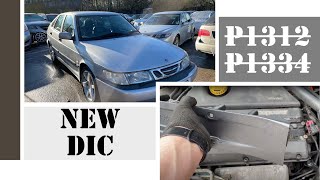
- Faulty Direct Ignition Cassette (DIC) (Very Common) — On Saab vehicles, this is the definitive cause. The DIC is a single unit housing all ignition coils. 🎬 Watch: Step-by-step guide to replacing the Saab DIC. When it fails internally, it triggers P1334 and P1312 simultaneously.
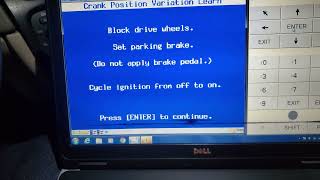
- CKP Variation Relearn Not Performed (GM) (Very Common) — On GM vehicles, replacing a crankshaft position sensor (CKP), PCM, or engine requires a mandatory 'relearn' procedure using a bidirectional scan tool. 🎬 Watch: How to perform the GM crankshaft relearn procedure. Failing to execute this procedure stores a permanent P1334 or P1336 code.
- Clogged or Stuck EGR Valve (Ford 6.0L) (Very Common) — On Ford 6.0L Power Stroke diesels, heavy carbon and soot buildup forces the EGR valve to stick open or closed, preventing it from reaching its commanded position.
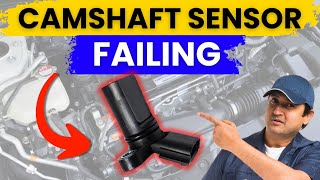
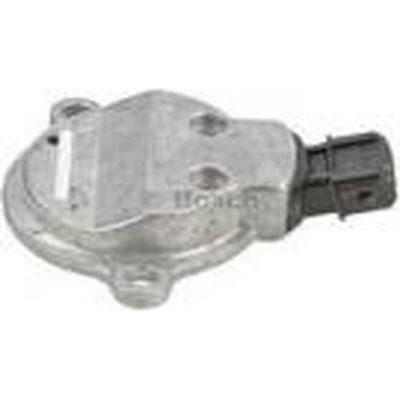
- Faulty Camshaft Position Sensor (VW/Audi) (Common) — On Volkswagen and Audi vehicles, the sensor reading the camshaft's position fails internally, or its wiring shorts out against the engine block.
- Worn or Incorrect Spark Plugs (Common) — Worn, fouled, or incorrect spark plugs cause misfires on Saab and Peugeot engines. Saab's Trionic system requires specific copper NGK plugs; using platinum or iridium alternatives guarantees misfire codes.
- Faulty Ignition Coil (Peugeot/Citroen) (Common) — On Peugeot and Citroen models, an individual ignition coil fails, causing a dead misfire on cylinder 4.
- Clogged Engine Oil Cooler (Ford 6.0L) (Less Common) — On a 6.0L Power Stroke, a restricted engine oil cooler overheats the EGR cooler. This chain reaction boils the coolant and destroys the EGR valve, triggering P1334.
- Wiring Harness Short to Ground (VW/Audi) (Less Common) — Damaged wires or corroded connectors for the Camshaft Sensor interrupt the 5V reference signal. On VWs, the harness rubbing against the engine block is a documented failure point.
- Major Vacuum Leak (Saab) (Less Common) — Cracked vacuum hoses cause a severe lean running condition and random misfires, which the Saab Trionic system interprets as a DIC fault.
- Aftermarket Engine Tuner (Ford) (Rare) — On Ford 6.0L engines, aftermarket performance tuners or improper EGR delete programming trigger P1334 as a 'tattletale' code indicating the emissions system is modified.
Symptoms
- Check Engine Light is On or Flashing — A solid check engine light is guaranteed. A flashing light indicates a severe, active misfire actively destroying your catalytic converter.
- Rough Engine Idle — The engine shakes, shudders, and vibrates violently when the vehicle is stopped at a red light.
- Poor Engine Performance — The vehicle hesitates, stumbles during acceleration, and lacks passing power on the highway.
- Reduced Fuel Economy — Fuel consumption increases by 10-20% because the engine dumps unburnt fuel into the exhaust.
- Engine Stalling or No-Start Condition — With a failed VW camshaft sensor or a completely dead Saab DIC, the engine stalls while driving or cranks endlessly without starting.
Diagnostic Flowchart
Tap your situation to follow the diagnostic path that matches what you're seeing on this code.
Common Fixes & Costs
- Replace Saab Direct Ignition Cassette (DIC) — Parts: $250-$400, Labor: $50-$100, ~0.5 hr book time (DIY)
- Perform GM Crankshaft Position Variation Relearn — Parts: $0, Labor: $100-$150, ~0.5 hr book time (Pro Only)
- Replace Ford 6.0L EGR Valve — Parts: $180-$350, Labor: $100-$150, ~1.0 hr book time (Intermediate)
- Replace VW/Audi Camshaft Position Sensor — Parts: $80-$150, Labor: $100-$150, ~1.0 hr book time (Intermediate)
- Replace Spark Plugs (Saab/Peugeot) — Parts: $30-$60, Labor: $60-$120, ~1.0 hr book time (DIY)
Used vs. New Parts: Buying Guide
When a used part is worth it: Buying used electronic sensors or ignition cassettes is a waste of money due to their high failure rates. Used parts only make sense for mechanical components like a Ford EGR valve, provided it is thoroughly cleaned and tested.
Donor-vehicle mileage cap: roughly under 60000 miles for the part to have meaningful remaining life.
Donor quality checklist:
- Verify the part number is an exact match.
- Ensure the donor vehicle was not scrapped for an engine fire or severe front-end collision.
- Demand a minimum 30-day warranty.
Decision logic:
- If The part is a Saab Direct Ignition Cassette (DIC) → Always buy a brand-new, genuine SEM unit. Used DICs are ticking time bombs.
- If The part is a VW Camshaft Sensor → Buy a new Bosch sensor. The labor required to replace a failed used sensor negates any upfront savings.
- If The part is a Ford EGR valve and budget is tight → A cleaned, low-mileage used OEM valve is acceptable, though a new aftermarket unit offers better peace of mind.
Warranty tradeoff: Used parts offer a 30-day part-only warranty. New OEM parts offer 1-year warranties. If a used sensor fails, you pay the labor cost twice.
Worst-case if a used part fails: 500-1000 in repeat labor and diagnostic fees if a used electronic part fails immediately.
What Happens If You Wait — Timeline
- 0-2 weeks: Check Engine Light illuminates. Saab/Ford symptoms manifest intermittently during cold starts or heavy acceleration. (MPG impact: 0-5%% · Added cost: $0)
- 2 weeks - 3 months: Symptoms become permanent: rough idle, hesitation, and a flashing CEL indicating raw fuel is entering the exhaust. (MPG impact: 5-15%% · Added cost: $50-150 in wasted fuel)
- 3-6 months: Unburnt fuel melts the catalytic converter substrate. Ford 6.0L EGR valves seize completely, straining the oil cooler. (MPG impact: 15-25%% · Added cost: $1,000-$2,500 for a new catalytic converter)
- 6+ months: A melted catalytic converter chokes the engine. A failed Ford EGR/oil cooler system blows the head gaskets. (MPG impact: 50% (undrivable)% · Added cost: $3,000-$7,000+)
Cost of Not Fixing It
- 0-1 month: Reduced fuel economy (10-20% drop), poor acceleration, and rough idle. (Added cost: 50-150 in wasted fuel)
- 1-6 months: Unburnt fuel melts the catalytic converter on misfiring vehicles (Saab, Peugeot), causing severe exhaust restriction. (Added cost: 1000-2500)
- 6+ months: A clogged Ford 6.0L EGR system destroys the oil cooler, leading to boiling coolant and catastrophic head gasket failure. (Added cost: 3000-7000)
Diagnosis Steps
- Identify Your Vehicle's Manufacturer
Because P1334 is manufacturer-specific, you must identify your car's make to determine the affected system (Ignition, EGR, or Camshaft Sensor).
Tools: OBD-II Scanner (Beginner) - Inspect Saab Ignition System
Remove the Direct Ignition Cassette (DIC) and spark plugs. Inspect the underside of the DIC for cracks or leaking dielectric fluid. Check the spark plugs for wear, carbon buildup, or oil fouling. Ensure the plugs are the correct NGK copper type and gapped to 1.0mm.
Tools: Torx T30 socket, Spark plug socket, Ratchet, Gapper tool (Intermediate) - Perform GM Crankshaft Variation Relearn
If you drive a GM vehicle, connect a bidirectional scan tool. Warm the engine to 158°F (70°C), apply the parking brake, and follow the scan tool prompts to accelerate the engine to the fuel cut-off RPM (around 4000 RPM) to complete the relearn.
Tools: Bidirectional Scan Tool (Advanced) - Inspect and Clean Ford 6.0L EGR Valve
Remove the EGR valve from the intake manifold. Inspect it for heavy, wet carbon buildup. Clean the valve thoroughly with carburetor cleaner and a wire brush. Do not use brake cleaner, as it destroys the internal electronics.
Tools: 8mm socket, Ratchet, Carburetor cleaner, Wire brush, Gasket scraper (Intermediate) - Test VW/Audi Camshaft Position Sensor
Disconnect the sensor and test the signal wire in the harness for continuity to the chassis ground using a multimeter. If continuity exists, repair the shorted harness. If not, back-probe the signal wire with the key on; it must produce a 0V to 5V square wave when cranking.
Tools: Multimeter, Back-probe kit (Advanced) - Check Ford 6.0L Oil vs. Coolant Temp
Using a scan tool, monitor Engine Oil Temperature (EOT) and Engine Coolant Temperature (ECT). Drive the truck at 65 mph on a flat highway for 15 minutes. If EOT exceeds ECT by more than 15°F, the oil cooler is clogged and must be replaced.
Tools: Advanced Scan Tool (Advanced) - Swap Peugeot/Citroen Ignition Coils
Swap the ignition coil from cylinder 4 to cylinder 2. Clear the codes and test drive. If the misfire code moves to cylinder 2 (P1338), the ignition coil is permanently failed and requires replacement.
Tools: Socket set (Beginner)
When This Code Triggers (Freeze-Frame Conditions)
- Engine Coolant Temp: Varies (Cold start or fully warm) (Saab DIC failures frequently trigger the code exclusively on cold starts (below 50°C) before the electronics warm up and expand.)
- RPM: Idle (600-900) or Cruise (1500-3000) (Misfire faults are most violent and detectable at idle or under steady highway cruising.)
- Engine Load: 15-60% (The code triggers under light to moderate load when the Ford EGR system is commanded active or when Saab ignition weaknesses are exposed.)
- Vehicle Speed: 45-65 mph (Steady-state highway driving provides the continuous data the ECU needs to flag EGR or misfire performance faults.)
Related Codes
- P1312 — On Saab vehicles, P1312 (Cyl 1+2) almost always appears with P1334 (Cyl 3+4). This combination guarantees a failed Direct Ignition Cassette.
- P0404 — On a Ford 6.0L, P1334 flags the EGR throttle plate position, while P0404 flags circuit performance. A carbon-clogged EGR valve causes both.
- P0341 — On VW/Audi, P1334 means 'Short to Ground', pointing to wiring. P0341 is a broader performance code pointing to a failing sensor or timing issue.
- P1336 — On GM vehicles, P1336 and P1334 are identical codes meaning 'Crankshaft Position System Variation Not Learned'. Both require a scan tool relearn.
Climate & Environmental Factors
- Cold Weather: Saab Trionic systems require coolant temperatures above 19°F (-7°C) to run the P1334 diagnostic. Early-stage DIC failures frequently trigger the CEL exclusively on freezing mornings.
- High Altitude: The Saab diagnostic for P1334 aborts if atmospheric pressure drops below 72 kPa (approx. 8,500 feet elevation).
How to Talk to a Mechanic About This Code
Say this: "{'saab': 'I have codes P1334 and P1312. Please quote replacing the Direct Ignition Cassette with a genuine SEM unit and installing new NGK spark plugs. I do not authorize aftermarket ignition parts.', 'gm': 'I have a P1334 code requiring a Crankshaft Position Variation Relearn. Can you confirm your scan tool performs this procedure, and what is the flat fee for the relearn only?', 'ford_6_0L': "I have a P1334 on my 6.0L Power Stroke. Please inspect the EGR valve for carbon buildup. If it's clean, check the EOT vs. ECT temperature delta under load to rule out a clogged oil cooler.", 'vw_audi': "I have a P1334 'short to ground' code for the camshaft position sensor. Please inspect the wiring harness for chafing before replacing the sensor."}"
This language proves you researched the manufacturer-specific cause of P1334. It directs the mechanic to the exact failure point and prevents them from selling you unnecessary sensors.
Avoid saying:
- 'My check engine light is on, can you just fix it?'
- 'I think it's the ignition coil.'
- 'Just do whatever you think is best.'
Questions to ask before authorizing the repair:
- For Saab: Are you installing a genuine SEM or Orio-branded ignition cassette?
- For GM: What is the all-in cost for just the CKP relearn procedure?
- For Ford 6.0L: If the EGR valve needs replacement, are you using an OEM Motorcraft part?
Where to Take It: Dealer vs Independent vs Chain
- Dealer:
Necessary for software reflashes, but too expensive for standard parts replacement.
Best for: GM vehicles needing a CKP relearn if independent shops lack the tool., Ford trucks requiring a PCM reflash (TSB 05-18-5).
Downsides: Highest labor rates., Refusal to perform a 'procedure-only' GM relearn without charging a $150 diagnostic fee. (Typical cost: +50% vs. baseline) - Independent Shop:
The best option, provided you use a specialist who understands the manufacturer-specific quirks of P1334.
Best for: Saab owners using a European specialist., Ford 6.0L EGR valve replacement at a diesel specialist., GM relearn procedures at a well-equipped shop.
Downsides: General mechanics may install cheap aftermarket Saab DICs out of ignorance. (Typical cost: +0% vs. baseline) - Chain Shop:
AVOID. Chain shops lack the specialized knowledge and bidirectional tools required to fix P1334 correctly.
Best for: Reading the initial code for free.
Downsides: High risk of misdiagnosing a GM relearn issue as a failed sensor., Inability to source genuine Saab parts. (Typical cost: -10% vs. baseline)
When to Walk Away From the Repair
If the estimated repair cost exceeds 40-50% of your car's private-party value, evaluate alternatives.
- Car worth $3500, fix is $450: Fix it. A Saab DIC replacement is well below the threshold.
- Car worth $10000, fix is $150: Fix it. A GM CKP relearn procedure is a minor maintenance cost.
- Car worth $8000, fix is $4500: Walk away. If a Ford 6.0L needs an oil cooler, EGR cooler, and head gaskets, the cost exceeds the truck's viable value.
What Scan Tool You Need for This Code
Minimum: A basic OBD-II code reader confirms the P1334 code and related codes like P1312.
Basic readers cannot perform the mandatory GM Crankshaft Position Variation Relearn, nor can they view live EOT/ECT data on a Ford 6.0L.
Budget: BlueDriver Pro (~$90) — Reads manufacturer-specific codes and graphs live data to compare Ford EOT vs. ECT. It CANNOT perform the GM relearn.
Mid-range: Foxwell NT510 Elite for GM (~$180) — Offers bidirectional control to successfully perform the GM Crankshaft Position Variation Relearn procedure at home.
Professional: Autel MaxiCOM MK808 (~$450) — Performs the GM CKP relearn, graphs live data with precision, and accesses deep diagnostic functions on all makes.
Rent vs buy: You CANNOT rent a bidirectional scan tool from AutoZone. If you have a GM vehicle, you must buy a $150+ scanner or pay a shop $100 to perform the relearn.
How to Clear the Code After You Fix It
- Use an OBD-II scan tool to clear the diagnostic trouble code.
- Ensure the fuel tank is between 25% and 75% full.
- Perform a complete OBD-II drive cycle to allow readiness monitors to run.
Drive cycle (~30 minutes): Start the engine cold. Idle for 3 minutes. Drive stop-and-go city speeds for 10 minutes. Maintain a steady 55-60 mph on the highway for 10 minutes. Coast down without braking. Turn the vehicle off.
Readiness monitors affected: Misfire Monitor, Catalyst Monitor, EGR System Monitor
Before emissions retest: drive at least 50 miles to fully set monitors.
Watch out for:
- Disconnecting the battery clears codes but resets all readiness monitors to 'Not Ready', guaranteeing an emissions test failure.
- The code returns immediately if a GM CKP relearn is not successfully completed.
- Testing with a full or empty gas tank prevents the EVAP monitor from running.
Will This Fail Emissions / State Inspection?
Yes — this code typically fails an OBD-II emissions inspection.
- California: An illuminated Check Engine Light is an automatic failure. You must complete a full drive cycle after repairs to set readiness monitors.
- New York: Clearing the P1334 code in the parking lot resets monitors to 'Not Ready', resulting in an automatic rejection.
- Texas: In emissions-testing counties, an active P1334 code blocks vehicle registration until repaired and re-inspected.
Most Commonly Affected Vehicles
- Saab 9-3 (1999-2009) — Extremely prone to Direct Ignition Cassette (DIC) failure on T7 engines. Always use genuine SEM part 55559955.
- Saab 9-5 (1999-2009) — Shares the same DIC failure rate as the 9-3. Cold starts are a common trigger for early failure symptoms.
- Ford F-250/F-350 Super Duty (2003-2007) — The 6.0L Power Stroke diesel suffers from chronic EGR valve sticking. TSB 05-18-5 addresses PCM reflash fixes.
- Chevrolet Silverado 1500 (1999-2006) — P1334 indicates the Crankshaft Position System Variation relearn is missing after a sensor or PCM swap.
- BMW 335i (2007-2010) — N54 engines set this fault when MOSFET transistors inside the DME (ECU) fail, requiring circuit board soldering.
- Hyundai Elantra (2015-2022) — GDI engines trigger this code when a clogged fuel injector causes a dead misfire.
- Peugeot 208 (2012-2020) — 1.2L PureTech engines are highly susceptible to ignition coil failures triggering P1334.
- Chevrolet Tahoe (2000-2006) — Requires the same CKP relearn procedure as the Silverado when P1334 is present.
Manufacturer-Specific Notes
- Saab: P1334 guarantees a bad Direct Ignition Cassette (DIC). Cheap aftermarket DICs fail instantly. You must use a genuine SEM-branded DIC and NGK copper spark plugs.
- Ford: On 6.0L diesels, aftermarket engine tuners or improper EGR deletes trigger P1334 as a tattletale code. TSB 05-18-5 also resolves phantom codes via a PCM reflash.
- General Motors: P1334 does not mean a part failed. It is an administrative code demanding a 5-minute 'Crankshaft Position Variation Relearn' using a professional scan tool.
- Volkswagen/Audi: The 'Short to Ground' definition demands you inspect the wiring harness for chafing against the engine block before replacing the camshaft sensor.
- BMW: On N54 engines, the fault lies in tiny MOSFET transistors soldered to the ECU circuit board, not the ignition coils themselves.
Real Owner Stories
2003 Saab 9-3 SE Turbo with P1312 & P1334
The Check Engine Light illuminated with codes P1312 and P1334, though the car drove normally.
What they tried:
- Cleared the codes with a basic scanner.
Outcome: The codes returned immediately. Saab specialists confirmed this specific code combination guarantees a failed Direct Ignition Cassette (DIC). The owner replaced the DIC with a genuine SEM part and installed new NGK spark plugs, permanently resolving the issue.
Lesson: On a Saab, P1312 and P1334 together mean the DIC is dead. Do not waste time diagnosing other parts. Buy a genuine SEM cassette and NGK plugs.
2005 Ford Excursion 6.0L with an EGR delete and P1334
After installing a full EGR delete kit and an SCT tuner, the truck threw a persistent P1334 code on every restart.
What they tried:
- Ensured the EGR was turned 'off' in the aftermarket tune settings.
Outcome: P1334 acts as a 'tattletale' code on 6.0L Fords when the ECU expects EGR throttle plate movement but detects none. The owner contacted SCT support for a custom tune file that properly suppressed the specific sensor check, clearing the code.
Lesson: If you deleted your Ford 6.0L EGR system, P1334 is a software issue, not a hardware failure. You need a revised tune file from your programmer.
2007 Saab 9-5 2.0L with intermittent P1334 on cold starts
The car triggered P1334 exclusively on cold mornings. Clearing the code after the engine warmed up kept the light off for the rest of the day.
What they tried:
- Replaced spark plugs and vacuum tubing.
Outcome: The cold-start symptom indicated an early-stage electrical failure inside the 'refurbished' DIC the owner previously installed. Replacing it with a brand-new genuine SEM DIC fixed the cold start fault.
Lesson: Intermittent P1334 codes on cold starts signal an impending Saab DIC failure. Refurbished or aftermarket cassettes are unreliable.
2002 Chevy Silverado 1500 5.3L with P1334 after repair
After replacing the crankshaft position sensor, the truck ran fine but held a permanent P1334 code.
What they tried:
- Attempted the CKP relearn procedure using a cheap handheld scanner.
Outcome: The cheap scanner failed to execute the command. The owner took the truck to a local shop equipped with a GM Tech 2 scanner, which completed the 5-minute relearn procedure and permanently cleared the code.
Lesson: On GM vehicles, P1334 requires a professional-grade bidirectional scan tool. Basic code readers cannot perform the mandatory relearn procedure.
How to Prevent This Code From Triggering
- Use only genuine SEM/Orio DIC and correct NGK plugs on Saabs (At every replacement) — The Saab Trionic ignition system requires exact electrical resistance. Aftermarket cassettes and platinum spark plugs guarantee misfires and P1334 codes.
- Periodically clean the Ford 6.0L EGR valve (Every 20,000 miles) — Diesel soot builds up rapidly. Regular cleaning prevents the valve from seizing, avoiding performance issues and P1334 codes.
- Install a coolant filtration kit on a Ford 6.0L (Once) — Casting sand in the coolant clogs the oil cooler, which overheats the EGR cooler. A filter stops this catastrophic chain reaction.
- Avoid excessive idling on Ford 6.0L diesels (Daily habit) — Prolonged idling lowers exhaust temperatures, dramatically increasing wet soot buildup that jams the EGR valve.
Frequently Asked Questions
Can I fix P1334 myself?
Yes, replacing a Saab DIC or cleaning a Ford EGR valve are DIY-friendly jobs requiring basic hand tools. Diagnosing a VW wiring short is more advanced. Performing a GM CKP relearn requires a $150+ bidirectional scan tool, making it cheaper to pay a shop $100 for the 10-minute procedure.
My car is a Saab and I have codes P1312 and P1334. What should I do?
This combination guarantees your Direct Ignition Cassette (DIC) has failed. Replace the DIC and the spark plugs using only a genuine SEM cassette and NGK plugs. Cheap aftermarket DICs fail quickly and waste your money.
What happens if I don't perform the CKP relearn on my GM vehicle?
The engine computer lacks an accurate reference for the crankshaft's position, causing suboptimal ignition and fuel timing. This triggers a persistent Check Engine Light, poor performance, and an automatic emissions test failure.
I replaced my Ford 6.0L EGR valve and still have a P1334. What now?
First, verify your aftermarket tuner isn't triggering a tattletale code; contact the tuner manufacturer for an updated file. Next, check for a clogged oil cooler by ensuring the EOT and ECT temperatures stay within 15°F of each other under load. Finally, a dealer must perform a PCM reflash per TSB 05-18-5.
Will clearing the code make it go away?
No. Clearing the code turns the check engine light off temporarily, but it returns as soon as the computer runs its diagnostic tests. You must repair the root cause to keep the light off permanently.
My Saab only gets the P1334 code on a cold start. Is it still the DIC?
Yes, this is a classic symptom of an early-stage DIC failure. The unit begins failing electrically when cold but functions normally once warm. Replace the DIC before it fails completely and leaves you stranded.
Can a bad battery cause a P1334 code?
Low system voltage during cranking causes spurious codes in sensitive electronic modules. On a Saab, the Trionic system requires main relay voltage to exceed 10V for proper diagnostics. Always ensure your battery and alternator are healthy before replacing expensive sensors.
What are the most common misdiagnoses for P1334?
On a Saab, replacing sensors instead of the DIC is a costly mistake. On a Ford 6.0L, replacing the EGR valve when an aftermarket tuner is the real culprit wastes money. On a GM vehicle, replacing any physical part is unnecessary, as the code strictly requires a scan tool relearn procedure.
Key Takeaways
- Identify your vehicle's manufacturer immediately, as P1334 definitions range from a Saab ignition failure to a Ford EGR blockage.
- On Saab 9-3 and 9-5 models, P1334 paired with P1312 guarantees a failed Direct Ignition Cassette (DIC) requiring a $350 genuine SEM replacement.
- For GM trucks (Silverado/Sierra), P1334 requires a 10-minute Crankshaft Position Variation Relearn using a bidirectional scan tool, not a parts replacement.
- Ford 6.0L Power Stroke owners must clean or replace the EGR valve, and verify the engine oil cooler isn't clogged by checking the EOT/ECT temperature delta.
Helpful Videos
Shop the Parts Behind P1334
Below are the parts most often responsible for code P1334, ranked by how frequently each one is the actual culprit (per the diagnosis above). Tap any to see what we have for your vehicle.





The information in this article is provided for general reference and educational purposes only. Vehicle specifications, procedures, and part compatibility can vary by production date, trim level, and region. Always consult your vehicle's factory service manual and verify part numbers before purchasing or performing repairs. Safety-critical components such as airbags, seat belts, and braking systems should be installed by a qualified professional.
- 🧭 Diagnostic Flowchart
- 🎬 Helpful Videos
- 🛍️ Shop This Part
- What Does P1334 Mean?
- Can I Drive With P1334?
- Common Causes
- Symptoms
- Common Fixes & Costs
- Used vs. New Parts: Buying Guide
- What Happens If You Wait — Timeline
- Cost of Not Fixing It
- Diagnosis Steps
- When This Code Triggers (Freeze-Frame Conditions)
- Related Codes
- Climate & Environmental Factors
- How to Talk to a Mechanic About This Code
- Where to Take It: Dealer vs Independent vs Chain
- When to Walk Away From the Repair
- What Scan Tool You Need for This Code
- How to Clear the Code After You Fix It
- Will This Fail Emissions / State Inspection?
- Most Commonly Affected Vehicles
- Manufacturer-Specific Notes
- Real Owner Stories
- 2003 Saab 9-3 SE Turbo with P1312 & P1334
- 2005 Ford Excursion 6.0L with an EGR delete and P1334
- 2007 Saab 9-5 2.0L with intermittent P1334 on cold starts
- 2002 Chevy Silverado 1500 5.3L with P1334 after repair
- How to Prevent This Code From Triggering
- Frequently Asked Questions
- Can I fix P1334 myself?
- My car is a Saab and I have codes P1312 and P1334. What should I do?
- What happens if I don't perform the CKP relearn on my GM vehicle?
- I replaced my Ford 6.0L EGR valve and still have a P1334. What now?
- Will clearing the code make it go away?
- My Saab only gets the P1334 code on a cold start. Is it still the DIC?
- Can a bad battery cause a P1334 code?
- What are the most common misdiagnoses for P1334?
- Key Takeaways
- 🎟️ Get 5% Off