

P1338 on 2022-2026 Jeep Compass: Cylinder 2 Misfire Causes and Fixes
P1338 on a Jeep Compass means cylinder 2 is misfiring. On 2022 models with the 2.4L engine, this is often caused by a leaking valve cover gasket that lets oil foul the spark plug and ignition coil. On 2023+ models with the 2.0L Turbo, it's typically a faulty ignition coil or worn spark plug. A coil/plug fix is ~$50-150 in parts; the gasket job is ~$250-400.
- P1338 is a Jeep-specific code for a misfire in cylinder 2.
- If you have a 2022 Compass (2.4L engine), the first thing to check is for oil in the spark plug well, which points to a failed valve cover gasket.
- If you have a 2023+ Compass (2.0L engine), the most likely cause is a bad ignition coil or spark plug.
- A simple 'swap test' by moving the cylinder 2 ignition coil to another cylinder is the easiest way to confirm a bad coil.
- Do not ignore a flashing check engine light, as it signals a severe misfire that can quickly damage your catalytic converter.
What's Unique About the 2022-2026 Jeep COMPASS
The 2022-2026 Compass spans two distinct engines, which have different common failure points for this code. The 2022 model year retained the 2.4L Tigershark engine, which is widely known for its valve cover gaskets failing and leaking oil directly into the spark plug tubes, causing misfires. For the 2023 model year and newer, the Compass was updated with a 2.0L Turbo GME-T4 engine, which does not have the same widespread oil leak issue; on these models, a P1338 code points to more traditional ignition component failures like the coil or spark plug.
Diagnostic Flowchart
Tap your situation to follow the diagnostic path that matches what you're seeing on this vehicle.
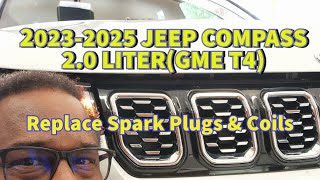
Generation note: This year range covers the second generation (MP) Jeep Compass, but there is a significant powertrain change. The 2022 model year primarily features the 2.4L Tigershark engine. From 2023 onward, the standard engine is the 2.0L Turbo GME T4. 🎬 See this walkthrough for 2.0L Turbo spark plug and coil replacement. Diagnostic steps and common parts differ significantly between these two engines.
Symptoms You May Notice
- Flashing or solid Check Engine Light
- Rough or shaky engine idle
- Noticeable loss of power and sluggish acceleration
- Hesitation or stumbling when accelerating
- Reduced fuel economy
- Engine stalling in severe cases
- Replacing only the spark plug on a 2.4L engine without checking for an oil leak. If the valve cover gasket is leaking, the new plug will quickly become fouled and the misfire will return.
- Replacing an oxygen sensor. A misfire dumps unburned fuel and air into the exhaust, which can cause an O2 sensor to give an abnormal reading, but the sensor is just reporting the problem, it is not the cause of the misfire.
Most Likely Causes
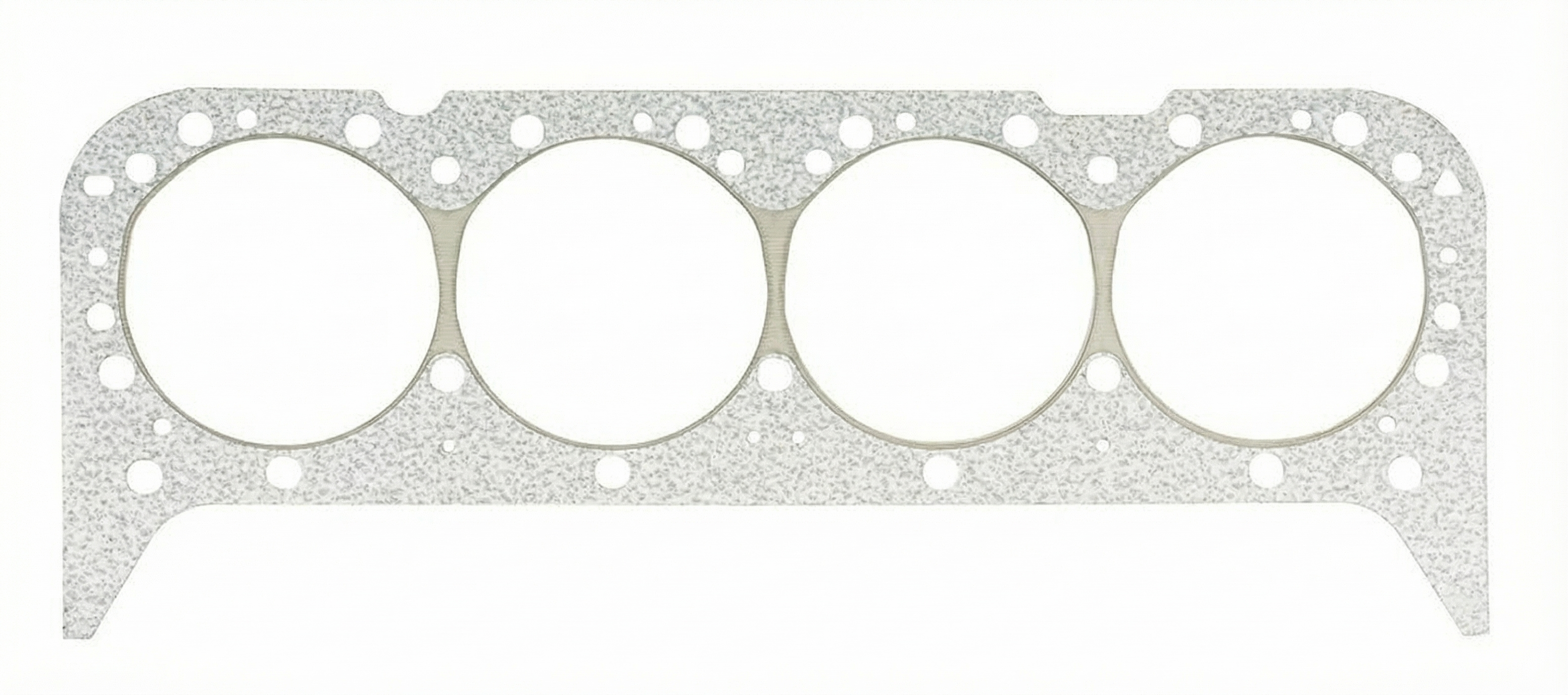
- Leaking Valve Cover Gasket (2.4L Engine Only) 🔴 High Probability → Shop Engine Valve Cover This is a widely documented, extremely common failure on the 2.4L Tigershark engine. The gasket's integrated spark plug tube seals become hard and brittle, allowing engine oil to fill the spark plug wells, which soaks the ignition coil and spark plug, causing a misfire. A faulty PCV valve can also cause excessive crankcase pressure, forcing oil past the seals.
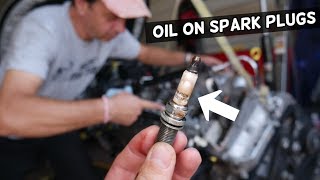
How to confirm: Remove the ignition coil from cylinder 2 (second from the left). If the bottom of the coil boot is wet with engine oil, or you can see oil pooled in the spark plug tube, the valve cover gasket has failed. This is the most definitive sign. 🎬 Watch: How to identify oil leaking into spark plug tubes.
Typical fix: Replace the valve cover gasket with a full kit that includes new spark plug tube seals and bolt grommets. It is critical to also replace the oil-fouled spark plug and ignition coil for cylinder 2, as oil saturation can permanently damage them. Applying a small amount of RTV sealant at the corners where the timing cover meets the head is crucial for a good seal.
Est. part cost: $80-$150 - Faulty Ignition Coil 🔴 High Probability → Shop Ignition Coil Coil-on-plug systems are common failure points due to constant heat cycles. This is the most likely cause on the 2.0L Turbo engine and a very common cause on the 2.4L (often damaged by oil leaks). A Reddit user with a 2.0L Turbo in a Jeep Wrangler reported morning misfires that were resolved by swapping coils, indicating it's a known issue.
How to confirm: Swap the ignition coil from cylinder 2 with the coil from another cylinder (e.g., cylinder 3). Clear the codes and drive the vehicle. If the code changes to P1339 (or P0303), the ignition coil is confirmed to be faulty.
Typical fix: Replace the failed ignition coil. It's best practice to replace the corresponding spark plug at the same time and apply a small amount of dielectric grease to the inside of the new coil boot to prevent corrosion and ease future removal.
Est. part cost: $40-$150 - Worn or Fouled Spark Plug 🟡 Medium Probability → Shop Spark Plug Spark plugs are a normal wear item. On the 2.4L engine, they are frequently fouled by oil from a leaking valve cover gasket or internal oil consumption, which is a known issue with the Tigershark engine's piston rings.
How to confirm: After removing the ignition coil, remove the spark plug from cylinder 2. Inspect it for heavy carbon buildup, oil fouling (a wet, black appearance), or a worn/damaged electrode. Compare it to a plug from a working cylinder.
Typical fix: Replace the spark plug. If one is worn or fouled, it is recommended to replace all four, especially if they are near their service interval. Ensure the new plugs are gapped correctly; the spec for the 2.4L is 0.047 inches (1.2 mm). 🎬 Watch: 2.4L Tigershark spark plug and ignition coil replacement guide.
Est. part cost: $10-$30 - Faulty Fuel Injector ⚪ Low Probability → Shop Fuel Injector
How to confirm: This is more difficult to diagnose. A professional can perform a fuel injector balance test using a scan tool. A DIY method involves listening to the injector with a mechanic's stethoscope to ensure it's clicking like the others. For the 2.4L engine, the injector should have a resistance of approximately 12 Ohms.
Typical fix: Replace the faulty fuel injector for cylinder 2. This is more involved than ignition components and may require releasing fuel pressure.
Est. part cost: $50-$120
Rare But Worth Checking
- Low Engine Compression: This indicates a serious internal engine problem like worn piston rings, a burnt valve, or a leaking head gasket. The 2.4L Tigershark engine is known for oil consumption problems that can lead to premature piston ring wear. A compression test and/or leak-down test is required to diagnose this and should be performed if new ignition and fuel parts do not solve the misfire.
- Faulty Ignition Coil Insulating Boots (2.4L Engine): → Shop Ignition Coil TSB #08-027-20 was issued for 2017-2018 Compass models (and other vehicles with the 2.4L) for misfire codes where the specific fix was to replace only the rubber boots on all four ignition coils, not the entire coil assembly. This suggests a known issue with the original boot material degrading and causing a poor seal or electrical leakage.
- MultiAir Brick Actuator Failure (2.4L Engine): The 2.4L engine uses an electro-hydraulic 'MultiAir brick' to control intake valves. This system is sensitive to oil level and cleanliness. Low or dirty oil can cause the system to malfunction, leading to misfires. While often causing multiple cylinder misfires, a failure of a single actuator within the brick can target one cylinder. This is an expensive and complex repair.
Diagnosis Steps
- Scan for codes and confirm P1338 (or P0302) is present. Note any other codes, as they can provide valuable clues (e.g., P0087 for fuel pressure).
- FOR 2.4L ENGINES (2022 model): Start by checking the engine oil level. The Tigershark engine is known for oil consumption, and low oil can cause MultiAir system issues leading to misfires. If the oil is low, top it off, clear codes, and test drive.
- Next, inspect for an oil leak into the spark plug tube. Remove the plastic engine cover. Disconnect and remove the ignition coil from cylinder 2 (second from left). Visually inspect the spark plug tube for pooled oil. If oil is present, the valve cover gasket is the root cause and must be replaced.
- If no oil is present (or for 2.0L Turbo engines), perform an ignition coil swap test. Move the cylinder 2 coil to cylinder 3, and the cylinder 3 coil to cylinder 2. Mark the coils to keep track.
- Clear the codes. Drive the vehicle until the check engine light returns. Re-scan for codes. If the code is now P1339 (or P0303), the ignition coil you moved is bad and needs replacement.
- If the code remains P1338, the coil is likely good. The issue is probably the spark plug. Remove and inspect the spark plug from cylinder 2. Replace if it appears worn, damaged, or fouled with oil or carbon.
- If the problem persists after confirming the coil and plug are good, the issue may be with the fuel injector or, in a worst-case scenario, engine compression. At this point, professional diagnosis with a fuel pressure gauge, injector balance tester, or compression tester may be necessary.
Parts You'll Likely Need
- Ignition Coil (2.0L Turbo)
(OEM #68211953AA)— The most common cause of a single-cylinder misfire on the 2.0L Turbo engine.
Trusted brands: Mopar, NGK, Delphi
OEM price range: $99 - Ignition Coil (2.4L Tigershark)
(OEM #68242286AB)— A very common failure point, often induced by oil leaking from the valve cover gasket.
Trusted brands: Mopar, Spectra, Delphi
OEM price range: $82 - Spark Plug (2.0L Turbo)
(OEM #68292346AA)— Standard maintenance item and a common cause of misfires.
Trusted brands: Mopar/NGK
OEM price range: $21 - Spark Plug (2.4L Tigershark)
(OEM #SP148183AD)— Standard maintenance item, frequently fouled by oil consumption or leaks on this engine.
Trusted brands: Champion, NGK
OEM price range: $15 - Valve Cover Gasket Kit (2.4L Tigershark) — Extremely common failure point on the 2.4L engine, leading directly to oil-induced misfires.
Trusted brands: Mopar, Fel-Pro, Mahle
OEM price range: $120
Related Codes That Often Appear With This One
- P0302 — This is the generic SAE equivalent of P1338. A scanner may show one or both codes for the same fault. TSBs often list both the generic (P030x) and manufacturer-specific (P133x) codes for the same condition.
- P0300 — If the misfire is severe or intermittent, or if other cylinders are also beginning to misfire (e.g., due to a widespread issue like low fuel pressure or major oil leaks), a P0300 Random/Multiple Cylinder Misfire code may be set.
- P1337, P1339, P1340 — These are the corresponding manufacturer-specific codes for misfires in cylinders 1, 3, and 4, as listed in TSB #14-003-26. If you swap a bad coil from cylinder 2 to 3, you should expect to see P1339 appear.
- P0087 — TSB #14-009-25 notes that misfire codes can be set along with P0087 (Fuel Rail/Line Pressure Too Low), indicating the misfire may be caused by a fuel delivery issue rather than an ignition problem.
Technical Service Bulletins (TSBs) & Recalls
- 08-027-20
- 14-003-26
- 09-026-25
- 14-009-25
- 09-016-25
Platform-Specific Known Issues
- On 2022 models with the 2.4L Tigershark engine, the primary vehicle-specific issue is the failure of the valve cover gasket, which allows oil to flood the spark plug tubes and cause misfires.
- The 2.4L Tigershark engine is also known for excessive oil consumption, which can foul spark plugs over time and contribute to misfire codes.
Mechanic-Grade Diagnostic Values
- Ignition Coil Primary Resistance (2.4L Engine) — expected: 0.56 - 0.68 Ohms. Failure: A reading outside this range, or OL (Open Line), indicates a faulty coil winding.
- Ignition Coil Secondary Resistance (2.4L Engine) — expected: 7.8 - 9.6 kOhms (7,800 - 9,600 Ohms). Failure: A reading significantly outside this range suggests a failure in the secondary windings.
- Fuel Injector Resistance (2.4L Engine) — expected: ~12 Ohms. Failure: A reading significantly higher or lower than 12 Ohms, or one that differs greatly from the other injectors, suggests a failed injector.
- Low-Pressure Fuel Pump (2.4L Engine) — expected: 58 - 64 PSI. Failure: Pressure below 58 PSI can indicate a weak in-tank fuel pump, potentially causing lean conditions and misfires.
- Spark Plug Gap (2.4L Engine) — expected: 0.047 inches (1.2 mm). Failure: An incorrect or excessively large gap due to wear can cause a weak spark.
Hidden / Shadow Codes Worth Checking
- Mode 6 Misfire Counters: While generic OBD-II Mode 6 can show misfire counts per cylinder on many brands, Chrysler/Jeep vehicles often do not report this data through generic Mode 6. Instead, these counters are typically only accessible through the proprietary wiTECH scan tool under specific system tests. (see via Chrysler/Jeep dealer scan tool (wiTECH) or a high-end professional scan tool with OEM-specific capabilities.)
Scan Tool Commands That Help
- wiTECH or equivalent professional scan tool: Power Balance Test — This is the primary diagnostic function to isolate a misfiring cylinder when the cause is not obvious. The test systematically disables one fuel injector at a time and measures the corresponding drop in engine RPM. A cylinder that shows little or no RPM drop when disabled is the one that is not contributing power, confirming it as the source of the misfire.
- wiTECH: Actuator Tests — Can be used to command specific components like the VVT solenoids on the 2.4L engine to check their response, helping to rule out issues with the MultiAir system.
Wiring & Ground Locations
- Ignition Coil Connector (Cylinder 2) — On top of the valve cover, plugged into the second ignition coil from the passenger side.. This 2-pin connector provides power from the Auto Shutdown (ASD) relay and the control signal (ground trigger) from the PCM. Corrosion or damage to these pins or wires will directly prevent the coil from firing, causing a P1338.
- G103 / G102 — On or near the top of the transmission housing.. These are major ground points for engine and transmission components. A loose or corroded ground here can cause erratic behavior in various sensors and actuators, including the PCM and ignition system, potentially leading to misfire codes.
- G104 — On the right front of the engine compartment, typically on the frame rail.. This is another critical chassis ground. Poor connection here can affect the entire engine management system, leading to intermittent and hard-to-diagnose electrical issues, including misfires.
Real Owner Repair Stories
- Reddit user on r/Jeep (Jeep Wrangler with 2.0L Turbo engine (same GME-T4 engine as 2023+ Compass)) — Cylinder 3 misfires in the morning.
❌ Tried (didn't work) Initial diagnosis was unclear.
✅ What actually fixed it Swapping the spark plugs and ignition coils around confirmed a bad coil, and replacing them resolved the issue.
OEM Part Supersession History
68080580AB, 68242286AA→68242286AB— Standard part revision and consolidation by the manufacturer for the 2.4L Tigershark engine ignition coil.
Heads up: The latest part number, 68242286AB, is the correct replacement. The older numbers may still be found but are considered obsolete.
Model Year Variations Within This Range
- 2022: Primarily uses the 2.4L Tigershark MultiAir engine. Misfire diagnosis for P1338 should heavily focus on oil-related issues: leaking valve cover gasket, low oil level, and correct oil viscosity (SAE 0W-20).
- 2023-2026: Uses the 2.0L GME-T4 Turbo engine. This is a direct-injection engine without the MultiAir 'brick'. Diagnosis for P1338 should focus on traditional ignition components (coil P/N 68211953AA, plug P/N 68292346AA) and fuel system components specific to direct injection.
Helpful Videos
We Have This Part in Stock

The information in this article is provided for general reference and educational purposes only. Vehicle specifications, procedures, and part compatibility can vary by production date, trim level, and region. Always consult your vehicle's factory service manual and verify part numbers before purchasing or performing repairs. Safety-critical components such as airbags, seat belts, and braking systems should be installed by a qualified professional.
- Jeep COMPASS:
- 🧭 Diagnostic Flowchart
- 🎬 Helpful Videos
- 🛍️ Shop This Part
- What's Unique About the 2022-2026 Jeep COMPASS
- Symptoms You May Notice
- Most Likely Causes
- Rare But Worth Checking
- Diagnosis Steps
- Parts You'll Likely Need
- Related Codes That Often Appear With This One
- Technical Service Bulletins (TSBs) & Recalls
- Platform-Specific Known Issues
- Mechanic-Grade Diagnostic Values
- Hidden / Shadow Codes Worth Checking
- Scan Tool Commands That Help
- Wiring & Ground Locations
- Real Owner Repair Stories
- OEM Part Supersession History
- Model Year Variations Within This Range
- 🎟️ Get 5% Off