

OBD-II Code P1367: Ignition System or Camshaft Sensor Fault
What P1367 means, why it triggers, and how to fix it
- P1367 is a manufacturer-specific code indicating a failed Camshaft Position Sensor B on Honda/Acura vehicles, or an ignition system failure on Audi, Jaguar, and Ford.
- For Honda and Acura models, test the TDC Sensor 2 resistance; a healthy sensor reads between 1,850 and 2,450 Ohms.
- On Audi and VW vehicles, swap the suspected faulty ignition coil to an adjacent cylinder to confirm the failure before spending $50-$250 on a replacement.
- Never ignore a flashing Check Engine Light with this code, as raw fuel entering the exhaust destroys a $1,200+ catalytic converter within miles.
What Does P1367 Mean?
P1367 is a manufacturer-specific code, meaning its definition changes by make. For Honda and Acura, it indicates a dead Camshaft Position (CMP) Sensor B (Top Dead Center/TDC Sensor 2). The engine computer receives no signal from this sensor. For Jaguar, Ford, and Audi, P1367 flags an ignition system failure, such as a dead ignition coil, a faulty ignition control module, or an open wiring circuit.
Technical definition: The formal definition of P1367 varies by manufacturer. Honda/Acura: Camshaft Position (CMP) Sensor B (Top Dead Center/TDC Sensor 2) No Signal. Jaguar: Ignition System Failure Group 1. Ford/Citroen/Peugeot: Ignition Spare. Audi/Volkswagen: Cylinder 5, Ignition Circuit Open Circuit. GM/Chevrolet: IC (Ignition Control) Cylinder 7 Not Toggling After Enable.
Can I Drive With P1367?
Yes, But With Caution. You can drive short distances, but engine performance will suffer. For ignition faults (Jaguar, Audi), continued driving dumps unburnt fuel into the exhaust, destroying the catalytic converter—an $800-$2,500 repair. For cam sensor faults (Honda/Acura), the engine stalls unexpectedly or fails to restart, leaving you stranded. Diagnose and repair the issue immediately.
Common Causes
- Faulty Camshaft Position (TDC) Sensor (Very Common) — This is the most frequent cause for Honda and Acura vehicles. The sensor fails from heat and age, permanently dropping its signal to the engine computer.
- Faulty Ignition Coil (Common) — On Audi, VW, and Ford, a single ignition coil failure triggers this code for a specific cylinder. Oil leaking from a valve cover gasket frequently causes this by contaminating the coil boot and connector.
- Damaged Wiring or Poor Connection (Common) — Wires leading to the camshaft sensor or ignition coil fray, corrode, or break from heat and vibration. The electrical connector also loosens or fills with oil, interrupting the signal.
- Faulty Ignition Control Module (Igniter) (Less Common) — On older Jaguars (pre-2003) and some Audis, this code points to a failure of an external ignition control module responsible for firing a bank of ignition coils.
- Mechanical Timing Issue (Timing Belt/Chain) (Less Common) — On Honda/Acura, if the timing belt slips a tooth or stretches, the correlation between the crankshaft and camshaft is lost. The PCM misinterprets this mechanical failure as a dead sensor.
- Failed Engine Control Module (ECM/PCM) (Rare) — The engine computer itself fails and cannot process sensor signals or command the ignition system. On 1997-2004 Jaguars, leaking internal ECM capacitors specifically disrupt the ignition monitoring circuits, triggering P1367.
- Low Battery Voltage or Poor Ground (Rare) — A dying battery drops voltage significantly during cranking, causing unpredictable behavior from electronic modules and triggering spurious fault codes like P1367.
Symptoms
- Check Engine Light is On or Flashing — The Malfunction Indicator Lamp (MIL) illuminates. If it flashes, the engine is experiencing a severe, catalyst-damaging misfire.
- Engine Will Not Start — The engine cranks but fails to start because the computer cannot determine the engine's position or fire the spark plugs.
- Reduced Power (Limp Mode) — The vehicle enters a reduced power mode to protect the engine from damage, severely limiting acceleration and top speed.
- Increased Fuel Consumption — Incorrect timing or a dead cylinder forces the engine to run inefficiently, noticeably dropping gas mileage.
- Rough Idle, Misfires, and Stalling (also visible on scanner) — The engine runs erratically, shakes at idle, hesitates during acceleration, or shuts off unexpectedly while driving.
Diagnostic Flowchart
Tap your situation to follow the diagnostic path that matches what you're seeing on this code.
Common Fixes & Costs
- Replace Camshaft Position Sensor (TDC Sensor) — Parts: $80-$200, Labor: $100-$200, ~1.2 hr book time (DIY)
- Replace Ignition Coil(s) — Parts: $50-$250, Labor: $75-$150, ~0.8 hr book time (DIY)
- Replace Ignition Control Module — Parts: $100-$350, Labor: $70-$170, ~1 hr book time (Intermediate)
- Repair Damaged Wiring or Connector — Parts: $10-$60, Labor: $125-$250, ~2 hr book time (Professional)
- Replace Engine Control Module (ECM/PCM) — Parts: $200-$800, Labor: $150-$300, ~1.5 hr book time (Professional)
Used vs. New Parts: Buying Guide
When a used part is worth it: Buying used electronic parts like camshaft sensors and ignition coils is not recommended due to their wear-and-tear nature. It only makes sense if the vehicle is very old, the part is discontinued, and you accept the risk of premature failure.
Donor-vehicle mileage cap: roughly under 50000 miles for the part to have meaningful remaining life.
Donor quality checklist:
- Verify the donor vehicle's mileage is low.
- Match the part number exactly, as similar-looking parts have different internal electronics.
- Avoid parts from rust-belt states to prevent connector corrosion.
Decision logic:
- If The part is an electronic sensor or ignition coil → Buy a new OEM or high-quality aftermarket part. The savings from a used part are not worth the risk of repeat labor costs.
- If The vehicle is over 15 years old and the budget is extremely tight → A used part from a reputable salvage yard with a 30-day warranty is a gamble but serves as a temporary solution.
- If The failed part is a major component like an ECM → A remanufactured unit with a warranty is a better choice than a used one, as it has been tested and repaired.
Warranty tradeoff: Used parts typically have a 30-90 day warranty covering only the part. New aftermarket parts offer 1-year to limited lifetime warranties. New OEM parts carry a 12-month manufacturer's warranty.
Worst-case if a used part fails: $200-$500 if a used sensor or coil fails after installation, requiring repeat labor costs plus the price of a new part.
What Happens If You Wait — Timeline
- 0-1 month: Check Engine Light illuminates. Honda models experience occasional hard starting. Audi models exhibit a slight rough idle. (MPG impact: 0-5%% · Added cost: $0-$50 in wasted fuel.)
- 1-3 months: Symptoms become consistent. Hondas stall at intersections. Audis and Jaguars experience noticeable hesitation, and the Check Engine Light flashes during acceleration. (MPG impact: 5-15%% · Added cost: $50-$150 in wasted fuel.)
- 3-6 months: For ignition faults, unburnt fuel consistently enters the exhaust, overheating the catalytic converter. The exhaust smells like rotten eggs. (MPG impact: 10-20%% · Added cost: $1,200 - $2,800 (catalytic converter replacement is now required).)
- 6+ months: Catastrophic failure. The catalytic converter melts completely, choking the engine. Severe misfires wash oil off cylinder walls, causing loss of compression. (MPG impact: 20-40% (if drivable at all)% · Added cost: $2,500 - $6,000+ (includes catalytic converter and engine repairs).)
Cost of Not Fixing It
- Short-Term (0-1 month): Poor drivability (stalling, rough idle, poor acceleration), reduced fuel economy (5-15% drop), and risk of being stranded. (Added cost: $50-$150 in wasted fuel.)
- Medium-Term (1-6 months): For ignition faults, unburnt fuel dumps into the exhaust, overheating and melting the internal structure of the catalytic converter. This creates an exhaust blockage. (Added cost: $1200-$2800 for catalytic converter replacement.)
- Long-Term (6+ months): Continued misfires wash oil from cylinder walls, accelerating wear on piston rings and cylinder bores. This leads to loss of compression and requires major engine repair. (Added cost: $2500-$6000+ for engine repair or replacement.)
Diagnosis Steps
- Read the Trouble Codes
Use an OBD-II scanner to confirm P1367 and check for related codes. Note the specific definition provided by the scanner to determine if you are chasing a cam sensor or an ignition fault.
Tools: OBD-II Scanner (Beginner) - Visually Inspect the Area
Locate the component in question. For Hondas, find the Camshaft Position Sensor B near the camshaft gears. For Audis/VWs, find the specified ignition coil. Look for disconnected plugs, broken wires, or oil pooling in the spark plug well.
Tools: Flashlight (Beginner) - Swap Components (Ignition Coil Systems)
If the code points to a specific cylinder's ignition coil, swap that coil with one from an adjacent cylinder. Clear the codes and drive. If the trouble code follows the coil to the new cylinder, the ignition coil is dead.
Tools: Basic hand tools (socket set) (Intermediate) - Test the Component (Honda/Acura Cam Sensor)
Set a digital multimeter to Ohms (Ω). With the sensor disconnected, measure the resistance between its two terminals. A healthy sensor reads between 1,850 and 2,450 Ohms. If it reads infinite resistance (open circuit) or shows continuity to ground, replace it.
Tools: Digital Multimeter (Intermediate) - Inspect the Wiring and Connector
Disconnect the electrical connector from the sensor or coil. Examine the pins for corrosion, bending, or being pushed out. Tug gently on the wires to ensure they are secure in the connector housing.
Tools: Pick tool, electrical contact cleaner (Beginner) - PRO TIP: Check for Reference Voltage and Ground
Verify circuit integrity. For a 3-wire sensor, turn the key on (engine off). One wire must have a 5V reference from the PCM, one must be a ground (less than 0.1V), and the third is the signal. For an ignition coil, check for 12V power. Missing voltage points to a wiring or PCM issue.
Tools: Digital Multimeter, Vehicle-specific wiring diagram (Advanced) - PRO TIP: Check Live Data PIDs
Monitor live data PIDs. For a cam sensor fault, look for a 'CMP Signal' PID stuck at 0 or 'No'. For an ignition fault, monitor the misfire counter for the specific cylinder. An increasing misfire count confirms the fault's impact.
Tools: Advanced OBD-II Scan Tool (Advanced) - Check Mechanical Timing
If sensors and wiring pass testing on a Honda/Acura, the timing belt or chain is the culprit. Remove the timing covers and physically inspect the alignment marks on the cam and crank gears. Being off by even one tooth sets this code.
Tools: Advanced hand tools, vehicle-specific repair manual (Professional) - PRO TIP: Perform a Waveform Analysis (Scope Test)
For intermittent issues, use an oscilloscope. A healthy cam sensor produces a clean square wave while cranking. A bad sensor produces an erratic or flat waveform. For coils, observe the PCM command signal; no command means a PCM/wiring fault.
Tools: Oscilloscope, T-pins or back-probes (Professional)
When This Code Triggers (Freeze-Frame Conditions)
- Engine Coolant Temp: 175-210°F (Engine at full operating temperature.)
- RPM: 700-2500 RPM (The fault is detected at idle or during light acceleration/cruise.)
- Engine Load: 20-50% (Occurs under light to moderate load, rarely during heavy acceleration.)
- Vehicle Speed: 0-60 mph (Sets while idling, during city driving, or at steady highway speeds.)
Related Codes
- P1362 — On Honda/Acura, this is 'TDC Sensor 1 No Signal'. If present with P1367, it strongly suggests a shared wiring fault, blown fuse, or bad PCM, as both sensors rarely fail simultaneously.
- P1366 — Indicates an 'intermittent interruption' in the same sensor circuit that P1367 reports 'no signal' for. You often see P1366 right before the sensor fails entirely.
- P030X — Generic misfire codes (e.g., P0305 for cylinder 5) appear with P1367 on Audi or Jaguar. P1367 identifies the electrical fault, while P030X confirms the resulting misfire.
- P035X — Specific ignition coil fault codes. On a Jaguar, P1367 indicates a 'Group 1' failure, while P0351 pinpoints the exact coil within that group experiencing the circuit fault.
Climate & Environmental Factors
- Extreme Cold: Thermal contraction causes micro-cracks in sensor housings or solder joints, leading to open circuits. Moisture also freezes within connectors, compromising the signal.
- High Heat: Proximity to the engine block degrades the internal windings of camshaft sensors and ignition coils over thousands of heat cycles. A sensor often tests fine when cold but fails at operating temperature.
- Humidity / Moisture: High humidity accelerates corrosion on connector pins. If weather seals fail, moisture enters the connector and creates a short or open circuit.
How to Talk to a Mechanic About This Code
Say this: "I have a P1367 code and I'd like to schedule a diagnostic. On my Honda, this usually points to the Camshaft Position Sensor B circuit. On my Audi, it points to the cylinder 5 ignition circuit. Can you start the diagnosis there?"
This signals you've done your research and directs the technician to the most probable cause, saving diagnostic time and preventing a 'shotgun' approach of replacing unrelated parts.
Avoid saying:
- 'Just fix whatever's wrong'
- 'My check engine light is on, can you look at it?'
- 'I'm not a car person, just do what you think is best'
Questions to ask before authorizing the repair:
- For a Honda: Did you test the sensor's resistance and check for voltage/ground at the connector?
- For an Audi: Did you swap the ignition coil to another cylinder to confirm the coil is the problem?
- For a Jaguar: Did you swap the two ignition modules to see if the code changed from P1367 to P1368?
- Will you be using an OEM or a quality aftermarket part?
- What is your warranty on this specific repair, covering both parts and labor?
Where to Take It: Dealer vs Independent vs Chain
- Dealer:
Best for: Vehicles still under a powertrain or extended warranty., Complex, manufacturer-specific quirks, like a Jaguar ECM failure., Recalls and warranty-related work.
Downsides: Significantly higher labor rates compared to independent shops., More likely to replace an entire assembly rather than repairing a smaller component. (Typical cost: +50% vs. baseline) - Independent Shop:
Best overall fit. Most P1367 faults are straightforward component failures that a competent independent shop diagnoses and repairs efficiently.
Best for: Out-of-warranty vehicles where cost is a factor., Common, well-documented failures like a Honda cam sensor or an Audi ignition coil., Building a long-term relationship with a trusted mechanic.
Downsides: Quality and expertise vary widely; vet the shop through reviews and ASE certifications., May lack expensive, dealer-specific programming tools for the newest models. (Typical cost: +0% vs. baseline) - Chain Shop:
Use with caution. Acceptable for a simple ignition coil replacement if you are certain that is the problem. AVOID for deeper diagnostic work or timing-related problems.
Best for: Simple, routine maintenance like oil changes or brake pad replacement.
Downsides: Technician skill varies dramatically., High pressure to upsell services and parts leads to misdiagnosis. (Typical cost: -10% vs. baseline)
When to Walk Away From the Repair
If the estimated repair cost exceeds 40-50% of the car's private-party value, seriously consider selling or trading it in instead of repairing it.
- Car worth $3500, fix is $1800: Walk away. The repair cost is over 50% of the car's value. You're likely to face other age-related repairs soon.
- Car worth $10000, fix is $450: Fix it. This is a relatively minor repair cost compared to the vehicle's value.
- Car worth $2000, fix is $1200: Walk away. A $1,200 repair on a $2,000 car is a poor investment. Put that money toward a more reliable vehicle.
What Scan Tool You Need for This Code
Minimum: A code reader that displays engine live data, including RPM and misfire counts. For Honda/Acura, manufacturer-specific codes are required.
A $20 reader just gives you the code 'P1367'. It cannot show the live misfire data needed to confirm an Audi ignition fault or see if a Honda cam sensor signal is present.
Budget: BlueDriver Pro (~$99) — Pairs with your smartphone to read the code, provides repair reports, and displays live data to monitor misfires or sensor status.
Mid-range: Foxwell NT510 Elite (~$180) — A powerful handheld unit offering manufacturer-specific diagnostics. It reads Honda-specific PIDs and performs advanced functions generic scanners cannot.
Professional: Autel MaxiCOM MK808S (~$450) — Offers full bidirectional control to actively test components. You can command an ignition coil to fire to test its circuit, invaluable for complex diagnostics.
Rent vs buy: If this is a one-time fix, auto parts stores like AutoZone offer a free tool loaner program. Buy a scanner only if you plan to do your own diagnostics regularly.
How to Clear the Code After You Fix It
- Reconnect the battery if it was disconnected for the repair.
- Use an OBD-II scan tool to formally clear the P1367 and any related trouble codes.
- Perform a complete drive cycle to allow the vehicle's readiness monitors to run.
Drive cycle (~30 minutes): A general drive cycle includes a cold start (engine off for 6+ hours), 2-3 minutes of idling, 10-15 minutes of mixed city and highway driving (including steady speeds around 55 mph), and a period of coasting down without braking.
Readiness monitors affected: Misfire Monitor, Catalyst Monitor, Oxygen (O2) Sensor Monitor, Comprehensive Component Monitor
Before emissions retest: drive at least 100 miles to fully set monitors.
Watch out for:
- Disconnecting the battery clears the Check Engine Light but resets all readiness monitors to 'Not Ready', causing an automatic emissions test failure.
- The code returns immediately if the underlying mechanical or electrical fault was not properly fixed.
- Short city trips prevent monitors like the Catalyst and EVAP from setting.
Will This Fail Emissions / State Inspection?
Yes — this code typically fails an OBD-II emissions inspection.
- California: An illuminated Check Engine Light is an automatic failure. After repairs, the vehicle must complete a drive cycle to set readiness monitors before re-testing.
- New York: An active P1367 code causes an automatic failure. For 2001 and newer vehicles, only one readiness monitor is allowed to be 'Not Ready'.
- Texas: In the 17 counties requiring emissions testing, a vehicle with an illuminated Check Engine Light automatically fails the inspection.
Most Commonly Affected Vehicles
- Honda Accord (1998-2002) — TDC Sensor 2 (P1367) failure is highly common on V6 models, causing a no-start or stalling. The sensor sits behind the front camshaft pulley.
- Acura TL (1999-2003) — Prone to Camshaft Position Sensor B failure. Honda issued TSB 00-085 for 1999-2000 models regarding intermittent P1362/P1367 codes.
- Honda Civic (2001-2005) — The camshaft position sensor is a frequent failure item, leading directly to a P1367 code and a no-start condition.
- Jaguar XJ8 / XK8 (1997-2004) — On 1997-2002 V8s, P1367 indicates Bank 1 ignition control module failure. On 2003-2004 V8s, it points to a bank-wide wiring or ECM issue, often caused by leaking ECM capacitors.
- Audi A6 (1998-2004) — Indicates 'Cylinder 5, Ignition Circuit Open Circuit'. Commonly caused by oil leaking from the valve cover gasket into the spark plug well, destroying the coil.
- Chevrolet Various V8 Models (2005-2013) — Defined as 'IC Cylinder 7 Not Toggling After Enable', indicating a fault in the ignition control circuit for cylinder 7 (coil, wiring, or PCM driver).
- Volkswagen Jetta, Passat (2010-2015) — Points to an open Ignition Control Module circuit or a specific cylinder ignition fault, most commonly related to individual coil pack failure.
- Ford Focus (International) (2010-2012) — Uses the vague 'Ignition Spare' definition, typically pointing to a problem in the ignition system monitoring circuits rather than a simple component failure.
Manufacturer-Specific Notes
- Honda / Acura: This code is almost exclusively for the Camshaft Position Sensor B (TDC Sensor 2). The engine may run without this signal, but performance is severely degraded. No active recalls exist, as it is considered a maintenance item.
- Jaguar: For pre-2003 V8s, P1367 points to one of two ignition control modules. Swap the modules to see if the fault follows. If it doesn't, the root cause is often leaking capacitors inside the main engine computer (ECM).
- Audi / Volkswagen: The code is highly specific, usually indicating an open circuit for a single cylinder's ignition coil. The root cause is almost always oil contamination from a leaky valve cover gasket destroying the coil.
- Ford: Ford uses the generic definition 'Ignition Spare'. It points to a problem in the ignition monitoring circuits and requires looking at accompanying misfire codes to pinpoint the failing component.
Real Owner Stories
2000 Honda Accord V6 with ~150k miles
Engine cranked but would not start, or stalled while driving. Code P1367 was present.
What they tried:
- Inspected wiring but found no visible damage.
- Tested the resistance of the TDC Sensor 2 and found an open circuit.
Outcome: Replaced the TDC Sensor 2. The repair required removing the timing belt and a camshaft pulley, so a mechanic performed the final installation. This resolved the no-start issue.
Lesson: On a Honda/Acura with a no-start and P1367, testing the sensor's resistance (spec: 1,850-2,450 Ohms) is a definitive diagnostic step before attempting a difficult replacement.
2000 Audi A6 2.7T
Car suddenly idled roughly with a flashing Check Engine Light. Codes P1367 (Cylinder 5 Ignition Circuit Open) and P0305 (Cylinder 5 Misfire) were present.
What they tried:
- Cleaned oil out of the spark plug well and replaced the spark plug.
- Replaced the ignition coil for cylinder 5, but the misfire persisted.
- Swapped the Ignition Control Modules (ICMs) between banks.
Outcome: The misfire code moved to a different cylinder after swapping the ICMs. Replacing the faulty ICM resolved the misfire.
Lesson: On Audi/VW models with external ICMs, if a new coil and plug don't fix a cylinder-specific ignition code, swap the ICMs to confirm the failure point.
1997 Jaguar XK8
Engine ran perfectly for 10 seconds, then stumbled and stalled. Codes P1367 and P1368 were present, along with multiple specific coil codes.
What they tried:
- Recognized that P1367 and P1368 pointed to faults in both ignition control modules, which rarely fail simultaneously.
- Swapped the two ignition modules on the firewall to see if the codes changed.
Outcome: The simultaneous appearance of both bank failure codes pointed to a common failure point. The issue was traced to leaking capacitors within the Engine Control Module (ECM).
Lesson: On older Jaguars, if both P1367 and P1368 appear together, suspect a deeper problem like the ECM or its wiring, as it's rare for both ignition modules to fail at once.
How to Prevent This Code From Triggering
- Replace Valve Cover Gaskets at First Sign of Leaking (Inspect every 30,000-50,000 miles; replace when weeping.) — A leaking valve cover gasket allows oil to seep into the spark plug tubes, destroying the ignition coils and directly causing an ignition-related P1367.
- Replace Spark Plugs at Recommended Intervals (Every 60,000 to 100,000 miles.) — Worn spark plugs have a wider gap, forcing the ignition coil to generate higher voltage. This extra strain overheats the coil and leads to premature failure.
- Keep Engine Bay Clean and Dry (Annual cleaning.) — Dirt traps heat, while moisture causes corrosion on electrical connectors. Keeping the engine clean ensures solid electrical connections and prevents open circuits.
- Perform Regular Timing Belt/Chain Service (As per manufacturer's interval (typically 70k-100k miles for belts).) — For Honda/Acura, a stretched timing belt throws off the cam/crank correlation, which the PCM misinterprets as a sensor failure (P1367).
- Inspect and Clean Sensors During Other Maintenance (Every 30,000-50,000 miles.) — Camshaft position sensors are magnetic and attract fine metallic particles. Gently cleaning the sensor tip restores signal integrity and prevents intermittent faults.
Frequently Asked Questions
What does TDC Sensor mean?
TDC stands for Top Dead Center, referring to the piston's highest point in the cylinder. The TDC sensor tells the engine computer when a specific piston reaches this point. This data is critical for perfectly timing fuel injection and spark.
Can I replace just the one bad ignition coil?
Yes, you can replace a single faulty ignition coil. However, since all coils endure the same heat and age, the others will likely fail soon. Mechanics strongly recommend replacing all of them at once as preventative maintenance.
Where is the P1367 sensor located?
On Honda and Acura vehicles, the Camshaft Position (TDC) Sensor sits on the cylinder head, near the timing belt cover and camshaft gears. There are often two sensors, so verify you are replacing Sensor B (TDC 2).
Can a bad battery cause a P1367 code?
Yes. A weak battery causes a massive voltage drop during engine cranking. This electrical starvation forces control modules to generate false or random trouble codes, including P1367.
How much does it cost to fix code P1367?
Costs range from $180-$400 for a Honda camshaft sensor replacement to $125-$350 for an Audi ignition coil. Jaguar ignition module repairs run $170-$520, while wiring fixes cost $135-$310. Prices depend heavily on local labor rates and whether you use OEM or aftermarket parts.
Why does the P1367 code have so many different meanings?
Codes starting with 'P1' are manufacturer-specific and not standardized by the SAE. Each automaker uses these codes to report on proprietary systems, meaning P1367 flags a cam sensor on a Honda but an ignition coil on an Audi.
What are common mistakes when diagnosing P1367?
A common mistake on Hondas is replacing the camshaft sensor without testing its resistance or checking the wiring. The issue is often a simple bad connection or a slipped timing belt. Avoid cheap aftermarket sensors, as they frequently fail out of the box.
My Honda has both P1362 and P1367. Do I need to replace both sensors?
Not necessarily. It is highly unlikely both sensors failed simultaneously; they usually share a common power or ground wire that is damaged, or a single blown fuse. Inspect the shared portions of the circuit before buying any parts.
What happens if I don't fix code P1367?
Ignoring P1367 guarantees poor fuel economy and leaves you at risk of stalling in traffic. For ignition-related faults, unburnt fuel dumps into the exhaust and melts the catalytic converter. This turns a $100 repair into a $2,000 nightmare.
Key Takeaways
- P1367 is a manufacturer-specific code indicating a failed Camshaft Position Sensor B on Honda/Acura vehicles, or an ignition system failure on Audi, Jaguar, and Ford.
- For Honda and Acura models, test the TDC Sensor 2 resistance; a healthy sensor reads between 1,850 and 2,450 Ohms.
- On Audi and VW vehicles, swap the suspected faulty ignition coil to an adjacent cylinder to confirm the failure before spending $50-$250 on a replacement.
- Never ignore a flashing Check Engine Light with this code, as raw fuel entering the exhaust destroys a $1,200+ catalytic converter within miles.
Shop the Parts Behind P1367
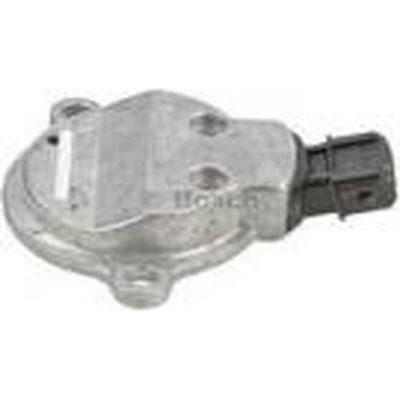
Below are the parts most often responsible for code P1367, ranked by how frequently each one is the actual culprit (per the diagnosis above). Tap any to see what we have for your vehicle.


The information in this article is provided for general reference and educational purposes only. Vehicle specifications, procedures, and part compatibility can vary by production date, trim level, and region. Always consult your vehicle's factory service manual and verify part numbers before purchasing or performing repairs. Safety-critical components such as airbags, seat belts, and braking systems should be installed by a qualified professional.
- 🧭 Diagnostic Flowchart
- 🛍️ Shop This Part
- What Does P1367 Mean?
- Can I Drive With P1367?
- Common Causes
- Symptoms
- Common Fixes & Costs
- Used vs. New Parts: Buying Guide
- What Happens If You Wait — Timeline
- Cost of Not Fixing It
- Diagnosis Steps
- When This Code Triggers (Freeze-Frame Conditions)
- Related Codes
- Climate & Environmental Factors
- How to Talk to a Mechanic About This Code
- Where to Take It: Dealer vs Independent vs Chain
- When to Walk Away From the Repair
- What Scan Tool You Need for This Code
- How to Clear the Code After You Fix It
- Will This Fail Emissions / State Inspection?
- Most Commonly Affected Vehicles
- Manufacturer-Specific Notes
- Real Owner Stories
- 2000 Honda Accord V6 with ~150k miles
- 2000 Audi A6 2.7T
- 1997 Jaguar XK8
- How to Prevent This Code From Triggering
- Frequently Asked Questions
- What does TDC Sensor mean?
- Can I replace just the one bad ignition coil?
- Where is the P1367 sensor located?
- Can a bad battery cause a P1367 code?
- How much does it cost to fix code P1367?
- Why does the P1367 code have so many different meanings?
- What are common mistakes when diagnosing P1367?
- My Honda has both P1362 and P1367. Do I need to replace both sensors?
- What happens if I don't fix code P1367?
- Key Takeaways
- 🎟️ Get 5% Off