

OBD-II Code P1387: A Manufacturer-Specific Fault Guide
Why P1387 means different things for Ford, Honda, VW, and BMW, and how to get the right fix.
- P1387 requires manufacturer-specific diagnosis, meaning it points to a $50 VCT solenoid on a Ford or a $1,200 ECU replacement on a Volkswagen.
- For Ford 5.4L engines, check your oil level immediately, as 5W-20 oil acts as the critical hydraulic fluid for the VCT system.
- Do not replace the Ford VCT solenoid if you hear a loud engine rattle; this noise indicates a $3,000 mechanical timing chain failure.
- On Honda models built before 2005, fixing a P1387 code requires replacing the entire $200 distributor assembly rather than a single standalone sensor.
What Does P1387 Mean?
P1387 is a manufacturer-specific code with entirely different definitions based on your vehicle. For Ford, Mazda, and Jaguar, it signifies an electrical fault in the Variable Camshaft Timing (VCT) solenoid circuit for engine bank 2. For Volkswagen and Audi, it points to a failed altitude sensor inside the engine's main computer (ECU). For Honda and Acura, it indicates the Cylinder Position (CYP) sensor on Bank 2 is not sending a signal. For GM, it flags a coolant valve sensor software bug. This guide covers all variations.
Technical definition: The SAE J2012 definition for P1387 is manufacturer-specific. Ford/Mazda: 'Variable Cam Timing Solenoid #2 Circuit Malfunction' (open or short in Bank 2 VCT circuit). Volkswagen/Audi: 'Internal Control Module Altitude Sensor Error' (failed atmospheric pressure sensor inside the ECU). Honda/Acura: 'Camshaft Position (CYP) Sensor B No Signal' (loss of Bank 2 cam sensor signal). GM (2024+): 'Engine Block Coolant Control Valve Position Sensor Stop Performance'.
Can I Drive With P1387?
Yes, But With Caution. You can drive short distances, but do not ignore it. Depending on the manufacturer, this code causes rough idling, poor fuel economy, or sudden stalling in traffic. For Ford, a malfunctioning VCT system causes engine misfires that destroy the catalytic converter, a secondary repair costing up to $2,500. For Honda, a failing CYP sensor shuts the engine off while driving. Diagnose and repair the issue immediately to avoid safety risks.
Common Causes
- Low, Dirty, or Incorrect Viscosity Engine Oil (Very Common) — For Ford/Mazda VCT systems, oil acts as the hydraulic fluid. Low oil, sludge buildup, or using the wrong weight (e.g., 10W-30 instead of 5W-20) clogs the tiny solenoid screens and oil passages, preventing the system from adjusting cam timing.
- Failed VCT Solenoid or CYP Sensor (Common) — The Ford solenoid or Honda sensor frequently fails internally. The internal coil breaks to create an open circuit, or shorts out entirely. The mechanical valve inside a VCT solenoid also gets stuck from debris.
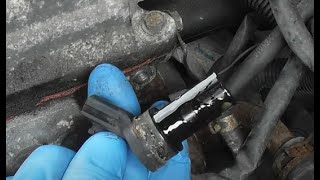
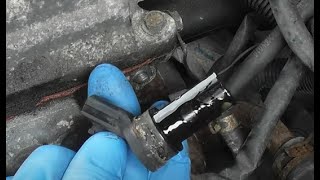
- Damaged Wiring or Connectors (Common) — Wires fray, melt from engine heat, or corrode. The connector itself becomes loose, fills with oil, or suffers pin corrosion, leading to a dead electrical connection.
- Stretched Timing Chain or Worn Guides (Ford) (Less Common) — On high-mileage Ford 5.4L 3V engines, a stretched timing chain or broken plastic guides throw off base engine timing so severely that the VCT system cannot compensate, triggering circuit codes as a secondary fault.
- Faulty Powertrain Control Module (VW/Audi) (Less Common) — On VW/Audi vehicles, this code definitively means the internal altitude sensor has failed, requiring a complete ECU replacement. For other makes, a failed PCM driver circuit is rare.
- Failed or Sticking Camshaft Phaser (Ford) (Less Common) — The mechanical gear (phaser) controlled by the Ford VCT solenoid fails internally. If the phaser sticks or its locking pin breaks, the PCM flags a circuit code as it struggles to achieve the commanded timing angle.
- Failing Alternator (Ford) (Rare) — Per Ford TSB 06-19-12, a failing alternator diode introduces excessive electrical noise (AC ripple) into the system. This interferes with sensor signals, causing the PCM to incorrectly set VCT-related codes.
Symptoms
- Check Engine Light On — The Malfunction Indicator Lamp (MIL) illuminates immediately when the PCM detects the fault condition and stores the P1387 code.
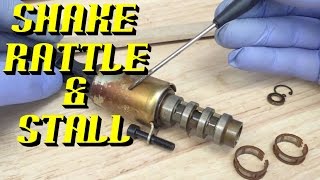
- Rough Idle, Shaking, and Stalling — The engine runs erratically, shakes at stoplights, or stalls completely because the camshaft timing is locked in a position unsuitable for low RPM operation.
- Engine Rattle or Ticking Noise (Ford) — Ford engines emit a distinct rattling or ticking sound from the top of the engine. This is the sound of a failing VCT phaser or a loose timing chain slapping the cover.
- Reduced Engine Power and Hesitation — The vehicle feels sluggish and hesitates during acceleration because the engine cannot adjust its valve timing for optimal power delivery.
- Engine Will Not Rev Above 3,000 RPM (Honda) — A failing CYP sensor on Honda vehicles forces the ECU into 'limp-home' mode, cutting fuel at 3,000 RPM to prevent engine damage.
- Poor Fuel Economy — When the engine's timing is not optimized for cruising conditions, it operates inefficiently and consumes 10% to 20% more fuel than normal.
Diagnostic Flowchart
Tap your situation to follow the diagnostic path that matches what you're seeing on this code.
Common Fixes & Costs
- Engine Oil and Filter Change — Parts: $40-$100, Labor: $30-$60, ~0.5 hr book time (DIY)
- Replace VCT Solenoid (Ford/Mazda) — Parts: $50-$150, Labor: $100-$300, ~1.5 hr book time (Intermediate)
- Replace Camshaft Position Sensor or Distributor (Honda) — Parts: $100-$300, Labor: $100-$200, ~1.2 hr book time (Intermediate)
- Replace Powertrain Control Module (VW) — Parts: $800-$1500, Labor: $150-$300, ~1.5 hr book time (Professional)
- Replace Timing Chain and Phasers (Ford) — Parts: $800-$1500, Labor: $2000-$3500, ~12.0 hr book time (Professional)
- Repair Wiring Harness or Connector — Parts: $15-$60, Labor: $150-$400, ~2.0 hr book time (Professional)
Used vs. New Parts: Buying Guide
When a used part is worth it: Buying used electronic sensors is not recommended. The cost savings are minimal compared to the labor required, and used parts have no warranty.
Donor-vehicle mileage cap: roughly under 50000 miles for the part to have meaningful remaining life.
Donor quality checklist:
- Verify the exact part number matches.
- Avoid parts from engines known for oil sludge issues.
- Ensure connectors are not corroded or damaged.
Decision logic:
- If The part is an electronic sensor or solenoid → Buy new from an OEM or reputable aftermarket brand. The risk of premature failure is too high.
- If The part is a complete ECU (for VW/Audi) → A used ECU from a salvage yard is viable, but requires professional programming to your vehicle's VIN.
- If The part is a low-cost component and the vehicle is very old → A used part from a low-mileage donor vehicle is a budget-conscious choice, but accept the risk of a shorter lifespan.
Warranty tradeoff: Used parts have a 30-90 day warranty. New aftermarket parts carry a 1-year warranty. New OEM parts carry a 1-2 year warranty.
Worst-case if a used part fails: 300-600 for repeat labor if a used electronic part fails shortly after installation.
What Happens If You Wait — Timeline
- 0-1 month: Check Engine Light illuminates. Symptoms are intermittent. The fault occurs mostly during cold starts. (MPG impact: 0-5%% · Added cost: $0)
- 1-3 months: Symptoms become consistent. Rough idle, hesitation, and occasional stalling occur. Fuel economy drops noticeably. (MPG impact: 5-15%% · Added cost: $50-200 in wasted fuel)
- 3-8 months: Incorrect timing and unburnt fuel overheat the catalytic converter. On Fords, a rattling noise develops as mechanical timing components wear out. (MPG impact: 15-25%% · Added cost: $1200-2800)
- 8+ months: Catastrophic failure risk. A worn timing chain jumps a tooth, causing pistons to hit valves and destroying the engine. (MPG impact: >25%% · Added cost: $4000-7000)
Cost of Not Fixing It
- 0-1 month: Noticeable drop in fuel economy (5-15%), rough idle, and potential stalling. (Added cost: 50-150 in wasted fuel)
- 1-6 months: Risk of catalytic converter damage due to unburnt fuel from misfires or incorrect timing. (Added cost: 1200-2800)
- 6+ months: On Ford 5.4L engines, continued operation accelerates wear on timing chain guides, leading to catastrophic engine failure. (Added cost: 3000-7000)
Diagnosis Steps
- Verify the Code's Meaning for Your Vehicle
Confirm what P1387 means for your specific Make and Model. Diagnosing a Ford VCT fault requires a completely different approach than a VW ECU fault.
Tools: OBD-II Scanner (Beginner) - Check Engine Oil Level and Condition
For Ford/Mazda/Jaguar, ensure the oil level is full and the oil is clean 5W-20. If the oil is low or resembles black sludge, perform an oil change before any further diagnosis.
Tools: Rag or paper towel (Beginner) - Inspect the Wiring and Connector
Locate the VCT solenoid (Ford Bank 2) or CYP sensor (Honda Bank 2). Visually inspect the electrical connector for oil contamination, corrosion, or pushed-out pins. Trace the harness to find melting or chafing.
Tools: Flashlight (Beginner) - Test Component's Internal Resistance
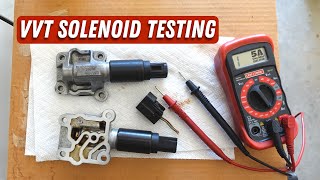
Disconnect the component. Set a multimeter to Ohms (Ω). A good Ford VCT solenoid reads between 5 and 14 Ohms. A Honda CYP sensor reads between 800 and 1500 Ohms. 'OL' indicates an open circuit; near-zero indicates a short.
Tools: Multimeter (Intermediate) - Test the Circuit for Power and Ground
With the component unplugged and ignition ON (engine OFF), set a multimeter to DC Volts. Probe the vehicle-side harness. One pin must show battery voltage (~12.6V). The other pin is the PCM control wire; check it for continuity to ground.
Tools: Multimeter (Intermediate) - Command the Solenoid with a Bi-Directional Scan Tool
Use an advanced scan tool to command the VCT solenoid ON while the engine idles. The engine idle should immediately become rough or stall. This confirms the PCM, wiring, and solenoid function perfectly.
Tools: Advanced Bi-Directional Scan Tool (Advanced) - Manually Activate the VCT Solenoid
Remove the solenoid. Use jumper wires to apply 12V power directly from the battery to the solenoid pins. You must hear a solid 'click' and see the plunger move. If it barely moves, it is mechanically stuck.
Tools: Jumper wires, 12V power source (Intermediate) - Monitor Live Data with a Scan Tool
Monitor Ford VCT PIDs: VCTADV (commanded angle) and RCAM (actual angle). If the PCM commands a 20-degree advance but RCAM stays at 0, you have a stuck solenoid, failed phaser, or severe oil pressure issue.
Tools: Advanced Bi-Directional Scan Tool (Advanced) - Check Oil Pressure with a Mechanical Gauge
If electrical tests pass but Ford symptoms persist, install a mechanical gauge at the oil pressure sensor port. At a fully warmed-up idle, pressure must be at least 25 PSI. Lower pressure starves the VCT system.
Tools: Mechanical oil pressure gauge, assorted fittings (Advanced) - Check for Signal with an Oscilloscope
Backprobe the Honda CYP sensor signal wire at the ECU. While cranking, verify a clean square wave pattern from 0V to 5V. A missing or distorted wave confirms a bad sensor or reluctor wheel.
Tools: Oscilloscope, backprobe pins (Advanced)
When This Code Triggers (Freeze-Frame Conditions)
- Engine Coolant Temp: 170-200°F (Fully warmed up)
- RPM: 1500-2500 (Cruise / steady throttle)
- Engine Load: 25-60% (Steady state driving, not heavy acceleration)
- Vehicle Speed: 40-60 mph (Highway or arterial road driving)
Related Codes
- P1385 — For Ford/Mazda, this is the identical fault for the VCT solenoid on Bank 1. If both appear, suspect low oil pressure or a shared power/ground circuit fault.
- P0022 — 'Camshaft Position 'B' - Timing Over-Retarded'. P1387 is the electrical fault, while P0022 is the resulting mechanical condition. Always diagnose the electrical code (P1387) first.
- P0345 — 'Camshaft Position Sensor 'B' Circuit'. This faults the sensor, while P1387 (on a Ford) faults the actuator. On a Honda, P1387 is a sensor code itself, making it a direct relative.
- P1382 — For Honda, this is the identical fault ('CYP Sensor No Signal') for Bank 1. Seeing both points to a shared wiring problem or a failing PCM.
Climate & Environmental Factors
- Cold Weather: Cold weather thickens engine oil, slowing its flow. This delays the Ford cam phasers from adjusting correctly on startup, triggering timing codes. Using the exact manufacturer-specified oil viscosity is mandatory.
- High Altitude: For Volkswagen/Audi vehicles, P1387 indicates the internal barometric pressure sensor in the ECU has failed. This prevents the ECU from compensating for changes in air density at different altitudes.
- Extreme Heat: High ambient temperatures accelerate oil breakdown and sludge formation, which clogs the tiny screens in VCT solenoids. Heat also makes plastic wiring connectors brittle and prone to cracking.
How to Talk to a Mechanic About This Code
Say this: "I have a P1387 code on my vehicle. For a Ford, I need a diagnosis that checks the VCT solenoid circuit, verifies oil pressure at warm idle, and listens for timing chain noise. For a Honda, please diagnose the Bank 2 CYP sensor circuit. For a VW, I need a quote to confirm and replace the ECU."
This signals you understand the make-specific nature of P1387. It directs the mechanic toward a logical diagnostic path and prevents them from replacing an obvious part without checking for a serious underlying cause.
Avoid saying:
- 'Just fix whatever's wrong'
- 'My check engine light is on, can you look at it?'
- 'Whatever you recommend'
Questions to ask before authorizing the repair:
- For a Ford: Did you confirm good oil pressure (at least 25 PSI) with a mechanical gauge at warm idle?
- For a Ford: Did swapping the VCT solenoids cause the fault to move to the other bank?
- For a VW: Does your quote include programming the new ECU to my car's VIN and immobilizer?
- Can you provide a written estimate with a full breakdown of parts and labor, and what is the warranty?
Where to Take It: Dealer vs Independent vs Chain
- Dealer:
Best for: Vehicles under warranty, VW/Audi ECU replacement and programming, 2024+ GM vehicles requiring a software update
Downsides: Highest labor rates, often $150 to $250 per hour., May recommend a major assembly replacement when a smaller repair suffices. (Typical cost: +50% vs. baseline) - Independent Shop:
Best overall fit for Ford and Honda. For VW/Audi, a German car specialist is required; otherwise, go to the dealer.
Best for: Out-of-warranty Ford and Honda repairs., Diagnosing complex mechanical root causes, like a Ford 5.4L timing issue.
Downsides: Quality varies widely; vet shops via reviews and ASE certifications., May lack specialized tools for ECU programming on German vehicles. (Typical cost: +0% vs. baseline) - Chain Shop:
AVOID for P1387 diagnosis. The risk of misdiagnosis on a Ford or inability to complete the repair on a VW is very high.
Best for: Simple jobs like oil changes and tire rotations.
Downsides: Technician skill varies dramatically; high pressure to upsell services., Unlikely to correctly diagnose the root cause of P1387 on a Ford 5.4L. (Typical cost: -10% vs. baseline)
When to Walk Away From the Repair
If the estimated repair cost exceeds 50% of the car's private-party value, seriously consider selling or trading in the vehicle.
- Car worth $5000, fix is $3500: Walk away. A $3,500 timing job on a 2007 F-150 worth $5,000 is a poor investment.
- Car worth $6000, fix is $450: Fix it. A $450 distributor replacement on a Honda Accord is well below the threshold.
- Car worth $4500, fix is $1200: Borderline. A $1,200 ECU replacement on an older VW Jetta is 27% of its value. Get a second opinion before proceeding.
What Scan Tool You Need for This Code
Minimum: A scanner that reads manufacturer-specific trouble codes and displays live data streams.
A basic $20 code reader will not display the manufacturer-specific live data PIDs (like cam angle error) required to diagnose a Ford VCT system. It also cannot differentiate between a component, wiring, or computer fault on a Honda or VW.
Budget: BlueDriver Pro (~$100) — Connects to your smartphone and accesses enhanced diagnostics, allowing you to view critical VCT-related live data.
Mid-range: Foxwell NT510 Elite (~$200) — Offers bi-directional control, allowing you to command the VCT solenoid on and off while the engine runs to confirm functionality.
Professional: Autel MaxiCOM MK808 (~$500) — Provides OE-level diagnostics, full bi-directional controls, and handles programming functions needed for module replacements.
Rent vs buy: For a proper P1387 diagnosis, especially on a Ford, you must buy a scanner with live data and bi-directional functions. Free loaner tools are too basic.
How to Clear the Code After You Fix It
- Reconnect battery if disconnected for repair
- Use an OBD-II scan tool to clear the diagnostic trouble code
- Perform a complete drive cycle to allow readiness monitors to run
Drive cycle (~30 minutes): Cold start after sitting 8+ hours. Idle for 3 minutes. Drive for 20 minutes with mixed city and highway conditions. Allow for coasting without braking. Let vehicle cool down.
Readiness monitors affected: Catalyst monitor, Oxygen (O2) sensor monitor, Evaporative System (EVAP) monitor
Before emissions retest: drive at least 100 miles to fully set monitors.
Watch out for:
- Clearing the code does not fix the issue; the code returns immediately if the fault persists.
- Disconnecting the battery resets all readiness monitors to 'Not Ready', guaranteeing an emissions test failure.
- A drive cycle requires specific acceleration and deceleration patterns not met during a normal commute.
Will This Fail Emissions / State Inspection?
Yes — this code typically fails an OBD-II emissions inspection.
- California: An illuminated Check Engine Light is an automatic failure. A full drive cycle must be completed to set readiness monitors before a retest.
- New York: A vehicle with the Check Engine Light on automatically fails the emissions portion of the annual state inspection.
- Texas: In the 17 counties requiring emissions testing, an active P1387 code is an automatic failure.
Most Commonly Affected Vehicles
- Ford F-150 (2004-2010) — Extremely common on the 5.4L 3V Triton engine. Failure is heavily linked to oil sludge and failing timing components.
- Ford Mustang GT (2005-2010) — The 4.6L 3V engine is highly susceptible. Alternator issues also cause related cam sensor codes on this platform.
- Ford Explorer / Mountaineer (2006-2010) — The 4.6L 3V V8 shares the exact VCT system design and failure points as the Mustang and F-150.
- Honda Accord / CR-V / Civic (1998-2012) — P1387 points to the Bank 2 CYP sensor. In older models, this sensor is integrated into the distributor assembly.
- Volkswagen Jetta / Golf / Passat (2000-2010) — Indicates an 'Internal Control Module Altitude Sensor Error'. The standard repair is replacing and reprogramming the ECU.
- BMW 3-Series / 5-Series (2001-2013) — Indicates 'Camshaft timing exceeds maximum value' or 'Ionization signal low input', requiring specialized BMW diagnostics.
- Acura MDX / TL (2001-2014) — Refers to 'CYP Sensor B No Signal', pointing to a fault in the Bank 2 camshaft position sensor circuit.
- Jaguar S-Type / XF / XJ (2002-2012) — Utilizes engine designs shared with Ford; P1387 corresponds to the VCT solenoid circuit fault on Bank 2.
- Chevrolet Traverse (2024-2025) — Per GM Service Bulletin 24-NA-130, P1387 is a known software issue fixed by a PCM reprogram at the dealership.
Manufacturer-Specific Notes
- Ford / Mazda / Jaguar: This code targets the Bank 2 VCT solenoid electrical circuit. However, it is frequently a symptom code caused by mechanical timing issues like worn phasers or low oil pressure on the 5.4L 3V engine.
- Volkswagen / Audi: P1387 means 'Internal Control Module Altitude Sensor Error'. The atmospheric pressure sensor inside the ECU has failed. The only fix is replacing and reprogramming the entire ECU.
- Acura / Honda: P1387 means 'Camshaft Position (CYP) Sensor B No Signal'. On many older engines, this sensor is located inside the distributor and cannot be serviced separately.
- General Motors: On 2024+ vehicles, GM Service Bulletin 24-NA-130 defines P1387 as a coolant control valve sensor error. It is a software bug fixed by a dealership PCM update.
- BMW: This code means 'Camshaft timing exceeds a maximum calibrated value' or 'Ionization signal low input'. The latter is a fault in the advanced system that uses ignition coils to analyze combustion.
Real Owner Stories
2006 Ford F-150 5.4L 3V at 145,000 miles
Check engine light came on with P1387. Engine idled very rough, shook at stop lights, and emitted a faint ticking noise from the driver's side.
What they tried:
- Owner replaced the Bank 2 VCT solenoid for $80.
- The rough idle improved briefly but returned within a week, accompanied by a P0022 code.
Outcome: A mechanic diagnosed broken timing chain guides and a failing cam phaser causing low oil pressure. The owner paid $2,800 for a full timing job. The codes did not return.
Lesson: On a Ford 5.4L 3V, a VCT solenoid code paired with engine noise is a symptom of mechanical failure. Replacing only the solenoid wastes time and money.
1999 Honda Accord 2.3L at 180,000 miles
Car suddenly died while driving and restarted after cooling down. Check engine light showed P1387.
What they tried:
- Owner tested the fuel pump and main relay, finding no faults.
- Inspected distributor wiring and found no visible damage.
Outcome: The owner learned the CYP sensor is integrated into the distributor. They replaced the entire distributor assembly for $150. The car stopped stalling and the code resolved.
Lesson: For older Hondas, P1387 requires replacing the entire distributor. Do not waste time searching for a standalone CYP sensor.
2008 Volkswagen Jetta 2.5L at 110,000 miles
Check Engine Light on for P1387. The car ran fine, but fuel economy dropped slightly.
What they tried:
- Owner replaced the MAP sensor, thinking it related to pressure readings. The code returned immediately.
- A shop inspected for vacuum leaks and wiring faults, finding nothing.
Outcome: Research confirmed P1387 means the internal ECU barometer failed. A specialist installed and programmed a used ECU for $650 total. The code resolved.
Lesson: On a VW/Audi, P1387 is a definitive code for a failed sensor inside the main engine computer. Expect to replace and program the ECU.
How to Prevent This Code From Triggering
- Use high-quality full synthetic 5W-20 engine oil. (Every 5,000 miles or 6 months) — Synthetic oils resist thermal breakdown and prevent sludge, which is the primary cause of clogged VCT solenoid screens.
- Change the engine oil filter with every oil change. (Every 5,000 miles or 6 months) — A quality oil filter captures contaminants that clog the sensitive passages of the VCT solenoids.
- Avoid excessive idling and frequent short trips. (Daily habit) — Short trips prevent oil from reaching operating temperature, allowing moisture to build up and accelerate sludge formation.
- Perform a professional engine flush service. (Every 30,000-50,000 miles) — For engines known for sludge, a flush dissolves varnish deposits before they clog VCT system components.
Frequently Asked Questions
What is the difference between a VCT solenoid and a cam phaser?
The VCT solenoid is an electronic oil control valve that directs oil into the cam phaser. The cam phaser is the mechanical gear on the camshaft that rotates to change the timing. The solenoid is the switch, and the phaser is the moving part.
What is Bank 2 on my engine?
Bank 2 is the cylinder head on the side of the engine that does not contain cylinder #1. On most V-engines from Ford, GM, and Dodge, Bank 1 is the passenger side, making Bank 2 the driver's side. For transverse V6 engines, Bank 2 is typically the cylinder bank closer to the radiator.
Can I just unplug the VCT solenoids to fix the problem?
Unplugging the solenoids defaults the cam timing to its base position and temporarily smooths out a rough idle. However, this is not a fix and keeps the Check Engine Light on while tanking fuel economy. It simply masks the underlying problem, which is often a severe mechanical issue.
Can I just clean the VCT solenoid?
If the solenoid is stuck due to oil sludge, cleaning it with brake cleaner restores function temporarily. However, if the code triggers due to an internal electrical failure like an open coil, cleaning does nothing. In electrical failure cases, you must replace the part.
Will using thicker oil help with a P1387 code on my Ford 5.4L?
No, using a heavier weight oil like 10W-30 in an engine designed for 5W-20 makes VCT problems worse. The system relies on fast oil flow through microscopic passages. Thicker oil flows too slowly when cold, hindering the operation of the phasers and solenoids.
Is a VCT solenoid the same as a VVT solenoid?
Yes, the terms are used interchangeably in the automotive industry. VCT (Variable Camshaft Timing) is Ford's specific terminology. VVT (Variable Valve Timing) is the generic term used by most other manufacturers for the exact same technology.
Can a weak battery cause code P1387?
A weak battery or failing alternator causes low system voltage, leading to unpredictable behavior from the PCM. This triggers false electrical fault codes like P1387. Always ensure your battery holds a 12.6V charge and the alternator outputs 13.5V-14.5V before starting deep circuit diagnostics.
Key Takeaways
- P1387 requires manufacturer-specific diagnosis, meaning it points to a $50 VCT solenoid on a Ford or a $1,200 ECU replacement on a Volkswagen.
- For Ford 5.4L engines, check your oil level immediately, as 5W-20 oil acts as the critical hydraulic fluid for the VCT system.
- Do not replace the Ford VCT solenoid if you hear a loud engine rattle; this noise indicates a $3,000 mechanical timing chain failure.
- On Honda models built before 2005, fixing a P1387 code requires replacing the entire $200 distributor assembly rather than a single standalone sensor.
Helpful Videos

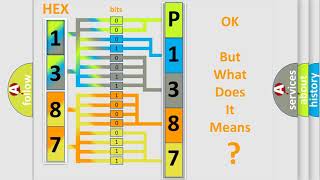
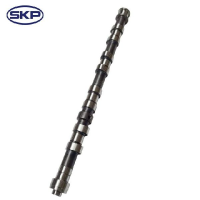
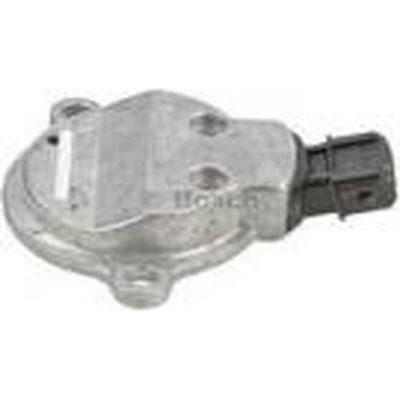
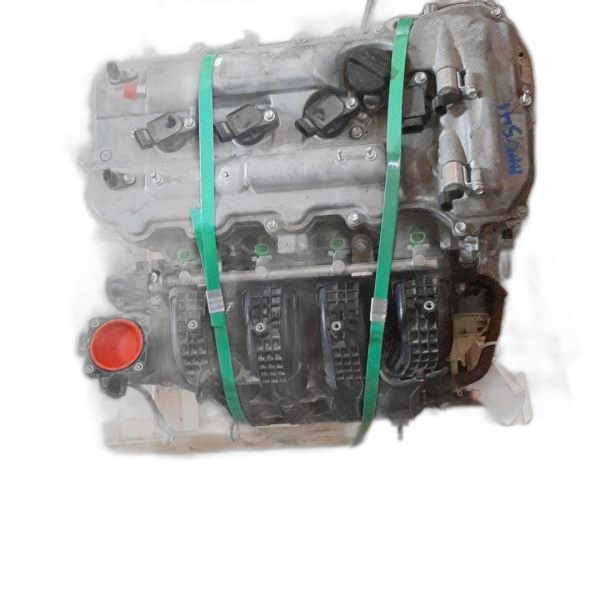
Shop the Parts Behind P1387
Below are the parts most often responsible for code P1387, ranked by how frequently each one is the actual culprit (per the diagnosis above). Tap any to see what we have for your vehicle.
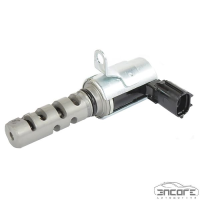
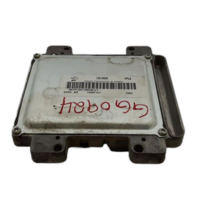
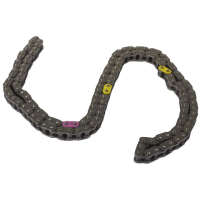

The information in this article is provided for general reference and educational purposes only. Vehicle specifications, procedures, and part compatibility can vary by production date, trim level, and region. Always consult your vehicle's factory service manual and verify part numbers before purchasing or performing repairs. Safety-critical components such as airbags, seat belts, and braking systems should be installed by a qualified professional.
- 🧭 Diagnostic Flowchart
- 🎬 Helpful Videos
- 🛍️ Shop This Part
- What Does P1387 Mean?
- Can I Drive With P1387?
- Common Causes
- Symptoms
- Common Fixes & Costs
- Used vs. New Parts: Buying Guide
- What Happens If You Wait — Timeline
- Cost of Not Fixing It
- Diagnosis Steps
- When This Code Triggers (Freeze-Frame Conditions)
- Related Codes
- Climate & Environmental Factors
- How to Talk to a Mechanic About This Code
- Where to Take It: Dealer vs Independent vs Chain
- When to Walk Away From the Repair
- What Scan Tool You Need for This Code
- How to Clear the Code After You Fix It
- Will This Fail Emissions / State Inspection?
- Most Commonly Affected Vehicles
- Manufacturer-Specific Notes
- Real Owner Stories
- 2006 Ford F-150 5.4L 3V at 145,000 miles
- 1999 Honda Accord 2.3L at 180,000 miles
- 2008 Volkswagen Jetta 2.5L at 110,000 miles
- How to Prevent This Code From Triggering
- Frequently Asked Questions
- What is the difference between a VCT solenoid and a cam phaser?
- What is Bank 2 on my engine?
- Can I just unplug the VCT solenoids to fix the problem?
- Can I just clean the VCT solenoid?
- Will using thicker oil help with a P1387 code on my Ford 5.4L?
- Is a VCT solenoid the same as a VVT solenoid?
- Can a weak battery cause code P1387?
- Key Takeaways
- 🎟️ Get 5% Off