

P1400 on 1997-2006 VW Golf 1.4L: EGR Valve Circuit Malfunction Causes and Fixes
On a VW Golf with a 1.4L engine, code P1400 almost always points to a faulty EGR valve assembly. The internal electronics fail, requiring a replacement valve, which typically costs between $50 and $150 for an aftermarket part. Inspecting the wiring first is recommended, but the valve itself is the most common point of failure.
- P1400 on your 1.4L Golf is an electrical fault in the EGR valve circuit, not a flow problem.
- The most likely cause is a failed EGR valve assembly that needs to be replaced.
- Before buying parts, always inspect the wiring and connector for damage, as this can be a cheaper fix.
- After replacing the valve, you must perform an 'EGR Adaptation' using a scan tool like VCDS for the fix to be complete.
- Always replace the two metal gaskets when installing a new EGR valve to prevent leaks.
What's Unique About the 1997-2006 Volkswagen Golf
For this generation of VW 1.4L engines (AUA, BBY, BKY, BCA), the EGR valve is an electronically controlled unit with an integrated position sensor. Unlike some systems that use separate vacuum solenoids and sensors, this all-in-one design means an internal electrical failure of any component requires replacing the entire EGR valve assembly. The code P1400 specifically targets these electrical issues rather than just the mechanical sticking or clogging that can also occur. Forum discussions frequently confirm that simply cleaning a valve that has an electrical fault will not resolve a P1400 code.
Generation note: This year range covers the Volkswagen Golf Mk4 (1997-2004) and the early Golf Mk5 (2004-2006). The specified 1.4L 16-valve engines (like BCA, BBY, AUA) were used in both generations, and they share the same electronically controlled EGR valve design (Part No. 036131503T or 036131503R) and are susceptible to the same failures causing the P1400 code.
Symptoms You May Notice
- Check Engine Light is on
- Rough or unstable idle
- Engine hesitation or stumbling during acceleration
- Reduced engine power
- Increased fuel consumption
- Engine stalling at low speeds
- Failing an emissions test
- Replacing oxygen sensors or other emissions components before verifying the EGR circuit is faulty.
- Assuming the EGR valve is only clogged when the P1400 code specifically points to an electrical issue.
- Replacing the EGR valve without first checking for a simple wiring or connector fault.
Most Likely Causes
- Faulty EGR Valve Assembly 🔴 High Probability → Shop Exhaust Gas Recirculation (EGR) Valve The EGR valve contains both a solenoid and a position sensor. The internal electronics are prone to failure from heat and age, leading to short circuits or open circuits within the unit. A user on YouTube documented a case where a small metal plate inside the electrical housing came loose and shorted the 5-volt reference pins, causing P1400 and P0407.
How to confirm: After verifying the wiring is intact, the most reliable method is to replace the valve. A scan tool (like VCDS) can be used to read the EGR position sensor data in Measuring Block 074 to see if it's erratic or non-responsive when the valve is commanded to move during a basic setting test. If the valve fails the adaptation test with an 'ERROR' status, it is faulty.
Typical fix: Replace the entire EGR valve assembly and both gaskets. After replacement, an EGR adaptation must be performed using a compatible scan tool.
Est. part cost: $50-$150 - Damaged Wiring or Connector 🟡 Medium Probability The wiring harness leading to the EGR valve is in the engine bay and exposed to heat and vibration, which can cause wires to become brittle, frayed, or for pins in the connector to corrode. The connector itself can become loose or damaged.
How to confirm: Visually inspect the wiring harness for any signs of damage, melting, or chafing. Unplug the connector and check for corrosion, moisture, or bent/broken pins. Use a multimeter to check for 12V power, a good ground, and a 5V reference signal at the connector pins according to the vehicle's service manual.
Typical fix: Repair the damaged section of wire or clean/replace the connector pigtail.
Est. part cost: $10-$30 - Heavy Carbon Buildup ⚪ Low Probability While P1400 is an electrical code, severe carbon buildup can cause the valve's pintle to stick. This can put extra strain on the internal motor or solenoid, potentially causing an electrical fault or burnout. However, it's more common for carbon to trigger flow-related codes (like P0401 or P0402) before causing an electrical failure.
How to confirm: Remove the EGR valve and inspect it and the connecting pipe for thick carbon deposits that could restrict movement. Even if cleaning restores mechanical movement, the code may persist if the electronics are already damaged.
Typical fix: Clean the EGR valve and passages with a dedicated EGR/intake cleaner. If the code returns, the valve's electronics were likely already damaged and it will need replacement.
Est. part cost: $10-$20
Rare But Worth Checking
- Faulty Engine Control Module (ECM): This is extremely rare. The ECM should only be considered after all other possibilities, including the EGR valve and its entire circuit, have been thoroughly tested and ruled out.
Diagnosis Steps
- Read the fault codes with an OBD-II scanner and confirm P1400 is present. Note any other codes, especially P0407, P0401, or P0402.
- Perform a thorough visual inspection of the EGR valve's 5-pin electrical connector and wiring harness. Look for any obvious signs of damage, corrosion, or loose connections.
- With the ignition on (engine off), use a multimeter to check for the correct reference voltage (5V), power (12V), and ground at the EGR valve connector according to the pinout diagram.
- If a VCDS or similar advanced scan tool is available, navigate to Engine -> Measuring Blocks -> Group 074. Observe the potentiometer voltage and adaptation status.
- Attempt to run an EGR adaptation via Basic Settings -> Group 074. The status should change from 'Run' to 'ADP OK'. If it shows an 'ERROR' or fails to adapt, and the wiring is confirmed good, the EGR valve is faulty.
- If wiring seems okay, remove the EGR valve. It is typically held by two bolts and connected to a metal pipe.
- Inspect the valve and pipe for heavy carbon buildup. If clogged, cleaning it is a good first step, though it may not solve an electrical fault.
- If the valve is clean and the wiring is good, the EGR valve assembly itself is the most likely culprit due to internal electrical failure.
- Replace the EGR valve, ensuring you also replace the metal gaskets on both sides to prevent exhaust leaks.
- After installation, perform the EGR adaptation procedure again as described in step 5.
- Clear the fault codes and perform a test drive to ensure the code does not return.
Parts You'll Likely Need
- EGR Valve
(OEM #036131503T, 036131503R)— This is the most common failure point. The code P1400 points to an electrical fault within this component, which is not serviceable and requires full replacement.
Trusted brands: Pierburg (OEM supplier), Wahler, Bosch, Valeo, Febi Bilstein
OEM price range: $180-$250
Aftermarket price range: $50-$150 - EGR Valve Gaskets
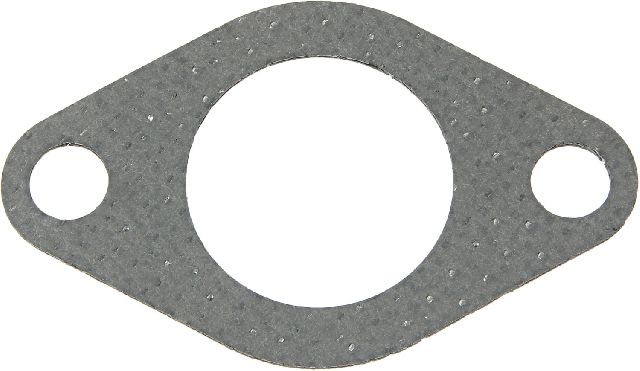
(OEM #N90521601 (Pipe to EGR), 036131547F (EGR to Head))— Two gaskets are required when replacing the EGR valve to ensure a proper seal against the engine and the EGR pipe. Most new EGR valves come with these included, but it's crucial to verify.
Trusted brands: Victor Reinz, Elring
OEM price range: $10-$20
Aftermarket price range: $5-$10
Related Codes That Often Appear With This One
- P0407 — P0407 (EGR Sensor 'B' Circuit Low) is a closely related code that also points to an electrical fault in the EGR valve's position sensor circuit. They often appear together when the internal sensor fails or shorts.
- P0401 — If the electrical fault (P1400) prevents the EGR valve from opening correctly, the ECM may eventually also trigger P0401 (EGR Flow Insufficient Detected) during a system self-test.
- P0402 — Conversely, if the electrical fault causes the valve to be stuck open, the ECM may trigger P0402 (EGR Flow Excessive Detected). This is a common complaint on VW/Skoda forums for this engine family.
Platform-Specific Known Issues
- Owners on forums like UK-POLOS.NET and Briskoda frequently discuss the P1400-family of codes on the 1.4 16v engines. A common theme is the futility of cleaning the valve when an electrical fault code is present; replacement is almost always the required fix.
- Aftermarket EGR valve quality can be inconsistent. Many users report success with Pierburg, the OEM supplier, while cheaper unbranded valves may fail prematurely or even be faulty out of the box.
- Performing an EGR adaptation with a tool like VCDS after replacement is critical. Failure to do so can result in the code returning or the engine running poorly even with a new part.
Mechanic-Grade Diagnostic Values
- EGR Valve Connector - 5-Pin Pinout Test (Key On, Engine Off) — expected: Pin 1 (Solenoid Power): ~12V. Pin 5 (Solenoid Control): ~12V (this is a ground-side switched circuit, voltage will be present until the ECU commands it to ground). Pin 3 (Sensor Power): 5V reference. Pin 2 (Sensor Ground): ~0V. Pin 4 (Sensor Signal): ~0.7-1.0V at rest, should change when valve is actuated.. Failure: Missing 12V or 5V supply points to a wiring or ECU fault. Signal voltage stuck at 0V or 5V indicates a short or open in the sensor circuit.
- EGR Valve Solenoid Coil Resistance — expected: Between 4 and 12 Ohms when measured across the two solenoid pins (Pin 1 and Pin 5).. Failure: A reading of infinity (Open Loop) or 0 Ohms (short circuit) indicates a failed solenoid coil inside the EGR valve.
- VCDS - Measuring Blocks - Group 074 — expected: Field 1 (Min Position): ~0.5-0.7V. Field 2 (Max Position): ~4.4-4.6V. Field 3 (Current Position): Should match Field 1 at rest. Field 4 (Adaptation Status): Should read 'ADP. OK!' after a successful basic setting.. Failure: Field 4 showing 'ERROR' after an adaptation attempt indicates a hard electrical fault in the valve or wiring. Fields 1 or 2 showing 0.00V can also indicate a fault.
Scan Tool Commands That Help
- VCDS (VAG-COM): Basic Settings - Group 074 — This is a mandatory procedure after replacing the EGR valve. It allows the ECU to learn the closed and open stop points of the new valve's position sensor. A failure to adapt, resulting in an 'ERROR' status, confirms a hard electrical fault.
- VCDS (VAG-COM): Output Tests - 03 - EGR Valve (N18) — This function allows you to manually cycle the EGR valve. It can be used to audibly or visually confirm if the valve's motor is attempting to move, helping to distinguish between a seized mechanical pintle and a dead electrical motor.
Wiring & Ground Locations
- Ground Points 1 & 12 — On the chassis frame rail directly below the battery tray on the left side of the engine compartment.. This is the primary grounding point for the main engine wiring harness and battery cable. Corrosion or looseness here can cause a host of intermittent and difficult-to-diagnose electrical faults, including sensor circuit errors for components like the EGR valve.
- Ground Point 15 — On the cylinder head itself.. This provides a direct ground for components mounted on the engine, including the ignition coils. A poor ground here can affect sensor readings that rely on a stable engine ground reference.
Real Owner Repair Stories
- Ross-Tech Forums user 'i lunn' (VW with 1.4 16v BCA engine) — Check Engine Light with code P1404 (EGR System Basic Setting not Performed).
❌ Tried (didn't work) Installed a brand new, aftermarket EGR valve which repeatedly failed the VCDS adaptation in Basic Settings Group 074.
✅ What actually fixed it The user tested the resistance between pins 2 and 4 on the new (faulty) valve and his old valve. He then acquired a second-hand EGR valve, confirmed its resistance matched the old one, installed it, and it successfully adapted within seconds. The brand new aftermarket part was defective. - YouTube user 'Fae's Garage' (VW Golf 5 1.6 FSI (similar electronic EGR design)) — Engine would start, run for 6-7 seconds, then die. Fault codes P1400 and P0407 were present.
❌ Tried (didn't work) Initial checks of ECU connector and ground connections.
✅ What actually fixed it The owner disassembled the plastic electrical housing of the EGR valve itself. A small, square metal plate inside had come loose and was physically shorting out the 5-volt reference pins on the internal circuit board. Removing the loose plate and repairing a damaged pin fixed the issue completely. - Briskoda Forums user 'LB123' (Skoda Fabia with 1.4 16v BBZ engine (platform-mate)) — Rough running, Check Engine Light.
❌ Tried (didn't work) Installed a new EGR valve from an aftermarket supplier (GSF)., Cleaned EGR pipework and performed a throttle body alignment.
✅ What actually fixed it The new EGR valve consistently failed the VCDS adaptation, showing 'ADP Run' for two seconds then 'ERROR'. The measuring blocks showed 0.53v, 4.46v, 0.531v, and ERROR. The user concluded the new part was likely defective or there was a wiring fault, highlighting that a failed adaptation points directly to an electrical problem, not a clog.
OEM Part Supersession History
036131503T→036131503R— Part revision or change in manufacturer.
Heads up: The parts are considered interchangeable. 036131503R is the newer version.
Model Year Variations Within This Range
- 1999-2006: During the VCDS EGR adaptation (Basic Settings, Group 074), some earlier engine codes like AXP require the engine coolant temperature to be below 50°C. However, for the common BCA engine, this temperature prerequisite does not apply. The adaptation can be run on a warm engine as long as the engine is off.
Diagnostic Flowchart
Other Known Issues on This Vehicle
Issues unrelated to this code that are worth knowing about as an owner of this generation:
- Excessive Oil Consumption 🟠 Medium — Common on 1.4 16v engines, especially with higher mileage. Can be caused by worn piston rings or valve stem seals, but is often exacerbated by a clogged PCV/breather system.
- Manual Gearbox Bearing Failure 🔴 High — The 02T manual gearbox paired with these engines is known for premature failure of the differential and input shaft bearings, often starting around 60,000-80,000 miles. Symptoms include a whining or rumbling noise that changes with road speed.
- Timing Chain Tensioner/Chain Wear (TSI Engines) 🔴 High — While the specified engines are belt-driven, later 1.4L TSI engines (EA111, found in Mk5/Mk6) are notorious for timing chain tensioner failure, which can cause a rattle on startup and lead to catastrophic engine damage if the chain jumps.
- Throttle Body Malfunctions 🟠 Medium — The throttle body can become contaminated with oil from the breather system, leading to an erratic idle, stalling, and EPC light illumination. Regular cleaning is often required.
- Ignition Coil Pack Failure 🟡 Low — Failure of individual ignition coil packs is a common issue, leading to engine misfires (P030x codes), rough running, and a flashing Check Engine Light. It's a relatively simple and inexpensive fix.
Used vs. New Parts: Buying Guide for This Vehicle
When a used part is the smart pick: A used part from a reputable salvage yard can be a viable option, especially if it can be tested or comes with a short warranty. One documented repair showed a used OEM part worked perfectly after a brand-new aftermarket part was found to be defective out of the box. It makes sense if you are on a tight budget and can verify the part's resistance before installation.
Donor-vehicle mileage cap: roughly under 80000 miles for the part to have meaningful remaining life.
What to inspect on the donor part:
- Check the electrical connector for any signs of corrosion, cracked plastic, or bent pins.
- Inspect the pintle and passages for excessive carbon buildup; a relatively clean valve suggests it may not have been the original point of failure on the donor car.
- If possible, use a multimeter to check the resistance across the solenoid pins (should be ~4-12 ohms) and compare it to your old part.
- Ask for the donor vehicle's mileage if possible.
Aftermarket brands forum-validated for this vehicle:
- Pierburg (This is the Original Equipment Manufacturer and the most recommended brand for this part).
- Wahler (Also a well-regarded OEM supplier).
- Bosch
- Valeo
Brands owners have reported issues with on this vehicle:
- Unbranded, low-cost EGR valves from online marketplaces have a documented history of being dead-on-arrival or failing prematurely. While they may be cheap, they can fail the critical VCDS adaptation test, wasting time and effort.
Real Owner Stories
Aggregated from forums and TSBs cited above. Mileages and costs reflect what owners reported in those sources.
2003 Skoda Fabia 1.4L 16v
Symptoms: Check Engine Light was on with an electrical EGR fault code (P1400).
What fixed it: Initially tried cleaning the EGR valve, but this did not solve the problem. The issue was only resolved by replacing the entire EGR valve assembly.
Source hint: vehicle_specific_issues section referencing owner discussions on UK-POLOS.NET and Briskoda
2002 VW Polo 1.4L 16v
Symptoms: Check Engine Light on with code P1400.
What fixed it: Forum discussion confirmed that P1400 indicates a direct electrical fault in the valve or its circuit, not a flow issue. The fix was to replace the faulty EGR valve.
Source hint: Club Polo - '1.4 16v EGR valve.' (https://www.clubpolo.co.uk/topic/264560-14-16v-egr-valve/)
2005 VW Golf 1.4L BCA
Symptoms: The P1400 code returned soon after replacing the original EGR valve with a cheap, unbranded aftermarket part.
What fixed it: The problem was solved by replacing the faulty aftermarket valve with a quality part from Pierburg, the OEM supplier.
Source hint: vehicle_specific_issues section regarding aftermarket EGR valve quality
Related OBD-II Codes
Frequently Asked Questions
I cleaned my EGR valve but the P1400 code came back. What should I do next?
Do I need a special tool to complete the EGR valve replacement on my Golf?
I'm buying a replacement EGR valve online. Does the brand matter?
My scan tool shows an 'ERROR' when I try to run the EGR adaptation. What does this mean?
Can a bad EGR valve cause my 1.4L Golf to have a rough idle and stall?
My car has both P1400 and P0407 stored. Are these codes related?
Is the P1400 EGR problem common on other VW Group cars, or just the Golf?
We Have This Part in Stock





The information in this article is provided for general reference and educational purposes only. Vehicle specifications, procedures, and part compatibility can vary by production date, trim level, and region. Always consult your vehicle's factory service manual and verify part numbers before purchasing or performing repairs. Safety-critical components such as airbags, seat belts, and braking systems should be installed by a qualified professional.
- Volkswagen Golf:
- 🧭 Diagnostic Flowchart
- 🛍️ Shop This Part
- What's Unique About the 1997-2006 Volkswagen Golf
- Symptoms You May Notice
- Most Likely Causes
- Rare But Worth Checking
- Diagnosis Steps
- Parts You'll Likely Need
- Related Codes That Often Appear With This One
- Platform-Specific Known Issues
- Mechanic-Grade Diagnostic Values
- Scan Tool Commands That Help
- Wiring & Ground Locations
- Real Owner Repair Stories
- OEM Part Supersession History
- Model Year Variations Within This Range
- Other Known Issues on This Vehicle
- Used vs. New Parts: Buying Guide for This Vehicle
- Real Owner Stories
- 2003 Skoda Fabia 1.4L 16v
- 2002 VW Polo 1.4L 16v
- 2005 VW Golf 1.4L BCA
- Related OBD-II Codes
- Frequently Asked Questions
- 🎟️ Get 5% Off