

OBD-II Code P1404: EGR Valve Closed Position Performance
The Ultimate Guide to What P1404 Means, Why It Triggers, and How to Fix It for Good
- P1404 indicates the EGR valve is stuck open at idle, with carbon buildup causing over 80% of these failures.
- Thoroughly cleaning the EGR valve and the intake manifold passages resolves the code for under $30 in materials.
- Replacing the valve without performing a PCM relearn (via battery disconnect or scan tool) guarantees the code will return immediately.
- Driving over 100 miles with an active P1404 code risks destroying your catalytic converter, turning a $200 repair into a $2,000 disaster.
What Does P1404 Mean?
P1404 means the Powertrain Control Module (PCM) detected a problem with the Exhaust Gas Recirculation (EGR) valve. The computer commanded the EGR valve fully closed, but the position sensor reports the internal pintle has not returned to the closed position. The EGR system reduces harmful NOx gases by recirculating exhaust back into the cylinders to lower combustion temperatures.
Technical definition: The SAE/OBD-II definition is "EGR Closed Position Performance." The PCM learns the valve's correct closed-position voltage during startup. When commanded to 0% (closed), the PCM compares live sensor voltage to this learned value. If actual voltage exceeds the learned voltage by a specific threshold (e.g., >0.2V on GM models) for over 20 seconds, the PCM concludes the valve is stuck open and triggers P1404.
Can I Drive With P1404?
Yes, But With Caution. You can drive short distances, but it is not recommended. A stuck-open EGR valve causes rough idling, poor acceleration, stalling, and reduced fuel economy. Driving over 100 miles with this code causes excessive carbon buildup in the intake manifold and damages the catalytic converter due to an incorrect air-fuel mixture—a repair costing $800 to $2,500. Stop driving immediately if you experience frequent stalling or engine knocking.
Common Causes
- Carbon buildup on the EGR valve or passages (Very Common) — Exhaust soot and carbon deposits accumulate on the EGR valve's pintle and seat, physically preventing it from closing completely.
- Faulty EGR valve position sensor (Common) — The sensor reporting the valve's position to the PCM fails, sending an incorrect high-voltage signal that tricks the computer into thinking the valve is open.
- Mechanically failed EGR valve (Common) — Extreme heat cycles and constant movement wear out internal components, causing the pintle to bind or stick permanently.
- Outdated PCM software (Less Common) — On Chrysler, Dodge, and Jeep vehicles, overly sensitive original PCM software erroneously sets a P1404 code. A dealership software update (reflash) is the only fix.
- Damaged wiring or electrical connectors (Less Common) — Wires leading to the EGR valve fray, corrode, or melt from engine heat, causing a short or open circuit.
- Faulty EGR vacuum solenoid (Uncommon) — On older vacuum-operated systems, a failing solenoid leaks vacuum, preventing the EGR valve's diaphragm from fully retracting.
Symptoms
- Check Engine Light is on — The primary and most immediate indicator of an emissions system fault.
- Rough or unstable idle — Exhaust gas leaking into the intake at idle disrupts the air-fuel mixture, causing the engine to shake, stutter, or stall.
- Poor acceleration or hesitation — The engine feels sluggish and lacks power because exhaust dilutes the air-fuel mixture during acceleration.
- Reduced fuel economy — The incorrect air-fuel mixture forces the engine to work inefficiently, dropping MPG by 5-15%.
- Failed emissions test (also visible on scanner) — A P1404 fault indicates a malfunctioning NOx reduction system, resulting in an automatic state inspection failure.
Common Fixes & Costs
- Cleaning the EGR Valve and Passages — Parts: $10-$30, Labor: $150-$250, ~1.5 hr book time (Intermediate)
- Replacing the EGR Valve Assembly
— Parts: $100-$300, Labor: $150-$300, ~1.2 hr book time
(Intermediate)
Chevrolet Silverado (2007, 5.3L): OEM {'part_number': '12576918', 'brand': 'ACDelco', 'estimated_price': '$120-$180'} (Alt: {"part_number": "EGV1041", "brand": "Standard Motor Products", "estimated_price": "$80-$110"})
Jeep Grand Cherokee (2012, 3.6L): OEM {'part_number': '05281256AI', 'brand': 'Mopar', 'estimated_price': '$190-$290'} (Alt: {"part_number": "EGV1149", "brand": "Standard Motor Products", "estimated_price": "$150-$200"}) - Updating the PCM Software — Parts: $0, Labor: $100-$250, ~1.0 hr book time (Professional)
- Repairing Damaged Wiring or Connectors — Parts: $5-$50, Labor: $100-$300, ~1.5 hr book time (Advanced)
DIY vs Professional
- Cleaning the EGR Valve and Passages — Beginner: Yes, with caution.
Tools: Socket set, wrenches, EGR cleaner, wire brushes, new gaskets. - Replacing the EGR Valve Assembly — Beginner: Yes, if accessible.
Tools: Socket set, torque wrench, new EGR valve and gasket. - Updating the PCM Software — Beginner: No.
Tools: OEM-level scan tool and manufacturer software subscription. - Repairing Damaged Wiring or Connectors — Beginner: No.
Tools: Multimeter, wire strippers, soldering iron, heat shrink.
Used vs. New Parts: Buying Guide
When a used part is worth it: A used OEM EGR valve from a low-mileage vehicle (<60k miles) is a cost-effective option for older vehicles where new OEM parts exceed $250.
Donor-vehicle mileage cap: roughly under 60000 miles for the part to have meaningful remaining life.
Donor quality checklist:
- Verify the donor vehicle was not scrapped for an emissions failure.
- Match the OEM part number exactly.
- Inspect the pintle for heavy carbon caking or physical binding.
Decision logic:
- If A new, quality aftermarket or OEM part is under $150. → Buy new. The labor risk of installing a faulty used part outweighs the minimal savings.
- If The vehicle is over 10 years old and a new OEM valve is over $250. → Buy a low-mileage used OEM part, but accept a potentially shorter lifespan.
- If The EGR valve is buried under the intake manifold (high labor cost). → Buy a new OEM part to guarantee you only pay for labor once.
Warranty tradeoff: Used parts offer a 30-90 day part-only warranty. New aftermarket parts offer 1-year to lifetime warranties. New OEM parts carry a 1-2 year warranty.
Worst-case if a used part fails: $300. If a used valve fails, you pay the labor cost a second time.
What Happens If You Wait — Timeline
- 0-1 month: Check Engine Light illuminates. The engine exhibits a slightly rough idle when cold. (MPG impact: 0-5%% · Added cost: $0-$40 in wasted fuel)
- 1-4 months: Rough idle persists when warm. Noticeable hesitation occurs during acceleration, and fuel economy drops as exhaust gas constantly dilutes the air-fuel mixture. (MPG impact: 5-10%% · Added cost: $50-$150 in wasted fuel)
- 4-12 months: Stalling at stops becomes frequent. Carbon heavily coats the intake manifold ports. The incorrect air-fuel mixture begins overheating the catalytic converter. (MPG impact: 10-15%% · Added cost: $300-$800 for necessary intake manifold cleaning)
- 12+ months: The catalytic converter suffers catastrophic failure. The internal honeycomb melts from sustained excessive temperatures, creating a major exhaust blockage and triggering limp mode. (MPG impact: 15-25%+% · Added cost: $1,200-$2,800 for catalytic converter replacement)
Cost of Not Fixing It
- Short-Term (0-3 months): Drop in fuel economy (5-15%), rough idle, hesitation, and guaranteed emissions test failure. (Added cost: $50-$150 in wasted fuel)
- Medium-Term (3-12 months): Severe carbon buildup in the intake manifold. The constant leak of hot exhaust gas begins overheating the catalytic converter. (Added cost: $300-$800 for intake manifold cleaning)
- Long-Term (12+ months): Catastrophic failure of the catalytic converter. The internal substrate melts, causing a major exhaust restriction and severe engine damage. (Added cost: $1,200-$2,800 for catalytic converter replacement)
Diagnosis Steps
- Read Codes and Review Freeze Frame Data
Use an OBD-II scanner to confirm P1404. Note freeze frame data (RPM, load, temp) and check for related codes like P0404 or P0300, which dictate the diagnostic path.
Tools: OBD-II Scanner (Beginner) - Check for Technical Service Bulletins (TSBs)
Before removing parts, verify if your specific vehicle requires a PCM software update. Chrysler/Jeep models frequently trigger false P1404 codes requiring a dealer reflash (e.g., TSB 18-088-22).
Tools: Online access to TSB databases (Beginner) - Analyze Live EGR Data
Monitor the live data stream for 'EGR Commanded' vs. 'EGR Actual Position'. At a warm idle, commanded EGR must be 0%. If actual position exceeds 1% or sensor voltage is >0.8V, the valve is physically open or the sensor is lying.
Tools: Advanced OBD-II Scanner with Live Data (Intermediate) - Remove and Inspect the EGR Valve
Unbolt the EGR valve. Examine the pintle and port for heavy carbon deposits blocking closure. Push the pintle by hand; it must move smoothly and snap back to its seat without binding.
Tools: Socket set, Gasket scraper, Gloves (Intermediate) - Clean the EGR Valve and Passages
Scrub the valve with EGR cleaner and a wire brush. Crucially, clean the EGR passages on the intake manifold—clogged manifold ports are the primary reason this code returns after replacing the valve.
Tools: EGR cleaner, Wire brushes, Gaskets, Safety glasses (Intermediate) - Test the EGR Position Sensor Circuit
Back-probe the EGR connector with a multimeter. Verify a 5V reference and a solid ground (<0.1V). The signal wire must read low (0.4V-0.9V) when closed and scale smoothly to >4.0V as the valve opens. Dead spots indicate a failed sensor.
Tools: Multimeter, Back-probe kit (Advanced) - Test Vacuum-Operated Solenoids (Older Vehicles)
Disconnect the vacuum solenoid and check resistance (typically 20-60 ohms). Blow through the vacuum port; it must hold vacuum. Apply 12V and ground; it must click and allow air to pass.
Tools: Multimeter, Jumper wires, Hand vacuum pump (Advanced)
When This Code Triggers (Freeze-Frame Conditions)
- Engine Coolant Temp: 180-210°F (82-99°C) (Fully warmed up; the test does not run on a cold engine.)
- Engine RPM: 600-850 RPM (At or near idle, when the EGR valve is commanded 100% closed.)
- EGR Commanded: 0% (The PCM actively commands the valve shut.)
- EGR Actual Position (or Voltage): >5% or >0.8V (The sensor reports a position that is not closed.)
- Time: > 20 seconds (The fault condition must be present continuously before the code sets.)
Related Codes
- P0401 — Indicates 'Insufficient EGR Flow.' P1404 means the valve won't close at idle, while P0401 means it won't flow enough under load. Clogged passages cause both.
- P0404 — Indicates 'EGR Circuit Range/Performance.' P1404 is specific to the closed position, while P0404 means the valve's movement is erratic or slow across its entire range.
- P0300 — Indicates 'Random Misfire.' A stuck-open EGR valve creates a massive vacuum leak at idle, directly causing misfires. Fixing P1404 resolves the P0300.
- P0405 — Indicates 'EGR Sensor A Circuit Low.' Points to a dead sensor or shorted wire (<0.2V), whereas P1404 points to a voltage that is too high for the closed position.
Climate & Environmental Factors
- Cold Weather: Frequent short trips in cold weather prevent the exhaust from reaching operating temperature, accelerating carbon deposit formation in the EGR system.
- High Humidity: Accelerates corrosion on EGR electrical connectors, leading to poor connections and erratic sensor signals.
How to Clear the Code After You Fix It
- Reconnect the EGR valve electrical connector.
- Use an OBD-II scan tool to clear the P1404 code.
- For GM vehicles, disconnect the negative battery terminal for 30 minutes to reset the PCM's learned EGR closed position.
- For Chrysler/Dodge/Jeep vehicles, perform a 'Sequence EGR reset' using a professional bidirectional scan tool.
Drive cycle (~20 minutes): Cold start and idle for 3 minutes. Drive at a steady 40-60 mph for 8 minutes. Coast down to 20 mph without braking. Perform stop-and-go city driving for 5 minutes. Allow the engine to cool completely.
Readiness monitors affected: EGR System, Catalyst, O2 Sensor
Before emissions retest: drive at least 50 miles to fully set monitors.
Watch out for:
- Clearing the code without performing a PCM relearn causes the code to return immediately on GM and Chrysler vehicles.
- Failing to complete the full drive cycle leaves the EGR readiness monitor 'Not Ready', resulting in an emissions test failure.
Will This Fail Emissions / State Inspection?
Yes — this code typically fails an OBD-II emissions inspection.
- California: An active P1404 is an automatic failure. The EGR readiness monitor must be set to 'Ready' to pass.
- New York: An illuminated Check Engine Light due to P1404 results in an automatic OBD-II scan failure.
- Texas: In emissions-testing counties, P1404 causes an automatic failure. Vehicles 2001 and newer can have a maximum of one monitor 'Not Ready' after repairs.
Most Commonly Affected Vehicles
- Chevrolet Silverado, Impala, Tahoe (1998-2008) — Utilizes an electronic linear EGR valve highly susceptible to carbon buildup.
- Jeep Grand Cherokee, Wrangler (2005-2021) — Plagued by sensitive PCM software. Newer models require a dealer-level scan tool to perform a 'Sequence EGR reset' after part replacement.
- Dodge Ram 1500, Durango (2004-2013) — The 5.7L Hemi frequently suffers from carbon-clogged valves and requires PCM calibration updates.
- Ford Explorer, F-150 (1998-2010) — Often related to a failed DPFE sensor or brittle, cracked connecting hoses.
- Volkswagen Jetta, Golf TDI (1999-2014) — TDI diesel engines are notorious for EGR systems that clog completely with heavy soot.
Manufacturer-Specific Notes
- General Motors (Chevrolet, GMC): You must perform an EGR relearn after replacement. Disconnect the battery for 30 minutes to clear the learned 'closed position' voltage. Failing to do this causes the PCM to immediately set P1404 again.
- Chrysler/Dodge/Jeep: Known for overly sensitive PCM software requiring dealership updates (TSBs). On 2018+ models, a battery disconnect is insufficient; a 'Sequence EGR reset' must be performed with a professional scan tool.
- Ford: On older models with a DPFE sensor, the two rubber hoses connecting the sensor to the EGR tube crack and leak. Always replace these hoses when servicing the sensor.
Real Owner Stories
2021 Jeep Wrangler JL (87K miles)
Check Engine Light on with P1404. Owner replaced the EGR valve with a new OEM part, but the code returned immediately.
What they tried:
- Installed a $380 OEM EGR valve.
- Disconnected the battery to clear codes.
Outcome: Took the Jeep to a mechanic who performed a 'Sequence EGR reset' and flashed the PCM for $185, permanently clearing the code.
Lesson: On modern Jeeps, replacing the valve is insufficient. The PCM must be reprogrammed with a dealer-level scan tool to recognize the new valve's closed position.
2000 Chevy S-10 Blazer (100K miles)
P1404 appeared immediately after a DIY fuel pump replacement.
What they tried:
- Cleaned the original EGR valve.
- Installed a used salvage yard valve.
- Installed a new $119 aftermarket valve.
Outcome: The code returned every time. The actual issue was a damaged wiring harness disturbed during the fuel pump repair.
Lesson: If a code appears immediately after unrelated maintenance, inspect the wiring harnesses near the repair area before replacing parts.
How to Prevent This Code From Triggering
- Avoid frequent short trips; drive at highway speeds regularly. (Weekly) — Sustained highway driving heats the exhaust system sufficiently to burn off soft carbon deposits before they harden and jam the valve.
- Use top-tier fuel with detergent additives. (Every fill-up) — High-quality detergents ensure complete combustion, drastically reducing the soot and carbon particles that clog the EGR system.
- Perform an aerosol EGR system cleaning. (Every 30,000 miles) — Spraying dedicated EGR cleaner into the intake dissolves early-stage carbon deposits without requiring disassembly.
Frequently Asked Questions
Can I just clean the EGR valve instead of replacing it?
Yes. If the failure is due to carbon buildup, thoroughly cleaning the EGR valve and intake manifold passages restores function. This is highly effective and significantly cheaper than replacement.
I replaced the EGR valve, but the P1404 code came back. What now?
The most common reasons are clogged intake manifold passages, failing to perform a PCM relearn, or needing a dealer software update. Always reset the PCM's learned closed position after replacement.
What's the difference between P1404 and P0404?
P1404 is specific: the valve fails to fully close at idle. P0404 is a general performance code indicating the valve's position doesn't match the commanded position at any point, pointing to erratic or slow movement.
Can a vacuum leak cause a P1404 code?
Not typically. A traditional vacuum leak causes a lean condition and codes like P0171. P1404 specifically means the EGR valve is physically open or the sensor falsely reports it open.
Can I just unplug the EGR valve to fix this?
No. If the valve is mechanically stuck open, unplugging the connector will not close it. If the issue is electrical, unplugging it forces the PCM to set a different circuit code and keeps the Check Engine Light on.
Will a P1404 code clear itself?
No. The PCM verifies this persistent mechanical or electrical fault during each drive cycle. You must repair the underlying issue and clear the code with a scan tool or by disconnecting the battery.
Key Takeaways
- P1404 indicates the EGR valve is stuck open at idle, with carbon buildup causing over 80% of these failures.
- Thoroughly cleaning the EGR valve and the intake manifold passages resolves the code for under $30 in materials.
- Replacing the valve without performing a PCM relearn (via battery disconnect or scan tool) guarantees the code will return immediately.
- Driving over 100 miles with an active P1404 code risks destroying your catalytic converter, turning a $200 repair into a $2,000 disaster.
Shop the Parts Behind P1404
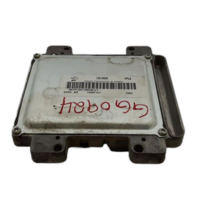
Below are the parts most often responsible for code P1404, ranked by how frequently each one is the actual culprit (per the diagnosis above). Tap any to see what we have for your vehicle.


The information in this article is provided for general reference and educational purposes only. Vehicle specifications, procedures, and part compatibility can vary by production date, trim level, and region. Always consult your vehicle's factory service manual and verify part numbers before purchasing or performing repairs. Safety-critical components such as airbags, seat belts, and braking systems should be installed by a qualified professional.
- 🛍️ Shop This Part
- What Does P1404 Mean?
- Can I Drive With P1404?
- Common Causes
- Symptoms
- Common Fixes & Costs
- DIY vs Professional
- Used vs. New Parts: Buying Guide
- What Happens If You Wait — Timeline
- Cost of Not Fixing It
- Diagnosis Steps
- When This Code Triggers (Freeze-Frame Conditions)
- Related Codes
- Climate & Environmental Factors
- How to Clear the Code After You Fix It
- Will This Fail Emissions / State Inspection?
- Most Commonly Affected Vehicles
- Manufacturer-Specific Notes
- Real Owner Stories
- 2021 Jeep Wrangler JL (87K miles)
- 2000 Chevy S-10 Blazer (100K miles)
- How to Prevent This Code From Triggering
- Frequently Asked Questions
- Can I just clean the EGR valve instead of replacing it?
- I replaced the EGR valve, but the P1404 code came back. What now?
- What's the difference between P1404 and P0404?
- Can a vacuum leak cause a P1404 code?
- Can I just unplug the EGR valve to fix this?
- Will a P1404 code clear itself?
- Key Takeaways
- 🎟️ Get 5% Off