

P1404 on 1997-2003 Ford F-150: EGR Closed Position Performance Causes and Fixes
On the 1997-2003 F-150, P1404 almost always means the EGR valve is stuck slightly open due to carbon buildup. The fix is usually cleaning or replacing the EGR valve. After the repair, the PCM's Keep Alive Memory (KAM) must be cleared by disconnecting the battery for at least 15 minutes to relearn the new closed-valve voltage. A DIY repair costs between $20 for gaskets and cleaner, or $100-$200 for a new valve.
- P1404 means your F-150's EGR valve isn't closing all the way, usually because of carbon buildup.
- The most effective first step is to remove and thoroughly clean the EGR valve and passages.
- After any repair, you MUST reset the PCM's Keep Alive Memory (KAM) by disconnecting the battery for 15+ minutes.
What's Unique About the 1997-2003 Ford F-150
The 10th generation F-150 (1997-2003) is well-known for EGR system issues. While P1404 specifically points to the valve not closing, this platform also frequently suffers from a faulty DPFE (Differential Pressure Feedback) sensor and clogged EGR passages in the intake manifold, which typically set a P0401 code. Owners should be aware that while P1404 is about the valve itself, the entire EGR system is a common trouble spot on these trucks. The issue is so common that many owners on forums report successfully cleaning the valve themselves to resolve the code.
Symptoms You May Notice
- Check Engine Light is on
- Rough, unstable, or rolling idle
- Engine stalling at idle or low speeds
- Hesitation or stumbling during acceleration
- Engine pinging or knocking sounds
- Reduced fuel economy
- Black smoke from the tailpipe in some cases
- Replacing the DPFE sensor. The DPFE sensor measures EGR flow and typically causes a P0401 code when it fails. While it's part of the same system and a common failure point on these trucks, it does not directly cause the P1404 code, which is related to the valve's *position*, not flow.
Most Likely Causes
- Carbon Buildup on EGR Valve 🔴 High Probability → Shop Exhaust Gas Recirculation (EGR) Valve Over time, soot from the exhaust gas accumulates on the EGR valve's pintle (the moving plunger) and its seat, physically preventing it from closing completely. This is the most cited cause in owner forums and repair databases.
How to confirm: Remove the EGR valve from the engine. Visually inspect the pintle and the port for thick, black carbon deposits. Check if the pintle can be moved by hand; it should move smoothly and return to a closed position without sticking.
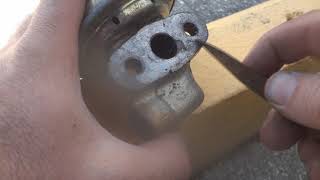
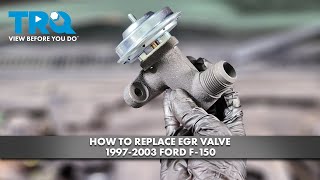
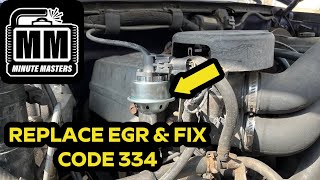
Typical fix: Thoroughly clean the EGR valve and its mounting passages with carburetor cleaner and a wire brush. 🎬 Watch: Step-by-step EGR removal and cleaning guide If cleaning is not sufficient or the valve is worn, replace the entire EGR valve assembly. 🎬 See this EGR valve replacement walkthrough Always use new gaskets.
Est. part cost: $15-$30 (cleaner and gaskets), $100-$200 (new valve) - Failed EGR Valve 🟡 Medium Probability → Shop Exhaust Gas Recirculation (EGR) Valve The internal components of the valve, including the diaphragm and the integrated position sensor, can fail from age and constant heat cycles. The sensor can report an incorrect position even if the valve itself is mechanically clean.
How to confirm: If the valve is physically clean but the code persists, the internal position sensor may be faulty. You can test the sensor's resistance with a multimeter according to the service manual's specifications. A scan tool can also monitor the sensor's reported position versus the commanded position at idle.
Typical fix: Replace the EGR valve assembly.
Est. part cost: $100-$200 - Damaged Wiring or Connectors ⚪ Low Probability The wiring harness to the EGR valve is in the engine bay and exposed to heat and vibration, which can cause wires to become brittle, frayed, or corroded over time, especially at the connector.
How to confirm: Visually inspect the wiring harness and connector for any signs of damage, melting, or corrosion. Use a multimeter to check for proper voltage (typically a 5-volt reference), ground, and signal continuity between the EGR connector and the PCM.
Typical fix: Repair the damaged section of the wiring harness or replace the connector pigtail.
Est. part cost: $10-$50
Rare But Worth Checking
- Faulty Powertrain Control Module (PCM): → Shop Engine Control Module (ECM) This is extremely rare. The PCM should only be considered after all other possibilities, including the EGR valve, wiring, and passages, have been thoroughly tested and ruled out.
Diagnosis Steps
- Read the Code: Use an OBD-II scanner to confirm P1404 is the active code. Note any other codes present, especially misfire (P030x) or EGR flow (P0401/P0402) codes.
- Check Live Data: With a scan tool, monitor the 'EGR Commanded' vs. 'EGR Actual Position' PIDs. At a fully warm idle, 'EGR Commanded' should be 0%. If 'EGR Actual' is greater than 1% or the sensor voltage is above 0.8V, it confirms the valve is not fully closed.
- Visual Inspection: Inspect the EGR valve, its vacuum lines (if applicable), and the electrical connector. Look for obvious damage, cracks in hoses, or loose connections.
- Inspect for Carbon Buildup: Remove the two bolts holding the EGR valve to the intake manifold. Look inside the valve and the manifold ports for heavy carbon deposits. This is the most common cause.
- Clean the EGR Valve: If carbon is present, remove the valve completely. Use carburetor cleaner, a wire brush, and a pick to scrape all carbon from the pintle, seat, and passages. Ensure the pintle moves freely and snaps shut after cleaning.
- Check the Wiring: If the valve is clean and the code returns, check the electrical connector. Ensure there is a 5-volt reference signal, a good ground, and that the signal wire is not shorted or open.
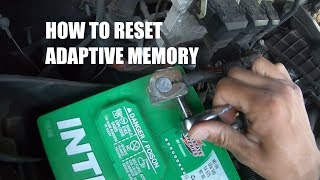
- Clear Keep Alive Memory (KAM) and Relearn: This is a CRITICAL step. After cleaning or replacing the valve, disconnect the negative battery terminal for at least 15 minutes. This clears the PCM's adaptive memory, forcing it to relearn the new, correct closed-position voltage for the EGR valve. Failing to do this will often cause the code to return immediately. 🎬 Watch: How to clear your PCM memory
- Test Drive: Drive the vehicle for at least 15-20 minutes, including a mix of city and highway driving, to allow the engine to reach operating temperature and the PCM to run its self-tests to confirm the fix.
Parts You'll Likely Need
- EGR Valve
(OEM #Motorcraft CX-1741 (for many 4.6L V8 applications), F75Z-9D475-DA (for some 4.6L V8), XL3Z-9D475-BB (for some 5.4L V8). Verify with VIN.)— This is the most common failure point, either due to carbon buildup that can't be fully cleaned or an internal sensor failure.
Trusted brands: Motorcraft, Standard Motor Products, Delphi
OEM price range: $150-$250
Aftermarket price range: $100-$180 - EGR Valve Gasket
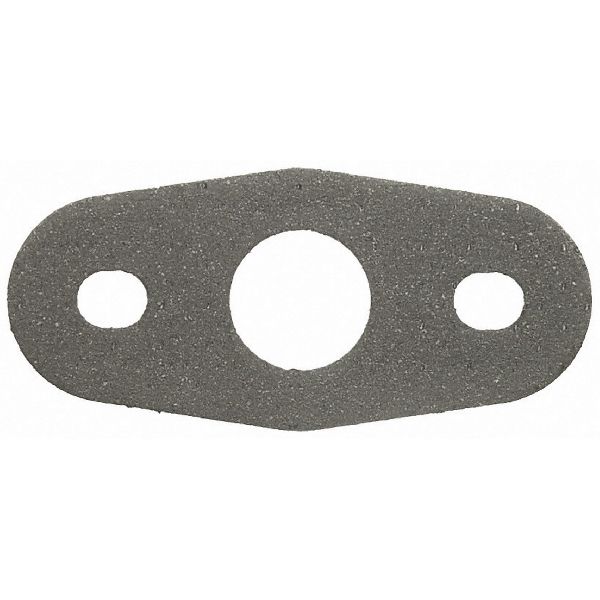
(OEM #Included with most new valves, but can be purchased separately. Fel-Pro is a common aftermarket choice.)— The gasket must be replaced anytime the EGR valve is removed to prevent exhaust leaks.
Trusted brands: Motorcraft, Fel-Pro, Mahle
OEM price range: $10-$20
Aftermarket price range: $5-$15
Related Codes That Often Appear With This One
- P0401 — Stands for 'EGR Flow Insufficient.' If the EGR passages are clogged with carbon, it can trigger both a flow code (P0401) and a closing performance code (P1404) as the valve itself also gets gummed up.
- P0402 — Stands for 'EGR Flow Excessive.' This can occur if the valve is stuck significantly open, causing too much exhaust gas to be recirculated at the wrong time.
- P0300-P0308 — Misfire codes. A stuck-open EGR valve acts like a vacuum leak at idle, leaning out the air-fuel mixture and causing the engine to misfire.
Platform-Specific Known Issues
- Owner Experience: Cleaning vs. Replacing: Numerous owners on forums like F150forum.com and Ford-trucks.com have successfully resolved the P1404 code by simply removing the EGR valve and thoroughly cleaning it with carburetor cleaner and a wire brush. Many report that replacement is only necessary if the internal sensor has failed or if the valve is too corroded to clean effectively.
- Importance of KAM Reset: A recurring theme in owner discussions is the immediate return of the P1404 code after a repair if the Keep Alive Memory (KAM) is not reset. The PCM stores the 'stuck open' voltage as its learned closed value, and without a reset, it will continue to see a fault even with a new, perfectly functioning valve. Disconnecting the battery is the most common DIY method for this.
Mechanic-Grade Diagnostic Values
- EGR Valve Position (EVP) Sensor Voltage at Idle (KOEO) — expected: 0.24V - 0.67V. Failure: A voltage significantly higher than 0.7V, such as 0.8V or more, indicates the valve is not fully closed, triggering P1404.
- EVP Sensor Reference Voltage (VREF) — expected: 4.0V - 6.0V. Failure: Voltage outside this range indicates a problem with the PCM or the wiring harness, not the sensor itself.
- EVP Sensor Resistance (Valve Closed) — expected: Should not exceed 5500 ohms (5.5 kΩ). Failure: Resistance significantly higher than 5.5 kΩ or an open circuit (OL) indicates a faulty sensor.
- EVP Sensor Resistance (Valve Fully Open) — expected: Should not be less than 100 ohms. Failure: Resistance higher than specified when vacuum is applied, or a value that doesn't change smoothly, indicates a faulty sensor.
- EGR Vacuum Regulator (EVR) Solenoid Resistance — expected: 20 - 70 ohms. Failure: Resistance outside this range suggests the solenoid coil is failing.
Scan Tool Commands That Help
- Ford Integrated Diagnostic System (IDS): Active Commands / Output State Check — To command the EGR valve to open and close while monitoring the EGR position sensor voltage (EVP PID). This directly tests the valve's mechanical and electrical response, confirming if it's sticking or if the sensor is reporting incorrectly.
- High-End Bidirectional Scanners (e.g., FOXWELL NT510 Elite): EGR Valve Actuation Test — Similar to the IDS command, this function allows the technician to cycle the EGR valve on demand. It's used to verify if the valve is physically capable of moving through its full range of motion and to check if the position sensor tracks the movement accurately.
Wiring & Ground Locations
- G100 — Lower right rear of the engine, often on a starter motor mounting bolt.. This is a primary engine block ground. A poor connection here can cause erratic behavior in multiple sensors that use the block as a ground reference, including potentially the EGR system components.
- G101 — Rear of the engine compartment, on the right side of the cowl panel.. This is a critical body/firewall ground. The PCM and various sensor circuits rely on clean body grounds. Corrosion or looseness at G101 can introduce noise or voltage offsets into sensor readings, potentially causing false codes.
- EGR Valve Connector — Directly on top of the EGR valve assembly.. This connector provides the 5V reference, ground (Signal Return), and the position signal from the sensor to the PCM. Technicians will back-probe this connector to test for correct VREF voltage, continuity to ground, and to measure the output signal voltage to confirm if it matches the valve's physical position.
Real Owner Repair Stories
- JK-Forum.com user (Jeep Wrangler (demonstrates a universal P1404 fix)) — Check Engine Light with code P1404.
❌ Tried (didn't work) Initially considered immediate replacement of the EGR valve.
✅ What actually fixed it The owner removed the EGR valve and found the internal piston/pintle was stuck. After forcing it to move and thoroughly cleaning it with carb cleaner until it moved freely and snapped back, the valve was reinstalled. This completely resolved the P1404 code without needing to purchase a new part. - Saturn Forum user (Saturn (demonstrates a common diagnostic trap)) — Recurring P1404 code.
❌ Tried (didn't work) Thoroughly cleaning the EGR valve multiple times.
✅ What actually fixed it The user noted that even after cleaning or replacing the valve, the code can return if the PCM's learned 'zero value' for the closed position is not reset. The final fix required not just cleaning the valve until the pintle snapped shut decisively, but also disconnecting the battery to force the PCM to relearn the new, correct closed-position voltage.
OEM Part Supersession History
F75Z-9D475-DA→CX-1741 (Motorcraft Service Part Number)— Standard part number consolidation for service replacement.XL3Z-9D475-BB→CX-1741 (Motorcraft Service Part Number)— Standard part number consolidation for service replacement.
Model Year Variations Within This Range
- 1997-1998 F-150 vs 1999-2003 4.6L/5.4L F-150: While the function is the same, there can be different EGR valve part numbers and designs between the early (97-98) and later (99-03) models within this generation. It is crucial to verify the correct part number using the vehicle's VIN, as the mounting or connector could differ slightly.
Diagnostic Flowchart
Other Known Issues on This Vehicle
Issues unrelated to this code that are worth knowing about as an owner of this generation:
- Spark Plug Ejection (4.6L/5.4L 2V V8) 🔴 High — Common issue, especially on engines from 1997-2003. Caused by insufficient thread engagement in the aluminum cylinder heads. (Ref: TSB 07-15-2 outlines an authorized out-of-warranty thread repair procedure.)
- Leaking Intake Manifold Gaskets (4.2L V6) 🔴 High — Very common on 1997-1998 models. The original gaskets were prone to failure, allowing coolant to leak externally or internally, potentially causing engine hydrolock. (Ref: Ford had an owner notification program (99B29) for a related timing cover gasket, but the intake gaskets were also a known weak point.)
- Cracked Exhaust Manifolds (V8 Models) 🟠 Medium — The original cast iron manifolds are prone to cracking from heat cycles, causing an exhaust leak and ticking noise, especially when cold.
- Frame Rust 🔴 High — Significant frame rust, particularly in the salt belt, is a major issue for this generation. Areas around the leaf spring hangers and front bump stops are especially vulnerable. (Ref: While later generations had recalls, the 10th gen is known for severe rust that often requires weld-in repair patches.)
- 4R70W Transmission Faults 🟠 Medium — Common issues include delayed engagement into gear, harsh shifting, or a flashing O/D light, often caused by failed shift solenoids, a worn valve body, or a filter that has fallen into the pan.
- Broken IMRC Linkage Clips (4.6L/5.4L V8) 🟡 Low — The small plastic clips for the Intake Manifold Runner Control (IMRC) linkage at the back of the manifold become brittle and break, causing a loss of low-end torque. This often sets codes like P1516.
Used vs. New Parts: Buying Guide for This Vehicle
When a used part is the smart pick: A used EGR valve is generally not recommended for this repair. The primary failure mode is carbon buildup and internal sensor wear, both of which are related to age and mileage. A used part from a junkyard carries a high risk of having the same or an impending problem.
Donor-vehicle mileage cap: roughly under 50000 miles for the part to have meaningful remaining life.
What to inspect on the donor part:
- Check that the pintle moves freely by hand and snaps back sharply.
- Inspect the electrical connector pins for any signs of corrosion, melting, or damage.
- Avoid parts that are excessively rusty or show signs of heavy external corrosion.
OEM-only on this vehicle (don't cheap out):
- While not strictly 'OEM-only', using a Motorcraft replacement EGR valve is highly recommended by forum veterans for fitment and longevity. Some aftermarket valves have been reported to fail prematurely or have slightly different sensor voltage ranges, causing the code to return.
Aftermarket brands forum-validated for this vehicle:
- Standard Motor Products (SMP)
- Delphi
- Dorman (often cited, but with mixed long-term reviews)
Brands owners have reported issues with on this vehicle:
- No-name, unbranded parts from online marketplaces are frequently reported to fail quickly or be dead-on-arrival.
Real Owner Stories
Aggregated from forums and TSBs cited above. Mileages and costs reflect what owners reported in those sources.
1997-2003 Ford F-150
Symptoms: Rough, unstable, or rolling idle and stalling at low speeds.
What fixed it: Removing the EGR valve and thoroughly cleaning it and the mounting passages with carburetor cleaner and a wire brush.
Source hint: Ford-trucks.com forum discussions regarding P1404 success stories
1997-2003 Ford F-150
Symptoms: The P1404 code returned immediately after a repair was performed.
What fixed it: Disconnecting the negative battery terminal for at least 15 minutes to clear the Keep Alive Memory (KAM), allowing the PCM to relearn the correct closed-position voltage.
Source hint: F150forum.com consensus on P1404 repairs
10th-generation Ford F-150
Symptoms: Check Engine Light with P1404; carbon buildup found in the EGR valve.
What fixed it: Cleaning the EGR valve and passages; noted as a common DIY job for this specific generation.
Source hint: Reddit.com/r/f150 discussions on 10th-generation EGR issues
Related OBD-II Codes
Frequently Asked Questions
Is there a TSB for the spark plug ejection issue on my 1997-2003 Ford F-150 5.4L V8?
My 1998 F-150 4.2L V6 is throwing P1404; could this be related to the common intake manifold issues?
Do I really need to buy a new EGR valve for my F-150, or can I just clean it?
Why did my P1404 code come back immediately after I cleaned the EGR valve on my 4.6L V8?
Are there any known frame issues I should look for while fixing the EGR system on my 10th-gen F-150?
Helpful Videos
We Have This Part in Stock


The information in this article is provided for general reference and educational purposes only. Vehicle specifications, procedures, and part compatibility can vary by production date, trim level, and region. Always consult your vehicle's factory service manual and verify part numbers before purchasing or performing repairs. Safety-critical components such as airbags, seat belts, and braking systems should be installed by a qualified professional.
- Ford F-150:
- 🧭 Diagnostic Flowchart
- 🎬 Helpful Videos
- 🛍️ Shop This Part
- What's Unique About the 1997-2003 Ford F-150
- Symptoms You May Notice
- Most Likely Causes
- Rare But Worth Checking
- Diagnosis Steps
- Parts You'll Likely Need
- Related Codes That Often Appear With This One
- Platform-Specific Known Issues
- Mechanic-Grade Diagnostic Values
- Scan Tool Commands That Help
- Wiring & Ground Locations
- Real Owner Repair Stories
- OEM Part Supersession History
- Model Year Variations Within This Range
- Other Known Issues on This Vehicle
- Used vs. New Parts: Buying Guide for This Vehicle
- Real Owner Stories
- 1997-2003 Ford F-150
- 1997-2003 Ford F-150
- 10th-generation Ford F-150
- Related OBD-II Codes
- Frequently Asked Questions
- 🎟️ Get 5% Off