

P1404 on 2006-2010 Jeep Commander 3.7L: EGR Closed Position Performance Fixes
The P1404 code on a Jeep Commander 3.7L almost always means the EGR valve is stuck slightly open due to carbon buildup. The most common fix is to remove and thoroughly clean the EGR valve and its passages; if that fails, replacing the EGR valve assembly is the next step. Expect to pay around $120-$250 for a new valve.
- P1404 on your Jeep Commander 3.7L points directly to the EGR valve not closing properly.
- The most likely cause is heavy carbon buildup; start by removing and cleaning the valve and intake ports.
- If cleaning doesn't solve the problem, replacing the EGR valve assembly is the most reliable permanent fix.
- Access to the rear-mounted EGR valve is tight, and bolts can be seized, making it a challenging DIY job for some.
What's Unique About the 2006-2010 Jeep Commander
The 3.7L V6 PowerTech (EKG) engine in the Commander, shared with other Chrysler/Dodge/Jeep trucks and SUVs of the era, is known for accumulating carbon in the EGR system. This makes the P1404 code a relatively common issue. Unlike some other vehicles where electrical failure is more common, on this platform, the root cause is very frequently a mechanical issue of the valve being physically blocked by soot and carbon deposits, preventing it from seating correctly. This creates a condition similar to a small vacuum leak at idle, leading to the noticeable rough running symptoms.
Symptoms You May Notice
- Check Engine Light is on
- Rough or shaky idle
- Engine hesitation or surging during light acceleration
- Reduced fuel economy
- Engine stalling, especially at idle
- Engine knocking or pinging noises upon acceleration
- Extended crank time to start the engine
- Replacing spark plugs or ignition coils for a rough idle without checking EGR codes first.
- Assuming a vacuum leak is the cause of a rough idle without diagnosing the EGR system.
- Replacing the EGR valve when the actual problem is a simple wiring issue at the connector.
Most Likely Causes
- Carbon Buildup on EGR Valve and Passages 🔴 High Probability → Shop Exhaust Gas Recirculation (EGR) Valve The 3.7L engine's EGR system is susceptible to collecting soot and carbon from exhaust gases, which can physically prevent the valve's pintle from fully closing. This is the most common failure mode for this code on this platform.
How to confirm: Remove the EGR valve and visually inspect it and the corresponding ports on the intake manifold for heavy black carbon deposits. The pintle should be able to move freely without sticking.
Typical fix: Thoroughly clean the EGR valve and the intake manifold passages with a wire brush and carburetor cleaner. Ensure the pintle can move freely after cleaning. Many owners find this resolves the issue, at least temporarily.
Est. part cost: $10-$30 for cleaning supplies - Faulty EGR Valve Assembly 🟡 Medium Probability → Shop Exhaust Gas Recirculation (EGR) Valve The electronic position sensor integrated into the valve can fail, or the internal motor can wear out over time, leading to incorrect operation even if it's clean. Cleaning a valve with a failed sensor will not fix the problem.
How to confirm: After cleaning, if the code returns, the valve itself is likely faulty. A scan tool with bidirectional controls can be used to command the EGR valve open and closed while monitoring the position sensor voltage to confirm a malfunction. A defective new valve is also a possibility. 🎬 Watch: Diagnosing a P1404 code and testing a new valve
Typical fix: Replace the entire EGR valve assembly and the gasket. This is often the most permanent solution.
Est. part cost: $120-$250 - Damaged Wiring or Connectors ⚪ Low Probability Engine bay heat and vibrations can cause wires in the EGR valve's electrical harness to become brittle, corroded, or broken over time. The connector itself can also become loose or contaminated.
How to confirm: Visually inspect the wiring harness and connector leading to the EGR valve for any signs of damage, corrosion, or loose pins. Use a multimeter to check for proper 5V reference voltage, ground, and signal wire continuity according to the service manual.
Typical fix: Repair or replace the damaged section of the wiring harness or the connector.
Est. part cost: $5-$50
Rare But Worth Checking
- Powertrain Control Module (PCM) Malfunction: → Shop Engine Control Module (ECM) This is extremely rare, but a software glitch or internal failure in the PCM could theoretically cause it to misinterpret the EGR position sensor's signal. Some Chrysler vehicles occasionally require a PCM software update to correct EGR logic. This should only be considered after all other possibilities have been exhaustively ruled out.
Technical Service Bulletins (TSBs) & Recalls
- TSB Bulletin #18-048-22 — While issued for newer models in the lineup, this bulletin explicitly identifies P1404 as "EGR Close Position Performance," confirming the manufacturer's diagnostic focus on the valve's inability to reach its seated position.
- TSB Bulletin #1805519 — This manufacturer service bulletin notes that when diagnosing certain vehicles, a technician may find DTC P1404 alongside other codes like P0456, requiring specific verification tests to determine if the EGR system is performing correctly.
Diagnosis Steps
- Retrieve all stored fault codes with an OBD-II scanner to confirm P1404 and check for any other related codes.
- Visually inspect the EGR valve, its electrical connector, and wiring harness for any obvious damage, corrosion, or loose connections. The valve is located at the rear of the engine, and access can be tight.
- Remove the EGR tube that connects to the valve (typically two 8mm bolts), then remove the EGR valve from the engine (typically two T45 Torx or 10mm bolts). Be prepared for bolts to be seized.
- Inspect the valve's pintle and the mounting ports on the engine for heavy carbon buildup. This is the most common cause.
- If carbon is present, thoroughly clean the valve and the passages using carburetor cleaner and a wire brush. Ensure the pintle can move freely after cleaning.
- Reinstall the cleaned EGR valve with a new gasket. Clear the codes and perform a test drive, including idle periods, to see if the code returns.
- If the code comes back, the EGR valve's internal sensor or motor is likely faulty. The next step is to replace the EGR valve assembly.
- If a new valve does not fix the issue, perform electrical checks. Using a multimeter and a wiring diagram, verify the 5-volt reference, ground, and signal wires at the EGR connector. Wiggling the harness during testing can help identify intermittent breaks.
- As a final, rare step, consider a PCM issue if all other components and wiring have been proven to be good.
Parts You'll Likely Need
- EGR Valve
(OEM #53034192AB)— This is the component that fails, either by getting clogged with carbon or through internal electrical failure. Cleaning is sometimes a temporary fix, but replacement is often the permanent solution.
Trusted brands: Mopar, Standard Motor Products (SMP), Dorman, Crown Automotive
OEM price range: $180-$280
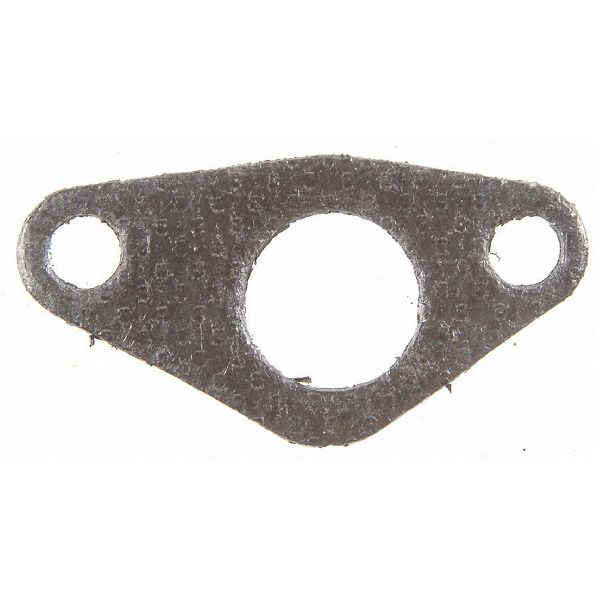
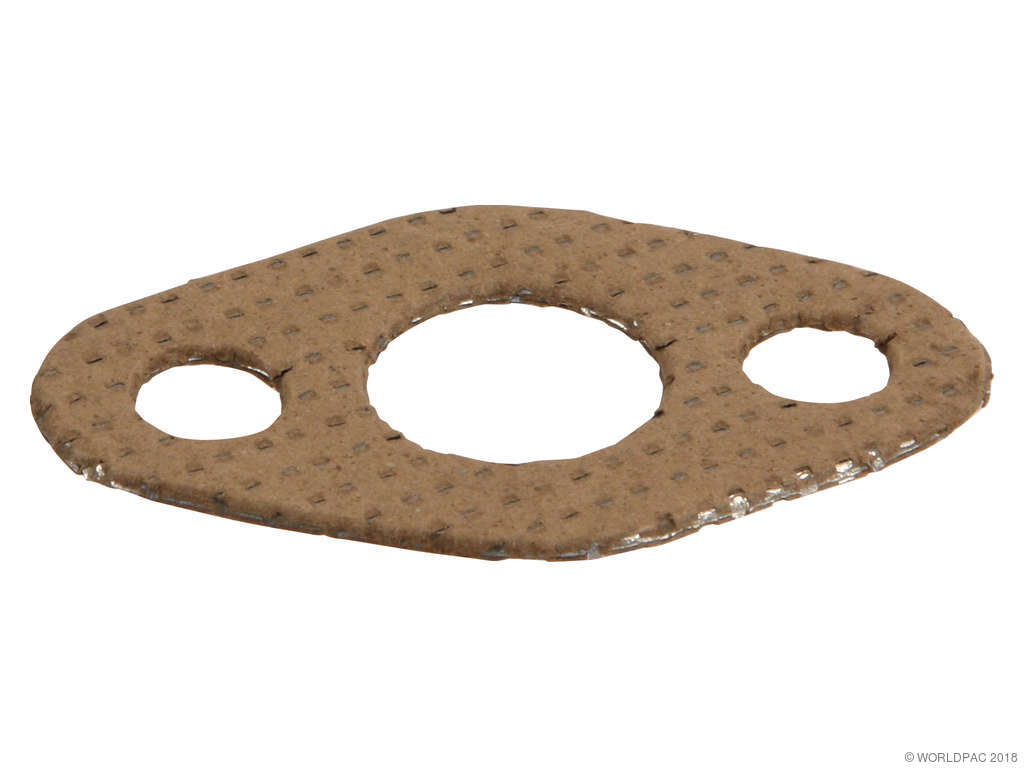
Aftermarket price range: $120-$200 - EGR Valve Gasket
(OEM #Included with most new valves)— A new gasket is required anytime the EGR valve is removed to ensure a proper seal and prevent exhaust leaks. Most new EGR valves include a gasket.
Trusted brands: Fel-Pro, Victor Reinz
OEM price range: $5-$15
Aftermarket price range: $2-$10
Related Codes That Often Appear With This One
- P0300 — A stuck-open EGR valve allows exhaust gas into the cylinders at idle, which can disrupt the air/fuel mixture and cause a random misfire (P0300).
- P0406 — This code indicates 'EGR Sensor A Circuit High,' which points to an electrical problem within the EGR valve's position sensor circuit. It often appears if the sensor itself has failed internally.
- P0404 — This code for 'EGR Circuit Range/Performance' can sometimes accompany P1404, indicating the PCM is seeing irrational values from the position sensor during the entire range of motion, not just at the closed position. 🎬 See this step-by-step Jeep EGR valve replacement walkthrough
Platform-Specific Known Issues
- Accessing the EGR valve bolts can be challenging due to the tight space at the back of the 3.7L engine bay.
- The bolts holding the EGR valve and tube can be prone to seizing or stripping, especially the Torx head bolts. Using a quality penetrating oil and the correct socket size is crucial to avoid complications.
Mechanic-Grade Diagnostic Values
- EGR Position Sensor Signal Voltage (Key On, Engine Off) — expected: ~0.9 Volts. Failure: Voltage significantly higher than 1.0V indicates the valve is not fully seated in the closed position, triggering P1404. A reading of 0V or 5V indicates an electrical circuit fault.
- EGR Position Sensor Signal Voltage Range — expected: ~0.9V (Closed) to ~3.9V (Fully Open). Failure: Voltage that is stuck, erratic, or does not change smoothly when commanding the valve open with a scan tool indicates a faulty sensor.
- EGR Solenoid Coil Resistance — expected: ~7 Ohms at 70°F (21°C). Failure: Resistance that is significantly higher (open) or lower (shorted) than 7 ohms indicates a failed solenoid coil within the EGR valve assembly.
- EGR Solenoid Control Circuit Voltage (During Scan Tool Test) — expected: Below 0.5 Volts when commanded OPEN. Failure: Voltage does not drop when the valve is commanded open, indicating high resistance in the control circuit or a faulty PCM driver.
Scan Tool Commands That Help
- wiTECH / DRB III / Professional Bidirectional Scanner: EGR System Test — This is the primary diagnostic command. It allows the technician to manually command the EGR valve to open by a certain percentage while the engine is running. A functional system will show a smooth change in sensor voltage on the scan tool data stream and cause the engine idle to become rough or stumble, confirming the valve is opening and exhaust is flowing.
Wiring & Ground Locations
- EGR Valve Connector (6-Pin) — On the EGR valve assembly, located at the rear of the engine.. This is the central point for all electrical testing. Pinpoint tests for voltage, ground, and signal should be performed here. The pinout is: Pin 1 (Signal), Pin 2 (5V Supply), Pin 3 (Sensor Ground), Pin 4 (Solenoid Ground), Pin 6 (Solenoid Control).
- G102 — Left rear side of the engine compartment.. This is a primary powertrain ground point. Corrosion or a loose connection at G102 can cause unstable or incorrect readings from various sensors, including the EGR position sensor, leading to false codes.
Real Owner Repair Stories
- JK-Forum user (Jeep Wrangler (JK) with similar EGR system design) — P1404 Check Engine Light.
❌ Tried (didn't work) Initial diagnosis pointed towards replacing the valve.
✅ What actually fixed it The owner removed the EGR valve and found the internal piston/pintle was stuck. After forcefully pushing it down and cleaning the assembly with carburetor cleaner until it moved freely, the valve was reinstalled. This resolved the P1404 code without the cost of a new part.
OEM Part Supersession History
53032948AC, 53032948AD, 53034192AA→53034192AB— Standard part evolution for design improvements, material changes, or supplier changes.
Heads up: All listed part numbers are interchangeable for the specified vehicle and engine. When ordering, the latest part number (53034192AB) will typically be supplied.
Diagnostic Flowchart
Other Known Issues on This Vehicle
Issues unrelated to this code that are worth knowing about as an owner of this generation:
- Dropped Valve Seats 🔴 High — Common on higher-mileage 3.7L engines, especially after an overheating event. Can cause misfires and catastrophic engine damage.
- Leaking Sunroof Drain Tubes 🟠 Medium — Very common across all model years. The drain tubes clog or detach, causing water to leak into the cabin, typically flooding the front passenger or driver footwells.
- Faulty Electronic Shifter Module (ESM) 🟠 Medium — Common issue where the vehicle gets stuck in Park or Neutral, or all gear indicator lights illuminate on the dash. Often requires replacement of the shifter assembly.
- Broken Exhaust Manifold Bolts 🟠 Medium — The bolts holding the exhaust manifold to the cylinder head are prone to breaking, causing an exhaust leak and a ticking noise, especially when the engine is cold.
- Totally Integrated Power Module (TIPM) Failure 🔴 High — A widespread issue on many Chrysler/Jeep/Dodge vehicles of this era. A failing TIPM can cause a vast array of bizarre electrical problems, including no-starts, stalling, fuel pump issues, and random activation of accessories. (Ref: Multiple recalls on other Jeep models, but diagnosis on the Commander often leads back to the TIPM.)
Used vs. New Parts: Buying Guide for This Vehicle
When a used part is the smart pick: Buying a used EGR valve is generally not recommended for this vehicle. The primary failure mode is carbon buildup or internal sensor wear, both of which are related to age and mileage. A used part from a junkyard is likely to have similar issues or a shortened lifespan.
Donor-vehicle mileage cap: roughly under 40000 miles for the part to have meaningful remaining life.
What to inspect on the donor part:
- Verify the pintle moves freely without any sticking or roughness.
- Check the electrical connector pins for any corrosion or damage.
- If possible, test the solenoid coil resistance with a multimeter; it should be around 7 ohms.
- Inspect the passages for any signs of excessive carbon that cannot be easily cleaned.
OEM-only on this vehicle (don't cheap out):
- While not strictly 'OEM-only', using a Mopar EGR valve is the safest bet to avoid calibration issues seen with some aftermarket parts.
Aftermarket brands forum-validated for this vehicle:
- Standard Motor Products (SMP) is a well-regarded aftermarket brand known for quality electronics and is a reliable alternative to OEM.
Brands owners have reported issues with on this vehicle:
- Dorman is sometimes cited by owners as being 'hit-or-miss' in quality for this specific part.
- Be cautious with unbranded, low-cost EGR valves from online marketplaces, as they are the most likely to have incorrect sensor calibrations or premature failures.
Real Owner Stories
Aggregated from forums and TSBs cited above. Mileages and costs reflect what owners reported in those sources.
2008 Jeep Liberty 3.7L V6
Symptoms: The vehicle experienced a P1404 code and an extended crank symptom when trying to start the engine.
What fixed it: The owner attempted to remove the EGR valve to address the code but encountered a common challenge where the Torx bolt became stripped during the process.
Source hint: Jeep KJ and KK Liberty Forum thread titled 'remove stripped torx from egr'
Related OBD-II Codes
Frequently Asked Questions
Where is the EGR valve located on the 3.7L Jeep Commander, and is it easy to reach?
Can I just clean the EGR valve on my Commander to fix P1404, or do I need a new one?
Why does my Jeep Commander have an extended crank time when starting?
Are there any specific tools I should use to avoid stripping the EGR bolts?
Does the P1404 code on my Commander mean I have a TIPM failure?
Is it worth buying a used EGR valve from a junkyard for my 3.7L V6?
Helpful Videos
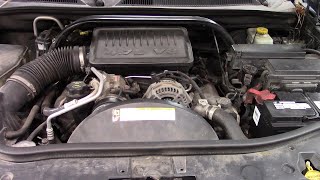
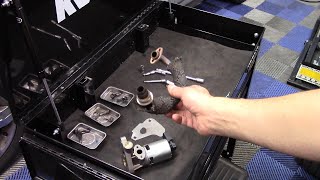
We Have This Part in Stock


The information in this article is provided for general reference and educational purposes only. Vehicle specifications, procedures, and part compatibility can vary by production date, trim level, and region. Always consult your vehicle's factory service manual and verify part numbers before purchasing or performing repairs. Safety-critical components such as airbags, seat belts, and braking systems should be installed by a qualified professional.
- Jeep Commander:
- 🧭 Diagnostic Flowchart
- 🎬 Helpful Videos
- 🛍️ Shop This Part
- What's Unique About the 2006-2010 Jeep Commander
- Symptoms You May Notice
- Most Likely Causes
- Rare But Worth Checking
- Technical Service Bulletins (TSBs) & Recalls
- Diagnosis Steps
- Parts You'll Likely Need
- Related Codes That Often Appear With This One
- Platform-Specific Known Issues
- Mechanic-Grade Diagnostic Values
- Scan Tool Commands That Help
- Wiring & Ground Locations
- Real Owner Repair Stories
- OEM Part Supersession History
- Other Known Issues on This Vehicle
- Used vs. New Parts: Buying Guide for This Vehicle
- Real Owner Stories
- 2008 Jeep Liberty 3.7L V6
- Related OBD-II Codes
- Frequently Asked Questions
- 🎟️ Get 5% Off