

OBD-II Code P1410: A Manufacturer-Specific Malfunction
What P1410 means, why it triggers, and how to fix it on your vehicle
- Verify your vehicle's specific P1410 definition before buying parts; it means a failed Secondary Air Injection (SAI) valve on a Subaru, a faulty fuel level sensor on a BMW, or a bad EGR sensor on a Toyota.
- For Subaru owners, P1410 almost guarantees a stuck-open SAI valve, a repair that frequently exceeds $1,500 because the valves are buried under the intake manifold.
- Never replace a dead secondary air pump without also replacing the one-way check valves; a stuck-open valve allows hot exhaust to flow backward and will destroy a new $300 pump within months.
- You can safely drive with a P1410 code, but your vehicle will automatically fail its next state emissions test and you risk destroying the catalytic converter over the next 12 months.
What Does P1410 Mean?
P1410 is a manufacturer-specific Diagnostic Trouble Code (DTC), meaning its definition changes depending on your vehicle's make. For Subaru and Honda, it signifies a fault in the Secondary Air Injection (SAI) system. This emissions system pumps fresh air into the exhaust for 30-90 seconds after a cold start to warm up the catalytic converter. For Toyota, BMW, or Chevrolet, this exact code points to entirely different systems: the EGR valve, fuel level sensor, or EVAP system, respectively.
Technical definition: The Engine Control Unit (ECU) triggers P1410 when a specific emissions or fuel monitoring circuit fails. On Subarus, it means 'Secondary Air Injection System Switching Valve Stuck Open'—the ECU commands the SAI system but detects incorrect exhaust pressure. On Toyotas, it means 'EGR Valve Position Sensor Circuit Malfunction'. On BMWs, it flags a 'Fuel level - impossible signal' from the tank senders. On Chevy Trackers, it indicates a 'Fuel Tank Pressure System' fault.
Can I Drive With P1410?

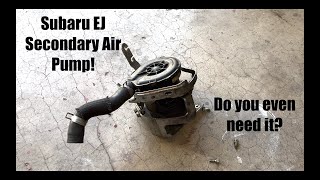
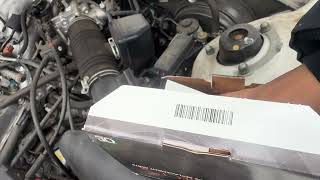
Yes, But With Caution. Yes, you can drive your car, as this code does not create an immediate safety issue or affect primary engine performance. However, your vehicle will fail an emissions test. If the code indicates a 'valve stuck open' (common on Subarus), repair it promptly. Continuing to drive allows hot exhaust gases to flow backward and destroy the air pump, adding $300-$800 to your final repair bill. 🎬 Watch: How to remove the Subaru secondary air pump If the code points to a fuel level sensor (BMW) or EVAP issue (Chevy Tracker), the main risks are an inaccurate fuel gauge or an emissions failure.
Common Causes

- Failed or Sticking SAI Check Valve (Subaru/VW) (Very Common) — This one-way valve prevents hot exhaust from flowing back into the air pump. It frequently sticks open or closed due to moisture and carbon buildup. A stuck-open valve allows corrosive exhaust gas to destroy the pump's motor.
- Failed Fuel Level Sensor (BMW) (Common) — On BMWs, P1410 indicates a failure of one of the two fuel level sending units inside the saddle-style gas tank, causing the ECU to receive an impossible resistance reading.
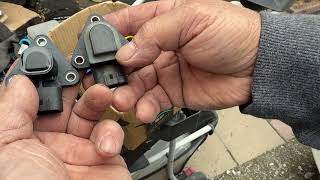
- Faulty EGR Valve Position Sensor (Toyota) (Common) — On Toyotas, the sensor that monitors the position of the Exhaust Gas Recirculation (EGR) valve fails electrically, or carbon buildup prevents the valve from moving to the commanded position. 🎬 See: Toyota EGR valve position sensor replacement and comparison
- Failed Secondary Air Injection Pump (Common) — The electric air pump burns out. This is almost always a secondary failure caused by water intrusion from a faulty check valve, which corrodes the pump's motor and bearings.
- EVAP Tank Pressure Solenoid Failure (Chevy Tracker) (Less Common) — On Chevy/Geo Trackers, this code flags a failure in the EVAP purge control circuit, most often a dead tank pressure control solenoid.
- Carbon Buildup in Air Passages (Less Common) — On VW, Audi, and Mercedes-Benz vehicles, small air passages in the cylinder head clog with hard carbon deposits, blocking airflow even if the pump and valves work perfectly.
- Blown Air Pump Relay or Fuse (Rare) — If the air pump motor struggles or seizes, it draws excessive current, burning out the control relay or blowing the fuse as a protective measure.
Symptoms

- Check Engine Light On — The most common symptom. On Subaru models, this is accompanied by a flashing cruise control light and disabled sport mode.
- Loud Whining or 'Vacuum Cleaner' Noise on Cold Start — A failing air pump sounds like a loud vacuum cleaner or a small jet engine for the first 30-90 seconds after a cold start. The noise disappears once the pump's cycle completes.
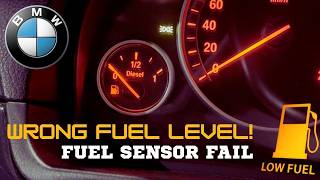
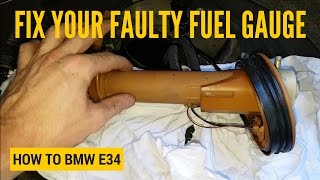
- Inaccurate or Erratic Fuel Gauge (BMW) — The fuel gauge sticks at a certain level (often half-full) or jumps randomly between empty and full. 🎬 Watch: Easy fix for BMW fuel gauge sensor issues
- Failed Emissions Test — Because P1410 flags an emissions control device (SAI, EGR, or EVAP), your vehicle automatically fails a state-mandated smog inspection.
- Soot or Water in Air Pump Hoses (also visible on scanner) — Finding black soot or moisture inside the air hoses proves the one-way check valve failed and is allowing exhaust to flow backward.
Diagnostic Flowchart
Tap your situation to follow the diagnostic path that matches what you're seeing on this code.
Common Fixes & Costs
- Replace Secondary Air Injection Check Valve(s) — Parts: $200-$500, Labor: $600-$1,500+, ~8.5 hr book time (Advanced)
- Replace BMW Fuel Level Sensor — Parts: $150-$350, Labor: $200-$400, ~2.5 hr book time (Intermediate)
- Replace Toyota EGR Valve Assembly — Parts: $250-$450, Labor: $150-$250, ~2.0 hr book time (Intermediate)
- Replace Secondary Air Injection Pump — Parts: $200-$800, Labor: $150-$300, ~1.5 hr book time (Intermediate)
- Replace EVAP Tank Pressure Solenoid (Chevy) — Parts: $30-$80, Labor: $100-$150, ~1.0 hr book time (Beginner)
- Clean Carbon from Air Passages — Parts: $20-$50, Labor: $400-$1,000+, ~5.0 hr book time (Advanced)
- Replace Air Pump Fuse or Relay — Parts: $10-$50, Labor: $0-$50, ~0.2 hr book time (DIY)
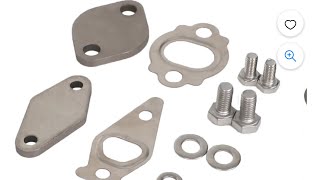
- SAI System Delete / Block-Off (Off-Road Use Only) — Parts: $50-$150, Labor: $200-$500, ~3.0 hr book time (Advanced)
Used vs. New Parts: Buying Guide
When a used part is worth it: For expensive electronic components like an SAI pump or BMW fuel sender from a low-mileage vehicle, a used OEM part offers 40-70% savings. It is practical for older vehicles where new OEM costs are prohibitive.
Donor-vehicle mileage cap: roughly under 80000 miles for the part to have meaningful remaining life.
Donor quality checklist:
- Verify the donor vehicle wasn't scrapped for a related emissions failure.
- For SAI components, avoid parts from regions with high humidity or heavy road salt, as moisture causes failure.
- Match the OEM part number exactly.
Decision logic:
- If The part is a simple relay or fuse → Always buy new; the cost is minimal.
- If The part is an SAI pump for a vehicle with over 100K miles on a tight budget → A tested, used OEM part from a reputable seller is a reasonable choice.
- If The part has a known high failure rate (like Subaru SAI valves) → Favor a new part, as used ones carry a high risk of premature failure.
Warranty tradeoff: Used parts typically come with a 30-90 day functional warranty. New aftermarket parts offer 1-year to lifetime warranties. New OEM parts carry a 12-month/12,000-mile warranty.
Worst-case if a used part fails: $400-1500 if a used pump or valve fails after installation, requiring repeat labor costs.
What Happens If You Wait — Timeline
- 0-1 month: Code P1410 sets. For SAI faults, there are no drivability symptoms. For BMW or Toyota faults, the fuel gauge is wrong or there are no symptoms. The car fails emissions testing. (MPG impact: 0-2%% · Added cost: $0)
- 1-6 months: If an SAI valve is stuck open, hot exhaust gases flow back into the air pump. The pump's internal motor and plastic impeller degrade from heat and corrosive moisture. (MPG impact: 1-3%% · Added cost: $50 in wasted fuel. Pump damage risk becomes significant.)
- 6-12 months: The secondary air pump seizes from heat and corrosion, blowing its dedicated fuse. The original stuck valve is now joined by a dead pump. The catalytic converter suffers from slow warm-ups. (MPG impact: 3-5%% · Added cost: $300-$800 for the destroyed air pump, on top of the original valve repair.)
- 12+ months: Sustained failure to warm the catalytic converter efficiently leads to premature catalyst failure. The substrate clogs, triggering P0420/P0430 codes. (MPG impact: 5-10%% · Added cost: $1200-$2800 for catalytic converter replacement.)
Cost of Not Fixing It
- 0-3 months: Guaranteed failure of any state emissions or smog inspection. (Added cost: Negligible, other than the cost of a failed test.)
- 3-12 months: If the code is due to a 'valve stuck open', hot exhaust continuously flows backward, destroying the secondary air pump. (Added cost: $300-$800 to replace the failed air pump in addition to the original valve repair.)
- 12+ months: Prolonged failure of the SAI system reduces the efficiency and lifespan of the catalytic converter. (Added cost: $1200-$2800 for catalytic converter replacement.)
Diagnosis Steps
- Verify Code Meaning by Make
Confirm what P1410 means for your specific vehicle. It is SAI for Subaru/VW, Fuel Level Sensor for BMW, EGR Position Sensor for Toyota, and EVAP for Chevy Tracker. Do not diagnose the wrong system.
Tools: OBD-II Scanner, Service Manual (Beginner) - Listen for Pump Operation on Cold Start (SAI Systems)
Have a friend start the car after it sits overnight. Stand near the air pump. You should hear it run for 30-90 seconds. Silence means a dead pump or blown fuse. A loud grinding noise means failing bearings.
Tools: A friend (Beginner) - Test the Check Valve(s) for Backflow (SAI Systems)
Disconnect the hose from the pump-side of the check valve. With the engine running, feel for exhaust gas escaping the valve. If you feel exhaust pulses, the valve is stuck open and must be replaced.
Tools: Pliers, screwdrivers (Intermediate) - Test BMW Fuel Level Sensor Resistance
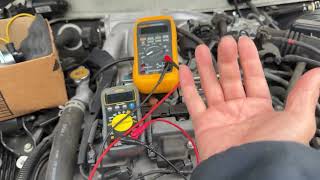
Access the fuel senders under the rear seat. Measure the resistance of each sender with a multimeter. For an E90, the right sender reads ~51 Ω empty and 652 Ω full. Open, shorted, or erratic readings indicate a failed sender.
Tools: Multimeter, trim removal tools, socket set (Advanced) - Test Toyota EGR Position Sensor Resistance
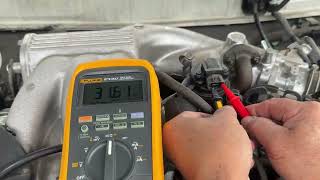
Test the EGR valve position sensor with an ohmmeter. Resistance between main terminals should be 4-6 kΩ. Apply vacuum to the valve; resistance should sweep smoothly from ~1.3 kΩ (closed) to ~4.2 kΩ (open).
Tools: Ohmmeter, vacuum pump (Mity-Vac), wiring diagram (Advanced) - Check the Fuse and Relay (SAI Systems)
Locate the fuse and relay for the 'AIR Pump'. Inspect the fuse. Swap the relay with an identical one from a non-critical system (like the horn) to see if the pump runs on the next cold start.
Tools: Owner's manual, fuse puller (Beginner) - Test the Air Pump Manually
Disconnect the electrical connector from the air pump. Use jumper wires to apply 12V directly from the battery to the pump's terminals. If it spins up, it is mechanically sound. If it does nothing, the motor is dead.
Tools: Jumper wires, basic hand tools (Intermediate) - Check Pressure Sensor Voltage (Subaru)
Back-probe the integrated pressure sensor's signal wire. With Key On, Engine Off, expect ~3.5-4.5V. When the pump turns on, voltage should drop to ~1.0-1.5V. Unchanging voltage means a failed sensor.
Tools: Multimeter, back-probe kit, wiring diagram (Advanced) - Perform an Air Pump Current Draw Test
Clamp a DC amp meter around the main power wire to the air pump. Command the pump on. A healthy pump draws 20-40 amps. 0 amps indicates an open circuit. Over 40 amps indicates a seized motor.
Tools: DC Amp Clamp, bi-directional scan tool (Advanced) - Use a Smoke Machine
Introduce low-pressure smoke into the SAI system starting at the pump outlet. Smoke emerging from hose connections or valve diaphragms pinpoints pressure leaks.
Tools: Low-pressure smoke machine, adapter fittings (Advanced)
When This Code Triggers (Freeze-Frame Conditions)
- Engine Coolant Temp: Below 122°F (50°C) (During a cold start. The SAI system monitor runs when the engine is cold to test primary functionality.)
- Time After Start: 0-120 seconds (The fault is detected during the brief window after a cold start when the air pump is commanded to run.)
- RPM: 700-2,000 RPM (The test runs at idle or slightly elevated idle immediately after starting.)
- Vehicle Speed: 0 mph (The initial system check occurs while the vehicle is stationary.)
Related Codes
- P0410 — The generic code for 'Secondary Air Injection System Malfunction'. If present with P1410, it confirms a general SAI system problem.
- P0411 — 'Secondary Air Injection System Incorrect Flow Detected'. Points directly to a physical blockage (carbon, stuck valve) or a massive leak.
- P2440 / P2441 — Highly specific codes for a 'Switching Valve Stuck Open' or 'Stuck Closed'. On a Subaru, P1410 triggered alongside P2440 confirms you must replace the valve assembly.
- P0418 — 'Secondary Air Injection System Relay 'A' Circuit Malfunction'. Indicates an electrical problem with the pump's control relay or circuit, not a mechanical failure.
Climate & Environmental Factors
- Cold Ambient Temperature: Low temperatures freeze moisture inside failing components, causing valves to stick or weak pump motors to seize during cold starts.
- High Humidity / Moisture: Humid air introduces moisture into the SAI system. When the exhaust cools, condensation flows backward through faulty check valves, corroding the pump.
- Road Salt (Winter Climates): Road salt accelerates corrosion on electrical components located low in the engine bay, leading to short circuits in the air pump wiring.
How to Talk to a Mechanic About This Code
Say this: "I have a P1410 code on my [Make/Model]. I've researched that for this specific car, it usually points to the [Specific System, e.g., 'Secondary Air Injection valves' or 'EGR position sensor']. I'd like to schedule a diagnostic to confirm the failure before replacing parts."
Signals to the shop that you're an informed customer. It directs them to the most likely cause, saving diagnostic time and preventing unrelated upsells.
Avoid saying:
- 'Just fix whatever's wrong'
- 'My check engine light is on, can you look at it?'
- 'Whatever you recommend'
Questions to ask before authorizing the repair:
- For Subaru SAI: Did you test the check valves for backflow and the pump for current draw?
- For Toyota EGR: Did you test the position sensor's resistance and check if the EGR passages are clogged?
- For BMW Fuel Sender: Can you show me the resistance readings from both sending units to confirm which one failed?
- Will you provide a written estimate with a clear breakdown of parts and labor costs?
Where to Take It: Dealer vs Independent vs Chain
- Dealer:
Recommended for in-warranty vehicles or complex German electrical issues. For the notorious Subaru SAI valve repair, they have extensive experience but charge a massive premium.
Best for: Vehicles still under an emissions or powertrain warranty., Complex, make-specific issues on German brands (e.g., BMW fuel sender)., Checking for open recalls or secret warranty extensions.
Downsides: Significantly higher labor rates., May recommend replacing an entire assembly when only a smaller component failed. (Typical cost: +50% vs. baseline) - Independent Shop:
Best fit for most P1410 scenarios. A reputable make-specific shop offers high-quality repair at a much lower cost than the dealer.
Best for: Out-of-warranty vehicles where cost is a major factor., Common, well-documented failures like the Subaru SAI system or Toyota EGR valve., Shops specializing in your vehicle's brand.
Downsides: Quality and expertise vary widely; vet shops based on reviews and ASE certification. (Typical cost: +0% vs. baseline) - Chain Shop:
AVOID. The diagnostic nuance of P1410 is too high for a typical chain shop. High risk of misdiagnosis or being sold unnecessary parts.
Best for: Simple, unrelated maintenance like oil changes or tire rotations.
Downsides: Technician skill varies dramatically., High pressure to upsell services., Lack of in-depth, make-specific diagnostic experience. (Typical cost: -10% vs. baseline)
When to Walk Away From the Repair
If the total estimated repair cost exceeds 40-50% of your car's private-party market value, seriously consider alternatives to the repair.
- Car worth $4500, fix is $2400: Walk away. The repair for Subaru SAI valves costs over 50% of the car's value. Consider an 'as-is' sale or an off-road block-off kit if legal.
- Car worth $12000, fix is $1800: Fix it. The repair cost is 15% of the vehicle's value, well within a reasonable threshold.
- Car worth $3000, fix is $450: Fix it. A $450 repair for a Toyota EGR valve or Chevy Tracker solenoid is a sensible investment to pass emissions.
What Scan Tool You Need for This Code
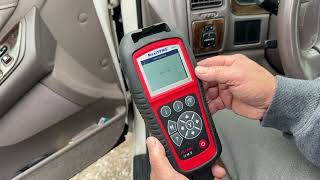
Minimum: A tool that reads manufacturer-specific codes and displays live sensor data. A basic code reader won't tell you what P1410 means for your specific car.
A $20 reader only shows 'P1410'. It won't tell you if it's a Subaru air valve, a BMW fuel sensor, or a Toyota EGR valve. You need live data like pressure sensor voltage or fuel level resistance to diagnose it.
Budget: BlueDriver Pro (~$100) — Connects to your smartphone, reads manufacturer-specific P1410 definitions, and graphs live data to watch sensor performance in real-time.
Mid-range: Foxwell NT510 Elite (~$159) — Offers bidirectional control. For an SAI system fault, this allows you to command the air pump and valves to turn on and off manually for testing.
Professional: Autel MaxiCOM MK906BT (~$500-1200) — Provides full professional-level bidirectional control, advanced coding functions, and comprehensive data logging. Overkill for a single DIY repair.
Rent vs buy: Renting a basic parts-store scanner is insufficient for P1410. Buying a budget or mid-range tool like a BlueDriver or Foxwell NT510 pays for itself by preventing a single misdiagnosis.
How to Clear the Code After You Fix It
- Use an OBD-II scan tool to clear diagnostic trouble codes.
- Ensure the fuel tank is between 1/4 and 3/4 full.
- Perform a complete drive cycle to allow readiness monitors to run.
Drive cycle (~30 minutes): Start the engine cold (after sitting 8+ hours) and idle for 3 minutes. Drive at a steady 55-60 mph for 15 minutes. Perform 15 minutes of stop-and-go city driving. Coast down from higher speeds without braking.
Readiness monitors affected: Secondary Air System, Catalyst Monitor, Oxygen (O2) Sensor Monitor
Before emissions retest: drive at least 100 miles to fully set monitors.
Watch out for:
- Disconnecting the battery clears the code but resets all readiness monitors to 'Not Ready', causing an automatic emissions failure.
- The Secondary Air monitor requires a cold start to run; simply driving around a warm engine will not set this monitor.
Will This Fail Emissions / State Inspection?
Yes — this code typically fails an OBD-II emissions inspection.
- California: An active P1410 code is an automatic smog check failure. After repair, you must complete a full drive cycle to set all readiness monitors before re-testing.
- New York: Any active Check Engine Light results in an immediate failure. The Secondary Air System is a required readiness monitor.
- Texas: In counties requiring emissions testing, an illuminated Check Engine Light for P1410 causes an automatic inspection failure.
Most Commonly Affected Vehicles
- Subaru WRX, STI, Forester XT, Legacy GT (2006-2017) — Extremely common for P1410 ('Valve Stuck Open'). The failure is almost always the check/switching valves seizing due to moisture. Repair is notoriously expensive on turbo models as valves sit under the intake manifold.
- BMW 3-Series (E90/E92), 5-Series, X3, X5 (2005-2016) — P1410 indicates an 'impossible signal' from the fuel level sensor, often on the left side of the saddle tank. Repair requires replacing the sensor assembly.
- Chevrolet / Geo Tracker (1999-2004) — P1410 points to an EVAP system fault, specifically a 'Fuel Tank Pressure System' or 'Tank Pressure Control Solenoid' malfunction. Repair costs are typically low.
- Toyota / Lexus Camry, Solara, ES300 (1998-2006) — P1410 indicates an 'EGR Valve Position Sensor Circuit Malfunction'. The fix is cleaning the EGR valve's carbon passages or replacing the position sensor.
- Audi / Volkswagen Various models with 2.0T, 1.8T, and V6/V8 engines (2002-2015) — Prone to carbon buildup blocking air passages in the cylinder head, pump failure from moisture, and cracked vacuum lines controlling the combination valve.
Manufacturer-Specific Notes
- Subaru: P1410 almost universally means 'Secondary Air Injection System Switching Valve Stuck Open'. This is a widespread failure on turbocharged models due to moisture corroding the valves.
- Toyota: P1410 typically means 'EGR Valve Position Sensor Circuit Malfunction'. On some models, it confusingly points to a 'Tire Pressure Monitoring System (TPMS) Warning Lamp Circuit Short'.
- BMW: P1410 points to a 'Fuel level - impossible signal' caused by a faulty fuel level sending unit, completely unrelated to emissions systems.
- Chevrolet / Geo: On the Tracker, P1410 indicates a fault with the 'Fuel Tank Pressure System' (EVAP), usually the tank pressure control solenoid.
Real Owner Stories
2006 Subaru WRX with 120,000 km
Check Engine Light illuminated with code P1410 (Secondary Air Combi Valve Seized Open).
What they tried:
- Researched the official repair, which requires removing the intake manifold for a multi-thousand dollar bill.
- Discovered an alternative method of inserting block-off plates between the pipes and the valves.
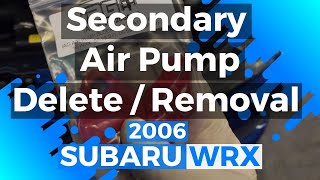
Outcome: The owner fabricated stainless steel block-off plates, installed them by only removing the intercooler, and used RomRaider software to clear the codes from the ECU. This solved the problem for off-road use without the massive repair bill.
Lesson: For the notorious Subaru P1410 issue, community-developed block-off plates offer a viable, cheaper alternative to full valve replacement if you have the technical skill for ECU modification and do not require emissions compliance.
1999 Toyota Camry with 107k miles
Check Engine Light appeared with no drivability symptoms. Code reader showed P1410 (EGR Valve Position Sensor Circuit Malfunction).
What they tried:
- Considered replacing the entire $300 EGR valve assembly immediately.
- Followed forum advice to clear the code, test the position sensor separately, and clean the EGR valve passages first.
Outcome: Cleaning the carbon-clogged EGR passages resolved the issue without requiring a new valve assembly.
Lesson: Don't immediately replace expensive components based on a code alone. For Toyota's P1410, carbon-clogged passages frequently trigger the code and resolve with cleaning.
2011 BMW E92 (N47 Diesel)
The fuel gauge became highly inaccurate, jumping randomly between empty and half-tank, triggering a P1410 fault.
What they tried:
- Accessed the two halves of the saddle-style fuel tank.
- Found the left sensor had a burnt ceramic plate and the right sensor float was physically stuck.
Outcome: The owner replaced the faulty right sensor with a used part and cleaned the electrical contacts on the left sensor, restoring normal fuel gauge operation.
Lesson: On BMWs with saddle tanks, P1410 means diagnosing both sending units individually. Cleaning contacts or freeing a stuck float saves money over replacing the entire fuel pump assembly.
2003 Chevrolet Tracker with 2.5L engine
Persistent Check Engine Light for EVAP purge control circuit (P1410) remained after replacing multiple sensors.
What they tried:
- Tested the EVAP purge solenoid and confirmed it received power.
- Tested the control wire from the Powertrain Control Module (PCM) and found it was not grounding to activate the solenoid.
Outcome: The driver circuit inside the PCM failed. Swapping in a used, plug-and-play PCM resolved the final code.
Lesson: When a component has a 'circuit malfunction' code, test the full circuit (power, ground, and PCM control signal) before condemning the part. Rarely, the engine computer itself fails.
How to Prevent This Code From Triggering
- Perform an 'Italian Tune-Up' periodically (Once a month) — Driving at higher RPMs on the highway increases exhaust temperatures, burning off soft carbon deposits from valves and passages before they harden.
- Use high-quality fuel with detergents (Every fill-up) — Top-tier gasoline contains additives that clean engine components, reducing unburnt fuel byproducts that cause carbon buildup in EGR and SAI passages.
- Avoid frequent short trips (Daily habit) — Short drives prevent the exhaust system from reaching full operating temperature, allowing moisture to accumulate and accelerate corrosion of SAI valves and pumps.
Frequently Asked Questions
What is the most common misdiagnosis for a P1410 code?
The biggest mistake is assuming P1410 always means a Secondary Air Injection (SAI) problem. You must verify the code's definition for your specific make and model. Diagnosing the SAI system on a Toyota wastes hours when the code actually points to the EGR valve.
Can I clean a secondary air injection valve or passage?
Yes, mechanics use solvents and long brushes to clear carbon buildup from clogged passages. However, cleaning a sticking valve only provides a temporary fix. Internal corrosion and worn seals cause the sticking, making replacement the only reliable long-term solution.
Why did my P1410 code appear when it got colder outside?
The SAI system operates primarily during cold starts. Low temperatures freeze moisture inside failing components, causing valves to stick or weak pump motors to seize. The issue disappears in warmer weather but serves as an early warning of a pending hard failure.
My P1410 code went away on its own. Am I in the clear?
No. SAI valves stick intermittently at first, prompting the ECU to clear the light if the fault doesn't immediately reoccur. The underlying internal corrosion or carbon buildup remains, guaranteeing the code will return permanently.
Is a P1410 repair covered under an emissions warranty?
Federal law mandates an 8-year/80,000-mile warranty on major emissions components, while other parts receive 2-year/24,000-mile coverage. Some manufacturers issue extended warranties for known SAI system defects. Check with your dealer using your VIN to verify your specific coverage.
Will I save money by replacing the pump and check valve at the same time?
Absolutely. A faulty check valve allows hot, moist exhaust to flow backward and destroy the air pump. If you only replace the dead pump, the bad valve will quickly destroy the new pump as well.
Can I just delete or bypass the secondary air injection system?
Removing or disabling emissions equipment on a road-going vehicle violates the Federal Clean Air Act. Doing so triggers an automatic failure of any state emissions inspection and carries significant fines.
Key Takeaways
- Verify your vehicle's specific P1410 definition before buying parts; it means a failed Secondary Air Injection (SAI) valve on a Subaru, a faulty fuel level sensor on a BMW, or a bad EGR sensor on a Toyota.
- For Subaru owners, P1410 almost guarantees a stuck-open SAI valve, a repair that frequently exceeds $1,500 because the valves are buried under the intake manifold.
- Never replace a dead secondary air pump without also replacing the one-way check valves; a stuck-open valve allows hot exhaust to flow backward and will destroy a new $300 pump within months.
- You can safely drive with a P1410 code, but your vehicle will automatically fail its next state emissions test and you risk destroying the catalytic converter over the next 12 months.
Helpful Videos
Shop the Parts Behind P1410
Below are the parts most often responsible for code P1410, ranked by how frequently each one is the actual culprit (per the diagnosis above). Tap any to see what we have for your vehicle.



The information in this article is provided for general reference and educational purposes only. Vehicle specifications, procedures, and part compatibility can vary by production date, trim level, and region. Always consult your vehicle's factory service manual and verify part numbers before purchasing or performing repairs. Safety-critical components such as airbags, seat belts, and braking systems should be installed by a qualified professional.
- 🧭 Diagnostic Flowchart
- 🎬 Helpful Videos
- 🛍️ Shop This Part
- What Does P1410 Mean?
- Can I Drive With P1410?
- Common Causes
- Symptoms
- Common Fixes & Costs
- Used vs. New Parts: Buying Guide
- What Happens If You Wait — Timeline
- Cost of Not Fixing It
- Diagnosis Steps
- When This Code Triggers (Freeze-Frame Conditions)
- Related Codes
- Climate & Environmental Factors
- How to Talk to a Mechanic About This Code
- Where to Take It: Dealer vs Independent vs Chain
- When to Walk Away From the Repair
- What Scan Tool You Need for This Code
- How to Clear the Code After You Fix It
- Will This Fail Emissions / State Inspection?
- Most Commonly Affected Vehicles
- Manufacturer-Specific Notes
- Real Owner Stories
- 2006 Subaru WRX with 120,000 km
- 1999 Toyota Camry with 107k miles
- 2011 BMW E92 (N47 Diesel)
- 2003 Chevrolet Tracker with 2.5L engine
- How to Prevent This Code From Triggering
- Frequently Asked Questions
- What is the most common misdiagnosis for a P1410 code?
- Can I clean a secondary air injection valve or passage?
- Why did my P1410 code appear when it got colder outside?
- My P1410 code went away on its own. Am I in the clear?
- Is a P1410 repair covered under an emissions warranty?
- Will I save money by replacing the pump and check valve at the same time?
- Can I just delete or bypass the secondary air injection system?
- Key Takeaways
- 🎟️ Get 5% Off