

OBD-II Code P1417: A Comprehensive Guide for Secondary Air System & Hemi MDS Faults
The Ultimate P1417 Resource: What it means, why it triggers, and how to fix it on your vehicle
- P1417 means a Secondary Air Injection (SAI) fault on most vehicles, but specifically indicates a Cylinder 7 Multi-Displacement System (MDS) failure on Dodge, Chrysler, and Jeep models.
- Never buy emissions parts for a Hemi with a P1417 code; diagnose the MDS solenoids, lifters, and camshaft instead.
- Replace the $50 check valve before the $400 air pump, as a stuck-open valve is the primary cause of pump failure.
- Pairing P1417 with a P0307 (Cylinder 7 Misfire) code on a Hemi guarantees a mechanical valvetrain failure requiring immediate professional repair.
- You can drive temporarily, but ignoring P1417 causes catalytic converter failure ($1,500+) on SAI systems or catastrophic camshaft destruction ($4,000+) on Hemi engines.
What Does P1417 Mean?
P1417 is a manufacturer-specific code. For most brands, it indicates a Secondary Air Injection (SAI) system flow issue on Bank 2. The SAI system pumps fresh air into the exhaust during cold starts to heat the catalytic converter faster. However, on Chrysler, Dodge, and Jeep vehicles, P1417 indicates a failure in the Multi-Displacement System (MDS) for cylinder 7.
Technical definition: For most manufacturers, P1417 translates to "Secondary Air Injection System Incorrect Flow Detected (Bank 2)". For modern Chrysler, Dodge, and Jeep vehicles with Hemi engines, P1417 is defined as "Cylinder 7 Reactivation Control Performance", indicating a fault in the cylinder deactivation system.
Can I Drive With P1417?
Yes, But With Caution. You can drive with a P1417 code, but you will fail an emissions test. Ignoring a secondary air system fault eventually clogs the catalytic converter, an $800-$2500 repair. On Dodge, Chrysler, or Jeep vehicles, this code indicates a Multi-Displacement System (MDS) issue. Short-term driving is possible, but it often precedes catastrophic lifter and camshaft failure exceeding $4,000. Driving with the associated misfire quickly destroys the catalytic converter.
Common Causes
- Failed Secondary Air Injection Check Valve (Very Common) — This one-way valve allows air into the exhaust but prevents exhaust gases from flowing back. It frequently gets stuck open or closed. When stuck open, hot, moist exhaust gas flows backward and destroys the air pump. When stuck closed, it prevents air from entering the exhaust, triggering the code.
- Failed Multi-Displacement System (MDS) Solenoid (Dodge/Chrysler/Jeep) (Very Common) — On Hemi engines, a faulty solenoid for cylinder 7 is a primary cause. These solenoids control oil flow to the MDS lifters. They fail electrically or become clogged with sludge when oil changes are neglected or the wrong viscosity oil is used.
- Clogged Secondary Air Passages (Very Common) — Over time, hard carbon deposits completely block the air passages inside the cylinder head or exhaust manifold. This is the most frequent cause of P1417 on GM V8 trucks and is common on Volkswagen/Audi models.
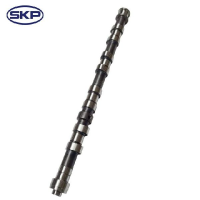
- Wiped Camshaft Lobe / Failed MDS Lifter (Dodge/Chrysler/Jeep) (Common) — This is a severe mechanical failure in Hemi engines. The MDS lifter for cylinder 7 collapses and gets stuck, or the corresponding camshaft lobe wears down. This prevents the cylinder from activating correctly and occurs alongside a P0307 misfire code. 🎬 See how to diagnose and fix a cylinder 7 misfire
- Failed Secondary Air Injection Pump (Common) — The electric air pump motor burns out or seizes. This is almost always a secondary failure caused by a leaking check valve allowing water and exhaust to enter the pump. On Toyota trucks, it fails from ingesting degraded foam filter material.
- Leaking or Cracked Hoses (Less Common) — The rubber and plastic hoses connecting the SAI system components become brittle with age and heat, leading to cracks and vacuum leaks. Deteriorated vacuum lines are a common source of lean condition codes like P0171 and P0174.
- Damaged Wiring or Connectors (Less Common) — Wiring to the air pump, control solenoid, or MDS solenoids degrades from heat, vibration, or corrosion. The main connector on the air pump is particularly vulnerable to weather exposure.
- Faulty Air Pump Relay or Fuse (Rare) — The relay that powers the high-current air pump fails, or the circuit fuse blows. This is the first component to check when the pump does not run at all.
Symptoms
- Check Engine Light is On — This is the most common, and sometimes only, symptom a driver notices.
- Loud Vacuum/Hairdryer Noise at Cold Start — A failing or normally operating secondary air pump sounds like a loud vacuum cleaner for 30-90 seconds after a cold engine start. An unusually loud grinding or whining indicates failing pump bearings.
- Failed Emissions Test — The vehicle automatically fails an emissions test because the SAI system is an essential, monitored pollution control device.
- Reduced Engine Power / 'Limp Mode' — On Dodge/Chrysler/Jeep vehicles, a persistent MDS fault causes the ECU to enter 'limp mode' to prevent further damage, limiting engine RPM and power.
- Rough Idle, Hesitation, or Misfire (Dodge/Chrysler/Jeep) (also visible on scanner) — When P1417 is caused by an MDS fault, the engine runs rough, hesitates, and logs a misfire code (P0307) because cylinder 7 is not firing correctly.
Diagnostic Flowchart
Tap your situation to follow the diagnostic path that matches what you're seeing on this code.
Common Fixes & Costs
- Replace Secondary Air Injection Check Valve — Parts: $40-$250, Labor: $100-$200, ~1.2 hr book time (Beginner)
- Replace MDS Solenoid — Parts: $50-$150, Labor: $300-$600, ~3.5 hr book time (Advanced)
- Replace Secondary Air Injection Pump — Parts: $150-$600, Labor: $150-$350, ~1.5 hr book time (Intermediate)
- Clean Clogged Cylinder Head Passages — Parts: $20-$50, Labor: $500-$1000, ~6 hr book time (Advanced)
- Replace Camshaft and Lifters (Dodge/Chrysler/Jeep) — Parts: $1000-$1800, Labor: $2000-$3500, ~16 hr book time (Professional)
Used vs. New Parts: Buying Guide
When a used part is worth it: Used electronic parts like MDS solenoids or SAI pumps are budget-friendly if sourced from a reputable seller with a warranty. For internal engine components like a camshaft or lifters, buying used is high-risk and never recommended.
Donor-vehicle mileage cap: roughly under 60000 miles for the part to have meaningful remaining life.
Donor quality checklist:
- Verify the part number matches exactly.
- For mechanical parts, get high-quality pictures to check for visible wear, scoring, or rust.
- Buy from sellers with a positive reputation and a clear return policy.
Decision logic:
- If Part is electronic (pump, solenoid) and vehicle is high-mileage (>120k) → A warrantied used part is a reasonable choice to save money.
- If Part is internal engine (camshaft, lifters) → Buy new. The labor cost is too high to risk using a part with an unknown history.
- If New aftermarket part has an upgraded design (e.g., metal vs. plastic housing) → Favor the new, improved aftermarket part over OEM or used.
Warranty tradeoff: Used parts from recyclers typically offer a 30-90 day warranty. New aftermarket parts usually come with a 1-year to limited lifetime warranty. New OEM parts carry a 1-2 year warranty.
Worst-case if a used part fails: $600-$3500 if a used part fails. This cost represents the repeated labor for the job, plus the cost of another replacement part.
What Happens If You Wait — Timeline
- 0-1 month: Code is set, Check Engine Light is on. For SAI faults, no symptoms are felt. For Hemi MDS, a very slight rough idle or minor hesitation occurs. The vehicle fails an emissions test. (MPG impact: 0-2%% · Added cost: $0)
- 1-4 months: For SAI: A leaking check valve allows moisture into the air pump, causing corrosion. For Hemi MDS: The faulty lifter or solenoid causes intermittent misfires (P0307) under light load. A noticeable 'Hemi tick' starts. (MPG impact: 3-8%% · Added cost: $50-$150 in wasted fuel.)
- 4-12 months: For SAI: The air pump motor seizes or burns out from moisture damage. For Hemi MDS: The roller on the failed lifter seizes and grinds away the camshaft lobe, causing persistent misfires and sending metal particles into the oil. (MPG impact: 5-15%% · Added cost: $300-$950 (SAI pump replacement needed). For Hemi, initial camshaft damage begins, repair cost escalates to $2,500+.)
- 12+ months: For SAI: Prolonged rich cold starts overheat and damage the catalytic converter. For Hemi MDS: The camshaft lobe is completely wiped out. The engine runs extremely rough, loses power, and metal debris circulates throughout the oiling system. (MPG impact: 15-25%+% · Added cost: $1,200-$2,800 (Catalytic Converter). $4,000-$7,000+ (Hemi camshaft/lifter replacement).)
Cost of Not Fixing It
- 0-3 months: Guaranteed failure of state emissions inspection. For Hemi MDS, a 5-10% drop in fuel economy as the system will not engage. (Added cost: Negligible, other than re-test fees.)
- 3-12 months: For SAI faults, a stuck-open check valve destroys the air pump via moisture backflow. For Hemi MDS, a faulty solenoid or lifter begins scoring the camshaft lobe. (Added cost: $300-$950 (SAI pump replacement), $2,500+ (initial Hemi cam damage))
- 12+ months: For SAI faults, prolonged rich cold-start conditions overheat and destroy the catalytic converter. For Hemi MDS, a failed lifter completely wipes out the camshaft lobe, sending metal debris through the engine. (Added cost: $1,200-$2,800 (Catalytic Converter), $4,000-$7,000+ (Hemi Cam/Lifter replacement))
Diagnosis Steps
- Scan for All Codes and Review Freeze Frame Data
Use an OBD-II scanner to check for other codes. On a Hemi, P1417 pairs with P0307 (Cylinder 7 Misfire). On other cars, it appears with P1416 (Bank 1 fault) or P0410/P0411 (general system faults). Freeze frame data shows the exact engine conditions when the code set.
Tools: OBD-II Scanner (Beginner) - Listen for the Air Pump at Cold Start
With the engine completely cold, have a helper start the car while you listen under the hood. You should hear a vacuum cleaner sound run for 30-90 seconds and shut off. If you hear it, the pump and relay are good. If you hear nothing, suspect the pump, fuse, or relay.
Tools: None (Beginner) - Test the Check Valve
Disconnect the large hose from the Bank 2 check valve. Start the engine cold and feel for air coming out of the hose to confirm pump operation. After the pump stops, feel the inlet of the valve for exhaust pressure leaking out. Look inside the valve for black soot or moisture, which confirms failure. Use a hand vacuum pump to test if the valve opens under 5-10 inHg of vacuum.
Tools: Pliers, Hand Vacuum Pump (Intermediate) - Diagnose MDS Solenoid and Oil Pressure (Dodge/Chrysler/Jeep)
Confirm the engine has 5W-20 oil at the proper level. Use a scan tool to command the cylinder 7 MDS solenoid on and off; listen for a click. Disconnect the solenoid connector and measure resistance between the pins (specification is 10-15 ohms). Verify proper oil pressure with a gauge; MDS requires 16-25 PSI at idle.
Tools: OBD-II Scanner with Live Data, Multimeter, Oil Pressure Gauge (Advanced) - Test the Air Pump and Relay Manually
If the pump did not run, check the fuse. Swap the pump relay with an identical relay (like the horn relay). Use a bidirectional scanner or power probe to command the relay on. If the relay clicks but the pump stays off, apply 12V power and ground directly to the pump motor to confirm motor failure.
Tools: Multimeter, Power Probe or Jumper Wires, OBD-II Scanner with Bidirectional Controls (Intermediate) - Visually Inspect Hoses, Wiring, and Connectors
Inspect all rubber and plastic hoses connected to the air pump and check valves for cracks, brittleness, or disconnections. Check the electrical connector at the pump and control solenoids for corrosion, pushed-out pins, or melted plastic.
Tools: Flashlight (Beginner) - Check for Blockages in Cylinder Head
On GM trucks, remove the check valve and tube from the exhaust manifold. Use a mechanic's pick or stiff wire to probe the air passage. If you feel a hard blockage, the passage is clogged with carbon and requires manual cleaning with carburetor cleaner and compressed air.
Tools: Socket Set, Gasket Scraper, Mechanic's Pick Set, Compressed Air (Advanced) - Physical Lifter Check (Dodge/Chrysler/Jeep)
Remove the Bank 1 valve cover. Rotate the engine so the cylinder 7 valves are closed (cam lobes pointing away from rockers). Pry gently under the rocker arm for the intake and exhaust valves. A healthy lifter has no give. If a rocker arm lifts visibly, the MDS lifter has collapsed.
Tools: Socket Set, Small Pry Bar (Advanced) - In-Cylinder Pressure Analysis
Install an in-cylinder pressure transducer in place of the spark plug. The oscilloscope waveform visually shows the compression, exhaust, intake, and power strokes. On a Hemi with a failed MDS lifter, the waveform shows no exhaust event or very low compression, definitively proving mechanical failure.
Tools: Oscilloscope, In-Cylinder Pressure Transducer (Professional)
When This Code Triggers (Freeze-Frame Conditions)
- Engine Coolant Temp: 40-85°F (SAI) / 180-210°F (MDS) (SAI triggers on cold start; MDS triggers when fully warmed up.)
- RPM: 1200-3000 (MDS activates during steady-state cruise, not at idle or high RPM.)
- Engine Load: 20-40% (Indicates light, steady throttle application, typical for highway cruising where MDS is active.)
- Vehicle Speed: 30-70 mph (MDS engages at steady cruising speeds to improve fuel economy.)
Related Codes
- P1416 — Identical fault but for Bank 1. On a Dodge, it points to cylinder 6 reactivation. Having both codes points to a shared component like oil pressure (MDS) or the air pump relay (SAI).
- P0307 — On Dodge/Chrysler/Jeep, 'Cylinder 7 Misfire Detected' confirms the P1417 code is a real performance issue, strongly suggesting a failed MDS lifter or wiped camshaft.
- P0492 — The generic SAE equivalent code for 'Secondary Air Injection System Insufficient Flow Bank 2'. European manufacturers use this instead of P1417.
- P0411 — Generic code for 'Secondary Air Injection System Incorrect Flow Detected'. Indicates the ECU activated the pump but didn't see the expected change in oxygen sensor readings.
- P0410 — A general fault for the Secondary Air Injection System. The ECU knows there is a problem but cannot isolate it to a specific bank or component.
Climate & Environmental Factors
- Cold Weather: Cold temperatures force the ECU to run the air pump longer (up to 120 seconds), increasing the chance of detecting a flow issue. Moisture from a leaking check valve freezes, jamming the pump motor or valve.
- Humidity / Moisture: High humidity creates more condensation in the exhaust. If the check valve fails, this moisture flows backward and corrodes the air pump bearings and electrical components.
- Short Trips: Frequent short trips prevent the exhaust from getting hot enough to burn off condensation. Accumulated moisture accelerates the failure of check valves and the air pump.
- Altitude: At higher altitudes, less dense air forces the SAI pump to work harder to move the required volume, putting additional strain on aging pump motors.
How to Talk to a Mechanic About This Code
This signals you've done your research and directs the technician to the most likely failure points. It prevents them from simply replacing the most expensive part (the SAI pump) or misdiagnosing the Hemi MDS issue as an emissions problem, saving you money on diagnostic time and incorrect repairs.
Avoid saying:
- 'My check engine light is on, can you look at it?'
- 'Just fix whatever is wrong.'
- 'I think I need a new air pump.' (Don't diagnose for them)
Questions to ask before authorizing the repair:
- For a Hemi: Did you confirm a mechanical failure with a physical inspection or pressure test, or is it just an electrical solenoid?
- For an SAI system: Did you confirm the pump runs? Did the check valve fail its test? Was there moisture in the line?
- Can you provide a written estimate with a clear breakdown of parts and labor?
- What is the warranty on the parts and your labor for this specific repair?
Where to Take It: Dealer vs Independent vs Chain
- Dealer:
Best for: Vehicles under warranty (powertrain or emissions)., Complex Hemi MDS camshaft/lifter replacement., Diagnosing manufacturer-specific quirks if an independent shop is stumped.
Downsides: Highest labor rates, often 1.5-2x an independent shop., Recommends replacing an entire assembly vs. a smaller failed component. (Typical cost: +50% vs. baseline) - Independent Shop:
Best overall fit. For SAI faults, it is a routine repair for a competent indie shop. For Hemi MDS faults, choose a top-rated shop with proven experience in domestic engine repair.
Best for: Out-of-warranty vehicles., Standard SAI system repairs (pumps, valves, hoses)., Hemi MDS solenoid replacement (if they are experienced with these engines).
Downsides: Quality and experience vary greatly; vet shops by reviews and ASE certifications., Lacks expensive, specialized tools for major engine work. (Typical cost: +0% vs. baseline) - Chain Shop:
AVOID. The complexity and dual-meaning of P1417 make it a poor fit for the chain shop model. There is a high risk of misdiagnosis, leading to wasted money and unresolved problems.
Best for: Simple, unrelated maintenance like oil changes or tires.
Downsides: High pressure to upsell; technicians lack the deep diagnostic skill for this code., Very likely to misdiagnose a Hemi MDS fault or just throw parts at an SAI fault. (Typical cost: -10% vs. baseline)
When to Walk Away From the Repair
If the estimated repair cost exceeds 40-50% of your car's private-party value (from a source like Kelley Blue Book), you should pause and consider alternatives.
- Car worth $15000, fix is $1100: Fix it. The repair cost for a new SAI pump and valve is well below the threshold.
- Car worth $8000, fix is $4500: Borderline, lean towards walking away. A Hemi camshaft/lifter replacement exceeds 50% of the car's value. Get a second opinion, but it is likely time to sell or trade in.
- Car worth $3000, fix is $1800: Walk away. The repair cost is over 50% of the car's value. Putting this much money into an older, lower-value car is rarely a good investment.
What Scan Tool You Need for This Code
Minimum: A scanner with bidirectional control is highly recommended for this code.
A basic $20 reader only shows the P1417 code. It cannot command the SAI pump or MDS solenoids to activate, which is a critical diagnostic step. Without bidirectional control, you are guessing at the cause and waste hundreds on unneeded parts.
Budget: BlueDriver Pro Scan Tool (~$100) — Connects to your smartphone and offers live data graphing for O2 sensors, freeze frame data, and reads manufacturer-specific codes. It provides detailed repair reports helpful for DIYers.
Mid-range: Kingbolen S6 Elite / Foxwell NT510 Elite (~$250) — Provides full bidirectional control, the key feature needed for P1417. You can command the SAI pump to turn on to verify operation or activate individual MDS solenoids to hear them click, directly testing the component without removing it.
Professional: Autel MaxiCOM MK808S / Launch X431 Series (~$500-1200) — Offers full, OE-level bidirectional controls, advanced data graphing, and access to all vehicle modules. These are professional-grade tools that are overkill for a one-time fix but essential for a repair shop or serious enthusiast.
Rent vs buy: Auto parts stores like AutoZone and O'Reilly read your codes for free, which is a good first step to confirm the code number. However, their loaner tools do not have the bidirectional features needed for a full diagnosis of P1417. If you plan to do the diagnosis yourself, buying a mid-range scanner is a wise investment.
How to Clear the Code After You Fix It
- Use an OBD-II scan tool to clear diagnostic trouble codes.
- Ensure the fuel tank is between 15% and 85% full.
- Perform a complete drive cycle to allow readiness monitors to run.
Drive cycle (~20 minutes): Start engine from cold and idle for 2-5 minutes. Accelerate to 55 mph and hold steady for 3-5 minutes. Let the vehicle coast down to 20 mph without braking. Repeat acceleration and coasting 2-3 times. Allow the engine to cool completely (8+ hours) and repeat if monitors are not set.
Readiness monitors affected: Secondary Air System, Catalyst, Oxygen (O2) Sensor
Before emissions retest: drive at least 50 miles to fully set monitors.
Watch out for:
- Clearing codes with a scanner resets all readiness monitors to 'Not Ready', causing an automatic emissions test failure.
- The code returns immediately if the underlying mechanical or electrical fault is not properly repaired.
Will This Fail Emissions / State Inspection?
Yes — this code typically fails an OBD-II emissions inspection.
- California: An active P1417 code is an automatic failure. All readiness monitors must be 'Ready'. Clearing the code results in a 'Not Ready' status, causing a failure until a full drive cycle is completed.
- New York: The NYVIP3 inspection checks for any stored or pending trouble codes. P1417 causes an immediate test failure.
- Texas: In counties requiring emissions testing, an illuminated Check Engine Light is an automatic failure. Inspectors scan the OBD-II system, and this code prevents the vehicle from passing.
Most Commonly Affected Vehicles
- Dodge/Ram/Jeep Ram 1500, Charger, Grand Cherokee with 5.7L Hemi (2006-2021) — P1417 exclusively indicates a Multi-Displacement System (MDS) failure for cylinder 7. This is often a bad solenoid, but frequently points to a collapsed lifter and wiped camshaft lobe.
- Chevrolet/GMC Silverado, Sierra, Tahoe, Suburban, Yukon (1999-2007) — Prone to secondary air injection passages in the cylinder heads becoming completely blocked by carbon. TSB 03-06-04-032A addresses this exact issue.
- BMW 3-Series (E46), 5-Series (E39), X3, X5 (1999-2006) — Suffers from a brittle plastic check valve that fails, allowing moisture to flow back and destroy the air pump. TSB SI B11 03 05 exists for these components.
- Toyota Tundra, Sequoia (2007-2013) — The pump assembly contains foam filters that degrade, get sucked into the pump, and cause it to seize. Toyota issued warranty enhancement CSP ZHA for this issue.
- Subaru Forester, Outback, Impreza, Legacy (Non-turbo) (2006-2012) — High failure rate for both the air pump and combination valves. Subaru issued a warranty extension (WQW-58R) for these parts on many affected vehicles.
- Chevrolet Corvette (C5) (1997-2004) — Check valves are a common failure item. The Bank 2 valve is notoriously difficult to reach, tucked behind the intake manifold.
- Audi/Volkswagen A4, Jetta, Golf, Passat with 1.8T, 2.8L, 4.2L (2000-2008) — Experiences failures of the 'Kombiventil' (combination valve) and air pump. Carbon buildup in the secondary air ports is also a well-documented issue.
- Ford Thunderbird, Lincoln LS (2000-2005) — On the 3.9L V8, P1417 is defined as 'Port Air Relief Circuit Malfunction', pointing to an electrical fault with the control solenoid or wiring harness.
Manufacturer-Specific Notes
- Dodge/Chrysler/Jeep: P1417 is NOT an emissions code. It refers exclusively to the Multi-Displacement System (MDS) for cylinder 7. Diagnosis must focus on oil pressure, MDS solenoids, lifters, and the camshaft. Using anything other than 5W-20 oil causes MDS problems.
- General Motors (Chevy/GMC): The primary cause on V8 trucks is carbon buildup completely blocking the air passages inside the cylinder heads. The official repair (TSB 03-06-04-032A) requires a labor-intensive cleaning process. Replacing the pump or valves will not fix this.
- BMW: Failures are a chain reaction. The plastic check valve fails, allowing hot, moist exhaust to flow backward and seize the expensive electric pump. You must replace the check valve when replacing the pump.
- Subaru: Due to high failure rates of secondary air valves, Subaru issued warranty extension WQW-58R covering these parts for up to 10 years/120,000 miles or 15 years/150,000 miles. Check with a dealer before paying for repairs.
- Toyota: The air pump assembly contains foam sound-dampening filters that deteriorate and jam the pump. Toyota acknowledged this with Customer Support Program ZHA, extending the warranty to 10 years or 150,000 miles.
Real Owner Stories
2011 Ram 1500 5.7L Hemi at 106K miles
Check engine light appeared the morning after an oil change, with code P1417. This happened mid-way through a road trip, preceded by a P0307 (Cylinder 7 Misfire) code. The truck ran rough at all speeds.
What they tried:
- Suspected the shop used the wrong oil weight and had them change it again for free; no change.
- Replaced all 16 spark plugs.
- Replaced the cylinder 7 ignition coil.
Outcome: The issue was diagnosed as a wiped camshaft lobe and a failed lifter on cylinder 7. The owner faced a major engine repair.
Lesson: On a Hemi, the combination of P1417 and a misfire code like P0307 almost always points to a mechanical failure of the camshaft and lifters. Do not waste money on coils or plugs before inspecting the valvetrain.
2005 Chevy Silverado 5.3L
Check Engine Light with SAI codes. The owner suspected a common failure point.
What they tried:
- The owner correctly identified that the most common issue on these GM trucks is clogged secondary air passages in the cylinder head, as noted in TSB 03-06-04-032A.
Outcome: The fix required removing the exhaust manifold to manually clean hard carbon deposits out of the small air ports in the cylinder head. This is a labor-intensive but low-parts-cost repair.
Lesson: Always check for Technical Service Bulletins (TSBs). For GM trucks, replacing the pump or valves for an SAI code is a common misdiagnosis; the root cause is a blockage requiring physical cleaning.
BMW E46 3-series
Owner had a code for the secondary air system (P0492, the generic equivalent of P1417).
What they tried:
- Replaced the secondary air pump, but the code returned.
Outcome: The actual problem was a failed check valve. The failed valve allowed moisture and exhaust to flow backward, which destroyed the new pump. The owner had to replace the pump again, along with the faulty check valve.
Lesson: The SAI pump is almost always destroyed by a separate component failure, usually the check valve. When replacing a failed air pump, you must replace the check valve to prevent a costly repeat failure.
2012 Subaru Forester
Check Engine Light came on for a secondary air system fault.
What they tried:
- Owner researched the code and found that Subaru had a high failure rate for these components.
Outcome: The owner contacted a Subaru dealer and discovered their vehicle was covered under a special warranty extension (WQW-58R) covering the air valves and pump for up to 15 years/150,000 miles. The repair was free.
Lesson: Before paying for repairs on known high-failure parts, check with a dealer for warranty extensions or customer support programs. Manufacturers like Subaru and Toyota have issued these for SAI problems, saving owners thousands.
How to Prevent This Code From Triggering
- Use correct oil viscosity and change frequently (Hemi MDS) (Every 3,000-5,000 miles) — The Hemi MDS system is extremely sensitive to oil quality and pressure. Using only the specified 5W-20 synthetic oil prevents sludge from clogging the tiny passages in the MDS solenoids and lifters.
- Avoid excessive engine idling (Hemi MDS) (Daily habit) — At idle, Hemi engines produce their lowest oil pressure. Prolonged idling leads to oil starvation at the lifter roller bearings, accelerating wear and leading to catastrophic lifter failure.
- Perform an 'Italian Tune-Up' (Monthly) — Driving the vehicle at higher RPMs on the highway for a sustained period increases exhaust temperatures, burning off soft carbon deposits from intake valves and SAI passages before they harden.
- Use Top-Tier rated gasoline (Every fill-up) — High-quality fuels contain effective detergent additives. These detergents clean intake valves and combustion chambers, reducing carbon deposits that clog SAI passages.
- Install an oil catch can or air-oil separator (One-time modification) — These devices capture oil and fuel vapors before they enter the intake tract. This significantly reduces deposits that form on intake valves and in SAI ports, preventing future clogs.
Frequently Asked Questions
What is the most common misdiagnosis for P1417?
For Dodge/Chrysler/Jeep, the biggest mistake is diagnosing the secondary air system instead of the MDS. For other cars, it is replacing the expensive air pump when the true fault is a cheap stuck check valve. Always test components before replacing them.
Why is P1417 different for a Dodge Ram than a Chevy Silverado?
P1xxx codes are manufacturer-specific, meaning the carmaker defines them. GM, Ford, and BMW use P1417 for secondary air injection faults. Chrysler uses it to report faults within their Multi-Displacement System (MDS).
Can using the wrong oil cause a P1417 code?
Yes, but only on Dodge, Chrysler, or Jeep vehicles with the MDS system. These systems require the specific oil pressure and flow characteristics of 5W-20 oil. Thicker oil prevents the MDS solenoids and lifters from operating correctly.
Can I just clean the secondary air check valve?
Cleaning is usually a temporary fix. The internal diaphragm that prevents exhaust backflow fails from heat and age, which cleaning cannot solve. Replacement is the most reliable repair.
Can I disable the MDS system on my Hemi to fix P1417?
Disabling the MDS with an aftermarket tuner stops the system from activating, which hides the code if the issue is a faulty solenoid. However, if a lifter has physically collapsed, the cylinder will still misfire continuously. Disabling MDS does not fix underlying mechanical damage.
Why did P1417 appear on a very cold morning?
Cold weather forces the ECU to run the air pump longer, increasing the chance of detecting a flow problem. Additionally, moisture from a leaking check valve freezes inside the pump. This ice jams the pump motor or valve, triggering the code.
What is Bank 2?
Bank 2 refers to the side of the engine that does not contain cylinder number 1. On V-shaped engines (V6, V8), it is one of the two cylinder banks. Inline engines only have one bank, so they rarely use Bank 2 codes.
Key Takeaways
- P1417 means a Secondary Air Injection (SAI) fault on most vehicles, but specifically indicates a Cylinder 7 Multi-Displacement System (MDS) failure on Dodge, Chrysler, and Jeep models.
- Never buy emissions parts for a Hemi with a P1417 code; diagnose the MDS solenoids, lifters, and camshaft instead.
- Replace the $50 check valve before the $400 air pump, as a stuck-open valve is the primary cause of pump failure.
- Pairing P1417 with a P0307 (Cylinder 7 Misfire) code on a Hemi guarantees a mechanical valvetrain failure requiring immediate professional repair.
- You can drive temporarily, but ignoring P1417 causes catalytic converter failure ($1,500+) on SAI systems or catastrophic camshaft destruction ($4,000+) on Hemi engines.
Helpful Videos

Shop the Parts Behind P1417
Below are the parts most often responsible for code P1417, ranked by how frequently each one is the actual culprit (per the diagnosis above). Tap any to see what we have for your vehicle.




The information in this article is provided for general reference and educational purposes only. Vehicle specifications, procedures, and part compatibility can vary by production date, trim level, and region. Always consult your vehicle's factory service manual and verify part numbers before purchasing or performing repairs. Safety-critical components such as airbags, seat belts, and braking systems should be installed by a qualified professional.
- 🧭 Diagnostic Flowchart
- 🎬 Helpful Videos
- 🛍️ Shop This Part
- What Does P1417 Mean?
- Can I Drive With P1417?
- Common Causes
- Symptoms
- Common Fixes & Costs
- Used vs. New Parts: Buying Guide
- What Happens If You Wait — Timeline
- Cost of Not Fixing It
- Diagnosis Steps
- When This Code Triggers (Freeze-Frame Conditions)
- Related Codes
- Climate & Environmental Factors
- How to Talk to a Mechanic About This Code
- Where to Take It: Dealer vs Independent vs Chain
- When to Walk Away From the Repair
- What Scan Tool You Need for This Code
- How to Clear the Code After You Fix It
- Will This Fail Emissions / State Inspection?
- Most Commonly Affected Vehicles
- Manufacturer-Specific Notes
- Real Owner Stories
- 2011 Ram 1500 5.7L Hemi at 106K miles
- 2005 Chevy Silverado 5.3L
- BMW E46 3-series
- 2012 Subaru Forester
- How to Prevent This Code From Triggering
- Frequently Asked Questions
- What is the most common misdiagnosis for P1417?
- Why is P1417 different for a Dodge Ram than a Chevy Silverado?
- Can using the wrong oil cause a P1417 code?
- Can I just clean the secondary air check valve?
- Can I disable the MDS system on my Hemi to fix P1417?
- Why did P1417 appear on a very cold morning?
- What is Bank 2?
- Key Takeaways
- 🎟️ Get 5% Off