

P1427 on 2016-2017 Chevrolet Volt: EGR Plausibility and Software Fixes
On a 2016-2017 Chevy Volt, code P1427 is almost always caused by a software glitch in the Engine Control Module (ECM). The definitive fix, outlined in GM Technical Service Bulletins, is a dealer-performed software update, which owners report typically costs between $150 and $250. Replacing parts before this update is a common misdiagnosis.
- For a 2016-2017 Chevy Volt, P1427 almost always points to a software issue, not a bad part.
- The first and most important step is to have a dealer check for and apply any available ECM software updates, as specified in multiple GM TSBs.
- Do not replace the EGR valve or any sensors unless the ECM software has been confirmed to be up-to-date and the code persists.
- This code is often accompanied by other codes like P0300, P1429, P040B, and P041B, all of which are typically resolved by the same software update.
What's Unique About the 2016-2017 Chevrolet VOLT
The second-generation (2016-2019) Chevrolet Volt is unique regarding this code because General Motors officially acknowledged a widespread software issue. Multiple Technical Service Bulletins (TSBs) were released confirming that the original ECM calibration was too sensitive and could incorrectly flag P1427, often along with other codes like P0300 (misfire) and P1429. This makes a software check the mandatory first step, as replacing parts before updating the ECM will not solve the problem.
Diagnostic Flowchart
Tap your situation to follow the diagnostic path that matches what you're seeing on this vehicle.
Symptoms You May Notice
- Check Engine Light (Malfunction Indicator Lamp) is illuminated
- Engine may run rough or vibrate excessively for a short period, especially when starting in cold weather.
- The code often appears during or after the engine runs due to cold temperatures (Engine Running Due to Temperature - ERDTT).
- Replacing the EGR valve or sensors before verifying the ECM software is up-to-date. The TSBs make it clear that the software is the most probable culprit, and owners who replace parts first often find the code returns until the reprogram is performed.
Most Likely Causes
- Outdated Engine Control Module (ECM) Software 🔴 High Probability → Shop Engine Control Module (ECM) GM issued multiple TSBs (e.g., SB-32340-B, GCUS-3-421, 15-NA-080 and its successors) for the 2016-2017 Volt, explicitly stating a software update is available to correct a condition where DTC P1427 may set incorrectly.
How to confirm: A Chevrolet dealer or a repair shop with GM diagnostic tools (like GDS2) can check the ECM's current software calibration ID and verify if a newer version is available per the TSBs.
Typical fix: Reprogram ('flash') the Engine Control Module with the latest GM-approved software calibration. Owners on forums report paying between $150 and $250 for this service at a dealership.
Est. part cost: $0 - Faulty or Clogged EGR Valve ⚪ Low Probability → Shop Exhaust Gas Recirculation (EGR) Valve The Volt's gasoline engine often runs in short, intermittent cycles, which can contribute to carbon buildup in the EGR system over time. A stuck or slow-moving EGR valve can cause implausible temperature readings, but this is far less common than the software issue.
How to confirm: If the ECM software is confirmed to be up-to-date, a technician would then inspect the EGR valve for carbon deposits and test its operation using a scan tool to command it open and closed.
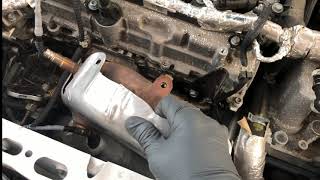
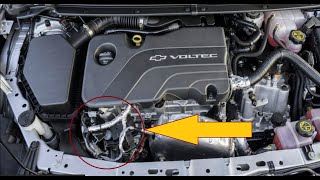
Typical fix: Clean or replace the EGR valve and associated passages. The EGR gasket should be replaced at the same time. 🎬 See this step-by-step walkthrough for replacing the EGR valve.
Est. part cost: $150-$350
Rare But Worth Checking
- Faulty EGR Temperature Sensor: While the code definition points to a sensor plausibility issue, the sensor itself failing is much less common than the software glitch or a clogged valve. This should only be considered after the software and EGR valve have been ruled out.
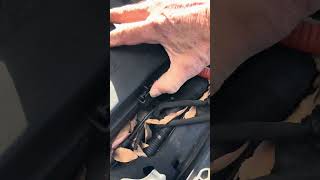
- Wiring Harness or Connector Issue: Damage to the wiring for the EGR valve or its temperature sensor could cause an open or short 🎬 Watch: How to disconnect the EGR plug and check the fuse., leading to incorrect signals. This is worth checking if the software is updated and the EGR valve is clean.
Diagnosis Steps
- Connect a professional scan tool capable of communicating with GM modules.
- Check for any Technical Service Bulletins (TSBs) related to the VIN. Specifically look for SB-32340-B, GCUS-3-421, 15-NA-080, or any superseding bulletins like 16-NA-095.
- Verify the current software calibration on the Engine Control Module (ECM).
- If an update is available, have a dealership or qualified shop reprogram the ECM. This is the most likely fix.
- Clear the codes and perform a drive cycle, preferably including a cold start, to see if the code returns.
- If the code returns after the software update, proceed with physical diagnosis.
- Inspect the EGR valve for heavy carbon buildup. 🎬 Watch: How to correctly clean and flush the EGR system. Command the EGR valve open and closed with a scan tool to check for proper mechanical operation.
- Inspect the wiring and connectors for the EGR valve and EGR temperature sensor for any signs of damage, corrosion, or looseness.
- Monitor live data from the EGR temperature sensor and intake air temperature sensor to check for readings that are illogical or do not change with engine conditions.
Parts You'll Likely Need
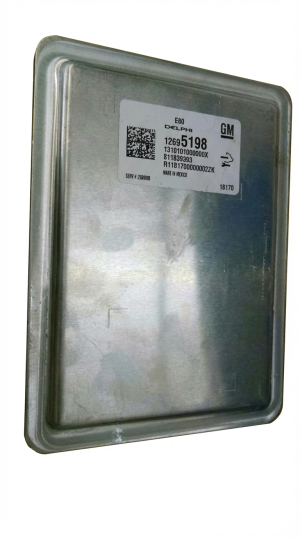
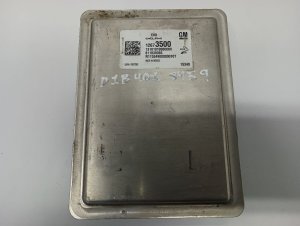
- Engine Control Module (ECM) Reprogram — This is not a physical part, but a software service. It is the most common and officially documented fix for P1427 on this vehicle as per GM TSBs.
Trusted brands: GM Service Programming System (SPS)
OEM price range: $150-$250
Aftermarket price range: N/A - Exhaust Gas Recirculation (EGR) Valve
(OEM #12673531)— If the ECM software update does not resolve the issue, the next most likely cause is a physical EGR valve that is stuck or clogged with carbon.
Trusted brands: ACDelco
OEM price range: $250-$350
Aftermarket price range: $150-$250 - EGR Valve Gasket
(OEM #12657379)— This gasket should always be replaced when the EGR valve is removed for cleaning or replacement to ensure a proper seal.
Trusted brands: ACDelco
OEM price range: $10-$20
Aftermarket price range: $5-$15
Related Codes That Often Appear With This One
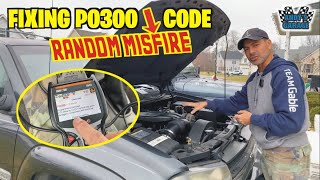
- P0300 — Random Misfire. The GM TSBs explicitly group P1427 with P0300 as codes that can be set incorrectly by the same software glitch. Forum discussions frequently mention these two codes appearing together.
- P1429 — Another manufacturer-specific EGR-related code mentioned in the same TSBs as being resolved by the ECM reprogram.
- P040B — EGR Temperature Sensor 'A' Circuit Range/Performance. This code is also listed in the TSBs as being potentially set in error by the software bug.
- P041B — Secondary Air Injection System Switching Valve 'B' Circuit Range/Performance. Also mentioned in the TSBs as part of the same software issue.
- P050D — Cold Start Rough Idle. TSB SB-32340-B links this code to the same software update that fixes P1427.
Technical Service Bulletins (TSBs) & Recalls
- SB-32340-B: Advises dealers to reprogram the Engine Control Module to correct a condition where DTCs P040B, P041B, P1427, and P1429 may set incorrectly.
- GCUS-3-421: Similar to the above, notes that a software update is available to prevent P1427 and other codes from setting incorrectly.
- 15-NA-080: Describes a Malfunction Indicator Lamp (MIL) being on and lists P1427 as one of the possible DTCs that may be set due to the software issue. This TSB was later superseded by other bulletins.
- 16-NA-095: A later bulletin that also addresses software updates for various DTCs and drivability concerns, representing the evolution of GM's software fixes for this platform.
Platform-Specific Known Issues
- A known software anomaly in the Engine Control Module for 2016-2017 models causes P1427 to be set incorrectly. This is documented in GM TSBs #SB-32340-B, #GCUS-3-421, and #15-NA-080.
- Real-World Repair Story: A typical owner experience involves a 2017 Volt throwing codes P1427 and P0300, particularly on a cold morning when the gas engine kicks on. The owner, after researching online, takes the car to a dealer and specifically mentions the TSBs. The dealer confirms a software update is available, performs the ECM reprogram for a fee (e.g., $180), and the issue is permanently resolved without replacing any parts.
Mechanic-Grade Diagnostic Values
- EGR Temperature Sensor Resistance vs. Temperature — expected: At 25°C (77°F), resistance should be approximately 3000 Ohms. At 100°C (212°F), resistance should be approximately 204 Ohms.. Failure: Readings that are significantly outside of the expected resistance curve, or an open/shorted circuit reading.
Scan Tool Commands That Help
- GM GDS2 (or equivalent professional scan tool): EGR Valve Control — After confirming the ECM software is up-to-date. This bidirectional command allows the technician to manually command the EGR valve to open and close. While commanding the valve, the technician should monitor the EGR temperature sensor and engine RPM. A functioning valve will cause a change in temperature and may cause the engine to run rough or stall when opened at idle, confirming mechanical operation.
Wiring & Ground Locations
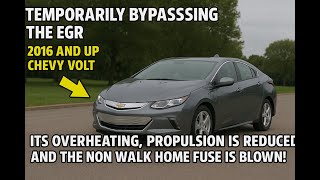
- F03 (Underhood Fuse Block) — In the underhood fuse block, located in the engine compartment on the driver's side. It is a 15A mini fuse, often in the top-left position.. A short circuit within the electronic EGR valve can cause this specific fuse to blow. When it blows, it can lead to a 'Propulsion Power Reduced' or 'Propulsion Power Disabled' message. Some owners disconnect the faulty EGR valve and replace this fuse as a temporary measure to make the vehicle drivable.
- G103 — On the left front (driver's side) of the engine block. It is part of the main negative battery cable harness.. This is a primary engine ground. While not directly linked to P1427 in TSBs, poor engine grounds are a known cause for random misfires (P0300) and other erratic sensor readings on GM vehicles. Since P1427 is often accompanied by P0300, ensuring this ground is clean and tight is a valid diagnostic step if software and EGR valve checks are inconclusive.
Real Owner Repair Stories
- Reddit user in r/volt (2017 Chevrolet Volt) — Check Engine Light, 'Propulsion Power Reduced', then 'Propulsion Power Disabled', and an engine overheating message.
❌ Tried (didn't work) Letting the car cool down only allowed it to be limped to a dealer.
✅ What actually fixed it The dealer diagnosed a failed EGR valve which had shorted internally, causing the F03 'non-walk-home' fuse to blow. Due to a nationwide backorder on the EGR valve, the temporary fix was to disconnect the EGR valve's electrical connector and replace the blown 15A F03 fuse. This allowed the car to run normally but with a persistent Check Engine Light, which would cause it to fail an emissions test. - Reddit user No-Bottle7328 (2017 Chevrolet Volt) — Unspecified problems leading to a dealer visit.
❌ Tried (didn't work) A trusted mechanic attempted to clean the EGR valve and EGR cooler, but could not get the system to function correctly, indicating a full internal failure of the valve.
✅ What actually fixed it The issue was a complete failure of the EGR valve and associated components. The final repair involved waiting two months for a back-ordered part and replacing the EGR valve, EGR cooler, and other small parts. The total cost was approximately $3,900, with the main EGR part quoted by GM at $2,400 and labor around $1,000.
OEM Part Supersession History
12667038, 12674163→12691147 (New), 19436113 (Remanufactured)— Standard part evolution and introduction of a remanufactured option. There have been widespread reports of long-term backorders and shortages for all versions of this part.
Heads up: All listed part numbers (12667038, 12674163, 12691147, 19436113) are reported by the community to be compatible with the 2016-2017 Volt.
Helpful Videos
We Have This Part in Stock

The information in this article is provided for general reference and educational purposes only. Vehicle specifications, procedures, and part compatibility can vary by production date, trim level, and region. Always consult your vehicle's factory service manual and verify part numbers before purchasing or performing repairs. Safety-critical components such as airbags, seat belts, and braking systems should be installed by a qualified professional.
- Chevrolet VOLT:
- 🧭 Diagnostic Flowchart
- 🎬 Helpful Videos
- 🛍️ Shop This Part
- What's Unique About the 2016-2017 Chevrolet VOLT
- Symptoms You May Notice
- Most Likely Causes
- Rare But Worth Checking
- Diagnosis Steps
- Parts You'll Likely Need
- Related Codes That Often Appear With This One
- Technical Service Bulletins (TSBs) & Recalls
- Platform-Specific Known Issues
- Mechanic-Grade Diagnostic Values
- Scan Tool Commands That Help
- Wiring & Ground Locations
- Real Owner Repair Stories
- OEM Part Supersession History
- 🎟️ Get 5% Off