

OBD-II Code P1429: A Complete Diagnostic and Repair Guide
What P1429 means, why it triggers, and how to fix it on your specific vehicle
What Does P1429 Mean?
P1429 is a manufacturer-specific code with drastically different meanings based on your car brand. For Volkswagen and Audi, it signals a critical electrical failure in the auxiliary brake vacuum pump circuit, disabling power brakes. For the 2016-2017 Chevrolet Volt, it is a known software bug. For Ford and BMW, it points to a failure in the secondary air injection emissions control system.
Technical definition: The official SAE/OBD-II definition of P1429 varies by manufacturer. Volkswagen and Audi define it as 'Brake System Vacuum Pump Activation Open Circuit', meaning the engine computer (ECM) detects a broken electrical path to the power brake assist pump. Ford defines it as 'Electric Air Pump Primary Failure'. BMW defines it as a 'Diagnostic Module Tank Leakage (DMTL) Heater Malfunction' or secondary air pump fault.
Can I Drive With P1429?
No — Do Not Drive. Driving is not recommended. On affected VW and Audi models, this code signifies a complete failure of the power brake assist system. This increases your required stopping distance by 50-100% in a panic stop. The brake pedal requires 3-5 times more physical force to depress, creating a severe and immediate safety hazard. The vehicle must be towed for immediate repair.
Common Causes
- Failed Electric Brake Vacuum Pump (VW/Audi) (Very Common) — The electric motor inside the brake vacuum pump assembly burns out or seizes, creating the 'open circuit' condition detected by the computer.
- Blown Vacuum Pump Fuse (VW/Audi) (Common) — A failing vacuum pump draws excessive current and blows its dedicated fuse (typically 15A or 20A). If a replacement fuse blows immediately, the pump motor is shorted and requires replacement.
- Faulty Brake Booster Pressure Sensor (VW Atlas) (Common) — On the VW Atlas, a faulty brake booster pressure sensor frequently fails and triggers P1429 alongside P0556. Replacing this sensor is the definitive first diagnostic step for this specific model.
- Outdated ECM Software (Chevy Volt) (Common) — On 2016-2017 Chevrolet Volts, this code is a known software glitch. The ECM incorrectly reports a fault when no hardware is broken, requiring a dealer-performed software update per GM TSB #15-NA-080.
- Failed Secondary Air Injection Pump (Ford/BMW) (Less Common) — The emissions system's secondary air injection (SAI) pump fails electrically. This pump reduces emissions during cold starts and does not affect braking.
- Damaged Wiring or Connector (Less Common) — Engine bay vibrations and heat cause wires leading to the pump to chafe, break, or corrode. The electrical connector at the pump often becomes brittle and interrupts the circuit.
- Faulty Relay (Rare) — Worn contacts or a faulty coil inside the brake vacuum pump relay create an open circuit, preventing power from reaching the pump even if the fuse is intact.
Symptoms
- Hard Brake Pedal (VW/Audi) — The brake pedal becomes extremely stiff and requires 3-5 times more physical effort to press down.
- Increased Stopping Distance (VW/Audi) — The vehicle takes 50-100% longer to stop due to the complete loss of power brake assist.
- Dashboard Warnings — The Check Engine Light illuminates, often accompanied by a red or yellow brake warning light and a 'Brake booster faulty' message.
- Driver-Assist Systems Disabled — Safety systems relying on brake intervention, such as Adaptive Cruise Control (ACC) and Front Assist, automatically disable.
- Audible 'Pop' From Fuse Box — A distinct pop from the fuse box occurs at the exact moment power assist is lost, indicating the pump motor shorted and blew the fuse.
Common Fixes & Costs
- Replace Electric Brake Vacuum Pump (VW/Audi) — Parts: $250-$500, Labor: $150-$400, ~1.5 hr book time (Intermediate)
- Replace Brake Booster Pressure Sensor (VW Atlas) — Parts: $40-$90, Labor: $50-$150, ~0.5 hr book time (DIY)
- Update ECM Software (Chevy Volt) — Parts: $0, Labor: $125-$250, ~1.0 hr book time (Professional)
- Replace Blown Fuse — Parts: $1-$5, Labor: $0, ~0.1 hr book time (DIY)
- Replace Secondary Air Injection Pump (Ford/BMW) — Parts: $200-$600, Labor: $105-$200, ~1.2 hr book time (Intermediate)
- Repair Damaged Wiring or Connector — Parts: $10-$50, Labor: $100-$300, ~1.5 hr book time (Intermediate)
Used vs. New Parts: Buying Guide
When a used part is worth it: A used electric brake vacuum pump from a low-mileage donor vehicle is cost-effective if the budget is tight and the vehicle has high mileage.
Donor-vehicle mileage cap: roughly under 60000 miles for the part to have meaningful remaining life.
Donor quality checklist:
- Verify the part number matches exactly.
- Inspect the electrical connector for corrosion or melting.
- Avoid parts from flood-damaged or rust-belt vehicles.
Decision logic:
- If Vehicle is under 100K miles and you plan to keep it long-term → Buy a new OEM or high-quality aftermarket (Pierburg) part for the warranty.
- If The failure is on a critical safety system like brakes → Favor new. The peace of mind is significant when safety is on the line.
Warranty tradeoff: Used parts offer a 30-90 day warranty. New aftermarket parts (Pierburg) come with a 1-2 year warranty.
Worst-case if a used part fails: $300-$600 if a used pump fails prematurely, requiring duplicate labor and parts.
What Happens If You Wait — Timeline
- Immediate (VW/Audi Brake Fault): An open circuit is detected in the brake vacuum pump. Power brake assist is completely lost, creating an immediate collision hazard. (MPG impact: 0%% · Added cost: $1000 - $20,000+ (from potential collision))
- 0-1 Month (Ford/BMW Emissions Fault): The Secondary Air Injection pump fails. The car drives normally but emits excess pollutants during cold starts. (MPG impact: 0-1%% · Added cost: $0)
- 1-6 Months (Ford/BMW Emissions Fault): The vehicle automatically fails state emissions inspections. Sustained rich cold-start conditions begin stressing the catalytic converter. (MPG impact: 1-2%% · Added cost: $50-$150 (inspection fees and fines))
Cost of Not Fixing It
- Immediate: Catastrophic loss of power brake assist on VW/Audi models. Stopping distances increase by 50-100%, creating a severe collision risk. (Added cost: Collision damage ($1,000 - $20,000+), injury, or fatality.)
- 0-1 month: Continued driving puts extreme stress on the driver. The vehicle will fail state safety inspections. (Added cost: Towing fees ($100-$300) when the vehicle is deemed unsafe to drive.)
- 1-6 months: For Ford/BMW, the vehicle fails state emissions inspections, leading to fines or registration suspension. (Added cost: $50-$150 in inspection fees and fines.)
Diagnosis Steps
- Identify Vehicle Manufacturer
Identify your vehicle's make. A VW with P1429 has a critical brake problem, a Chevy Volt has a software bug, and a BMW has an emissions issue.
Tools: None (Beginner) - Scan for All Fault Codes
Use an OBD-II scanner to confirm P1429. Note any other codes, especially P0556, which commonly appears with P1429 on VW/Audi vehicles.
Tools: OBD-II Scanner (Beginner) - Check the Pump Fuse
Locate the fuse box and find the fuse for the brake vacuum pump or secondary air pump (often F17, F21, or F31 on VWs). A blown fuse is a simple fix, but if it blows again, the pump motor is shorted.
Tools: Fuse Puller, Multimeter (Beginner) - Test for Power at the Pump
With the ignition on, use a multimeter to test for power and ground at the pump's electrical connector. If ~12V and ground are present but the pump doesn't run, the pump has failed internally.
Tools: Multimeter (Intermediate) - Inspect Wiring and Connector
Visually inspect the wiring harness going to the pump. Look for chafing, melting, breaks, or corrosion on the connector pins.
Tools: Flashlight (Intermediate) - Verify ECM Software Version (Chevy Volt)
For a 2016-2017 Chevy Volt, contact a dealer to check if the ECM software is outdated per TSB #15-NA-080. Do not replace parts.
Tools: Phone (Advanced) - [PRO TIP] Measure Pump Motor Current Draw
For VW/Audi, use a DC amp clamp around the pump's power wire. Command the pump on. A healthy pump draws 6-10 amps. 0A confirms an open circuit. >10A confirms a shorted motor.
Tools: DC Amp Clamp, Bi-directional OBD-II Scanner (Advanced) - [PRO TIP] Test the Brake Booster Pressure Sensor Voltage
For VW/Audi with P1429 and P0556, back-probe the sensor's signal wire. With the engine off, voltage should be ~4.5V. At idle, it should drop to ~0.5V. A stuck signal indicates a failed sensor.
Tools: Multimeter or Oscilloscope, Back-probe pins (Advanced)
When This Code Triggers (Freeze-Frame Conditions)
- Engine State: Varies (The ECU continuously monitors the pump circuit. The code sets immediately if an open circuit is detected during a self-test or when the pump is commanded to run.)
- Brake Booster Pressure: < 500 mbar (The pump is commanded on when the sensor detects low vacuum. If the pump fails to run, pressure remains high, and the fault logs.)
- System Voltage: 9V - 16V (The code typically sets when system voltage is normal. Extremely low battery voltage triggers other codes but occasionally causes erroneous P1429 faults.)
How to Clear the Code After You Fix It
- Use an OBD-II scan tool to clear all diagnostic trouble codes (DTCs).
- Perform a complete drive cycle to allow the vehicle's readiness monitors to run.
- Re-scan the vehicle to ensure P1429 has not returned.
Drive cycle (~20 minutes): Cold start and idle for 3 minutes. Drive at a steady 45-55 mph for 7 minutes. Accelerate to 60-65 mph and cruise for 5 minutes. Decelerate and idle for 3 minutes.
Readiness monitors affected: Clearing the code resets all monitors to 'Not Ready' status.
Before emissions retest: drive at least 50 miles to fully set monitors.
Watch out for:
- Disconnecting the battery clears the code but resets all readiness monitors, guaranteeing an emissions test failure.
- The code returns immediately if the underlying electrical fault is not repaired.
Will This Fail Emissions / State Inspection?
Yes — this code typically fails an OBD-II emissions inspection.
- California: An illuminated Check Engine Light is an automatic failure. A complete drive cycle must be performed after repair.
- New York: A vehicle automatically fails the emissions inspection if the Check Engine Light is on.
- Texas: An illuminated MIL results in an automatic failure. Vehicles 2001 and newer are allowed only one 'Not Ready' monitor.
Real Owner Stories
2019 VW GTI - The Classic Pump Failure
Check Engine Light illuminated alongside a 'Brake booster faulty' warning. The brake pedal became extremely hard to press.
What they tried:
- Checked the vacuum pump fuse (F31, 15A) and found it blown.
- Replaced the fuse, which blew immediately upon starting the car, confirming a dead short.
Outcome: Replaced the electric brake vacuum pump assembly and the blown fuse. This completely resolved P1429 and restored normal brake function.
Lesson: On a VW/Audi with a hard brake pedal, a blown fuse confirms a failed pump. If a new fuse blows instantly, the pump motor is shorted and must be replaced.
2019 VW Atlas - The Misleading Sensor Issue
Intermittent 'Brake booster faulty' warning and codes P1429 and P0556 stored.
What they tried:
- Took the vehicle to a mechanic for diagnosis due to safety concerns.
Outcome: Mechanic diagnosed a faulty brake booster pressure sensor. Replacing the sensor (Part No. 5Q0906207B) resolved both fault codes.
Lesson: For a VW Atlas with P1429 and P0556, the pressure sensor is the primary failure point. Start diagnosis there to avoid an unnecessary pump replacement.
2017 Chevy Volt - The 'Ghost Code' Software Bug
Check Engine Light appeared with code P1429. The car drove perfectly with no braking or performance symptoms.
What they tried:
- Researched the code and found GM Technical Service Bulletin #15-NA-080.
Outcome: The dealer reprogrammed the Engine Control Module (ECM) with updated software. No parts were replaced, and the code never returned.
Lesson: For a 2016-2017 Volt, P1429 is a software glitch. Do not let a shop replace hardware; demand the dealer software update.
How to Prevent This Code From Triggering
- Apply an underbody anti-corrosion spray annually (Once per year, before winter) — The VW/Audi electric vacuum pump mounts low on the subframe, exposing its connector to road salt. A hydrophobic barrier prevents corrosion that causes open circuits.
- Clean the pump's electrical connector (Every 30,000 miles) — Disconnect the connector, inspect for green corrosion, and clean with electronics contact spray to ensure a solid connection.
- Inspect the Secondary Air Injection check valve (Ford/BMW) (Every 60,000 miles) — A stuck-open check valve allows hot exhaust gas to flow backward, melting the AIR pump and causing electrical failure.
Shop the Parts Behind P1429
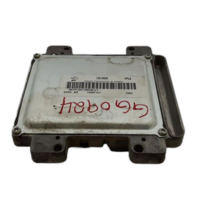
Below are the parts most often responsible for code P1429, ranked by how frequently each one is the actual culprit (per the diagnosis above). Tap any to see what we have for your vehicle.




The information in this article is provided for general reference and educational purposes only. Vehicle specifications, procedures, and part compatibility can vary by production date, trim level, and region. Always consult your vehicle's factory service manual and verify part numbers before purchasing or performing repairs. Safety-critical components such as airbags, seat belts, and braking systems should be installed by a qualified professional.
- 🛍️ Shop This Part
- What Does P1429 Mean?
- Can I Drive With P1429?
- Common Causes
- Symptoms
- Common Fixes & Costs
- Used vs. New Parts: Buying Guide
- What Happens If You Wait — Timeline
- Cost of Not Fixing It
- Diagnosis Steps
- When This Code Triggers (Freeze-Frame Conditions)
- How to Clear the Code After You Fix It
- Will This Fail Emissions / State Inspection?
- Real Owner Stories
- 2019 VW GTI - The Classic Pump Failure
- 2019 VW Atlas - The Misleading Sensor Issue
- 2017 Chevy Volt - The 'Ghost Code' Software Bug
- How to Prevent This Code From Triggering
- 🎟️ Get 5% Off