

P1429 on 2007-2015 Audi Q7 3.6L: Brake Vacuum Pump Circuit Failure and Fixes
On a 2007-2015 Audi Q7 3.6L, P1429 means the electric brake vacuum pump circuit has failed, which will cause a very hard brake pedal. The most likely cause is a failed pump motor, followed by a blown fuse or damaged wiring. This is a critical safety fault; do not drive the vehicle.
- P1429 on a 2007-2015 Audi Q7 3.6L is a critical safety fault indicating a failure in the electric brake vacuum pump circuit.
- Do not drive the vehicle. The primary symptom is a very hard brake pedal and loss of power braking assist.
- The most common cause is a failed electric vacuum pump motor, but always check the associated fuse first as a simple potential fix.
- This code is almost always accompanied by P0556; fixing the P1429 fault will resolve both codes.
- Diagnosis involves checking the fuse, wiring, and connector before condemning the expensive pump itself.
What's Unique About the 2007-2015 Audi Q7
The first-generation Audi Q7 with the 3.6L VR6 engine (engine code: BHK) relies on an auxiliary electric pump for brake vacuum, rather than relying solely on engine vacuum. It's important to note that some very early 2007 models used this electric pump, while later versions of the same engine switched to a mechanical, engine-driven pump. If your vehicle sets this code, it is equipped with the electric version. The failure is almost always electrical (the pump, its fuse, or wiring) and directly impacts the power braking system, making it a significant safety concern. This platform is shared with the Volkswagen Touareg and Porsche Cayenne, which also use the same 3.6L VR6 and can experience the same failure.
🎬 Watch: Why your brake pedal is hard on these platformsSymptoms You May Notice
- Extremely hard brake pedal, requiring significantly more effort to press.
- Noticeable increase in the vehicle's stopping distance.
- Check Engine Light is on.
- Brake warning light may be illuminated on the dashboard.
- Driver-assist features like Adaptive Cruise Control (ACC) may be disabled.
- Replacing the brake booster. The booster itself is usually not the problem; it simply isn't receiving the vacuum it needs to operate due to the electrical fault in the pump circuit.
- Replacing the brake master cylinder. This is unrelated to the vacuum assist system and will not resolve a hard pedal caused by a P1429 code.
- Replacing the brake booster pressure sensor. While this sensor can fail and cause code P0556, the P1429 code specifically points to an open circuit in the pump's electrical supply, not a sensor data issue.
Most Likely Causes
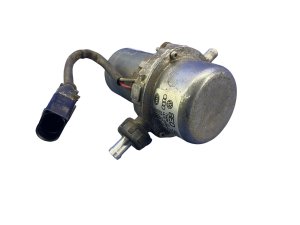
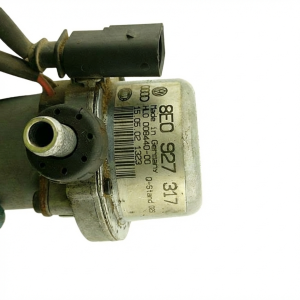
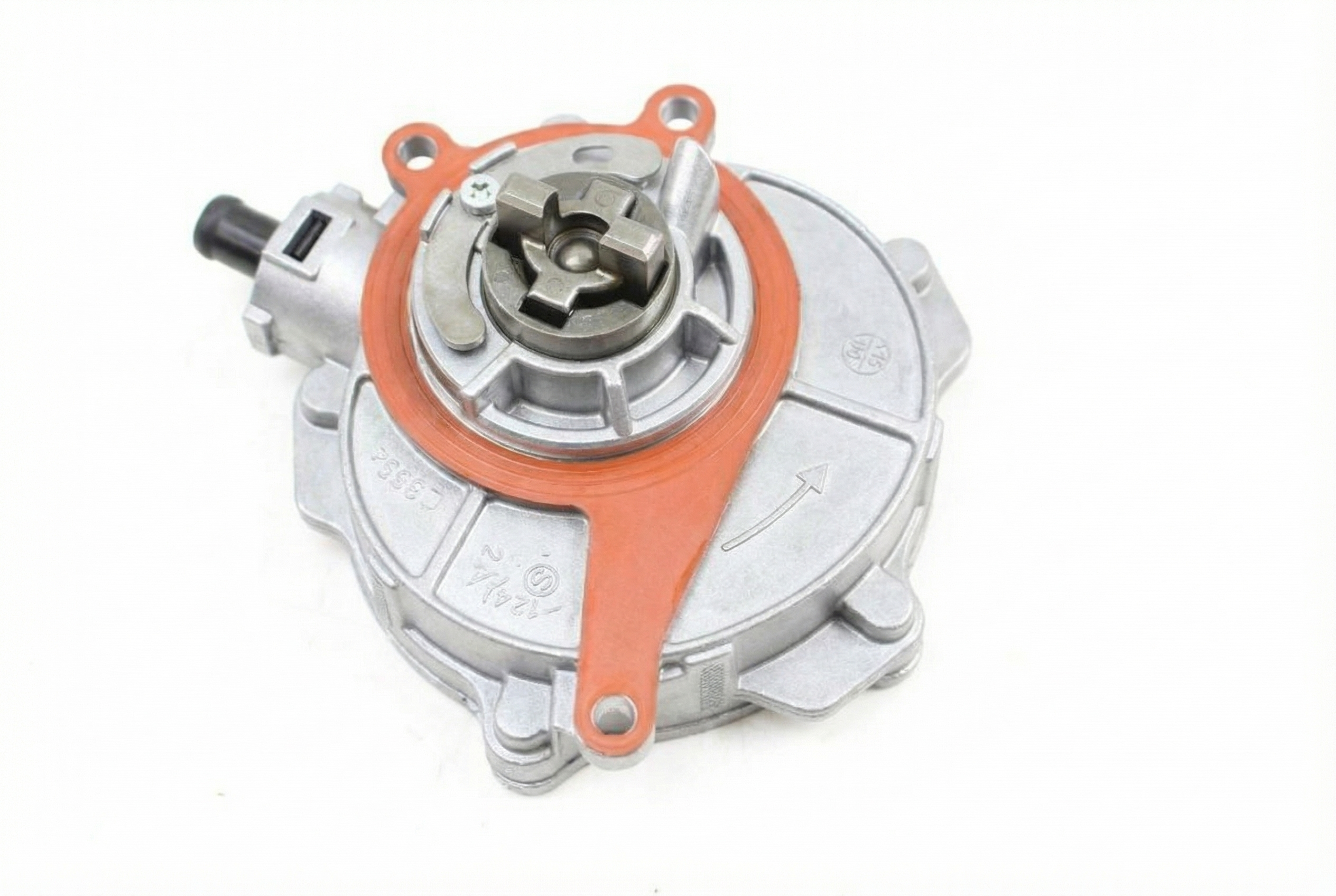
- Failed Electric Brake Vacuum Pump 🔴 High Probability → Shop Vacuum Pump The electric motor inside the pump assembly is a common failure point across many VW/Audi vehicles. It can wear out and seize or develop an internal short, creating the 'open circuit' condition. The pump is located in the engine bay and is exposed to heat and vibration, which contributes to its failure over time.
How to confirm: After confirming the fuse and wiring are good, supply 12V power and a ground directly to the pump's terminals. If the pump does not run, it has failed internally. A scan tool can also be used to perform an output test on the pump.
Typical fix: Replace the electric brake vacuum pump assembly and its gasket.
Est. part cost: $250-$500 - Blown Fuse 🟡 Medium Probability A failing vacuum pump motor can draw excessive electrical current before it completely fails, causing its dedicated fuse to blow as a protective measure. This is often the first and easiest component to check.
How to confirm: Locate the fuse for the brake vacuum pump in the engine bay fuse box (E-box), often located next to the battery. Visually inspect the fuse. If it is blown, replace it. If the new fuse blows immediately upon installation or activation, the pump motor is short-circuited and must be replaced.
Typical fix: Replace the blown fuse. If it blows again, replace the vacuum pump.
Est. part cost: $1-$5 - Damaged Wiring or Electrical Connector ⚪ Low Probability Vibrations and exposure to the elements in the engine bay can cause wires to break or the connector at the pump to become corroded or damaged over time. Wires are known to fray or break right at the 2-pin connector body.
How to confirm: Visually inspect the wiring harness leading to the vacuum pump. Gently tug on the wires at the connector to check for breaks inside the insulation. With the ignition on, use a multimeter to test for 12V power and a solid ground at the pump's electrical connector. If either is missing, trace the wiring back to find the break.
Typical fix: Repair the broken wire or replace the damaged connector pigtail.
Est. part cost: $10-$50
Diagnosis Steps
- Scan the vehicle for fault codes and confirm P1429 is present. Note if P0556 is also stored, which is highly likely.
- Locate the fuse for the brake vacuum pump in the engine compartment fuse box. Check if the fuse is blown. If it is, replace it and see if the code returns. If the new fuse blows immediately, the pump motor is shorted.
- If the fuse is intact, locate the electric brake vacuum pump. It is typically mounted on the engine. Visually inspect the electrical connector and wiring harness for any signs of corrosion, damage, or broken wires. Pay close attention to the area where the wires enter the connector.
- Using a multimeter, test for 12V power and ground at the pump's connector with the ignition on. If power or ground is missing, there is a wiring issue that needs to be traced and repaired.
- If power and ground are present at the connector, the vacuum pump itself is the most likely culprit. Confirm by directly powering the pump with a 12V source; if it doesn't run, it has failed.
- Replace the faulty component (pump, wiring, or fuse). Clear the fault codes and test drive the vehicle to ensure the brake pedal feel and assist have returned to normal.
Parts You'll Likely Need
- Electric Brake Vacuum Pump
(OEM #03H145100C)— The internal motor of the pump is the most common failure point that leads to an open circuit and triggers the P1429 code.
Trusted brands: Pierburg (OEM supplier), Bosch, Genuine Volkswagen/Audi
OEM price range: $400-$550
Aftermarket price range: $250-$400 - Brake Vacuum Pump Gasket — A new gasket should always be used when replacing the vacuum pump to ensure a proper seal against the engine.
Trusted brands: Elring, Victor Reinz
OEM price range: $10-$20
Aftermarket price range: $5-$15
Related Codes That Often Appear With This One
- P0556 — Stands for 'Brake Booster Pressure Sensor Circuit Range/Performance'. This code is a direct symptom of P1429. When the vacuum pump fails to run (P1429), it cannot generate vacuum, causing the pressure sensor to correctly report an out-of-range value (P0556). Fixing the cause of P1429 will almost always clear P0556.
Platform-Specific Known Issues
- Engine Version Confusion: A known point of confusion, documented on Ross-Tech forums, is that early 3.6L VR6 engines used this electric pump, while later versions switched to a mechanical pump. An owner swapping a later engine into an early chassis will set a P1429 because the ECU is looking for an electric pump that no longer exists. This confirms the code is specific to the electric pump circuit.
Mechanic-Grade Diagnostic Values
- Voltage at brake vacuum pump connector (V192) — expected: ~12V (battery voltage) with ignition on and pump commanded on by ECM.. Failure: 0V indicates a wiring or fuse issue; voltage present but pump not running indicates a failed pump motor.
- Brake vacuum pump fuse integrity — expected: Continuity (0 ohms) across the fuse terminals.. Failure: No continuity (Open Line/OL) indicates a blown fuse. If a new fuse blows immediately, the pump motor is shorted.
Scan Tool Commands That Help
- VCDS (VAG-COM): Output Test: Engine (01) -> Output Tests (03) -> Cycle through until 'Actuating vacuum pump for brake system' is displayed. — Use this command after checking the fuse. If you can hear the pump activate during this test, the electrical circuit is likely intact, and the problem may be mechanical (e.g., an internal pump failure or a leak). If it does not activate, it confirms an electrical open circuit, pointing to the pump motor or wiring.
Wiring & Ground Locations
- Fuse F18 — In the E-box (fuse box) in the engine compartment, on the left side in the plenum chamber.. This is the specific 15-amp fuse for the 'Vacuum pump for brakes -V192-'. It is the first and most critical electrical component to check.
- Ground Connection 640 — In the engine compartment on the left side.. A corroded or loose main engine bay ground can cause intermittent or complete failure of various electrical components, including the vacuum pump circuit.
- Ground Connection 671 — On the left front longitudinal member (frame rail).. This is another primary chassis ground point in the engine bay. Verifying it is clean and tight is a key step in diagnosing any electrical fault, including an open circuit code like P1429.
Real Owner Repair Stories
- Ross-Tech Forums user (2007 Audi Q7 3.6L VR6) — Check Engine Light on with code P1429.
❌ Tried (didn't work) Initial diagnosis focused on the pump and fuse, which were found to be okay.
✅ What actually fixed it The final cause was a broken wire in the harness leading to the pump. Repairing the wire resolved the code, emphasizing the need to inspect the harness thoroughly before replacing the pump.
OEM Part Supersession History
03H145100C→03H145100E— Standard part revision by the manufacturer for improvements or supplier changes.
Heads up: The parts are interchangeable for the specified vehicles.
Diagnostic Flowchart
Other Known Issues on This Vehicle
Issues unrelated to this code that are worth knowing about as an owner of this generation:
- Timing Chain Stretch / Tensioner Failure 🔴 High — Becomes a concern over 80,000-100,000 miles. A rattling noise on cold startups is the primary warning sign. Failure is catastrophic and requires engine removal for the complex repair.
- PCV Valve / Oil Separator Failure 🟠 Medium — Common failure item. A failed PCV diaphragm creates a significant vacuum leak, leading to lean codes (P0171/P0174), a rough idle, and sometimes a whistling noise.
- Oil Filter Housing Gasket Leak 🟠 Medium — The gasket between the oil filter housing and the engine block is known to degrade over time, causing a persistent oil leak that can be mistaken for a valve cover or main seal leak.
- Clogged Plenum and Sunroof Drains 🔴 High — Very common issue. Drains under the windshield cowl and for the panoramic sunroof clog with debris, causing water to leak into the cabin. This can damage sensitive electronics, including the MMI system and the ECM.
- High-Pressure Fuel Pump (HPFP) Cam Follower Wear 🟠 Medium — While more prominent on turbocharged engines, the 3.6L FSI can also experience wear on the cam follower for the high-pressure fuel pump, potentially leading to fuel pressure issues (P0087, P2293).
Used vs. New Parts: Buying Guide for This Vehicle
When a used part is the smart pick: A used OEM pump from a low-mileage, rear-ended donor vehicle can be a cost-effective option, as this part is electrical and not subject to the same wear patterns as mechanical engine components. However, it carries the risk of unknown remaining lifespan.
Donor-vehicle mileage cap: roughly under 60000 miles for the part to have meaningful remaining life.
What to inspect on the donor part:
- Check the electrical connector for any signs of corrosion, melting, or broken locking tabs.
- Inspect the pump housing for any cracks or signs of physical damage.
- If possible, ask the seller to test the pump with a 12V source to confirm the motor runs before purchase.
OEM-only on this vehicle (don't cheap out):
- While the pump itself can be sourced from aftermarket, it's critical to use a Genuine VW/Audi or OEM-supplier gasket to prevent vacuum leaks.
Aftermarket brands forum-validated for this vehicle:
- Pierburg (This is the original equipment manufacturer/OEM supplier, offering the same quality as the Genuine part at a lower price).
Brands owners have reported issues with on this vehicle:
- Unbranded, low-cost pumps from online marketplaces should be avoided, as their internal motor quality and longevity are highly questionable and can lead to premature failure, compromising a critical safety system.
Real Owner Stories
Aggregated from forums and TSBs cited above. Mileages and costs reflect what owners reported in those sources.
2007 Audi Q7 3.6L VR6 — 119516 miles
Symptoms: Check Engine Light with code P1429 - Open Circuit after an engine swap.
What fixed it: The owner discovered the replacement engine was a later version with a mechanical pump, whereas the ECU required the original electric pump. The issue was a mismatch between the chassis electronics and the new engine hardware.
Source hint: Ross-Tech Forums thread: 2007 3.6L-VR6 Brake Vacuum Pump Recode
2007 Volkswagen Touareg 3.6L VR6 — ~100000 miles
Symptoms: Crank-no-start condition and vacuum system issues.
What fixed it: Diagnosis revealed a cracked check valve on the brake booster pump.
Source hint: Ross-Tech Forums (Touareg platform mate)
Audi Q7 3.6L VR6
Symptoms: Check Engine Light (P1429) accompanied by lean codes and a hard brake pedal.
What fixed it: Identified as an open circuit for the vacuum pump.
Source hint: AudiWorld Forums
Related OBD-II Codes
Frequently Asked Questions
Why did my 2007 Audi Q7 3.6L develop a P1429 code after I swapped in a newer engine?
Where is the fuse for the electric brake vacuum pump located on my Q7?
My Q7 has a hard brake pedal and P1429; could this be related to my Adaptive Cruise Control (ACC) not working?
Is it possible for a vacuum leak to cause P1429 on the 3.6L VR6 platform?
Can I just replace the fuse to fix the hard brake pedal on my Audi?
Are there any common wiring issues near the pump I should look for?
Helpful Videos
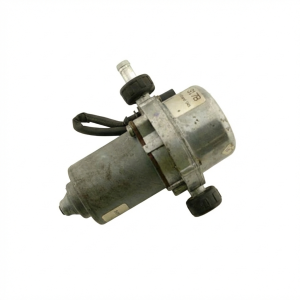
Used OEM Parts in Stock
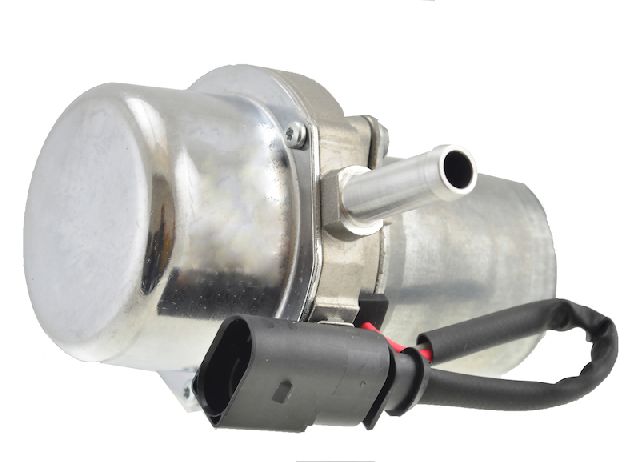
New Aftermarket Parts Available

The information in this article is provided for general reference and educational purposes only. Vehicle specifications, procedures, and part compatibility can vary by production date, trim level, and region. Always consult your vehicle's factory service manual and verify part numbers before purchasing or performing repairs. Safety-critical components such as airbags, seat belts, and braking systems should be installed by a qualified professional.
- Audi Q7:
- 🧭 Diagnostic Flowchart
- 🎬 Helpful Videos
- 🛍️ Shop This Part
- What's Unique About the 2007-2015 Audi Q7
- Symptoms You May Notice
- Most Likely Causes
- Diagnosis Steps
- Parts You'll Likely Need
- Related Codes That Often Appear With This One
- Platform-Specific Known Issues
- Mechanic-Grade Diagnostic Values
- Scan Tool Commands That Help
- Wiring & Ground Locations
- Real Owner Repair Stories
- OEM Part Supersession History
- Other Known Issues on This Vehicle
- Used vs. New Parts: Buying Guide for This Vehicle
- Real Owner Stories
- 2007 Audi Q7 3.6L VR6 — 119516 miles
- 2007 Volkswagen Touareg 3.6L VR6 — ~100000 miles
- Audi Q7 3.6L VR6
- Related OBD-II Codes
- Frequently Asked Questions
- 🎟️ Get 5% Off