

P1429 on 2014-2018 Chevrolet Silverado 1500: Brake Vacuum Pump Failure Explained
P1429 on a 2014-2018 Silverado almost always indicates a problem with the engine-driven brake vacuum pump. This is a known issue covered by GM Safety Recall N192268490. The most common fix is replacing the faulty vacuum pump and ensuring the recall's software update for the brake module has been performed. The recall's software update alone will not fix a mechanically failed pump.
- P1429 on this truck is a critical safety issue pointing to a failure in the power brake system.
- The root cause is almost certainly a failed engine-driven brake vacuum pump, a widespread and well-documented problem.
- Check your VIN with a GM dealer or on the NHTSA website to see if Safety Recall N192268490 is open for your vehicle.
- The recall involves a software update, but if the pump has already failed mechanically, it must be physically replaced to restore proper brake function.
- If the failed pump contaminated the system with oil, the vacuum hose and brake booster must also be replaced per GM's own service bulletin (PIT5361D).
- Do not drive the vehicle until this issue has been repaired due to the risk of brake failure.
What's Unique About the 2014-2018 Chevrolet Silverado 1500
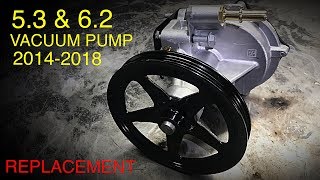
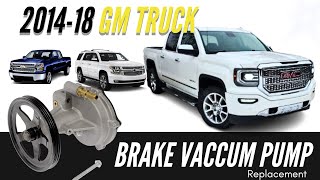
The 2014-2018 Silverado (K2XX platform) uses a belt-driven mechanical vacuum pump to ensure consistent brake assist, as the L83 and L86 engines may not produce sufficient intake manifold vacuum in all conditions (like during cylinder deactivation/AFM). This specific pump design proved to be a major issue, leading to a massive safety recall (NHTSA campaign 19V-645) affecting over 3.4 million GM trucks and SUVs. The problem is so widespread that any symptom of a hard brake pedal or a related code on this truck points directly to this known pump failure. The pump is lubricated by engine oil, and debris or sludge can clog an internal filter screen, reducing oil flow and causing the pump to fail.
Symptoms You May Notice
- Hard brake pedal, requiring significantly more effort to press.
- Increased stopping distance.
- "Service Brake Assist" message on the Driver Information Center (DIC).
- A ticking or clattering noise from the engine compartment, which may be the failing pump and can sound like an exhaust manifold leak. 🎬 Watch: Hear the ticking noise of a failing pump
- Loss of brake assist after pumping the pedal two or three times at low speed or a standstill.
- A pulsing feeling in the brake pedal at low speeds as the secondary hydraulic boost system attempts to compensate.
- Replacing the master cylinder. The master cylinder is a hydraulic component and is not typically the cause of a hard pedal feel related to a vacuum issue. However, if the booster is contaminated with oil, some technicians may replace the master cylinder as a precaution.
- Replacing the brake booster without checking the vacuum pump first. While the booster can fail, the pump is the far more common failure point on these specific trucks.
Most Likely Causes
- Failed Engine-Driven Brake Vacuum Pump 🔴 High Probability → Shop Vacuum Pump The pump design used on this generation of trucks is prone to premature failure. The pump is lubricated by engine oil, and over time, sludge or debris can clog an internal filter screen, starving the pump of lubrication and causing it to wear out and lose vacuum output. Poor oil change intervals can contribute to this failure.
How to confirm: A technician will connect a vacuum gauge to the pump's outlet. A healthy pump should produce a strong vacuum (typically 20-25 in-Hg) at idle. A low or nonexistent reading confirms a failed pump. The technician will also check the vacuum line and brake booster for engine oil contamination, a common result of the pump's internal seals failing. If oil is found, the booster and line must be replaced along with the pump to prevent a repeat failure.
Typical fix: Replace the brake vacuum pump and its gasket. If oil has contaminated the system, the vacuum line to the booster must also be replaced. In severe cases, the brake booster itself may require replacement. Crucially, the vehicle must also have the software remedy from GM recall N192268490 performed by a dealer, which reprograms the Electronic Brake Control Module (EBCM) to better utilize the secondary hydraulic boost system. However, many owners report that this software update is merely a 'patch' and does not solve the underlying issue of a mechanically failed pump, which must be replaced to restore proper brake feel.
Est. part cost: $150-$400
Rare But Worth Checking
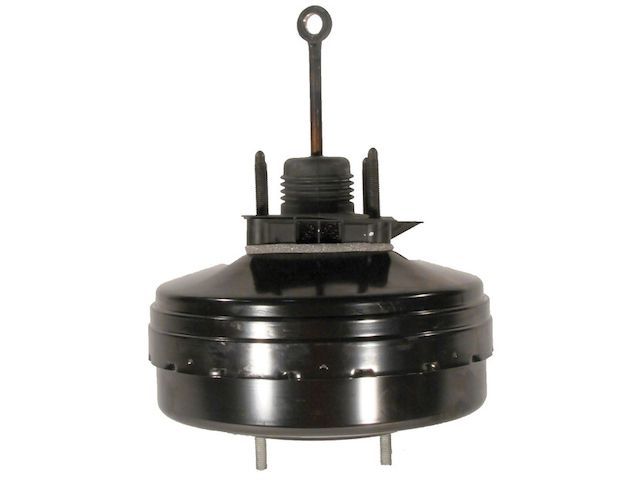
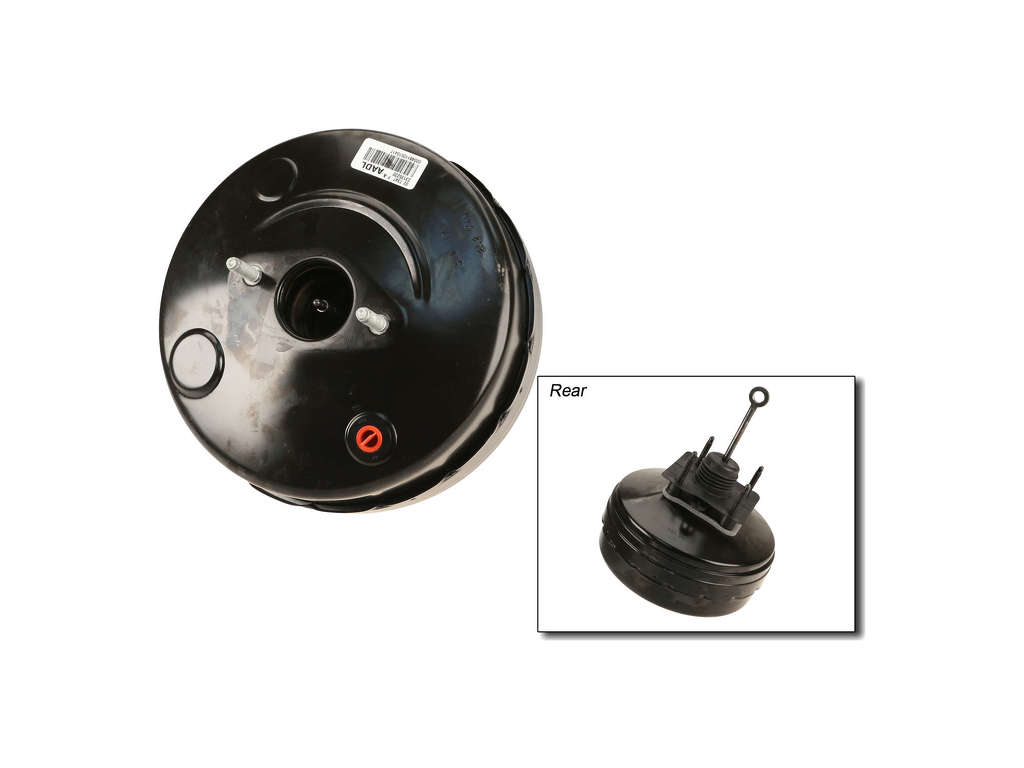
- Leaking Brake Booster Vacuum Hose: → Shop Power Brake Booster The hose connecting the vacuum pump to the brake booster can become cracked, brittle, or disconnected, causing a vacuum leak. This is less common than outright pump failure but should be inspected.
- Failed Brake Booster: → Shop Power Brake Booster The diaphragm inside the brake booster can rupture, causing a major vacuum leak. This is often accompanied by a distinct hissing sound when the brake pedal is pressed. On these trucks, booster failure is often a consequence of oil contamination from a failed vacuum pump.
- Incorrect Software Calibration: While primarily documented on other GM models like the Volt, manufacturer service bulletins such as TSB Bulletin #SB-32340-B and TSB Bulletin #GCUS-3-421 note that a software update may be required to correct a condition where P1429 sets incorrectly.
Diagnosis Steps
- Verify the Check Engine Light and/or "Service Brake Assist" message is active.
- Scan the vehicle's computer systems for DTCs. Confirm if P1429 or other related brake codes like C0299 or P0556 are present.
- Check if GM Safety Recall N192268490 has been performed. A GM dealer or the NHTSA website can verify this with the vehicle's VIN.
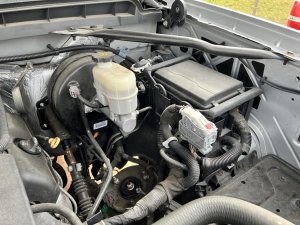
- Visually inspect the vacuum pump (located on the lower driver's side of the engine block) and the vacuum hose running to the brake booster for any obvious damage, leaks, or oil saturation.
- With the engine running, carefully disconnect the vacuum hose from the pump and connect a vacuum gauge.
- Check the vacuum reading at idle. A low or zero reading indicates a failed pump.
- If the pump has failed, inspect the inside of the vacuum hose and the booster fitting for any signs of engine oil contamination. Per TSB PIT5361D, if oil is present, the pump, hose, and booster must all be replaced.
- If the pump's vacuum output is good, check for leaks in the vacuum hose and at the brake booster check valve.
Parts You'll Likely Need
- Brake Booster Vacuum Pump
(OEM #12696313)— This is the primary point of failure for this issue on the 2014-2018 Silverado. The original design is prone to premature wear and failure.
Trusted brands: ACDelco, Dorman, TRQ
OEM price range: $200-$350
Aftermarket price range: $150-$250 - Power Brake Booster Vacuum Pipe
(OEM #23135228)— If the failing vacuum pump allows engine oil to pass through it, this hose will become contaminated and should be replaced to prevent damage to the new pump or brake booster.
Trusted brands: ACDelco
OEM price range: $50-$80
Aftermarket price range: $30-$60 - Brake Booster Vacuum Pump Belt
(OEM #12657239)— This is a stretch-fit belt. While it can sometimes be reused if new, it is best practice to replace it when replacing the pump. Special tools are recommended for removal and installation.
Trusted brands: ACDelco, Gates
OEM price range: $15-$30
Aftermarket price range: $10-$20
Related Codes That Often Appear With This One
- C0299 — This is a generic code for Brake Booster Performance, often set when the EBCM detects low vacuum.
- P0556 — This code relates to the Brake Booster Pressure Sensor Circuit. A failing vacuum pump will cause the pressure sensor to report readings that are out of the expected range.
- P0300, P040B, P041B, P1427 — According to TSB Bulletin #15-NA-080, these codes may set alongside P1429 when the Malfunction Indicator Lamp (MIL) is illuminated.
Technical Service Bulletins (TSBs) & Recalls
- PIT5361D: A diagnostic technical service bulletin that outlines steps for diagnosing a hard brake pedal or increased pedal effort. It explicitly states that if the vacuum pump has failed and engine oil is found in the vacuum line, the pump, vacuum line, and brake booster must all be replaced to prevent the condition from returning.
- TSB Bulletin #15-NA-080: This bulletin addresses instances where the Malfunction Indicator Lamp (MIL) is on with P1429 and other DTCs set, noting that some customers may comment on a check engine light illumination.
Platform-Specific Known Issues
- GM Safety Recall N192268490 (NHTSA 19V-645): 🎬 Watch: Why the recall software update might not fix your brakes This recall was issued because the output from the engine-mounted mechanical vacuum pump can decrease over time, leading to a loss of power brake assist. The official remedy is a reprogramming of the Electronic Brake Control Module (EBCM) to better utilize the secondary hydraulic brake boost system when vacuum is low. However, this software update does not fix a mechanically failed pump, which must be replaced separately. Many owners report on forums that the software flash is insufficient and that pump replacement is the only true fix for a hard pedal.
Mechanic-Grade Diagnostic Values
- Brake Vacuum Pump Output at Idle — expected: 24-27 in-Hg (inches of Mercury). Failure: A reading below 20 in-Hg, with failing pumps often measuring as low as 9 in-Hg, indicates a worn or failed pump.
Scan Tool Commands That Help
- GDS2 (GM Global Diagnostic System 2): EBCM Data Display > Brake Booster Pressure Sensor — While this is not a bidirectional command, it is the primary function used on the dealer scan tool to monitor the vacuum/pressure reading from the sensor in real-time. This allows a technician to see the vacuum level electronically as perceived by the module that sets the code, confirming what a mechanical gauge shows.
- GDS2 (GM Global Diagnostic System 2): SPS (Service Programming System) > EBCM Reprogramming — This function is used to perform the software update specified in GM Safety Recall N192268490. This is a required step in the official repair procedure, even if the pump is also replaced.
Wiring & Ground Locations
- EBCM Ground — On the vehicle frame, located beneath the driver's side door.. A poor or corroded ground connection for the Electronic Brake Control Module (EBCM) is a very common issue on GM trucks. This can cause a variety of erroneous ABS and brake-related trouble codes and warnings, including the 'Service Brake Assist' message. Before replacing expensive components, it is critical to remove, clean, and secure this ground connection.
Real Owner Repair Stories
- GM-Trucks.com Forum User (2014-2018 Silverado/Sierra) — Failing vacuum pump and associated hard brake pedal.
❌ Tried (didn't work) Taking the truck to the dealer for the recall (N192268490). The dealer only performed the EBCM software update and did not replace the pump.
✅ What actually fixed it The owner reported the brakes failed again the same day. They personally replaced the mechanical vacuum pump, which restored brake performance to 100%. This highlights that the software update alone cannot fix a mechanically failed pump. - GM-Trucks.com Forum User (2014 Chevrolet Silverado, 5.3L V8, 42,000 miles) — Very heavy and hard brake pedal, especially when parking or applying brakes multiple times at low speed.
✅ What actually fixed it The Chevrolet dealership diagnosed that the vacuum pump was not pulling enough vacuum. Replacing the vacuum pump resolved the issue. Multiple other owners in the same discussion reported identical failures at similar low mileage (42k-43k miles).
When the Usual Fixes Don't Work
- A common misdiagnosis is to suspect the brake booster first. One owner documented replacing the brake booster and master cylinder in an attempt to fix the hard pedal and 'Service Brake Assist' message, but the problem remained unchanged. This reinforces that the vacuum pump is the primary point of failure, and other components should only be replaced if the pump is confirmed to be good or if they are contaminated with oil from a failed pump.
OEM Part Supersession History
12654013, 12659655, 12660004, 12662552, 12669488→12696313— The original pump design had a high failure rate. The part has been redesigned multiple times to improve durability and performance. Later versions are noted to be of a completely different design, manufactured by WABCO.
Model Year Variations Within This Range
- 2014-~2016 vs. ~2017-2018: There was a physical design change in the vacuum pump during this generation. Early style pumps used an aluminum outlet fitting, while later style pumps used a brass fitting. The internal check valve mechanism also differs between the two designs. While the mounting is the same, it's an indicator of the different revisions of the part.
Diagnostic Flowchart
Other Known Issues on This Vehicle
Issues unrelated to this code that are worth knowing about as an owner of this generation:
- Active Fuel Management (AFM) Lifter Failure 🔴 High — Common issue, particularly on vehicles with inconsistent oil change histories. Can occur from 80,000 miles onward. (Ref: Multiple TSBs exist, and a class-action lawsuit was filed regarding this issue.)
- 8-Speed (8L90) Transmission Torque Converter Shudder 🟠 Medium — Widespread issue on 2015-2018 models, often described as driving over rumble strips at light throttle between 40-70 mph. (Ref: TSB 18-NA-355 recommends a specific transmission fluid flush with Mobil 1 Synthetic LV ATF HP (Blue Label).)
- A/C Condenser Leak 🟠 Medium — The A/C condenser is prone to cracking at its welds or leaking from seals, causing loss of refrigerant and A/C function. (Ref: TSB 18-NA-156 addresses leaks at the receiver/dehydrator plug. A separate TSB (PIT5331) addresses cracks in the A/C line on early 2014-2015 models.)
- Hard Shifting or Jerking (6L80 & 8L90 Transmissions) 🟠 Medium — Owners report harsh 1-2 upshifts and clunky downshifts, particularly on the 8-speed transmission. (Ref: Various TSBs and software updates have been released to address shift quality. TSB 19-NA-266 addresses valve body issues causing clunking.)
- Intermediate Steering Shaft Clunk 🟡 Low — A common issue where a clunking or popping noise is heard and felt through the steering wheel, especially when turning at low speeds or going over bumps. (Ref: No specific recall, but it is a widely recognized problem. The fix is to replace the intermediate steering shaft.)
Used vs. New Parts: Buying Guide for This Vehicle
When a used part is the smart pick: For this specific repair, a used part is NEVER recommended. The original equipment vacuum pump has a well-documented, extremely high failure rate due to a design defect. A used part from a salvage yard is highly likely to be the original failure-prone design and will fail again in short order.
What to inspect on the donor part:
- Do not purchase a used vacuum pump for this vehicle.
OEM-only on this vehicle (don't cheap out):
- Brake Booster Vacuum Pump Belt: While aftermarket is available, the cost is low and an OEM (ACDelco) or OEM-supplier (Gates) stretch-fit belt is recommended to ensure proper fit and tension.
Aftermarket brands forum-validated for this vehicle:
- ACDelco (OEM supplier)
- Dorman (Offers a direct replacement, often with design improvements for known failure points)
Brands owners have reported issues with on this vehicle:
- Unbranded, low-cost vacuum pumps from online marketplaces should be avoided, as the quality and durability are unknown for such a critical safety component.
Real Owner Stories
Aggregated from forums and TSBs cited above. Mileages and costs reflect what owners reported in those sources.
2016 Chevrolet Silverado 1500 5.3L V8
Symptoms: The owner experienced a 'Service Brake Assist' message and found that the software fix provided by the recall did not resolve the hard pedal issue. They noted the dealership failed to follow TSB PIT5361D regarding oil-contaminated systems.
What fixed it: The owner sought to have the pump, booster, and lines replaced as per TSB instructions for oil contamination.
Source hint: GM-Trucks.com - '2016 Silverado 5.3l 1500 “Service Brake Assist”'
2014-2018 Chevrolet Silverado 1500
Symptoms: The owner took the truck in for a failed vacuum pump. The dealer only performed a software update, and the brakes failed again the same day.
What fixed it: Replacing the vacuum pump manually resulted in a 'huge difference' and restored brakes to 100%.
Source hint: GM-Trucks.com - 'GM # N 192268490 increased brake pedal effort recall'
2014-2018 Chevrolet Silverado 1500
Symptoms: Mechanical vacuum pump failure leading to loss of power assist.
What fixed it: The owner performed an advanced modification to completely delete the mechanical vacuum pump, sourcing vacuum from the intake manifold instead (requires AFM delete).
Source hint: GM-Trucks.com - 'How to Delete Brake Vacuum Pump (Video)'
Related OBD-II Codes
Frequently Asked Questions
Does GM Safety Recall N192268490 actually fix the mechanical failure of the vacuum pump on my Silverado?
What does TSB PIT5361D say about engine oil in my brake booster lines?
Why did my 5.3L V8 vacuum pump fail prematurely?
Can I just ignore the 'Service Brake Assist' message if the truck still stops?
Is there a way to verify if the pump is actually bad before I spend $150-$400 on parts?
My brake pedal pulses at low speeds; is this related to P1429?
Helpful Videos
Used OEM Parts in Stock
New Aftermarket Parts Available




The information in this article is provided for general reference and educational purposes only. Vehicle specifications, procedures, and part compatibility can vary by production date, trim level, and region. Always consult your vehicle's factory service manual and verify part numbers before purchasing or performing repairs. Safety-critical components such as airbags, seat belts, and braking systems should be installed by a qualified professional.
- Chevrolet Silverado 1500:
- 🧭 Diagnostic Flowchart
- 🎬 Helpful Videos
- 🛍️ Shop This Part
- What's Unique About the 2014-2018 Chevrolet Silverado 1500
- Symptoms You May Notice
- Most Likely Causes
- Rare But Worth Checking
- Diagnosis Steps
- Parts You'll Likely Need
- Related Codes That Often Appear With This One
- Technical Service Bulletins (TSBs) & Recalls
- Platform-Specific Known Issues
- Mechanic-Grade Diagnostic Values
- Scan Tool Commands That Help
- Wiring & Ground Locations
- Real Owner Repair Stories
- When the Usual Fixes Don't Work
- OEM Part Supersession History
- Model Year Variations Within This Range
- Other Known Issues on This Vehicle
- Used vs. New Parts: Buying Guide for This Vehicle
- Real Owner Stories
- 2016 Chevrolet Silverado 1500 5.3L V8
- 2014-2018 Chevrolet Silverado 1500
- 2014-2018 Chevrolet Silverado 1500
- Related OBD-II Codes
- Frequently Asked Questions
- 🎟️ Get 5% Off