

P1429 on 2013-2019 Ford Escape: Understanding a Code That May Not Apply
P1429 is a manufacturer-specific code that is not documented to occur on the 2013-2019 Ford Escape. The generic Ford definition is 'Electric Air Pump Primary Failure,' but this vehicle is not equipped with that system. If you have braking issues, the camshaft-driven mechanical brake vacuum pump is a more likely culprit, and its failure is a very common and well-documented problem on this platform.
- Code P1429 for 'Electric Air Pump Primary Failure' is not known to be applicable to the 2013-2019 Ford Escape with 1.6L, 2.0L, or 2.5L engines.
- Do not waste time or money looking for a Secondary Air Injection (SAI) pump on this vehicle; it is not equipped with one.
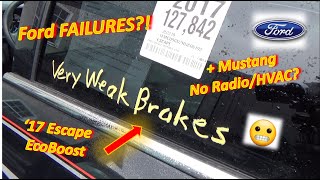
- If you are experiencing a hard brake pedal, the issue is likely the mechanical brake booster vacuum pump, which is a common failure point on this platform. This is a critical safety issue that makes the vehicle unsafe to drive.
- Always diagnose the specific codes present in your vehicle; do not rely on generic code definitions that may not apply to your exact model and engine.
What's Unique About the 2013-2019 Ford Escape
This is a case of a generic code definition conflicting with the actual hardware on the vehicle. While P1429 exists in Ford's code library for emissions equipment on older or different models, the 2013-2019 Escape platform does not use the specified 'Electric Air Pump'. Instead, these engines (especially the 1.6L and 2.0L EcoBoost variants) use a camshaft-driven *mechanical* vacuum pump to provide consistent vacuum for the power brake booster. This mechanical pump is a known failure point that causes a hard brake pedal, but it is unrelated to the P1429 emissions code. Owners or technicians may be confused by the P1429 definition if it is seen in a generic code database, leading them to search for a part that does not exist on the vehicle.
Symptoms You May Notice
- No confirmed symptoms for P1429 on this vehicle, as the code is not known to occur.
- If you are experiencing a hard brake pedal, especially on startup, the mechanical brake vacuum pump is a likely cause, not P1429.
- Increased effort required to press the brake pedal.
- Longer stopping distances.
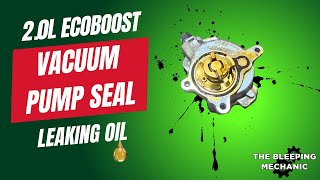
- Oil leak on the driver's side of the engine, near the transmission, from a failed pump seal.
- Searching for a Secondary Air Injection (SAI) pump. This vehicle is not equipped with one.
- Confusing the code with P1429 on Volkswagen/Audi vehicles, where it indicates a critical failure of the electric brake vacuum pump.
Rare But Worth Checking
- Scanner error or software glitch in the diagnostic tool misinterpreting data and displaying an incorrect code.
Diagnosis Steps
- Confirm the code P1429 is actually present and active in the Powertrain Control Module (PCM) using a high-quality OBD-II scanner. Try rescanning to see if it was an error.
- If the code is present, double-check the vehicle's year, model, and engine to ensure it is not a hybrid model, which may have different emissions equipment.
- Given the lack of documentation, the presence of this code could indicate a PCM software anomaly or a fault in the diagnostic logic itself. Check for PCM software updates with a dealer-level tool.
- Scan for other diagnostic trouble codes. The actual issue with the vehicle is almost certainly indicated by a different, valid code.
- If brake-related symptoms are present, inspect the mechanical brake vacuum pump system. Check for oil leaks around the pump and test the vacuum output of the pump.
Parts You'll Likely Need
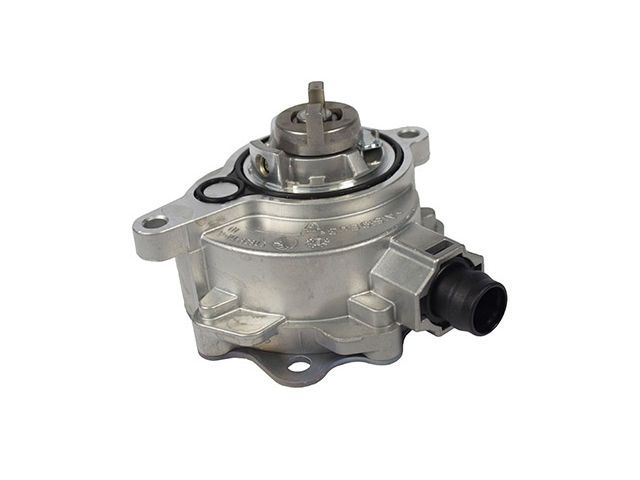
- Mechanical Brake Booster Vacuum Pump
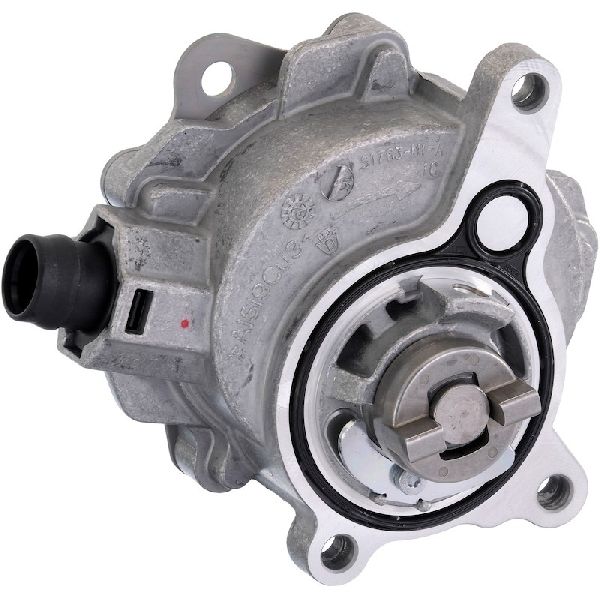
(OEM #CJ5Z-2A451-A (1.6L), BB5Z-2A451-C (2.0L))— This part is NOT related to code P1429, but it is a very common failure on this vehicle that owners may be investigating. It provides vacuum for the brake booster and its failure leads to a hard brake pedal. The primary cause of failure is oil starvation due to clogged oil passages in the cylinder head.
Trusted brands: Motorcraft, Standard Motor Products (VCP128), Dorman
OEM price range: $150-$250
Aftermarket price range: $80-$160
Platform-Specific Known Issues
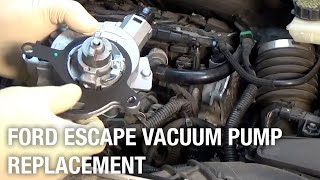
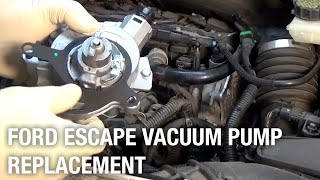
- The mechanical brake booster vacuum pump, driven by the camshaft, is a well-documented failure point on 1.6L and 2.0L EcoBoost engines. 🎬 See: Diagnostic tips for a failing vacuum pump Failure is often due to lack of lubrication from clogged oil passages or internal wear, leading to a hard brake pedal that requires significant effort to stop the vehicle.
- Ford issued Customer Satisfaction Program 15N05 for some F-150 models with similar vacuum pump issues, extending warranty coverage, but no such widespread program exists for the Escape.
Mechanic-Grade Diagnostic Values
- Mechanical Brake Vacuum Pump Output — expected: 18-24 inches of mercury (inHg) at idle.. Failure: A reading significantly below 18 inHg. One owner reported a faulty pump producing only 4 PSI (~8.1 inHg) when the target was 12 PSI (~24.4 inHg). Another test showed a faulty aftermarket pump at 16 inHg while a good OEM pump produced 26 inHg.
Wiring & Ground Locations
- OBD-II Connector Pins — Under the driver's side dashboard.. Since P1429 is a 'ghost code' for this vehicle, its appearance is likely a scanner error. A common cause of scanner communication failure is spread or contaminated pins in the vehicle's OBD-II port, specifically Pin 4/5 (Ground) and Pin 16 (12V Power). Poor contact can lead to data corruption or the display of erroneous codes.
Real Owner Repair Stories
- Reddit r/fordescape (2015 Ford Escape) — A hard brake pedal, identical to another user's 2013 Escape which had the issue on startup.
❌ Tried (didn't work) The original poster with the 2013 Escape had already replaced the vacuum pump, booster, and check valve without a complete resolution, suggesting a complex issue or misdiagnosis.
✅ What actually fixed it A second user diagnosed the root cause of their identical symptom by measuring the vacuum pump's output. They read only 4 PSI (~8.1 inHg) when they expected ~12 PSI (~24.4 inHg), confirming the mechanical vacuum pump was faulty and not providing enough vacuum for the brake booster. This highlights that quantitative measurement is key to confirming the failure.
OEM Part Supersession History
BB5Z-2A451-A, BB5Z-2A451-B→BB5Z-2A451-C— Part revision and improvement by the manufacturer.
Heads up: Applies to the mechanical brake vacuum pump for the 2.0L EcoBoost engine. The newest revision 'C' is the recommended replacement.BM5G-2A451-EC→BM5Z-2A451-A— Part revision and improvement by the manufacturer.
Heads up: Applies to the mechanical brake vacuum pump for the 1.6L EcoBoost engine.
Model Year Variations Within This Range
- 2013-2016 vs 2017-2019: For the 2017 model year refresh, the 1.6L EcoBoost engine was discontinued and replaced with a 1.5L EcoBoost engine. While the displacement changed, the new 1.5L engine continues to use a camshaft-driven mechanical vacuum pump for brake assist, which is susceptible to similar failure modes.
Diagnostic Flowchart
Other Known Issues on This Vehicle
Issues unrelated to this code that are worth knowing about as an owner of this generation:
- 1.6L/2.0L EcoBoost Coolant Intrusion 🔴 High — Common issue where coolant leaks into the cylinders due to a flaw in the engine block/head design, leading to misfires, white smoke, and eventual catastrophic engine failure. (Ref: TSB 19-2346 for 2.0L engines.)
- 1.6L EcoBoost Engine Fire Hazard 🔴 High — Multiple recalls were issued for the 1.6L engine due to risks of overheating, cracked cylinder heads, and leaking fuel lines that could cause engine compartment fires. (Ref: Recalls 13S12, 17S09)
- 6F35 Transmission Problems 🟠 Medium — Owners report shuddering, harsh shifting, hesitation, and premature failure. Issues can sometimes be addressed with software updates, but often require significant repairs or replacement. (Ref: TSB 16-0043 addresses a common fluid leak from the halfshaft seal.)
- Faulty Door Latches 🔴 High — A widespread issue where a component in the door latch breaks, preventing the door from latching properly or causing it to open while driving. (Ref: Recalls 16S30 and 20S30.)
- 'Shift to Park' Error Message 🟡 Low — A common annoyance where the vehicle does not detect it is in Park, preventing the driver from shutting off the vehicle or locking it. Often caused by a faulty shifter cable bushing or a microswitch in the shifter assembly. (Ref: Recall 18S20 for shifter cable bushing.)
- Auto Start/Stop Failure to Restart 🟡 Low — Some vehicles may fail to restart after an auto-stop event, displaying a message to shift to park and restart manually. This is typically a software issue. (Ref: A service bulletin exists to reprogram the Body Control Module (BCM).)
Used vs. New Parts: Buying Guide for This Vehicle
When a used part is the smart pick: A used OEM (Motorcraft) mechanical vacuum pump can be a viable option if budget is a primary concern, but ONLY if it can be thoroughly inspected before purchase. Given the high failure rate due to oil starvation from the donor car, a new OEM part is significantly safer.
Donor-vehicle mileage cap: roughly under 60000 miles for the part to have meaningful remaining life.
What to inspect on the donor part:
- CRITICAL: Check for oil presence. The pump's interior and drive mechanism should be coated in clean engine oil. If it appears dry, discolored from heat, or has any metallic sheen, reject it immediately as it has been oil-starved and is internally damaged.
- Inspect the drive tang that engages with the camshaft. It must be perfectly straight with no signs of twisting, shearing, or excessive wear.
- Examine the housing for any cracks, especially around the mounting points and the vacuum port nipple.
OEM-only on this vehicle (don't cheap out):
- Mechanical Brake Vacuum Pump
Aftermarket brands forum-validated for this vehicle:
- Pierburg is a known OEM supplier and is considered a high-quality alternative to Motorcraft.
- Standard Motor Products (SMP) is a reputable aftermarket manufacturer with parts available for this application.
Brands owners have reported issues with on this vehicle:
- Dorman: Forum users have reported negative experiences, with one user measuring a brand new Dorman pump producing significantly less vacuum (16 inHg) than a new Motorcraft pump (26 inHg), leading to insufficient brake assist.
Real Owner Stories
Aggregated from forums and TSBs cited above. Mileages and costs reflect what owners reported in those sources.
2013 Ford Escape
Symptoms: Hard brake pedal on startup; measured low vacuum at 4 psi vs. a target of 12 psi.
What fixed it: Replacement of the faulty mechanical vacuum pump.
Source hint: Reddit r/fordescape
2017 Ford Escape 1.6L
Symptoms: Oil leak from the vacuum pump mounting location.
What fixed it: Replacement of the vacuum pump gasket.
Source hint: Reddit r/MechanicAdvice
Ford Focus ST 2.0L EcoBoost
Symptoms: Sudden loss of brake assist; pump 'internally decided to leave the chat.'
What fixed it: Replacement of the mechanical brake vacuum pump.
Source hint: Reddit r/FocusST
Related OBD-II Codes
Frequently Asked Questions
Is there a recall for the brake vacuum pump on my 2013-2019 Ford Escape?
My 1.6L EcoBoost Escape has a hard brake pedal on startup; is this P1429?
Can I use a Dorman brand vacuum pump to fix my braking issues?
What causes the mechanical vacuum pump to fail on the 2.0L EcoBoost?
I see an oil leak on the driver's side near the transmission; what is it?
Is the 2015-2019 Lincoln MKC affected by the same vacuum pump issues as the Escape?
Helpful Videos
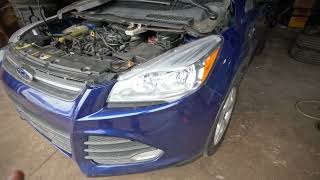
Used OEM Parts in Stock
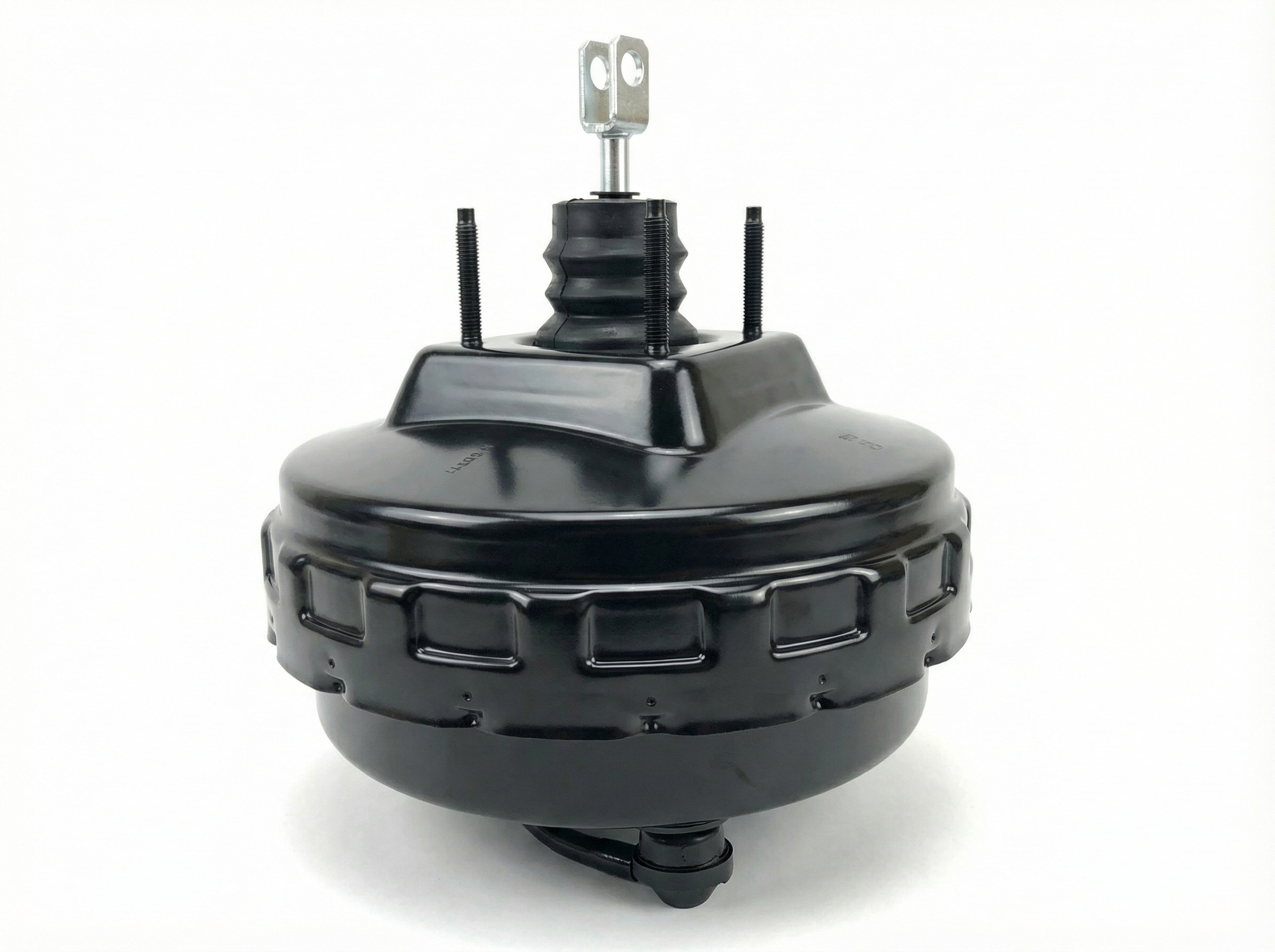
New Aftermarket Parts Available

The information in this article is provided for general reference and educational purposes only. Vehicle specifications, procedures, and part compatibility can vary by production date, trim level, and region. Always consult your vehicle's factory service manual and verify part numbers before purchasing or performing repairs. Safety-critical components such as airbags, seat belts, and braking systems should be installed by a qualified professional.
- Ford Escape:
- 🧭 Diagnostic Flowchart
- 🎬 Helpful Videos
- 🛍️ Shop This Part
- What's Unique About the 2013-2019 Ford Escape
- Symptoms You May Notice
- Rare But Worth Checking
- Diagnosis Steps
- Parts You'll Likely Need
- Platform-Specific Known Issues
- Mechanic-Grade Diagnostic Values
- Wiring & Ground Locations
- Real Owner Repair Stories
- OEM Part Supersession History
- Model Year Variations Within This Range
- Other Known Issues on This Vehicle
- Used vs. New Parts: Buying Guide for This Vehicle
- Real Owner Stories
- 2013 Ford Escape
- 2017 Ford Escape 1.6L
- Ford Focus ST 2.0L EcoBoost
- Related OBD-II Codes
- Frequently Asked Questions
- 🎟️ Get 5% Off