

P1429 on 2019 Volkswagen Beetle: Brake Vacuum Pump Circuit Failure Causes and Fixes
P1429 on a 2019 VW Beetle means the electric brake vacuum pump circuit is open. This will cause a hard brake pedal and is a significant safety risk. The most likely cause is a failed pump motor, followed by a blown fuse or a wiring issue. Do not replace the brake booster sensor if you also have code P0556, as this is a symptom, not the cause.
- P1429 means the power brake system is not getting the vacuum it needs due to an electrical fault.
- Your brakes will still work, but will require much more force. Drive with extreme caution.
- Always check the fuse for the brake vacuum pump first; it's the cheapest and most likely fix.
- If code P0556 is also present, do not replace the brake booster pressure sensor. It is a symptom, not the cause.
- The problem is almost certainly the fuse, relay, wiring, or the pump itself, in that order of probability.
What's Unique About the 2019-2019 Volkswagen BEETLE CONVERTIBLE
The A5 generation Beetle (2011-2019), like many modern VWs with turbocharged 2.0T TSI engines, relies on this auxiliary electric pump for consistent brake feel. The pairing of P1429 with code P0556 (Brake Booster Pressure Sensor) is very common and is noted in Volkswagen's own Technical Service Bulletins (TSBs) for the 2019 model year. This specific pairing strongly points to a failure in the pump's power circuit (the pump itself being the most common failure point), rather than a sensor issue.
Diagnostic Flowchart
Tap your situation to follow the diagnostic path that matches what you're seeing on this vehicle.
Symptoms You May Notice
- Check Engine Light is on
- Brake warning light may be illuminated on the dashboard
- Hard brake pedal that requires significantly more effort to push
- Increased stopping distances
- ABS/ESP warning lights may also be illuminated
- Replacing the Brake Booster Pressure Sensor. Code P0556 often appears with P1429. P0556 means the sensor is detecting no vacuum, which is correct because the pump isn't running due to the P1429 fault. Replacing the sensor will not fix the problem. Ross-Tech specifically advises checking the vacuum pump, relay, and fuse when P0556 is present.
- Replacing the Brake Booster. A hard pedal can be caused by a failed booster, but with code P1429 present, the lack of vacuum from the pump is the primary issue to diagnose first.
Most Likely Causes
- Failed Brake Vacuum Pump Motor 🔴 High Probability → Shop Vacuum Pump The electric motor inside the pump is the most common point of failure, creating an internal open circuit. This is a widely reported issue across VW platforms with this part.
How to confirm: After confirming the fuse, relay, and wiring are good, test the pump directly. Disconnect the pump's 2-pin electrical connector and carefully apply a 12V power source and ground 🎬 See this quick video on how to test the vacuum pump. to the pump's terminals. If the pump does not run, it has failed. A multimeter test across the pump's terminals will show infinite resistance (an open loop).
Typical fix: Replace the brake vacuum pump and its gasket.
Est. part cost: $200-$450 - Blown Fuse 🟡 Medium Probability A fuse is a designed weak point. If the pump motor is failing and drawing excess current, it may blow the fuse before failing completely. A random surge can also cause a blown fuse.
How to confirm: Check the fuse boxes, one in the engine bay and one inside the car under the driver's side dash. For the A5 Beetle, check fuse F31 (15A) in the engine bay fuse box. For related MQB platform cars like the Golf 7, it is also F31. A visual inspection 🎬 Watch: How to find and replace the pump fuse and relay. or a multimeter can confirm if the fuse is blown. If a new fuse blows immediately, the pump motor is likely shorted internally.
Typical fix: Replace the blown fuse with a new one of the exact same amperage.
Est. part cost: $1-$5 - Damaged Wiring or Connector ⚪ Low Probability Wires can break or corrode due to engine vibration, heat, and exposure to the elements. A specific forum post on a related platform noted the wire had chafed against the engine block, causing a short and blowing the fuse.
How to confirm: Visually inspect the wiring harness leading to the brake vacuum pump. Look for any breaks, chafing, or signs of corrosion on the connector pins. Use a multimeter to check for continuity from the relay socket to the pump connector and for 12V at the connector with the key on.
Typical fix: Repair the broken wire or clean/replace the corroded connector.
Est. part cost: $5-$50 - Faulty Brake Vacuum Pump Relay ⚪ Low Probability → Shop Wiring Relay Relays are electromechanical switches that can wear out, but they fail less frequently than the pump motor itself for this specific code.
How to confirm: Locate the relay. On related platforms like the Golf 7, it is in the interior fuse box in relay position 1. You can test it by swapping it with an identical relay from a non-critical system (like the horn) to see if the pump starts working. A mechanic can also test the relay with a multimeter. The relay is often a '645' relay.
Typical fix: Replace the faulty relay.
Est. part cost: $15-$40
Rare But Worth Checking
- Faulty Engine Control Module (ECM) or Brake Booster Control Module (J542): → Shop Engine Control Module (ECM) This is very rare. The module that controls the pump relay has failed. This should only be considered after all other possibilities have been exhaustively ruled out. One owner story on a Jetta reported that using an incompatible aftermarket pump 'fried' the control module, requiring replacement of both the pump and the module.
Diagnosis Steps
- Read the codes with an OBD-II scanner to confirm P1429 and check for other codes like P0556.
- Check the brake vacuum pump fuse. On the A5 Beetle platform, this is likely fuse F31 (a 15A fuse) in the engine bay fuse box. Replace if blown. If it blows again, suspect a shorted pump motor.
- If the fuse is good, locate the brake vacuum pump relay. On related platforms, this is in the interior fuse box. Swap it with a known-good, identical relay to test.
- If the relay is good, perform a visual inspection of the wiring harness and connector at the vacuum pump. The pump is located on the side of the engine, often near the cylinder head. Look for any obvious damage, like chafing against the engine block.
- Test for power at the vacuum pump connector. With the key on, use a multimeter to check for 12V at the 2-pin connector. If there is no voltage, there is a break in the wire between the relay and the pump.
- If 12V is present at the connector, test the pump itself. Apply 12V and ground directly to the pump's terminals. If it doesn't run, the pump has failed and needs to be replaced.
- If the pump runs when powered directly, but does not get power from the vehicle harness, and the fuse/relay are good, the problem lies in the wiring or the control module, which may require professional diagnosis.
Parts You'll Likely Need
- Brake Vacuum Pump
(OEM #06L145100N (supersedes 06L145100B, 06L145100F))— The pump's internal motor is the most common failure point for an open circuit P1429 code. Part number revisions suggest improvements to address reliability.
Trusted brands: Volkswagen (Genuine), Pierburg
OEM price range: $350-$500
Aftermarket price range: $200-$350 - Fuse
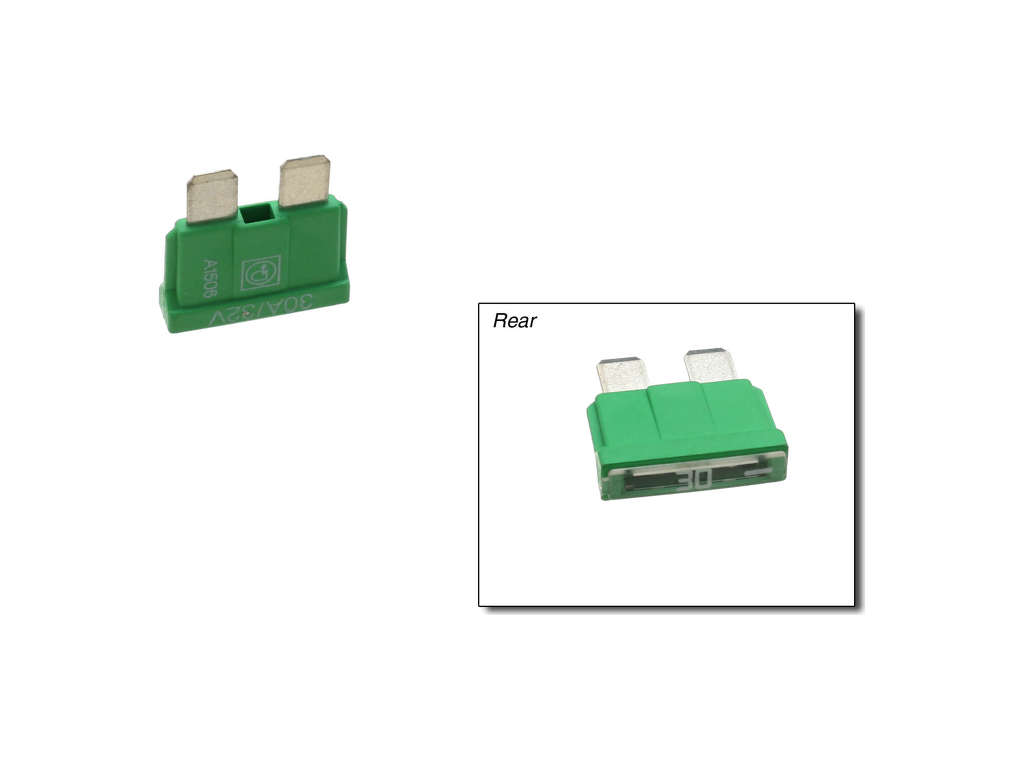
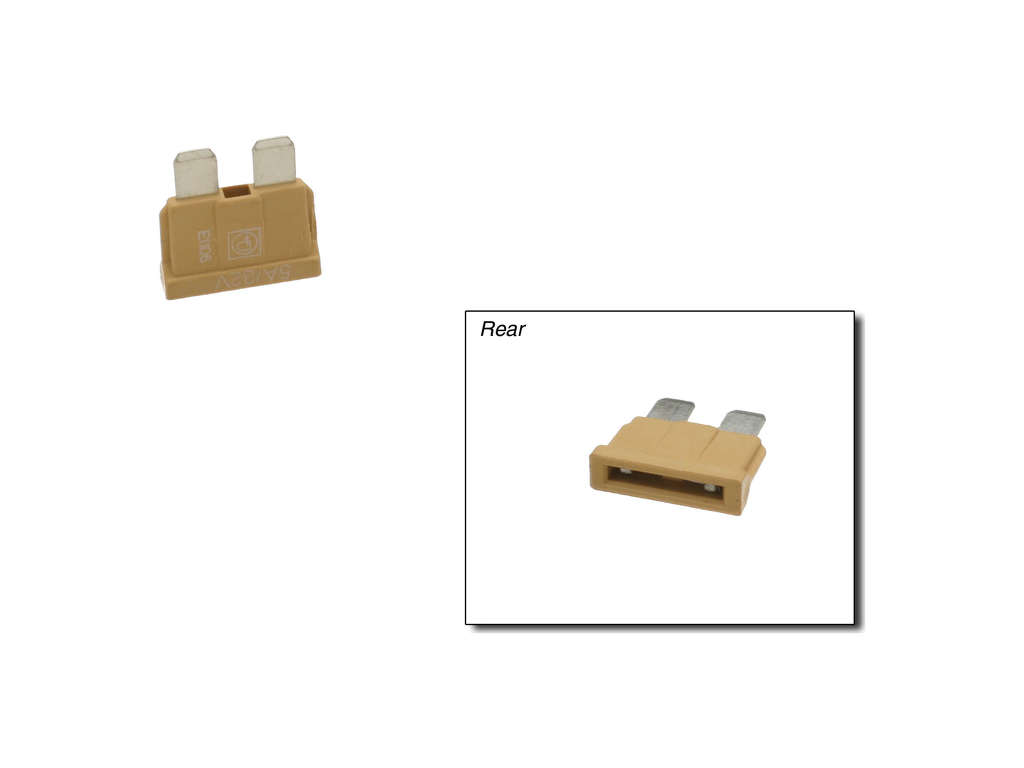
(OEM #N01713112 (for 15A ATO fuse))— A blown fuse is a common and simple cause for an open circuit fault. It's the first thing to check.
Trusted brands: Volkswagen, Bussmann, Littelfuse
OEM price range: $1-$5
Aftermarket price range: $1-$2 - Brake Vacuum Pump Relay
(OEM #4H0951253A (common VW '645' relay))— Relays are a common failure point in electrical circuits and the next logical part to check after a fuse.
Trusted brands: Volkswagen, Bosch, Hella
OEM price range: $25-$50
Aftermarket price range: $15-$40
Related Codes That Often Appear With This One
- P0556 — P0556 (Brake Booster Pressure Sensor Circuit Range/Performance) is triggered because the P1429 fault prevents the vacuum pump from running. The sensor correctly reports the resulting lack of vacuum. The TSBs VIN4APIN20190628 and VIN4APIN20190617 confirm these codes often appear together. Fixing the P1429 issue will resolve the P0556 code.
Technical Service Bulletins (TSBs) & Recalls
- VIN4APIN20190628: Notes that customers may report a MIL-on condition with P1429 and/or P0556.
- VIN4APIN20190617: Also notes customer complaints of MIL-on with P1429 and/or P0556.
- Ross-Tech Wiki for P0556: Mentions TSB 01-18-09 for 2016-17 Jettas, advising an ECU software update, showing that VW has addressed related sensor codes via software. It also directly advises checking the pump, relay, and fuse for P0556 codes.
Mechanic-Grade Diagnostic Values
- Brake Vacuum Pump Power Supply — expected: 12V at Pin 1 (typically Red wire), Ground at Pin 2 (typically White or Brown wire) with key on, engine off.. Failure: No voltage or less than battery voltage indicates a wiring, fuse, or relay issue. If voltage is present and the pump doesn't run, the pump motor is open.
- Brake Vacuum Pump Motor Resistance — expected: A low resistance value (typically under 50 ohms, exact spec not published).. Failure: Infinite resistance (OL on a multimeter) indicates an open circuit inside the pump motor, confirming pump failure.
Scan Tool Commands That Help
- VCDS (VAG-COM) / ODIS: Engine (01) -> Basic Settings (04) -> Group 008 (System Test) — This function can initiate a self-test of the brake vacuum system. The tool may prompt the user to press the brake pedal multiple times while it monitors the pressure sensor and pump activity to see if the system can be evacuated within a specified time. Note that for some engine controllers, this output test is not supported, requiring manual diagnosis.
Wiring & Ground Locations
- Brake Vacuum Pump Connector (V192) — A 2-pin electrical connector directly on the electric brake vacuum pump assembly, located on the side of the engine near the cylinder head.. This is the primary point for testing. P1429 means 'Open Circuit', so checking for 12V power and a good ground at these two pins is the most direct diagnostic step. If power and ground are present, the 'open' is inside the pump.
- Engine Bay Ground Point — A main ground point with several brown wires is typically located on the chassis/bulkhead, often behind or near the battery.. While the pump itself may have a dedicated ground wire in its harness, a poor main engine or chassis ground can cause a variety of electrical issues. Ensuring this connection is clean and tight is a fundamental step in any electrical diagnosis.
- Engine Block Ground Strap — A heavy braided strap connecting the engine block or transmission housing directly to the vehicle's chassis.. This is the main ground path for many components mounted on the engine. Corrosion or a loose connection here can create high resistance and lead to intermittent or persistent electrical faults.
Real Owner Repair Stories
- Reddit user on r/jetta (2017 VW Jetta) — Check Engine Light with code P0556 would appear intermittently.
❌ Tried (didn't work) Ignoring the code, as there were no immediate drivability symptoms.
✅ What actually fixed it The user reported that after checking the wiring and finding no visible faults, the code eventually went away on its own and did not return, suggesting a possible intermittent connection issue that resolved itself. This highlights that loose or corroded connections can cause temporary faults. - YouTube video on an Audi A1 (Audi A1 (shares components with VW)) — Check Engine Light with code P142900 (a more specific variant of P1429).
❌ Tried (didn't work) Testing the pump directly and finding it had failed.
✅ What actually fixed it After replacing the failed vacuum pump, the technician found there was still no power at the connector. The root cause was a blown fuse that was part of the same circuit. The final fix required replacing both the failed pump and the fuse it had blown.
OEM Part Supersession History
06L145100B, 06L145100F→06L145100N— Part revisions are common for VW/Audi to improve reliability or address known failure modes. The change from 'B' to 'F' and finally to 'N' likely involves improvements to the internal motor or seals to increase service life.
Heads up: While physically interchangeable, it is critical to use the latest revision (06L145100N) for the best reliability. A known-good aftermarket alternative is Pierburg (part # 7.24807.69.0).
Helpful Videos

We Have This Part in Stock

The information in this article is provided for general reference and educational purposes only. Vehicle specifications, procedures, and part compatibility can vary by production date, trim level, and region. Always consult your vehicle's factory service manual and verify part numbers before purchasing or performing repairs. Safety-critical components such as airbags, seat belts, and braking systems should be installed by a qualified professional.
- Volkswagen BEETLE CONVERTIBLE:
- 🧭 Diagnostic Flowchart
- 🎬 Helpful Videos
- 🛍️ Shop This Part
- What's Unique About the 2019-2019 Volkswagen BEETLE CONVERTIBLE
- Symptoms You May Notice
- Most Likely Causes
- Rare But Worth Checking
- Diagnosis Steps
- Parts You'll Likely Need
- Related Codes That Often Appear With This One
- Technical Service Bulletins (TSBs) & Recalls
- Mechanic-Grade Diagnostic Values
- Scan Tool Commands That Help
- Wiring & Ground Locations
- Real Owner Repair Stories
- OEM Part Supersession History
- 🎟️ Get 5% Off