

P1429 on 2014-2018 Volkswagen Jetta 1.8T: Brake Vacuum Pump Circuit Causes and Fixes
P1429 on a 2014-2018 Jetta 1.8T indicates an electrical fault in the auxiliary brake vacuum pump circuit, leading to a hard brake pedal. The most common cause is a failed electric vacuum pump, followed by a blown fuse or damaged wiring. The fix usually involves replacing the pump with the correct OEM part, 06L145100F or a later revision.
- P1429 is a serious safety issue on your Jetta, indicating a failure in the power brake assist system. Do not delay diagnosis and repair.
- The most common symptom is a hard brake pedal and increased stopping distances.
- Always check the fuse for the vacuum pump first; it's a simple and cheap potential fix.
- The most likely failed part is the electric vacuum pump itself, which has an internal electrical failure. Ensure you use the correct part number for the 1.8T Gen3 engine (06L145100F or newer).
- This code is almost always accompanied by P0556; fixing the P1429 fault will resolve both.
What's Unique About the 2014-2018 Volkswagen Jetta
The 1.8T EA888 Gen3 engine, being turbocharged, has variable intake vacuum levels, which necessitates an auxiliary electric vacuum pump to ensure consistent power brake assist. This system is common across modern VW and Audi vehicles built on the MQB platform. Therefore, a failure in this electric pump system is a relatively common issue. The P1429 code is an electrical fault code, pointing specifically to the circuit, not necessarily a mechanical vacuum leak, although an internal electrical failure of the pump is the most frequent root cause.
Symptoms You May Notice
- Hard brake pedal, especially on cold starts or after repeated pedal presses.
- Increased effort required to stop the vehicle.
- Longer than normal stopping distances.
- Check Engine Light (CEL) is on.
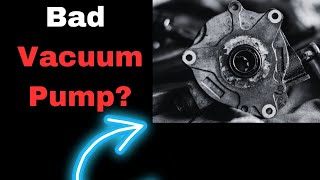
- Brake warning light may be illuminated on the dashboard. 🎬 Watch: 6 common signs of a failing brake vacuum pump.
- Replacing the brake booster. The booster relies on vacuum to function, but the P1429 code points to an electrical issue with the vacuum *source* (the pump circuit), not the booster itself.
- Replacing the Brake Booster Pressure Sensor (G294). While this sensor often fails and triggers code P0556, P1429 specifically points to the pump circuit. A failed pump will cause the sensor to read implausible data, but replacing the sensor won't fix the open pump circuit.
Most Likely Causes
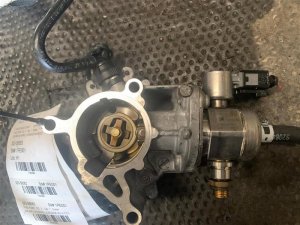
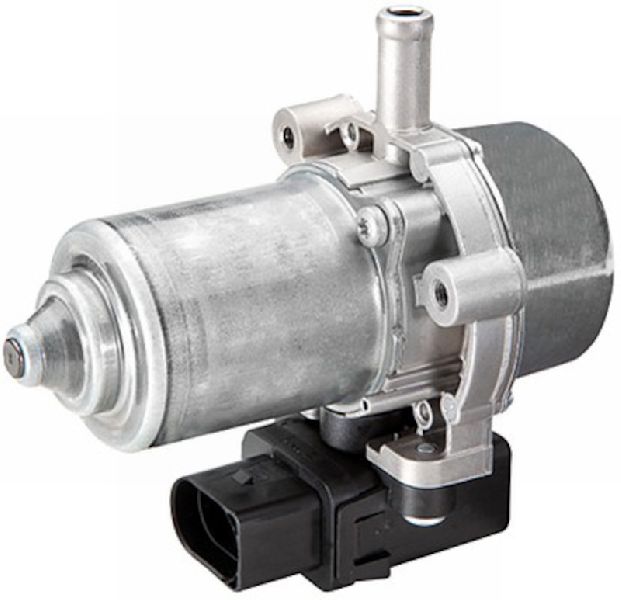
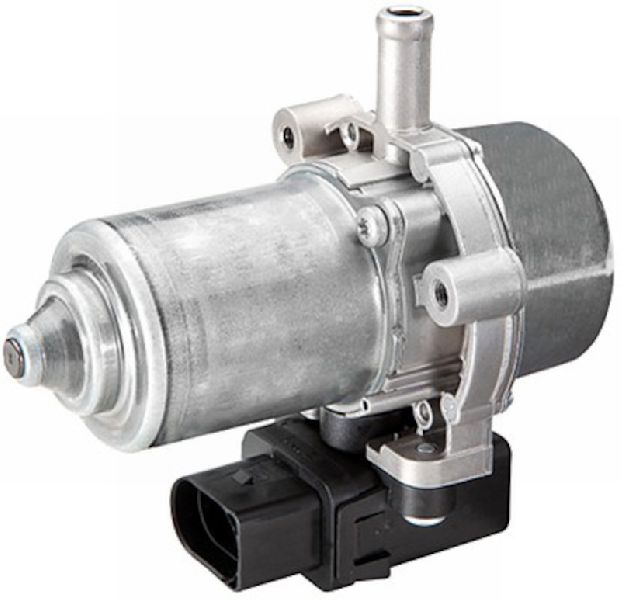
- Failed Electric Brake Vacuum Pump 🔴 High Probability → Shop Vacuum Pump The electric pump motor can burn out over time or fail internally, creating an open circuit. This is the most common failure mode for this system on VW platforms. The failure often occurs without warning.
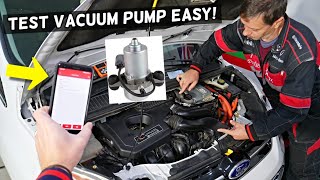
How to confirm: After verifying the fuse and wiring are good, test for 12V power and ground at the pump's 2-pin connector. A scan tool that can perform an output test to command the pump on is very helpful. If power is present when commanded but the pump does not run, the pump has failed internally. 🎬 See how to test a vacuum pump for proper operation.
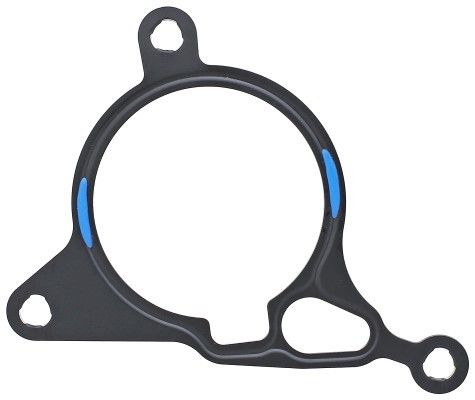
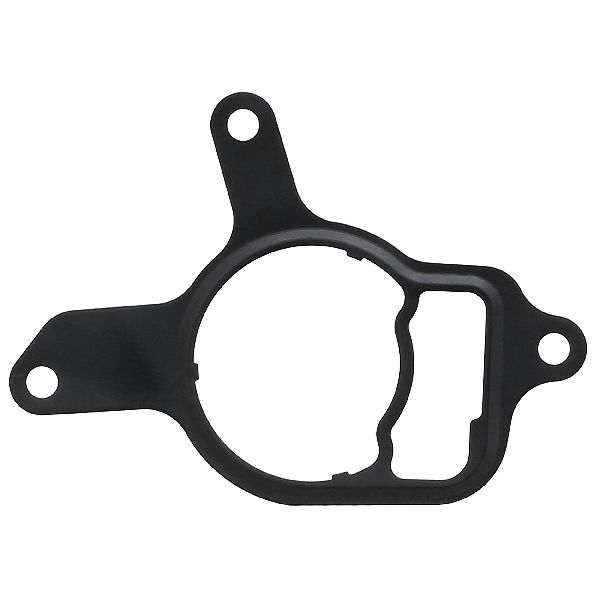
Typical fix: Replace the electric brake vacuum pump assembly and its associated gasket.
Est. part cost: $250-$500 - Blown Fuse 🟡 Medium Probability A failing pump motor can draw excessive current, causing the fuse to blow as a protective measure. The fuse may also fail due to age or voltage spikes.
How to confirm: Locate the fuse for the brake vacuum pump in the engine bay fuse box. The specific location and rating (e.g., 15A, 20A, or 30A) can vary, so consulting the owner's manual or a vehicle-specific fuse diagram is critical. For the Jetta A6, this may be fuse F26. Visually inspect it or test for continuity with a multimeter.
Typical fix: Replace the blown fuse. If the new fuse blows immediately, it indicates a short circuit in the wiring or a seized pump motor that needs to be addressed.
Est. part cost: $1-$5 - Damaged Wiring or Connector ⚪ Low Probability The wiring harness leading to the pump, located in the engine bay, can be susceptible to heat, vibration, and corrosion, potentially causing wires to break or the connector to fail. In some cases, rodent damage to the wiring has been reported. Wires are known to break right at the 2-pin connector.
How to confirm: Visually inspect the wiring and connector for any signs of damage, melting, corrosion, or animal bites. Gently tug on the wires at the connector to see if they are broken inside the insulation. Perform a continuity test on the power and ground wires from the fuse/relay block to the pump connector.
Typical fix: Repair the broken wire or replace the damaged connector pigtail.
Est. part cost: $10-$50
Rare But Worth Checking
- Faulty Engine Control Module (ECM) or Brake Booster Control Module (J542): → Shop Engine Control Module (ECM)
Diagnosis Steps
- Read the codes with an OBD-II scanner to confirm P1429 and check for any other related codes like P0556.
- Check the fuse for the brake vacuum pump. On the Jetta A6, this is often in the engine bay fuse box. The rating can be 15A, 20A or 30A. Consult your owner's manual or a current repair manual to confirm the exact location (e.g., F26) and rating for your specific vehicle.
- If the fuse is blown, replace it. If it blows again, suspect a shorted pump or wiring.
- If the fuse is good, visually inspect the wiring harness and the 2-pin electrical connector at the vacuum pump for any visible damage, corrosion, or loose connections. Pay close attention to the wires right at the connector, as they are a common point of failure.
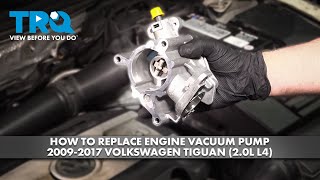
- The electric auxiliary pump is typically located on the cylinder head, often near the high-pressure fuel pump, and may require removing the air intake assembly for access.
- Using a multimeter, test for 12V power at the pump connector. The pump may only be commanded on under specific conditions (e.g., low vacuum on startup), so a scan tool that can run an output diagnostic test to activate the pump is the most reliable method.
- Test for a good ground connection at the pump's connector.
- If both power and ground are present when the pump should be active, but the pump does not run, the electric vacuum pump has failed and needs to be replaced.
- If power is not present at the connector (and the fuse is good), trace the circuit back from the pump, checking the relay (if applicable) and wiring for faults.
Parts You'll Likely Need
- Electric Brake Vacuum Pump
(OEM #06L145100F)— This is the most common point of failure for a P1429 code, as the internal motor burns out, creating the 'open circuit'. This part number supersedes earlier versions and may be revised to 06L145100N or other suffixes.
Trusted brands: Pierburg (OEM supplier), Bosch, Genuine Volkswagen
OEM price range: $350-$500
Aftermarket price range: $250-$400
Related Codes That Often Appear With This One
- P0556 — P0556 indicates a problem with the Brake Booster Pressure Sensor. If the vacuum pump fails to run due to the P1429 open circuit, the sensor will detect an implausible pressure reading, triggering P0556. Fixing the P1429 fault will almost always resolve P0556. 🎬 Watch this repair walkthrough for the P0556 code on a Jetta. Multiple TSBs on related models confirm these codes appear together as a known issue pattern.
Technical Service Bulletins (TSBs) & Recalls
- While no TSB is exclusive to the Jetta 1.8T for P1429, related TSBs confirm the pattern. TSBs #VIN4APIN20190628 and #VIN4APIN20190617 for the VW Beetle note that P1429 and P0556 often appear together. TSB 01-18-09 (TPI 2045383) addresses P0556 on the 1.4T Jetta and advises checking the vacuum pump system. This indicates a known issue pattern across similar VW models.
- Manufacturer TSB Bulletin #VIN4APIN20190610 explicitly lists P1429 and/or P1556 as conditions where the Malfunction Indicator Lamp (MIL) will be illuminated, confirming this code as a recognized service concern for the platform.
Platform-Specific Known Issues
- The vacuum pump on the EA888 Gen 3 engine is a mechanical pump driven by the camshaft, but it is electrically controlled/monitored, which is why an electrical fault code is generated. It is physically located on the side of the cylinder head, and access typically requires removing the engine cover and air intake piping.
- Do not confuse this brake vacuum pump with the secondary air injection pump, which is part of the emissions system and located elsewhere.
Mechanic-Grade Diagnostic Values
- Voltage at 2-pin pump connector, Pin 1 to chassis ground — expected: 12V+ (Battery Voltage). Failure: 0V when the pump is commanded on (via scan tool or during startup) indicates an open in the power supply wire, a bad fuse, or a faulty relay.
- Continuity at 2-pin pump connector, Pin 2 to chassis ground — expected: Near 0 ohms. Failure: Infinite resistance (OL) indicates a broken ground wire or a bad ground connection point.
- Resistance across the two pins of the pump itself — expected: A specific resistance value is not commonly published, but a reading should be present.. Failure: Infinite resistance (Open Loop) indicates the motor windings are broken internally and the pump has failed.
Hidden / Shadow Codes Worth Checking
- 17837: This is the VAG-specific fault code that corresponds to the generic OBD-II code P1429. The description is 'Circuit for Brake Vacuum Pump: Open Circuit'. (see via Displayed by Volkswagen/Audi specific scan tools like VCDS (VAG-COM) or ODIS.)
Scan Tool Commands That Help
- VCDS (VAG-COM), OBDeleven, ODIS: Engine (01) -> Output Tests (03) -> Brake Vacuum Pump (V192) — This is the most crucial diagnostic step. It directly commands the electric pump to turn on, allowing a technician to listen for activation and test for power/ground at the pump connector simultaneously. This definitively proves if the pump itself has failed or if the problem is elsewhere in the circuit.
Wiring & Ground Locations
- Fuse F26 (A6 Jetta) — In the engine bay fuse box (E-box).. This fuse (rating varies, can be 15A, 20A, or 30A) is the primary power source for the electric vacuum pump circuit. It is the first place to check when diagnosing P1429.
- Pump 2-Pin Connector — Directly on the electric vacuum pump assembly, which is mounted to the cylinder head.. This is the primary point for electrical testing. Pin 1 is 12V+ power, and Pin 2 is ground. Wires are known to break inside the insulation right at this connector due to engine vibration.
- Brake Vacuum Pump Relay (J542 or R1) — Location can vary. On some related models, it is in the interior fuse box (fascia) at position R1. On others, it may be integrated into a control module.. This relay switches power to the pump. If the relay fails in the open position, the pump will not receive power even if the fuse is good, causing the P1429 code.
- Engine Bay Ground Points — Commonly found on the left side frame rail or on top of the cylinder head (e.g., G15).. The pump circuit requires a clean, solid ground to complete the circuit. A corroded or loose ground point can cause an open circuit fault.
Real Owner Repair Stories
- Reddit user nazzareno1535 on r/mechanic (2019 VW Jetta 1.4L (EA211 engine, but uses a similar electric vacuum pump system)) — Check Engine Light with code P0556 (often paired with P1429).
❌ Tried (didn't work) Replacing the brake booster vacuum pump with an aftermarket part., Replacing the brake booster pressure sensor.
✅ What actually fixed it The vehicle was taken to a VW dealership. They found the aftermarket pump was incompatible and had damaged the control module. The final repair required replacing both the pump (with a genuine VW part) and the damaged control module.
When the Usual Fixes Don't Work
- In a documented case on a similar VW platform, a P1429 code persisted after a new aftermarket pump was installed. The root cause was not the pump itself, but the control module which was reportedly damaged by the incompatible aftermarket part. This highlights that if the code returns after replacing the pump, the new part's quality or compatibility, and its effect on the control module, should be questioned before assuming a wiring fault.
OEM Part Supersession History
06L145100B→06L145100F— Revision and improvement of the part by the manufacturer.06L145100F→06L145100N, 06L145100K, 06L145100M— Continued design revisions by the manufacturer for improved reliability.
Heads up: Always verify the latest part number with a dealership using the vehicle's VIN, but these are generally interchangeable for this application.
Model Year Variations Within This Range
- 2014-2018: While the core components are the same, the exact fuse location and amperage for the vacuum pump circuit can vary slightly. For the A6 Jetta, fuse F26 in the engine bay box is a common location, but it's critical to verify with the owner's manual or a vehicle-specific diagram.
Diagnostic Flowchart
Used vs. New Parts: Buying Guide for This Vehicle
When a used part is the smart pick: For this specific repair, a used part is NOT recommended. The electric vacuum pump is a wear-and-tear item with an internal motor that fails over time. The cost savings of a used part do not outweigh the high risk of premature failure.
Donor-vehicle mileage cap: roughly under 30000 miles for the part to have meaningful remaining life.
What to inspect on the donor part:
- Verify the part number on the used unit matches the OEM number or a known supersession.
- Inspect the electrical connector for any signs of melting, corrosion, or damage.
- If possible, test the motor by applying 12V power and ground to the pins to ensure it runs.
OEM-only on this vehicle (don't cheap out):
- Electric Brake Vacuum Pump
Aftermarket brands forum-validated for this vehicle:
- Pierburg (This is the Original Equipment Manufacturer (OEM) that supplies the part to Volkswagen).
Brands owners have reported issues with on this vehicle:
- Unnamed or generic aftermarket brands. There is documented evidence on forums of incompatible aftermarket pumps potentially causing damage to the vehicle's engine control module, leading to a much more expensive repair.
Real Owner Stories
Aggregated from forums and TSBs cited above. Mileages and costs reflect what owners reported in those sources.
2019 Volkswagen Jetta 1.4T
Symptoms: A persistent P0556 code after replacing the vacuum pump with an aftermarket part and also replacing the sensor.
What fixed it: The issue was ultimately traced to a fried control module, which was allegedly caused by the incompatible aftermarket pump.
Source hint: Reddit r/mechanic
Related OBD-II Codes
Frequently Asked Questions
Where is the brake vacuum pump located on my 2014-2018 Jetta 1.8T?
What fuse should I check for the P1429 code?
Can I use a cheap aftermarket vacuum pump to fix this?
My Jetta also has a P0556 code along with P1429. Is that normal?
What is the most likely part that failed to cause a P1429 code?
My fuse and pump seem okay. What else could cause P1429?
Is this P1429 issue common on other VW or Audi models?
Helpful Videos
Used OEM Parts in Stock
New Aftermarket Parts Available


The information in this article is provided for general reference and educational purposes only. Vehicle specifications, procedures, and part compatibility can vary by production date, trim level, and region. Always consult your vehicle's factory service manual and verify part numbers before purchasing or performing repairs. Safety-critical components such as airbags, seat belts, and braking systems should be installed by a qualified professional.
- Volkswagen Jetta:
- 🧭 Diagnostic Flowchart
- 🎬 Helpful Videos
- 🛍️ Shop This Part
- What's Unique About the 2014-2018 Volkswagen Jetta
- Symptoms You May Notice
- Most Likely Causes
- Rare But Worth Checking
- Diagnosis Steps
- Parts You'll Likely Need
- Related Codes That Often Appear With This One
- Technical Service Bulletins (TSBs) & Recalls
- Platform-Specific Known Issues
- Mechanic-Grade Diagnostic Values
- Hidden / Shadow Codes Worth Checking
- Scan Tool Commands That Help
- Wiring & Ground Locations
- Real Owner Repair Stories
- When the Usual Fixes Don't Work
- OEM Part Supersession History
- Model Year Variations Within This Range
- Used vs. New Parts: Buying Guide for This Vehicle
- Real Owner Stories
- 2019 Volkswagen Jetta 1.4T
- Related OBD-II Codes
- Frequently Asked Questions
- 🎟️ Get 5% Off