

OBD-II Code P1433: A/C Refrigerant Temperature Sensor Circuit Low
What P1433 means, why it triggers, and how to fix it — The Ultimate 2026 Guide
- Always verify your vehicle's specific P1433 definition before buying parts, as it means an A/C fault on Fords, a vacuum leak on Porsches, or a dead hybrid battery on Hondas.
- On Porsche 911 and Boxster models, ignore the dashboard 'Cooling System Fault' message and test the vacuum system's Change-Over Valves (COVs) to find the actual leak.
- For GM vehicles like the C5 Corvette, run 2 to 3 tanks of fuel treated with Chevron Techron to clean the fuel sender contacts before paying $1,500+ to drop the fuel tanks.
- First-generation Honda Civic Hybrids logging P1433 require a $2,000 to $4,000 replacement of the main IMA high-voltage battery pack, though you must test the 12V starter battery first.
What Does P1433 Mean?
P1433 is a manufacturer-specific diagnostic trouble code (DTC) with widely different meanings. Its most common definition (used by Ford and Saab) indicates the Powertrain Control Module (PCM) detected a voltage signal from the A/C refrigerant temperature sensor below the specified range. To protect A/C components, the computer disables the A/C compressor clutch. You must verify the code's exact meaning for your make and model, as it points to completely different systems like fuel delivery (GM), hybrid batteries (Honda), or vacuum systems (Porsche).
Technical definition: The most prevalent technical definition for P1433 is 'A/C Refrigerant Temperature Sensor Circuit Low.' However, this code has drastically different meanings for other major manufacturers. For General Motors: 'Fuel Level Sensor 2 Circuit High Voltage.' For VW/Audi: 'Secondary Air Injection System Pump Relay Circuit Open.' For Honda: 'Battery Module Deterioration.' For Porsche: 'Vacuum System Fault.' Always confirm the definition before beginning diagnosis.
Can I Drive With P1433?
Yes, But With Caution. For the most common A/C-related definition (Ford, Saab), it is safe to drive. You will lack air conditioning, but no mechanical damage will occur. However, for other manufacturers, the risks escalate. For GM, this code disables the fuel gauge, creating a risk of unexpectedly running out of gas. For Honda Hybrids, it indicates a failing high-voltage battery that causes the 12V battery to die and leave you stranded. For Porsche, it indicates a vacuum leak that increases braking effort and stopping distance, posing a serious safety concern.
Common Causes
- Failed Change-Over Valve (COV) or Vacuum Leak (Porsche) (Very Common) — On Porsche models, a small, cracked plastic change-over valve or a leaking vacuum line causes a loss of vacuum required to operate cooling system valves, triggering a misleading 'Cooling System Fault' message.
- Faulty A/C Refrigerant Temperature Sensor (Ford/Saab) (Very Common) — The sensor failed internally, sending a continuous low-voltage signal to the PCM. This is the most frequent cause on Ford and Saab vehicles.
- Faulty Secondary Fuel Level Sensor (GM) (Common) — On GM vehicles with dual fuel tanks (like the C5 Corvette), the level sensor in the secondary tank failed, sending a high-voltage signal that the PCM interprets as a fault.
- Failing IMA High-Voltage Battery (Honda) (Common) — On early Honda Civic Hybrids, individual cells or modules in the main high-voltage IMA battery pack no longer hold a proper charge.
- Faulty Secondary Air Injection Pump or Relay (VW/Audi) (Common) — On VW and Audi vehicles, this indicates an open circuit for the emissions-related secondary air injection pump relay, caused by a bad relay or a dead pump motor.
- Low A/C Refrigerant Level (Common) — A leak in the A/C system caused the refrigerant level to drop. This lowers system pressure and temperature, pushing the sensor's reading below the expected threshold.
- Damaged Wiring or Electrical Connectors (Common) — The wiring harness to the affected sensor is shorted to ground, frayed, or corroded. The electrical connector is loose, contaminated with moisture, or has bent pins.
- Faulty Powertrain Control Module (PCM) (Rare) — The vehicle's main computer failed and misinterprets signals due to a faulty driver circuit. This is a last resort after ruling out all other possibilities.
Symptoms
- 'Cooling System Fault' Message (Porsche) — Porsche vehicles display a 'Cooling System Fault' or 'Front Cooling Fault' message on the instrument cluster, even though the actual problem is a vacuum leak.
- Inaccurate or Empty Fuel Gauge (GM) — For many GM vehicles, this code forces the fuel gauge to read empty, even with fuel in the tank, and triggers a 'Check Gauges' light.
- Air Conditioning Blows Warm Air — The primary symptom for the A/C-related definition. The PCM commands the A/C compressor off as a protective measure.
- IMA Light On (Honda Hybrids) — The Integrated Motor Assist (IMA) warning light illuminates alongside the Check Engine Light, indicating a hybrid battery system fault.
- Check Engine Light On — The Malfunction Indicator Lamp (MIL) illuminates on the dashboard to notify the driver of the stored fault code.
- Reduced Engine Power and Poor Fuel Economy — The vehicle experiences reduced performance, especially true for Honda's IMA fault, Porsche's vacuum leak, and VW/Audi's emissions fault.
Diagnostic Flowchart
Tap your situation to follow the diagnostic path that matches what you're seeing on this code.
Common Fixes & Costs
- Replace Change-Over Valve (COV) or Repair Vacuum Line (Porsche)
— Parts: $50-$120, Labor: $300-$800 (Labor is high due to component access and leak location time), ~3.5 hr book time
(Professional)
: OEM - Replace A/C Refrigerant Temperature Sensor
— Parts: $20-$85, Labor: $180-$280 (Includes A/C system evacuation and recharge), ~1.5 hr book time
(Professional)
: OEM - Replace Fuel Level Sending Unit (GM)
— Parts: $300-$1300, Labor: $1100-$1600 (Requires removing dual fuel tanks), ~9 hr book time
(Professional)
: OEM - Replace IMA Hybrid Battery Pack (Honda)
— Parts: $2000-$4000, Labor: $400-$600, ~2.5 hr book time
(Professional)
: OEM - Replace Secondary Air Injection Pump or Relay (VW/Audi)
— Parts: $30-$350, Labor: $150-$300, ~1.8 hr book time
(Intermediate)
: OEM - Repair Damaged Wiring or Connector — Parts: $10-$30, Labor: $150-$400, ~2 hr book time (Intermediate)
- Recharge A/C System (after fixing leak) — Parts: $30-$60, Labor: $150-$300, ~1.2 hr book time (Professional)
Used vs. New Parts: Buying Guide
When a used part is worth it: Used or remanufactured parts make sense for high-cost components like a Honda IMA battery, where a reputable supplier offers significant savings ($1,500 vs $4,000+ new) with a solid warranty.
Donor-vehicle mileage cap: roughly under 80000 miles for the part to have meaningful remaining life.
Donor quality checklist:
- For electronic modules (IMA battery), verify the seller is a specialist with a robust testing process.
- For mechanical parts like Porsche valves, avoid parts from vehicles with high mileage or rust-belt areas.
- Match part numbers exactly, as superseded numbers have different compatibility.
Decision logic:
- If Part is a low-cost sensor or valve (<$150 new), and labor for access is high (e.g., Porsche COV, GM Fuel Sender) → Always buy new OEM or OEM-supplier parts. The risk of a used part failing and requiring repeat labor outweighs the small savings.
- If Part is extremely expensive new (e.g., Honda IMA Battery >$2,000) → A professionally remanufactured part from a specialist with a multi-year warranty is the most financially sound choice.
- If Part has a known wear-out failure mode (e.g., plastic Porsche COV, GM fuel sender contacts) → Strongly favor new. A used part has a significantly reduced lifespan.
Warranty tradeoff: Used salvage parts offer 30-90 day warranties. Remanufactured specialty parts (hybrid batteries) offer 1-5 year warranties. New OEM parts carry a 1-2 year warranty.
Worst-case if a used part fails: $700-$1600 if a used part with high labor cost (GM fuel sender or Porsche COV) fails after installation, requiring a full repeat of the labor.
What Happens If You Wait — Timeline
- 0-2 months: For Honda IMA: Code sets, IMA and CEL on. MPG drops 10-15%. For Porsche: 'Cooling System Fault' message appears but temps are normal. For GM: Gauge drops to empty. For VW: CEL on, no symptoms. (MPG impact: 0-15% (Honda only)% · Added cost: $0)
- 2-6 months: For Honda IMA: Assist becomes intermittent, car struggles on hills. The IMA battery struggles to keep the 12V battery charged. For Porsche: A persistent vacuum leak causes a slightly rough idle. For VW SAI: Continued cold starts without SAI degrade catalytic converter efficiency. (MPG impact: 15-25% (Honda only)% · Added cost: $0-$150 (Potential for a new 12V battery in Honda))
- 6-12 months: For Honda IMA: The 12V battery dies unexpectedly, causing a no-start condition. IMA system is non-functional. For Porsche: A major vacuum leak affects air-fuel ratios, stressing catalytic converters. (MPG impact: 25-40% (Honda only)% · Added cost: $150-$400 (Towing plus 12V battery replacement for Honda))
- 12+ months: For VW/Audi SAI: Improper light-off temperatures lead to premature catalytic converter failure. For Honda IMA: The car is a heavy, underpowered gasoline vehicle. For GM/Porsche: The primary risk (running out of fuel/misleading warnings) remains constant. (MPG impact: N/A% · Added cost: $1200-$2800 (Potential catalytic converter replacement for VW/Audi))
Cost of Not Fixing It
- Immediate: Loss of air conditioning (Ford/Saab). Inoperative fuel gauge risking running out of fuel (GM). Persistent dashboard warning (Porsche). Reduced power (Honda). Failed emissions test (VW/Audi). (Added cost: $100-$300 (Potential tow bill if running out of fuel))
- 1-6 Months: The Honda high-voltage battery fails to charge the 12V battery, leading to a no-start condition. A persistent Porsche vacuum leak causes poor engine performance and fuel economy. (Added cost: $150-$400 (Towing plus replacement of a damaged 12V battery))
- 6+ Months: Ignoring a VW/Audi SAI fault causes premature failure of the catalytic converter due to improper warm-up. Ignoring a major vacuum leak leads to long-term air-fuel mixture issues. (Added cost: $1200-$2800 (Catalytic converter replacement))
Diagnosis Steps
- Verify the Code's Definition
Use a professional scan tool or reliable service database to confirm the exact definition of P1433 for your vehicle's make, model, and year. Misdiagnosis is extremely common with this code.
Tools: OBD-II Scan Tool, Service Manual/Database (Beginner) - Visual Inspection
Inspect the relevant system based on the definition. For A/C faults, check the sensor and wiring for damage. For Porsche, look for cracked vacuum lines near the change-over valves and exhaust. For GM, inspect the fuel tank wiring.
Tools: Flashlight, Inspection Mirror (Beginner) - Check for Reference Voltage and Ground
For sensor faults (A/C or Fuel Level), disconnect the sensor's electrical connector. Turn the ignition to 'On' (engine off). Use a multimeter to verify a 5-volt reference wire (4.75V to 5.25V) and a ground wire (near 0 volts). A lack of either points to a wiring or PCM issue.
Tools: Digital Multimeter (DMM) (Intermediate) - Test Sensor Resistance (A/C or GM Fuel)
With the sensor disconnected, set your multimeter to Ohms (Ω) and measure resistance across the terminals. A GM C5 Corvette fuel sensor should read 40 Ohms (Full) to 251 Ohms (Empty), while a Ford A/C sensor reads 37,000 Ohms at 50°F. Infinite resistance (open) or zero resistance (short) confirms a failed sensor.
Tools: Digital Multimeter (DMM), Service Manual (Intermediate) - Analyze Live Sensor Data
Using a capable scan tool, view the live data stream for the relevant sensor. A 'Circuit Low' fault shows an out-of-range value, such as -40°F for a temperature sensor. For a GM fuel sensor fault, the scan tool shows 0% fuel level for the secondary tank despite fuel being present.
Tools: Advanced Scan Tool (Advanced) - Perform a Vacuum Test (Porsche)
Connect a handheld vacuum pump to the vacuum lines leading to the change-over valves (COVs). The lines and valves must hold a steady vacuum of 18-22 inHg. If a valve bleeds down quickly, replace it.
Tools: Handheld Vacuum Pump/Gauge (Advanced) - Test Secondary Air Injection Relay (VW/Audi)
Remove the SAI relay (labeled '373'). Check for battery voltage at socket terminal 30. Use a fused jumper to connect terminal 30 to terminal 87; the SAI pump should run. If it runs, replace the relay. If it doesn't, the pump motor failed.
Tools: Digital Multimeter (DMM), Fused Jumper Wires (Advanced) - Check for a Short to Ground
Disconnect the sensor and the PCM. Set your multimeter to continuity. Place one probe on the signal wire at the sensor connector and the other on a known good chassis ground. If the multimeter beeps, there is a short circuit in the harness.
Tools: Digital Multimeter (DMM), Vehicle-Specific Wiring Diagram (Advanced) - Dynamic Sensor Response Test (A/C)
Back-probe the sensor's signal wire with a multimeter. Apply gentle heat from a heat gun or cold from inverted canned air to the sensor body. The voltage must change smoothly (e.g., sweeping from 4.0V cold to 1.0V hot). Erratic jumps indicate a faulty sensor.
Tools: Digital Multimeter (DMM), Heat Gun or Canned Air (Advanced)
When This Code Triggers (Freeze-Frame Conditions)
- Engine Coolant Temp: 180-210°F (82-99°C) (The code sets when the engine is fully warmed up, allowing all system self-tests to complete.)
- Engine RPM: 700-2500 RPM (Triggers at idle (for A/C or vacuum faults) or during steady-state cruise (when the ECU runs diagnostic checks on fuel or emissions systems).)
- Vehicle Speed: 0-65 mph (0-105 kph) (Logged either at a standstill (A/C requested at idle) or during highway driving, depending on the specific system at fault.)
- Fuel System Status: Closed Loop (Registered after the engine enters closed-loop operation, using sensor feedback to control the air-fuel mixture.)
Related Codes
- P1432 — On Porsche vehicles, P1432 is also a 'Vacuum System Fault' code. It frequently appears alongside P1433, pointing to the same underlying issue of a vacuum leak or failed change-over valve.
- P1434 — For A/C systems, this code means 'A/C Refrigerant Temperature Circuit High,' the opposite of P1433. Diagnosis involves looking for an open circuit or a short to power.
- P0532 — A generic code for 'A/C Refrigerant Pressure Sensor 'A' Circuit Low.' While P1433 refers to a temperature sensor, P0532 points to a pressure sensor, diagnosed using similar methods.
- P1600 (Honda) — On Honda Hybrids, P1600 is a generic IMA system malfunction code almost always stored alongside P1433 when the high-voltage battery fails.
Climate & Environmental Factors
- Extreme Cold: Hard plastic vacuum lines, common on Porsche and other European vehicles, become extremely brittle in cold weather and snap with minimal force, leading to vacuum leaks.
- High Heat & Humidity: Prolonged exposure to high under-hood temperatures and humidity accelerates the degradation of electrical connectors, leading to corrosion on pins or shorts in the wiring harness.
- Engine Heat Cycles: Thousands of heat cycles cause plastic components like Porsche's Change-Over Valves and A/C sensors to become brittle and fail over time.
How to Talk to a Mechanic About This Code
Say this: "I have a Check Engine Light with code P1433. I know this code has different meanings, so my first step is to authorize one hour of diagnostic time to confirm the specific definition for my [Your Car's Make/Model/Year] and pinpoint the cause. Please call me with a firm estimate for the full repair before doing any work beyond the initial diagnosis."
This shows you are an informed customer. It clearly defines the scope of the initial work (diagnosis only), prevents surprise charges, and forces the shop to get your explicit approval before proceeding with a potentially expensive repair.
Avoid saying:
- 'My check engine light is on, can you fix it?' (This is too vague and invites unnecessary work).
- 'Just do whatever it takes to fix it.' (This is a blank check and gives up all your control).
- 'My friend said it's probably the [incorrect part for your car].' (This misleads the technician and wastes diagnostic time).
Questions to ask before authorizing the repair:
- Can you show me the specific P1433 definition from your service information for my exact car?
- Is this estimate for the complete, out-the-door price, including all parts, labor, and taxes?
- What is the warranty on the parts and the labor for this specific repair?
- If the fix is for a Porsche, did you test the vacuum system or are you quoting a cooling system part? If for a GM, have you considered a chemical cleaning before replacing the fuel sender?
Where to Take It: Dealer vs Independent vs Chain
- Dealer:
Best for: Vehicles under warranty., Complex, brand-specific issues like a Honda IMA battery replacement or a Porsche vacuum system fault, where specialized tools and knowledge are critical., Recalls or service campaigns related to the fault.
Downsides: Significantly higher labor rates and parts costs., Less flexible on repair options, often preferring to replace entire assemblies rather than smaller components. (Typical cost: +40% vs. baseline) - Independent Shop:
A brand-specialist independent shop is the best choice for most P1433 scenarios, offering a balance of expertise and value. A general shop is only suitable for the most common Ford/Saab A/C definition.
Best for: Out-of-warranty vehicles where cost is a major factor., Brand-specialist indies (e.g., a German car expert for a VW/Porsche or a Japanese car expert for a Honda) who have deep experience with these specific P1433 variants., Common versions of the code, like the A/C fault on a Ford.
Downsides: Quality and expertise vary widely; vetting the shop's reputation and certifications (like ASE) is crucial., A general-purpose shop lacks the specific tools or experience for the Porsche or Honda versions of this code. (Typical cost: +0% vs. baseline) - Chain Shop:
AVOID for diagnosing P1433. The complexity and manufacturer-specific nature of this code are a poor match for the chain shop model.
Best for: Simple, unrelated maintenance like oil changes or tire rotations.
Downsides: Technician skill varies dramatically; they are unlikely to have the specialized knowledge for the diverse P1433 meanings., High pressure to upsell services; they frequently misdiagnose the root cause and recommend unnecessary repairs. (Typical cost: -10% vs. baseline)
When to Walk Away From the Repair
If the estimated repair cost exceeds 50% of the car's private-party market value, seriously consider selling or trading in the vehicle instead of repairing it.
- Car worth $3000, fix is $3500: Walk away. The repair cost for the Honda IMA battery exceeds the car's value. Sell as-is or scrap the vehicle.
- Car worth $55000, fix is $800: Fix it. The cost to repair the vacuum leak on the Porsche is a small fraction of the car's value and is a common, well-understood issue.
- Car worth $12000, fix is $2100: Borderline. The fuel sender replacement on the Corvette is expensive. Attempt the cheaper chemical fix first. If that fails, get a second opinion before committing to a repair that is nearly 20% of the car's value.
What Scan Tool You Need for This Code
Minimum: A scanner that reads manufacturer-specific code definitions and displays live sensor data. A generic code reader is not sufficient for P1433.
A basic $20 reader only shows 'P1433' but won't tell you if it's a Porsche vacuum leak, a GM fuel gauge fault, or a Honda battery failure. Without the specific definition and live data, you cannot begin to diagnose the correct system.
Budget: BlueDriver Pro Scan Tool (~$100) — Pairs with your smartphone and excels at identifying the correct manufacturer-specific definition for P1433. It allows you to view live data for the relevant sensors (A/C temp, fuel level, etc.), which is essential for diagnosis.
Mid-range: Innova 5610 or XTOOL D7 (~$300-350) — Adds bidirectional controls. This is crucial for the VW/Audi version, allowing you to command the Secondary Air Injection pump to run, instantly testing the pump and relay circuit.
Professional: Autel MaxiCOM MK808Z or Launch X431 series (~$450-1200) — Provides full, OE-level diagnostics. For a failing Honda IMA battery, these tools perform deep analysis of individual battery cell blocks. For Porsche, they access specific test plans for the vacuum system.
Rent vs buy: Buy. The free 'loaner' scanners at auto parts stores are typically basic code readers insufficient for this code. Because P1433 requires a scanner with manufacturer-specific definitions and live data, you must purchase a capable tool.
How to Clear the Code After You Fix It
- Use a compatible OBD-II scan tool to erase the diagnostic trouble codes.
- Perform a complete drive cycle to allow the vehicle's readiness monitors to run and verify the repair.
Drive cycle (~20 minutes): 1) Cold start and idle for 2-3 minutes. 2) Drive in stop-and-go traffic with several accelerations and decelerations. 3) Drive at a steady highway speed (55 mph) for 5-10 minutes. 4) Allow the vehicle to cool down completely.
Readiness monitors affected: Comprehensive Component Monitor, Evaporative System, Catalyst Monitor
Before emissions retest: drive at least 50 miles to fully set monitors.
Watch out for:
- Clearing the code without fixing the underlying problem guarantees the code will return.
- Failing to complete a full drive cycle leaves readiness monitors 'Not Ready,' causing an automatic emissions test failure.
Will This Fail Emissions / State Inspection?
Yes — this code typically fails an OBD-II emissions inspection.
- California: An illuminated Check Engine Light is an automatic failure. After repairs, a full drive cycle must be completed to set all readiness monitors before a retest.
- New York: The NYS DMV vehicle inspection includes an OBD-II scan. A P1433 code with the Check Engine Light on results in an emissions test failure.
- Texas: In the 17 Texas counties requiring emissions testing, an active P1433 code and illuminated MIL fails the OBD portion of the annual inspection.
Most Commonly Affected Vehicles
- Porsche 911 (991.1), Boxster/Cayman (981) (2012-2016) — P1433 indicates a 'Vacuum System Fault', often caused by a failed change-over valve (COV) or a cracked vacuum line. The fault is even triggered by a vacuum leak in the Porsche Sports Exhaust (PSE) system.
- Chevrolet Corvette (C5), Suburban (1997-2004) — P1433 means 'Fuel Level Sensor 2 Circuit High Voltage,' referring to the sending unit in the right-hand fuel tank. It forces the fuel gauge to read empty.
- Audi / VW A4 (B6), Golf, Jetta (2000-2006) — P1433 means 'Secondary Air Injection System Pump Relay Circuit Open,' an emissions system fault common on the 'B6' platform A4.
- Honda Civic Hybrid (Gen 1) (2003-2005) — P1433 means 'Battery Module Deterioration,' indicating the high-voltage IMA battery is failing. A weak 12V battery sometimes triggers this code, so test it first.
- Ford Focus, Explorer, Ranger (1998-2011) — These vehicles use the primary definition of 'A/C Refrigerant Temperature Sensor Circuit Low.' On late 90s models, it occasionally refers to an EVAP system fault.
- Saab 9-3, 9-5 (2000-2011) — Saab vehicles frequently use the 'A/C Refrigerant Temperature Circuit Low' definition for this code.
- Subaru Impreza, Forester, Outback (2000-2008) — P1433 relates to the 'EVAP Control System Vent Control Function,' pointing to a problem with the canister vent valve or purge control solenoid.
- Toyota Corolla, Camry, Tacoma (2010-2018) — Toyota vehicles rarely use powertrain code P1433. Instead, they use Chassis code C1433, meaning 'Steering Angle Sensor Internal Circuit,' an unrelated ABS/VSC fault.
Manufacturer-Specific Notes
- Porsche: P1433 is a 'Vacuum System Fault' that misleadingly displays as a 'Cooling System Fault' on the dash. Critical cooling valves are vacuum-actuated, so any leak in the car's vacuum system triggers this code. The root cause is almost always a small plastic Change-Over Valve (COV) or a cracked vacuum hose, not the water pump.
- General Motors (Chevrolet, GMC, Buick, Cadillac): P1433 means 'Fuel Level Sensor 2 Circuit High Voltage.' It points to a failure of the fuel level sending unit in the secondary (right side) fuel tank on vehicles like the C5 Corvette, resulting in an empty fuel gauge reading.
- Honda: On first-generation Civic Hybrids (2003-2005), P1433 specifically means 'Battery Module Deterioration,' signifying the end of life for the high-voltage IMA battery pack.
- Volkswagen / Audi / SEAT: P1433 means 'Secondary Air Injection System Pump Relay Circuit Open.' This is an emissions-related code indicating a fault in the electrical circuit for the air pump used during cold starts.
- Toyota/Lexus: Toyota and Lexus vehicles typically do not use the P1433 powertrain code. If you see this code, double-check that it is not C1433, a chassis code for 'Steering Angle Sensor Internal Circuit.'
Real Owner Stories
2013 Porsche 911 Carrera (991.1) with 50k miles
Yellow 'Cooling System Fault' warning appeared on the dashboard during spirited driving, but engine temperatures remained normal. The code returned shortly after being cleared.
What they tried:
- Owner confirmed no coolant leaks.
- Initial suspicion was on the Porsche Sports Exhaust (PSE) vacuum lines, but the car did not have PSE.
- A shop diagnosed a leak in the vacuum system.
Outcome: A loose vacuum hose connection at a T-junction near the airbox was found and reconnected. This fixed the issue without replacing any parts. In similar cases, the cause is a failed plastic Change-Over Valve (COV).
Lesson: On a modern Porsche, P1433 with a 'Cooling System Fault' message almost always points to a vacuum system leak, not an actual cooling problem. Check all vacuum lines and COVs before replacing expensive cooling components.
2002 Chevrolet Corvette C5 with 100k+ miles
The fuel gauge suddenly dropped to 'Empty' and the 'Check Gauges' light came on, despite having a nearly full tank of gas. The code reader showed P1433.
What they tried:
- Owner tried a chemical fix by adding multiple bottles of Chevron Techron Fuel System Cleaner over several fill-ups.
- A dealership quoted $2,100 to replace both fuel sending units, a repair the owner declined.
Outcome: Repeated treatments with Techron successfully cleaned the sulfur deposits off the fuel sender's contacts and restored gauge function after a few hundred miles. For others, the only fix is replacing the passenger-side fuel sending unit.
Lesson: For a GM P1433, attempt 2-3 cleaning cycles with a quality fuel system cleaner like Techron Concentrate before committing to a very expensive fuel tank removal. It has a high success rate and saves over a thousand dollars in labor.
2004 Honda Civic Hybrid (Gen 1) with 120k miles
The Check Engine Light and IMA light came on simultaneously. A code scan revealed P1433 and P1600, for 'Battery Module Deterioration'.
What they tried:
- Owner checked and replaced the 12V starter battery, as a weak 12V battery sometimes causes false IMA codes.
- The lights turned off temporarily but always returned, confirming the high-voltage battery was the core issue.
Outcome: The owner purchased a remanufactured battery from a third-party specialist for ~$2,000 with a multi-year warranty, avoiding the $4,000 dealer quote.
Lesson: On a first-gen Civic Hybrid, P1433 is a definitive end-of-life code for the IMA battery. Test the 12V battery first, but be prepared for a high-cost replacement of the main hybrid pack.
2009 VW Jetta 2.5L
Check Engine Light was on with code P1433, 'Secondary Air Pump Relay - Open Circuit'. The car drove normally but failed an emissions test.
What they tried:
- The owner replaced the specified relay in the fuse box multiple times, but the code kept returning.
- Using a VCDS scan tool, an output test was performed on the Secondary Air Injection (SAI) system, but the pump did not activate.
Outcome: The 'Open Circuit' was not in the relay itself, but the pump motor had failed. Applying 12V power directly to the pump confirmed it was dead and required replacement.
Lesson: An 'Open Circuit' code for a relay doesn't always mean the relay is bad. The fault is often the component it controls (the pump). Use a scan tool's output test mode to verify if the component activates before buying parts.
How to Prevent This Code From Triggering
- Use Top Tier certified gasoline. (Every fill-up) — For GM vehicles, Top Tier fuels contain high-quality detergents that prevent sulfur buildup on the silver contacts of the fuel level sending unit, the primary cause of the P1433 fault.
- Periodically inspect plastic vacuum lines and rubber connectors. (Every oil change) — For Porsche, heat cycles make plastic vacuum lines brittle. A visual inspection for cracks catches a potential failure before it triggers a P1433 code.
- Drive the vehicle regularly for at least 30 minutes. (At least once a month) — For Honda Hybrids, letting the car sit allows the high-voltage IMA battery to self-discharge. Regular driving keeps the battery pack balanced and healthy, postponing P1433.
- Keep the hybrid battery cooling system clean. (Annually) — For Honda Hybrids, heat is a major enemy of battery longevity. Ensure the battery pack's cooling fan inlets are clean to prevent overheating.
Frequently Asked Questions
What is the most common mistake when diagnosing P1433?
The biggest mistake is assuming the code's definition without verification. A technician seeing P1433 on a Porsche and trying to diagnose the A/C system wastes hours. Always confirm the definition for your specific vehicle using a reliable service manual before starting work.
My Porsche has a P1433 'Cooling System Fault' but it's not overheating. What's wrong?
This is the classic symptom for a Porsche P1433 vacuum system fault. The problem is not your cooling system, but a leak in the vacuum lines that control the cooling valves. The most likely cause is a cracked plastic change-over valve (COV).
My Chevy Corvette has P1433 and the fuel gauge reads empty. Are they related?
Yes, they are directly related. On your Corvette, P1433 indicates a fault with the fuel level sensor in the right-side fuel tank. The computer defaults the gauge to empty as a precaution.
Can I replace the A/C refrigerant temperature sensor myself?
While the sensor is inexpensive, replacing it requires professional equipment. The A/C system contains high-pressure, environmentally regulated refrigerant. A shop must safely recover the old refrigerant before opening the system and properly vacuum and recharge it afterward.
What is the difference between P1433 and P1432 on a Porsche?
Both P1432 and P1433 indicate a 'Vacuum System Fault' on Porsche vehicles. They frequently appear together and point to the exact same root causes: a leaking change-over valve or a cracked vacuum hose. Diagnosis and repair for both codes are identical.
What does the secondary air injection system do on my Audi/VW?
The secondary air injection (SAI) system is an emissions control device used during cold starts. An electric pump pushes fresh air into the exhaust manifold to help burn unburnt fuel. This extra oxygen heats the catalytic converter faster, reducing emissions.
Can a weak 12V battery cause code P1433?
Yes, a weak 12V starting battery causes voltage instability that triggers false IMA battery codes on early Honda Hybrids. Always load-test and verify the 12V battery is healthy before condemning the $2,000+ high-voltage hybrid pack.
Key Takeaways
- Always verify your vehicle's specific P1433 definition before buying parts, as it means an A/C fault on Fords, a vacuum leak on Porsches, or a dead hybrid battery on Hondas.
- On Porsche 911 and Boxster models, ignore the dashboard 'Cooling System Fault' message and test the vacuum system's Change-Over Valves (COVs) to find the actual leak.
- For GM vehicles like the C5 Corvette, run 2 to 3 tanks of fuel treated with Chevron Techron to clean the fuel sender contacts before paying $1,500+ to drop the fuel tanks.
- First-generation Honda Civic Hybrids logging P1433 require a $2,000 to $4,000 replacement of the main IMA high-voltage battery pack, though you must test the 12V starter battery first.
Helpful Videos
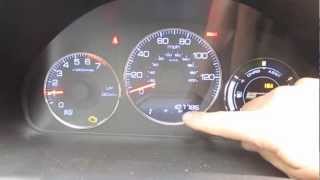
Shop the Parts Behind P1433
Below are the parts most often responsible for code P1433, ranked by how frequently each one is the actual culprit (per the diagnosis above). Tap any to see what we have for your vehicle.



The information in this article is provided for general reference and educational purposes only. Vehicle specifications, procedures, and part compatibility can vary by production date, trim level, and region. Always consult your vehicle's factory service manual and verify part numbers before purchasing or performing repairs. Safety-critical components such as airbags, seat belts, and braking systems should be installed by a qualified professional.
- 🧭 Diagnostic Flowchart
- 🎬 Helpful Videos
- 🛍️ Shop This Part
- What Does P1433 Mean?
- Can I Drive With P1433?
- Common Causes
- Symptoms
- Common Fixes & Costs
- Used vs. New Parts: Buying Guide
- What Happens If You Wait — Timeline
- Cost of Not Fixing It
- Diagnosis Steps
- When This Code Triggers (Freeze-Frame Conditions)
- Related Codes
- Climate & Environmental Factors
- How to Talk to a Mechanic About This Code
- Where to Take It: Dealer vs Independent vs Chain
- When to Walk Away From the Repair
- What Scan Tool You Need for This Code
- How to Clear the Code After You Fix It
- Will This Fail Emissions / State Inspection?
- Most Commonly Affected Vehicles
- Manufacturer-Specific Notes
- Real Owner Stories
- 2013 Porsche 911 Carrera (991.1) with 50k miles
- 2002 Chevrolet Corvette C5 with 100k+ miles
- 2004 Honda Civic Hybrid (Gen 1) with 120k miles
- 2009 VW Jetta 2.5L
- How to Prevent This Code From Triggering
- Frequently Asked Questions
- What is the most common mistake when diagnosing P1433?
- My Porsche has a P1433 'Cooling System Fault' but it's not overheating. What's wrong?
- My Chevy Corvette has P1433 and the fuel gauge reads empty. Are they related?
- Can I replace the A/C refrigerant temperature sensor myself?
- What is the difference between P1433 and P1432 on a Porsche?
- What does the secondary air injection system do on my Audi/VW?
- Can a weak 12V battery cause code P1433?
- Key Takeaways
- 🎟️ Get 5% Off