

P1437 on 2004-2008 Audi A4 V6: EGR Bank 2 Short to Positive Causes and Fixes
On a V6-equipped 2004-2008 Audi A4, code P1437 (VAG 17845) indicates an electrical short in the Bank 2 EGR valve circuit. This is not a carbon buildup issue. The fix is almost always replacing the Bank 2 EGR valve itself, which is a difficult, labor-intensive job due to its location deep in the engine valley.
- This code only applies to 2004-2008 Audi A4 models with a V6 engine.
- P1437 is an electrical fault ('short to positive'), not a mechanical clog. Do not start by cleaning the EGR system.
- The most likely cause is a faulty Bank 2 EGR valve itself with an internal short circuit.
- Repair is labor-intensive due to the location of the Bank 2 EGR valve under the intake manifold, and professional service is recommended.
What's Unique About the 2004-2008 Audi A4
It is critical to understand that P1437 on an Audi A4 is completely different from the same code on other Audi models like the A6, A8, or Q7. On those larger vehicles, P1437 (VAG 01437) refers to an air suspension fault, specifically 'Control Position not Learned'. The B6/B7 generation A4 was not equipped with this type of air suspension, so that definition is irrelevant. For the A4, this code is exclusively for V6 engines (like the 3.0L AVK and 3.2L BKH) and points directly to an electrical problem with the Bank 2 EGR valve. This component is often located deep in the 'V' of the engine between the cylinder heads, underneath the intake manifold, making access extremely difficult.
Generation note: This guide covers the end of the B6 generation (2004) and the entire B7 generation (2005-2008) of the Audi A4. The meaning of code P1437 is consistent for V6 engines (e.g., 3.0L AVK, 3.2L BKH, and TDI variants) across both generations.
Symptoms You May Notice
- Check Engine Light is on
- Failed emissions test
- Slightly reduced fuel economy
- Potential rough idle in some cases
- Black smoke from exhaust on TDI models under acceleration has been noted in forums, though often related to EGR issues in general.
- Cleaning the EGR valve or passages. This code is for an electrical short, not a mechanical clog due to carbon buildup. Cleaning will not resolve a 'short to positive' fault.
- Replacing the Bank 1 EGR valve. The code specifically identifies a problem on Bank 2. On V6 engines, there are two EGR valves, one for each bank.
- Confusing it with an air suspension fault. On other Audi platforms like the A6/A8, P1437 points to the air suspension, but this is incorrect for the A4.
Most Likely Causes
- Faulty Bank 2 EGR Valve Assembly 🔴 High Probability → Shop Exhaust Gas Recirculation (EGR) Valve The EGR valve contains internal electronics and a solenoid that are situated in a high-heat area of the engine. Over many heat cycles, the internal circuitry can fail and develop a short, leading to the 'short to positive' fault.
How to confirm: After confirming the wiring is intact by testing the harness connector with the valve disconnected, the valve itself is the point of failure. A 'short to positive' that disappears when the component is unplugged is a definitive sign of an internal short in that component.
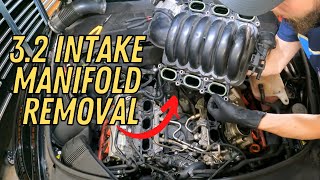
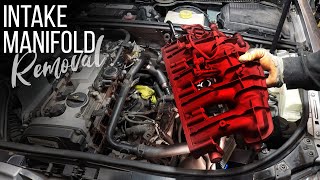
Typical fix: Replace the Bank 2 EGR valve assembly and the associated gaskets. This requires removing the intake manifold for access. 🎬 Watch: Step-by-step guide to removing the B7 intake manifold.
Est. part cost: $300-$600 - Damaged EGR Valve Wiring Harness 🟡 Medium Probability → Shop Exhaust Gas Recirculation (EGR) Valve The wiring harness is located in the hot engine 'V' and is susceptible to heat degradation. Oil leaks from valve cover gaskets or cam adjuster seals—common on these engines—can saturate the wiring, making it brittle and prone to cracking, which can lead to a short circuit.
How to confirm: Visually inspect the wiring harness leading to the Bank 2 EGR valve for any signs of melting, chafing, or oil saturation. Use a multimeter to test for a 'short to positive' between the signal wire and a 12V source with the valve and ECM disconnected. If the short persists with the valve unplugged, the fault is in the harness.
Typical fix: Repair the damaged section of the wiring harness. This may involve splicing in a new wire or replacing the connector pigtail. If damage is extensive, a new engine harness may be required, which is a very costly repair.
Est. part cost: $20-$150
Rare But Worth Checking
- Faulty Engine Control Module (ECM): This is extremely rare. The ECM should only be considered after all other possibilities, including the EGR valve and wiring, have been exhaustively tested and ruled out. A failure of the driver circuit within the ECM could theoretically cause this fault.
Diagnosis Steps
- Verify the vehicle is a 2004-2008 Audi A4 with a V6 engine (e.g., 3.0L AVK, 3.2L BKH, or TDI).
- Scan the vehicle with a VAG-compliant tool (like VCDS) and confirm P1437 (VAG code 17845) is present in the Engine Control Module.
- Locate the Bank 2 EGR valve. This is typically in the engine valley, under the intake manifold. Bank 2 is the driver's side on North American vehicles.
- Turn the ignition on (engine off). Disconnect the electrical connector from the Bank 2 EGR valve.
- Using a multimeter, probe the pins on the wiring harness side of the connector. Check for voltage on the signal wire. If constant voltage is found where it shouldn't be, the short is in the harness.
- If the harness wiring tests good (no short to positive with the valve unplugged), the fault is almost certainly internal to the EGR valve itself.
- If the wiring is confirmed to be good, the EGR valve is faulty and needs to be replaced. This will involve removing the intake manifold. Always replace the intake manifold gaskets at the same time.
- If both the wiring and valve test good, the issue may be with the ECM, but this is highly unlikely and should be the last resort.
Parts You'll Likely Need
- Bank 2 EGR Valve
(OEM #06C131501A (for 3.0L AVK), 03G131501B (example for 2.0 TDI, verify by VIN))— This is the most common failure point for this code, as the internal electronics are prone to shorting out over time due to extreme heat cycles in the engine valley.
Trusted brands: Bosch, Pierburg, Wahler, Genuine Audi
OEM price range: $400-$600
Aftermarket price range: $300-$450 - Intake Manifold Gaskets
(OEM #Varies by specific V6 engine)— These are one-time use gaskets and must be replaced anytime the intake manifold is removed to access the EGR valve.
Trusted brands: Victor Reinz, Elring
OEM price range: $40-$80
Aftermarket price range: $20-$50
Related Codes That Often Appear With This One
- P1438 — P1438 indicates an open circuit or short to ground for the same Bank 2 EGR valve. Seeing both may indicate an intermittent wiring problem or a completely failed valve.
- P0401 — A 'Insufficient EGR Flow' code can sometimes accompany P1437 if the electrical fault prevents the valve from opening correctly, leading to a flow problem detected by other sensors.
Platform-Specific Known Issues
- Access to the V6 EGR valves is notoriously difficult, requiring removal of the intake manifold. This turns a simple part swap into a multi-hour job.
- On the 3.0L AVK engine, oil leaks from the valve covers and camshaft adjuster seals are very common and can saturate the engine harness in the 'V', potentially causing the short circuit 🎬 See how to fix common oil leaks on the 3.0L V6. that triggers P1437.
Mechanic-Grade Diagnostic Values
- EGR Valve Solenoid Resistance — expected: 19.9 - 23.4 Ohms (when cold). Failure: A reading outside this range indicates a faulty internal coil.
- VCDS Measuring Block 074, Field 1 (Min Position) — expected: Voltage reading representing the closed position.. Failure: An illogical or out-of-spec voltage can indicate a sensor or mechanical stop issue.
- VCDS Measuring Block 074, Field 2 (Max Position) — expected: Voltage reading representing the fully open position.. Failure: An illogical or out-of-spec voltage can indicate a sensor or mechanical stop issue.
- VCDS Measuring Block 074, Field 3 (Potentiometer Voltage) — expected: Voltage should change smoothly as the valve is commanded to move during an output test.. Failure: Jumping, erratic, or static voltage during commanded movement points to a bad position sensor inside the valve.
Scan Tool Commands That Help
- VCDS (VAG-COM): Engine -> Basic Settings -> Group 074 — This function is used to run the EGR valve adaptation procedure after a new valve has been installed. 🎬 Watch: How to perform the EGR adaptation procedure. The ECU learns the new valve's closed and open stop points. The status should change from 'Run' to 'ADP OK'.
- VCDS (VAG-COM): Engine -> Output Tests — To command the EGR valve to cycle open and closed. This allows a technician to observe the valve's physical movement (if visible) and monitor live data in Measuring Blocks (Group 074) to see if the position sensor is responding correctly to the commands.
- VCDS (VAG-COM): Engine -> Measuring Blocks -> Group 074 — To monitor the live voltage from the EGR valve's internal position sensor, as well as the learned minimum and maximum position values. This is critical for diagnosing if the fault is with the valve's sensor or its movement.
Wiring & Ground Locations
- EGR Valve Connector — On the Bank 2 EGR valve itself, located in the engine valley under the intake manifold. It is a 5-pin connector on many TDI models, with 2 pins for the solenoid and 3 for the position sensor.. This is the primary point for testing. A 'short to positive' will be present on one of the signal or power pins at this connector. Disconnecting it helps isolate the fault to either the wiring harness or the valve itself.
- G12 Ground Connection — Located in the engine compartment on the left side, often near the firewall or plenum chamber.. This is a major engine-related ground point. While less likely to cause a 'short to positive', a poor ground here can cause erratic behavior and incorrect voltage readings in various engine circuits, including the EGR system.
- Ground Strap, Engine to Body — A braided strap connecting the engine block to the vehicle's chassis, typically near a motor mount or the transmission.. A corroded or broken main engine ground strap can force electrical current to find alternative paths, leading to bizarre electrical faults and voltage issues across multiple sensors. It should be inspected for integrity in any complex electrical diagnosis.
Diagnostic Flowchart
Other Known Issues on This Vehicle
Issues unrelated to this code that are worth knowing about as an owner of this generation:
- Carbon Buildup on Intake Valves (3.2L FSI) 🔴 High — Very common on all direct-injection (FSI) engines, typically requiring cleaning every 60,000-80,000 miles. Causes misfires, rough idle, and performance loss.
- High-Pressure Fuel Pump (HPFP) Cam Follower Wear 🔴 High — A critical wear item primarily on the 2.0T FSI engine, but also relevant to the 3.2L V6 FSI. The follower can wear through, causing HPFP failure and potential camshaft damage. Recommended inspection/replacement every 30k-40k miles. (Ref: TSB 2013147 / 13 addresses this wear on the 2.0T engine, highlighting the failure mode.)
- Timing Chain Tensioner Failure (3.2L FSI) 🔴 High — The plastic timing chain guides and hydraulic tensioners at the rear of the engine can fail, especially at higher mileage (100k+ miles). Symptoms include a startup rattle. Failure is a catastrophic, engine-out repair.
- Valve Cover and Cam Adjuster Oil Leaks (3.0L AVK) 🟠 Medium — Extremely common. The gaskets and seals harden over time, causing oil to leak onto the exhaust manifolds (creating a burning smell) and into the engine valley, where it can damage wiring.
- Ignition Coil Failure 🟡 Low — Coil packs are a frequent failure item on most VAG products of this era, leading to misfires. Many were covered by a service campaign/recall. Easy and cheap to fix. (Ref: Service campaigns were issued for many VINs.)
- Failing Window Regulators 🟡 Low — The plastic clips that hold the window glass to the regulator are known to break, causing the window to fall into the door. It is a common and annoying, but not mechanically critical, failure. (Ref: TSB 2064585 addresses window noise, but breakage is a more common complaint.)
Used vs. New Parts: Buying Guide for This Vehicle
When a used part is the smart pick: A used EGR valve is generally not recommended for this repair. The failure mode is typically internal electronic failure caused by prolonged exposure to high heat in the engine valley. A used part carries a high risk of having a similar, age-related weakness and failing shortly after the difficult installation.
Donor-vehicle mileage cap: roughly under 40000 miles for the part to have meaningful remaining life.
What to inspect on the donor part:
- Verify the part is from a low-mileage, rear-end collision vehicle if possible.
- Inspect the electrical connector for any signs of melting, corrosion, or broken locking tabs.
- Check that the part number is an exact match for the required OEM number.
- Avoid parts that are covered in oil or show signs of external damage.
OEM-only on this vehicle (don't cheap out):
- While not strictly 'OEM-only', using a part from the original equipment manufacturer (OEM) is highly advised due to the high labor cost of the repair. A cheap, unproven aftermarket part failing prematurely would require repeating the entire 3-5 hour job.
Aftermarket brands forum-validated for this vehicle:
- Pierburg (often the original equipment supplier for VAG).
- Wahler.
- Bosch
Brands owners have reported issues with on this vehicle:
- Unbranded, low-cost parts from online marketplaces have been reported by owners to fail quickly or cause performance issues right after installation.
Real Owner Stories
Aggregated from forums and TSBs cited above. Mileages and costs reflect what owners reported in those sources.
2006 Audi A4 B7 2.0 TDI
Symptoms: Owner reported issues with the EGR and throttle flap, specifically noting black smoke from the exhaust and power loss.
What fixed it: The issue was identified as a broken EGR valve.
Source hint: Reddit r/MechanicAdvice - "Audi A4 B7 2.0 tdi Egr and throttle flap question."
2005 Audi A4 3.0L AVK V6 — ~120000 miles
Symptoms: Check Engine Light on with a 'short to positive' fault; oil leaks found near the cam adjuster seals saturating the valley wiring.
What fixed it: Repairing the damaged section of the wiring harness where oil saturation had caused the wires to crack and short.
Source hint: vehicle_specific_issues
Related OBD-II Codes
Frequently Asked Questions
Does TSB 2013147 / 13 apply to the P1437 code on my 3.2L V6 Audi A4?
Why is the labor for replacing the Bank 2 EGR valve so expensive on the 3.0L AVK engine?
Can I use a used EGR valve from a donor A6 to fix my A4's P1437 code?
Could an oil leak be causing my P1437 'short to positive' code?
Are there specific aftermarket brands I should look for or avoid for the EGR valve?
Do I need to replace any other parts when fixing the EGR valve?
Helpful Videos
Used OEM Parts in Stock
New Aftermarket Parts Available



The information in this article is provided for general reference and educational purposes only. Vehicle specifications, procedures, and part compatibility can vary by production date, trim level, and region. Always consult your vehicle's factory service manual and verify part numbers before purchasing or performing repairs. Safety-critical components such as airbags, seat belts, and braking systems should be installed by a qualified professional.
- Audi A4:
- 🧭 Diagnostic Flowchart
- 🎬 Helpful Videos
- 🛍️ Shop This Part
- What's Unique About the 2004-2008 Audi A4
- Symptoms You May Notice
- Most Likely Causes
- Rare But Worth Checking
- Diagnosis Steps
- Parts You'll Likely Need
- Related Codes That Often Appear With This One
- Platform-Specific Known Issues
- Mechanic-Grade Diagnostic Values
- Scan Tool Commands That Help
- Wiring & Ground Locations
- Other Known Issues on This Vehicle
- Used vs. New Parts: Buying Guide for This Vehicle
- Real Owner Stories
- 2006 Audi A4 B7 2.0 TDI
- 2005 Audi A4 3.0L AVK V6 — ~120000 miles
- Related OBD-II Codes
- Frequently Asked Questions
- 🎟️ Get 5% Off