

P1437 on 2002-2010 Audi A8: Air Suspension Calibration and Fixes
On a 2002-2010 Audi A8, P1437 is a generic code for the VAG-specific fault 01437, meaning the air suspension's 'Control Position not Learned'. This requires a system recalibration with a tool like VCDS. The issue is often triggered by a failing compressor relay, a leaking air strut, or a faulty level sensor, which must be fixed before calibration will work. Forgetting to enable 'Jack Mode' before lifting the vehicle can also trigger this fault.
- P1437 (or 01437) means your A8's air suspension has lost its calibration and needs to be reset with a special tool like VCDS.
- Do not attempt calibration until you have fixed any other suspension fault codes, especially for leaks (01583) or compressor temperature (01577).
- The most common underlying causes are a leaking air strut or a failed compressor relay. Check the cheap relay first before assuming the expensive compressor is bad.
- The fix is a multi-step process: 1) Diagnose and repair any hardware faults (leaks, sensors, relay). 2) Perform the suspension level control calibration.
- This is not a beginner-friendly DIY repair due to the need for specialized tools and a logical diagnostic approach.
What's Unique About the 2002-2010 Audi A8
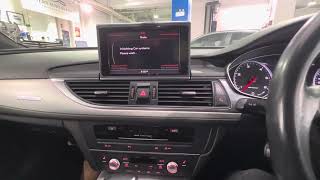
The D3 generation Audi A8 (2002-2009) relies on a complex adaptive air suspension system for its ride quality. Unlike many cars, a fault like P1437 isn't a simple part-out, part-in fix. It's a system-level problem that points to a loss of calibration. This often happens after a component like a level sensor or air strut is replaced, or when the system has a significant air leak that causes the compressor to overheat and other faults to cascade. A critical and often overlooked trigger is failing to engage 'Jack Mode' via the MMI before lifting the car for service 🎬 Watch: How to properly enable Jack Mode via the MMI, which can confuse the level control module and cause it to lose its settings. Resolving it requires a VAG-specific diagnostic tool (like VCDS by Ross-Tech) to communicate with the suspension module (Address 34) and perform a specific recalibration procedure.
Generation note: The 2002-2010 range primarily covers the Audi A8 D3 generation (2002-2009). The information is most relevant to this platform. While the early D4 generation (2010+) also uses a similar air suspension, component locations, part numbers (like the compressor relay), and specific MMI procedures may vary slightly.
Symptoms You May Notice
- Yellow or green air suspension warning light on the dashboard.
- Suspension adjustment controls in the MMI (Multi Media Interface) are grayed out and unusable.
- Vehicle is stuck at one height (often very low or 'on the bump stops').
- Vehicle is sitting unevenly (e.g., one side or one corner is lower or higher than the others).
- A message on the dash indicating an air suspension fault.
- The system attempts to raise the car but fails, and the compressor shuts off after running for a period.
- Replacing the air suspension compressor immediately. The compressor often fails because of a leak or a bad relay. If the root cause isn't fixed, the new compressor will also fail prematurely. Always check the relay and for leaks first.
Most Likely Causes
- Loss of Adaptation / Calibration Memory 🔴 High Probability This can occur after a battery disconnect, replacement of a suspension module, clearing other major suspension faults, or, most commonly, after lifting the vehicle without first enabling 'Jack Mode' in the MMI.
How to confirm: The presence of fault code 01437 is the primary confirmation. The system will not respond to height adjustment commands and the MMI controls will be disabled.
Typical fix: Perform a full Suspension Level Control Calibration using a diagnostic tool like VCDS. This can only be done after all other hardware faults are fixed.
Est. part cost: $0 (if you have the tool) - Failed Air Suspension Compressor Relay 🟡 Medium Probability → Shop Wiring Relay The relay handles high current and is a known weak point that fails from wear, often getting stuck 'on' or 'off'. A stuck relay can burn out the compressor. It's a very common failure point before the compressor itself.
How to confirm: Listen for the compressor running (a humming sound from the front driver's side wheel well area). If it never runs and the suspension is low, the relay is a prime suspect. If it runs continuously even after the car is off, the relay is stuck closed.
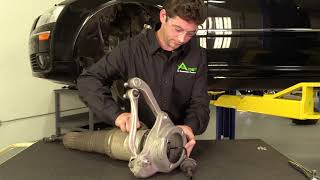
Typical fix: Replace the compressor relay. On a RHD car, it's under the passenger footwell carpet. On a LHD car, it's often behind the lower dash trim near the driver's dead pedal. It is often labeled '373' or the updated replacement '645'. The correct part number is typically 8D0951253A. 🎬 See this guide for locating the relay and compressor repair
Est. part cost: $20-$50 - Leaking Air Strut / Air Spring 🟡 Medium Probability The rubber air springs develop microscopic cracks and leaks over time due to age and environmental exposure. This causes the compressor to run excessively, leading to overheating (fault 01577) and other faults, including a loss of calibration.
How to confirm: One corner of the car will be noticeably lower than the others after sitting overnight. A spray bottle with soapy water can be used to find leaks at the strut body and air lines, which will produce bubbles.
Typical fix: Replace the leaking air strut assembly. Aftermarket options from brands like Arnott or Rebuild Master Tech are popular alternatives to expensive OEM parts. This must be followed by a system calibration.
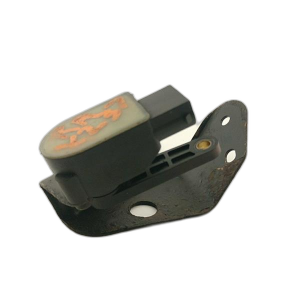
Est. part cost: $300-$800 per strut - Faulty Ride Height Level Sensor ⚪ Low Probability These sensors are located on the control arms and are exposed to the elements. The plastic sensor arms can break or the sensor itself can fail electrically, sending incorrect or no data to the control module.
How to confirm: Visually inspect the sensors and their linkages for damage. Use VCDS to monitor the live data from each sensor in the measuring blocks for Address 34; a faulty one will show an erratic or non-moving value.
Typical fix: Replace the faulty level sensor and its linkage, then perform a system calibration. Common part numbers include 4E0941285G (Front Left) and 4E0616571D (Rear Left).
Est. part cost: $100-$250
Rare But Worth Checking
- Water Ingress in ECU/Relay Box: The main electronics box in the engine bay plenum can have its drains clog with leaves and debris, allowing water to accumulate and corrode control modules, fuses, and relays, leading to bizarre electrical faults including suspension issues. An AudiWorld forum member found standing water in the ECU box which corroded suspension relays and fuses, causing this fault.
- Failed Air Suspension Control Module: While rare, the control module itself (J197) can fail. This should only be considered after all other possibilities, including wiring, have been thoroughly checked. Replacement requires component protection removal and coding by a dealer or specialist.
- Sticking or Faulty Valve Block: The solenoid valve block, which directs air to each strut and the reservoir, can fail. This can be caused by internal debris (sometimes from a disintegrated compressor intake filter) or electrical failure of a solenoid. Symptoms can be intermittent and may mimic a leak. Some owners have had success cleaning the block, but replacement is often necessary.
Diagnosis Steps
- Scan the vehicle with a VAG-specific tool like VCDS. Confirm the presence of 01437 and note any other codes in the Level Control module (Address 34).
- Address all other fault codes FIRST. The 01437 code is often a consequence of another problem. You cannot calibrate a broken system.
- If a leak code (01583) is present, inspect all air struts and lines with soapy water to find the leak. Check if one corner sags after being parked for several hours.
- If the compressor does not run, locate and test the compressor relay (often labeled '373' or '645', P/N 8D0951253A) and its 40A fuse. This is a common and inexpensive failure point.
- If level sensor codes are present, inspect the sensors and their linkages for physical damage and check their live data in VCDS measuring blocks.
- Once all hardware issues are resolved and all other codes are cleared, proceed with the Suspension Level Control Calibration. The car must be on a perfectly level surface with the engine running and all doors closed.
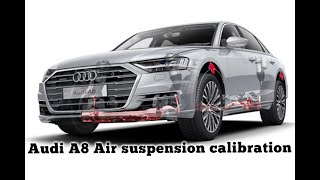
- In VCDS, go to Module 34 (Level Control) -> Security Access (16) -> Enter code 31564. 🎬 Watch: Step-by-step suspension leveling calibration using VCDS
- Go to Adaptation (10). One by one, select Channels 01, 02, 03, and 04 (Front Left, Front Right, Rear Left, Rear Right). For each channel, wait for the system to adjust, then measure the distance in millimeters from the wheel center to the bottom edge of the fender arch. Enter this value and save it.
- Go to Channel 05, enter a value of 1 to confirm and save the entire calibration.
- Clear all fault codes and cycle the ignition. Verify the warning
Parts You'll Likely Need
- Air Suspension Compressor Relay
(OEM #8D0951253A)— This is a very common failure point that prevents the compressor from running or causes it to run continuously. It's an inexpensive part to rule out before suspecting the costly compressor itself.
Trusted brands: Bosch, Genuine Audi/VW
OEM price range: $40-$60
Aftermarket price range: $15-$30 - Front or Rear Air Strut Assembly — The rubber air spring is the most common source of leaks, causing the car to sag and the compressor to overwork.
Trusted brands: Genuine Audi, Arnott (remanufactured OEM or new design), Rebuild Master Tech (rebuild service)
OEM price range: $1500-$2500
Aftermarket price range: $400-$800 - Ride Height Level Sensor
(OEM #4E0941285G (Front Left), 4E0941286G (Front Right), 4E0616571D (Rear Left), 4E0616572D (Rear Right))— Failure of a sensor or its linkage provides bad data to the control module, preventing proper leveling and calibration.
Trusted brands: Genuine Audi, Hella, Vemo
OEM price range: $150-$250
Aftermarket price range: $50-$120
Related Codes That Often Appear With This One
- 01583 — This code means 'Leak in System Detected'. A leak is a common reason for the system to lose pressure, causing the compressor to overwork and eventually leading to a state where calibration is lost (01437).
- 01772 — This code points to an issue with the 'Level Control Pressure Sensor (G291)'. This sensor is integrated into the valve block. A faulty sensor or valve block can cause the system to misinterpret height levels, triggering the 01437 fault.
- 01577 — This code means 'Turn-Off due to Over-Temp' and indicates the compressor has been running too long (likely due to a leak) and has shut down to prevent damage. This state can lead to the 01437 fault.
- 02646 — This code means 'Plausibility of Level Control System'. It often appears alongside 01437 when a calibration attempt fails, indicating a fundamental problem (like a bad valve block or sensor) is preventing the system from responding logically.
Technical Service Bulletins (TSBs) & Recalls
- TSB 43-13-15 (April 11, 2013): Discusses conditions like the compressor running after engine off or failure to adjust height, pointing towards compressor performance issues as a root cause for system shutdown, which can precede the 01437 fault.
Platform-Specific Known Issues
- Jack Mode is Critical: Failing to enable 'Jack Mode' in the MMI before lifting the car, even on a two-post lift, is a very common way to trigger the 01437 fault. The system tries to compensate for the hanging wheels, gets confused, and loses its calibration. Many repair shops unfamiliar with these cars make this mistake.
- Compressor Relay Location: The location of the compressor relay is notoriously inconvenient. In Left-Hand Drive (LHD) models, it is typically located deep behind the lower dashboard trim, near the driver's left foot (dead pedal). In Right-Hand Drive (RHD) models, it is under the passenger-side carpet and trim.
- Plenum Drains and Water Ingress: The plenum chamber drains under the windshield can clog with leaves and debris, causing the electronics box that houses various control modules and relays to fill with water. This can cause a host of electrical problems, including shorting out suspension components and leading to this fault code.
Mechanic-Grade Diagnostic Values
- Accumulator Pressure via VCDS Output Test — expected: 16 bar. Failure: Faults may begin to appear when pressure drops below 10-12 bar. A low reading indicates a worn compressor or a leak in the system.
- Factory Ride Height (Center of Wheel to Fender Arch) — expected: Standard Suspension: ~416 mm (Front), ~398 mm (Rear). Sport Suspension: ~396 mm (Front), ~378 mm (Rear).. Failure: Values entered during VCDS calibration that are outside an acceptable range (e.g., above 435mm or below 390mm) will be rejected and cause a 'sequence error'.
Hidden / Shadow Codes Worth Checking
- B2013 - No End-of-Line Programming: This fault indicates that the control module's basic settings and adaptations have been completely erased, often by an aftermarket scan tool. It appears alongside 'Control module not coded' and 'Control Position not Learned'. (see via This code is visible with dealer-level tools like ODIS and sometimes advanced tools like VCDS after a failed adaptation attempt.)
Scan Tool Commands That Help
- VCDS (VAG-COM): Address 34 -> Output Tests (03) — To sequentially test individual components like the compressor, accumulator, and each corner's solenoids. This can help isolate a hardware failure before attempting calibration. The accumulator pressure test is particularly useful for diagnosing a weak compressor.
- VCDS (VAG-COM): Address 34 -> Basic Settings (04) -> 'Delete Calibration For Level Control' — This function is used as part of a full system reset procedure, often when calibration is repeatedly failing. It must be followed by 'Start Up to Reference Level' and then the full Adaptation procedure. Use with caution as it erases existing values.
- ODIS (Dealer Tool): SVM (Software Version Management) Programming — This is required when a module has lost its fundamental programming (e.g., fault B2013 'No End-of-Line Programming'). ODIS can connect to factory servers to download and install the correct parameterization and coding for the module, which is a prerequisite for performing the ride height calibration.
Wiring & Ground Locations
- J197 - Level Control Module — Located behind the glove box on the passenger side of the vehicle. Access requires removing the glove box assembly.. This is the central computer for the air suspension system. All sensor data is processed here, and all commands to the compressor and valve block originate from it. A failure or bad connection here can cause a loss of calibration.
- Compressor Relay (J403) — On Left-Hand Drive (LHD) models, it is often found in the relay carrier behind the lower driver's side dash trim, near the dead pedal. On Right-Hand Drive (RHD) models, it is typically under the passenger's side (left) footwell carpet/panel.. This relay powers the compressor. Its failure is a very common root cause for a chain of faults that ultimately leads to P1437.
- Ground Connection 640 — Located in the engine compartment on the left side.. This is a primary ground point for multiple systems in the engine bay. A corroded or loose connection here can cause intermittent electrical issues for various modules, including the suspension system.
- G291 Pressure Sensor Wiring — The G291 sensor is internal to the valve block. Its 10-pin connector is susceptible to corrosion. Pin #10 (Green/Red wire) is the 12V+ feed from the J197 control module (Pin #1 on the 18-pin connector).. An intermittent short or open circuit on the wiring to the G291 pressure sensor will cause fault 01772 and can prevent the system from correctly learning its position, leading to P1437.
Real Owner Repair Stories
- AudiWorld Forums user (2011 Audi A8 3.0T) — Suspension failure light after a minor accident. Fault for 'mechanical fault' on left rear level sensor. Car sat very high on the left rear corner (450mm).
❌ Tried (didn't work) Clearing the fault code (it would return)., Attempting VCDS calibration multiple times on different level surfaces.
✅ What actually fixed it The owner had installed a cheap, Chinese-made aftermarket level sensor. The VCDS calibration procedure would not accept the measured height of 450mm, as it was outside the plausible range (approx. 390-435mm). The problem was the faulty aftermarket sensor itself preventing the system from physically achieving a correct height to be calibrated. The resolution required replacing the faulty sensor with a working OEM or quality equivalent part before calibration could be completed. - AudiWorld Forums user (2004 Audi A8L) — Car would not ride correctly for over a year despite numerous new parts. Intermittent and unpredictable suspension behavior.
❌ Tried (didn't work) Replacing all 4 air struts., Replacing the air compressor., Replacing the solenoid valve block., Replacing all new control arms.
✅ What actually fixed it After exhausting all common hardware failures, the owner replaced the Level Control Module (J197) itself. Upon removal, it was discovered that the existing module was not the original and was likely a used part from a previous repair. Installing another (used, but functional) control module finally resolved the persistent suspension issues. This indicates that the module can fail internally without throwing specific fault codes for itself.
OEM Part Supersession History
8D0951253A (Stamped '373')→4H0951253A (Stamped '645')— The '645' relay is an updated, more robust multi-function relay that replaces the older '373' version for the air suspension compressor and other high-current applications.
Heads up: The relays are interchangeable, but using the newer '645' (P/N 4H0951253A) is highly recommended as it is considered a more reliable part.OEM Air Strut (e.g., Bilstein)→Arnott New Aftermarket Strut (e.g., AS-2775)— Arnott provides a new (not remanufactured) alternative to the expensive OEM strut.
Heads up: Crucially, many new Arnott struts for this platform are engineered with a conventional, fixed-rate shock absorber. They disable the factory adaptive damping feature. While the car's height adjustment will still work, the ability to switch between 'Comfort' and 'Dynamic' damping modes is lost. The strut includes a resistor box to prevent a fault code for the missing adaptive damping control.
Diagnostic Flowchart
Used vs. New Parts: Buying Guide for This Vehicle
When a used part is the smart pick: Sourcing a used Level Control Module (J197) from a salvage yard can be a cost-effective final step if all other components have been ruled out. Used level sensors or valve blocks can also be viable if their history is known.
Donor-vehicle mileage cap: roughly under 100000 miles for the part to have meaningful remaining life.
What to inspect on the donor part:
- For struts, look for part numbers to see if they are newer replacements. A high-mileage donor car may have had its struts replaced more recently.
- For control modules, match part numbers exactly. A different suffix letter may indicate an incompatible revision.
- Inspect connectors on all electronic parts for corrosion or damage.
- Avoid struts that show any signs of leaking oil from the damper portion or have cracked/weathered rubber air springs.
OEM-only on this vehicle (don't cheap out):
- Compressor Relay: While aftermarket versions exist, the OEM relay (or its official supersession) is inexpensive and known to be reliable.
Aftermarket brands forum-validated for this vehicle:
- Arnott: A popular choice for both new and remanufactured air struts. Their new struts often have a lifetime warranty but may delete the adaptive damping feature.
- Rebuild Master Tech (RMT): An option for having your original struts rebuilt, which preserves the factory adaptive damping. Quality can be variable, similar to other rebuilders.
- Bilstein: As the OEM supplier, their B4 Air Suspension line is a direct replacement that maintains all factory functions, but at a higher cost.
Brands owners have reported issues with on this vehicle:
- Unbranded/Extremely Cheap 'Aliexpress' Level Sensors: These can have incorrect electrical characteristics or poor build quality, making calibration impossible and causing the car to sit at an incorrect height.
Real Owner Stories
Aggregated from forums and TSBs cited above. Mileages and costs reflect what owners reported in those sources.
2006 Audi A8
Symptoms: After having the car lifted at a repair shop that was unfamiliar with Audis, the yellow air suspension warning light came on. The controls in the MMI were grayed out and the car was stuck at its current height.
What fixed it: A full Suspension Level Control Calibration was performed using VCDS. The shop had failed to enable 'Jack Mode' before lifting the vehicle, which caused the system to lose its memory.
Source hint: vehicle_specific_issues section titled 'Jack Mode is Critical'
2005 Audi A8
Symptoms: The car was sitting very low on its bump stops with the suspension fault light on. The owner noted that the compressor, which normally makes a humming sound from the driver's side wheel well, was not running at all.
What fixed it: The air suspension compressor relay (part number 8D0951253A, often labeled '373' or '645') was replaced. The old relay had failed in the 'off' position, preventing the compressor from ever receiving power.
Cost: $20-$50
Source hint: common_causes section for 'Failed Air Suspension Compressor Relay'
2007 Audi A8L
Symptoms: The front left corner of the car was noticeably lower than the others after being parked overnight. Over time, the compressor seemed to be running more and more, until eventually the yellow suspension warning light came on and the P1437 code appeared.
What fixed it: The leaking front left air strut was replaced with an aftermarket unit. Afterwards, a full system calibration was performed with VCDS to clear the P1437 code and restore function.
Cost: $300-$800
Source hint: common_causes section for 'Leaking Air Strut / Air Spring'
Related OBD-II Codes
Frequently Asked Questions
Do I need to do anything special before jacking up my 2002-2010 Audi A8 to change a tire?
Why are the suspension adjustment controls grayed out and unusable in my A8's MMI?
I replaced a leaking air strut, but the P1437 code and suspension warning light are still on. What did I miss?
I think my air suspension compressor relay is bad. Where can I find it on my Audi A8?
What is the security access code needed to calibrate the air suspension on an A8 with VCDS?
After a heavy rain, I found water in the electronics box under the windshield and now have a suspension fault. Are these issues related?
Helpful Videos
We Have This Part in Stock

The information in this article is provided for general reference and educational purposes only. Vehicle specifications, procedures, and part compatibility can vary by production date, trim level, and region. Always consult your vehicle's factory service manual and verify part numbers before purchasing or performing repairs. Safety-critical components such as airbags, seat belts, and braking systems should be installed by a qualified professional.
- Audi A8:
- 🧭 Diagnostic Flowchart
- 🎬 Helpful Videos
- 🛍️ Shop This Part
- What's Unique About the 2002-2010 Audi A8
- Symptoms You May Notice
- Most Likely Causes
- Rare But Worth Checking
- Diagnosis Steps
- Parts You'll Likely Need
- Related Codes That Often Appear With This One
- Technical Service Bulletins (TSBs) & Recalls
- Platform-Specific Known Issues
- Mechanic-Grade Diagnostic Values
- Hidden / Shadow Codes Worth Checking
- Scan Tool Commands That Help
- Wiring & Ground Locations
- Real Owner Repair Stories
- OEM Part Supersession History
- Used vs. New Parts: Buying Guide for This Vehicle
- Real Owner Stories
- 2006 Audi A8
- 2005 Audi A8
- 2007 Audi A8L
- Related OBD-II Codes
- Frequently Asked Questions
- 🎟️ Get 5% Off