

P1437 on a 2006-2013 BMW X5: Why This Code Is Likely an Error and What to Check Instead
If your scanner shows code P1437 on a BMW X5, the code itself is most likely an error. This is not a recognized fault code for BMW. The real issue is likely with the EVAP system (DMTL pump) or HVAC system, which a generic scanner is misinterpreting. Rescan with a BMW-specific tool to find the true fault code, such as 2A17 or P1447.
- The code P1437 is not a valid, recognized fault for a 2006-2013 BMW X5. Do not buy parts based on this code.
- The first and most important step is to rescan your vehicle with a BMW-compatible diagnostic tool to find the true fault code.
- The actual problem is likely related to the EVAP system (DMTL pump), which has codes like P1447 or, more commonly, the hex code 2A17.
- If the issue is not EVAP-related, it could be an HVAC fault, such as a stuck heater control valve, which will have its own set of codes stored in the climate control module.
- Always check the gas cap and perform a coolant system bleed procedure before replacing expensive components like the DMTL pump or heater valve.
What's Unique About the 2006-2013 BMW X5
BMW vehicles use a complex diagnostic system with thousands of proprietary fault codes that provide very specific information. Generic OBD-II scanners often attempt to translate these manufacturer-specific codes into a standard 'P-code' format, and this can lead to errors. The absence of P1437 in BMW communities, alongside the consistent appearance of other codes for common issues, strongly suggests that P1437 is a 'ghost code'—a misinterpretation by the scan tool.
Generation note: The 2006-2013 range covers the end of the first generation (E53, through 2006) and the entire second generation (E70, 2007-2013). This guide applies to both, as the core issue—the invalidity of the P1437 code—is consistent. The underlying potential faults, such as the DMTL pump, are present on both the E53 and E70 generations, though their location may differ.
Symptoms You May Notice
- Check Engine Light is on
- Possible fuel smell (if the underlying issue is with the EVAP system)
- Difficulty refueling, with the pump nozzle clicking off repeatedly (a symptom of a blocked EVAP system or failing DMTL pump).
- Issues with cabin heating or cooling, such as one side blowing hot while the other is cold, or minimal heat output.
- A hissing or gurgling sound from the engine bay, which can indicate a failing heater control valve.
- Searching for a 'P1437 sensor' or other parts related to a non-existent code.
- Replacing parts based on generic definitions of P1437 for other car brands like Honda or Toyota.
Most Likely Causes
- Generic Scan Tool Error 🔴 High Probability BMW's use of proprietary diagnostic codes often confuses generic OBD-II readers, leading to the display of incorrect or non-existent 'P' codes.
How to confirm: Rescan the vehicle using a BMW-specific diagnostic tool (such as INPA/ISTA, Foxwell, Autel, or other capable scanners). The tool should reveal the actual BMW fault code (e.g., '2A17' or 'P1447') instead of P1437.
Typical fix: Disregard the P1437 code and begin diagnosis based on the correct code found with a capable scanner.
Est. part cost: $0
Diagnosis Steps
- Do not trust the P1437 code. Treat it as an error from your scan tool.
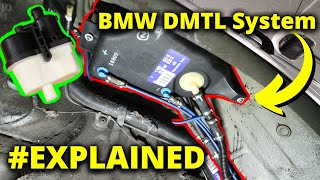
- Rescan the vehicle with a BMW-specific scanner. This is the most critical step. Access the Engine Control Module (DME) and all other modules to read the correct, manufacturer-specific fault codes. 🎬 Watch: How to diagnose and fix BMW DMTL fault codes.
- If the real code is 2A17, P1447, or similar (EVAP/DMTL related):
- a. Inspect the gas cap seal for cracks or wear. A loose or faulty gas cap is a common cause for EVAP codes.
- b. Locate the DMTL pump. On the E70 X5, it is mounted to the charcoal canister, accessible by removing the right-rear (passenger side in US) wheel and wheel well liner.
- c. You will need to remove several 8mm and 10mm screws and plastic rivets to pull back the liner. The DMTL pump is held to the canister bracket by three T20 Torx screws.
- d. Inspect the wiring harness and connector going to the DMTL pump for damage, corrosion, or breaks. The wires can be vulnerable.
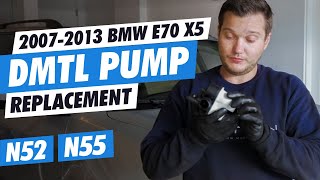
- e. If wiring and gas cap are good, the DMTL pump itself has likely failed and requires replacement. 🎬 See this step-by-step E70 DMTL pump replacement walkthrough. The pump motor wears out or fails its internal self-test.
- If the real code is in the '9C' range (HVAC related):
- a. This indicates a fault in the automatic climate control (IHKA) system. A common failure is the heater control valve (water valve), which can cause heat to blow on one side and not the other.
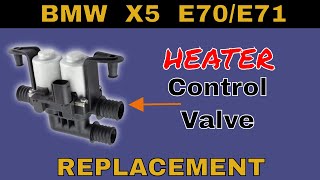
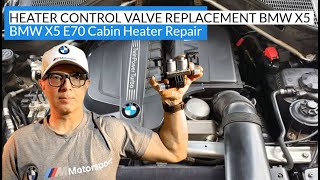
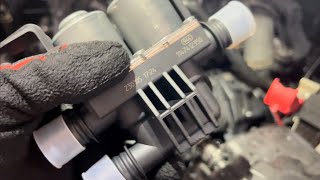
- b. The heater control valve is located in the engine bay, near the firewall on the passenger side. Check if both hoses going to it are hot when the engine is warm and heat is on. If one is hot and one is cold, the valve is likely stuck. 🎬 Watch: How to replace a failing heater control valve.
- c. An air-bound heater core can also cause a lack of heat. Performing a coolant bleed procedure can sometimes resolve this without replacing parts.
Parts You'll Likely Need
- Diagnostic Module Tank Leakage (DMTL) Pump
(OEM #16137193479)— This is the most common part to fail when real EVAP system codes like 2A17 are present, which may be misreported as P1437.
Trusted brands: Bosch (OEM), Genuine BMW, Dorman
OEM price range: $150-$200
Aftermarket price range: $60-$130 - Heater Control Valve (Water Valve)
(OEM #64116906652)— If the underlying issue is HVAC-related, this valve is a common failure point, causing incorrect cabin temperatures.
Trusted brands: Genuine BMW, Behr, Valeo
OEM price range: $100-$150
Aftermarket price range: $40-$80 - Gas Cap
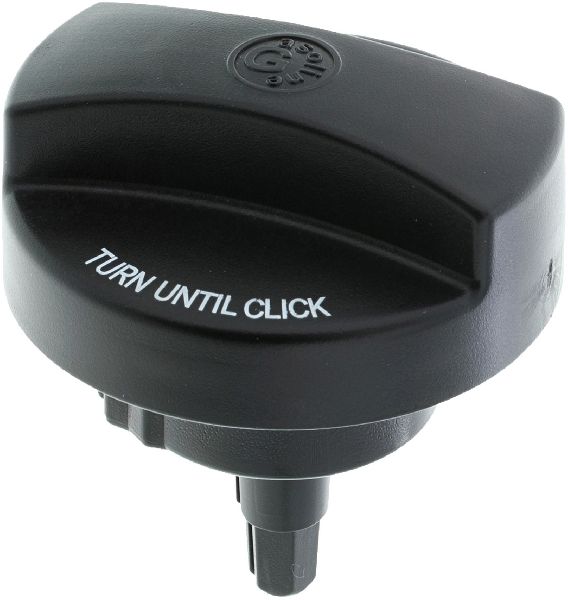
(OEM #16117222391)— A worn gas cap seal can cause EVAP leak codes. It's an inexpensive first step before replacing more expensive components.
Trusted brands: Genuine BMW, Blau
OEM price range: $25-$40
Aftermarket price range: $15-$25
Related Codes That Often Appear With This One
- P1447 — This is a common, real BMW code for a fault with the DMTL (EVAP leak detection) pump. A generic scanner might misinterpret a DMTL-related fault and display P1437 instead.
- 2A17 — This is the BMW-specific hexadecimal code for 'DMTL System Fault'. It indicates the pump's electrical current draw was implausible during a test cycle, often meaning the pump itself has failed. This is the most likely true code behind a P1437 reading.
- 2A15, 2A16 — These are BMW-specific hexadecimal codes related to minor and major EVAP system leaks detected by the DMTL pump. A generic scanner may incorrectly translate these into P1437.
Technical Service Bulletins (TSBs) & Recalls
- SI B12 04 08: This Service Information bulletin from BMW addresses troubleshooting for the electric coolant pump on N52 engines, which is a common failure item on 6-cylinder X5 models.
- SI B 01 05 11: This Service Information bulletin extends the warranty on the DMTL pump to 10 years/120,000 miles for eligible vehicles due to high failure rates. It instructs technicians to replace the pump without performing a test plan if codes like 2A17, 2B3A, 2B3B, 2B3C, or 2B3D are present.
Mechanic-Grade Diagnostic Values
- DMTL Pump Current Draw (for code 2A17) — expected: Approx. 25-30 mA during reference measurement.. Failure: Current draw significantly exceeds 30 mA, which triggers the 2A17 'System Fault'. This indicates an implausible reading, often due to a faulty pump motor, not an actual tank leak.
- Heater Control Valve Solenoid Resistance — expected: Approximately 12-16 Ohms between the ground pin (Pin 1) and each of the two solenoid control pins (Pin 2, Pin 3).. Failure: A reading that is significantly lower (e.g., 3-4 Ohms) or an open circuit (infinite resistance) indicates a failed solenoid coil inside the valve.
Hidden / Shadow Codes Worth Checking
- 2A17: DMTL, System Fault. This is the most common true code that a generic scanner misinterprets as P1437. It indicates an electrical failure or implausible current draw reading from the pump itself during its self-test, not necessarily an EVAP leak. (see via BMW-specific scanner like ISTA, INPA, Foxwell, or Autel.)
- 2B3A, 2B3B, 2B3C, 2B3D: Additional DME fault codes for 'DMTL diagnosis module tank leakage, system failure'. A BMW TSB (SI B 01 05 11) lists these as codes that warrant replacing the DMTL pump. (see via BMW-specific scanner like ISTA or INPA.)
Scan Tool Commands That Help
- ISTA/D: DMTL Test Plan (Vehicle Management -> Service Functions -> Power Train -> Digital Motor Electronics -> DMTL diagnosis module) — To command the DMTL pump to run its test cycle. ISTA will guide the technician through the test plan, activate the pump, and report whether the system passes or fails, confirming if the pump is responding correctly.
- INPA: DMTL System Test (Select Engine Module (e.g., MSV80) -> F9 -> F9) — This is a more direct way to run the DMTL test and view live data, such as the pump's current draw in milliamps (mA), to verify if it is within the expected range (approx. 27mA) or exceeding the failure threshold (>30mA).
- ISTA or Manual Procedure: Cooling System Bleed Procedure / Venting — After replacing the heater control valve or any part of the cooling system. With ignition on (engine off), set temperature to max (84°F), fan to lowest speed, and press the accelerator pedal for 10 seconds. This activates the electric water pump to circulate coolant and purge air pockets, which can cause no-heat symptoms.
Wiring & Ground Locations
- DMTL Pump Connector (X1714) — At the DMTL pump, located in the passenger-side rear wheel well, attached to the charcoal canister.. Provides specific pins for testing. Pin 4 (Red/White) is power, Pin 1 (Brown/Blue) is the pump motor ground switch, Pin 2 (Black/Red) is for the internal heater, and Pin 3 (Black/Green) is for the changeover valve. A voltage check at Pin 4 and continuity checks on the other wires can rule out a wiring issue.
- Main Engine Ground Strap — Connects the engine block to the chassis. On the E70 X5, a primary ground strap is located on the driver's side of the engine, near the engine mount. It is best accessed by removing the driver's side front wheel and the plastic wheel well liners.. This braided strap is prone to corrosion and failure, causing a poor ground for the entire engine and its electronics, including the DME. A bad ground can lead to a wide range of intermittent and bizarre electrical faults, including incorrect sensor readings and module errors that could be misinterpreted by the DME.
Real Owner Repair Stories
- Reddit user r/BmwTech (2008 BMW 335xi (shares DMTL system)) — Code 2A17, gas pump nozzle clicks off prematurely when refueling.
✅ What actually fixed it The confirmed fix was replacing the DMTL pump. The user also recommended replacing the charcoal canister at the same time if refueling issues are present. - YouTube user 'Driven And Done' (2012 BMW X5 (E70)) — No hot air coming from the dashboard vents, even when the engine is warm and heater is on.
❌ Tried (didn't work) The owner initially suspected a complex mechanical or electrical failure like a blend door actuator.
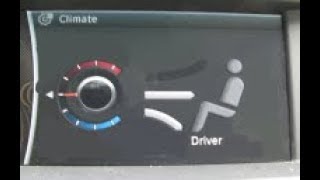
✅ What actually fixed it The problem was an operator setting. The iDrive system has a 'Stratification' setting for the dashboard vents that allows the user to make the vent air cooler or warmer than the main climate setting. The dial was set to full cool. Adjusting this setting in iDrive to the middle or warmer position immediately restored heat to the vents. - Bimmerpost user (BMW E90 (shares DMTL system)) — Code 2A17 and difficulty filling the gas tank.
✅ What actually fixed it One user reported that taking the DMTL pump off and cleaning it out with compressed air resolved the issue for them, suggesting an internal blockage or debris can cause the fault.
"I Checked Everything" — The Actual Cause
- The primary fault code, 2A17, is a 'DMTL System Fault,' which is an electrical self-test failure, not a leak detection code (like P0442 or 2A15). Therefore, a smoke test on a vehicle with only a 2A17 code will almost always be clean. The fault lies with the pump's internal motor or its ability to measure current draw correctly during its reference cycle. Technicians should not waste time smoke testing for a 2A17 code unless a leak code is also present.
When the Usual Fixes Don't Work
- In some cases, replacing the DMTL pump for a 2A17 code does not fix the issue. Forum users have reported the code returning shortly after replacement. In these instances, the root cause could be a clogged charcoal canister putting strain on the new pump, a faulty gas cap, or an intermittent wiring/connector issue that wasn't immediately obvious on inspection.
OEM Part Supersession History
16136752551, 16136764191, 16130428344→16137193479— Part has been redesigned and superseded multiple times by BMW, likely to improve reliability. A TSB was issued recommending replacement with the improved version.
Model Year Variations Within This Range
- 2011-2013 (LCI Models): The Life Cycle Impulse (LCI) models feature different engines (N55 turbo I6 replacing the N52 I6), an 8-speed automatic transmission, and different front/rear bumper styling. However, for the repairs discussed (DMTL pump, heater control valve), the parts and locations remain largely the same or very similar to the pre-LCI (2007-2010) models. The DMTL pump part number 16137193479 is consistent across the entire E70 generation.
Diagnostic Flowchart
Other Known Issues on This Vehicle
Issues unrelated to this code that are worth knowing about as an owner of this generation:
- Electric Water Pump & Thermostat Failure (I6 Engines) 🔴 High — Common failure between 60,000-100,000 miles on N52, N54, N55 engines. Failure is often sudden and without warning, causing rapid overheating. (Ref: SI B12 04 08 covers troubleshooting for N52 engines.)
- Valve Stem Seal Leaks (V8 Engines) 🔴 High — Very common on the N62 V8 engine. The primary symptom is a puff of blue/white smoke from the exhaust after idling, such as at a stoplight. Leads to high oil consumption.
- Transfer Case Actuator Gear Failure 🟠 Medium — The plastic gear inside the transfer case actuator motor wears out, typically between 90,000-120,000 miles, causing '4x4', 'ABS', and 'Brake' warning lights and sometimes a clicking noise or binding on turns.
- Oil Leaks (All Engines) 🟠 Medium — Common sources include the valve cover gasket, oil filter housing gasket, and oil pan gasket. These are expected maintenance items on higher-mileage vehicles.
- Panoramic Sunroof Drain Clogs 🔴 High — The four sunroof drains can clog with debris, causing water to leak into the cabin, potentially damaging sensitive electronic modules located in the trunk floor and footwells.
- High-Pressure Fuel Pump (HPFP) Failure (Turbo Engines) 🔴 High — Affects turbocharged N55 and N63 engines, causing long cranks, rough idle, and limp mode. BMW has had extended warranties on this part for some models. (Ref: Check with dealer for Goodwill/Extended Warranty.)
Used vs. New Parts: Buying Guide for This Vehicle
When a used part is the smart pick: For this specific set of repairs, buying used parts is generally not recommended. Both the DMTL pump and the heater control valve are common failure items with internal moving parts (motor, solenoids) that wear out. The cost of a new OEM-supplier (e.g., Bosch) or reputable aftermarket part is low enough that the risk and labor of installing a used part with unknown remaining life is not a smart trade-off.
Donor-vehicle mileage cap: roughly under 50000 miles for the part to have meaningful remaining life.
What to inspect on the donor part:
- If buying used is unavoidable, look for a donor vehicle with the lowest possible mileage.
- Visually inspect the part for any cracks in the plastic housing.
- Check electrical connector pins for any signs of corrosion (green or white powder) or moisture intrusion.
OEM-only on this vehicle (don't cheap out):
- While not strictly 'OEM-only', using the OEM supplier (Bosch for the DMTL pump, Behr/Valeo for the heater valve) is strongly recommended over generic, unbranded parts to ensure longevity and proper function.
Aftermarket brands forum-validated for this vehicle:
- Bosch (OEM supplier for DMTL pump)
- Standard Motor Products (for DMTL pump)
- Dorman (for DMTL pump)
- Behr (often OEM supplier for HVAC components)
- Valeo (often OEM supplier for HVAC components)
Brands owners have reported issues with on this vehicle:
- Unbranded, low-cost parts from online marketplaces like Amazon or eBay. While some users report success with them due to the low cost, their lifespan is highly unpredictable.
Real Owner Stories
Aggregated from forums and TSBs cited above. Mileages and costs reflect what owners reported in those sources.
2008 BMW X5 E70 4.8i
Symptoms: The owner experienced a leak-down pump failure in the EVAP system and provided a guide for accessing the unit behind the passenger side rear wheel well liner.
What fixed it: Replacement of the DMTL pump (Leak Diagnosis Pump) using T25 Torx and 10mm tools.
Source hint: Xoutpost.com - DIY: Replacing DMTL
2007-2013 BMW 3-Series (E90)
Symptoms: The owner reported code 2A17 and noted significant difficulty when trying to fill the gas tank at the station.
What fixed it: Diagnosed as a failing DMTL pump, which is the same system used in the X5.
Source hint: Bimmerpost - Code 2A17 = Failing DMTL pump?
2007-2013 BMW X5 E70 3.0
Symptoms: Minimal heat output in the cabin.
What fixed it: The owner checked engine temperatures via the hidden OBC menu and performed a coolant bleed procedure to fix an air-bound cooling system.
Source hint: Xoutpost.com - Heater Control Problem E70 3.0
Related OBD-II Codes
Frequently Asked Questions
Is there an extended warranty for the DMTL pump on my 2006-2013 BMW X5?
My X5 is blowing hot air on the passenger side but cold on the driver side; is this related to P1437?
Why does my gas pump nozzle click off repeatedly when I try to refuel my X5?
Where is the DMTL pump located on the E70 X5?
What tools do I need to replace the DMTL pump myself?
Could my lack of cabin heat be fixed without replacing parts?
Helpful Videos


We Have This Part in Stock


The information in this article is provided for general reference and educational purposes only. Vehicle specifications, procedures, and part compatibility can vary by production date, trim level, and region. Always consult your vehicle's factory service manual and verify part numbers before purchasing or performing repairs. Safety-critical components such as airbags, seat belts, and braking systems should be installed by a qualified professional.
- BMW X5:
- 🧭 Diagnostic Flowchart
- 🎬 Helpful Videos
- 🛍️ Shop This Part
- What's Unique About the 2006-2013 BMW X5
- Symptoms You May Notice
- Most Likely Causes
- Diagnosis Steps
- Parts You'll Likely Need
- Related Codes That Often Appear With This One
- Technical Service Bulletins (TSBs) & Recalls
- Mechanic-Grade Diagnostic Values
- Hidden / Shadow Codes Worth Checking
- Scan Tool Commands That Help
- Wiring & Ground Locations
- Real Owner Repair Stories
- "I Checked Everything" — The Actual Cause
- When the Usual Fixes Don't Work
- OEM Part Supersession History
- Model Year Variations Within This Range
- Other Known Issues on This Vehicle
- Used vs. New Parts: Buying Guide for This Vehicle
- Real Owner Stories
- 2008 BMW X5 E70 4.8i
- 2007-2013 BMW 3-Series (E90)
- 2007-2013 BMW X5 E70 3.0
- Related OBD-II Codes
- Frequently Asked Questions
- 🎟️ Get 5% Off