

P1437 on 2006-2012 Ford Fusion: A/C Not Working Causes and Fixes
On a 2006-2012 Ford Fusion, P1437 most likely indicates a failed A/C Evaporator Temperature Sensor, causing the A/C to stop blowing cold air. The sensor itself is inexpensive, but it is very difficult to access, making labor the primary cost of repair. Confirm with a scan tool showing a -40° reading for the sensor.
- P1437 on a 2006-2012 Fusion almost always means your A/C will not work because of a failed A/C Evaporator Temperature Sensor.
- Confirm the failure by checking for a -40 degree reading from the sensor using a scan tool.
- The part is cheap, but the repair is labor-intensive due to the sensor's location deep inside the dashboard.
- Do not waste money on an A/C refrigerant recharge before diagnosing this sensor.
- This issue does not affect the vehicle's safety or drivability, only comfort.
- DIY-ers have two main options: the official, time-consuming dashboard removal, or a faster but riskier method of cutting an access hole in the HVAC case.
What's Unique About the 2006-2012 Ford Fusion
While P1437 has different meanings across manufacturers, on the first-generation Ford Fusion and its platform mates, it points to a well-documented, common failure of the A/C evaporator temperature sensor. Unlike many cars where a fan issue might be suspected, on this platform, the code almost always relates to this specific sensor. The primary challenge is not the part itself, but its location deep within the dashboard's HVAC plenum, making replacement a labor-intensive job requiring dash removal. It's important to note there is some ambiguity, as the code is generically associated with 'Blower Motor Speed Circuit Malfunction' on some Ford products, but vehicle-specific evidence for the Fusion strongly points to the evaporator sensor.
Symptoms You May Notice
- Air conditioning does not blow cold air
- A/C compressor clutch does not engage
- A/C system may work intermittently, especially in cooler weather, before failing completely
- Scan tool live data for the A/C Evaporator Temperature Sensor (ACET) PID reads -40°F or -40°C
- Recharging the A/C system with refrigerant. If the system is disabled by the sensor fault, adding refrigerant will have no effect.
- Replacing the A/C compressor. The compressor is not engaging because the PCM is commanding it off, not because the compressor itself has failed.
- Replacing the blower motor or blower motor resistor. While a bad resistor can cause fan speed issues, it does not typically set a P1437 code on this vehicle and presents with different symptoms (e.g., fan only works on high).
Most Likely Causes
- Failed A/C Evaporator Temperature Sensor 🔴 High Probability → Shop A/C Evaporator Core This specific sensor is a known common failure point on the 2006-2012 Fusion platform and its CD3 platform-mates due to the poor quality of the original component.
How to confirm: Use a scan tool with live data capability to view the 'ACET' or 'Evap Temp' sensor reading. A value of -40°F or -40°C is a definitive sign of a failed sensor creating an open or 'circuit high' condition.
Typical fix: Replace the A/C evaporator temperature sensor. Due to its location inside the HVAC plenum behind the dashboard, this is a labor-intensive repair often requiring full dashboard removal. Some owners have developed shortcuts by cutting the HVAC case.
Est. part cost: $20-$60 - Wiring or Connector Issue ⚪ Low Probability
How to confirm: Visually inspect the wiring harness leading to the evaporator temperature sensor for any signs of damage, corrosion, or loose connections. The relevant wires are typically Blue/Brown and Violet/Brown. Test for 5-volt reference and ground at the connector with a multimeter.
Typical fix: Repair or replace the damaged section of the wiring harness or the connector itself.
Est. part cost: $5-$50
Rare But Worth Checking
- Powertrain Control Module (PCM) Fault: This is extremely rare. The PCM should only be considered after the sensor and its wiring have been definitively ruled out as the cause.
Diagnosis Steps
- Connect an OBD-II scanner and confirm that P1437 is the only code present. If other codes exist, diagnose them first.
- Access the live data stream on the scan tool. Monitor the PID (Parameter ID) for the A/C Evaporator Temperature Sensor (may be listed as ACET).
- If the reading is stuck at -40°F or -40°C, this confirms the 'Circuit High' fault and points directly to a problem with the sensor or its circuit.
- (Optional Workaround) For testing, or as a temporary fix, a ~37k Ohm resistor can be wired into the sensor connector to simulate a reading of ~20°C (68°F), which should allow the A/C compressor to engage. This confirms the rest of the system is functional.
- If possible, gain access to the sensor's electrical connector to test for a 5-volt reference signal and a good ground from the PCM. The connector is behind the glove box, and the wires are typically Blue/Brown and Violet/Brown.
- If power and ground are present, the sensor itself has failed and needs to be replaced.
- If power or ground is missing, the wiring between the PCM and the sensor is faulty and needs to be traced and repaired.
Parts You'll Likely Need
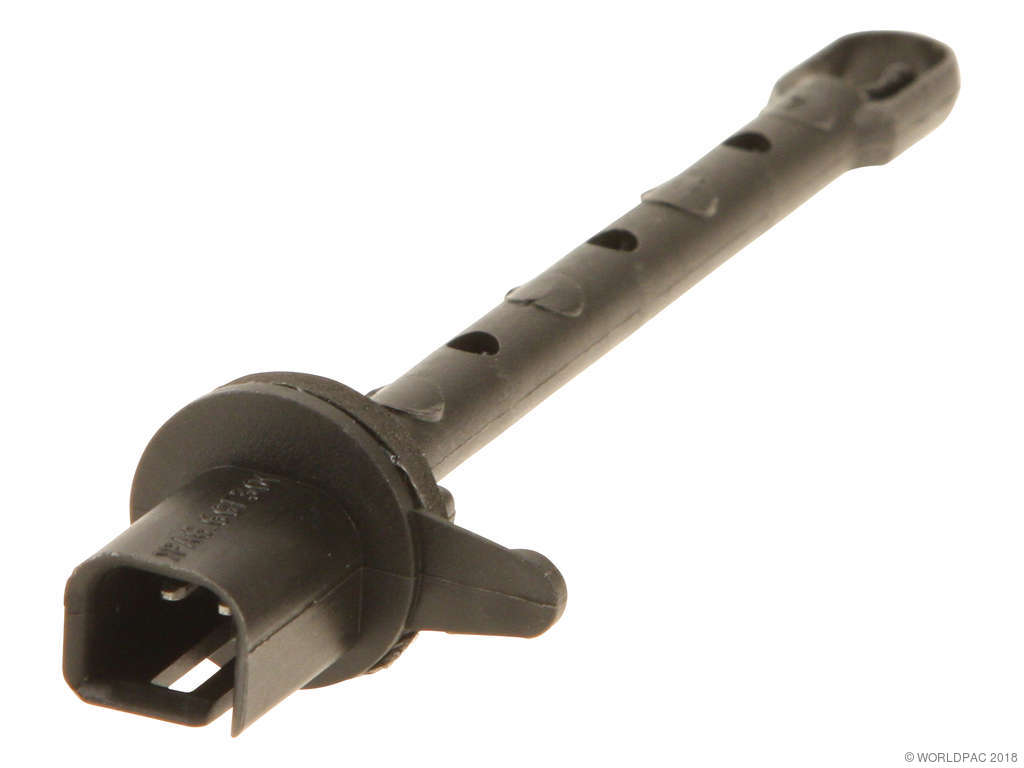
- A/C Evaporator Temperature Sensor
(OEM #6E5Z-19C734-BA)— This is the most common cause of P1437 on this vehicle, leading to the A/C system being disabled by the PCM.
Trusted brands: Motorcraft (YH1662), Standard Motor Products (AX163), Four Seasons, Dorman
OEM price range: $40-$60
Aftermarket price range: $20-$40
Platform-Specific Known Issues
- The A/C evaporator temperature sensor is notoriously difficult to access on the 2006-2012 Fusion. The official repair procedure requires significant disassembly of the dashboard.
- Some DIY mechanics have developed shortcuts by cutting a small access hole in the HVAC case behind the center console/radio stack. This method avoids pulling the entire dashboard but carries the risk of damaging other components if not done carefully.
- A temporary workaround involves splicing a resistor (around 37k Ohm) into the sensor's wiring harness to trick the computer into thinking the temperature is normal, allowing the A/C to function. This is not a permanent repair.
Mechanic-Grade Diagnostic Values
- A/C Evaporator Temperature Sensor Resistance — expected: Resistance should correspond to ambient temperature. At 0°C (32°F), expect 7.30-9.10 kΩ. At 10°C (50°F), expect 4.40-5.35 kΩ. At 20°C (68°F), expect 2.70-3.25 kΩ. At 30°C (86°F), expect 1.71-2.05 kΩ.. Failure: Infinite resistance (open circuit) or a reading that does not change with temperature. An open circuit results in the -40° reading on the scan tool.
- Sensor Signal Wire to Ground Resistance Test — expected: Greater than 10,000 ohms.. Failure: Resistance less than 10,000 ohms indicates a short to ground in the VH406 (VT/BN) wire.
- Sensor 5V Reference Voltage (VREF) — expected: ~5 volts on the VT/BN (Violet/Brown) wire at the sensor connector with the key on.. Failure: No voltage indicates an open in the wiring or a fault in the HVAC module.
Hidden / Shadow Codes Worth Checking
- B1B71:15: Evaporator Temperature Sensor: Circuit Short to Battery or Open. This is the specific HVAC module code that corresponds to the P1437 and the -40 degree reading. (see via A professional scan tool capable of communicating with the HVAC module, such as Ford's IDS (Integrated Diagnostic System).)
- B1B71:11: Evaporator Temperature Sensor: Circuit Short to Ground. This code would be set if the signal wire is shorted to ground, which would result in a very high temperature reading, not the typical -40. (see via A professional scan tool capable of communicating with the HVAC module, such as Ford's IDS.)
Scan Tool Commands That Help
- Ford IDS (or equivalent high-level scanner): HVAC Module Self-Test — To command the HVAC module to check all its inputs and outputs and report any specific fault codes, such as B1B71.
- Ford IDS (or equivalent high-level scanner): Datalogger - ACET PID — To monitor the live temperature reading from the A/C Evaporator Temperature sensor as reported by the module. This is used to confirm the -40°F/-40°C failure reading.
Wiring & Ground Locations
- C2295 — The electrical connector on the A/C Evaporator Temperature Sensor itself, located inside the HVAC plenum.. This is the primary connection point that fails or where testing would occur if the sensor could be easily accessed. The workaround resistor is often spliced into the harness leading to this connector.
- G201 / G202 — G201 is located at the center of the dash. G202 is on the left side of the dash.. These are the main ground points for the HVAC module. While a failure here would likely cause many other symptoms, a poor ground could potentially affect sensor readings.
- C2356a / C2357a — Connectors at the HVAC module, located behind the center of the dashboard.. These are the connectors where the sensor circuit terminates. Testing here can isolate a wiring fault from a module fault. Pin VH406 (VT/BN) is the signal wire and RH111 (GY/BU) is the sensor return/ground. The specific pin numbers vary by connector (see Model Year Variations).
- Sensor Wires — The two wires running from the HVAC module to the sensor are typically Violet/Brown (VT/BN) for the 5V signal and Grey/Blue (GY/BU) for the signal return on later models, or Violet/Brown and Blue/Brown on earlier models.. These are the wires to test for continuity, shorts, and to splice in a test resistor. They can be accessed behind the glove box area before they enter the HVAC case.
Real Owner Repair Stories
- Multiple YouTube videos and forum threads (2006-2012 Ford Fusion, all trims) — A/C suddenly stops blowing cold air. Fan works, but compressor clutch will not engage. Scan tool shows P1437 and a live data reading for the evaporator temp sensor of -40 degrees.
❌ Tried (didn't work) Recharging the A/C system with refrigerant., Replacing the A/C compressor relay., Checking fuses.
✅ What actually fixed it The A/C Evaporator Temperature Sensor was replaced. The vast majority of successful repairs involved either the full, labor-intensive dashboard removal or the popular DIY shortcut of cutting an access hole in the side of the HVAC plenum to access and swap the sensor.
OEM Part Supersession History
6E5Z-19C734-BA→6E5Z-19C734-BA (no supersession)— This part number appears to be consistent throughout the 2006-2012 model years.
Heads up: The Motorcraft service part number is YH1662. Aftermarket interchanges include Standard Motor Products AX163 and Duralast ATSA144. No known incompatibilities exist as long as the correct part for the vehicle is purchased.
Model Year Variations Within This Range
- 2006-2012: The HVAC control module and its connectors vary between the Electronic Manual Temperature Control (EMTC) and the Dual Automatic Temperature Control (DATC) systems. For testing at the module, the pins are different: On EMTC, the sensor uses pins 6 (VH406 VT/BN) and 10 (RH111 GY/BU) on connector C2357a. On DATC, it uses pins 6 (VH406 VT/BN) and 10 (RH111 GY/BU) on connector C2356a. While the pin numbers are the same in this specific case, the connectors themselves are different and this is a critical distinction for diagnosis.
Diagnostic Flowchart
Other Known Issues on This Vehicle
Issues unrelated to this code that are worth knowing about as an owner of this generation:
- Electronic Throttle Body Failure 🔴 High — Very common across all model years. Can cause sudden stalling and 'limp mode' while driving. (Ref: Ford Customer Satisfaction Program 13N03 (expired) covered 2010-2013 models, but the issue affects the entire generation.)
- Automatic Transmission Harsh Shifting / Failure 🟠 Medium — Common issue, particularly in earlier models, manifesting as harsh shifts, slips, or jerking. Often starts around 85,000 miles. (Ref: Software updates were released, but sometimes a valve body or full transmission rebuild/replacement is needed.)
- Broken Interior Door Handles 🟡 Low — Extremely common failure where the plastic handle breaks, preventing the door from being opened from the inside.
- Power Steering Failure / Leaks 🔴 High — Widespread complaints of sudden power steering loss (on models with EPAS) or fluid leaks from hoses on hydraulic systems. (Ref: Recalls were issued for some 2011-2012 models for loss of power steering assist.)
- Swollen/Capped Lug Nuts 🟡 Low — The two-piece lug nuts swell and deform due to corrosion, making it impossible to use a standard lug wrench to remove them.
Used vs. New Parts: Buying Guide for This Vehicle
When a used part is the smart pick: Never for the A/C Evaporator Temperature Sensor itself. This is a known high-failure component and the labor to access it is extremely high (3-8 hours). The risk of a used part failing shortly after installation is not worth the small cost savings on the part.
What to inspect on the donor part:
- Not applicable, as a used sensor is not recommended.
OEM-only on this vehicle (don't cheap out):
- A/C Evaporator Temperature Sensor: Due to the extreme difficulty and high labor cost of replacement, using a genuine Motorcraft (YH1662 / 6E5Z-19C734-BA) part is strongly recommended to minimize the risk of a premature failure and having to repeat the job.
Aftermarket brands forum-validated for this vehicle:
- Standard Motor Products (AX163) is a widely available and generally trusted aftermarket alternative if an OEM part is not available.
Brands owners have reported issues with on this vehicle:
- No specific brands are consistently cited as problematic, but unbranded, low-cost parts from online marketplaces should be avoided due to the high labor cost of a potential repeat repair.
Real Owner Stories
Aggregated from forums and TSBs cited above. Mileages and costs reflect what owners reported in those sources.
2010 Ford Fusion Hybrid — 110000 miles
Symptoms: Check engine light came on.
What fixed it: The dealer replaced the Degas hose (it was leaking) and the thermostat.
Source hint: fordfusionforum.com P1437 - Heater Thermostat Control Circuit
2006 Ford Fusion SEL 3.0L V6
Symptoms: the check engine light came on
What fixed it: I replaced the thermostat and the code went away.
Source hint: fordforums.com Check Engine Light Code P1437
Related OBD-II Codes
Frequently Asked Questions
Is there a shortcut to replace the A/C Evaporator Temperature Sensor on my 2006-2012 Fusion without removing the whole dashboard?
My scan tool shows the ACET PID at -40°F. Does this mean the sensor is definitely bad?
Can I use a resistor to bypass the P1437 code on my Ford Fusion?
Does the 2006-2011 Mercury Milan have the same A/C sensor issue as the Fusion?
Is there a recall for the A/C sensor failure on the 2012 Ford Fusion?
Why does my A/C work intermittently in cool weather but fail when it gets hot?
Helpful Videos



We Have This Part in Stock


The information in this article is provided for general reference and educational purposes only. Vehicle specifications, procedures, and part compatibility can vary by production date, trim level, and region. Always consult your vehicle's factory service manual and verify part numbers before purchasing or performing repairs. Safety-critical components such as airbags, seat belts, and braking systems should be installed by a qualified professional.
- Ford Fusion:
- 🧭 Diagnostic Flowchart
- 🎬 Helpful Videos
- 🛍️ Shop This Part
- What's Unique About the 2006-2012 Ford Fusion
- Symptoms You May Notice
- Most Likely Causes
- Rare But Worth Checking
- Diagnosis Steps
- Parts You'll Likely Need
- Platform-Specific Known Issues
- Mechanic-Grade Diagnostic Values
- Hidden / Shadow Codes Worth Checking
- Scan Tool Commands That Help
- Wiring & Ground Locations
- Real Owner Repair Stories
- OEM Part Supersession History
- Model Year Variations Within This Range
- Other Known Issues on This Vehicle
- Used vs. New Parts: Buying Guide for This Vehicle
- Real Owner Stories
- 2010 Ford Fusion Hybrid — 110000 miles
- 2006 Ford Fusion SEL 3.0L V6
- Related OBD-II Codes
- Frequently Asked Questions
- 🎟️ Get 5% Off