

P1440 on 2007-2013 Acura MDX 3.7L V6: EVAP System Causes and Fixes
This code points to a fault in the evaporative emissions (EVAP) system. On this MDX, the most common cause is a failing EVAP canister purge solenoid valve, which often triggers a 'Tighten Fuel Cap' message. Replacing this valve (OEM Part #36162-RMX-A01) is the most likely fix, costing around $40-$90 for the part and is a simple DIY job.
- P1440 on a V6 MDX indicates an EVAP (emissions) system problem, not a hybrid system failure.
- The most common symptom is a 'Tighten Fuel Cap' message on the dash, which may appear even if the cap is tight.
- Before buying any parts, check that your gas cap is tight and its seal isn't cracked.
- The most probable fix is replacing the EVAP Canister Purge Solenoid Valve in the engine bay (Part #36162-RMX-A01), a common DIY task.
- If a new cap and purge valve don't solve the issue, a smoke test is needed to find a leak elsewhere in the system.
What's Unique About the 2007-2013 Acura MDX
The second-generation Acura MDX is well-known for displaying a persistent 'Tighten Fuel Cap' message on the dashboard. While this can be caused by a loose gas cap, it very frequently points to a failing EVAP canister purge solenoid valve located in the engine bay. Many owners have fixed the warning message and associated codes by replacing this specific valve, even after a new gas cap made no difference. 🎬 Watch: What to check when a new gas cap doesn't fix the warning. A DIY video shows a user with an MDX confirming the purge valve is bad with a hand vacuum pump because it fails to hold vacuum.
Symptoms You May Notice
- Check Engine Light is on
- A 'Tighten Fuel Cap' message appears on the multi-information display
- A faint smell of fuel may be noticeable
- Slightly rough idle
- Difficulty starting the engine immediately after getting gas
- Reduced fuel efficiency
- In some hybrid Acura models, the car may feel like it is dragging or lack power, as noted in NHTSA ODI #11485532.
- Replacing the gas cap multiple times when the root cause is the EVAP canister purge solenoid valve.
Most Likely Causes
- Faulty EVAP Canister Purge Solenoid Valve 🔴 High Probability → Shop Vapor Canister This specific part is a widely reported failure item for the second-generation MDX, often causing the 'Tighten Fuel Cap' message even when no other leak is present.
How to confirm: Disconnect the hose leading from the valve to the intake manifold and apply vacuum with a hand pump. The valve should hold vacuum when not powered. If it leaks, it's bad. Alternatively, if it's stuck open, you may hear a vacuum hiss from it at idle. A resistance check across the two pins should read approximately 33 ohms at room temperature.
Typical fix: Replace the EVAP canister purge solenoid valve located in the engine bay. It is held on by two 10mm bolts and has two hoses and one electrical connector. The engine cover must be removed for access. 🎬 See this step-by-step guide to replacing the purge valve yourself.
Est. part cost: $40-$90 - Loose or Faulty Gas Cap 🟡 Medium Probability → Shop Fuel Tank Cap
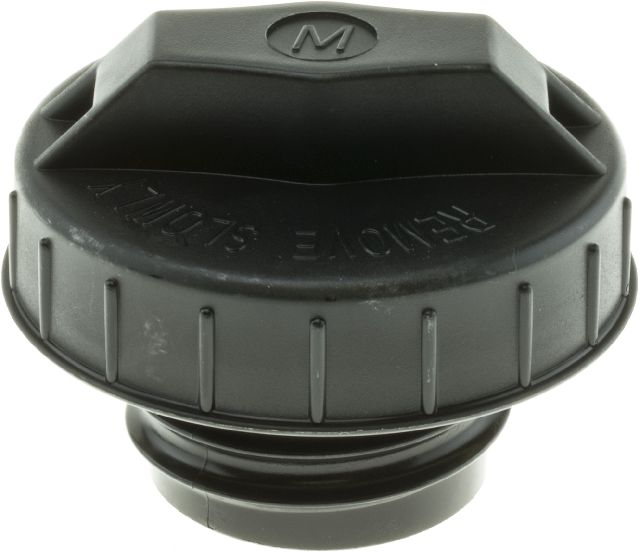
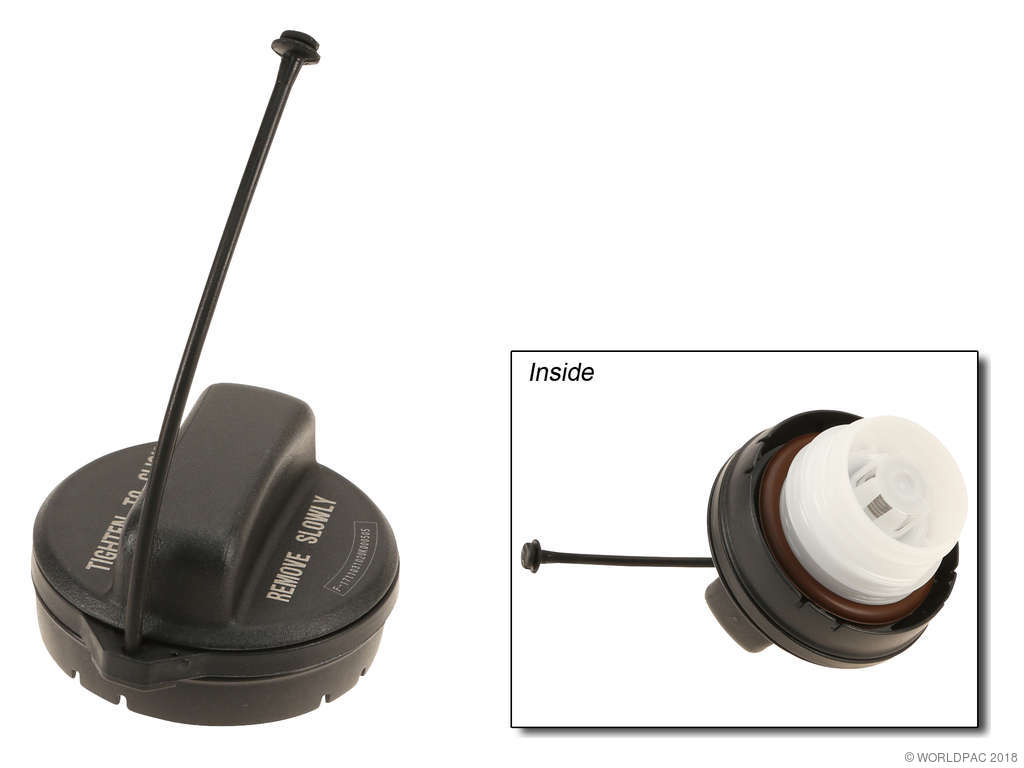
How to confirm: Ensure the gas cap is tightened until it clicks at least three times. Inspect the rubber seal on the cap for cracks, stiffness, or damage. If the seal is compromised, the cap cannot hold pressure.
Typical fix: Replace the gas cap with a new, high-quality OEM part. Aftermarket caps can sometimes cause sealing issues.
Est. part cost: $25-$50 - Cracked or Disconnected EVAP Hoses ⚪ Low Probability
How to confirm: A visual inspection may reveal obvious cracks or disconnected lines, particularly around the purge valve in the engine bay. A definitive diagnosis requires a smoke test, where a mechanic fills the EVAP system with smoke to see where it escapes.
Typical fix: Replace the cracked or broken hose section.
Est. part cost: $10-$50 - Faulty EVAP Canister Vent Valve/Solenoid ⚪ Low Probability → Shop Vapor Canister
How to confirm: This valve, located near the charcoal canister under the car, can be tested with a bidirectional scan tool to command it open and closed. A smoke test can also reveal if it's stuck open.
Typical fix: Replace the vent valve assembly.
Est. part cost: $50-$120
Rare But Worth Checking
- Faulty Fuel Tank Pressure (FTP) Sensor: → Shop Fuel Tank If all other components check out and a smoke test shows no leaks, the sensor that monitors system pressure could be sending incorrect data to the computer. Normal voltage is around 1.3V-1.7V; a reading stuck near 0V or 5V indicates a sensor or wiring fault.
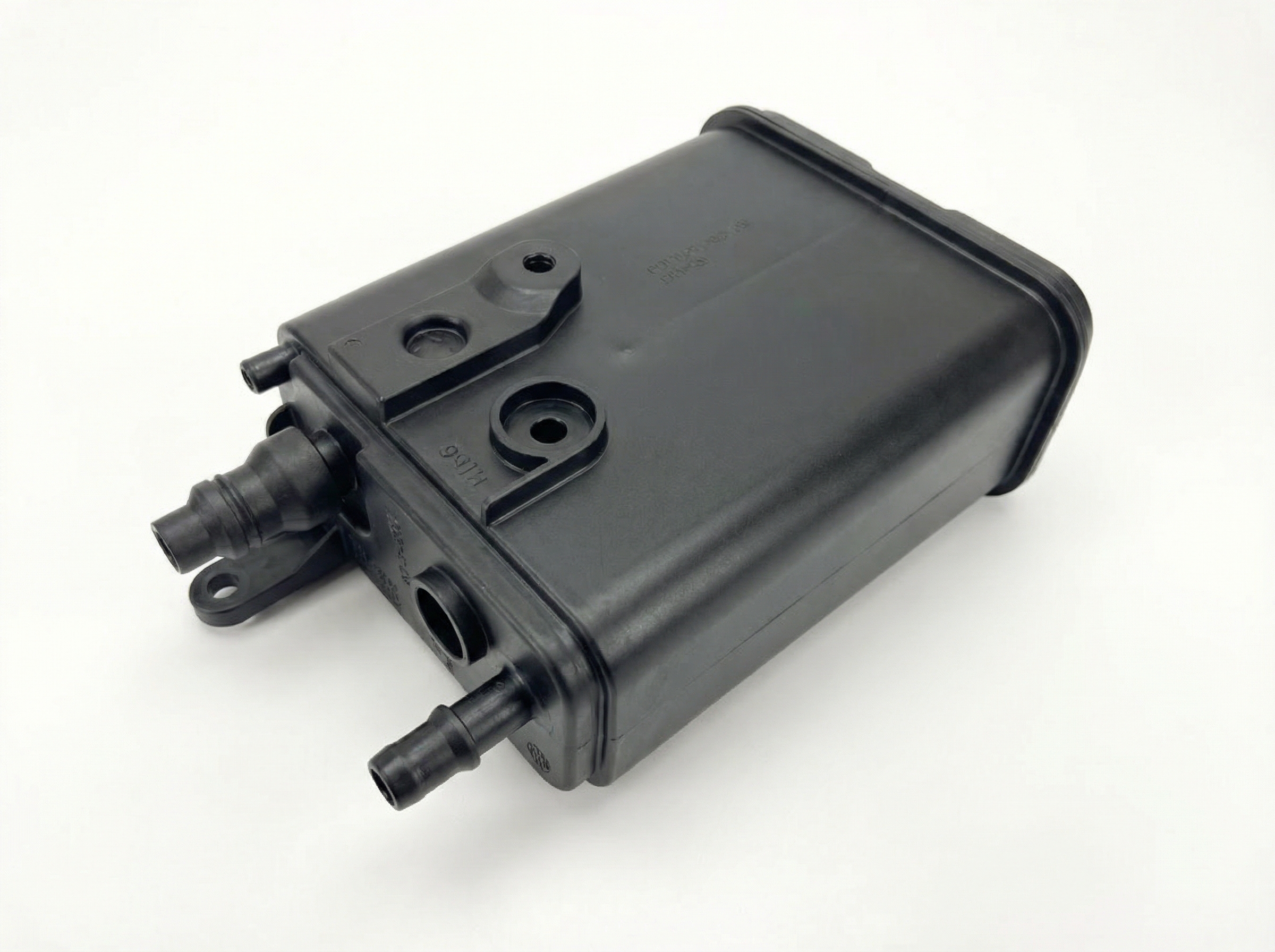
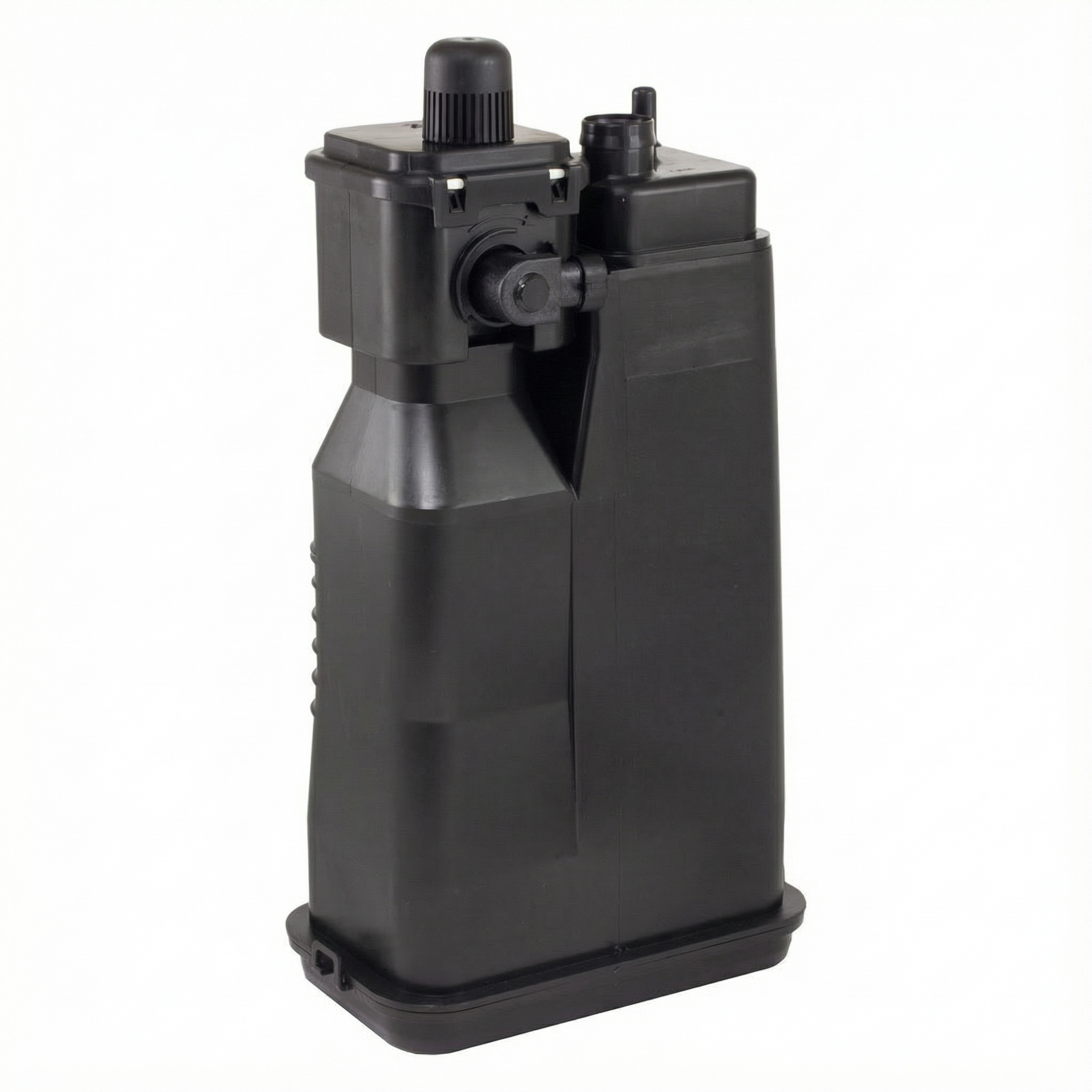
- Cracked or Clogged Charcoal Canister: → Shop Vapor Canister This can happen from physical damage or become saturated with fuel from repeatedly overfilling the gas tank. This typically throws a large leak code like P0455 but can sometimes manifest as other issues or a persistent 'Tighten Fuel Cap' message even after replacing valves.
- MPI Module Output Circuit Malfunction: While primarily documented on other Acura hybrid platforms, manufacturer bulletin #B20-021 notes that P1440 can be triggered by a defective solder joint in the intelligent inverter unit (IIU).
Diagnosis Steps
- Check the Gas Cap: Remove and reinstall the gas cap, ensuring it clicks several times. Inspect the rubber O-ring for any visible cracks or damage. If it looks worn, replace it with an OEM cap first, clear the codes, and drive for a few days.
- Inspect the Purge Solenoid Valve: Locate the valve in the engine bay. Check that its electrical connector and two vacuum hoses are securely attached and not cracked.
- Test the Purge Solenoid Valve: With the engine off, disconnect the vacuum hose that runs from the valve to the engine intake. Attach a hand vacuum pump to the valve's port. It should hold vacuum. 🎬 Watch: How to test and replace an EVAP canister solenoid. If it doesn't, the valve is stuck open and must be replaced. As a secondary check, measure the resistance between the two electrical pins on the valve; it should be approximately 33 ohms.
- Perform a Smoke Test: If the gas cap and purge valve are good, the next step is to find the source of the leak. A mechanic will use a smoke machine to pressurize the EVAP system with a light smoke. The vent valve near the canister must be commanded closed with a scan tool for this test to be effective. Smoke will exit from any cracks in hoses or faulty seals, pinpointing the leak's location.
- Inspect Other Components: If no leak is found, the issue could be a faulty vent valve (near the canister) or a bad fuel tank pressure sensor. These typically require more advanced diagnostics, often with a professional scan tool to command components and read live data. In some cases, a dealer diagnostic may point to an internal circuit malfunction in the MPI, causing the 12V battery to lose charge, as described in NHTSA ODI #11591884.
Parts You'll Likely Need
- EVAP Canister Purge Solenoid Valve
(OEM #36162-RMX-A01)— This is the most frequent cause of EVAP system warnings, specifically the 'Tighten Fuel Cap' message, on this generation of Acura MDX.
Trusted brands: Acura (Genuine OEM), Standard Motor Products (e.g., CP734), Dorman (e.g., 911-772), Wells (e.g., PV639)
OEM price range: $60-$90
Aftermarket price range: $30-$60 - Fuel Filler Cap
(OEM #17670-T3W-A01)— A worn out gas cap seal is a common cause for all EVAP leak codes and is the simplest part to replace first.
Trusted brands: Acura (Genuine OEM), Stant, Motorad
OEM price range: $30-$50
Aftermarket price range: $15-$25
Related Codes That Often Appear With This One
- P0497 — This is a specific Acura code for 'Evaporative Emission System Low Purge Flow,' which can be caused by the same faulty purge valve.
- P1457 — A common Honda/Acura code for a leak in the EVAP canister system area. A failing vent valve or canister could potentially trigger this alongside or instead of P1440.
- P0456 — A generic code for a 'Very Small Leak Detected.' A failing purge valve or gas cap seal could be interpreted as a small leak by the system.
- P15A5 / P0A78 — These codes may appear alongside P1440 if there is an internal circuit malfunction in the MPI module, as referenced in manufacturer bulletin #B20-021.
Technical Service Bulletins (TSBs) & Recalls
- Acura TSB 12-013: While for a 'BATTERY CHARGE LOW' message on 2012 TL models, it is part of a series of software updates related to MID warnings. Predecessor TSB 11-012 specifically mentions the 'TIGHTEN FUEL CAP' message appearing without a DTC, requiring a software update for some vehicles.
- Acura Bulletin #B20-021: Notes that P1440 can be defined as an MPI Module Output Circuit Malfunction, potentially caused by a defective solder joint in the intelligent inverter unit.
Platform-Specific Known Issues
- The 'Tighten Fuel Cap' message is a very common electronic complaint on the 2007-2013 MDX, and forum data overwhelmingly suggests the canister purge solenoid valve is the culprit more often than the cap itself.
- Acura TSB 12-013 was issued for some 2012 models for a 'BATTERY CHARGE LOW' message, but related TSBs like 11-012 and 12-030 for other models address the 'TIGHTEN FUEL CAP' message appearing, sometimes requiring a software update.
Mechanic-Grade Diagnostic Values
- EVAP Canister Purge Solenoid Coil Resistance — expected: Approximately 33 ohms at room temperature. Failure: A reading of infinite resistance (open circuit) or zero resistance (short circuit) indicates a failed solenoid coil.
- Fuel Tank Pressure (FTP) Sensor Voltage — expected: 1.3V to 1.7V with the system at rest (ideal is ~1.5V). Voltage changes as system pressure/vacuum changes.. Failure: A reading stuck at a low value (e.g., 0.3V) or a high value (e.g., 5V) suggests a faulty sensor or a wiring issue.
Scan Tool Commands That Help
- Professional Scan Tool (e.g., Honda HDS, Autel, Snap-on): EVAP System Test / Purge & Seal — This automated test commands the vent and purge valves to run a system self-test, helping to confirm if a leak is present without a smoke machine. It's a good first step after a visual inspection.
- Professional Scan Tool (e.g., Honda HDS, Autel, Snap-on): EVAP Vent Valve Control — This bidirectional command is essential when performing a smoke test. The normally-open vent valve must be commanded closed to allow the system to build pressure and reveal leaks.
- Honda Diagnostic System (HDS): PCM Reset — After replacing a component and clearing codes, a PCM reset can be performed to clear all learned adaptations and ensure the system re-learns with the new part correctly.
Wiring & Ground Locations
- G101 — On the right side of the engine compartment.. This is a primary ground point for the engine control system. A corroded or loose G101 can cause erratic sensor readings and unpredictable behavior from electronically controlled components like the EVAP purge and vent valves.
- Engine to Chassis Ground Strap — A braided strap located at the side motor mount, near the transmission.. Ensures the engine block has a solid ground reference to the vehicle's chassis. A poor connection here can lead to a variety of electrical issues, including problems with sensors and solenoids that ground through the engine block.
- PCM (Powertrain Control Module) — Located at the right front of the engine compartment.. Knowing the PCM's location is critical for advanced diagnostics, such as checking for power, ground, and signal at the PCM connectors if a valve or sensor is suspected to have a wiring fault.
Real Owner Repair Stories
- Tahoe Yukon Forum user (Similar GM vehicle, but EVAP system logic is universal) — 'Tighten Fuel Cap' message, followed by large leak codes.
❌ Tried (didn't work) Replacing gas cap with OEM, Replacing EVAP purge solenoid, Replacing EVAP vent solenoid
✅ What actually fixed it Replacing the charcoal canister finally resolved the message and codes. The user noted that the gas tank would build up significant pressure, which was a key symptom pointing towards a clogged canister rather than just a leak.
Documented NHTSA Reports
- An owner reported that their vehicle jerked while braking and displayed code P1440, with the IMA, check engine, and brake lights all illuminating (NHTSA ODI #11485532).
- In NHTSA ODI #11534323, an owner confirmed that a dealership diagnostic found P1440 along with P15A5, P0AE1, and P0DA8, which are codes associated with manufacturer service bulletin 20-021.
- NHTSA ODI #11666879 describes a situation where a diagnostic pointed to the IMA inverter needing replacement due to codes P1440 and P1505.
"I Checked Everything" — The Actual Cause
- In some cases, the 'Tighten Fuel Cap' message and associated EVAP codes can persist even if a smoke test shows no leaks. A documented cause for this is an internally clogged or saturated charcoal canister. While a smoke test is excellent for finding leaks (unintended openings), it may not identify a blockage (an unintended restriction). If fuel vapors cannot flow through the canister to be purged, the system can fail its pressure/vacuum self-test, triggering a code even without an external leak. This was the final solution for one owner after replacing both the purge and vent valves failed to fix the issue.
When the Usual Fixes Don't Work
- While the EVAP canister purge solenoid is the most common fix, it is not a guaranteed solution. In a documented case, an owner replaced the purge valve, vent valve, and gas cap, but the 'Tighten Fuel Cap' message and eventual codes persisted. The ultimate cause was a clogged charcoal canister, which prevented the system from breathing properly. This highlights that if the common, high-probability parts don't solve the issue, the canister itself should be investigated for blockage, not just leaks.
OEM Part Supersession History
36162-RDM-A01→36162-RDV-J01— Part revision by the manufacturer for improved reliability or sourcing.36162-RDV-J01→36162-RMX-A01— Further part revision. 36162-RMX-A01 is the most current part number specified for the entire 2007-2013 MDX range.
Heads up: While older part numbers may fit, it is always recommended to use the latest superseded part number (36162-RMX-A01) for the best reliability.
Model Year Variations Within This Range
- 2007-2009 vs. 2010-2013: A mid-cycle refresh occurred in 2010. The 2010-2013 models received a new 6-speed automatic transmission (replacing the previous 5-speed), a revised front grille ('power plenum' design), and updated technology packages. While the core J37A1 engine and the primary EVAP components like the purge valve remained the same, technicians should be aware of the refresh when sourcing other drivetrain or electronic parts.
Diagnostic Flowchart
Other Known Issues on This Vehicle
Issues unrelated to this code that are worth knowing about as an owner of this generation:
- Excessive Engine Oil Consumption 🔴 High — Common on 2010-2013 models. Caused by carbon buildup on oil control rings. Owners report adding 1 quart every 1000-1500 miles. (Ref: Acura TSB 19-006 extended the warranty to 8 years/125,000 miles for this issue.)
- Torque Converter Judder/Shudder 🟠 Medium — Felt as a vibration or shudder while driving between 20-60 mph. Caused by deteriorated automatic transmission fluid. (Ref: Acura TSBs 16-062, 16-063, and 17-015 address this with a software update and transmission fluid flush procedure.)
- Active Damper System (ADS) Failure 🟠 Medium — Affects models with the 'Sport' package. Failure of the electronic struts or corrosion at the connectors leads to a harsh ride and a 'Check Active Damper System' warning. Can occur from 30k miles onwards. (Ref: A product update was issued in Canada for front damper connector corrosion, expiring in 2013.)
- Propeller Shaft Whine/Noise 🟡 Low — A high-pitched whining or whistling noise, often speed-dependent (30-40 mph) and more noticeable in cold weather. Caused by the center support bearing on the driveshaft. Generally considered an annoyance, not a safety failure. (Ref: No specific TSB, but a common dealer complaint. A recall for propeller shaft bolts on the 2014 model was unrelated to this noise.)
- Hands-Free Link (HFL) Module Failure 🟡 Low — The Bluetooth module can fail, causing it to stop working or create a parasitic drain that kills the battery.
Used vs. New Parts: Buying Guide for This Vehicle
When a used part is the smart pick: For larger, less failure-prone components like the charcoal canister assembly or plastic EVAP lines, a used part from a low-mileage, non-corroded donor vehicle can offer significant savings and is a reasonable choice.
Donor-vehicle mileage cap: roughly under 100000 miles for the part to have meaningful remaining life.
What to inspect on the donor part:
- Check for a vehicle from a dry, salt-free climate to minimize corrosion on electrical connectors and metal brackets.
- Inspect the charcoal canister for any physical cracks or signs of being saturated with fuel (wetness, strong fuel smell).
- Ensure all hose connection nipples are intact and not brittle.
OEM-only on this vehicle (don't cheap out):
- EVAP Canister Purge Solenoid Valve
- Fuel Tank Pressure (FTP) Sensor
Aftermarket brands forum-validated for this vehicle:
- Denso (often the original OEM supplier, can be purchased separately)
- Standard Motor Products (SMP) (generally considered a reliable Tier 1 aftermarket supplier)
- WVE (reportedly a re-boxed Denso part in some cases)
Brands owners have reported issues with on this vehicle:
- Dorman: While a major aftermarket brand, some forum users have reported premature failure of Dorman-branded EVAP purge valves for this platform, leading them to purchase an OEM part afterward.
Real Owner Stories
Aggregated from forums and TSBs cited above. Mileages and costs reflect what owners reported in those sources.
2007-2013 Acura MDX 3.7L V6
Symptoms: The 'Tighten Fuel Cap' message appeared on the multi-information display even though no leak was present.
What fixed it: Replacement of the EVAP canister purge solenoid valve (P/N 36162-RDV-J01 or the modern 36162-RMX-A01).
Source hint: AcuraZine - Thread 'A-130: DIY to fix "Tighten Fuel Cap" message'
2009 Acura MDX 3.7L V6 — 200000 miles
Symptoms: The 'Tighten Fuel Cap' warning light appeared specifically after hitting bumps.
What fixed it: Replacement of the purge valve located in the engine bay.
Source hint: Reddit (r/AskMechanics) - Thread '2009 Acura " Tighten Fuel Cap" warning light'
Related OBD-II Codes
Frequently Asked Questions
My 2012 MDX is showing a 'TIGHTEN FUEL CAP' message but the cap is tight. Is there a software update for this?
I'm seeing P1440 and having trouble starting my MDX after refueling. What is the most likely part to fail?
How can I test if my purge valve is bad before buying a new one?
Does the 2007-2013 MDX have a specific TSB for oil consumption that might affect the EVAP system?
Where is the EVAP canister purge solenoid valve located on the 3.7L V6?
Helpful Videos
Used OEM Parts in Stock
New Aftermarket Parts Available


The information in this article is provided for general reference and educational purposes only. Vehicle specifications, procedures, and part compatibility can vary by production date, trim level, and region. Always consult your vehicle's factory service manual and verify part numbers before purchasing or performing repairs. Safety-critical components such as airbags, seat belts, and braking systems should be installed by a qualified professional.
- Acura MDX:
- 🧭 Diagnostic Flowchart
- 🎬 Helpful Videos
- 🛍️ Shop This Part
- What's Unique About the 2007-2013 Acura MDX
- Symptoms You May Notice
- Most Likely Causes
- Rare But Worth Checking
- Diagnosis Steps
- Parts You'll Likely Need
- Related Codes That Often Appear With This One
- Technical Service Bulletins (TSBs) & Recalls
- Platform-Specific Known Issues
- Mechanic-Grade Diagnostic Values
- Scan Tool Commands That Help
- Wiring & Ground Locations
- Real Owner Repair Stories
- Documented NHTSA Reports
- "I Checked Everything" — The Actual Cause
- When the Usual Fixes Don't Work
- OEM Part Supersession History
- Model Year Variations Within This Range
- Other Known Issues on This Vehicle
- Used vs. New Parts: Buying Guide for This Vehicle
- Real Owner Stories
- 2007-2013 Acura MDX 3.7L V6
- 2009 Acura MDX 3.7L V6 — 200000 miles
- Related OBD-II Codes
- Frequently Asked Questions
- 🎟️ Get 5% Off