

P1440 on 2008-2016 Audi A4 2.0L TDI: EGR Open Circuit Causes and Fixes
On the Audi A4 2.0L TDI, code P1440 indicates an electrical fault ('Open Circuit') within the EGR valve's control circuit. This is most often caused by a failed EGR valve assembly or a break in the wiring harness, not a simple clog. Expect to pay $300-$600 for a replacement EGR valve. The issue is common enough that it also affects platform-mates like the Audi A5 and Q5 with the same engine.
- P1440 on an Audi TDI is an electrical problem ('Open Circuit') in the EGR system, not a flow problem.
- Do not simply clean the EGR valve to fix this code; the fault is electrical and usually requires replacing the valve assembly or repairing the wiring.
- The most common symptoms are a check engine light, flashing glow plug light, and the car entering 'limp mode'.
- Always test the wiring harness for continuity before condemning the expensive EGR valve.
- This fault is shared across other Audi/VW models using the same 2.0L TDI engine, like the A5 and Q5.
What's Unique About the 2008-2016 Audi A4
Unlike many other manufacturers where P1440 points to a gasoline engine's EVAP system, on Audi TDI engines it specifically relates to the diesel EGR system. The 2.0L TDI engines (part of the EA189 family) are known for issues with their emissions components, including the EGR valve and DPF. While carbon buildup is a common problem that can cause EGR flow issues, P1440 is an electrical code. It most often points to the failure of the valve's internal motor or position sensor, or a break in the 5-pin wiring harness leading to it. Extreme cold has also been reported to trigger this fault, potentially due to contracting metal components in a failing valve or harness.
Generation note: The 2008-2016 model years cover the B8 generation of the Audi A4 (2008-2012) and its facelift, the B8.5 (2013-2016). The CJC engine and this specific P1440 fault are common to this platform without significant differences noted in the diagnostic approach. The EGR valve itself is a complex assembly that often includes the EGR cooler.
Symptoms You May Notice
- Check Engine Light (MIL) illuminated.
- Flashing glow plug warning light on the dashboard.
- Reduced engine power or 'limp mode'.
- Rough or unstable idle.
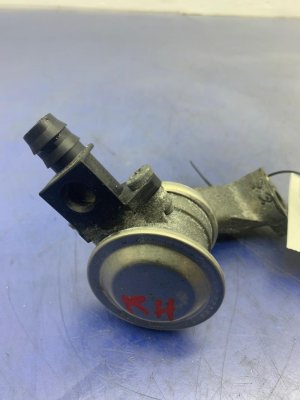
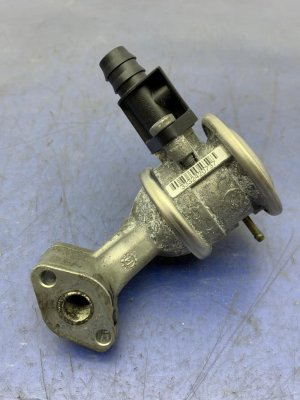
- Slightly rougher engine shut-off, as the anti-shudder valve (part of the EGR system) may not function correctly.
- Replacing the EGR valve based solely on the code without testing the wiring first. A simple broken wire could be the actual cause, leading to unnecessary expense.
- Cleaning a carbon-clogged EGR valve. While cleaning is good practice for flow-related codes (like P0401), it will not fix an electrical 'Open Circuit' fault like P1440.
- Replacing the wrong component. The EGR system has multiple parts; P1440 points specifically to the main valve's electrical circuit, not necessarily the EGR cooler or other related solenoids.
Most Likely Causes
- Failed EGR Valve Assembly 🔴 High Probability → Shop Exhaust Gas Recirculation (EGR) Valve The internal electronics of the 5-pin EGR valve can fail, creating an open circuit. Soot and carbon buildup can cause the valve's flap to stick, which overstresses the internal motor and leads to electrical failure. In some cases, the integrated position sensor fails, also triggering an open circuit or implausible signal code.
How to confirm: With a diagnostic scan tool like VCDS, attempt to actuate the EGR valve via the 'Output Tests' (in Engine -> Output Tests). If it does not respond or makes clicking noises without moving, and the wiring is confirmed to be good, the valve itself is faulty. You can also test the resistance across the valve's electrical pins; an 'Open Line' (OL) reading indicates failure.
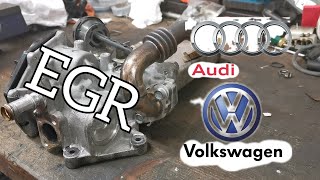
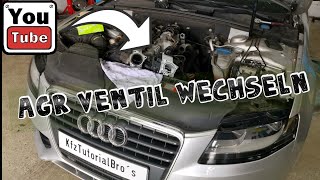
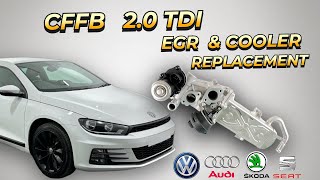
Typical fix: Replacement of the entire EGR valve assembly. On this platform, the EGR valve and cooler are often replaced as a single unit. 🎬 See this step-by-step guide for removing the EGR valve Cleaning the valve will not fix an internal electrical 'open circuit' fault. After replacement, an adaptation procedure using a scan tool is required.
Est. part cost: $300-$600 - Damaged Wiring Harness or Connector 🟡 Medium Probability The engine bay environment involves high heat and vibration, which can cause wires in the 5-pin connector harness to become brittle, chafe, or break over time, especially near the EGR valve connector itself.
How to confirm: Visually inspect the wiring harness leading to the EGR valve for any signs of damage, chafing against other components, or corrosion at the connector pins. Perform a continuity test on each of the 5 wires from the EGR connector to the ECU plug. Check for 5V reference and good ground at the connector with the ignition on.
Typical fix: Repair the broken wire(s) or replace the damaged connector pigtail. The pigtail repair is a common and cost-effective fix if the damage is localized at the connector.
Est. part cost: $10-$50 - Blown Fuse ⚪ Low Probability A short circuit in the EGR system or a related component on the same circuit can cause the fuse to blow.
How to confirm: For the B8 platform, fuses are located at both ends of the dashboard and in the luggage compartment. Check the fuse diagram on the panel cover or in the owner's manual for the fuse related to 'Engine Management' or 'Emissions Control'.
Typical fix: Replace the fuse. If the new fuse blows immediately, it indicates a persistent short circuit in the wiring that must be found and repaired.
Est. part cost: $1-$5
Rare But Worth Checking
- Faulty Engine Control Unit (ECU): This is extremely rare. The internal driver circuit ('Power Stage') for the EGR valve within the ECU can fail. This should only be considered after all other possibilities, especially the EGR valve and its wiring, have been thoroughly tested and ruled out.
Diagnosis Steps
- Read Fault Codes: Use an OBD-II scanner (VCDS is recommended) to confirm P1440 is the active code. Note any other codes present, such as P0403, P046C, or P0406.
- Inspect the Fuse: Check the fuses for the engine control system. On the B8 A4, these are located in panels on both the driver and passenger sides of the dashboard, as well as in the trunk.
- Inspect Wiring and Connector: Carefully inspect the entire 5-pin wiring harness going to the EGR valve. Look for any visible signs of damage, melting, or chafing. Unplug the connector and check for corrosion, moisture, or bent/damaged pins.
- Test for Power and Ground: Using a multimeter, verify that the EGR valve connector is receiving the correct reference voltage (typically 5V) and has a good ground connection with the key on.
- Command Actuation: Using an advanced scan tool (like VCDS), navigate to Engine -> Output Tests and find the test for the EGR valve (N18). Attempt to activate it. Listen for clicks and, if possible, visually inspect if the valve actuator moves. No response or only clicking indicates a failed valve or circuit.
- Test the EGR Valve: If wiring appears intact, test the EGR valve itself. Disconnect the connector and measure the resistance between the pins on the EGR valve as specified by the service manual. An infinite resistance or 'OL' reading indicates an open circuit within the valve.
- Replace the Faulty Component: Based on your findings, replace the EGR valve assembly or repair the wiring harness. After replacement, clear the fault codes and perform an EGR adaptation using your scan tool if required.
Parts You'll Likely Need
- EGR Valve Assembly
(OEM #03L131512DQ (or similar variants like 03L131512CF, 03L131512CH, 03L131512BB))— This is the most frequent cause of the P1440 code, as the internal electronics of the valve fail, creating the open circuit detected by the ECU. Often sold as a unit with the EGR cooler.
Trusted brands: Bosch, Wahler, Pierburg, NRF
OEM price range: $450-$600
Aftermarket price range: $300-$450
Related Codes That Often Appear With This One
- P0403 — This code indicates a 'Malfunction' in the EGR control circuit and frequently appears with P1440, 🎬 Watch: Troubleshooting the P0403 electrical fault on a 2.0 TDI pointing strongly to an electrical issue with the EGR system itself.
- P046C — This code for 'EGR Sensor 'A' Circuit Range/Performance' can appear if the internal position sensor in the EGR valve has failed or is providing an implausible signal, which can be related to the open circuit fault.
- P0406 — Indicates 'EGR Sensor 'A' Circuit High'. This can also be logged alongside P1440 when the valve's internal sensor fails and sends a high voltage signal or is part of the open circuit condition.
Platform-Specific Known Issues
- EGR Failure in Extreme Cold: A user on the 'elektroda.pl' forum with a 2014 A5 2.0 TDI reported that codes P1440 and P0403 would only appear in very cold temperatures (below -10°C), suggesting that thermal contraction may exacerbate a borderline electrical failure in the valve or wiring.
- Successful DIY Replacement: A user named '4matic' on 'a4-klub.pl' documented their experience with P1440 and related codes on a 2012 A4 with a CJCB engine. After getting the codes, they successfully replaced the EGR valve themselves, noting the difficult access, and resolved the issue.
Mechanic-Grade Diagnostic Values
- Voltage at EGR valve harness connector — expected: Approx. 5.0 Volts reference voltage with ignition on.. Failure: No voltage or significantly lower voltage points to a wiring or ECU issue upstream.
- Resistance of EGR valve motor pins — expected: While specific values for the CJC engine are not widely published, a similar VW TDI EGR valve shows ~8 Ohms between pins 1 and 5.. Failure: An 'OL' (Open Line) or infinite resistance reading indicates a break in the internal motor windings, confirming a failed valve.
Scan Tool Commands That Help
- VCDS (VAG-COM): Engine -> Basic Settings -> Group 074 — To perform an adaptation of a new EGR valve. The screen will show the min/max voltage positions and the status should change from 'Run' to 'ADP OK' when complete.
- VCDS (VAG-COM): Engine -> Output Tests -> Exhaust Gas Recirculation Valve (N18) — To command the EGR valve to cycle open and closed. This is a direct functional test to see if the valve's motor responds to ECU commands. Lack of movement or sound indicates a failure in the valve or its circuit.
- VCDS (VAG-COM): Engine -> Adaptation -> Channel 118 (Low Pressure) or 123 (High Pressure) — On some EA189 engine variants, this is used to reset the learned values for the EGR valve after replacement.
Wiring & Ground Locations
- Main Engine Ground Strap — Typically located on the driver's side of the engine bay, connecting the engine block to the chassis frame rail near the front.. A corroded or loose main engine ground can cause a host of electrical issues, including intermittent open circuit faults for various sensors and actuators like the EGR valve.
- G12 Ground Point — On the B6/B7 platform, which is similar, this is located at the center of the firewall and grounds the ECM. The B8 location is comparable.. The EGR valve is controlled by the ECM. A poor ground at the ECM itself can lead to incorrect readings and fault codes, including P1440.
- EGR Valve Connector — A 5-pin connector directly on the EGR valve assembly, which is located at the front of the engine on the 2.0L TDI.. This is the primary point of failure for wiring issues. Wires can break or chafe right at the connector due to engine vibration and heat.
- Jump Start Negative Post — A dedicated metal post on the passenger side of the engine bay, intended for jump-starting.. This post is a known, solid chassis ground point, making it an excellent reference for performing voltage and continuity tests on the EGR circuit with a multimeter.
Real Owner Repair Stories
- BRISKODA forum user 'jverdicchio' (Skoda Fabia 1.4 16V (BBZ engine), a VAG platform mate with a similar EGR system design.) — Persistent P1440 (VAG 17848) Open Circuit code, which eventually caused a no-start condition.
❌ Tried (didn't work) Initial diagnosis pointed to the EGR valve itself.
✅ What actually fixed it After testing for continuity, the owner discovered a broken wire between Pin 6 of the EGR connector and Pin 100 of the ECU. Running a new, separate wire between the two points resolved the fault code and the no-start issue. - YouTube video from 'Car Fanatic' (2014 Audi A4 2.0 TDI (CJC engine)) — Flashing glow plug light, loss of power (limp mode), and fault codes P1440 and P0403.
❌ Tried (didn't work) Cycling the ignition would temporarily restore power, but the fault would return quickly.
✅ What actually fixed it The video documents the diagnosis pointing to a failed EGR valve. The final fix was the replacement of the entire EGR valve assembly.
OEM Part Supersession History
03L131512AP, 03L131512AT, 03L131512BB, 03L131512BJ, 03L131512BL, 03L131512CF, 03L131512CH→03L131512DQ— These are various revisions of the EGR valve/cooler assembly for the EA189 engine family. The 'DQ' version is one of the latest and most common replacement parts, consolidating previous iterations.
Heads up: While most are interchangeable for this engine, it is critical to verify the part number with the vehicle's VIN. Some aftermarket suppliers note that their replacement for 'DQ' does not require software updates, implying some OEM versions might.
Diagnostic Flowchart
Other Known Issues on This Vehicle
Issues unrelated to this code that are worth knowing about as an owner of this generation:
- Diesel Particulate Filter (DPF) Clogging 🔴 High — Common for vehicles used frequently for short trips, as the DPF doesn't reach temperature for passive regeneration. Can occur from 50,000 miles onwards.
- Dual-Mass Flywheel (DMF) Failure 🟠 Medium — More common on manual and S-Tronic models, typically above 80,000 miles. Symptoms include rattling/chattering noises at idle that disappear when the clutch is depressed, and vibrations through the floor.
- High-Pressure Fuel Pump (HPFP) Failure 🔴 High — While less common than on earlier PD engines, failure can still occur, leading to a no-start or rough running condition. Can happen at various mileages.
- Fuel Injector Failure 🟠 Medium — Can occur on higher mileage vehicles (100,000+ miles), causing rough idle, misfires, and excessive smoke. Often due to internal wear or clogging.
- Timing Belt Failure 🔴 High — The timing belt has a strict service interval (e.g., 180,000 km or 5 years). Failure to replace it on schedule can lead to catastrophic engine damage. This is a maintenance item, but failure is a common issue if neglected.
Used vs. New Parts: Buying Guide for This Vehicle
When a used part is the smart pick: A used EGR valve is a significant gamble and generally not recommended. Because the failure mode for P1440 is often internal electronics or a motor stressed by soot buildup, a used part has an unknown history and a high likelihood of premature failure. It only makes sense if the cost is extremely low and the DIY replacement labor is not a concern for the owner.
Donor-vehicle mileage cap: roughly under 40000 miles for the part to have meaningful remaining life.
What to inspect on the donor part:
- Verify the part number exactly matches your original or its latest supersession.
- Inspect the electrical connector for any signs of corrosion, bent pins, or oil contamination.
- Look for excessive soot or carbon buildup in the ports, as this indicates a hard life.
- If possible, ask for the donor vehicle's history; a part from a car taken off the road for collision damage is preferable to one from a car with high mileage or engine failure.
Aftermarket brands forum-validated for this vehicle:
- Pierburg (often the OEM supplier)
- Wahler (also a frequent OEM supplier)
- Bosch
- Valeo
- NRF
- Nissens
Brands owners have reported issues with on this vehicle:
- Unbranded, no-name parts from online marketplaces should be avoided. The complexity of the integrated electronics and valve mechanism means that quality control is critical. A cheap part failing can lead to repeated, costly labor.
Real Owner Stories
Aggregated from forums and TSBs cited above. Mileages and costs reflect what owners reported in those sources.
2012 Audi A4 CJCB 2.0 TDI — 84500 miles
Symptoms: Engine CJCB, 100KW, mileage: 136000 KM. Encountered P1440 and related codes.
What fixed it: Replacement of the EGR valve assembly.
Source hint: Forum Audi A4 Klub Polska user '4matic'
2014 Audi A5 2.0 TDI
Symptoms: Codes P1440 and P0403 would only appear in very cold temperatures (below -10°C).
What fixed it: Diagnosis suggested thermal contraction exacerbated a borderline electrical failure in the valve or wiring.
Source hint: elektroda.pl forum
Related OBD-II Codes
Frequently Asked Questions
Can I just clean the EGR valve on my 2008-2016 Audi A4 to fix the P1440 code?
Is there a specific diagnostic test I can run with VCDS for the EGR system on my CJC engine?
Does the EGR valve replacement on the B8 A4 require any special software steps?
Why does my Audi A4 2.0 TDI go into 'limp mode' when P1440 is triggered?
Are there any other components I should check before buying a $600 EGR valve?
Does cold weather affect the EGR system on the Audi A4/A5 2.0 TDI?
Helpful Videos
We Have This Part in Stock

The information in this article is provided for general reference and educational purposes only. Vehicle specifications, procedures, and part compatibility can vary by production date, trim level, and region. Always consult your vehicle's factory service manual and verify part numbers before purchasing or performing repairs. Safety-critical components such as airbags, seat belts, and braking systems should be installed by a qualified professional.
- Audi A4:
- 🧭 Diagnostic Flowchart
- 🎬 Helpful Videos
- 🛍️ Shop This Part
- What's Unique About the 2008-2016 Audi A4
- Symptoms You May Notice
- Most Likely Causes
- Rare But Worth Checking
- Diagnosis Steps
- Parts You'll Likely Need
- Related Codes That Often Appear With This One
- Platform-Specific Known Issues
- Mechanic-Grade Diagnostic Values
- Scan Tool Commands That Help
- Wiring & Ground Locations
- Real Owner Repair Stories
- OEM Part Supersession History
- Other Known Issues on This Vehicle
- Used vs. New Parts: Buying Guide for This Vehicle
- Real Owner Stories
- 2012 Audi A4 CJCB 2.0 TDI — 84500 miles
- 2014 Audi A5 2.0 TDI
- Related OBD-II Codes
- Frequently Asked Questions
- 🎟️ Get 5% Off