

P1440 on 2008-2017 Audi Q5 2.0L TDI: EGR Open Circuit Causes and Fixes
On a 2008-2017 Audi Q5 2.0L TDI, code P1440 indicates an electrical 'Open Circuit' in the EGR valve's power stage. This is most often caused by a complete failure of the electronic portion of the EGR valve assembly or damaged wiring. Expect to pay $300-$500 for a new EGR valve.
- P1440 on your Audi Q5 TDI is an electrical problem with the EGR valve, not a clog.
- The most likely fix is replacing the entire EGR valve assembly, which often includes the cooler.
- Before buying parts, carefully inspect the wiring and 5-pin connector going to the EGR valve for any visible damage.
- This code is often paired with P0403, which reinforces the diagnosis of an electrical fault in the EGR system.
- Expect symptoms like a flashing glow plug light and the engine going into a reduced-power 'limp mode'.
What's Unique About the 2008-2017 Audi Q5
While many TDI engines suffer from carbon buildup clogging the EGR system, the P1440 code on this Audi Q5 specifically points to an electrical failure. Owners often find this code accompanied by a flashing glow plug light and limp mode. 🎬 Watch: See how this specific open circuit fault affects driving. The issue is almost always a break in the wiring harness or, more commonly, a complete failure of the electronic portion of the EGR valve assembly, rather than a simple clog that can be cleaned. The 2.0L TDI engine in this Q5 is part of the EA189 engine family, which is used across many VW and Audi models and is known for specific emissions component issues.
Symptoms You May Notice
- Check Engine Light (MIL) is on.
- Flashing glow plug light on the dashboard.
- Reduced engine power or 'limp mode'.
- Rough or abrupt engine shut-off, as the anti-shudder function (often part of the EGR assembly) may not work.
- Increased NOx emissions, leading to a failed emissions test.
- Rough or unstable idle.
- Engine may be hard to start.
- Replacing the EGR valve for being clogged. While a clogged EGR is a common TDI issue, P1440 is an electrical fault. Cleaning a valve with an internal open circuit will not solve the problem.
- Replacing other emissions components like the DPF or O2 sensors without first diagnosing the specific EGR electrical fault.
Most Likely Causes
- Failed EGR Valve 🔴 High Probability → Shop Exhaust Gas Recirculation (EGR) Valve The electronic power stage within the EGR valve assembly is a common failure point on these TDI engines. Heat cycles and vibration can lead to internal electronic failure, creating an open circuit. This is a well-documented issue on the EA189 engine family.
How to confirm: After confirming the wiring and fuse are intact, the EGR valve is the most likely culprit. A diagnostic scan tool like VCDS can be used for an output test, which will fail if the valve is internally open. A multimeter check at the valve's 5-pin connector can also confirm the absence of a complete circuit.
Typical fix: Replace the entire EGR valve assembly. The valve and its electronic motor are typically sold as one unit. New gaskets should always be used.
Est. part cost: $300-$500 - Damaged Wiring or Connector 🟡 Medium Probability The engine bay wiring harness is exposed to heat, vibration, and potential chafing, which can cause wires to break or insulation to wear through, leading to an open circuit. The connector itself can also become corroded or have pins back out.
How to confirm: Visually inspect the wiring harness leading to the EGR valve for any signs of damage, chafing, or corrosion at the connector. Use a multimeter to check for continuity from the ECU connector to the EGR valve connector. A wiring diagram is essential for this step.
Typical fix: Repair the broken wire(s) or replace the damaged connector pigtail.
Est. part cost: $10-$50 - Blown Fuse ⚪ Low Probability
How to confirm: Check the fuses related to the engine control module and emissions systems in the vehicle's fuse box. A wiring diagram can help identify the specific fuse.
Typical fix: Replace the blown fuse. If the new fuse blows immediately, it indicates a short circuit in the wiring that must be found and repaired.
Rare But Worth Checking
- Faulty Engine Control Unit (ECU): This is extremely rare. The internal driver circuit for the EGR valve within the ECU can fail. This should only be considered after all other possibilities (valve, wiring, fuses) have been exhaustively ruled out by a professional.
Diagnosis Steps
- Scan the vehicle for fault codes using a VCDS or other Audi-capable scanner. Confirm the presence of P1440 and note any other codes like P0403. A log from Ross-Tech shows P1440 as 'EGR Valve (N18) ... Open Circuit'.
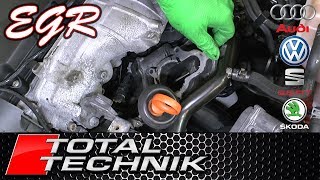
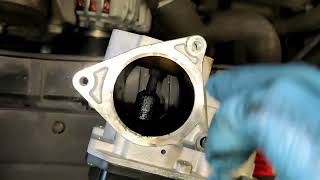
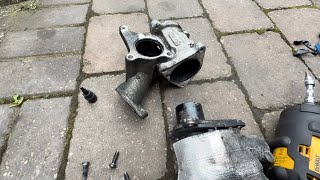
- Turn the ignition off and locate the EGR valve on the 2.0L TDI engine. 🎬 Watch: How to remove and inspect the valve for damage. It is often a combined unit with the EGR cooler.
- Carefully inspect the 5-pin electrical connector at the EGR valve. Check for loose pins, corrosion, or damage. Ensure it is securely plugged in.
- Inspect the visible sections of the wiring harness leading to the EGR valve for any signs of chafing, melting, or breaks.
- Check the vehicle's fuse panel for any blown fuses related to the engine management or emissions system.
- If wiring and fuses appear okay, use a multimeter to test for voltage and ground at the EGR valve connector (requires a wiring diagram for pinouts). An absence of voltage or a failed continuity test points to a wiring issue.
- If wiring tests confirm that power and ground signals are reaching the valve connector, the EGR valve itself is defective and has an internal open circuit. The entire EGR valve/cooler assembly will likely need replacement.
- After replacement, use the scan tool to clear the fault codes and perform a basic setting/adaptation for the new EGR valve if required by the manufacturer's procedure.
Parts You'll Likely Need
- EGR Valve Assembly
(OEM #03L131512DN / 03L131512BQ / 03L131512CD / 03L131512DT)— This is the most frequent cause of a P1440 code, as the internal electronics of the valve fail, creating an open circuit.
Trusted brands: Pierburg, Bosch, HELLA, Wahler
OEM price range: $400-$550
Aftermarket price range: $250-$400 - EGR Valve Gasket
(OEM #Included with new EGR assembly)— Gaskets are single-use and must be replaced whenever the EGR valve is removed to prevent exhaust and coolant leaks. They are typically included with a new valve assembly.
Trusted brands: Victor Reinz, Elring
OEM price range: $10-$20
Aftermarket price range: $5-$15
Related Codes That Often Appear With This One
- P0403 — P0403 is a generic code for 'EGR Circuit Malfunction'. It frequently appears with the manufacturer-specific P1440 because both point to an electrical problem within the EGR control system.
- P0405 — P0405 indicates 'EGR Sensor A Circuit Low', which can also be triggered by the same electrical failure in the EGR valve assembly that causes P1440.
Technical Service Bulletins (TSBs) & Recalls
- While no specific TSB for P1440 was found, TSBs exist for related DPF and intake issues on this platform. For example, a TSB related to P0401/P2002 faults advises checking the intake system for leaks and the condition of the air filter as part of DPF diagnostics, which is relevant context for overall emissions system health.
Platform-Specific Known Issues
- Post-'Dieselgate' Fix Complications: Some owners have reported an increase in DPF and EGR-related issues after receiving the emissions recall software update. The update can alter combustion parameters, potentially leading to more frequent DPF regenerations and increased stress on EGR components.
Mechanic-Grade Diagnostic Values
- EGR Valve (N18) Solenoid Resistance — expected: Approximately 15-100 Ω. Note: This is a general value from related TDI engines, not a manufacturer specification for this exact part.. Failure: A reading of 0 Ω (short circuit) or infinite resistance (open circuit). A reading significantly outside the expected range (e.g., 30 Ω) has been reported on faulty valves on other TDI engines.
- VCDS EGR Valve Position Feedback — expected: During an output test or basic setting, the 'Actual' position value should closely track the 'Requested' position value.. Failure: The 'Actual' value does not change, is erratic, or does not match the 'Requested' value, indicating a mechanical or electrical fault within the valve assembly.
- EGR Valve Connector Voltage Supply — expected: With ignition on, one pin on the 5-pin connector should show battery voltage (approx. 12V).. Failure: Absence of voltage points to a wiring or fuse issue upstream of the connector.
Scan Tool Commands That Help
- VCDS (VAG-COM): Engine -> Output Tests -> EGR Valve 🎬 Watch: Step-by-step guide to testing your EGR valve with VCDS. (N18) — This is a primary diagnostic step to command the EGR valve to cycle. A technician can then visually or audibly check if the valve is responding. A lack of response or jittery movement with P1440 strongly suggests a failed valve motor or internal open circuit.
- VCDS (VAG-COM): Engine -> Basic Settings -> Group 074 — This procedure is required after replacing the EGR valve. It allows the ECU to learn the new valve's end-stop positions (minimum and maximum). The status should change from 'Run' to 'ADP OK' to confirm successful adaptation.
Wiring & Ground Locations
- EGR Valve Connector — On the EGR valve assembly itself, which is typically located at the front or rear of the engine, often integrated with the EGR cooler.. This 5-pin connector is the primary interface for power, ground, and sensor signals. An open circuit is often at this connector or within the valve it plugs into.
- Ground Point 12 — In the engine compartment, on the left side.. A poor engine ground can cause a variety of electrical faults and unpredictable behavior in electronic components like the EGR valve.
- Ground Point 615 — On the left suspension strut tower in the engine bay.. This is a major chassis ground point. Verifying it is clean and tight is a crucial step in diagnosing any electrical fault code, including P1440.
- Ground Point 671 / 672 — On the left front longitudinal member (frame rail).. These are primary frame ground points for the front of the vehicle. A fault here could interrupt the ground path for various engine sensors and actuators.
Real Owner Repair Stories
- Ross-Tech Forums user (VW Jetta TDI (similar EA189 engine and EGR system)) — Check engine light, limp mode, codes P1440 (EGR Open Circuit) and P0403 (EGR Malfunction).
❌ Tried (didn't work) Checked wiring harness from EGR to ECM; all circuits had good continuity and passed a load test., Replaced the original EGR valve with a new, aftermarket valve. The new valve exhibited the same jittery, incorrect movement during a VCDS output test.
✅ What actually fixed it The user discovered that both the original and the new aftermarket valve were out of specification. The issue was resolved by installing a genuine OEM EGR valve. - MHH Auto forum user (2012 Audi A6 2.0 TDI (CGLC engine)) — P1440 code appeared immediately after an EGR delete.
❌ Tried (didn't work) Using DTC remover software to try and erase the P1440 code from the ECU flash memory.
✅ What actually fixed it The user confirmed the P1440 code was a direct result of the EGR valve being unplugged, creating the 'Open Circuit'. The fix in this context is not a repair, but confirmation that unplugging the valve is the direct cause of the code.
OEM Part Supersession History
03L131512BQ, 03L131512CD, 03L131512DT→03L131512DN (and others)— Part revisions and supplier changes over the production run.
Heads up: While multiple part numbers exist for the EA189 engine family, they are generally considered interchangeable for the application. However, always verify the correct part number for your specific vehicle's VIN and engine code (e.g., CGLC, CJCA) before purchasing.
Model Year Variations Within This Range
- 2008-2017: The specific 2.0L TDI engine code (e.g., CGLB, CGLC, CJCA) can determine the physical location of the EGR valve. On some variants, the EGR is at the rear of the engine, making access extremely difficult and significantly increasing labor time (e.g., 6+ hours) compared to variants where it is more accessible at the front.
Diagnostic Flowchart
Other Known Issues on This Vehicle
Issues unrelated to this code that are worth knowing about as an owner of this generation:
- High-Pressure Fuel Pump (HPFP) Failure 🔴 High — Can occur at any mileage, but becomes a greater concern over 70k miles. Failure can be sudden and cause catastrophic engine damage if metal debris enters the fuel system. (Ref: While part of the 'Dieselgate' extended warranty, it's a known failure point.)
- Clogged Diesel Particulate Filter (DPF) 🟠 Medium — Common on vehicles used primarily for short trips, preventing proper regeneration. Can occur from 80,000 miles onward. The 'Dieselgate' fix may increase soot production, potentially shortening DPF life.
- Intake Manifold Carbon Buildup 🟠 Medium → Shop Engine Intake Manifold — Significant buildup can occur every 50,000-70,000 miles, causing misfires (especially on cold starts), rough idle, and loss of power. Requires manual cleaning (e.g., walnut blasting).
- Leaking Panoramic Sunroof Drains 🔴 High — A very common issue where drain tubes clog with debris, causing water to leak into the cabin. This can damage sensitive electronics, including the Comfort Control Module located in the trunk area, leading to expensive electrical problems. (Ref: A recall was issued for some models due to the glass potentially shattering, but the drain issue is a maintenance-related problem.)
- Timing Belt Failure (2.0L TDI is belt-driven) 🔴 High — The timing belt is a maintenance item that must be replaced at the manufacturer-specified interval (typically 80,000-100,000 miles). Failure to do so will result in catastrophic engine damage.
Used vs. New Parts: Buying Guide for This Vehicle
When a used part is the smart pick: For a P1440 'Open Circuit' fault, a used part is strongly discouraged. The failure mode is typically internal electronics failing due to heat and vibration cycles, meaning a used part from a junkyard has unknown and likely limited remaining life.
What to inspect on the donor part:
- Not applicable, as the common failure is internal and not visually inspectable.
OEM-only on this vehicle (don't cheap out):
- EGR Valve Assembly: It is highly recommended to use a genuine OEM part or one from a primary OEM supplier (Pierburg, Wahler). Forum reports indicate new aftermarket parts can be faulty out of the box, leading to a repeat of the same symptoms and codes.
Aftermarket brands forum-validated for this vehicle:
- Pierburg (often the original manufacturer)
- Wahler
- HELLA
- Bosch
Brands owners have reported issues with on this vehicle:
- Unbranded or budget-priced brands should be treated with caution, as a documented case showed a new non-OEM valve was out of spec and did not fix the P1440 code.
Real Owner Stories
Aggregated from forums and TSBs cited above. Mileages and costs reflect what owners reported in those sources.
2011 Audi A4 2.0 TDI
Symptoms: VCDS scan log showed '4881 - EGR Valve (N18) P1440 00 - Open Circuit'.
What fixed it: Diagnostic confirmation of an open circuit at the N18 EGR valve.
Source hint: Ross-Tech Forums: A user with a 2011 Audi A4 2.0 TDI (B8 platform, similar engine) posted a VCDS scan log
Audi Q7 TDI
Symptoms: Flashing glow plug light and limp mode.
What fixed it: Resolved EGR fault (P0403), which is a common companion to P1440.
Source hint: AudiWorld Forums: A user with a Q7 experiencing a flashing glow plug light and limp mode found a P0403 'EGR Valve Malfunction' code
Audi Q5 2.0L TDI
Symptoms: Vehicle goes into limp mode and the glow plug light comes on.
What fixed it: Checking for wiring or EGR solenoid failure after seeing codes P1440 and P0405 together.
Source hint: JustAnswer: A mechanic explained to a Q5 owner that codes P1440 (open circuit) and P0405 (sensor circuit low) together point directly to a wiring or EGR solenoid failure
Related OBD-II Codes
Frequently Asked Questions
Could the 'Dieselgate' emissions recall update on my 2.0L TDI be related to this P1440 code?
Is there a specific TSB for P1440 on the Audi Q5?
My Q5 has a flashing glow plug light and reduced power; is this typical for an EGR open circuit?
Can I just replace the electronic motor, or do I need the whole EGR assembly?
How can I confirm if the EGR valve itself is dead versus a wiring issue?
Does the P1440 code affect how the engine shuts off?
Helpful Videos
We Have This Part in Stock

The information in this article is provided for general reference and educational purposes only. Vehicle specifications, procedures, and part compatibility can vary by production date, trim level, and region. Always consult your vehicle's factory service manual and verify part numbers before purchasing or performing repairs. Safety-critical components such as airbags, seat belts, and braking systems should be installed by a qualified professional.
- Audi Q5:
- 🧭 Diagnostic Flowchart
- 🎬 Helpful Videos
- 🛍️ Shop This Part
- What's Unique About the 2008-2017 Audi Q5
- Symptoms You May Notice
- Most Likely Causes
- Rare But Worth Checking
- Diagnosis Steps
- Parts You'll Likely Need
- Related Codes That Often Appear With This One
- Technical Service Bulletins (TSBs) & Recalls
- Platform-Specific Known Issues
- Mechanic-Grade Diagnostic Values
- Scan Tool Commands That Help
- Wiring & Ground Locations
- Real Owner Repair Stories
- OEM Part Supersession History
- Model Year Variations Within This Range
- Other Known Issues on This Vehicle
- Used vs. New Parts: Buying Guide for This Vehicle
- Real Owner Stories
- 2011 Audi A4 2.0 TDI
- Audi Q7 TDI
- Audi Q5 2.0L TDI
- Related OBD-II Codes
- Frequently Asked Questions
- 🎟️ Get 5% Off