

P1440 on 2006-2015 Audi Q7 3.0L TDI: EGR Valve Open Circuit Causes and Fixes
On the Audi Q7 3.0L TDI, code P1440 indicates an electrical failure ('Open Circuit') in the EGR valve. This is most often caused by an internal failure of the EGR valve itself, which requires replacement. The repair is labor-intensive as the valve is buried in the engine valley.
- P1440 on your Q7 TDI is an electrical fault in the EGR valve, not an EVAP leak.
- The most common fix is replacing the EGR valve, which is a difficult, labor-intensive job (5-8+ hours).
- This is not a DIY-friendly repair for beginners due to the location and complexity.
What's Unique About the 2006-2015 Audi Q7
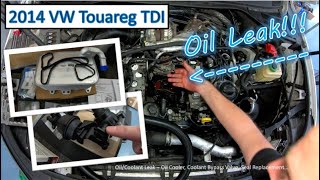
Unlike many other manufacturers where P1440 relates to the EVAP system, on the Audi 3.0L TDI (specifically the CATA engine) it points to an electrical fault with the EGR valve. The EGR system on this engine is notoriously difficult to access, as it's located deep in the engine 'V' underneath the intake manifold and turbocharger. Failures are often 🎬 Watch: Tips and tricks for removing the CATA EGR valve. linked to common oil leaks from the oil cooler seals in the same area, which can saturate and destroy the EGR valve's wiring harness.
Symptoms You May Notice
- Check Engine Light illuminated
- Flashing glow plug light on the dashboard
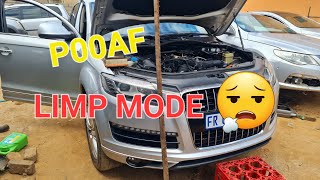
- Vehicle enters 'limp mode' with significantly reduced engine power 🎬 See how to diagnose and fix Audi Q7 limp mode.
- Rough or uneven idle
- Increased exhaust smoke
- Failed emissions test
- Mistaking the code for an EVAP system fault. Many generic code readers will incorrectly define P1440 as an EVAP leak, which is incorrect for this Audi TDI engine.
- Replacing the EGR valve without inspecting the wiring. If the fault is in the harness due to an oil leak, a new EGR valve will not solve the problem and the code will return.
Most Likely Causes
- Internal Failure of the EGR Valve 🔴 High Probability → Shop Exhaust Gas Recirculation (EGR) Valve The electronic motor within the EGR valve assembly is a common failure point due to heat cycles and age, leading to an internal open circuit.
How to confirm: After gaining access to the valve, disconnect its electrical connector. Use a multimeter to test the resistance between the power and ground pins on the valve itself. A reading of 'OL' or infinite resistance confirms an open circuit and a failed valve. Physically removing the valve can be difficult as carbon buildup can cause it to seize in its housing.
Typical fix: Replace the entire EGR valve assembly. New intake manifold gaskets and EGR gaskets will be required.
Est. part cost: $250-$500 - Damaged Wiring Harness or Connector 🟡 Medium Probability The engine valley is a common area for oil leaks from the oil cooler seals. This oil saturates the EGR wiring harness, degrading the insulation and causing wires to break or short. High heat in this confined area also makes wires brittle over time.
How to confirm: Visually inspect the wiring harness leading to the EGR valve for signs of oil saturation, melting, chafing, or broken wires. Check the connector for corrosion or damage. Test for continuity on each wire from the EGR connector back to the ECM.
Typical fix: Repair the damaged section of the wiring harness using automotive-grade wire and heat-shrink splices. If the connector is damaged, replace it with a new pigtail.
Est. part cost: $20-$70 - Blown Fuse ⚪ Low Probability A short circuit in the EGR valve or its wiring can cause the corresponding fuse in the engine bay fuse box to blow.
How to confirm: Check the fuse panel for a blown fuse related to the engine management or emissions systems. If a new fuse blows immediately upon installation, it confirms a short circuit is present in the system.
Typical fix: Replace the blown fuse after the underlying short circuit in the wiring or component has been found and repaired.
Est. part cost: $1-$5
Rare But Worth Checking
- Faulty Engine Control Module (ECM): This is extremely rare. The internal driver circuit for the EGR valve within the ECM can fail. This should only be considered a possibility after the EGR valve, wiring, and fuses have been exhaustively tested and confirmed to be good.
Diagnosis Steps
- Confirm P1440 is the active code using an Audi-specific scan tool (like VCDS) and check for other related EGR codes like P0403. Note if the fault is 'Intermittent'.
- Gain access to the engine valley. This is a significant job requiring removal of the engine cover, intake air piping, and potentially the intake manifold itself.
- Visually inspect the EGR valve connector and its wiring harness. Look carefully for signs of oil saturation from a leaking oil cooler, chafed or melted wires, and any physical damage to the connector.
- If wiring looks suspect, test for continuity and shorts. Check for power and ground at the EGR connector with the ignition on.
- If wiring appears intact, disconnect the EGR valve and test the resistance across the motor pins on the valve itself. An open circuit ('OL' on a multimeter) confirms the valve has failed internally.
- Check the engine bay fuse box for any blown fuses related to the emissions system or engine controls.
- If the valve, wiring, and fuses all test good, the fault may lie within the ECM, but this is highly unlikely.
Parts You'll Likely Need
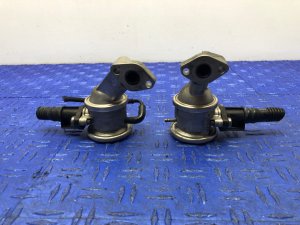
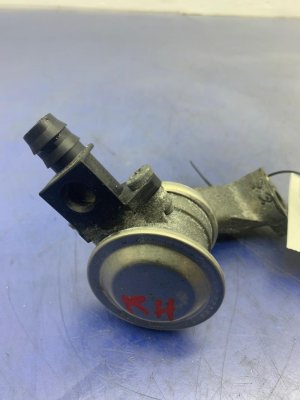
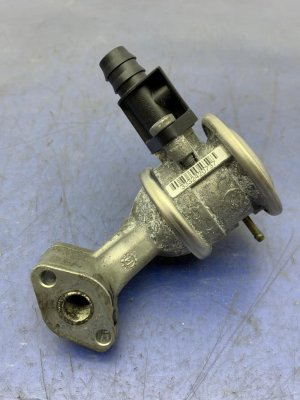
- EGR Valve
(OEM #059131502G)— This is the most common cause of a P1440 code, due to internal electrical failure of the valve's motor. The previous part number was 059131502B.
Trusted brands: Genuine Audi/VW, Pierburg, Topran
OEM price range: $400-$550
Aftermarket price range: $250-$400 - Intake Manifold Gasket Set — The intake manifold must be removed to access the EGR valve, and these gaskets are single-use and must be replaced to prevent vacuum leaks.
Trusted brands: Victor Reinz, Elring
OEM price range: $50-$80
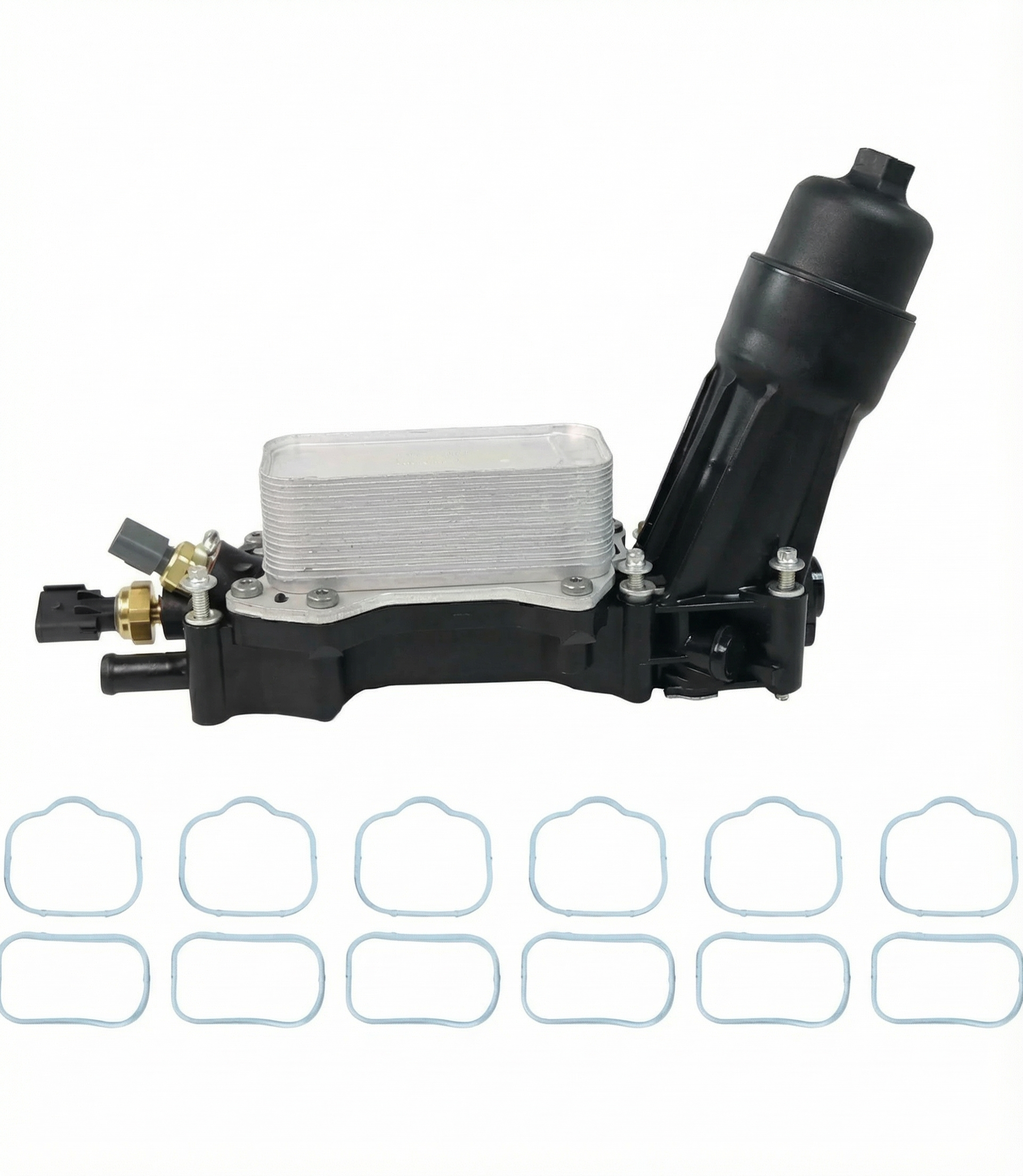
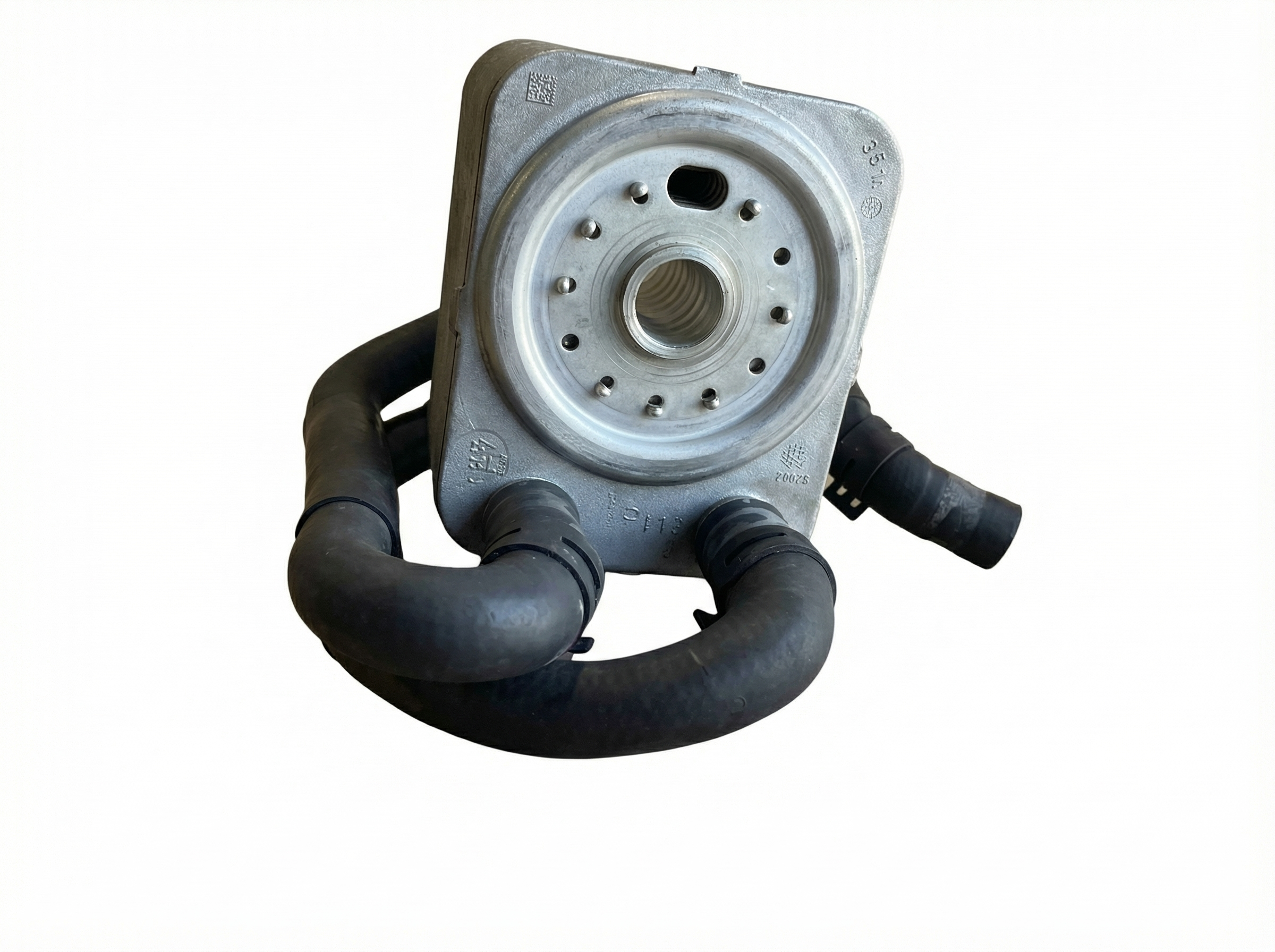
Aftermarket price range: $30-$50 - Oil Cooler Seal Kit — Highly recommended 'while you're in there' repair. Leaking oil cooler seals are a primary cause of the wiring damage that can lead to P1440. Replacing them prevents a repeat failure.
Trusted brands: Genuine Audi, Elring
OEM price range: $40-$70
Aftermarket price range: $20-$40
Related Codes That Often Appear With This One
- P0403 — This code also indicates a malfunction in the EGR control circuit, and frequently appears with P1440 as they both point to an electrical problem with the same system.
- P0401 — This code indicates 'EGR Insufficient Flow'. An electrical fault like P1440 can prevent the valve from opening, which in turn causes a flow fault.
Platform-Specific Known Issues
- The 'Dieselgate' Extended Emissions Warranty may cover the repair of the EGR system. This warranty covers the entire EGR system, including the EGR valve, cooler, filter, and all sensors and actuators. Owners should check with an Audi dealership with their VIN to confirm eligibility, which could make the entire repair free of charge.
Mechanic-Grade Diagnostic Values
- EGR Valve (N18) Motor Coil Resistance — expected: 4-12 Ohms. Failure: A reading of infinite resistance ('OL') indicates an open circuit, which is the direct cause of P1440. A reading significantly outside the expected range suggests an impending failure.
- EGR Cooler Switch-Over Valve (N345 / N381) Resistance — expected: 35.2 Ohms (+/- 6 Ohms). Failure: A reading outside this range indicates a fault in the solenoid controlling the EGR cooler.
Scan Tool Commands That Help
- VCDS (VAG-COM): Engine -> Output Tests -> EGR Valve (N18) — This command actively cycles the EGR valve motor, allowing a technician to verify if the ECM can command the valve. While the valve is deep in the engine valley and not visible, you can sometimes hear a faint click or use a stethoscope. If the test runs but the P1440 code immediately returns, it points strongly to an open circuit in the valve or wiring, as the ECM is not receiving the expected electrical feedback.
- VCDS (VAG-COM): Engine -> Basic Settings -> Group 074 -> Go! — This is the EGR valve adaptation procedure. It must be performed after replacing the EGR valve to teach the ECM the new valve's minimum and maximum position limits. Failure to perform this adaptation can result in incorrect EGR operation and other fault codes, even if P1440 is resolved.
- VCDS (VAG-COM): Engine -> Adaptation -> Channel for EGR — On some TDI controllers, this allows for adjusting the EGR duty cycle. Technicians sometimes use this to slightly reduce EGR flow to help prevent carbon buildup, but it cannot fix an electrical fault like P1440. For a deleted EGR, a login code (e.g., 12233) and a new value (e.g., 33768) are entered to trick the ECU, but this is for tuning and not for fixing a P1440 code on a stock vehicle.
Wiring & Ground Locations
- EGR Valve Connector (T6ae) — On the EGR valve itself, located in the 'V' of the engine, underneath the intake manifold. It is a 5-pin or 6-pin connector depending on the specific valve version.. This is the primary point for testing. An 'Open Circuit' code means the break is between this connector and the ECM, or inside the valve itself. Checking for voltage, ground, and continuity at these pins is a critical diagnostic step.
- Ground Connection (Engine to Chassis) — A primary ground strap runs from the engine block, near the starter motor, to the chassis on the passenger side. Access requires removing the airbox.. A corroded or loose main engine ground can cause a host of bizarre electrical issues and fault codes, including intermittent circuit errors for various sensors and actuators like the EGR valve. While not a direct cause of a persistent P1440, it can contribute to intermittent electrical faults and should be checked if other diagnostics are inconclusive.
- Ground Point 640 — In the engine compartment on the left (driver's) side.. This is a key grounding point for the engine harness. Corrosion or looseness at this specific point can cause erratic behavior and circuit faults for components controlled by the ECM, including the EGR system.
Real Owner Repair Stories
- AudiWorld Forums user '-Wes-' (2014 Audi Q7 TDI) — Significant coolant and oil leak in the engine 'V', overflowing and dripping onto the alternator. Burning coolant smell.
❌ Tried (didn't work) Initially, the user had replaced the alternator due to it failing from being soaked in oil and coolant from the leak above.
✅ What actually fixed it The user performed a complete 'valley' reseal. This involved removing the intake manifold to access the leaking components. The final fix included replacing the oil cooler seals, EGR cooler seals, and various connecting rubber hoses and o-rings. While in there, the user also cleaned significant carbon buildup from the intake manifold. This comprehensive approach fixed the source of the oil leak that often damages the EGR wiring, and addressed the common coolant leaks in the same area. - Reddit user 'Psychological_Oil728' (2014 Q7 TDI, purchased at 124,000 miles) — Not specified for P1440, but part of a larger preventative maintenance and repair effort.
❌ Tried (didn't work) Not applicable, this was a proactive replacement.
✅ What actually fixed it As part of a major service addressing common TDI failure points, the user replaced the oil cooler, EGR valve, and 'all the other plastic pieces in the V of the engine'. This highlights the common practice among experienced TDI owners of replacing the EGR valve and oil cooler seals simultaneously as a preventative measure, since the labor to access one justifies replacing the other.
OEM Part Supersession History
059131502B→059131502G— Likely an internal revision to improve reliability or address a known failure mode in the electronic motor.
Heads up: The parts are interchangeable. When ordering, you will almost always receive the newer 059131502G part.
Model Year Variations Within This Range
- 2006-2010 (approx.): Early 3.0L TDI engines (e.g., BUG, CASA codes) may have slightly different EGR cooler and pipe configurations compared to later CATA engines, but the EGR valve itself (and its failure mode for P1440) is largely the same. The key takeaway is that across the entire generation, the valve is located in the engine valley.
- 2009-2015 (CATA engine): These later Gen 1 / Gen 2 Touareg/Q7 TDI engines are the most commonly cited for the P1440 fault in conjunction with oil cooler leaks saturating the wiring. The 'Dieselgate' extended warranty is also most applicable to this later group.
Diagnostic Flowchart
Other Known Issues on This Vehicle
Issues unrelated to this code that are worth knowing about as an owner of this generation:
- Timing Chain Tensioner Rattle on Cold Start 🔴 High — Commonly reported, especially on vehicles over 75,000 miles. A 1-3 second rattle on startup is the primary symptom. If left unaddressed, it can lead to jumped timing and catastrophic engine damage. (Ref: No specific recall, but a known issue. Some owners report getting it covered under the 'Dieselgate' warranty, but it is dealer-dependent.)
- Panoramic Sunroof Drain Clogging and Water Leaks 🟠 Medium — Extremely common. The four corner drains for the sunroof get clogged with debris, causing water to overflow and leak into the cabin, often damaging sensitive electronics like the MMI amplifier in the rear cargo area.
- AdBlue / DEF System Failures 🟠 Medium — Failures of the AdBlue heater, pump, or level sensors are frequent. This can trigger a 'no-start' countdown. Problems were often exacerbated after the emissions modification. (Ref: The 'Dieselgate' extended warranty covers many of these components.)
- Adaptive Air Suspension Failure 🔴 High — Compressor failure, leaky air springs (bags), or faulty valve blocks are common as the vehicle ages, leading to the vehicle sagging at one or more corners and a harsh ride.
- Leaking Injector Seals 🟠 Medium — The copper washers under the injectors can fail, causing a 'chuffing' noise and allowing combustion gases and fuel to leak into the engine bay.
Used vs. New Parts: Buying Guide for This Vehicle
When a used part is the smart pick: For this specific repair, using a salvaged EGR valve is NOT recommended. The part is electronic, a known high-failure item, and the labor to replace it is immense. The risk of a used part failing shortly after installation is too high to justify the cost savings. A used wiring harness pigtail could be a viable option if the damage is only to the connector.
Donor-vehicle mileage cap: roughly under 20000 miles for the part to have meaningful remaining life.
What to inspect on the donor part:
- For a wiring pigtail: ensure the insulation is not brittle, there is no visible oil saturation, and the connector locking tabs are intact.
- For the EGR valve itself: avoid used parts entirely. The internal electronic motor is the failure point, and its condition cannot be visually assessed.
OEM-only on this vehicle (don't cheap out):
- EGR Valve: While high-quality OEM suppliers exist, Genuine VW/Audi is the safest bet given the labor involved. Avoid no-name Chinese parts.
- Oil Cooler Seals: Use Genuine or OEM supplier (Elring, Victor Reinz) gaskets only. The cost of the part is negligible compared to the labor if it fails again.
Aftermarket brands forum-validated for this vehicle:
- Pierburg: Pierburg is the original equipment manufacturer (OEM) for VW/Audi for this part. A Pierburg-branded valve is identical to the Genuine part but often costs less.
- Wahler: Also a reputable German OEM supplier known for quality emissions components.
Brands owners have reported issues with on this vehicle:
- Unbranded parts from eBay or Amazon. The quality control is non-existent, and failure is common, leading to a repeat of an 8+ hour repair job.
Real Owner Stories
Aggregated from forums and TSBs cited above. Mileages and costs reflect what owners reported in those sources.
2012 Audi Q7 TDI — 131315 miles
Symptoms: Check Engine Light with code P1440 (EGR Vlv i Eff Flt: 0.00 %). The car drove with excellent power, but the idle was sometimes erratic.
What fixed it: A Malone tuning file was flashed to the ECM to delete the EGR function, along with hardware deletion.
Source hint: Ross-Tech Forums owner report for 2012 Audi Q7 TDI
Audi Q7 3.0 TDI (North American CATA engine)
Symptoms: The owner attempted to replace the EGR valve due to failure but encountered extreme difficulty removing the motor from the housing.
What fixed it: The owner described the struggle of physically removing the EGR valve motor from its housing even after unbolting it, due to carbon buildup seizing it in place.
Source hint: AudiWorld Forums: EGR valve
Related OBD-II Codes
Frequently Asked Questions
Will the 'Dieselgate' Extended Emissions Warranty cover the P1440 repair on my Audi Q7 3.0L TDI?
Why is the EGR valve on the 3.0L TDI V6 so difficult to remove physically?
Can an oil leak in the engine valley cause the P1440 code?
What specific resistance reading indicates a failed EGR valve on this vehicle?
Is the P1440 code common on other vehicles with the same CATA engine?
Does a flashing glow plug light mean I have an EGR problem?
Helpful Videos
We Have This Part in Stock

The information in this article is provided for general reference and educational purposes only. Vehicle specifications, procedures, and part compatibility can vary by production date, trim level, and region. Always consult your vehicle's factory service manual and verify part numbers before purchasing or performing repairs. Safety-critical components such as airbags, seat belts, and braking systems should be installed by a qualified professional.
- Audi Q7:
- 🧭 Diagnostic Flowchart
- 🎬 Helpful Videos
- 🛍️ Shop This Part
- What's Unique About the 2006-2015 Audi Q7
- Symptoms You May Notice
- Most Likely Causes
- Rare But Worth Checking
- Diagnosis Steps
- Parts You'll Likely Need
- Related Codes That Often Appear With This One
- Platform-Specific Known Issues
- Mechanic-Grade Diagnostic Values
- Scan Tool Commands That Help
- Wiring & Ground Locations
- Real Owner Repair Stories
- OEM Part Supersession History
- Model Year Variations Within This Range
- Other Known Issues on This Vehicle
- Used vs. New Parts: Buying Guide for This Vehicle
- Real Owner Stories
- 2012 Audi Q7 TDI — 131315 miles
- Audi Q7 3.0 TDI (North American CATA engine)
- Related OBD-II Codes
- Frequently Asked Questions
- 🎟️ Get 5% Off